If you can’t get enough of these and want more than 5 articles, I have created an extended version of Petervan’s Delicacies in REVUE. If you want more than 5 links, you can subscribe here: https://www.getrevue.co/profile/petervan
This post is part-7 of a series of ten essays on the essence of work. For an introduction and overview of previous posts, check here.
Picture – Cirque du Soleil – Amaluna 2015 Show
This post is about the legacy of your work. It is not about your legacy. It is about the legacy of your work.
A couple of months I took some time off to reflect on my never-ending mid-life crisis that started when I was 35 😉
I suddenly got the shivers when I start thinking how little time I had left. I started wondering what I would do with the rest of my life.
In the better case scenario I would remain “professionally active” till I am 70. I suddenly realized I only have +/- 10 years left to get there. Luckily my coach helped me put things in perspective, sort of. She said: “Just look back at your last 10 years, and how you have progressed (or not) in that time frame. And now think how much more progress you could make in the next 10 years”.
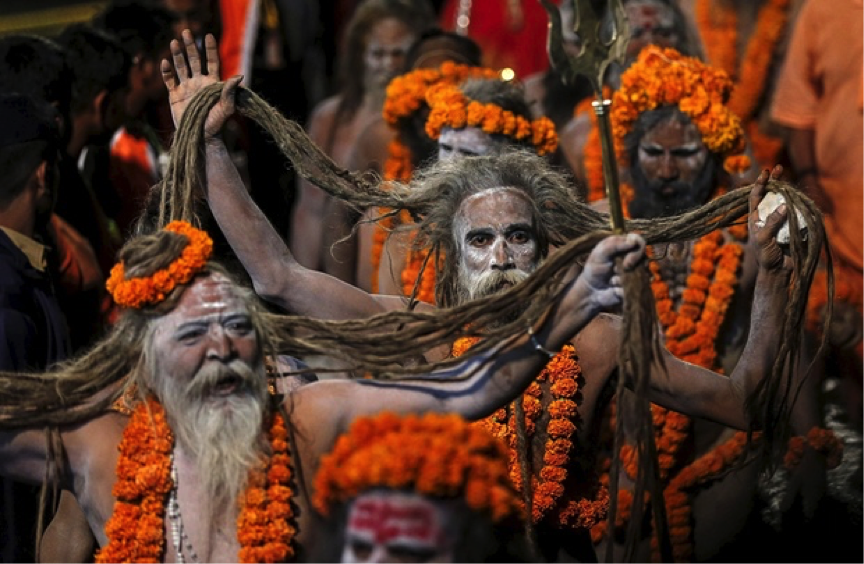
Picture – Hindu Holy Men
When I say “professionally active”, I did not necessarily mean it as “having a job”, the whole purpose of this series on The Essence of Work.
So, what would be the essence of being “professionally active”?
Mike Kruzeniski @mkruz, Design Director at Twitter came help me with his post about Jonathan Ive’s patience.
Picture: Jonathan Ive – Hypebeast.com
Don’t just think about that one product you need to design in the next 3, 6, or 12 months. Consider the skills, relationships, and tools that you and your company will need for the next 2, 5, 7, or 10 years and start working on them now.
Don’t just measure yourself by the output of your very next project; Measure yourself by how you’re improving quality over the course of your next 10 projects.
Your job is to be the shoulders that the next generation of designers — and perhaps your future self — at your company will stand on.
I found another hint to my question in “Your Work is Your Work” by John Wenger @JohnQShift
Picture: Sochi Enlightning People Pascal Le Segretain - Getty Images
Developing greater reflection on self is about asking those deeper questions about our beliefs, values and orientations. For some, it is best done when in nature, in silence or in solitude. These are questions that get to the heart of who we are.
What is it about the work I do that is related to the capabilities I need to grow in myself?
How do I delude myself?
How does my internal picture of “me” differ from how I actually am with people?
How do I use my power?
What kind of leader am I?
Am I living a wonder-full life?
Developing these practices gets us a significant way towards knowing ourselves and shining a light on our real “work”.
Or more recently, Kevin Kelly in reply to a question about the kind of mindset with to approach life and work that enables you to create at high quality and velocity:
Picture – The young Kevin Kelly – Almost casted to act in Star Trek
My “work” is usually the kind of thing that also gives me deep pleasure, so I could say I also play a lot. I am a big do-it-yourself believer and I still do a lot my self, but more and more I also hire the best expert or professional I can as well. That really ups one’s productivity.
Kelly again:
“Your job in life is to discover your job, and it usually takes your whole life to figure this out.”
This re-confirms my ever ongoing mid-life crisis and the realization that it take a whole life to search the truth and in the end probably not finding it.
It tells me not to wait for others to pick me, to praise me, to give me permission. It tells me that the whole enterprise appraisal system is completely screwed up because it measures the past and not the future potential. It only measures the output and not the input. Its measures are based on antiquated standards of maximizing efficiency, without realizing that the value creation and ethical norms of work – not jobs – have moved on to higher levels of quality and awareness.
Seth Godin was pitching recently “Don’t wait to be picked” in his keynote at Inbound 2015:
Go pick yourself. You decide. I will also talk about this in next post in this series, when we have the opportunity to be part of projects that change our lives. This way, your next 10 years will be more satisfying, as you adhere to your own norms and standards.
Each day the Innotribe programme will focus on a specific theme, throughout which both Millennials and Power Women in Fintech will play an important role participating in all sessions. In the next two weeks, we will produce a more detailed blog per theme of each day.
In a play of words on Kevin Kelly’s book “What Technology Wants”, we have four major themes this year, one theme per day:
Day-2 is about what society wants from financial institutions, covering topics from Millennials who are born digital and mobile, to refugees who are forced to be on the move and have no access to financial services, and financial inclusion for the 2.5 billion unbanked people. These issues will be intersected with a ‘what if’ session on re-inventing regulation for the digital era.
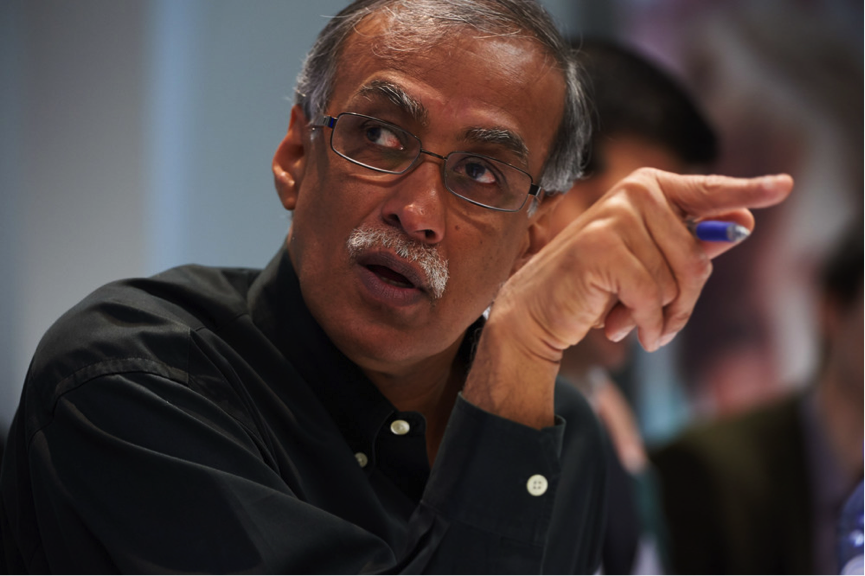
Our anchor-person for the day is Akhtar Badshah, PhD, Chief Catalyst, at the Catalytic Innovators Group. Akhtar will be with us the whole day, and will wrap up the findings of this society day. He is also an active speaker in some of the sessions. I met Akhtar at a Giving-conference in Minneapolis earlier this year, and besides the fact he has been Senior Director, Citizenship and Public Affairs, Head Corporate Philanthropy at Microsoft, Akhtar is also an artist and architect, and a wonderful and deep person to engage with.
Artwork by Akhtar Badshah – Untitled - Acrylic on Canvas - 36"x48"
We have prepared and designed six sessions for you on Tuesday, including our Innotribe day opening at 09:15am in the Innotribe Space.
After our Innotribe day opening, we’ll kick off at 10:15am with a session about digital natives. During the session “Engaging with the millennial generation – A hands-on workshop for banks”, Claro Partners and Anthemis Group will share the key insights of research done with a consortium of financial institutions in six markets. The session will also feature key tenets of a whitepaper (PDF link) produced by Millennials from Wharton Fintech in collaboration with Innotribe. The circle will be powered by Millennials from Wharton FinTech and students from the Singapore Management University.
After the Big Issue Debate at 11:30am, we’ll continue at 12:45am in the Innotribe space on Financial Inclusion. Kosta Peric, Deputy Director, Financial Services for the Poor, Bill & Melinda Gates Foundation, will continue the conversation that was started by Bill Gates during the closing plenary at Sibos Boston 2014.
Video 1 Level One Project overview
Kosta will describe his work with the Level One Project and articulate the opportunity for banks to engage in financial inclusion, not as a CSR or philanthropic project, but as a very scalable business. He will be followed by Udayal Goyal, who will illustrate his work with Apis Partners, a catalyst capital for Financial Services in Growth Markets aiming to have a net positive impact in the communities they invest in. The session is set up as fully interactive session with audience polling, audience exercises and a call for action.
Just stay on the Innotribe stand for the next session about Re-Inventing Regulation starting at 14:00pm sharp. Risk and innovation don’t always go well together. Imagine what regulation would look like if we could start from scratch? Most of our regulatory frameworks are based on industrial era models. What if we could re-design regulation based on digital era models, and how would that inform our conversations with the regulators today. The three igniters from Anthemis Group, Silicon Valley Bank and Transferwise will plant some provocative seeds that will grow like trees on the big LED wall, and lead you into a conversation about the key tenets of a re-invented regulation landscape. We have powered our “circle” with thought leaders on regulation from leading institutions and new entrants. Again, a fully designed and facilitated session with audience exercises.
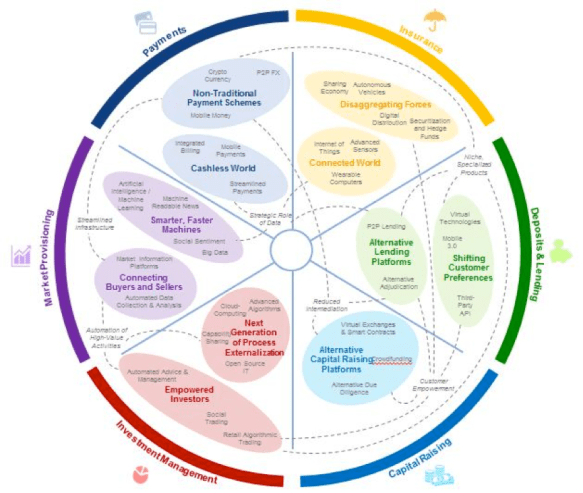
At 15:15pm, we have made our circular workshop space available to the team lead by Jesse McWaters from the WEF (World Economic Forum) Project on Disruptive Innovation in Financial Services: in 2015 the team explored the drivers and potential implications of innovation across core function of financial services. This invitation-only session will also give feedback on regulatory models for innovation, applications of decentralized systems, blueprint for digital identity, and the impact on society at large.
Graphic from WEF report on Disruptive Innovation in Financial Services.
Where we started the day with Millennials who are born digital and mobile, we will close the day with a session about refugees: people who are forced to be on the move and have no access to financial services.
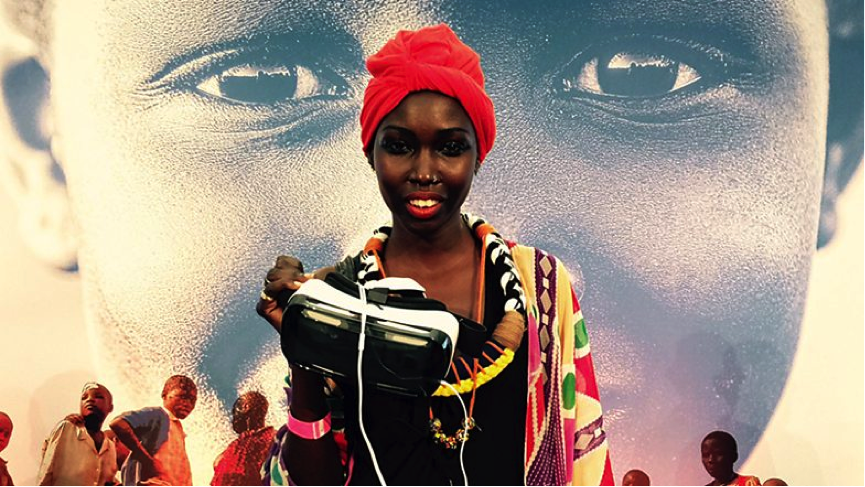
Image: The United Nations has collaborated with filmmaker Chris Milk to make its
first virtual reality film
The session will include the United Nations virtual reality film Clouds Over Sidra bringing viewers closer to the Syrian conflict by transporting them into the Za’atari refugee camp in Jordan – currently home to 84,000 refugees. The session is about refugee crisis in general, not zooming in on any particular region or population. We hope we can challenge you to become part of the solution of this pressing world problem.
Check-out this TED talk video with Chris Milk at minute 7 and imagine how this
could work on our LED Wall.
In the coming days and weeks, we will familiarize you with the program for the remaining two days. We believe we have a fantastic line-up of speakers, igniters, instigators, contrarians, Millennials and Powerwomen in FinTech.
Hope you will find ample time to join us in these immersive learning experiences.
If you can’t get enough of these and want more than 5 articles, I have created an extended version of Petervan’s Delicacies in REVUE. If you want more than 5 links, you can subscribe here: https://www.getrevue.co/profile/petervan
Each day the Innotribe programme will focus on a specific theme, throughout which both Millennials and Power Women in Fintech will play an important role participating in all sessions. In the next two weeks, we will produce a more detailed blog per theme of each day.
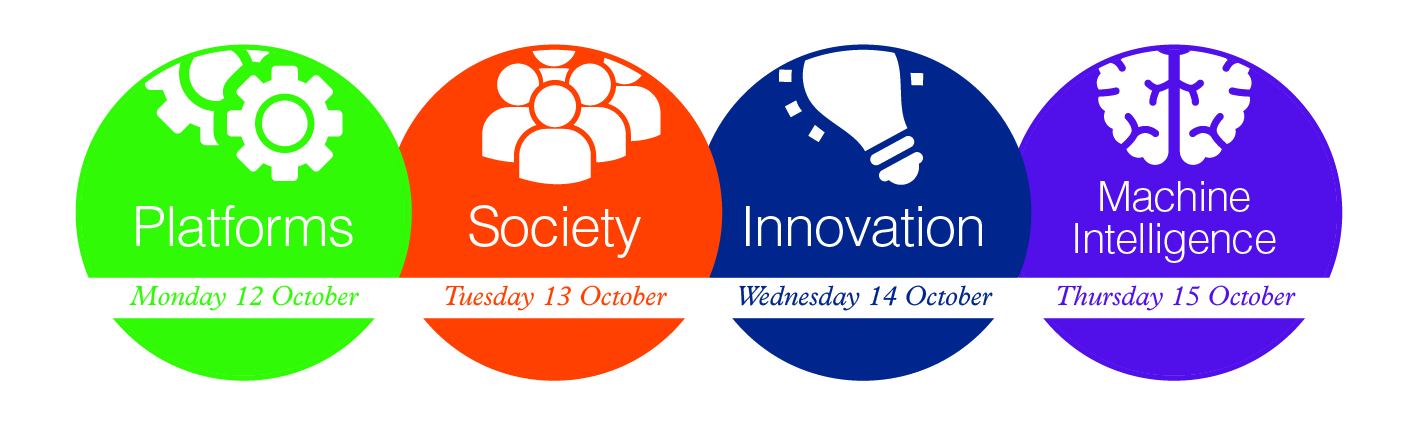
In a play of words on Kevin Kelly’s book “What Technology Wants”, we have four major themes this year, one theme per day:
Day-1: What Platforms Want
Day-2: What Society Wants
Day-3: What Innovation Wants
Day-4: What Machine Intelligence Wants
Platform economics and business models are foundational capabilities for innovation. All the Innotribe sessions on Monday have a specific focus on Platforms.
Our anchor-person for the day is Christopher Wasden, Executive Director at the Sorenson Center for Discovery & Innovation at the University of Utah. Chris will be with us the whole day, and will wrap up the findings of day-1 the following day. He is also an active speaker in some of the sessions.
We have prepared and designed six sessions for you on Monday, including our Innotribe week opening at 09:15am in the Innotribe Space.
After our Innotribe week opening, we’ll kick off at 10:15am with a fascinating “New kids on the block(chain) platform” session, moderated by Mark Buitenhek, Global Head of Transaction Services, ING, and also member of the SWIFT Board. We have invited four newcomers from the blockchain and distributed ledger space: Chain.com, Stellar.org, Standard Treasury (recently acquired by Silicon Valley Bank), and Hyperledger (recently acquired by Digital Asset Holdings). They will engage in a highly interactive debate with four financial institutions (UBS, Barclays, DBS Bank, and Bank of New York Mellon) on the relevancy of blockchain and distributed ledger technologies for the financial industry. This is the first session where we will use our magic LED wall on the Innotribe Stand, next to the main SWIFT Stand.
We’ll then move to Conference Room 2 at 11:30am for the “Future of Money” session, for several years now a standing room only session. This session will focus on disruption at large in the financial industry, looking at how the front end is influencing the back end. The underlying theme is to show the front end is fragmenting, whereas the back end is converging. We will use automated credit as the use case for this conversation. The session format promises to be exciting and entertaining: we will position some newcomers in the area of automated credit on the main (front) stage, and facilitate a lively conversation with some major financial institutions in the back-end of the room. With two moderators, camera interaction, audience voting and a mix of Millennials and Powerwomen in FinTech, this promises to be one of the highlights of Innotribe 2015.
Back then to the Innotribe Stand at 12:45pm for “Platform disruption: The business of APIs”. The key immersive learning experience we’d like to create is that the business of API’s is an ecosystem play: with financial institutions wishing to expose or consume functionality through APIs, API gateway providers, developers, applications, and customers using the functionality delivered through those applications. The igniters for this conversation come from Fidor Bank, Silicon Valley Bank, Bank of New York Mellon, and Level39. Moderated by Jurgen Ingels, Founder of Clear2Pay, and Co- Founder / managing partner of SmartFinCapital.
After the big Sibos opening plenary session, we’ll reconvene in the Innotribe Space at 15:15pm for “Killer platforms: The Chinese road to platform disruption”. This session really is about big Chinese tech companies, carving out their platform space in the financial industry (Alibaba, TenCent, Baudu, etc.) and how this will dramatically change the way we think about disruption in FinTech. Through disruptive analysis and primary market research, Kapronasia, The Disruption House and Daily Fintech will present a detailed look at the history of China’s financial industry, the models behind the extraordinary growth of technology companies as financial players and the impact of regulation and reform the most likely path for the industry going forward. Attendees will walk away with a qualitative and quantitative understanding of how China’s tech companies will affect both China and the rest of the world. We’ll use again in a big way our LED Wall to pencil on the world map the relevancy of all this on the different regions.
We will close the day with “Exploring real world disruption scenarios” (starting at 16:30pm on the Innotribe Stand, on how platform strategies help you respond to new entrants in the ever-changing payment landscape. In this session, we will share some of the key findings of a specialised 2015 Innotribe Task Force on platform thinking. We will first familiarize the audience with some of the key drivers of disruption and the “why” of innovation strategies leading into strategic options. Our facilitators have created an engaging hands-on exercise for the audience to familiarize them selves with “disruption scenarios”. We will land with a contextualization of platform strategies on our LED Wall, leveraging the findings of the previous sessions of day one of Innotribe at Sibos 2015.
In the coming days and weeks, we will familiarize you with the program for the remaining three days. We believe we have a fantastic line-up of speakers, igniters, instigators, contrarians, Millennials and Powerwomen in FinTech.
Hope you will find ample time to join us in these immersive learning experiences.
This post is part-6 of a series of ten essays on the essence of work. For an introduction and overview of previous posts, check here.
Illustration: Adrian Villar Rojas - The most beautiful of all mothers - Instanbul Water Biennale
Part-6 is about you being responsible. Responsibility is highly correlated with accountability. In the Essence of Work, you are the sole responsible.
You are responsible for:
Yourselves: your mental and physical well-being
The teams you belong to:
The organisations these teams belong to;
The ecosystems these organisations belong to;
The whole world these ecosystems belong to
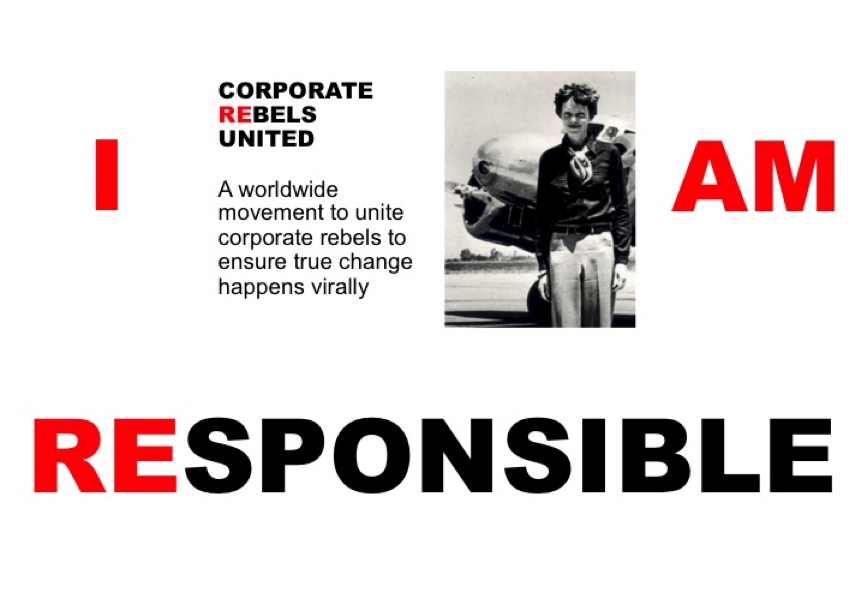
It’s about daring to step forward. It’s about daring to observe authentically. About daring expressing the unsaid. It is about daring to be great. We have covered a lot of all that in our work at Corporate Rebels United. Check out that site and join if you feel that resonates with you.
Why do I write this in the 3rd person? Make it personal. Read this as if it were you. Start the sentence with “I”.
What else am I responsible for?
I am responsible for:
Choosing my clients
And the projects that I refuse
My own failure
How I stand in life and in work
Not being dependent anymore on the judgment of others and their standards
My standards
My norms
My promises to them and myself
Cartoon – “Can’t take this anymore” - by Steve Cutts
Stop blaming others. Stop blaming the system. The problem is never out there, it is always in here. Step forward, and decide what you are going to do about it. You can’t take this anymore? Bullshit. You can take a lot more.
What happens when you take personal leadership? When you take responsibility for your health. For your needs and those of your team. Even if you live in a different needs–system. Even if you live in a different belief-system.
Your actions will be different, depending on the belief system and the needs you try to satisfy.
Here are some suggestions on how you can start your day differently. Make a checklist of it and read it when you wake-up, or stick it on the mirror where you brush your teeth every day. Make a poster out of it. Whatever.
I let go any notion of complaint – about myself and others – and see any situation where I feel uncomfortable as an opportunity to learn and change.
I leave all my fears behind and setmyself open to all possibilities that may lead to something good, positive and inspiring to create with and for others.
I let the past for what it is and focus on “being” what can be: if I want the essence of my work be more integer, then I am more integer myself. If I need more coddling in my relationship, and I start coddling myself.
I inexhaustibly focus on the positive – on what I love about my partner, my daughter, my boss, etc and each time I still say how much I like them and let all the negative washout.
I’m a Believer – I believe and follow my inner compass. If I feel that something is possible, that is probably true.
Picture: Art students discussing the approach for their study books
Art Academy BKO 2015 - Overijse - Belgium
In the Essence of Work, I am responsible from A-Z. From the initial authentic observation, the first line of your drawing, the choice of paper, the choice of pen, brush or pencil, the execution, the finishing, the sharing, the giving of the gift, and the receiving of the feedback.
In the Essence of Work, I don’t have any excuses anymore to produce half-baked bread. In the Essence of Work, I am solely responsible to show the very best of me, every day.
Exactly one month from the start of Innotribe@Sibos 2015, we issued a press release about our program. It is the kick-off of our campaign for our 7th edition of a four-day FinTech immersive learning experience.
This year, Sibos is taking place at the Sands Expo and Convention Centre, Marina Bay Sands, Singapore, from 12-15 October.
“Innotribe is not about pitching anything in particular, but rather trying to take a helicopter view of what we see at the edge of our ecosystem – things we believe have the potential to enter the mainstream in three to five years time”
As I already mentioned in our July inaugural post, our tagline this year is “the right mix”.
Each day the Innotribe programme will focus on a specific theme, throughout which both Millennials and Power Women in Fintech will play an important role participating in all sessions. In the next two weeks, we will produce a more detailed blog per theme of each day. The daily themes are as follows:
Monday – what platforms want: Platform economics and business models are foundational capabilities for innovation. Throughout the day, we will cover a wide range of topics from distributed ledger technologies, automated credit, API community strategies, the rapidly changing financial industry in China and its global impact, and real world disruption scenarios.
Tuesday – what society wants: The platform theme continues, covering topics from Millennials who are born digital and mobile, to refugees who are forced to be on the move and have no access to financial services, and financial inclusion for the 2.5 billion unbanked people. These issues will be intersected with a ‘what if’ session on re-inventing regulation for the digital era.
Wednesday – what innovation wants: The highlight of the day is the Innotribe Startup Challenge Finale. It will be preceded by a session on novel ways of progressing innovation throughput, and a highly interactive session with seven FinTech Hubs.
Thursday – what machine intelligence wants: Thursday will showcase highly immersive demonstrations of cognitive analytics (e.g. analytical strategies to help derive insights from big data and improve decision making) for a real-time world. The day will include sufficient critical voices on the impact of machine intelligence on the future of jobs and human / machine interaction.
We ensured diversity across the different thought-leaders joining us throughout the week. The notable list of 70+ experts, men, women, Millennials, investors, accelerators and contrarians who will join us throughout the week includes:
Akhtar Badshah, PhD, Chief Catalyst, Catalytic Innovators Group
Mark Buitenhek, Global Head of Transaction Services, ING
Claire Calmejane, Director of Innovation, Lloyds Banking Group
Neal Cross, Chief Innovation Officer, DBS Bank
Christine Duhaime, Founder, Digital Finance Institute
Leda Glyptis, Head of EMEA Innovation Centre, Bank of New York Mellon
Matthias Kroener, Co-Founder, Shareholder and CEO, Fidor Bank
Sopnendu Mohanty, Chief FinTech Officer, Monetary Authority of Singapore (MAS)
Dr. David Nordfors, CEO and Co-Chair, i4j (Innovation for Jobs)
Anju Patwardhan, Group Chief Innovation Officer, Standard Chartered Bank
Scarlett Sieber, Senior Vice President, Open Innovation and Ecosystem Builder, BBVA
Activities will be centred on the Innotribe Stand (A20), directly adjacent to the SWIFT stand (A50) on the Exhibition floor. This innovation hub will host a circular workshop room, where the majority of sessions will take place. Given the success of previous years, the session “The Future of Money” and the Innotribe Startup Challenge Finale will move to the biggest main conference room, Conference Room 2. We will see 12 early-stage finalists pitch and showcase their business ideas to Sibos delegates who will select this year’s winner.
All together, it’s becoming quite a big production that starts feeling more and more like a non-stop four-day late night television show. We use professional facilitators to engage the “circle” and the audience, and inject sound and light landscapes with our fantastic new 2,5 meter high LED Wall running all around the workshop space. With a big thanks to our partners Georges P. Johnson and Collective Next.
“We are not in the events business, that we are in the business of creating high quality feedback loops to enable immersive learning experiences”
The Innotribe Stand is also designed to welcome delegates in a networking area and offer them the opportunity to visit the exhibition booths of the growth-stage finalists from this year Startup Challenge and some of Innotribe’s Alumni who will be giving live product demos.
As in 2014, the event will also include a number of book signings.
And on Wednesday evening we’ll mix even further with the vibrant local FinTech scene of Singapore for a Networking Event in town. 250 invitees will have the chance to network at BASH, the new startup hub in Singapore, for a joint event organised by Innotribe and the following Singapore’s FinTech communities.
This FinTech Meet-up is kindly sponsored by Wells Fargo and Standard Chartered Bank. Register for the FinTech Meet-Up via this link. Innotribe Sibos attendees will get an invitation card on-site.
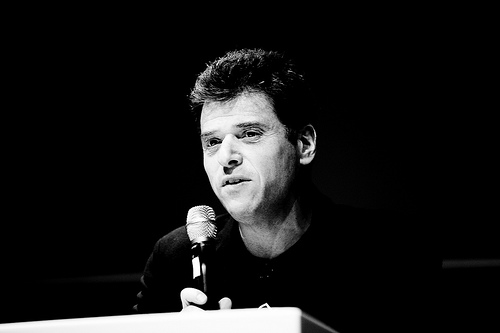
The Innotribe closing keynote this year will come from Andrew Keen, one of the world’s best-known and controversial commentators on the digital revolution.
He is the author of three books: Cult of the Amateur, Digital Vertigo and his current international hit The Internet Is Not The Answer which the London Sunday Times acclaimed as a “powerful, frightening read” and the Washington Post called “an enormously useful primer for those of us concerned that online life isn’t as shiny as our digital avatars would like us to believe”.
After Andrew Keen, you are all invited to join the Sibos Closing Keynote in the plenary room.
Innotribe is open to all Sibos delegates willing to drive change and embrace innovation for the benefit of the financial industry, by understanding its trends, opportunities, and challenges: business analysts, product managers, strategists, marketing/branding/innovation managers, transaction bankers, securities managers, corporates, standards experts, payment professionals, investment managers, regulators, policy makers.
If you can’t get enough of these and want more than 5 articles, I have created an extended version of Petervan’s Delicacies in REVUE. If you want more than 5 links, you can subscribe here: https://www.getrevue.co/profile/petervan
According to the company, the mechanical chef, which incorporates 20 motors, 24 joints and 129 sensors, learns how to cook by watching a plain old human chef, whose movements are turned into commands that drive the robot hands. Moley hopes to eventually create a product that can do everything from preparing the ingredients to cleaning up the kitchen, and include a built-in refrigerator and dishwasher. The idea is to support the robot with thousands of app-like recipes, and it would allow owners to share their special recipes online.
And that “they” – the robot tribes – don’t get it. As we have seen already in our series’ post about belief systems, “They don’t get it” is a strong indicator of living in a different belief system.
Peter Goossens - Hof Van Cleve
Let’s contrast this with the craftsmanship of Peter Goossens and his team, who are running Hof Van Cleve, one of the best restaurants in the world. Best like in world-class: a 3-star Michelin and much more, bringing them into the top-25 of the world.
“In order to cook at the highest level every day and guarantee an exceptional experience for our guests, it is important that the interior of our restaurant exudes the same traditional spirit and identity that our kitchen does. Our preparations are, after all, in my opinion, the result of a great deal of effort at all levels. Indeed, we handle the best local products that the gardeners, farmers, growers, fishermen, hunters and cheese refiners can provide. Out of respect for their passionate work and thanks to their fantastic ingredients, we are able to provide our guests with a unique culinary experience. This makes cooking a true craft.”
You can take this wonderful definition of the Essence of Work, and apply it to your own domain. Note the emphasis on guests, tradition, respect, experience, and craft.
Cooking is much more than executing a recipe.
The essence of work is much more
than building to spec
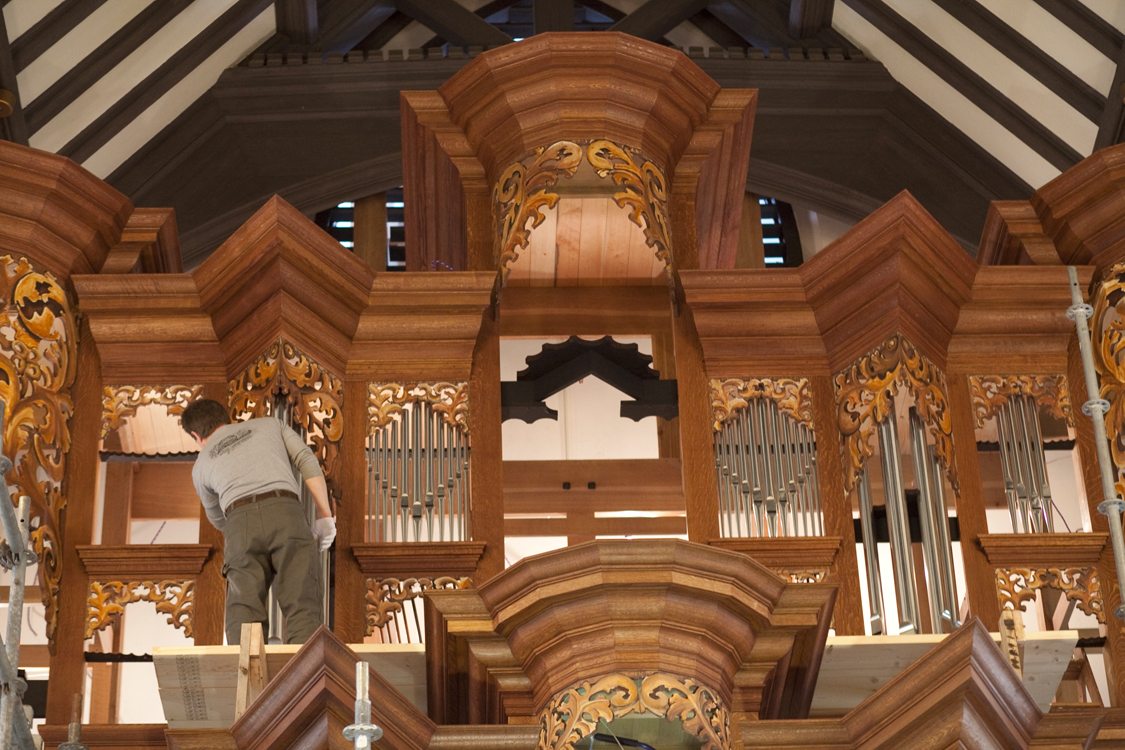
In “The world beyond your head… “, there is a great chapter about a small family-run business that is specialized in restoring and building from scratch old baroque organs.
A New Organ for Anabel Taylor Chapel
Like Peter Goossens, these organ builders don’t content themselves with restoring or building to spec. What they aim for is a dramatically superior musical experience by the musician who will play the organ.
Tradition is about building on the shoulders of giants, a bit of a simplistic statement. The author goes at length to “craft” deep into the meaning of tradition, to internalize tradition, and to pass it on in your work and onto next generations.
Tradition
is not seen as non-authentic,
but a source for energized work.
“Unlike a space shuttle, the pipe organ is a species that comes to us through cultural traditions, and serves aesthetic purposes that would be unintelligible without reference to those traditions.”
“the historical inheritance of a long tradition of organ making seems not to burden these craftspeople, but rather to energize their efforts in innovation.”
What is driving these people to strive for unconditional excellence? Wouldn’t it be easier to componentize and modularize the different elements of work and cast them in a repeatable process, so we can be more efficient and produce more at less cost? Yes, that would be possible, but I think some of us don’t get excited anymore by the efficiency game and we are aiming for a higher quality and awareness of quality of our work and the experience it delivers to our customers, or should I call them “guests”?
“There were also electronic organs available. But there’s a part of the population that will only take this.
“It’s a totally handcrafted, handmade object, and some people are willing to pay an enormous premium for it. They realize the performance musically is superior. And that’s the only justification.”
“We’re weird: we’re trying to make a living, for one thing, and make this whole thing practical, so we have to make the parts in good order and build to the contract price, which is an insane thing to do for what we’re producing, and we have to make something that’s going to perform technically or our customers are going to be coming back and getting on us. At the same time the ethos of the instrument has to be authentic—that’s why people are paying big money for us to do the work. So we’re jammed in the cracks, trying to make a realistic business out of this and at the same time be as authentic as we can. The thread of what we’re doing is totally authentic.”
The author leads us into two criteria that are essential for the Essence of Work:
Historical coherence: The work is enlivened by a sense of going further on a trajectory they have inherited.
Musicality: Timeless standards of engineering, specifically as they contribute to musicality.
So, we are getting into something called
“The timeless demands of musicality.”
Wow! This is getting pretty close to Christopher Alexander’s “Timeless way of building” and his passion for “pattern languages”, much more profound ways of communicating, integrating, and passing on of patterns of tradition and craftsmanship.
How would you define “musicality” in your work, even if your work has nothing to do with organs or music?
I would now like to mix-in two other criteria for our Essence of Work:
Constraints: Constraints have to do a lot with craftsmanship, tradition, and musicality.
Authentic observation: perceiving as a baby does, liberated from conventionality
Constraints. Good work is usually performed within the boundaries of timeless tradition and qualities. You have to respect the scheme, the pitch, tone, the rhythm and other musical traditions to create the right “musical experience”. Very well trained musicians, who have superior mastery of their instruments, and respect the tradition canvas of conventions, usually perform a good jazz jam.
The Essence of Work is about producing a good jazz jam. Grounded and building upon the conventions and traditions of the thousand of years before us.
The other “constraint” is the audience: the public, the commissioner, the customer, the guest. Where the context of the host and the guest meet, where host and guest get into a dance, not a fight. Host and guest: much better than the transactional supplier and buyer, or producer and consumer.
Architecture is not at all about letting your imagination go. You must confront your imagination again and again with the request and desire of your customer
Then there is “authentic observation”.
In my art classes last year, I learned to observe. To draw what I see and not to draw what I think. This has helped me a lot to get the basics more or less right: arms and legs in the right proportion vis-à-viz the body, that sort of basics. I only got a feel for the basics. Much more work to before i am getting any good at it, let’s not even think yet about mastery or even mystery. It’s still something very tactical, mechanical for me. So much more to learn.
This week-end the 2015-2016 art class started.
Picture of my art class – season 2015-2016
I will try painting this year. I never did painting, never worked with color. I am completely novice here, and open and receptive to anything that comes my way. No clue what will happen. No plan in mind.
It was thus a happenstance when my art teacher showed this as the main guiding principle for this academy year:
We were asked to “observe”, to look through a frame and let ourselves surprise by the shapes in the frame. Just see. But it is more than non-judgmental observation. It’s more than the facts and the spec.
An historian looks at the world adopting an non-judgmental stance towards the facts.
A preservationist adopts a deferential stance towards the world
What we are talking about in the Essence of Work is the “Artist’s Way” of looking at the world.
“This is what an artist does. She must defamiliarize herself with her everyday perceptions, which depend on—are conditioned by—her past experiences, including the experience of inhabiting a world that is thoroughly conventional. She has to try to perceive as a baby does, or as the empiricist supposes we all do, but this is a subtle and extraordinary accomplishment. There is nothing infantile about good art, but it does show us the world as viewed by a consciousness that has, for a spell, liberated itself from conventionality” (from the World beyond your head…)
Craftsmanship, Historical Coherence, Musicality, Authentic Observation, and Creating The Dance between host and guest are critical components of the Essence of Work.
If you can’t get enough of these and want more than 5 articles, I have created an extended version of Petervan’s Delicacies in REVUE. If you want more than 5 links, you can subscribe here: https://www.getrevue.co/profile/petervan


















 Petervan Studios