Is it really worth daring to be great?

In September this year, I was attending the BIF-6 Summit, in Providence, RI.

Why only report about it now ? Because they finally released the videos of the stories that were told at this year’s edition of BIF.

Next year’s edition BIF-7 dates will be 21-22 Sep 2011, unfortunately the same week as Sibos 2011 in Toronto. Wonder if we can not do something together with BIF that week at Sibos, if only sharing some of the 2011 speakers? I will give a call to Saul Kaplan. Look at the confirmed dream-list of already confirmed speakers: Danah Boyd, Lisa Gansky, John Hagel, Dan Pink, etc. Wow ! What a start, and still almost a year to go!

From this year’s edition, I suggest you take some time to go through my personal top-5:

Absolute topper, world-class, inspiring, moving, energizing, whatever talk came from Keith Yamashita.

Is it really worth daring to be great?

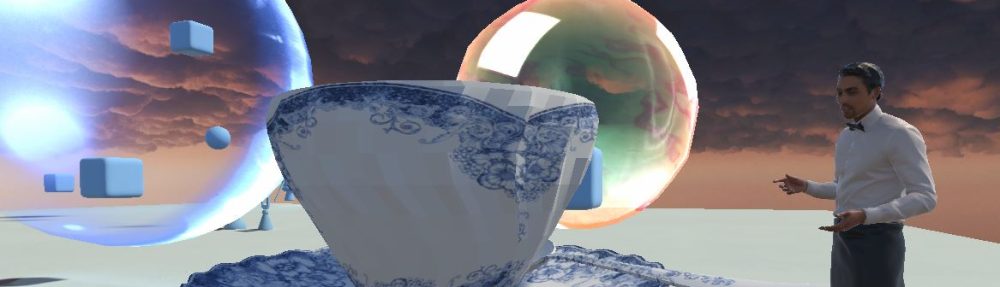
SY Partners chairman Keith Yamashita dares us all in this moving video story crafted as a metaphor from the Charles and Ray Eames video “Powers of Ten.” It’s a remarkable tale that reminds us that the future is here for us to create and it starts one collaborative duo at a time.

It’s worth every of it’s 25 minutes, and it’s a fantastic story about how “twins” in teams are the fuel of great teams.

  • It’s about doing great things like landing the Eagle in the moon, and “turning a bunch of folks blue” back home
  • It’s about having the house full of diagrams
  • It’s about when you start to believe that anything is possible
  • It’s about kids being born with greatness
  • It’s about being fully aware and fully alive
  • Trusting so deeply you can create together remarkable things
  • Duo-ships are about great invitations
  • Going actively after the status quo
  • About systems thinking + creativity
  • Building different type of organizations
  • That there is a better optimum than just the first choice
  • About having deep conversations on how to get smarter
  • To tackle things at a societal level
  • About finite/infinite resource and infinite/no possibility
  • About “then” (pre-crash), and “tomorrow”: finite resource + infinite possibility


About saying

“I trust you implicitly

to do a brilliant job,

and come back

with what  you learned”


About

Ending the tyranny

of false trade-offs


Who is Keith Yamashita ? All the quoted text below comes straight from the BIF site, but I have added my usual color and typographic emphasis:


When Keith Yamashita looks at the world, he sees complexity—a beautiful and rich one, if we can visualize our place within it.

As chairman of SYPartners , a consultancy that has worked with leaders at IBM, Apple, Facebook, Target, Blackstone, Target Financial Services, Bloomberg, Starbucks and The Coca-Cola Company, Yamashita is a master at helping people define themselves against the backdrop of a profoundly shifting business landscape. The task requires tremendous empathy, he says, a singular understanding of what clients need and want.

“The biggest fallacy of business is that it’s only rational,” he says. “All business is personal and all business is human.” Yamashita is intensely curious about what makes people tick. Who are they? What are their deep aspirations? What do they need to be successful? What’s holding them back?


Ambition

Love

Fear

The human component of consulting goes deep. “We hope for people what they wish for themselves,” Yamashita says. “I’d like to think that when we show up in a room, we authentically care about the people in that room and that they sense that.”

Still, it is not enough to simply identify a dream, Yamashita tells his clients. The only way to stand out is to be fully aware of how you fit into a wider spectrum, to figure out what unique part you play, given the circumstances around you.

“Because we live in a world that is more interconnected than it’s ever been, we are particularly susceptible to the dynamics at play,” Yamashita says. “People feel overwhelmed—it’s a natural outcome of the world we live in. There are more systems problems that require creativity than there are creative people in the world.”

To minimize the potential fallout from system shifts and to maximize the positive impact we can have on the world, Yamashita urges a return to authenticity. He says it’s a question of unlearning bad habits and relearning what comes naturally:

I do believe

that people enter this world

with a certain amount of

greatness

So many people,

through the pressures

of society

or the way we’re educated,

unlearn that greatness.

They fritter it away.

They start limiting themselves.

It’s really about

reclaiming that greatness

people learning about

how to be just themselves,

fully alive and aware.”


The positive exponential effect of all this self-awareness arises when individuals begin working together. Yamashita encourages his clients to build “powerful duo relationships” that require one of the trickiest human emotions: trust. “The duo is the smallest atomic unit where trust is built,” he points out. “If there’s only two people, you can’t shovel blame.”

With competent, self-aware individuals who relate to others on the basis of that trust, an organization has the potential to expand by the power of ten, just as in the Eames film. Zooming out, Yamashita sees a universe where companies design their own destinies by connecting purposefully to a wider array of players in order to work on a tougher set of problems.

Other remarkable stories came from:

  • John Hagel, with an even more personal version of his Sibos2010 talk on “The Power of Pull” and the role of passion in high-performance organizations,
  • Carmen Medina, on how one can innovate in a conservative castle like the CIA,
  • Jigar Shah, talking about scale in our Global Warming initiatives, and why everybody buying a Prius is really a drop in the ocean.
  • Kim Scheinberg (no video available yet), who also was interviewed in the FutureofMoney video. She’s an ex-gambler and now a new wave angel investor,
  • Gerard van Grinsven, (no video available yet), a former Ritz-Carlton executive, who became CEO of a hospital where it is all about health-care and not sick-care.

All these speakers indeed confirm, inspire and motivate it is really worth daring to be great.

That it is worth everyday to re-question yourself, and there to re-invent yourself to keep the greatness-bar high, very high.


And greatness is

not good enough anymore.


A program is not good enough anymore. What we need is an agenda.

“For a better world” for example.


Idealistic? Maybe.


Ambitious? Sure.


It is so easy to copy-cat last year’s success formula. But it does not satisfy myself. I believe you – readers, followers, innotribers – you expect more. You want us to surprise you, year after year.

I hope these principles will also guide us when articulating our Innotribe 2011 initiatives.
Innotribe @ Sibos 2010 : Meet the Jury of Pitch Your Lab !

As you know by now, Thursday 28 October 2010 is our Innotribe Grand Finale day where everything comes together!

Print

Make sure to be in the Interactive Workspace from 9-10:30am on Thursday 28 Oct 2010 when we run the “Pitch your Lab” session .

This session is the culminating point of the all the work that will have happened in the Innotribe Labs throughout the Sibos week.

  • We will open with a 20 min update and reflections on the Long Now Lab by Paul Saffo, who will also be the keynote speaker in the Sibos closing plenary later that day.
  • After that, we’ll have a “Pitch your Lab” competition. The best ideas from the cloud, mobile, and smart data labs will be pitched to a jury who will select the winner of this year’s SWIFT Innovation Awards.

Listen to Kosta Peric who explains what this "Pitch your Lab" session is all about. It is your chance to win the SWIFT 2010 Innovation Award !


Here are the members of our extraordinary jury, also referred as our Buyer’s Panel:

  • Paul Saffo, Professor, Stanford University
  • Jo Van de Velde, Managing Director, Head of Product Management, Euroclear SA/NV
  • Wilco Dado, Head of Global Payments, Royal Bank of Scotland
  • Gary Greenwald, Chief Innovation Officer, Global Transaction Services, Citi
  • Lázaro Campos, CEO, SWIFT
  • Ian Johnston, Chief Executive, Asia Pacific, SWIFT
  • Gottfried Leibbrandt, Head of Marketing, SWIFT
  • Alain Raes, Chief Executive EMEA, SWIFT
  • Kosta Peric, Head of Innovation, SWIFT

The jury will be assisted and advised by a VC (Venture Capitalist) Advisor’s Panel. These VC’s were part of the Innotribe Labs during the week. Here are the members of the VC Advisor’s Panel:

  • Oren Michels, CEO, Mashery (Cloud Lab)
  • Sean Park, Managing Director & Founder, Anthemis Group (Cloud Lab)
  • Eghosa D. Omoigui, Founder & Managing Partner, EchoVC (Smart Data Lab)
  • Nova Spivack, CEO, Lucid Ventures (Smart Data Lab)
  • Jennifer L. Schenker, Founder and Editor-in-Chief, Informilo (Mobile Lab)
  • Matthaus Krzykowski, Mobile Expert, VentureBeat (Mobile Lab)

Each team will have 5 minutes to pitch their Lab-idea to the jury. After each pitch, we will ask the advice of the VC’s.

Then there will be a short Q&A with the judges, and a voice-of-the-public using our latest “high-tech” applause meter.

The winner of this “Pitch your Lab” competition will be announced during the Sibos Closing Plenary at 16:00 later that day.

We run this competition for the second time this year. Last year this session was referred to as “the best session of Sibos 2009”. We have done everything to match last year’s success. We have invested heavily in a solid design of the labs, and have armed the teams with fantastic facilitators from The Value Web, Innotribe Leaders from the business and the technology eco-systems, and matter expert VC’s.

In the true spirit of less push and more pull, we encourage you to engage in a true dialogue with the Innotribe team and the Pitch your Lab finalists. We look forward to seeing you in Amsterdam.

The Innotribe team

www.sibos2010.com
www.innotribe.com
www.swiftcommunity.net/innotribe
innotribe@swift.com
Twitter: http://twitter.com/innotribe
Hash tags: #innotribe and #sibos

Digital Identity Tour Part-2: Digital Identity Tuner 7.0

This blog post is Part-2 of a series that started as the ongoing thinking after our Digital Identity Tour in June 2010. In Part-1, I developed the idea of the Unpolished Diamond.

Today, I will entertain you on the concept of a Digital Identity Tuner, which in its own is also a further evolution of the Identity Rights System 3.0 post of March 2010.

It all started coming together when – during the tour – we visited PayPal.

This visit was at the end of the tour. We were welcomed by Eve Maler, Distinguished Engineer, Identity Services at PayPal, and Andrew Nash, Senior Director Identity Services at PayPal

Eve MalerAndrew Nash

These folks of PayPal basically told us to forget what we had seen earlier in the week. These are probably some of the smartest identity folks around, so you pay attention.

Indeed, I was amazed how much further ahead they were, not only in their conceptual thinking, but also in the pace at which they define and rapidly test new protocol standards.

The eye-opener for me was that there is no business in identity, but there is some significant potential when flipping the discussion to sharing and managing of user data.


It is not that much about identity,

but more about digital footprint.


Happens that a couple of weeks later I read Tony Fish’s book My Digital Footprint, where the author explains razor sharp that there is a difference between digital identity and digital footprint.

At about the same time, I saw appearing on the internet all sorts of semantically tagged enabled viewers, like this one from Recorded Future.


Recorded Future lets you search and find for events, based on the WHAT, the WHO/WHERE and the WHEN.


What if we could do this

for a person’s digital footprint ?


Here is where my Digital Identity Tuner comes into the picture:

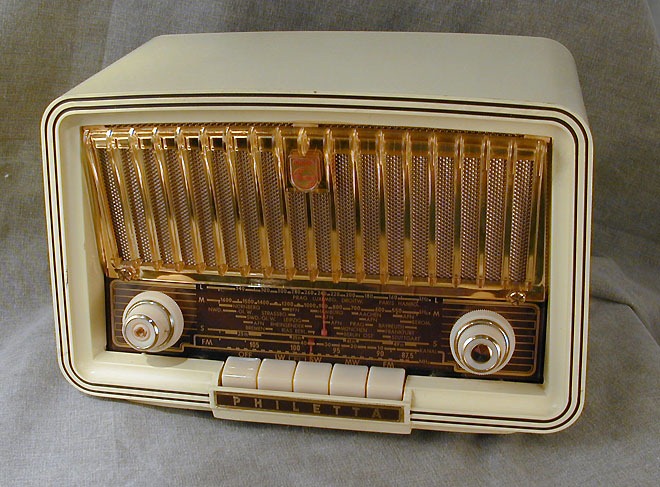
phil0501

Remember those old radios ? You could “tune” into a radio channel, and there was a big button, and if you turned that button an arrow would move over a “map” of pre-defined radio stations.

What if we could do the same on your digital footprint ?

Petervan Digital Persona AUG 2010

The spectrum above is my “Digital Persona” as generated recently by MIT’s Digital Personas project. Personas shows you how the internet sees you.

Every color in the spectrum is about a certain dimension of your digital footprint: books you read, education, political preferences, musical preferences, professional attributes, etc, etc…

What if you could make that spectrum “clickable” ? Not only via a browser, but also via API’s. What if you could zoom in/out that spectrum or certain aspects of it ?

So far, we have “tuned” in two dimensions:

  • On the horizontal axis, hovering over the different color dimensions
  • On the “depth” axis, zooming in/out to get more or less detail

Let me add the third dimension of Time.

m01_16895561

I could tune into the past, but I could also tune into the future, as my digital footprint does not only contain past behavior, but also contains real-time data (such as devices that I may wear to beam my heartbeat-data to the Microsoft or Google or Wallgreens or whoevers Healthvault when running a couple of miles on my cloud enabled Nike shoes.

PolarS625Ximage

It also contains data about my future, as I keep my calendar in Google Calendar, for example. Or the event for which I bought tickets. Or even on-line streaming events for which I subscribed.


image


UPDATE-2: or check out this TED Video, on the Quantified Self, with Gary Wolf’s intriguing new pastime: using mobile apps and always-on gadgets to track and analyze your body, mood, diet, spending — just about everything in daily life you can measure — in gloriously geeky detail.

image

So, the third dimension is time.


What if I would have a sort of

“Remote Control”


that could let me navigate through my digital footprint on those three dimensions. It’s like steering a helicopter via remote control.


Or maybe more dimensions. You would end-up with something that navigates you through a fractal or so…

Of course, we don’t live alone on this planet.


We are part of tribes

of swarms

with leaders and followers


I love the metaphor of “SWARM”


Imagine that we have a similar digital tuner for navigating the swarm. For seeing links between the WHO’s in the swarm.

UPDATE: just a couple of hours after my initial posting of this blog entry, I came across this great post by Greg on Digital Tonto about “The Story of Networks”. At the end he refers to a great TED talk by Nicholas Christakis “How social networks predict epidemics” 


In essence, it shows the “swarm” of communities, leaders and followers and their relationships. And how germs, ideas, memes, etc spread in a community based on the same S-curves as innovations happen. Nicholas A. Christakis, MD, PhD, MPH, is an internist and social scientist at Harvard University who conducts research on social factors that affect health, health care, and longevity.

So far, we looked at “navigating”. But the system would also allow me to define and manage who gets access to what parts of my digital footprint in what specific contexts or constraints. Not only “access”, but also “usage”.

For all that to happen, we need to fundamentally rethink how we deal with digital footprint.


We have to navigate away from identity systems that mimic our brick-and-mortar world, that are still based on the metaphor of identity cards, or passports, or electronic equivalents based on PKI systems and certificates.


No, we almost need a new semantic tagging language. Not to “tag” pages or servers, but to tag my digital footprint.

And not only “tag” it but allocate and manage “usage” rights to it. And I should be the owner of those data, whether they sit on my computer, in Facebook, or distributed open source models like Diaspora.


image


So that I end up with a collection of different “where’s” where data about me is kept. It may lead to some new form of DNS, but then a DNS of people. Not pages or servers.

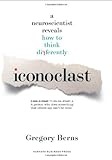
Maybe all this is a bit of futuristic/iconoclastic thinking. Maybe. But when reading the book “Iconoclast: A Neuroscientist Reveals How to Think Differently” by Dr. George Berns, I came across the following two sentences and took them a little bit out of … context.

But they are so relevant to our identity context:

There are two paths in spectrum: one for identity/categorization and the other for digital footprint / Trail / history/future (time dimension, recording, in the future,…)

The high road is concerned with extracting where objects are located and throws away the elements related to their identity. The low road, on the other hand, is concerned with identification and categorization, and less so with objects’ spatial locations

As Tony Fish so well articulated in his book: we have to separate identity an footprint.

The discussion

about internet identity

has moved from identity to footprint

how we are going to manage that

with a privacy ethic

that is adapted

to our hyper-connected world


Privacy is not dead. It needs to be redefined.

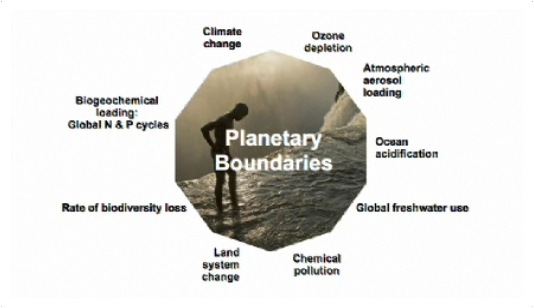
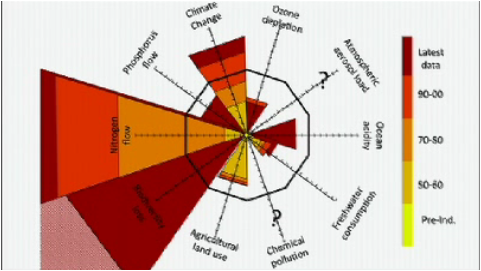
To put things in perspective: Planetary Boundaries

Sine parole. Watch this TED video on the resilience of our planet.

image


The nine planetary boundaries are:

image

Let the environment guide our development

image

The Value of Your Social Graph

image

If you have the time, please watch this presentation" How not to be seen” by futurist Mark Pesce. I mentioned it already yesterday in my post “The DJ with the Brainwave Helmet”, but now I took the time to watch the +/- 1 hour presentation.


Do it


It profoundly explains what’s going on in our ever more connected world.

It makes so clear that your social graph is your most important possession”

No need to further quote, as the full transcript is here.

This guy is super-smart. Follow him on twitter and on his blogs.

Social Graph is also about Sibos 2009 winning project “eMe”, but then on steroids.

Completely revised. Definitely in the vision of Mark Pesce.

With privacy and user control seen in a distributed internet world. NOT one single digital vault, or even several digital vaults. Whether they are “owned” and “controlled” by Governments, Banks, FaceBooks, Googles and alike.

Completely revising the “business model”. Where the value flows to the users, the owners of their social graph. Not to banks. Not to governments. Not to some controlling party in the middle.

The is no “where”, no “middle” on the internet. That’s where we got eMe wrong.

No, we have to revisit the whole concept of eMe along the open Plexus lines that Marc Pesce is describing in his “How not to be seen” presentation.

I will talk to Peter Hinssen, when he’s back from down under. So that we have something to say about eMe at Innotribe at Sibos 2010 in Amsterdam.

Oh, and if you like this sort of stuff, here is another presentation “Dense and Thick” by Mark Pesce at Webstock2010.  As a matter of fact, this presentation is even better, as Mark does a fabulous job in giving us a perspective of the current state of the web, how we got here and where this might lead us. Not just by throwing boring statistical data at us, but with deep insights and with a speaker’s passion that is difficult to match.

Without really mentioning (ok, only once), Mark Pesce is describing a vision of the semantic web that is not push-oriented like Tim Berners Lee, but truly “pulling” us – human beings – in this super-exciting world where meaning becomes explicit and exploitable and can be manipulated (hopefully in the positive sense of the word).

The summary of his talk goes like this:

It may be hard to believe, but we’re only just at the very beginnings of the web revolution. In the first fifteen years (1994-2009), the human world of culture and civilization was sucked into the black hole of cyberspace. Now the real world is poised to follow. Augmented Reality (AR) shows that when we peer through a portal, and look upon the world, it’s almost embarrassingly empty of our annotations. That data is there – the world is the database of itself – but it can’t be brought immediately to hand with a search or a gesture. That’s the next place we will go: we will build a virtual body for the real world, a dense database of everything, both natural and artificial. In fifteen years’ time, we’ll wonder how we got along without it.

This means that the clock has been reset. Everything we thought we knew about how the Web works, what the Web does for us, and who controls the Web is up for grabs, once again. We will see bright shining stars – and sudden, brief supernovas – just as we did in the Web’s early years. The opportunities are breathtaking, the innovations will be flying fast and thick. All of this is now within our grasp.

This guy is a real discovery for me, and hopefully to you as well.

I will ping Mark to check whether he is interested in the eMe update and hopefully lively ensuing debate at Innotribe at Sibos2010 in October.

Might be a challenge, as his intellect humbles me deeply, and maybe he is just not interested in such a mundane conference.

The DJ with the Brainwave Helmet

Found this TED 2010 video via Kurt Vega’s tweets.

From the TED site: “Tan Le’s astonishing new computer interface reads its user’s brainwaves, making it possible to control virtual objects, and even physical electronics, with mere thoughts (and a little concentration). She demos the headset, and talks about its far-reaching applications.”

Out-of-the-box support for facial expressions and emotional experiences, with some sensitivity adjustments available for personalization.

The demo is focusing  on the “cognitive suite”: the ability to move virtual objects with your mind.

And it just costs only a few hundred dollars. Like an iPAD, but it’s a hPAH “head-PAD”

Start mixing this with the ongoing discussions on personal digital identity. As you will notice, the demo starts with making a personal profile for this headset owner. And tuning to a neutral signal, a signal where you’re doing nothing particular, your are relaxed, hanging-out: a but like my holidays at home where I basically don’t do anything particular other than hanging around.

It’s interesting to see that the test is about “pulling” an object forward instead of “pushing”. I may be too influenced by John Hagel’s latest book “The Power of Pull” 😉

The cool stuff starts when the helmet man starts visualizing something that does not exist in real life: making something disappear.

Applications are obvious in virtual reality games, domotica systems, all sort of gesture and thought based interactions, control an electric wheel-chair. In banking it would be nice is I could raise the balance on my account just by thinking about it.

What I do NOT like about it is that the “system” has some built-in leveling system. It makes me think of Jaron Renier’s fantastic rant / manifesto that I mentioned in my previous blog “you have to be somebody before you can share yourself”

Start mixing this up with some of the cool ideas like Mark Pesce’s Plexus which is a quite novel way of looking and using your social graph in a sort of

event driven pub-sub system

where you decide as a user

what you listen to and

who and what you want to share

with

Sometimes, I think of myself as a disc-jockey (which I was as a matter of fact for more than 15 years starting in the late 70’ies), and I very much like Ethan Zuckerberg’s description of a DJ in this also great TED 2010 video on our distorted world-views.

His talk is basically about

getting you out of your normal orbit, of stepping out of your usual “flock” of people you normally interact with (both on- and off-line).

Around min 15:30, he describes a DJ as a guide:

A skilled human curator, who knows what material is available to her, who is able to listen to the audience, and who is able to make a selection and push people forward in one fashion or another

Of course, I could now make jokes on Faithless “God is a DJ”, and/or refer to one of my previous posts called “We are as gods and might as well get good at it”, but I won’t do that.

Instead, I’d like to share with you the feeling of giving pleasure to my audience.

It’s something I feel while writing these blogs, and it’s a very similar feeling as being a DJ in front of an audience and pushing people forward.

Its has a same sort of stage-fright

when starting a gig,

and the same sort of excitement

when you see your crowd getting

excited

As a DJ, I was doing some quite big gigs for 3,000 people or so, and my following community is not that big yet. But the feeling is the same, and everyday there are some more folks following my tweets. Some more reacting to my blog. Some more getting inspired by what’s on these pages.

So, I just continue doing that, and hope to inspire you to dream and execute your dreams.

You have to be somebody before you can share yourself

It’s holiday time, and I have reduced significantly my blogging, reading RSS feeds, tweeting, mailing, etc

Time for hanging around, some biking, some good food, and… a good book. If you want to follow what I am reading, check-out my page on Goodreads.

For me, a good book is one that leaves you puzzled, that makes you think,


that re-calibrates your perspective,


that is a pleasant read, that has depth.

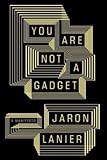
“You are not a gadget” by Jaron Larnier is such a book. I discovered it thanks to a tweet of my friend Paul, who reacted to one of my enthusiastic Singularity tweets. The title of this blog post “You have to be somebody before you can share yourself” is very early in the book, and captures its essence.

Jaron Larnier was listed on The 2010 TIME 100 in the Thinkers category. His Wikipedia entry is here.

It’s a great read if you are in your over-enthusiasm mode about  computationalism, the noosphere, the Singularity, web 2.0, the long tail, the hive mind, the global brain, crowdsourcing, collective intelligence and all the other buzzwords and trends and all the rest. It gives you some solid pushback and sound criticism.

I am not going to do a book review, but my experience of the book was like there were 3 stories interwoven:

  • How technology is limiting our potential and who we are on-line. This of course resonated a lot with my work on Digital Identity.
  • Our communication limitations. He has a great chapter on how cephalopods have the great ability to “morph” and how one could use “visual” communication and another dimension of communication, other than language. And how humans in virtual reality environments quickly adapt to a body with tentacles. Intriguing !
  • The notion of “neoteny”: humans are born as fetuses in air, and our brain is being developed during childhood. Lanier compares this to a newborn horse that can stand on its own and already possesses almost all the skills of an adult horse. Humans – in modern civilizations – have an artificial, protected space called “the classroom, the extended womb”.

Neoteny opens a window to the world before our brains can be developed under the sole influence of instinct.

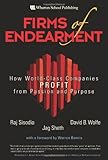
A similar concept related to neoteny – “generativity” – comes back in another great read Firms of Endearment: How World-class Companies Profit from Passion and Purpose.


This is a book about

the pragmatic role of

love in business


It’s about the epochal change into the Age of Transcendence. The dictionary defines transcendence as a "state of excelling or surpassing or going beyond usual limits."


The second event is the aging of the population. For the first time in history, people 40 and older are the adult majority. This is driving deep systemic changes in the moral foundations of culture. Higher levels of psychological maturity mean greater influence on society of what Erik Erikson called "generativity"—the disposition of older people to help incoming generations prepare for their time of stewardship of the common good

The Firms of Endearment book in essence talks about a new form of capitalism that is not only focused on profit and shareholders’ value, but on value creation for all parties in a company’s stakeholders’ ecosystem.

Joran also has an opinion on capitalism when he says:

Visiting the offices of financial cloud engines (like high-tech hedge funds) feels like visiting the Googleplex. There are software engineers all around, but few of the sorts of topical experts and analysts who usually populate investment houses. These pioneers have brought capitalism into a new phase, and I don’t think it’s working… capitalism in a digital future will require a general acceptance of a social contract

He is also calling for “so-called AI techniques to create formal versions of certain complicated or innovative contracts that define financial instruments” and that setting standards for these could be facilitated by “a cooperative international body” that

would probably have specific requirements for the formal representation, but any individual application making use of it could be created by a government, a nongovernmental organization, an individual, a school, or a for-profit company. The formal transaction-representation format would be nonproprietary, but there would be a huge market for proprietary tools that make it useful. These tools would quickly become part of the standard practice of finance

What a great potential for my employer SWIFT ! We are indeed a full-blown cooperative international organization with our roots in financial services.

In essence, Jaron Laniers’ manifesto and rant is about “The deep meaning of personhood is being reduced by illusions of bits”.

That should make us reflect deeply on how we want to engage as human beings in an on-line world, how we define digital identity in the relative and the absolute, and be very vigilant that we don’t loose our potential in our technology enthusiasm.

For me, the prospect of an entirely different notion of communication is more thrilling than a construction like the Singularity. Any gadget, even a big one like the Singularity, gets boring after a while. But a deepening of meaning is the most intense potential kind of adventure available to us

Finally, I also found some consolation to deal with my 3/4 Life Crisis. The following quote always helps:

If you are young and childless, you can run around in a van to gigs, and you can promote those gigs online. You will make barely any money, but you can crash on couches and dine with fans you meet through the web. This is a good era for that kind of musical adventure. If I were in my twenties I would be doing it. But it is a youthiness career. Very few people can raise kids with that lifestyle. It’s treacherous in the long run, as youth fades.

My blog is my “adult” way of doing gigs online.

Milo: gesture based interfaces 2.0

image


Have a look at this stunning gesture based interface with character Milo. First of all, it is more than gesture based. Milo also reacts to voice intonation, movements, etc

It is difficult to assess how much of this is a word-by-word script, or how much real interaction is going on here.

The most stunning effects are:

  • The women trying to capture goggles that thrown by Milo
  • The women moving the water with her hands
  • The women handing over a piece of paper, that gets scanned and taken over by Milo

It gives a sense where we are heading. Imagine this on your iPAD. My conservative guess is this will be real within the next 5 years.

This is very similar to what Oblong is doing with gesture based interfaces. See my previous blog on Oblong here. John Underkoffler indeed also said 5 years before this hits any PC.

Oh yes, in case I forget, Oblong will be at Innotribe at Sibos 2010 in the Smart Data track.

His Purple Highness and Innovation

There has been a lot of coverage on the net about Prince’s statement “The Internet is Dead” and the responses “Prince is dead”. For me, Prince is never dead, as he left me with memories to the best concert I have ever seen during his Purple Rain tour, indeed quite some time ago ;-/

The master of funk – aka His Purple Highness – just has a new CD “20TEN”, and it seems to be a good one, and it is btw given away today for free with Newspapers in Europe.

I found this review of 20TEN in the Belgian Newspaper De Standaard. It’s in Dutch, but if you turn on Google translation, it’s quite readable in English.

Prince

I blog about it for the following (auto-translated) paragraphs:

We give Prince creative freedom and we understand that he does not want to live in the past. The most pressing question that loomed when we 20Ten in the CD-changer was explained: the album will be as good as Sign O The Times or Parade? Equally exciting as 1999 or as viciously as Controversy?

Well … (Drum roll) … No. Not really. More importantly, we find that bad? Because let’s be honest: you really expect the 52-year-old Prince a plate opinions so urgent, as controversial and as innovative as his work from the 1980s?

Maybe we should ask whether it is the responsibility of someone like Prince to remain the major role of innovator to take on. That role he has not already played out with fervor when it was needed? Charts when artists do not dare to take risks, but only when blacks were allowed to play funk and disco, when explicit sex or gay and bisexuality have been stashed away in the bright pop music?

The question – or statement if you want – was already raised by Guillaume Van der Stighelen during an interview with business TV Channel Kanaal-Z some years ago at the occasion of the launch of his book “Heldenmerk” (the brand as a hero) somewhere end 2008, begin 2009.

He said something along the lines that creativity (and innovation) should be left to the young generation, and that he – as a 50+ year old – should give room to the young generation where the real creativity sits, and that his role should be one of mentorship.

I am 50+, so that quite resonated with me. But I think he is right. Since then, I try to make others win, younger people than me, who still have to proof something.

It is actually fun to disappear backstage, and enjoy the show being delivered by others, and knowing you were a substantial part of getting it where it is right now.

That’s a different – and in my view “better” – type of satisfaction, fulfillment and motivation.

We are as gods and might as well get good at it

Check out Raw Dawson’s blog post of today with superb video

TURNING INTO GODS – ‘Concept Teaser’ from jason silva on Vimeo.

Indeed today it is entirely appropriate for us to be thinking in terms of human transformation, and the power we have at our disposal. The cycle has swung back, and once again there is the promise that we have what it takes to change who we are… for the better. Whether human nature will allow those changes to be fully positive we have yet to discover. But that promise is – once again – part of the zeitgeist.