
My post “The End of Leadership” was one of the most read posts on my blog ever. But i owe the spark and the essence for this post to Rune Kvist Olsen, who keeps fine-tuning the concept by sending regular comments to that post. Here is one of these comments
As individual human beings we must learn to practise our free will in taking and making personal choices, and practise responsibility towards our self and each other as trustworthy, dignified, reliable and accountable humans.

The post also triggers comments in Google+ communities like this one by Leland LeCuyer:
Leader-ship puts the emphasis on the person, in particular upon the role that person is playing. Thus the title and the office give an individual certain powers, prerogatives, and duties. Certain other individuals are subordinate to the leader and are expected to execute what the leader commands.
Leading-ship emphasizes the action that is taken. It requires initiative mixed with talent, skill, and commitment. Instead of issuing orders to be carried out, it draws upon the ability of the person who is leading to inspire, teach, and motivate others to join her or him in acting. Most important of all, it doesn’t require an office or a title, just talent, skill and a commitment to act.
The differences are night and day. Carpe diem!
For others to join her or him in acting. That ties in wonderful with my updated “about” where i suggest:
“I love connecting with the experts,
the musicians, and artists of all kinds,
to bring out the very best in them,
to love to work & live with them
to show personal intent and integrity,
so that others want to join our projects too.”
But nothing better than the master himself 😉 Just a couple of days ago, Rune sent me his February update, and asked me to share it with my community and followers. It’s wonderful and deeply enlightening. Highlights are by your humble servant. Enjoy!
+++ Start Rune’s February 2012 update +++
1. Understanding the conceptualization of “Leadingship”
The ultimate core in the vision of “Leadingship” is the principle of self-determination at work. Subsequent that the individual human being is self-deciding within a defined area and field of work based on her or his individual competence. This principle should be the natural and self-evident choice in designing organizations regarding managing and leading working processes. “Leadingship” is a substantial humanistic principle by design and is stating the value of “Leadingship for Everyone”.
The contracting principle to “Leadingship” is that someone is leading and deciding over others and someone is led and decided over by others. The superior authority in subjugating people to subordination is designed by position and rank (contrary to competence). The design principle of “Leadership” authorizing the superior person in charge, is depriving the persons below their innate sense of being personal responsible of one owns contribution and performance of work. The relationship between superior people and subordinate people is legitimating the design of someone above who is worthy trust and responsibility and others below that is unworthy the dignity as equals and peers in the workplace. “Leadership” is definitive an anti-humanistic principle by design and is stating the value of “Leadership for Someone”.
In sum the natural design principle at work is to grant competent people their human right of self-decision. Depriving people their right of self-determination, is to devaluate their competence as authorities within their personal field of expertise. And that choice is both unnatural and anti-human.
2. Understanding the incomprehensibility and unintelligibility of the unknown matter of reality, through our adapted perceptions of beliefs and values.
To become able of understanding and learning anything that comes to us as a matter of something unknown, strange, different and perhaps controversial in challenging our ingrained beliefs and truths, we are dependent of an ability and a will force to think the unthinkable in understanding the unbelievable substance of the unknown matter at hand.
Unless our capacity of transgression beyond our force and power of mind exist, we will surely be stuck with our old beliefs and truths surrounded by ignorance, prejudice and convictions – as protective shields against challenges perceived as threats to our known measures of reality.
The journey of mind from Leadership to Leadingship, is an example of such a provocative, controversial and challenging test for our ability and will to move beyond the unthinkable of the common reality of theory and practice in organizations to day.
3. The pedagogical core of Leadingship
- As individual human beings we must learn to become independent responsible human entities interacting with each other on mutual and equal ground.
- As individual human beings we must learn to practice our free will in taking and making personal choices, and practice responsibility towards our self and each other as trustworthy, dignified, reliable and accountable humans.
- As individual human beings we must learn to convert our learning’s to personal competence by practicing our independence and responsibility through the adaption and application of our learning’s in real life.
- Being independent and responsible human beings at work. When we have become truly independent and responsible individual human beings at work by taking care of our self and each other, we have gained the personal ability to practice Leadingship in the process of leading our self together with others based on our competence and enabled by mutual trust and personal freedom.
4. Fear based relationship powered by Leadership versus trust based relationship powered by Leadingship
A relationship based on fear (of rejection, exclusion, punishment etc.) and managed by control, command and domination over other people in the organization, is an expression of a deep and intrinsic personal need, urge and desire of being in charge as a superior person ranked above others as subordinates ranked below. By being in charge the person has gained the superiority and the enforcing power over others. The nature of Leadership is to lead others by deciding over them and by subjugating others to be led through obedience and loyalty. The notion of being subjected to others mercy, is in it self a source of the threatening emergency of fear.
A relationship based on trust (of appreciation, recognition, acknowledgement etc) and managed by personal freedom, mutual respect and social responsibility, is an innate expression of a devoted and compassionate engagement between people who are regarding themselves as equal, peers and partners in either working alone or together. The social mutuality is practiced through the respect and appreciation of each person as a worthy, competent and valuable contributor in the integration and coordination of work. The nature of Leadingship is to lead one self together with others in taking personal responsibility for decisions within one owns field of work based on the shared trust in performing independence and responsible actions.
+++ End Rune’s February 2012 update +++
It should make us think deeply what we do with our organizations and the people working in it, for it, or even better from it. The “organization” is not anymore a objective in itself, but rather a tool, a platform for moving the needle of progress in the world. As mentioned before in this blog, I strongly believe that “Organizations are becoming Movements for Greatness”.
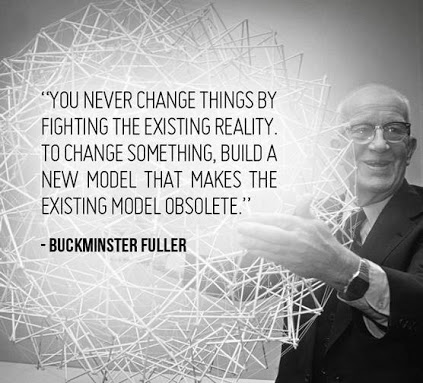
The old model has failed and is obsolete.
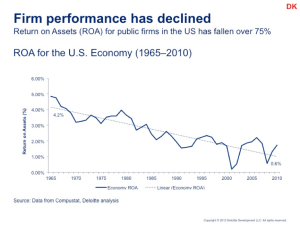
But we keep on training our young potentials based on the old-style model. Like the overall financial system has failed and is obsolete by only taking value out of the system but never giving back. The old model showcases perseverance in repeating the same greed errors over and over again. The old model fails to see the deeper ecological values beyond transactional relations based on raw power and money. The old model has failed because the power of leaders is based on hierarchical position, title and entitlement.
The old model has failed, and a new generation of leaders is standing up, protesting against the end-less and clueless forms of (re)organizations where people are still considered by “leaders” as pieces on a chessboard that can be moved as resources that are owned in a slavery type of relation, a power by leaders exercised on “subordinates”. These organizations are becoming toxic environments, where people are getting mentally and even physically sick, because they are deprived of genuine sharing and leadingship oxygen.

These new empowered employees are making a big plea for a more humanized workplace and call for actionable movements for greatness and inspiration. For a place where they are no longer seen as cogs in a machine, doing mindless repetitive work, soon to be taken over by machines
Ross Dawson and John Hagel recently elaborated in “Our future depends on the humanization of work“:
However perhaps the most important perspective is that work must be humanized.
As Hagel eloquently described, the problems we face have largely arisen because of the dehumanization of work. As we have built processes and structures that have made people into cogs in machines, it has indeed made them eminently replaceable.
In fact one of the great promises of the increased mechanization of work is that in a way it it forces us to be more human.
We are continually being pushed into the territory that distinguishes us from machines: emotion, relationships, synthesis, abstraction, beauty, art, meaning, and more.
Part of this is in designing jobs that draw on our uniquely human skills, and for all of us to bring our humanity to bear in our work.
Yet the broader frame is an economic structure that has made work inhuman and readily replaced by machines. We need to fundamentally change the nature of organizations and how we work together to create value. The systems must be humanized in order to allow the work to be humanized.
That is our challenge, our task, indeed our imperative if we wish our collective future to be happy and prosperous. Let us work hard to humanize work.
There is a huge role for independent and inter-dependent leadingship grounded employees to virally change the system from deep within, sticking out their neck for this good cause and leading from the edge.

I look forward hearing your comments. Have an inspiring day!




































 Petervan Studios