Social Currency: My Personal Identity

Recently came across this great site by Dan Robles.

image

One of his latest posts Will Social Capitalism Replace Market Capitalism? (Parts 1&2) included great video material on how social currency can change industries.

image

His forecasting example is the airline industry. And it’s even not so far fetched. What if you could “Time-Share” seats in private jets ?

It’s easy to think how this social currency model would apply to any other business and radically innovate by creative destruction.

It’s a very novel way to show how a number of trends come together:

  • The influence of gaming theories and practices in new business models
  • The value and tradability of my personal information
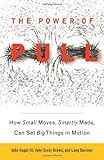
  • The power shift from Push to Pull that is so well described in John Hagel’s latest book “The Power of Pull” (I repeat it, in my opinion THE business book of 2010)

By the way, we recently had a face to face meeting with John exploring the possibility to have him with us at Innotribe at Sibos in Amsterdam, 25-29 October 2010.

image

We have asked John to consider a talk in our Innotribe Opening Keynotes, and to be part of our special Innotribe Lab on The long now in Financial Services.

To come back to the subject of the power of identity, I’d like to spend a bit more time on the tradability of my personal information.

The essence of the story is that some parts of my personal data have value and can be traded under the user’s control to get a better service.

It opens questions to:

  • How tradable is my personal identity ?
  • How tradable is my digital footprint ?
  • How tradable are my on and off-line relationships ?

I have been immersed in “personal digital identity” the last couple of weeks. Recently i attended the EEMA’s The European e-Identity Management Conference in London.

The week after i was the “tour guide” for a "Digital Identity Tour” we organized with some colleagues on the West-Coast”. I am preparing a set of blog posts on these conferences and 1-1 conversations with thought leaders in e-Identity space.

In this blog i will just simplify my summary thoughts with the statement that e-identity is much, much more that a certificate on a smart-card, or for sake of the argument any other form factor.

We are witnessing a power-shift:

In stead of the government (or the bank, or any other service offering entity) creating digital identities to give more value to the citizen, we see the emergence of  identities created by the user to give greater value to the government (or the bank, or any other service offering entity)

We have to carefully think this through, as identity – and relations between and with persons – is really a complex animal.

Have a look at this fantastic 210+ slides presentation “The Real Life Social Network V2” by a Google analyst @Padday aka Paul Adams, working for the UX team at Google. The essence of his story is that there is nothing such as a generic “Friends”. You have all sorts of friends and different depths in relations. Whether those relations are between people-people or people-companies.

It’s a great story, and all slides are annotated. As a teaser, here are his 3 summarizing slides:

image

image

image

It’s interesting how the words identity, privacy, care, relationships, collaboration, strong/week ties, Klout, etc are now all coming together. As a matter of fact, these are all attributes that make us truly human.

As a sherry on today’s cake, i’d like to link you once more to Venassa Miemis site “Emergent by Design” and the great recent blog post on Guidelines for Group Collaboration and Emergence, that is building on both her previous work on “Strenghts Based Society”, “”Skills for a 21st century connected world”, and her work on the open source collaborative tool “Junto”.


image

As we are preparing Innotribe at Sibos, i had the pleasure to talk to Venassa during a Skype session. We are discussing her participation at several levels of our Innotribe Program.

It is great to see how these novel ideas become “totally” relevant when you start thinking about their value for a “community” like SWIFT and an innitiative like Innotribe where “Enabling Collaborative Innovation” is our “Leifmotto”.

From the conversation with Venassa, i can tell you she “totally” got it, and she is preparing some material and levels of interactivity for Sibos that you even never dreamed of.

We are now 16 weeks from Sibos. The idea is to begin hosting a junto every week, invite different thinkers to discuss the future of money, record all conversations and develop a presentation based on them, but also make the videos available for the attendees of the conference to be able to watch whenever they want to see what those conversations were like.

If we think about the Long Now, will there still be currency as we know it? Or will social currency become central to our trade? And what impact does that have on banks ? Should be have personal data stores where we deposit our digital footprint and open personal accounts and do payments for services from there?

Feel free to jump in.

Creative juices everywhere

These days, when i kick-off an innovation workshop, i ask the participants “tell me about your hobbies/interests when you were 16-18 years old”.

The answers and the resulting effect are surprising.

  • First, it opens up people in a way they are not used to. The come out of their “i-am-at-work” comfort zone. Some people that you expect to be “emotional zombies”, suddenly have sparkles in their eyes and show leadership throughout the workshop. Having genuine interest in people unleashes nuclear creative energy.
  • Second, it is amazing how many creative juices you gave in your average workshop. People tell me about their dancing, painting, music instruments, fashion design, about crazy little (and big) things they did in life

I don’t know where it comes from, that attitude of “withholding” the best of yourself. Something that is for sure, is that once you tap into this creative well, the energy and engagement and idea generation increase by a factor 10.

Another example: a colleague from our German office came to see me on what our innovation team could mean for one of his customers. In stead of showing him a whitepaper or a slide show, i decided to show him some of our past productions. Again those sparkling eyes.

With hindsight, it is interesting to see how we almost unconsciously added some creative art/visual/audio layer to most of the things we do. You can call them “innovation productions”.

My German colleague was clearly surprised on the quality productions we do with relatively small means. “I have to let this sink” he said. “It’s all a bit overwhelming at this moment, but i am trying to grasp it all and how i can transfer the same excitement to my customer when going back to Frankfurt this evening”.

The point i am trying to make is that there are creative juices everywhere, and it only takes a little scratching or motivation to get the best out of people.

Here is an example of getting out the best in people. You remember by blog post on the Medici Effect ? Apparently it inspired my colleague Mela to some really video collage.


It’s beautiful. It touched me emotionally. Watch it. It’s only 5 min. You can use it as an inspiring start of your day as well. Or imagine starting a workshop after having played this video. The energy in the room is high. It’s a soft energy that makes you feel comfortable to share.

This video is used in our company to launch the next wave of internal innovation challenges.

Innovation Challenges are small competitions where we incentivize our creative people at all levels and locations in the organization to come up with ideas around a certain theme. The projects are presented to a judge panel that includes the CEO. The winner gets implemented. So the price is not money but personal fulfillment.

The Challenges of this wave are all run under the banner of “Create the Medici Effect”: bring together people of different expertise and with different creative and/or engineering skills, and let the power of intersections play.

It’s a powerful model.

You can expect this video at many of our events and workshops. Also at Innotribe @ Sibos this year in Amsterdam, where one of our labs will have a specific focus to amplifying the Medici Effect.

Nobody asked Mela to do this video. But she followed her own compass and did not wait to be called. Mela should not only start to blog. She should start her own “Mela Productions” company.

“Inspire other people to dream” seems to have worked. Creative juices are everywhere. Imagine if you could unleash this energy in a systemic way in your company and in your eco-system. Maybe we have to do a creative lab at Sibos where we ask teams to make a similar video on the topic Generation-Y and Banking and have it ready by the end of the conference for the closing plenary ? Any thoughts ?

I have to run now, but will polish up this post later in my usual way, but i wanted to get this off my chest and into the world as soon as possible.

Purpose Maximizers and Candies

What is it that motivates people to come to work, be happy and do a great job ?

I am a bit bored these days with all sort of “manifestos” and all sorts of “Power of Now”, “Power of Push”, Power of Why”, “Power of…”

What about candies ?

If you company is looking into people and culture, here are 3 candies that could give you the answer to the question of motivation and happy people.


Candy #1

Start treating people like people

might be a good start

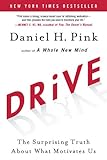
And find some good motivators. Here is a nice 10 min video scribe of Dan Pink’s presentation of his book “Drive” that is all about what REALLY motivates people ?


It’s really worth spending the 10 min video to understand why incentives that work in production environments don’t work in creative environments, and even have counterproductive effects.

It is the same as applying Lean efficiency programs that were designed for production environments, and applying them blindly to white collar creative and innovation environments. Nobody in his right mind would do this of course.

In essence motivators for creative workers are fundamentally different than classic bonus based motivators.


Candy #2


Create a culture of true personal leadership


My colleague Mela found the following interesting post on the Change This site.

image

I found this site last week, and if you follow my tweets @petervan you already knew about this site 😉

image

There is an interesting part about the difference between Systems Thinking,  the linear engineering type of approach – where we treat people as individual components whose behaviors need to be analyzed and fixed – also called “Tamed Problems “, and “Wicked Problems”- where we have to look at the CONTEXT where the people live in.

Later, the author writes about “emergent properties” in nature, and then uses this as a metaphor for the emergent properties in the relationship leader – person being led.

  • In dictatorships, the emergent property of people being led is fear and lack of freedom.
  • When the individual is in the position to choose it’s leader, then the emergent property of people being led is freedom.

Many other things emerge when people can vote: innovation, wealth, power, competitive advantage, a free media, the attraction of talent and so on.

The important point here is that real freedom brings real success. Shared systems matter more than shared culture.

The most interesting part is in the section about emerging properties in the workplace and where he notes that in the dictatorship metaphor, the emergent property of the boss is power.

Dr. Harvey A. Hornstein, a retired professor at Columbia University and the author of the book “Brutal Bosses and their Prey”. Dr. Hornstein found that while bosses used power in expected ways like putting down threatening subordinates or making them scapegoats, their main reason for abusing power was far more monstrous. Managers abused their subordinates for the fun of it, for the sheer pleasure of exercising power

Wow ! Nobody would want to work for a boss like this. But many people don’t have the choice, especially in the current economic climate where a having a job is priority #1 for most people. Frequent readers of this post know that i claim you always have a choice, but maybe i am reasoning from a luxury position, and the folks getting fired as part of all sorts of efficiency programs think very differently. I see so many good people go, and not finding something decent on the marketplace. Some recruiters told me they have piles of high-potential CV’s on their desk, and they expect a massive exodus once the economy picks up again.

Dr. Hornstein’s “scapegoating” reminds me of my Leading by Bing training, where in the “Who am i in a group" section, we learned the hard way that also a group goes through maturation stages. One important stage is when a group gets into scapegoating. Every group does in its lifecycle. The maturation comes when somebody in the group stands up – takes his personal leadership – and says we had enough scapegoating.

So Candy #2 is really about creating a culture of true personal leadership, not the leadership of a boss commanding his staff, but the personal leadership as the personal courage and to stand up, stick out your neck, daring to say the things as they are, and not making the story “better” as it moves up the corporate hierarchy. In essence caused by the phenomenon of Groupthink.

Groupthink is a phenomenon in which a group of people — however smart — ends up making poor decisions by disregarding facts, just to maintain consensus

To prevent groupthink, James Surowiecki says in his book that the best way for a group to be smart is for each person to think and act independently.


Every company executive

and at least every level-1

should take

a deep leading by being training

to discover the best and the purpose in

themselves

and making their people and companies better


Talking about “better”, candy #3 is about “betterness” for the company as a whole


Candy #3


Create a culture of true corporate leadership


It all boils down to having companies that make our world better. Umair Hague did once again a fantastic post this week on why Betterness is good for you and your company.


Umair Haque


He’s telling us to do betterness instead of business, pursue awesomeness instead of innovation — and maximize good, instead of quarterly profits.

The tectonic shift to social investing going mainstream is going to amplify the effects above as it gathers strength. It will ensure that every marginal bit of good creates even more shareholder value — and every marginal bit of bad destroys even more. It’s nothing less than the retuning of the global economic engine itself.

And he concludes:

Good, the evidence suggests, is the very opposite of Utopian idealism. The real utopia? That was the one economists, bankers, and titans of industry promised: in a world of perfect markets and infinite leverage, companies who blindly maximized profit would lead everyone, ineluctably, to unstoppable prosperity. It didn’t work out that way. Just ask Wall Street, Big Food, Big Media, Detroit, Greece, Spain, Dubai, or anyone from the American homeowner to the Chinese migrant worker. Today’s real idealism is this: pretending that business as usual is good enough for companies, countries, the world, or the future. It isn’t.

It’s time to get real: good is as sharp as a razor, as hard as a hammer blow. That’s what decades of research suggest. That’s why companies as different as Google, Wal-Mart, Pepsi, Lego, Starbucks, Nestle, Apple, Patagonia, Timberland, GE, Tata, are all, in their own ways, taking steps small and large towards it — and why customers, governments, and investors are joining hands with them on the way.

Welcome to 21st century business

It’s a movement to do meaningful stuff


Will be interesting to read Umair Hague’s upcoming book.

Maybe we should invite him to Sibos. The program has just been made available here. And our impressive Innotribe @ Sibos 2010 program can be found here.

image

As you will notice, the Innotribe sessions are coming from many sources of our company and industry. Indeed, since our first Innotribe @ Sibos in 2009 we have come a long way: from an event-in-the-event mainly driven by technology into something that is now fully part of the overall Sibos program and with contributions from many many different business and even social areas.

I have seen there is session on Doing good is good for Business, with following description:

Corporate Social Responsibility (CSR) is much more than just embracing the ‘green’ agenda. How can smart CSR strategies contribute directly or indirectly on how we manage our planet’s resources and – at the same time – have a direct and positive impact on your bottom-line? In this pragmatic session, with the help of a leading academic and representatives from financial institutions who have already benefitted from CSR, we’ll examine how ‘doing good’ is equally good for business.

All this is very relevant for Innovation. What motivates people to keep coming up with new ideas during their free time ?

It will be very interesting to see how unions will react when they discover there are other things in life than paid hours for people to feel motivated, engaged and innovative. I am preparing another post on the relation between innovation and unions. Stay tuned

Becoming Better Builders

This is about an amazing idea of a 23-year young big thinker who created a fantastic community on-line and almost by accident stumbled upon a new platform for on-line communication that could change our world.

I stumbled upon this absolutely great video of a speech given by Vanessa Miemis in NYC during the Social Business Edge Conference on 19 April 2010.

image

I am a big fan of Mrs. Miemis and fervent reader of her blog “Emergent by Design”.

image

It’s the first time I see and hear her speak. It’s adds a different dimension. It’s a different type of engagement, and that different type of engagement is exactly what “Junto” is a about: a conversational platform between “real” people (see later on this blog).

She has roughly 4 supporting slides, and talks from the heart, with only a small sheet of paper with probably a couple of keywords and key statements. That’s how really super keynoters do their thing.

In this video she talks in an almost shy way about what drives her, and makes one after the other bold statement about the way this society does (not) work anymore.

The story is in essence about

the old game and the new game


As my friend, coach and mentor Andre Pelgrims used to say:


our (mental) software has evolved, but our hardware did not (our value systems, our hierarchies, our corporate models)


Vanessa’s speech in in 3 chapters:

  • We are shaped by our tools
  • We learn by modeling behavior
  • We align around a shared vision

I was mainly blown away by the section on Modeling behavior, some elements in the vision alignment, and definitely by her description of Junto.


Modeling behavior


Some real deep thinking here:


This is how children learn. It makes interactions transparent

Encourage a culture of collaboration, there is a certain type of behavior that we are modeling, and one that is based on a value system that is predominantly different than the one that exists in society and business today.

And its difficult to expect a paradigm shift when the current model rewards selfishness, and hording of information and exploitative behavior.

This virtual space is actually like some kind of training ground to build trust and to have a different behavior where the outcome is more than the zero-sum (in the existing model)

We align around a shared vision


There is this new way. For the greater good. A new global conversation and collaboration platform. that would sit on top of the web and that would accelerate the rate of taking an idea to action. And we are calling it JUNTO.

Enter Junto’s vision: a 3D space, where it’s live-streaming video, with video streams of us human beings.


It’s actually you,

who you really are


On top of that a profile system, automatically generated by the conversations you are having. It’s a different kind of transparency on who your really are. On top of this this reputation system that would be build into these trust networks, and virtual currencies, … and it goes on.

It’s like 5 people having a public conversation about a topic that interests them, and 500 people sitting in the back-channel. It’s all open source. They don’t want to monetize the tool.


They co-create value

by what they do with each other


It’s sounds a lot like our “enabling collaborative innovation” theme of Innotribe. It sounds a lot like the “advancing critical dialogue” tag-line of Sibos.

I truly believe that this tool could bee the basis from which a new global economy and a new global society can emerge from.

Wouldn’t it be cool to address this a a theme at Sibos. In front of 8,000 bankers ? Wouldn’t it be cool to experiment with Junto – yes, live i mean – during Innotribe at Sibos ? We plan other cool remote interactive stuff anyway this year. Just have to keep you curious here, as we have not yet fully worked out the concept, but if we pull it off, it will be really cool. Sort of first off.

Her final idea to consider:

Technology is the tool, but not the builder. We are the builders.


I challenge you and ask how we get better use to tools to connect and to inspire, so that collectively we can become better builders.

I need to discuss with the Sibos team, but I’d like to invite Vanessa to our Innotribe @ Sibos 2010 in Amsterdam to be part of the keynotes on “the big tectonic shifts” and in our Gen-Y stream.

Innotribe your event: CPA and SWIFT

Print

Innovation is a key theme in SWIFT’s discussions with the community on how they can collectively address both complex and basic challenges. Via the launch of the Innotribe Program, SWIFT has embarked on a new way of promoting innovation amongst the financial industry. Innotribe is an initiative that leverages the collective intelligence of the SWIFT community to find new ideas, projects, and the infrastructure to let them grow.

“Innotribe your event” is a bit similar to “Pimp your car”, but then for events.

Through a soft collaboration with the Innotribe team, you can add some additional dynamics to your event. It’s part of our renewed SWIFT Innovation mission. Kosta Peric (Head of Innovation at SWIFT – i.e. my boss) wrote about this mission here and it goes like this:

“Build the Skills , Tools , Processes, Metrics , Values , Network , required to support collaborative innovation and transform SWIFT in an agile company,
able to succeed in a changing environment.”

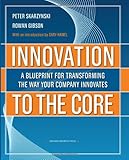
This mission is btw inspired by the book “Innovation to the Core”, that i already mentioned several times on this blog.

The sentence in that book that got us inspired was:

In our experience, it can take an organization three to five years to build the kinds of skills, tools, management processes, metrics, values, and IT systems that are required to support ongoing, across-the-board innovation.

As you have noticed, we added the network dimension to it. I’d like to focus today a bit on that dimension of our mission, and more particularly what we do with events.

Of course we have our own SWIFT events, such as SOFA, SIBOS, the regional events and the business fora worldwide. In each of these events we try to put some innovation spices. For the complete list of SWIFT event, check out the SWIFT website events section.

But what is new this year is that we very selectively partner with third-party events. A good example is our event partnership with CPA (Canadian Payments Association) where we work together on CPA’s Biennial Conference. The conference is tagged as the 2010 Payments Panorama and CPA is inviting you to join industry leaders from June 16 to 18 in Vancouver as we explore the latest trends, technology and processes in the payments industry.

The year’s conference theme – Leadership, Change and Vision – forms the basis for plenary discussions and breakout sessions on mobile and person to person (P2P) payments, evolution and innovation in merchant retail payments, the need for international standards, who is driving technology, and crime and payments. Full program here.

image

SWIFT is excited to launch the Innotribe Progam to the Canadian Community during a half-day session on Wednesday, 16 June2010. SWIFT’s Innotribe Leaders, in partnership with the Canadian Payments Association (CPA), will immerse you in a workshop that is inventive, interactive and collaborative. We will demonstrate how collaborative innovation works in practice.

The workshop will help you promote your ideas, be it a new service, product or a small internal project. You will learn how to grow it, nurture it, develop it, promote it, get others excited about it and sell it – to your colleagues, to the internal stakeholders, to customers, to venture capitalists.

In a workshop, called “The Art of Pitching,” orchestrated by experienced facilitators and innovation coaches, you will be able to develop an idea from a rough sketch to a selling pitch. The ideas will be around two hot trends:

· Cloud computing  and

· Collaborative Risk/Fraud and Security services

The workshop will conclude with a contest where a panel of judges will select a winning pitch. The winner will be showcased together with champions of Innotribe contests from around the world at this year’s Innotribe at Sibos 2010 Amsterdam, running from 25-29 Oct 2010.

What’s important is that this event is one of Innotribe events building up towards Sibos 2010.

  • The output of the Innotribe workshops of SOFA in NYC on 21-22 April 2010 will be the input of the CPA Innotribe workshop. Detailed agenda of SOFA here. You will notice that “The New Normal” and “Innovation” are prominent themes on this event as well.

image

  • We had a very good similar experience lately in our event collaboration with the EPCA Conference (presentations here) in Paris, France on 22-23 March 2010 and the related Florin Awards. In collaboration with Innotribe, they organized the “Best Product Pitch” Award which was won by the folks of AcceptEmail. We will showcase them as well during Innotribe @ Sibos 2010.

image

image


We are still looking forward for an Innotribe collaboration with an Financial Services APAC organized event, ideally before summer.

Obviously, we are open to any other suggestion that helps creating a win-win situation: improving your event with Innotribe “spices” and confirming our credibility and innovative organization and catalyst in the financial services industry.

Don’t hesitate to contact me or one of the Innotribe team members to find our more.

Identity Rights System 3.0

Next week, SWIFT Innotribe will be hosting the European eID Interoperability Conference 2010.

It’s a great agenda with presentations by European experts on eID, and also some of the smartest SWIFT folks on identity. For example, we’ll have Jacques Hagelstein, our Chief Architect, and we’ll also run an Innotribe Lab on day-2. Check out and download the PDF agenda here.

Hosting this sort of events is an interesting win-win model, where we at SWIFT can share our great meeting and auditorium facilities and at the same time dove-tail with important topics that are relevant in our industry.

Acting like this beyond our traditional boundaries nicely fits The Medici Effect that i described in my previous post, although i am not sure we at SWIFT apply this principle always with full consciousness and intent. It does not matter, the key thing is that it just happens, and i feel confident that on this intersection of worlds some new ideas will emerge naturally.

Thinking through how we deal with company and personal identities in an on-line world, and being able to deliver this on a world-wide, predictable, resilient and secure way is one of the key value propositions of SWIFT in the financial services eco-system. SWIFT has the advantage – it’s a deliberate choice – that we are a community based venture, and a lot of services we offer adhere to standards and rulebooks that have been subscribed to by our membership. Even then, delivering this is not a sinecure.

But in this post, i’d like to take you on a journey beyond SWIFT’s ecosystem and edges, and look at what is happening in terms of identity and privacy outside our safe community walls.

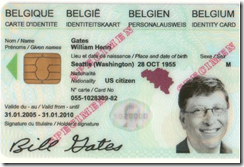
My first contacts with privacy related matters date back to my Microsoft period, where I was quite involved in the Belgian eID project.
image

Microsoft saw Belgium as a good test ground to see what happens when a country rolls-out in a mandatory way 8 million electronic identity cards to its citizens, what applications get developed, and what needed to be done at the level of Windows, Office, MSN Chat, etc to support an identity card issued by a third party, in this case a government. At that time, I experienced the Belgian Privacy Commission more as a pain in the neck, limiting us in doing ‘”real cool things” with on-line identity. But they surely planted in my head the first seeds of some “culture” of privacy. It’s only now that i start to fully appreciate the importance of privacy, and the role of Privacy commissions and alike.

Now the Belgian eID cards are rolled out, we even look at a second and third generation, but the number of applications that are really leveraging the eID on a day-to-day basis are disappointingly low.

Already when the first eID cards got rolled out, it appeared to me that the card was already a dated old-fashioned way of dealing with identities. It does not make a difference whether we talk here about a smart-card, a USB token, or whatever other hardware device.

The point i am trying to make is that

the model of an identity “card”

does not match anymore

the online realities of today

The “card” is an artifact of the physical world, and we try – in vain – to squeeze all sort of on-line concepts into an off-line model.

The next occasion where I felt something was wrong with our model, was when i saw the demo of Intelius Date Checker. See also my post on “privacy is dead” for more details on this application. I was shocked that nobody in the audience made any reflection on the huge privacy issues at stake here. It must have been American culture ?

Then a couple of months ago, there was the famous debate launched by Mark Zuckerberg of Facebook, where he basically suggested to change the paradigm with 180°: in stead of considering "private” as the default setting of personal data and letting the user decide what data he releases to whom, he suggested “public” as the default setting, forcing to “un-public” data the user did not want to make public and keep private. See also ReadWriteWeb coverage here. Unfortunately for Zuckerberg, there was around the same period an article about a Facebook employee revealing how much privacy data they have access to by for example super-admin passwords and alike.

And even ex-colleague Paul Shetler took the pain to scream out his frustration on why public as a default really does not make sense.

It all makes me feel very uncomfortable how much i have to believe from Mark Zucherberg or Eric Schmidt when they are behaving like the white-knights of privacy.

It looks to me that

privacy is out-of-control


and that they would like to officialise the dead of privacy by declaring “public” as the new norm. It looks to me as privacy has become


too complex to fix it


Via Facebook, Google Buzz, Twitter, etc, etc, there is already too much data out there. Fixing this taking into account regional and country laws and regulations must be a real nightmare for the Facebooks and alike.

It’s an interesting debate what should be the default: privacy or publicy. And Stowe Boyd rightly adds the dimension of “sociality”. Because you release some info about yourself consciously (when participating on social media, your really want people to know about yourself and your preferences) or passively (by accepting blindly the privacy notices on Facebook and alike. Some related info on sociality here.

This aspect of passive privacy is really well explained by David Birch. He recently wrote a whitepaper: “who do you want to be today ?” and “Kissing Phones”. Check-out here. And just a couple of weeks ago, David wrote this fantastic post about Moving to Privacy 3.0

And the big boys are feeling the pressure. A couple of years ago the audience at the Gartner IT Symposium in Cannes was still having fun with “The Great Google Hack” scenario. This session was part of an “Unconventional Thinking” set of sessions with following disclaimer from Gartner: “This research doesn’t have the full Gartner seal of approval (we call them Mavericks internally).” Today this is not just a scenario but getting very real. I am just picking one of the thousands of articles that have been written on the Google China hack described as the privacy breach of the year.

Let’s throw in some additional dimensions, so that you as novice reader on this subject really start feeling the pain.

  • What have you browsed ? Interesting reflections by Microsoft’s Chief Architect Identity on “browser fingerprints”. Btw, Kim is confirmed speaker at the eID Interoperability Conference next week.
  • Where have you been, and how your iPhone becomes a spy-phone here and here
  • What have you bought recently ? How you can let a service like Blippy stream your purchases online.
  • Who have you slept with ? Given some’s willingness to post all their data online, and the rising casual nature of some behavior, this isn’t so far out of reach to be completely ridiculous.
  • Add to this things like Facesence MIT, about mind-reading
  • Bodyscanners about being “sniffed-out” by chemical noses.
  • Did you take your pil and when. In essence about “body-surfing” and RFID like tracking inside your body.
  • Please rob me, in essence about real-time location tracking

Some suggested solutions for all this go into the direction of


“gatekeepers”


Trusted entities that are the safe-harbor for keeping these personal data. Or even distributed models of “gatekeepers” certification.

image

The recent announcement at the March 2010 RSA Conference of the Open Identity Exchange (OIX) goes in this direction. Please note that this initiative is backed by industry leaders Google, PayPal,Equifax, VeriSign, Verizon, CA, and Booz Allen Hamilton.

However, I don’t think it will work, and i am not alone, although from a different perspective (see below on PETs). I think it won’t work, because in the open online world, it will not be acceptable that somebody or some company sits in the middle of all this identity hocus-pocus, and controls our world. The internet has just become way too distributed to accept this sort of models. Maybe this works in a closed community (vertical or other) where users subscribe to a common set of standards and rules), but not on the open internet.

One possible route are PETs (privacy enhancing technologies).  For example, Stephan Engberg, one of the speakers at the European Commission’s December 2009 workshop talks about security (and privacy) “in context” and seems to be a big advocate of PETs. Check-out an interesting debate here.

The word “context” is very important here.

To come back to the beginning of this blog post, i believe we have to change the old eID model to a model where we acknowledge that the personal data are highly distributed on the net today and are dealt with “in context”.

Personal data sits everywhere, and you really can start imagining “data weavers” or “identity weavers” that combine these individual sets of personal data into new sets of relevant information, based on the context of usage.

The concept of data-weavers was already introduced in my guest blog “Digital Identity Weavers” by Gary Thompson from CLOUD, Inc.

image

I repeat myself by saying that this CLOUD vision goes way beyond the web of pages, goes way beyond the early thinking on Semantic Web. It is in essence proposing an identity architecture for the Internet. Because the internet is broken. It was never designed with identity in mind.

Its about user control of personal data.

It’s about context awareness.

It’s about who i am, how i am, and

what i do and intend to do in an on-line world.

But we all have problems in imagining how such standard and supporting system might work.

How it would look like ?


And then suddenly last night the pieces seemed to fall together. What if we start thinking about this in a way similar to “Information Right Management” (probably called something else today), something that Microsoft built as a feature in Microsoft Office, and basically put the user in control of what somebody could do with his documents. Mind you, this is about “USAGE” rights, not access-rights.

In Microsoft Office this was visualized by the “do not pass” sign.

By clicking on that icon, you – as the user – can control whether somebody can cut-and-paste from your document, whether they can print it, forward it, etc.

We need a standard that makes it possible to control/manage the usage-rights of the different pieces of our personal data that are distributed over the internet. And then we need to let play the competition on how this standard gets implemented in our day-to-day tools. Maybe by a clickable icon, maybe something else. Would be great to let Heads of User Experiences have a go at this.

But maybe it is too late. Maybe there is already so much data out there, that there is no way to 1) find where they are and 2) give back the control to the user/owner of the data. The breach already happened.

To conclude, get inspired by this NYT article “Redrawing the Route to Online Privacy”

So if the current model is broken, how can it be fixed? There are two broad answers: rules and tools.

“Getting this balance right is critical to the future of the Web, to foster innovation and economic growth,” Mr. Weitzner said.

Whatever the future of regulation, better digital tools are needed. Enhancing online privacy is a daunting research challenge that involves not only computing, but also human behavior and perception. So researchers nationwide are tackling the issue in new ways.

At Carnegie Mellon University, a group is working on what it calls “privacy nudges.” This approach taps computer science techniques like machine learning, natural language processing and text analysis, as well as disciplines like behavioral economics.

How would all this be relevant for our financial services industry ? One example would be to apply semantic web technologies to Corporate Actions. For folks at SWIFT it’s pretty obvious that we can apply our semantic knowledge to the data in the “messages” that are exchanged between parties of Corporate Actions.

What seems less obvious is to apply the same semantic tagging techniques to the personal data and attributes of the persons who participate in a Corporate Action transaction.

In essence this is about applying the CLOUD concepts. It’s about setting new standards and rules in this space. And are standards not one of the cornerstones of SWIFT.

It would be great to build an innovation prototype to educate our community on the power of semantic web.

I call this the “Identity Rights System 3.0”

UPDATE: apparently the subject is red-hot at SXSW in Austin this week. Check out Danah Boyd at SXSW “Privacy is not dead”

The Medici Effect


The Medicis were a banking family in Florence who funded creators from a wide range of disciplines. Thanks to this family and a few others like it, sculptors, scientists, poets, philosophers, financiers, painters, and architects converged upon the city of Florence. There they found each other, learned from one another, and broke down barriers between disciplines and cultures.

Together they forged a new world based on new ideas—what became known as the Renaissance. As a result, the city became the epicenter of a creative explosion, one of the most innovative eras in history. The effects of the Medici family can be felt even to this day.

These introductory words come from a book “The Medici Effect: What Elephants and Epidemics Can Teach Us About Innovation: What You Can Learn from Elephants and Epidemics” by Frans Johansson (Author).

The book is not that new (it dates from 2006), but it is very relevant to today’s innovation challenges. You can find the book on Amazon.com via the links above, but there is also a free PDF summary here and a Google Book edition here. And obviously, there is the website www.themedicieffect.com .

There was also a 2004 book The Medici Effect: Breakthrough Insights at the Intersection of Ideas, Concepts, and Cultures

The core of these books is about two types of ideas:

  • Directional ideas
  • Intersectional ideas

Directional innovation improves a product in fairly predictable steps, along a well-defined dimension. Examples of directional innovation are all around us because they represent the majority of all innovations. This is what we call incremental improvements (Innovation is in my opinion a bit on the optimistic, even window-dressing side).

The goal is to evolve an established idea by using refinements and adjustments. The rewards for doing so are reasonably predictable and attained relatively quickly. People and organizations do this all the time through increasing level of expertise and specialization. It is absolutely necessary if one does not wish to squander the value of an idea. Even an intersectional idea will, once it has become established, develop and evolve along a specific direction.

Intersectional innovations, on the other hand, change the world in leaps along new directions. This is what Guy Kawasaki calls “jumping the curve”. These ideas are game changers. I am preparing a whitepaper on how NIBC (Nano, Info, Bio, Cogno)) technologies are major game changers.

Although intersectional innovations are radical, they can work in both large and small ways. They can involve the design of a large department store or the topic of a novella; they can include a special-effects technique or the product development for a multinational corporation.

In summary, intersectional innovations share the following characteristics:

  • They are surprising and fascinating.
  • They take leaps in new directions.
  • They open up entirely new fields.
  • They provide a space for a person, team, or company to call its own.
  • They generate followers, which means the creators can become leaders.
  • They provide a source of directional innovation for years or decades to come.
  • They can affect the world in unprecedented ways.

The Medici Effect is about bringing together people of different fields of expertise and

let the magic of

cross-fertilization of ideas

happen


What sort of people do we need to invite ? In essence, we are looking for people who succeeded at

breaking down

their associative barriers


because they did one or more of the following things:

  • Exposed themselves to a range of cultures
  • Learned differently
  • Reversed their assumptions
  • Took on multiple perspectives

The explosion of concept combinations at the Intersection can offer a myriad of uniquely combined, extraordinary ideas.


I have a dream


That we can turn Innotribe.com into a Medici Effect: the place where different disciplines find each other, and through that intersection come up with intersectional innovations.


I have a dream


That we can turn the SWIFT Campus into a hosting environment, where we facilitate those intersections to happen.


I have a dream


That i can blend my personal interest of creating a Think Tank on Long Term Future with my professional endeavors at SWIFT.


I have a dream


That together we can write The Readiness Manifesto. The strategies and focus areas to prepare the Net.Generation – the 20-25 years old of today – to stand up as our leaders in 20 years from now in 2030.

But NIBC technologies are not the holy grail. There was a fantastic quote in one of Fred Destin’s latest blogs on Venture Capital 2.1:

The fundamentals of the business have changed.  Technology is a quasi-commodity, the spread of ideas is instantaneous, competition is global, in other words the market is more efficient.

“Technology is a quasi-commodity”


Wow ! So what will be your differentiator ?

I believe it will be in the HOW of delivering products and services. And i can’t help re-quoting Umair Hague in his Good to Great Manifesto and my related post some days ago. Umair Hague proposes a number of new corporate principles:

  • First how, then who: “Do our people have the capacity to judge right and wrong, no matter how great they are?”
  • The Yoda/Hedgehog concept: “companies should only do what they can be great at, what makes tons of money, and what they’re passionate about.”
  • Ethical accelerators: “”transparency, openness, rules, and accountability. Most companies have not a single one of these”
  • A culture of meaning: “Production and consumption are meaningful when they actually yield durable, tangible benefits to people, communities, and society”
  • Confront reality:” Banks, for instance, confronted the “brutal fact” that selling toxic financial instruments was great for their bottom line. But they never confronted the simple reality that a classic asset bubble in housing was failing to do good.”

So, the question is not only “What will be the technical readiness kit that we will need to provide ?”.

The question really is:

What will be the value kit

that will have to underpin

this highly technological environment ?


As i mentioned in a previous post, I have accepted an opinion article/essay on technical readiness for The Fifth Conference. See also my posting “No more collateral damage”.

Below an extract of my initial input for this essay:

We must carefully analyze and think-through on how all this will influence the way we will and want to live and work in the future. What sort of life-quality we aim for? What the socio-economic impact of all this may be? How we want education to be organized? Where we still can and want to influence? How are we going to deal with the Technical and Value Readiness of our region to be competitive in this new era ? To lead the change, and not only be mediocre followers?

I believe it’s time for action. I believe The Fifth Conference and its natural network of inspiring leaders bears deep in itself the embryo for a sort of “think-tank/foundation” on long term future. A movement and an energy that prepares our Net-Generation for the next 20 years. To focus on our technical and value readiness. A place where “smart people” can meet. Where experts from different technological domains share their insights for 2030. Cross-fertilizing each other’s disciplines. With “savants” from different contexts & worldviews that can act as our “eyes” and offer a perspective on how we will live, work in 2030.

Or will we find ourselves in 2030 like this medieval knight trying to get his cup of coffee in the local deli ?


c03_22043139

No, in 2030 we want our children to be in a position to lead and not be the “behaving” followers in some old-European country that is by-passed by countries and regions that work at the speed of light, that have higher education standards, higher ethical standards, in other words who have found the “how-differentiator”.

My desire is to create

a movement

a tribe

a Medici Effect


where the dream can come true.

Who feels connected ? Who would like to join this tribe ?

Let me know via the comments of the blog, or contacting me directly. Please also let me know where the model flaws. What you would add to it ? Do you believe i am on to something or just living an illusion ? Let me know.

Innovation Traumas

Interesting blog post from James Gardner in Bankersvision a couple of days ago.

My Photo

Formerly Head of Innovation and CIO of Investment at Lloyds Banking Group in London, James Gardner is now Chief Technology Officer at the Department for Work and Pensions in the UK Government.

James has also written “Innovation and the Future Proof Bank”, a book that is on top of the pile of to-read books next to my “broken-foot-sofa”.

Anyway, the title of his last post was “When failure is not an option” (FNAO), a theme that i addressed many times before on this blog before:

The blog entry is triggered by the following question:

What are your thoughts on organizations were failure maybe is not an option. For example nuclear physics, NASA or a government organization that pays benefits. In these situations failure could be disastrous. What strategy would you recommend in these types of organizations?

James adds an interesting perspective: failure early in your project is better then close to delivery.

…the further you get into delivery, the more money you’ve spent. If you have to stop then, its very bad indeed. As innovators, you don’t want that situation occurring if you can help it. It leads to what academics call “innovation trauma” – the scenario where everyone is so burned by a failed innovation that no-one will ever sign up for anything new again.

And – what is scary if you are in your early days of an innovation program in an organization that has FNAO as one of its core assets:

Even one bad failure, though, can close down an innovation program. And clearly, in the cases that Malcolm mentions, that kind of failure has very dire consequences indeed.

One last point on this: “failure is not an option” is a mentality that leads to – you guessed it – failure. Trying new things is a process that requires lots of stops and starts. There will, inevitably, be more stops than starts, actually.  In an organization that doesn’t celebrate good failure, what you get is a scenario where nothing new starts at all.

That, clearly, is a very bad situation to be in, and is one of the main reasons people complain they “don’t have enough innovation”

It’s also via this post i discovered James Gardner’s “The Little Innovation Book”.

image

This little on-line experiment has absolutely great content for innovators. Every page adds a perspective to innovation that i was not familiar with. A recommendation. You can also comment on-line as James is writing this on-line innovation book.

Would you be interested to have James Gardner at Innotribe @ Sibos 2010 in Amsterdam (25-29 October 2010) ?

Let me know. We can invite him 😉 But would he accept ?

Innotribe.com: a Lift-Off in perspective

Print

Today our team launched www.innotribe.com ! Different announcements on swift.com and on swiftcommunity.net here.

This is an important lift-off. At first sight, it may look like the launch of yet another tool or process. But this is much more. It is part of an overall Innovation Architecture based on the principles of Open Innovation.

In many industries, innovation is generally recognized as a critical ingredient for corporate suc­cess. Until relatively recent times, most companies used internal research and development as their only method of innovation. However, companies are now proactively considering all sources of innovation, both internal and external, to remain competitive. Usually this is referred to as “Open Innovation”, a term coined by Henry Chesbrough, Open Innovation: Researching a New Paradigm.

Idea Generation is an effort to uncover new and unexploited innovation opportunities. This is not about conducting traditional market research—that is, asking customers to go through a questionnaire, either on paper, online, or by phone. Neither is it about going out and directly asking customers what they want. Methods like these rarely yield the most useful customer insights. Typically, the answers they generate are the obvious suspects: “I want it cheap,” “It should be easy to buy and use,” and “Make it work really well, too.”

Innovation Idea Generation is about “serendipity”. Serendipity happens by understanding that innovation is largely a numbers game—it it takes a thousand ideas to find a hundred with enough commercial promise to merit a small-scale experiment. From those one hundred experiments, only ten projects will be judged worthy of pursuing seriously with a substantial financial commitment, and of those, only one or two will turn out to be unqualified successes.

SWIFT has been very successful in late 2008 and through 2009 in engaging community and staff in an “open” innovation model. Under the “Innotribe” label, SWIFT is encouraging individuals and companies to submit their ideas pertaining to SWIFT or the SWIFT eco-system.

The idea generation part of the process is thus focusing on engaging the community, through social networking (e.g. swiftcommunity.net) or specific events (such as Innotribe@Sibos) and tracking the resulting ideas in a transparent and open environment (innotribe.com).

Experience at SWIFT and the industry shows that this open approach does generate results (in terms of the number of ideas generated), The same experience shows that 1 or 2 ideas out of 10 prove to be successful ideas. So it is very important to establish a screening mechanism – the “innovation funnel”.

As ideas flow through the funnel, they can reach different “maturity levels”:

  • Discovery: the actual idea generation stage
  • Orient: document the ideas gathered and “orient” them in the SWIFT context. For example some ideas may give innovative insights for standards, for interfaces, for networking, etc
  • Evangelize: some ideas may need further evangelization to fully grasp the possible impact on SWIFT’s strategy and roadmap
  • Proof of Concept (POC). A way to make an idea more tangible. Can be a whitepaper as the outcome of a number of dedicated workshops, a mock-up prototype, an animation, or a fully working prototype.
  • Idea management: the stage where we decided whether an idea will go for internal or external development. The external route is usually the scope of “incubation”
  • Idea incubation: process to bring an idea from the concept stage to a first implementation (prototype, “beta” etc)
  • Implementation: anything beyond idea incubation

There are many ways to do idea generation:

  • Ideas from Staff, Partners, and Member companies: in the spirit of “open innovation”, we want to collect ideas from the SWIFT eco-system at large.
  • Innovation Challenges: mainly SWIFT internal challenges to collect ideas from staff.
  • Innovation Gardens: An Innovation Garden is 1-2 days of off-site meeting with 4-5 executives of the customer and a mixed team from SWIFT.
  • Innovation Labs: similar to gardens, Innovation Labs bring together multiple customers in an idea generation setting looking for ideas in a pre-defined focus area. Labs have been highly successful for example at Innotribe@Sibos 2009, SOFE, etc
  • Innotribe.com. The subject of the launch of today. Ideas above will be collected via the brand new Innotribe.com site, a sophisticated web-based idea management tool. The idea management process links seamlessly into the transversal product management process
  • Innotribe Events: Innotribe@Sibos was a huge success. We intend to run localized Innotribe events, and to participate and collaborate with other industry events where we aim at joined branding to enforce the SWIFT Innotribe brand as the innovation initiative for the financial industry
  • Scouting: many companies that are aggressively looking outside their walls for new technology are using Innovation Scouts, specialists tasked to identify new opportunities for partnership, co-devel­opment, licensing or acquisition.

All the above activities are related to the supply-side of idea management. However, the Innovation Architecture should be very specific on the demand-side of idea management. I already highlighted this topic in my previous post on “Innovation to the Core”. How we deal with that will be explored in a future post.

In the meantime, go to www.innotribe.com, look around, and start submitting loads of innovative ideas.

Reblog this post [with Zemanta]

Innovation to the Core

I just finished “Innovation to the Core” by by Peter Skarzynski (Author), Rowan Gibson (Author)

This is a modern, up-to-date, and indispensible book on Innovation.

More precisely on how to make Innovation a core capability of everything you do in your company.


Anybody who is deeply or remotely

involved with innovation

must read this book.


It’s a book that explains why radical innovation is the only option forward.

It’s a book that clearly explains the tension between efficiency and innovation, and what to do about it.

Both efficiency and innovation have value. More, they should be equal partners ! If you are serious about innovation, then you should spend at least as much on your innovation program as on your efficiency program. Check out how much resources you spent this and last year on efficiency. Take that amount and number of FTE’s and there is your budget for innovation for the next 2 years.

So it is not about being Lean OR Mean,


it’s about being Lean ànd Mean !


My biggest lessons learned from this book:

  • Dare to challenge everything, and especially your company “orthodoxies”, the taboos that have been taken for granted for the last 10-20 years.
  • Let the focus area of your innovation emerge bottom-up. Don’t define your innovation priorities in a leadership group. If you want everybody to be an innovator, you need input from everybody at all levels in your company when defining your innovation architecture. If not you end up with an impossible sell exercise towards the basis afterwards.
  • Make your executives and regional heads accountable for innovation. Some companies make 30% of the bonus dependent on innovation objectives.
  • There is an enormous responsibility for HR in getting the creative and innovation skills trained across the company at all levels.

But THE biggest lesson learned is probably about the difference between managing the supply and the demand for innovation ideas:

  • I believe most of us do a decent job on the supply side: we have plenty of initiatives and tools to gather, generate and follow-up on new ideas. That’s the supply side
  • But there remains a lot to be done on the demand side. I love the suggestions in the book that each division, region, product manager, etc is held accountable for at least picking-up 3-4 ideas coming from the supply side. Stronger: each of these groups has to reserve 10% or more of their existing budgets to spend on innovation projects. And this without changing the existing performance metrics.

Getting innovation into the objectives of managers is key. The book refers to this as the


“Management Process Make-Over”


Regular readers of this blog know that i have a strong opinions about:


Radical innovation vs. incremental innovation

The role HR has to play

Getting innovation deep into the DNA of your company, at ALL levels, all regions, all divisions.


This book only confirms and reinforces the thinking that i have previously shared in following posts on this blog: