Failure is NOT an option (you don’t know until you try)

A couple of weeks ago, i was attending the Web 2.0 Summit. Actually, it is the Web² Summit (read as Web Squared).

If you want to stay up-to-date a little bit, a must read is the Web Squared Whitepaper. You can read it online here or download it here.

web2009_websquared-cover

One morning, i was taking the elevator to have breakfast. In front of me in the elevator was somebody i never met, but he had a conference badge. So i started a chat. By the time we got to the ground floor, i understood i was chatting with Don Dodge, Director Business Development Emerging Business Team at Microsoft. UPDATE: just learned via Don’s blog that he has left Microsoft

6a00d8341bf9da53ef00e550076d788834-150wi

I identified myself as part of SWIFT’s Innovation Team, we got connected, and Don invited me to join him for breakfast.

We chatted about innovation cultures and where we were coming from. About our deep DNA of FNAO (Failure is not an Option), and how people in such culture usually feel reluctant to come up with idea of dare to take risks.

Don told me i gave him inspiration for a new blog post on The Next Big Thing.

Never thought he would do this, but hey ! Today i received from Don a mail with a link to his post. I have copied it here below in it’s entirety. Don’t hesitate to comment on this blog on on Don’s blog.

BTW: i have invited Don to be part of our Innotribe @ Sibos 2010 in Amsterdam in Oct 2010 :-). Hope he accepts.

PS-1: I am not an “Exec”. I am just part of SWIFT’s Innovation Team.

PS-2: “Make a mistake and you are fired” is of course a metaphor to indicate that an FNAO culture does not promote taking risks and being innovative. Sometime to the contrary. But that metaphor does not change anything to the important message Don has for big and small companies trying to innovate.

+++ start Quote from Don’s Blog

Failure is NOT an option – Why this can be a bad strategy

An exec at a large European financial company recently told me his former CEO believed “Failure is not an option”. Great, I thought. This means they will do whatever it takes to succeed, try five or ten different approaches until it works, get the whole company focused on the goal, etc. No, he told me. What it means is “Make a mistake and you are fired.” Wow! Another example of the difference between startups and big companies. I have worked most of my career in startups where you are always pushing the envelope, taking big risks, where there are no obvious answers, and you just keep trying until you find the combination that works.

Poker ChessStartups play poker, big companies play chess – This “failure is not an option” discussion reminded me of the huge differences between startups and big companies. Success is not easy in either case, but the approaches are radically different. Using a game analogy, startups are more like poker players. They take big risks, they bluff, they make quick decisions, change direction constantly, and they keep their competitors off balance. Poker is an aggressive game where if you play your cards right you win big, and win fast. If you lose a hand you can come back and double your money in the next hand. There is no time to wallow over a loss. You did your best. Move on and your luck will be better next time. Chess is a different game. Both require incredible skill and talent. A great poker player is rarely a good chess player.

Big companies think long term. Like chess players they think four or five moves (years) ahead. They protect their assets, play defensively, think strategically, and carefully consider the options before making a move. Big companies have a lot to lose, while small companies don’t. Big companies leverage their assets (conservatively) and flex their muscles where they can. They go for incremental improvements in position. Big company CEOs, like chess players, work a long term strategy. Each short term move plays a part in a longer term strategy that is not visible to the casual observer. In fact, their strategy is often kept secret, and they take care to make sure their short term moves don’t reveal their long term plan. Strategy is a competitive advantage.

There is another interesting topic on how to make the transition from startup to successful big company, but we will save that for another day.

Fail Fast – If you are going to fail, do it fast and move on to the next thing.More in depth thoughts here. The only thing better than a “Yes” is a quick “NO”. When you are raising money, selling a customer, or trying to get a deal done, it is the long drawn out process that never ends that will kill you. It is the same thing with startups. Being successful is always the goal, but if it is going to fail…Fail fast.

Bill Warner, founder of Avid Technologies, Wildfire Communications, etc, said recently “Some of you guys are so smart you turn what should have been a one year failure into a five year death march.” Entrepreneurs are resourceful, smart, and have that indomitable spirit that doesn’t allow them to quit. This can be good and bad. Sometimes it is better to “fold” and move on to the next game.

Hold ‘em or Fold ‘em? – “You got to know when to hold em, know when to fold em, know when to walk away, know when to run.” Kenny Rogers. The toughest decision any entrepreneur makes is giving up on a company. It just isn’t in their DNA to do it. In fact, they rarely decide to do it, it is the investors who finally make the call. How do they decide? It is really about passion and commitment – from the founders, investors, employees, and customers. If the passion is lost in any two of the four groups…it is probably time to “fold” and move on.

Fine line between success and failure – There are no easy and obvious answers. If it were easy everyone would have already done it. Timing and luck play a big part in success…bigger than most people will admit. There are four key elements to success in any business; great people, great idea, great timing, and luck. If you don’t have any two of the four…you are probably going to fail. I have seen startups with great people and a great idea that were too early (timing), or had bad luck on things they couldn’t control. They failed. The same idea tried five years later succeeded. Timing matters. The market needs to be ready to adopt your ideas. The answer is never obvious. You don’t know for sure until you try.

+++ End quote

Google and Finance 2.0

Umair Haque has written an Open Letter to Google titled “Can Google take on Wall Street – and Win ?”

It starts with: “Dear Google,…”

and goes on with:

Every day, you handle more searches than the NYSE handles trades — and that difference, I’m guessing, is about to hit an order of magnitude more. Every day, you connect people, businesses, and communities in deeper and tighter ways than besuited beancounters do. From my tiny perspective, it seems that you just might be in the best position of any organization in the world to take on Finance 2.0.

Umair’s open letter is nothing more (or less) than

asking Google to implement

his Finance 2.0 Manifesto

written some months ago, and commented in this blog here. I strongly recommend to read the Manifesto.

And he continues:

What would a Googlier

finance industry resemble?

What would a more Googly set of capital markets look like? That’s the $12 trillion dollar question. After all, markets are just search engines — remember?

You still think you’re in the media business. You’re not. In the 21st century, everyone’s in the same business: the awesomeness business. It doesn’t matter what you make, as long as it offers maximum awesomeness. And right now, better finance would be pretty awesome.

Yesterday, you used to change the world. If you think a bit harder, a bit smarter, a bit more disruptively — you still can. If you don’t — well, the biggest catfish in a parched, dried up pond sure ain’t the smartest catfish.

And he gives some “leading” examples:

Tracked, ValueCruncher, StockTwits, and many more are the leading edge of a revolution — a revolution in what finance has been for the last several centuries, and what it must become in the 21st.

Something i don’t like in Umair’s post is the polarizing tone as if all in financials services is bad, and Google is “doing good” and Google being positioned as the solution to cure world hunger. Although i have already promoted many times on his blog that

polarization fosters innovation

Also, the “leading” examples offered above are putting Google in its traditional role of information manager, searcher of information.

I believe we could also look at Google as a utility. They have some great tools that could be applied in a big way to financial services. What if for example a neutral party would host a federated Google Wave as a SaaS solution for the financial market ? Running on a secure messaging platform like SWIFT ? Next generation person to person communication ? Or apply the same technology to do Collateral Margin calls for example ? Where every new call is a new Call “wave”. Think about it.

There is of course a lot i like in this article, especially the implicit push for extreme – even “impossible” innovation. Last week, i was attending the 11th European Conference on Creativity and Innovation. One of the keynotes came from Mark Raison, titled “The Power of Impossible”

Look at this presentation. Internalize it. And then let’s play-back Umair’s open letter with The Power of the Impossible in mind.

What would happen then ?

PS: Mark Raison is on my target speaker list for Innotribe @ Sibos 2010.

Privacy is dead

This blog post is triggered by a start-up demonstration i saw at DEMOFall2009 some weeks ago.

The demo was about an iPhone application called “datecheck” aka “creepfinder”

You can find the video here.

Not that i am interested in on-line or real-life dating – i am happily married – but in essence the application allows me to do a check on my date. It basically crawls the internet, twitter, facebook, and  – in the US – public data such as your real-estate tax income and even criminal records.

The end-result is that i find data about criminal records about my future fiancée, full real-estate data about what house he/she lives in, family composition, real-estate tax-income etc

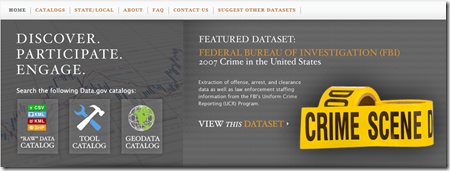
The US government also is getting quite open and transparent on its own data. Have a look at www.data.gov

image

And these days all these data are accessible via API’s to take data OUT of these systems. Some API’s like twitter, facebook etc also allow you to INPUT data via for example Tweetdeck, Seismic, and many others. I would love to have something that not only allows me to INPUT my Tweets, but also something that allows me to input and maintain my personal profile data, across services. See also at the end of this post.

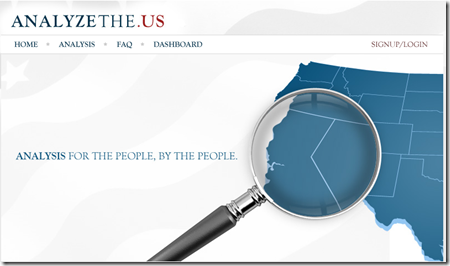
For the US government data, you see start appearing end-consumer apps that let you search through this massive amount of for example government contractor’s data with quite advanced intelligence tools in the hand of the citizen.

In stead of FBI (Federal) it’s becoming

CBI (Citizen’s Bureau of Investigation).

It says “analysis for the people, by the people”. I would add “"about the people”

image

All this is sold as “transparency” and “democracy”, and those are of course very important values.

But – and I don’t know about you – I start more and more FEELING quite uncomfortable about all this. Not that i have to hide anything, or that i have a criminal record (at least not that I am aware of ;-), but I do FEEL all this is quite intrusive.

As most of you know, in my previous life i was quite close to the Belgian eID project (electronic identity card). The card also allows you to access the on-line government database, where I can look at my OWN data and check who in the government has accessed those data.

But i believe we should make a big plea for the appliance of Law #1 of Kim Cameron’s Laws of Identity:

image

That’s easy said, but how do you enforce that. I took the pain to look at the privacy policy of Twitter (see http://twitter.com/privacy). In essence – as a user – i have nothing to say. I have 2 choices: to use twitter and accept the privacy policy, or not use it. But how many of the many million Twitter users have ever read the privacy policy ? How many know what sort of deep intelligence engines are crawling all these data that i released to the net WITH A DIFFERENT PURPOSE ?

This is not Twitter specific. It applies to Facebook, Friendfeed, or any other form of social network or service.

In my opinion, i would like to have something where i can control what data about myself i want to release to what service and in what context. I update my information there once, and have also guarantee that my profile information is consistent across Twitter, Facebook or even event/conference sites that these days more and more use their own social media piece of technology.

Of course you would need a highly trusted party to deal with these data. I think i would even be prepared to pay a price for my privacy.

This concept of a central digital vault comes pretty close to eMe, the winner of the Innotribe idea-contest at Sibos 2009 some weeks ago. But they started from “mydata” and information and documents related to financial services. If you start thinking privacy and putting control of data back into the user’s hands, you get a much more powerful proposition.

I would like to hear the opinion of a number of identity and privacy experts that are following this blog

UPDATE: Can’t help it, but just at the same time as i published this post, Guy Kawasaki tweeted the following URL:

 http://holykaw.alltop.com/why-you-should-think-before-you-tweet

Social Volume Knob

Also all hyped up by “The Wisdom of Crowds” and “We are smarter than Me” ?

wisdom-of-crowds

Time for some anti-dose 😉

Two articles about some recent studies done on this subject. One from ReadWriteWeb and one from MIT Technology Review. It’s again from Carnegie Mellon University (CMU). The author professor Vassilis Kostakos pokes a big hole in the prevailing wisdom that the "wisdom of crowds" is a trustworthy force on today’s web.

The articles speak for themselves, but what’s also interesting are the comments on the MIT article.

Some quotes:

I think that crowds are not wise and what we call Wisdom of Crowds is nothing else and not more than the Power of Diversity. This paper shows that it can be the Weakness of Diversity too.

OR

The true critic is NOT motivated by money or the subjective personal biases of the non-critic. A true critic is motivated by the objective enhancement of the human experience through careful and educated examination of the subject at hand.  We need more well-honed critical voices and less of the braying of the crowd. Crowd wisdom is built on a logical fallacy: just because a lot of people say it is so, doesn’t make it so.

Democractic Intelligence = FAIL.

OR this one is even better:

The conversation needs to be different when we are talking about social networks within an organization’s firewall. In that instance, it’s not about trusting the crowd’s wisdom. Rather, it’s about managing the community by knowing whose input should be trusted, along with managing and moderating the community. This must all be done in the context of how the community relates to business initiatives and the information assets of the organization. At our company, Inmagic, we call this the

"social volume knob."

As organizations roll out social technologies, they might want to start with the volume knob set "low" for certain classes of users. For example, some users might be allowed to tag one type of content, or other certain users can blog or comment.

Controversy ? Sure. What do you think ? Still 100% convinced of the Wisdom of Crowds ?

Innotribe @ Sibos: preparing for next year

Print

Oh boy, what a fantastic week this was !

More than 40 speakers, 7 keynotes, 15 R&D sessions, 3 face to face discussions, and a great opening and closing session.

We did some cool “order from chaos” things: Peter Hinssen has an AHA ! moment on his flight to Hong-Kong, and produced a brand new mind blowing presentation on the limits of the web. This was the start of Innotribe @ Sibos and set the scene for the quality level we were aiming for the rest of the week.

We also re-designed the workshops as the hours and days passed.

Russ Daniels – Vice President and CTO of EDS/HP decided on the spot not to deliver his planned PowerPoint, and instead gave a whiteboard session on cloud. It was like getting a private lecture by your most favorite professor at university. Awesome !

Below a short interview with Russ after that whiteboard session:

We improvised a debate with Aza Rasking from Mozilla Labs and Greg Skibiski of SenseNetworks on the Innotribe stand.

Here is an interview with Aza:

We had our Chief Executive Officer of Happiness – Mariela Atanassova – who was our super-sweet host on the Innotribe stand. All speakers felt immediately at home by the attention and care of Mariela. Mariela did awesome things in the background and produced very nice visualisations: are your going to post them somewhere, Mariela ?

What was really exciting were the Innotribe Sibos Labs where more than 50 folks took more than 10 hours out of their normal agenda to brainstorm and work on new ideas during workshops facilitated by Philippe Coullomb from The Value Web. Thank you very much to each of the 50 individuals who participated in the Innotribe labs.

The teams were lead by our 6 “Innotribe leaders”: Peter Hinssen from A-Cross, Nick Davies from Lombard Risk Management, Casper van Amelsvoort – Rabobank, Mary Knox – Gartner Research, Chris Skinner – Balatro Ltd – but more knows as active blogger on The Financial Services Club Blog, and Tim Collins from Wells Fargo. Leaders: you did a fantastic job !

In addition the teams were coached by 2 great guys from the venture capitalist community: Mattheus Krzykowsky from Venturebeat, and Eghosa D. Omoigui, Director Strategic Investments for Intel Capital. Your contribution was beyond any expectation !

We got a lot of coverage. Of course there is our own Innotribe at www.innotribe.com: Jeroen was our flying reporter during the week. And we has a lot of tweets #innotribe.

There is also a great article on Finestra about Innotribe – detailing the different pitches – and we made the cover page of friday’s Sibos Issues publication. You can download that publication here. See also Chris Skinner’s reports on Innotribe. Good example is here. Of course also Jeroen’s coverage on Innotribe.com

In the end, there was a winner. The eMe project of the Cloud team, lead by Peter Hinssen & Nick Davies. What a pitch ! As reported by Finestra, Guy Kawasaki loved it:

Kawasaki was impressed with the pitch, and said it sounded to him something like "Mint on steroids meets Open ID". He was also clearly impressed with the presentation skills of group leader Peter Hinssen, managing director of A-Cross Technology. "You’re just full of sh*t enough to be really attractive to a VC," he said.

Or also:

This presentation is better than 98% of the VC-pitched i see every day in Silicon Valley

Matteo Rizzi was great when he opened the “Grand Finale” with a “wake up and smell the coffee sunshine” type of call to the public. It was clear that he spoke straight from the heart and wanted to shake up the fully packed room. “look at what we have realized in the course of just 4 days at Innotribe” Create the right atmosphere, provide coaching and a sounding board, challenge the ideas and you end up with 3 executable ideas! “But this must not be a one-off thing” he warned. Innovation has to become a continuous and sustainable process and everybody in the banking industry must understand that this is critical for our survival.

Was Innotribe @ Sibos 2009 a one-off ? Certainly not. We are designing Innotribe as an ongoing innovation engine for the SWIFT community. We will be present a quite a number of regional events. We are preparing an on-line collaboration and idea generation tool. And last but not least, we are starting to scout and recruit speakers for next year. Where do we set the bar ? High, very high ! I would like that next year that all speakers match this year’s quality levels of speakers such as Peter Hinssen, Aza Raskin from Mozilla Labs (interview here), Russ Daniels from HP (interview here), and Joe Weinman from AT&T.  With that, you now also know my personal top-4 for this edition of Innotribe @ Sibos 2009.

Probably the biggest outcome of this Innotribe @ Sibos is that we have build a network of great smart people that we can call at any time if we need help for Innotribe or the next edition of Sibos.

Thanks to everybody who has contributed to this edition of Innotribe @ Sibos.

Innotribe @ Sibos – News Flash 9 – The Specials

Print

In Innotribe News Flashes 1 to 8, we have given you an overview of all the different sessions, debates, and presentations.

In this News Flash #9, i would like to point you at some of the presentations that have that little extra bit. As content coordinator of this year’s Innotribe @ Sibos, i had the privilege of meeting most of the speakers face to face, see the passion in their eyes and the tone of their voices. As the presentation material was being sent in, i could see how some presentations will be – how to say this – “different”.

There are of course many other cool sessions during Innotribe at Sibos, and for this overview i have NOT scanned the almost by definition and design great Opening and Closing Sessions, the Sibos Labs, the Cloud and Mash-up keynotes and the Face to Face discussions. So, i am in essence focusing on what is really special on the Innovation Floor, next to the big SWIFT stand. All the other presentations on the Innovation Floor are of course also from outstanding quality and content 😉

So, here we go ! Below my very personal selection of “The Specials”  and why I put them on my shortlist:

Tuesday 15 September 2009

14:30 –15:30 Oracle Fusion Middleware – Foundation for Innovation and Growth

Paul Shetler – Senior Director, Global Financial Services, Oracle

To be honest, i was expecting a quite commercial pitch from Oracle. To my surprise the presentation ended up to be quite educational. Although in the Oracle look & feel, Paul succeeds in putting together a deck with a real story line, good examples, and some interesting architectural thoughts about Anti Money Laundering, Fraud, and Reference Data. Paul’s presentation is very complementary to the presentation of Jost Hopperman (VP of Forrester Research) during the Innotribe opening session on monday morning. How a presentation with good content does not always require flashy visuals and special effects.

17:00 – 17:30 The virtual branch of the bank – project Wonderland

Michael Gialis – Head of Business Development for SUN Lab, SUN

On the shortlist for very similar reasons. The subject of virtual reality is well introduced and positioned, and goes well beyond the traditional blah blah on Second Life etc. Michael also brought a video with him, so that it all becomes a bit less… virtual 😉

I already posted on Project Wonderland in a previous posting “Virtual Worlds” on my personal blog.

Wednesday 16 September 2009

A lot of cool stuff is happening on day-3 of Innotribe !

13:00-13:30 A Reality Check? Time to Innovate? The Marriage of Business and Innovation

Clare Porter – Senior Vice-President – Technology Solutions, SunGard

It was interesting to follow how Clare built up the presentation. First she worked on a sketch/’”flow” of her presentation. Later she built the presentation itself. Again a surprise, as one could expect a standard vendor presentation, and Clare did something extra. Also, Guy Kawasaki will like the title including “reality check”, the title of his last book.

14:30-15:00 MacroSense – Understanding Realtime Consumer Sentiment & other Predictive Analytics from Mobile Location Data

Greg Skibiski – CEO, Sense Networks

Sense Networks is a real start-up with solid funding from Intel Capital, Javelin Venture Partners, and Passport Capital. I went to visit them in their office in New-York during one of my previous business trips and had a 1-1 with Greg Skibiski, the CEO. The office looks like, well it looks like a start-up: 11th floor, the boxes of the move still in the corridors, developers hacking their way through code. Greg small Spartan office way in the back, team members walking in and out the office with questions that need an answer right now. Pictures of after-funding party on the wall, press articles, team event snapshots, smiling faces everywhere, buzz, excitement. Greg is in his early 30’ies i guess, but boy, what a nice career at that age ! Has a story to tell, and it’s clear he sits on a goldmine. Just have a look at their site and the about us/company/founders information.  The founding team is composed of top computer scientists from MIT and Columbia University. Co-founder comes from MIT with specialty on privacy. What SenseNetworks does with massive sets of mobile data is incredible. If you want to get a feel on what Web 4.0 (combination of semantic web + pattern recognition engines + collective intelligence) will look like, this is your place to be.

15:30-16:30 Holographic Banking

Michael Warner – CEO, Quantum4D

We had to do quite some changes to our Innotribe booth to accommodate for this presentation and more excitingly the live demo ! They bring along a holographic projection unit. See also my previous posting on my personal blog about virtual worlds and/or holographic week-end. So, after the first 30 min presentation, the audience will have the opportunity to put on some sort of helmet and “walk” through the holographic banking environment with some sort of pen-pointer. In their words:

We will allow the audience to cue up to view the same views displayed on the big screen in an experimental holographic 3D display. Users wearing polarized sun-glasses will be able to see the above described animated network graphics ‘floating in space’ in the air between them and two screens. Users will also be able to wear a head tracking hat and use a pen device to literally look around and manipulate the network visualizations

Go and check it out !

16:30-17:00 The near-future of natural language interfaces

Aza Raskin – Head of User Experience, Mozilla Labs

Presentations from Aza Raskin are always great. Even if you’re not convinced of the subject, go and see this if only for the personality of Aza. I saw him doing his pitch at the Web 3.0 Semantic Web conference some months ago, and know right away “i want this guy at Innotribe !”. Just google Aza Raskin. He is now 25, and gave his first keynote at the age of 10 ! His father was Jeff Raskin, big thinker behind the Apple interface. So, Aza has been living and breathing user experience from when he was born. With the mother milk sort of ;-)Great speaker, highly energetic, visually strong metaphors,… Top !

17:00-17:30 Liberating the Collateral Information Worker through iPhone and other mobile devices

Nick Davies – Global CTO, Lombard Risk Management

I hope he will apologize me for this, but besides being CTO at Lombard, Nick is a real geek 😉 If it smells technology, he wants it. Nick blew my mind away when he explained me what modern video cameras can do. He has one with a 43GB (!) flash-card in it, with build-in Wifi in the flash-card. Shooting a video that was instantly sent into the cloud via MyMobile and real-time synched with his Mac at home. And the other server at his mother’s place to synch pictures etc between 2 locations. He has two iPhones and one iTouch with 100+ iPhone Apps on it. You get the idea how tech savvy Nick is. For Innotribe he took on a challenge 3 weeks ago: “let me build and live demo an iPhone application that hooks into an existing collateral management application, and I will demo it at Sibos.” I don’t know when Nick slept during the last weeks, but last Wednesday – just before the deadline – i received his presentation that will underpin this very cool demo. Mattheus from Venturebeat should definitely have a look at this.

Thursday 17 September 2009

10:00-10:30 The “Financial Commons” – collaborating to create, share and remix software

Alex Wulms & Mariela Atanassova from SWIFT.

These are SWIFT folks. And no, this is not navel staring. If you want to see and feel the enthusiasm of young people that get the opportunity of doing something cool, this is your place to be. Alex and Mariela have put a refreshing presentation together on a subject that one could make as boring as hell. To illustrate their story, they will cook soup ! Curious ? Good, that’s why they’re on the shortlist.

12:30-13:00 The Collaborative Back Office – Creating A Network Effect

Neil Vernon – Senior Product Manager, Smartstream

When i opened Neil’s presentation, it was “wow”. In had seen the material about TLM on Demand on the Smartstream website – all very professional – so i felt confident that i knew what to expect. Neil’s presentation does NOT use any of all that. Instead, he made a refreshing presentation – reality check style, no crap – on where we are and what’s next for Software as a Service. Neil is also on the Cloud debate panel, and gave some solid and challenging input to the moderator. I like this sort of folks.

13:00-13:30 HP CloudPrint for BlackBerry Smartphones

Hédi Ezzouaoui – Director, Financial Markets – Worldwide Financial Services Industry, HP

A very good example of how “anchors” in some vertical industries want to claim the space for Cloud computing. HP has a well-known big stake in the printer business. How can they leverage that in the new world of Cloud computing ? Come a see Hedi giving a demo with a Blackberry, wireless connected to the internet, and capable of printing on any networked printer world-wide. For the show, they’ll have a printer on site (but connected).

Practical:

Innotribe at Sibos is an integral part of Sibos. All Innotribe sessions are open to any Sibos delegate with a full week or day pass.

This is the last News Flash before Innotribe @ Sibos really kicks-off. From now, i hand you over to Jeroen Derynck, our “flying Innotribe reporter” who will cover Innotribe from start to finish. Follow us via live-postings at www.innotribe.com or via our Twitter account #Innotribe or via our Innotribe group on LinkedIn.

Innotribe @ Sibos – News Flash 8 – Presentations Day-4

Print

In this 8th News Flash on Innotribe @ Sibos, we’d like to give you an update on the rich set of presentations scheduled on 17 Sep 2009. These presentations come on top of our main morning event, the Innotribe Closing session from 10:30 – 12:00 .

On 17 Sep 2009, all below presentations will be held on the Innotribe Floor (follow the signs Innotribe Lounge). This is a special Innotribe booth next to the big SWIFT stand on the Exhibition Floor.

All presentations are R&D Insight presentations: talks and demos from the edge of business and technology. Several presentations include a video- or live demo ! Check out the specials for each presentation.

In the Innotribe Dome

Innotribe Closing Session

10:30-12:00 See News Flash 4 for details

On the Innovation Floor

R&D Insight presentations

09:00-09:30 Expanding the frontiers of financial services – enabled by smaller, cheaper computing on the move – supply chain, working capital, risk management and service delivery

Nigel Woodward – Worldwide Director Financial Services, Intel

– Presentation abstract: Computing in banking has traditionally been focused on process automation. Front, middle and back office operate islands of processing which variously integrate administration of transactions from capture to settlement.  These are tried and tested technologies. However look at emerging technologies and the picture changes. 3 axis drive innovation today – cost of compute, mobile and online; mix these elements and apply them to what business functions and the operational model can be challenged.  Data can be accessed earlier in the supply chain, huge amounts of transactions can be processed economically and information can be dispersed and accessed on the move to mobile devices.  This session will reveal today’s advances in chip capability and pose questions of where this might take the industry – challenging the status quo.

9:30-10:00 Meeting the Challenges of a Growth Market: Upgrading the Chinese Banking Infrastructure

Xin Sheng Mao – CTO IBM China Development Lab, IBM

– Presentation abstract: We will share our observations of the business challenges and opportunities in the China finance segments.  The Chinese finance market is growing very quickly.  But the market also faces lots of challenges, for example, trades and volumes are growing faster and faster, increasing the need for new innovative finance services, lower transaction latency etc. The as-is infrastructure is not going to survive and has to be upgraded.  We will share how we are helping customers prepare for these upgrades, including solutions from our industry solution lab, our products and innovative technologies.

10:00-10:30 The “Financial Commons” – collaborating to create, share and remix software

Alex Wulms – Lead Developer/Systems Engineer, Information Systems – SWIFT.COM Development

Mariela Atanassova, Innovation, SWIFT

– Presentation abstract: This presentation will share the experiences of one of the SWIFT team that responded to the SWIFT Innovation Challenges. The project was about co-development for the OLPC (One Laptop Per Child) project. This project illustrates two dimensions: first, how CSR (Corporate Social Responsibility) can lead to innovation and second, how SWIFT developers and external developers work together in an open source mode. Inspiration for other modes of co-operation with our community of members and partners at large ?

12:00-12:30 Smarter Mobile Payments

Peter Bearor – Global Payment Systems Sales Leader, IBM Sales & Distribution

– Presentation abstract: Technologies are more interconnected, intelligent and instrumented than ever before.  Come hear how IBM’s investments in these technologies is leading to smarter mobile payments.

12:30-13:00 The Collaborative Back Office – Creating A Network Effect

Neil Vernon – Senior Product Manager, Smartstream

– Presentation abstract: SmartStream will discuss: The evolution of Cloud computing in SmartStream’s OnDemand SaaS platform, Creating collaborative processes inside institutions to reduce transaction costs, Establishing collaborative venues for Banks and their Corporate clients to achieve the lowest cost per transaction, Strengthening collaborative processes with Artificial Intelligence.

13:00-13:30 HP CloudPrint for BlackBerry Smartphones

Hédi Ezzouaoui – Director, Financial Markets – Worldwide Financial Services Industry, HP

– Presentation abstract: HP will demonstrate HP CloudPrint for BlackBerry smartphones, a web-based solution that allows mobile users to easily print documents to the nearest printer no matter where they are. The CloudPrint service, invented by HP Labs, is printer-agnostic and driverless and requires simple Internet access.

– Specials: live demo

Practical:

Innotribe at Sibos is an integral part of Sibos. All Innotribe sessions are open to any Sibos delegate with a full week or day pass.

Follow us via live-postings at www.innotribe.com or via our Twitter account #Innotribe or via our Innotribe group on LinkedIn.

Innotribe @ Sibos – News Flash 7 – Presentations Day-3

Print

In previous News Flashes, we already detailed the Innotribe opening and closing sessions, the Innotribe Sibos Labs, the Face to Face discussions, and the overview of presentations on 15 Sep 2009.

In this 7th News Flash on Innotribe @ Sibos, we’d like to give you an update on the rich set of presentations scheduled on 16 Sep 2009. Several presentations include a video- or live demo ! Check out the specials for each presentation.

On 16 Sep 2009, we’ll have presentations at 2 locations:

  1. Innotribe Dome (follow the signs Sibos Labs):
    1. Keynotes on Mash-Ups: by innovation leaders on how this trend transforms their business.
  2. Innotribe Floor (follow the signs Innotribe Lounge). This is a special Innotribe booth next to the big SWIFT stand on the Exhibition Floor.
    1. R&D Insight presentations: talks and demos from the edge of business and technology
    2. Mini-Keynotes: Innovation updates from Partners

In the Innotribe Dome

Keynotes on Mash-Ups

9:00-9:30 Mashups for Global Financial Markets

Gary Dolsen – Director, WebSphere Portal, IBM

– Presentation abstract: Succeeding in today’s volatile financial environment requires not only managing but taking advantage of changing conditions in real time. Mashups bring information and capabilities together from diverse sources and empower individuals to assemble their own applications – offering compelling speed and self sufficiency to a wide range of financial professionals. The ability to reuse and tap into enterprise, web, and personal information gives financial organizations the power to significantly increase their return on investment from existing information and applications, and to strategically leverage services from the web to create new applications and serve new markets.  Learn in detail how mashups can rapidly combine information and applications to help your teams work faster and smarter – for example mashing together up to the minute regulatory updates with information from multiple systems to quickly analyze an event for regulatory compliance. Come and learn best practices from mashups that span retail and B2B institutions – ranging from financial investment analysis to financial investigations and fraud management, and beyond to see how your company can innovate with mashups.

– Specials: this presentation includes a video-demonstration.

9:30 – 10:00 Improving service excellence in banking through mashups

Olivier Berthier – Solutions Director, Transaction Banking, Misys

– Presentation abstract: Mashups are not merely one of the cornerstones of the Web 2.0 marketing wave or simply an innovative technical approach to combining data sources in a more efficient and easy way than ever before, they are also starting to appear in banking as a way to unlock new self-service capabilities for consumers of financial services particularly in the corporate banking space. After an overview and hopefully demystifying of the term, the presentation aims at walking through concrete examples of what mashups can offer a bank and more importantly its customers, with a focus on the “1+1=3” benefits brought by mashups’ more nimble and truly open aggregation techniques.

– Specials: this presentation includes a live demo.

10:00-10:30 Order from Chaos: The future of the web

Aza Raskin – Head of User Experience, Mozilla Labs

– Presentation abstract: At Mozilla, we don’t talk about building a semantic web; that’s synonymous with saying it won’t happen. Instead we talk about the contextual web, building the browser into an intelligent broker of your identity, and pragmatically turning the soup of data that is the Internet into the gravy of meaningfully contextual interaction. In this session, we discuss making order from chaos, and making the open web a better place to work, communicate, and play.

– Specials: this presentation includes a live demo.

On Innovation Floor

R&D Insight presentations

14:00 -14:30 R&D approach and roadmap to building Cloud Infrastructure and Services to support Enterprise Cloud Computing

Stephen Morse – Senior Director – Sales Engineering APAC, Salesforce.com

– Presentation abstract: Enterprise Cloud Computing demands new development methodologies and advanced approaches to data center infrastructure and service development.   Come learn how Salesforce has designed their R&D process to deliver 29 major releases in 10 years, and some of the future initiatives in data center infrastructure to provide the next generation of support for Enterprise Cloud Computing

14:30-15:00 MacroSense – Understanding Realtime Consumer Sentiment & other Predictive Analytics from Mobile Location Data

Greg Skibiski – CEO, Sense Networks

– Presentation abstract: Mobile location data from carriers is the world’s best data source describing unbiased real-time consumer behavior en masse. Analyses include macroeconomic trends from, how many people are going to work in the morning or out at night partying, down to understanding equity related demand metrics such as how far consumers are willing to travel to get to specific retailers, year over year. Even years of data from the locations of taxicabs has proven valuable in understanding real-time elasticities of demand based on income, derived by intelligently combining taxi movement data with the demographics of pickup and drop-off locations. Location data is the "lingua franca" of the world, as latitudes, longitudes and time are constants, and more than half the people on the planet are currently creating location data with the cell phone already in their pocket.

15:00-15:30 The future of EAI: how technology / open standards evolution will lead us to intelligent messaging

Kurt Florus – Chief Architect Global Messaging, Sungard

– Presentation abstract: In this presentation we will look at how the proliferation in open source technology, as well as the work SWIFT is embarking on regarding standards evolution, will help us to deliver intelligent messaging solutions to the market.  More explicitly, we will explore the innovations around transparent standards updates, business process modeling, model driven architectures and how we plan to increase STP rates through self-learning repair.

15:30-16:30 Holographic Banking

Michael Warner – CEO, Quantum4D

– Presentation abstract: What if you could model and visualize your enter business world in one collaborative living work environment?   Holographic Analytics goes beyond pages and files to open a new universe of interconnected insights.   During this session, we will go on a half hour tour exploring dynamic 3D holographic models of SWIFT’s global banking networks on a national scale.  We will then fly into regional views and on down into a individual bank and its internal network topology.  The tour will include – among a number of potential tour stops – models of banking markets that ‘mash-up’ demographic and industry data with SWIFT traffic.  We also aim to show a visual model of the bank enterprise itself from several dimensions (staff activities, IT networks, etc…) and how that those domains interact with each other and the larger banking ecosystem we help illuminate. This includes the addition of a display platform which will allow the audience to cue up to view the same views displayed on the big screen in an experimental holographic 3D display. Users wearing polarized sun-glasses will be able to see the above described animated network graphics ‘floating in space’ in the air between them and two screens. Users will also be able to wear a head tracking hat and use a pen device to literally look around and manipulate the network visualizations.

– Specials: this presentation includes a live demo where you will be able to move around in a holographic environment.

16:30-17:00 The near-future of natural language interfaces

Aza Raskin – Head of User Experience, Mozilla Labs

– Presentation abstract: Building a natural language interface for the browser is a mix of pragmatism and research. In this talk, we delve into building open platforms that work across multiple languages, and where the future of the browser lies.

– Specials: this presentation includes a live demo.

17:00-17:30 Liberating the Collateral Information Worker through iPhone and other mobile devices

Nick Davies – Global CTO, Lombard Risk Management

– Presentation abstract: This presentation we will show you one example on how a Collateral Information Worker can push transactions and remain connected to their workflow using a mobile device allowing unprecedented freedom for the worker, improved business decision efficiency and better risk management, even if the manager is in a meeting away from their traditional desktop. Come and imagine the future with us….it really is here today, and the formula is very simple: UBIQUITY + EXCEPTION BASED MANAGEMENT > LEGACY STP BENEFITS. It’s time for a new liberation.

– Specials: this presentation includes a live demo.

Mini-Keynotes: Innovation updates from Partners

13:00-13:30 A Reality Check? Time to Innovate? The Marriage of Business and Innovation

Clare Porter – Senior Vice-President – Technology Solutions, Sungard

– Presentation abstract: Global conditions and cost pressures are changing how technology is managed but is technology keeping pace with the challenges in the business world? Alternative delivery models are a now an imperative to meet the developing business expectations. This session will include lessons learnt from first generation SaaS deliverables and what the future roadmaps will look like.

Practical:

Innotribe at Sibos is an integral part of Sibos. All Innotribe sessions are open to any Sibos delegate with a full week or day pass.

Follow us via live-postings at www.innotribe.com or via our Twitter account #Innotribe or via our Innotribe group on LinkedIn.

Innotribe @ Sibos – News Flash 6 – Presentations Day-2

Print

In this 6th News Flash on Innotribe @ Sibos, we’d like to give you an update on the rich set of presentations scheduled on 15 Sep 2009. Some presentations include a video- or live demo ! Check out the specials for each presentation.

All presentations listed below will take place on the Innotribe Floor (follow the signs Innotribe Lounge). This is a special Innotribe booth next to the big SWIFT stand on the Exhibition Floor.

We’ll have 3 types of presentations that day:

  1. Keynotes on Cloud: by leaders from the Cloud computing industry
  2. R&D Insight presentations: talks and demos from the edge of business and technology
  3. Mini-Keynotes: Innovation updates from Partners

Keynotes on Cloud

9:00-09:30 Enabling Agility through Cloud Architectures

Amir Halfon – CTO Global Financial Services, SUN

– Presentation abstract: Cloud Computing has become one of the most important concepts in IT. It holds the potential of transforming the way IT services are being delivered by facilitating new levels of agility and automation that are impossible to achieve in the traditional data center. This presentation will explore how public, private and mixed cloud environments are changing the relationship between application developers and IT deployment. It will also discuss how applications and our notions of their reliability and availability are being transformed by these new models.

9:30-10:00 Let’s Head For the Clouds

Jeff Barr – Senior AWS Technology Evangelist, Amazon Web Services

– Presentation abstract: Amazon Web Services Senior Evangelist will introduce the concept of cloud computing from a business and architectural concept.  Jeff will review the economic model and resulting benefits of cloud computing, including an overview of Amazon’s line of scalable web services including the Amazon Elastic Compute Cloud, the Amazon Simple Storage Service,, and Amazon Elastic MapReduce. Jeff will also cover real-world cloud computing success stories.

10:00-10:30 The Cloud in Context

Russell Daniels – Vice President and Chief Technology Officer, EDS, Hewlett Packard

– Presentation abstract: In this presentation, Russ Daniels will describe how the cloud will fundamentally change the way people and businesses connect to information and the profound impact this will have on every aspect of our lives. The cloud will enable a proliferation of services anchored around individual profiles, aware of context and location, and tailored to particular areas of experience as well as vertical industries. Daniels will outline the implications this shift will have for the Financial Services industry, and how companies can move to capitalize on it.

15:30-16:00 Real-Time Results in the Cloud for Financial Services

Stephen Morse – Senior Director – Sales Engineering APAC, Salesforce.com

– Presentation abstract: Financial Services are already reaping the benefits of enterprise cloud computing to drive faster innovation while simultaneously reducing capital expense, operational expense, and risk.  We will review key Financial Services case studies, leveraging Sales, Service, and Platform Cloud capabilities, with specific demos of the solutions.  Also addressed is a discussion on cloud security, availability, and performance vs. traditional on-premise models.  Attendees will learn how to begin building cloud apps immediately.

R&D Insight presentations

16:00 – 16:30 The Benche

Lars Millberg – Head Cash Management, SEB

– Presentation abstract: The Benche (www.thebenche.com) is one of the world’s leading online communities for Trade Professionals. The Benche is provided by SEB as a free service to trade finance professionals or other members active in international trade. The purpose is to encourage sharing of knowledge and experience, open discussions and networking between such professionals. Lars Millberg will speak about the original idea that later became the success of today. He will guide through first meeting with site provider, building the structure of the site, touching upon surveys of client’s interest, pilots and the great launch till the status of today. Lars will also present problems encountered, lessons learned, and the continuous evolutionary roadmap of The Benche.

16:30-17:00 Discontinuities in Distributed Computing

Joe Weinman – Strategy & Business Development VP, AT&T

– Presentation abstract: Every decade or so, a major new paradigm shift occurs in the world of computing.  Shifts from the mainframe to the mini to the PC to the web are examples.  Now, we are at the beginning of a set of interconnected discontinuities.  First, the shift from enterprise data center to hybrid architectures including cloud computing.  Second, a shift from text and numeric data to multimedia, including video.  Third, a shift from person-to-person communications to sensor networks and automated agents, including speech synthesis and semantic analysis.  Fourth, a shift from fixed to mobile.  And finally, new interfaces…not just Windows, Icons, Menus, Pointers, but multi-touch, accelerometers, and ultimately, brain-computer interfaces.

17:00 – 17:30 The virtual branch of the bank – project Wonderland

Michael Gialis – Head of Business Development for SUN Lab, SUN

– Presentation abstract: Introduction to Virtual World technology and Project Wonderland specifically. We will discuss: 1) some ideas of use cases for virtual world technologies, (call center, virtual customer branch, interbank / inter-industry collaboration, etc.) 2) our approach to developing opportunities in this space, (technical collaborations with universities and enterprise, service and technology partner eco-system development, proofs-of-concept, etc.) 3) our architecture and distinguishing features and characteristics (GPL v2 w/ class-path exception, modular architecture, extensible platform, built for enterprise security / integration, etc.) 4) our go-to-market plans, (partner model, professional / engineering services, deployment / hosting services, commercial licenses, production support, etc.), and 5) provide the audience with a video demonstration

– Special: this presentation includes a video-demonstration !

Mini-Keynotes: Innovation updates from Partners

14:30 –15:30 Oracle Fusion Middleware – Foundation for Innovation and Growth

Paul Shetler – Senior Director, Global Financial Services, Oracle

– Presentation abstract: Changing markets, competitive pressures and evolving customer needs are placing increasing pressure on IT to deliver greater flexibility and speed. Organizations are adopting technology as a means of delivering on these requirements by overcoming the complexity of their application and IT environments. With the launch of Oracle Fusion Middleware 11g, Oracle is fundamentally transforming the way its customers develop, run, and manage their custom, packaged, and composite business applications. Learn how across the entire family of middleware components, Oracle has worked from a common set of design principles to forge unprecedented integrations between best-of-breed components. This innovative approach will help Oracle customers leverage agile, adaptable applications with a degree of ease that was not possible until now. Oracle Fusion Middleware also delivers unprecedented support for virtualization and cloud computing.

Practical:

Innotribe at Sibos is an integral part of Sibos. All Innotribe sessions are open to any Sibos delegate with a full week or day pass.

Follow us via live-postings at www.innotribe.com or via our Twitter account #Innotribe or via our Innotribe group on LinkedIn.

PayPal vs. Banks

On Nov 3, 2009 the world of payments will change. PayPal will open its platform to developer worldwide.

A glimpse of what this means can be seen in the following video:

How will traditional banks respond ? Hopefully a subject for the Innotribe Face to Face discussion on The Future of Banking next week during Sibos 2009.

Print