Sacred Spaces

I recently had some conversations with prospective clients on the need for alignment and coherence of physical and emotional space when trying to create great experiences. I started to call them “sacred spaces”.

As you know by now, I am not in the events business. I am in the business of creating high quality feedback loops to enable immersive learning expeditions and deep change. In essence, I want to resonate with my client’s guests at another (additional) level than the pure cognitive. I believe this ambition also requires its own awareness and vocabulary, but more about that in some later posts.

One aspect of that vocabulary is our expression of sacred spaces. What first comes to mind is a church, a cathedral, some religious building of some sort.

img_4397

Sagrada Familia – Barcelona – 31 Oct 2014

In the best cases, the moment you come in, you are struck by a lightning of beauty, awe, stillness, and grandeur. The entry into the space feels almost ceremonial. You cross the entry, the line between outside and inside. The experience of the space sends vibrations down your spine. You feel suddenly whole and small at the same time.

This whole- and small-ness creates some kind of safety; some form of familiarity that this space is the right space, that this space is right. Just right for what it was designed for.

I think in similar terms about the spaces for our experiences.

Our spaces must be safe spaces. Closed as with an entry door. The entry into the space is a ritual moment. The coming out as well. It must be a physical experience: guests have to walk through the “arc of change”. They must do this in a “communion” style, as a collective, creating a visceral experience of the collectivism in their change process.

The space is about “roundness”, round as in circle, but also round as in generative, coming back to the starting point with new insights.

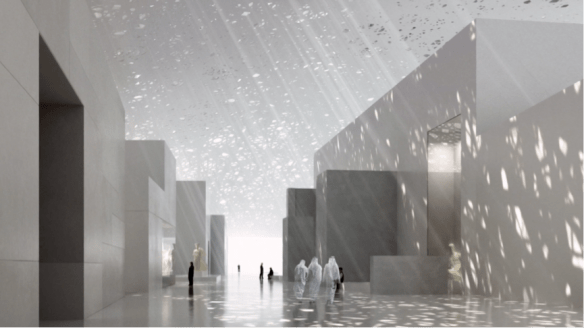
The space becomes a pulsing “egg”, a “womb” that will be our “nest” for a couple of days. It has of course to do a lot with right spaces for humans, and Jean Nouvel’s views (video here) on architecture. The video is also called “Reflections”, just like the latest from Brian Eno, one ambient song of 54 minutes (interview here)

jean-nouvel2

“Combining big bold shapes with intricacy and delicacy. The ability to be bold and delicate at the same time. The relation between time and light. The sphere above, the cupola. A spiritual space.”

I love the idea of the cupola. In my opinion, the closed space described above needs a roof – like a cupola – with some lattice membrane. But at the same time, the space needs to be “porous”, with light (the crack) coming in through the lattice, and light (enlightenment) coming out to inspire others. Or even better, some form of post-enlightenment as in Danny Hillis’ entanglement.

And light itself can also be the “roof” and the trees of the space forest. Check out this wonderful video of Fujimoto’s light forest:

light-forest


I shared the video with my good friend Marti Spiegelman, who replied:

Thanks for the link – this is extraordinary. It reminds me that sometimes the light itself is the sacred space – I’m thinking of the light beam on the floor, when one of the walkers stands in the light – and sometimes the light creates the boundaries, or defines the edges, of the space – as in a forest when there is a small round clearing, it’s traditionally considered to be a ‘power spot’’ [another name for sacred space] where you can call in greater powers of nature and the universe to create change.”

I was looking for some good description of sacred and sacredness. I think I found it in an article about a fashion book by Belgian fashion designer Ann Demeulemeester.

book-demeulemeester

“It looks and feels almost sacred, with pages so thin the images can be seen on both sides of each sheet; it’s a truly delicate beauty. For this reason, every single page is printed only on one side, creating a uniquely singular reading experience. The size and weight of the book gently contrasts with the fragility and smoothness of the paper, while the almost total white of the inside is in opposition with the blackness of the sides and the linen cover. Text is kept to the essentials, limited to an introduction by Patti Smith (Demeulemeester’s longtime muse) and a short final dedication by the designer herself. The book was designed by Victor Robyn, a Belgian graphic designer who has been in charge of realizing Demeulemeester’s graphics for years—from show invitations to printed fabrics. The art direction is curated by Victor Robyn, Demeulemeester herself and Patrick Robin, her life and business partner.”

Happenstance that I visited this week Casa Argentaurum, an art gallery in Ghent run by Caroline De Wolf, who kindly opened her space for me. It was one of the last days of the exposition about Ann Demeulemeester’s jewellery.

jewellery-demeulemeester

Necklace – Ann Demeulemeester – Casa Argentaurum

At the end of our conversation, Caroline gave me a copy of the catalogue of the 2010 exposition “Things, Thoughts, and Territorities”.

book-andrea-branzi

The book has some great design drawings by Andrea Branzi, and also a wonderful testimony of the artists’s love relation with Belgium (mostly Flanders btw). Somewhere half way, there is this superb quote:

“Architecture is not the art of building, it is a very complex discipline,

interpreting history, technology and the changes in society.”

It could have been the tag-line for Petervan Productions, as I see myself as the architect who conceives, gives birth to the vision together with the client, and then pulls together and orchestrates the resources, experts, and artists to create a unique experience in search for the secrets of life.

But “you can’t find secrets without looking or them” (quote by Peter Thiel in his book “From Zero to One”), so I am looking for your views on what you would expect from a sacred space.

I am looking for architects, space- and stage-designers to be part of our collective of leaders, visionaries, artists, craftsmen, designers and producers.

If you are interested to be part of that calling and dialogue, you can just leave a comment on this post.

Rebelliously yours,

petervan-signature_transparent_black_version2

Petervan Productions – Jan 2017 update

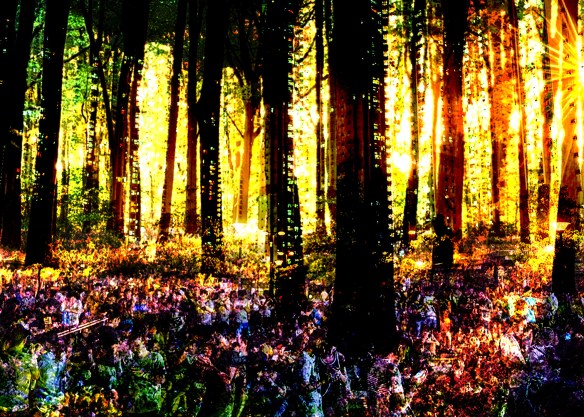
doig-study-v2-selected-for-study

Petervan Photoshop collage as part of study on Peter Doig
Theme: Culture and Nature – Dec 2016


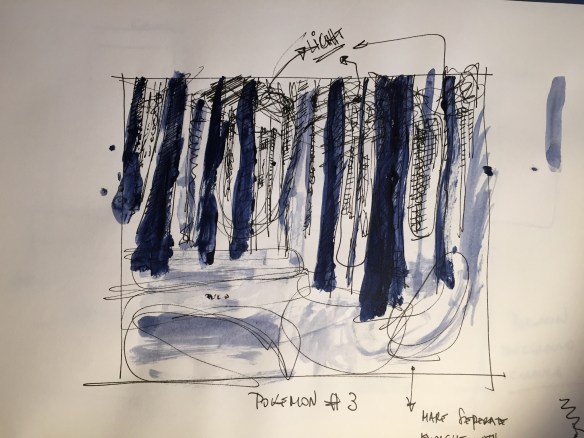
pre-study-peter-doig

Pre-Study Peter Doig - Sketch Dec 2016


Happy New Year to you, your friends and your family! Hope you are doing well.

As you know, I left Innotribe/SWIFT in Nov 2016 for a long term sabbatical to create my own thing under the Petervan Productions umbrella. My ambition is to architect and create high quality feedback loops to enable immersive learning experiences and deep change.

A quick update:

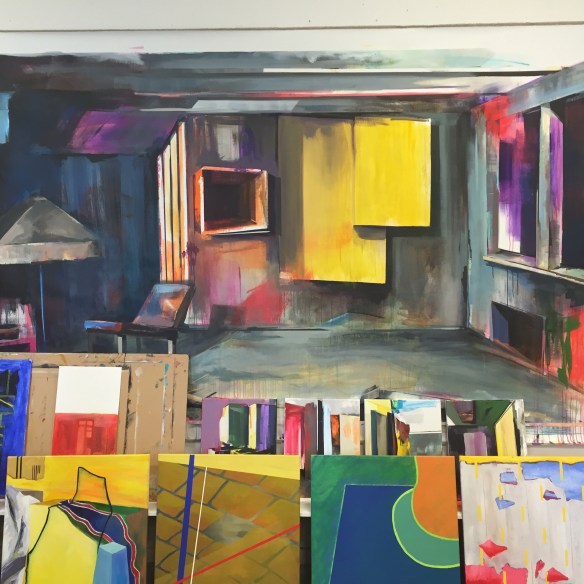
  • Artschool continued till the holiday break, starting again next week. We try to get under the skin of artists, and then paint an image in their style. Currently looking into Peter Doig.
  • Nov/Dec 2016 was a period of getting to grips with some tools for my performance: music, image, video composition tools
  • The performance “Tin Drum Is Back” is targeted for end March
  • The retreat event for Sep
  • The content festival for Nov
  • A lot of reading and a lot of posts in the queue


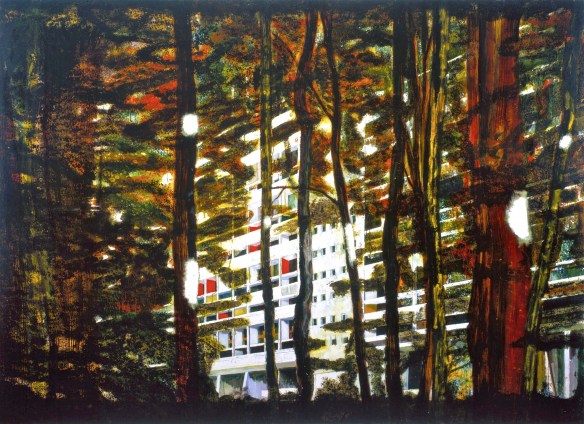
doi_concretecabinii-1992_lac_218x300mm-e1426095552774

“Concrete Cabin” by Peter Doig - 1992

During Jan-March 2017, the plan is to work on:

  • Detailed scripting of the performance
  • Build and expand the collective of leaders, visionaries, artists, craftsmen, designers and producers

project-plan

Extract project plan performance per week.

I am very focused (yes, working on a 8+ hour daily schedule and a project plan). I am about one week late compared to initial plans. Being focused also means saying “no”. As you may have noticed, I have drastically dimmed my social media activities, and kindly reject any requests for consultancy, speaking engagements, etc.

I have 1-2 leads that want to work with me as their architect for immersive learning experience events. But I am not in active prospection mode.

Every request for collaboration is assessed against the objectives and priorities for 2017: the art, the performance, the retreat, the festival, and to see how far I can get with all that in one year’s time.

If there is something worth reporting, next update is for Feb 2017. Looking forward to hearing from your latest adventures as well.

Rebelliously yours,
petervan-signature_transparent_black_version2


Right spaces for humans

As many of you know, since begin November I am trying to create my own thing called “Petervan Productions”.

The scaffolding is already in the works for many years, and I am still hesitating whether I will once publish the 100+ page reflections on the intentions of all this, what I think this enables, and then working down the tactics such as outcomes and deliverables.

Besides the artwork and the research bit of my activities, I spent quite some time in re-thinking what “events” could be like. And thinking of my customers as “guest”, not consumers. What I am trying to offer is a one-stop-shop for unique immersive learning expeditions in emotionally and physically right spaces for humans.

So anything that gets me back to my architectural roots of “right” spaces for human beings makes me a bit poetic. In this case this very nice article in Aeon about the French architect Jean Nouvel, all about light, geometry and symbolism to re-imagine culture.

The core of the article is a very nice video. As usual, I made the transcript of the video, and added some poetic highlights and typographic reflections by myself. I have stopped adding comments and trying to explain. My guests are smart enough to make up their own minds. Explaining would be an insult.

jean-nouvel1


Each project is an adventure, a passion

The biggest temptation

Is to jump into it

There are solutions that come to you

There are images that spontaneously appear

My method is rather to hold back as long as possible

To really imagine it spatially

So, to be sure that I have something to say

These moments where you understand somebody cared about something

That’s when you feel

 like “oh yes,

this is a human thing,

not some robot that

put something together”

Simply living there is a cultural act

Combine big bold shapes with intricacy and delicacy

The ability to be bold and delicate at the same time

jean-nouvel2

The relation between time and light

The sphere above,

the cupola

As spiritual space

“Perhaps we have to keep dust”

jean-nouvel3

Create a space, no inside, no outside…

jean-nouvel4

“We have principles, and these principles we have to nurture.

We nurture them.

We deepen them.

And with them,

we invent…

something else”

Petervan Productions: when my edge becomes the core

Hello Tribe,

This is a post to share that I’m taking an extended sabbatical from Innotribe and Swift after some of the most amazing years of my career so far. It has been such an exciting journey working with many of you creating and enabling Innotribe to grow. Thank you for letting me being part of that journey.

jump

Quote by Abel Morales (Oscar Isaac) in “A most violent year”. 

Poster copyright: Lessons Learned in Life


Now the time has come for my next phase as an independent thinker, creator and sense-maker, as from 1 November 2016.

I will concentrate my – limited – professional activities under “Petervan Productions”. In the first instance I will create art, performances, and invitation-only retreat expeditions.

pvp-web-banner

I believe there is room for a new kind of experiences that resonate with your and my guests at another level than the pure cognitive. Holding a space to connect thought leaders, experts, and artists of all kinds, and to bring out the very best in you and them. The art of creating high quality feedback loops to enable immersive learning experiences and deep authentic change.

Mastery and excellence will be my guidance, but mystery is what I aim for.

Focus means deep work without distractions. Focus also means saying “no”. For the next couple of weeks/months, I will live under a rock. I will dramatically reduce my social media presence and activity. But will keep blogging and writing occasionally.

+++

“Creative work needs solitude.

It needs concentration, without interruptions.

It needs the whole sky to fly in, and no eye watching

until it comes to that certainty which it aspires to,

but does not necessarily have at once.

Privacy, then. A place apart

to pace, to chew pencils,

to scribble and erase and scribble again.”


Mary Oliver in “On Power and Time”

+++

It’s a jump into the unknown. It is a fork from the responsive/reactive orientation to solve problems to the creative orientation to architect, design, and produce what I really want. It is tapping into what Nilofer Merchant calls my “onlyness”, when my edge becomes the core.

I’d love to keep in touch with you all, so if you would like to connect please do so via my personal email or the usual social channels. You can also subscribe to the Petervan Productions Newsletter here.

See you on the other side. Onwards.

Rebelliously yours,

petervan-signature

Blogging and writing:

Mantra: “Imagine the kindest, most positive response to whatever comes your way” – Chade-Meng Tan


Métier

“Métier” is usually defined as: profession, craft, craftsmanship, and workmanship. I already touched on this in my blog post on Craftmanship (Sep 2015).

Craftsmanship, Historical Coherence, Musicality, Authentic Observation, and Creating The Dance between host and guest are critical components of the Essence of Work.

Tradition is about building on the shoulders of giants, to “craft” deep into the meaning of tradition, to internalize tradition, and to pass it on in your work and onto next generations.

Tradition is not seen as non-authentic, but a source for energized work.

What is driving these people to strive for unconditional excellence?

I was reminded of this when discovering last week’s edition of the Belgian TV Art programme “Tout le Baz-Art” on the RTBF Channel that focused on evolution, tradition and art that is “academically right”. The programme was curated around Belgian super-star musician Ozark Henry.

ozark_henry_2013

Ozark Henry – cover of his album “Stay Gold”

One of Ozark’s guests was my good friend Peter Hinssen, as apparently Hinssen introduced Ozark Henry to 3D as an additional dimension to his superb musical expression. But the other guests included Sam Dillemans – one of the recent hypes (well, since 2010 or even before) on the Belgian art scene. Sam’s discourse also made me think about the essence of work of Michaël Borremans, the other big name in contemporary Belgian art.

All three have to say a lot about their “Métier” – their profession – and the intensity and clarity they have in creating extraordinary art-work. I found it highly inspiring: the way they stand in life and the mystical qualities they aim for.

Below some extracts/transcripts of what they shared in different videos:

Sam Dillemans

“I’ve always compared myself to the great artists. I’ve always done that. I am constantly healthily frustrated. That’s why I will always continue to work. Compared to modern artists… Victory is easy if you have an eye for it. You have to compete with the greats. That’s why I always work like crazy”

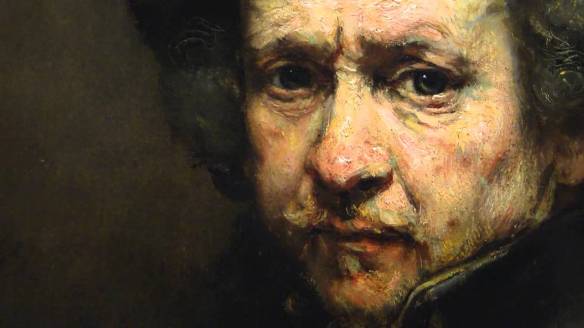
rembrandt

Rembrandt – Self Portrait – 1659

“If you show me Rembrandt, I panic because there’s still so much work. They say Rembrandt was before. He is tomorrow. That’s the difference. Rembrandt wasn’t before, he is tomorrow.

“A white canvas is the worst thing an artist can face. I did not say that. Picasso did. And if he says so… you can imagine what that means for us.”

“I have the ambition to continue painting till I’m 90. I still have so much work to do. If Picasso painted for 80 years, I’ll need 320 years. I don’t think I’ll succeed.”

“It’s my ambition to grow as old as possible. I don’t want to see others growing old and decaying with me.”

“But I’d like to realize my plastic dream as much as possible.

I’d like to get as far as possible.”

eddy_merckx_the_cannibal_3

Eddy Merckx – most successful cyclist ever

“The thing people lack nowadays in my opinion is veneration. People don’t often see others as gods anymore. They do like to idolize them. Merckx is a better cyclist than Sam Dillemans. I won’t point out the weak points of a god. To say he’s as small as I am because of his human side. The distance isn’t that great.

“Michelangelo also had to go to the bathroom. But put us in the Sistine Chapel and we don’t make it up the scaffolding.”

“That’s what’s important.

We have to be able to be in awe.

Of something or someone”

“Everything is fragmented. Everyone does everything, but nothing well. Everybody is an artist. If you ask someone on the street what he or she does in their spare time – apart from a lot of rubbish – one bakes pottery, another one paints, a third one plays guitar. We’re all wonderfully creative.”

“A lot of people are creative,

but not many are artists”

“I don’t mind. I support that democratic system. This is the problem: this 93-year-old crone, who baked two pots, wants twenty exhibits. That’s tiresome.”

“A part-time painter is the worst. People who are partly something are the worst. You have to try to be whole. That demands sacrifice. The worst sacrifice is being half.”

“Many people choose it freely. They compromise.

“Life is full of compromises, but art is not”

“You always have to question yourself during your ongoing studies. You don’t need to become self-centered, but you discover your inner self. Without psychedelics and philosophies.”

“We have lots of possibilities, but hardly anyone stops to look at a tree and to admire it and say “That tree is beautiful!” That is over. It happens but rarely, and even then only on Sunday, with the kids, and a giant buggy. “Today we will watch trees”.

“They go to Walibi (a sort of Belgian Disney Land), or to an exhibition of modern art, as modern as possible. Then they are hip and trendy. They don’t want to seem old fags. But of course they are. A young fag would look at the world like Jacques Brel, eyes wide open. They are obsolete. But they think they are trendy.”

“Being trendy is dying a little.”

“You don’t have to be hip, you have to know poetry or anything which is not influenced by time. Then you have a chance to approach godliness. In conclusion, what do people do with their free time?”

“They fuck it up.”

Michaël Borremans

Jan Hoet, who was the founder of the Museum of Modern Art in Ghent (SMAK) said about Borremans:

“Studious, pleasingly, nicely painted, it all looks so perfect. On the other side he is a bit unruly, recalcitrant, also a bit morbid, a little austere…” and Ann Demeester commented: “Michaël’s works is very subdued, mysterious, vs. bombastic.”

His paintings are cinematographic. He also launched himself into video and cinema. Using all senses to resonate with his audience at some many additional levels beyond the pure cognitive. Borremans continues:

“My work has no documentary value whatsoever. It is all imagination. That’s why I am painting. Cinema also has a lot of this. But a film is not my sole merit, you work with other people, who each have their own contribution”

Michaël is a difficult person, rigorous and strict for himself, with a greater technical maturity then many of the other contemporary painters.

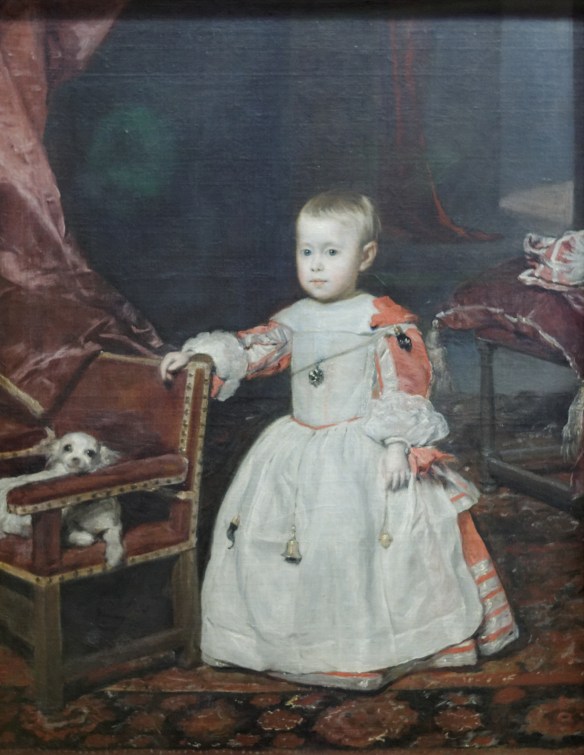
prince_philippe_prosper_-_diego_velasquez

Prince Philippe Prosper by Diego Velasquez - 1659

You really have to listen to Michaël Borremans explanation of the above painting at minute 33 of the documentary.

“The resounding “éclatant” aspect of Velasquez’ work, it always remains fresh.

“The accents being made, the structures,

almost like notes and chords in music,

a very sensual pleasure”

“Painting with a long stick, to keep the spontaneity. Unrivalled technical virtuosity”

“I want to stay professionally focused, and remain faithful to what in want (in the artwork). A painting is a suggestive construction. Getting better, and more sophisticated in the painterly technique. Capacitate myself to make the best paintings. It is not pleasant to make so many paintings that are almost ok”

Back to the RTBF TV programme. Sam Dillemans continues here:

Embracing Rubens – Leaving Rubens – by Sam Dillemans

“That’s where I left Rubens. Most important is that you first embrace Rubens, you get deep under his skin, and you study him. That’s what I did when I was young: the thigh muscles, the calf muscles, the calf bones, the ankle joints, etc.”

“I was drawing like crazy on Rubens, and Holbein, and all old masters, to be able to leave them when I really knew them.”

anna-pavlova

“Like Anna Poplova – the great dancer – said:

Master technique

then forget about it

and be natural.

cezane-apples

Paul Cézanne – Still life with apples

“The most important is how you paint, not what you paint (Jesus or Maria, etc). You can do the same with apples or radishes. Cézanne changed the history of art with just some apples. “

“For me form is the most important.”

“I started very realistically, and ended in a very abstract way. I have the tendency to always start very faithfully to reality. Not goody-goody realistic, but very recognizable. But always with a certain “schwung”, my own “schwung”, my own signature.”

“And then I leave that realism. After five years that then ends in structured chaos. It ends in calculated arbitrariness, quite chaotic. And that happens in a very natural way. I never have to force myself. I just follow my nature.”

Then Ozark and Sam in a conversation on trends:

“These days, you don’t need to be able to read musical notes. You don’t need to know anything. You make music by intuition.”

“You have to be creative as from the age of seven. How can one be creative without “métier”? It is métier that makes you free. If you have a lot of métier, and you have suddenly an idea, then you don’t need to think “how do I make this?” or “What am I doing?”.

“Métier makes it possible to follow your impulse. Because your whole body is trained for it.”

“Métier is the great luxury

to be a free human being.”

“When Picasso draws seven lines at the age of 85, then those lines are building on 75 years of study and knowledge”. If we draw those lines, we risk missing the ball.”

“The three great artists are Dostojewski for literature, Van Gogh for painting, Mozart for music. But Mozart can again be considered as cliché, and that’s not considered alright anymore.”

“These days, you have to come up with a strange name from Georgia or whatever, somebody nobody ever heard about. You are not allowed anymore to be normal in your taste or preferences.”

The programme ends with a musical pairing with the famous Krug champagne.

caves_couleur-krug

Kruge Champagne cellars

“The creation of Krug is very musical. It is a house where the founder had a dream. He wanted to create every year the richest symphony of champagnes. The approach of the house is a musical approach. We listen to each little vineyard, like a musical director listens to the orchestra.”

“A grand cuvée is like a music score”

“The art is in the experience: you enter the ballroom, the orchestra is getting installed and starts to play, everything is there, and there it is, and you live the moment. Like Tsjaikowski’s 6th symphony in b-minor: the way the music score opens all the colors of the orchestra and you discover. Like a room that opens, and you discover all the colors, all the nuances, and a total experience.”

It made me think about a comment by Fabian about the last Innotribe Sibos edition: “Peter created his 9th Symphony, and day-1 was his Allegro”. But creating one’s 9th symphony is at time a lonely place.

“But what makes you lonely,

makes you radical.”

What if in our professions, in our “Métiers”, we would all adhere to these highest standards? And be radical in the quality and total experience we aim for?

What if we would always compare ourselves to the great artists, and get motivated through a constant healthily frustration?

Instead of putting the bar of mediocrity to the best common denominator, as illustrated in so many industry “benchmarks”.

What would happen then?

We would delight the customer with mastery and mystery.

Like great art can put a knife in the eye.

Building on the shoulders of giants,

With your own signature.

petervan-signature_transparent_black_version2

Team Human

Web

Artificial intelligence. Cognitive computing. The Singularity. Digital obesity. Printed food. The Internet of Things. The death of privacy. The end of work-as-we-know-it, and radical longevity: The imminent clash between technology and humanity is already rushing towards us. What moral values are you prepared to stand up for—before being human alters its meaning forever?

This is not me saying this. This is Gerd Leonhard a new kind of futurist schooled in the humanities as much as in technology. A musician by origin, Gerd connects left and right brains for a 360-degree coverage of the multiple futures that present themselves at any one time. In 2015, Wired Magazine listed Gerd as one of the top 100 most influential people in Europe.

In his most provocative book to date “Technology vs. Humanity: The coming clash between man and machine” (Amazon Affiliated link), he explores the exponential changes swamping our societies, providing rich insights and deep wisdom for business leaders, professionals and anyone with decisions to make in this new era.

If you take being human for granted, check-out this trailer for a movie he made with Jean-François Cardella, his film producer.


Gerd has a new book out and it is and i recommend it strongly, and i am not alone.


“Gerd Leonhard is most definitely a member of Team Human. Here’s his convincing and heartfelt call for the reinstatement of people and purpose into the technology program.” – Douglas Rushkoff, Author of ‘Throwing Rocks at the Google Bus’, host of the ‘TeamHuman’ podcast

“Gerd Leonhard provides a fascinating look at the impact of exponential technologies and the dilemmas we will face in adapting to—or being adapted by—these. His book really makes you worry—and think.” – Vivek Wadhwa, Academic, Researcher, Writer, and Entrepreneur.


A good overview of the book can be found in Forbes’ recent interview with Gerd Leonhard and his reflections on digital ethics:

“Like sustainability, ethics is often thought of as a nice to have, a thing to consider when you have time, a luxury, non-monetizable. But now it is becoming clear that those distinctly human things that are not measurable (I call them the “androrithms” – as opposed to algorithms) such as emotions, intuition, beliefs and ethics are what sets us apart from machines.”

Gerd’s thinking is of great relevance to financial services. Because the whole value proposition of the financial services industry is about to change, it needs to reinvent itself in order to discover and grow new values and revenue streams.


Gerd_illustrations_27_5_16_v3


“In general you can say the financial industry has been asleep at the wheel for the past ten years, but it has woken up with a start,” says Leonhard, and

“The Darwinian megashifts of exponential technologies eventually challenge most of our assumptions, meaning somebody is going to reinvent the way we think about stock markets and what a stock-market actually is. After we get the blockchain and a global digital currency, the next step is to revamp the entire logic of the stock market. And that is imminent.”

In addition of the book and the film, Gerd has created a unique experience called The Future Show Live. The Future Show Live will demonstrate what exponential technologies are doing to our world of business and society and will create a context around financial services, pointing people towards how they can innovate from inside an organisation and not rest on outmoded systems.

We will need to embrace technology – but not become it. We will need to find ways that technology will actually serve humanity (i.e. support human flourishing and contentment) not vice versa.

Gerd Leonhard will be hosting The Future Show Live at Sibos at the Innotribe stand next to the main Sibos stand on Wednesday, 28th September from 9:30-10:15am.

55x19copy  All illustrations are by Gerd Leonhard and are licensed under a Creative Commons Attribution-NonCommercial 4.0 International License.


Crafting Beautiful Businesses

IMG_0384

Collection of artworks from my fellow students of the 2016 Art class

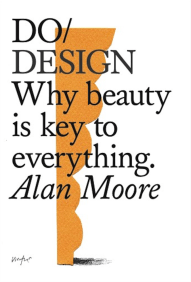
My good friend Alan Moore (@alansmlxl) from the flatlands of Cambridge recently published a great book on “Why beauty is key to everything” (Amazon Affiliates link).

Alan Moore book

It’s a great book, and as a teaser, here are some of my highlights out of the book:

Harmony, symmetry and maths all point to this atomic elegance.

A job well done is not based upon watching the clock or fighting time – but in giving oneself to the task

Their work transformed common objects into works of uncommon grace

I believe great work comes from a place of stillness where one’s focus is total on the action in hand, directed fully by the heart.

We need to open our senses to all that surrounds us

To be and to remain deeply intensely curious about our world is vital to original thinking, whereas the incurious face a rather dim future. To have a hungry heart and mind determines what it is we create

The interface with design is humanity

I don’t need to draw conclusions, I am happy for the thoughts to be half-formed but present

Do not work with people who don’t want beautiful, who wish to cut corners to increase profitability. Who, more dangerously, bring neither elegance nor grace to their work and their working environment, but the opposite.

The danger for the leader comes if you cannot truly love yourself. If you are at war with yourself then you will be unable to lead others with empathy and compassion. You may pretend – but you will always be found out

If you want more of this, Alan is organising on 27 Sep 2016 a workshop in London around the idea of, what would your business look like were it to be more beautiful?

Why should you come? You might be stuck in working out what direction to go in. Or seeking a more inspiring vision. Or trying to find new ways to make money. Or working out what your new technology can truly give to the world. You might be launching a precious new business, or working to rebuild an old one. Or a thousand other things besides. We will help you to:

  • See your work through a new lens
  • Get to grips with beautiful ways of making your business work better
  • Understand the value of beauty in designing experiences
  • See how beauty and utility can work together for success
  • Understand how great design is about the quality of your thinking, not the size of your wallet.

The gathering in a beautiful old church in Bishopsgate, London.  A remarkable space in the centre of skyscrapers.

seasonedjune323064

I read the book, and if the workshop is as good as the book, I strongly recommend it. More info about the event here. Enjoy

Freed From Desire

cadacut-1080x675

End February, i had the opportunity to attend the “Socratic Design Workshop” in Cadaqués, 1 hour drive north of Barcelona, Spain.

From the Socrates website:

Socratic Design is a new learning method, incubating the generation of the best human future narratives by realising collective wisdom through the art of dialogue.

The exponential technological revolution cannot be incorporated in the old narratives build on coal and steel ideas. Centrality, hierarchy, ownership, secret information and monopolies are no longer guarded in this new tech culture.

The exponential technology era challenges our human creativity in an unseen way. We can only approach this huge potential of power with next level humanity awareness.

We need to reflect profoundly on our values, on our strong and weak points and above all on our implicit and hidden dreams of a human good life; safeguarded in hundreds years of literature, philosophy, human experiences, religions and other narratives.

We can only perform this if we leave behind our old school atomic thinking, using the strength of intense socratic dialogue, using personal experiences, reaching collective intelligence to jump into new frontier of thinking: exponential humanity.

One of the first exercises was to describe your “perfect day” ten years from now. That exercise was more confronting than i thought at first sight. Here is what i came up with. I deleted the detailed daily hour-by-hour agenda of the perfect day, in order not to bother you with too much tactical detail.


In 10 years time…

I will almost be 70

My wife almost 60

My daughter almost 20

Our parents will be gone


I have become a full time artist – creator – sensemaker

I sell my art, creations, sense-makings, and curations

I curate, selectively, choose my clients/guests

I only select/accept commissions that meet my quality standards of intention and intensity and ethics


I am connecting with the experts, the musicians, and artists of all kinds, to bring out the very best in them. I love to work & live with them, to show personal intent and integrity, so that others want to join my projects too.


My work has given room to a Foundation for better work (essence of work and deep change)

My work leads to delight, enjoyment, joy, pleasance, elegance, and maybe epicurism.


Enjoying the silence of the house and the morning

Writing, researching, and sense-making

Creating, scripting, painting, making sound- and word-scapes

Performing, Architecting rythms and connections

Good food and wine

Family time

Reading and sleeping


I am completely disconnected

Only take mails if announced by phone

My mobile can only take calls and sms

I have stopped tweeting, FB-ing,

Enjoying the physical and emotional silence


What I do does not scale

I focus on uniqueness, excellence

The beauty is in the perfection


I live in another house, with plenty of space, and annex atelier, maybe art gallery

On the country side, the humid heavy earth of Flanders,

Or in Spain, Toledo, Sevilla, in the middle of the heat of the plain fields

The crack in me, Dries van Noten, the tones of a Spanish Guitar, the dry hot summer heat and the shadow and olive trees


I have become a hermit

Nothing should or must

There is no time pressure whatsoever

I am in flow

Nothing needs to be proven


I am freed from desire

In search for happiness

A couple of weeks ago, Pim de Morree and Joost Minnaar contacted me to check whether their Corporate Rebels idea was related to Corporate Rebels United, our movement to unite change agents worldwide to ensure that true change happens virally from deep within the fabric of our organizations.

There are several other organizations that have similar objectives as Corporate Rebels United:

Last June 2015, we organized our second Rebel Jam, this time as a co-production of Corporate Rebels Unites, Rebels at Work, and Change Agents Worldwide. The recordings of that Rebel Jam are available here:

rebels

The work of Pim and Joost is different, with a focus on employee (dis)engagement and happiness, and in the longer run, Pim and Joost hope to develop a business out of their research about corporate heroes. There is nothing wrong with wanting to develop a business, as long as you are transparent about your intentions, I suggested Pim and Joost.

I also invited them to write an essay about their work and ambitions, and that I would be happy to share it on my personal blog and the blog of Corporate Rebels United.

They followed suit, and sent me their essay, which I am happy to reproduce below, without any editing from my side.

+++ Start essay

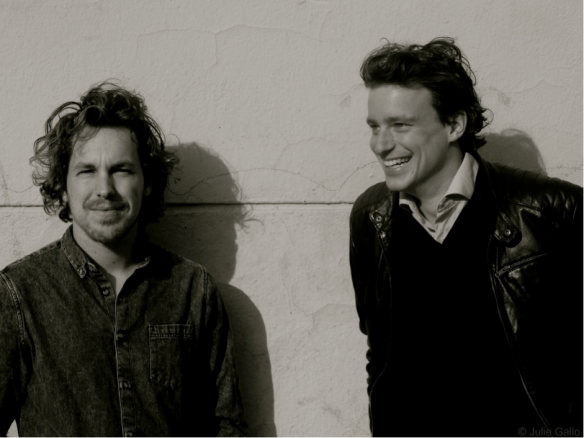
Pim de Morree and Joost Minnaar, Corporate Rebels, travel the world to meet their employee happiness ‘heroes’. They want to learn what works best and share their learnings with everyone.

pim and joost

Joost Minnaar (L) and Pim de Moree (R)

They believe the way most organizations are run nowadays is outdated. Gallup’s research reports show this time and time again; 87% of employees are disengaged with their work. Once you realize that we spend roughly 40 hours a week on this activity then you can only conclude that it’s time for a radical change.

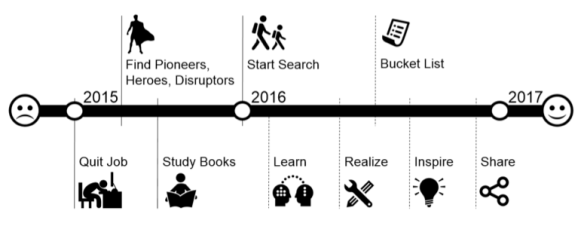
They themselves made a radical change once they both faced major demotivation after working for only 2.5 years. They quit their jobs and decided to start a quest for the happiest organizations around the globe. For a year (starting from January 2016) they dive into the world of employee happiness as Corporate Rebels. It’s their profound believe that work could and should offer much more satisfaction than it does nowadays.

Happily, there is reason for hope. Various pioneers (they call them ‘heroes’) around the world have found a solution. Organizations, academics, entrepreneurs and business leaders’ illustrate that they are achieving amazing results by increasing their employees’ happiness. They show that once people are happy at work they perform better and go the extra mile. An obvious win-win situation.

rebels time line

The Corporate Rebels visit the world’s happiest workplaces and try to discover what we all can learn from them. What do the pioneers do different than traditional companies? How did they made a successful transition? What works well? What doesn’t work? How can their approaches be spread across the world? A lot of questions as you can see.

In order to answer all those questions they have compiled a ‘Bucket List’ with the heroes they visit. The Corporate Rebels travel the world to expose their secrets. By checking off their ‘Bucket List’ they learn what works and share it with everyone that wants to listen. Only then, boring work can become a thing of the past.

rebels logo

The Corporate Rebels spread their learnings and experiences through their website (http://www.corporate-rebels.com), blog, newsletter, press, social media, inspirational talks and workshops. This is how they pursue their mission to make work more fun. To inspire employees and organizations to make a change. A change towards more happiness and more success. The Corporate Rebels hope to make the world a happier place; one employee at a time.

+++ End essay


Don’t let me entertain you, let me provoke you

Way back in 2010, I wrote a post “Let me entertain you” inspired by one of Robbie Williams’ biggest hits. Some extract of the lyrics below:

Hell is gone and heaven’s here
There’s nothing left for you to fear
Shake your arse come over here
Now scream
I’m a burning effigy
Of everything I used to be
You’re my rock of empathy, my dear
So come on let me entertain you
Let me entertain you

Lyrics of "Let me entertain you" - Robbie Williams

I have evolved since then. The title of this post is inspired by a quote by Brian Eno in an interview in December 2015 with Steven Johnson about art, music, punch lines, and culture in general I would say.


“I don’t want to be entertained,

I want to be provoked.”


Here is the video on punch lines.

When I first read that interview, there was no transcript, so I transcribed it all myself (so I did not cut and paste from the site, and everything in this post is my own crunching through the story ;-). Now it’s all for grabs on Steven’s post.

I think Eno’s quote could be a great tagline for the way I think about “events”. I could do my Magritte trick here again and say “Ceci n’est pas un event”. As I have said so many times in the past:

“I am not in the events business. I am in the business of creating high quality feedback loops to enable immersive learning experiences”.

It’s about creating spaces and environments where people want to be provoked, not feeling comfortable, not being entertained. At the edge, but not beyond.


Exactly what architect Clive Wilkinson refers to in his talk “Designing The Theatre of Work”. There is indeed something (un)wise in this notion of “Theater of Work” or “Theatre of Change”. At min 11:30 of this video, he quotes:

“I don’t want people to feel comfortable, I want them to be provoked. I am not going to get great work out of people who are comfortable”

and also

“The architecture and the language of space is not something that is meant to make you go to sleep”

It’s only very recently that I realized the “creating high feedback loops and immersive learning thing” was only about the “how” and not about the “why” and “what” this is supposed to achieve.

I think I have a better hunch about that now: I believe it is about creating high quality change. Deep change. Not the Theatre of Change. Change that is in the first place based on high quality human alignment. Beyond the cognitive, and beyond the tactics of processes and governance. Beyond the illusion and entertainment of the innovation theatre.

I recently bumped into a colleague that is doing innovation work – or should I say theatre – for a big international automotive company. She was asked to give support in the design of a “disruption tour” that was organized for the members of the board in Silicon Valley.

I think we have all seen those disruption tours, where execs are flown into sunny California, get a week immersion, come back all excited as part of this elite club that got to see one or the other hotshot in the valley, and where the initial momentum ebbs away very quickly, usually already after two weeks, when we all go back to business as usual.
But the briefing for this tour was a bit different. She learned that the tour should not challenge any of the “what” and only focus on the “how”. So in other words: avoid in all circumstances that anything they will see and hear would challenge or disrupt their existing automotive strategy. What was asked for was “disruption without disrupting”. Or “Safe Innovation” as I read somewhere else this week.

In Hollywood this is called “entertainment”.

I kept delving in the Brian Eno’s story about entertainment vs. provocation, and found this audio ànd the transcript of the 27th Sep 2015 BBC John Peel Lectures with Brian Eno.

I am very much inspired by both Peel, who has this art of giving others “airplay” and Brian Eno, who really is a “curator d’excellence”, if you look back at what sort of magic mix of artists he brought together in his life, always remaining a “vanguard”, and his restless desire for discovering new places and more:

vanguard

“Vanguard” means forefront, advance guard, avant-garde. Has to do with seeing early signals, making sense of them. Not only seeing. Also building. Building something new. “World Building”.

World building, like the places children imagine. Like the emotional places where children imagine: who would not crave to be in that state all the time? In that sense, I believe my curation and events work is more and more about painting and architecting “states of mind”.

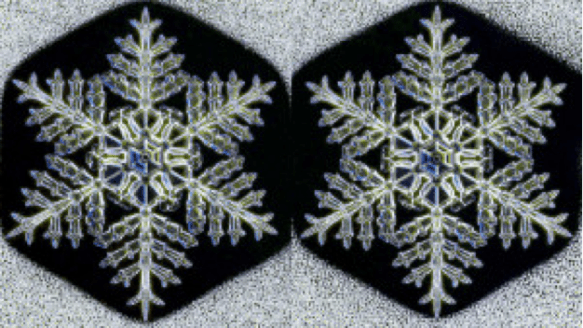
Happenstance that just this week @ribbonfarm had a fantastic post on this topic of “states of mind” titled “Productivity for precious snowflakes”

snowflakes

Two identical snowflakes, via NYT

He is talking about multi-finality (and not multi-tasking) and about the interest in the quality of the experience (and not the mere outcome), and about the source of creative being in the past.

It’s encouraging to realize that many of the states of mind we seek are not “out there” somewhere, to be hunted down and consumed. They are states of mind belonging to our past selves — we wouldn’t crave it if we had never experienced it. We have to go backwards and remember what we once knew, not forwards to some perfected version of ourselves. What would you pay to experience child-like wonder for a day? To watch Star Wars Episode IV for the first time again? To have the ability to snap your fingers at any time and see your writing, your painting, your app with the fresh eyes of a novice?

“Flexing our mental muscles” by imagining new worlds, and “when people synchronize themselves together”, says Eno.

He also introduces the topic of “exhaustion”. I will come back to the theme of exhaustion in another post, as I think it is key to the kind of problems we try to tackle today.

14th century

“We need ways to keep in synch, to keep coherent. That is what culture is doing for us.”

and

“Culture as a set of collective rituals to keep coherent, collective rituals that we are all engaged in”

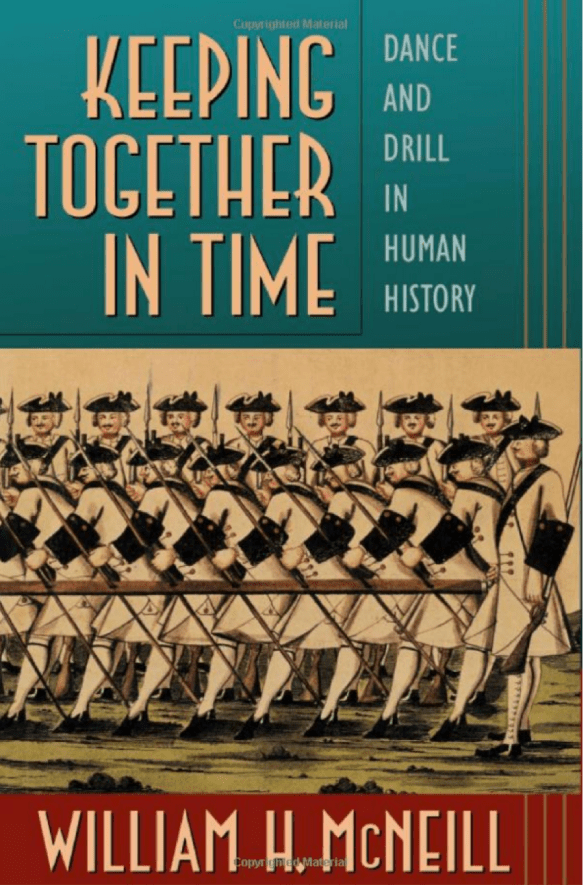
book keeping together

Brian refers to the book “Keeping Together” by William Hardy. In that book, one of the most widely read and respected historians in America pursues the possibility that coordinated rhythmic movement – and the shared feelings it evokes – has been a powerful force in holding human groups together.

As an ex-DJ, I think my work is about creating rhythms. Architecting these “coordinated rhythmic movements and rituals” for “state of minds” and “states of intentions”.

Way beyond the entertainment. This is about “Creating scenius together”. Scenius is the talent of whole communities. Bringing them in contact with their talent, their potential.

“You simply can’t absorb this (change and exhaustion). You just have to do it collectively. Nobody’s going to be able to do it individually”.

These interviews with Brian Eno are from last year. Before Bowie sent us Lazarus and left us all alone on 10 Jan 2016.


My good friend Gary Thompson also leveraged Bowie’s death into an intimate and very inspiring blog post about “being provoked” and “being at a trailhead, at the start of a new year and being on a journey without a map”.

Tony Visconti, who produced several of Bowie’s albums, acclaimed Bowie’s visionary status.

“He always did what he wanted to do,” and “And he wanted to do it his way and he wanted to do it the best way. His death was no different from his life – a work of art.”

Bowie and Eno are not entertainment. They are provoking art. Work becomes art. The essence of work is art.

“Art is everything

that you don’t have to do”

Brian Eno

At a reception earlier this week, I bumped into a friend who follows my blogs, tweets, and artwork.

She basically asked me “Quo Vadis, Peter?” and “What direction are you going with all this?” It’s a great question I am struggling with on an almost daily basis.

I will answer cryptically with the title of Otto Sharmer’s latest book “Leading from the Emerging Future: From Ego-System to Eco-System Economies”and with the last verse of Bowie’s Lazarus:

This way or no way
You know I’ll be free
Just like that bluebird
Now, ain’t that just like me?

Oh, I’ll be free
Just like that bluebird
Oh, I’ll be free
Ain’t that just like me?

Enjoy!