No more collateral damage

There was this week a really interesting article in Trends Magazine about “The Blue Economy”, about a guy called Gunter Pauli, and his ZERI foundation.

I started googling this stuff, and was amazed about what i found.

Apparently, Gunter Pauli is busy doing what he does for quite some time, as can be seen in the Fastcompany article dating back 1993 !

Surprise, surprise: Gunter is from Flanders, Belgium. He was co-founder of Ecover. In 1991, Pauli launched the concept of zero waste and zero emissions for industry through the clustering of activities at his detergent factory in Belgium.

image

Gunter Pauli is Member of the Club of Rome, a Fellow of the World Academy of Arts and Sciences, a Creative Fellow of the Club of Budapest and a long term advisor to the Japanese Government and the United Nations. He is professor at the Politecnico di Torino in charge of “systems design” at the Faculty of Architecture and the School of Design.

“The Blue Economy” is introduced as:

a new business model to inspire entrepreneurs to shape a new economy based on competitive innovations, creating JOBS and SOCIAL CAPITAL”

“The Blue Economy: Cultivating a New Business Model for a Time of Crisis” is based on the new book “The Blue Economy: 10 years, 100 Innovations. 100 Million Jobs”, published by Paradigm Publications (New Mexico, USA) with the support of UNEP and IUCN.

I could not yet find the book on Amazon, but the paper that was input to the Club of Rome can be downloaded here.

From the intro:

The form of capitalism that has dominated world societies is entirely disconnected from peoples’ real needs. Some two billion people struggle to get by on less than two dollars a day, lacking access to food, water, health, and energy, the most basic requirements for survival. Over 25% of the world’s youth are unemployed. Yet one billion of us are over nourished and swim in 400 million tons of electronic waste with higher metal concentrations than the ores extracted from the earth. Conservatively, the top 70% of the world’s wealth is concentrated in the top 10% of the population.

Fortunately, times are changing. This book is about that change. As the second decade of the 21st century sets the stage for a new economy, the core question we answer is, “What is the business
framework we really need?”

And the Zero Emissions Research & Initiatives (ZERI) is introduced as:

a global network of creative minds seeking solutions to world challenges. The common vision shared by the members of the ZERI family is to view waste as resource and seek solutions using nature’s design principles as inspiration.

I continued clicking through the different ZERI sites, and was thrilled by the ZERI Education Initiative:

The opening song is


“I want to live in a better world”


This is about an innovative learning project for children, developed by Gunter Pauli and a team from ZERI Network of scientists, scholars, pedagogues and artists.

It’s about learning children to ask the right questions.

It’s about teaching children

the 5 intelligences

  • Academic Knowledge
  • Emotional Intelligence
  • Artistic Expression
  • Eco-Literacy
  • Capacity to implement change

image

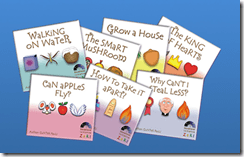
Apparently Pauli and friends published a whole series of books “Gunter’s Fables”. And yes, you can buy them at Amazon 😉
image

Also check-out this fantastic talk "How Can We Use Finite Resources To Propel Ourselves In The Future?" of TEDxTokyo 2009, held on May 22 at National Museum of Emerging Science and Innovation.

It all makes me think very much about the book “Cradle to Cradle” by William McDonough (Author), Michael Braungart (Author), a book that was a real eye-opener for me at the time, and a book that i already mentioned several times in this blog.

“Let the future emerge” is the tagline for this blog. And things seem to emerge with an astounding sense for synchronicity. Just last week, i discovered The Fifth Conference.

image

The Fifth Conference is a forum for vision. Part publisher and part conference, The Fifth Conference tackles the ‘big issues’, the factors that drive our future. Think ten, twenty, even fifty years ahead and try to imagine how we will live and work. What will this world look like? How will we have solved the economic, social and environmental challenges that we confront today? To answer those questions we talk to entrepreneurs, policy makers and experts. We analyse the facts, the forecasts and the arguments. And most importantly, we collect vision.

It is so close to my idea of the Think Tank for Long Term Future !

So, last week, i had a chat with Frank Boermeester, co-founder of The Fifth Conference.

Lots of synergies!


Frank invited me to draft an essay on Technology, with a focus on Technology Readiness in our region, for the next publication. Will certainly do so, and cross-post on this blog.

However, as we were chatting, we suddenly became aware of

the “understream”

that is driving all the changes and evolutions in Growth, Mobility, Green, Technology, Health.

Its about the theme of Cradle-to-Cradle that “reducing waste” is not good enough anymore, we need to “add value”. Its about the notion that Google’s “Don’t do evil” is not good enough anymore, and we need to “Do Good”.

It’s about what keeps Gunter Pauli going, and what he refers to in his video as


“no more

collateral damage”


And not anymore
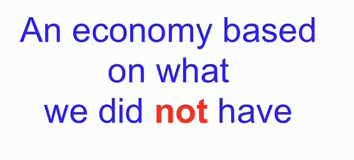
image

and yes, create a sustainable society.

image

See also some related blog posts on this site on:

Reblog this post [with Zemanta]

Thought experiment: who am i really ?

i34_21657263

About a year ago, I did my “coming-out” of the Leading by Being program. That program led to the start of this blog in April 2009.

Leading by Being is in essence a deep search for yourself and how you function in groups and in the world in general. It’s trying to answer the question “Who am I ?”.

Read that again:

“Who am i REALLY ?”


A couple of weeks, i “lost” my right foot – luckily only temporarily. Reflecting a bit during my extra free time sitting in my sofa with my right leg in the air, i started doing the following thought experiment:


What if i would loose not only my foot but everything ?

My job, my lovely wife and daughter, my family, my friends,…

Would that change who i am ?


And more related to this blog:


Would i write about the same things

in my blog as today ?

And if about the same things,

would i write about them

with the same intensity ?


The answer for me is yes.

  • Yes, i would write about different things
  • Yes, i would write about the same things but with a different intensity

What different things ?

  • Probably much much more about the realness of innovation.
  • Probably more on the themes like “Sex, Money, Happiness, and Death”
  • Probably more about ethics and ethical reboot
  • Probably more about meaning
  • Probably more about Love/Hate relationships
  • Probably more about digital identity. Not so much as a technology, but more as a philosophical aspiration
  • Probably more about soft things like poetry, romance, melancholy, more introspecting
  • Probably about my daughter and my wife. Without compromising them.
  • Probably about some nice sentences i read in novels.
  • Probably some writing of my own. As in my very first post:

I want to be playful like the birds,

showing little tricks,

challenge and pursue

but not limited

by any form of danger

In essence, it’s about a free mind.

What different intensity ?

  • I would be more radical on the innovation themes. Yes, even more radical 😉 I feel i still withhold, because of – real or imaginary ? – fear for reactions of my employer.

album_large_3571670

  • I would set-up the Think Tank Long Term Future on my own. With less dependency on others. Going my own way. I would look at setting up a open innovation web-site with online fund raising.

All the above is basically struggling with the fear of

“how naked do i dare to go ?”

There seems to be an interesting book on this topic: “Getting Naked: A Business Fable About Shedding The Three Fears That Sabotage Client Loyalty” by by Patrick M. Lencioni (Author)


“Naked” is a term that refers to the idea of being vulnerable with clients, being completely open and honest with no sense of pretense or cover. The book looks at 3 basic and well-known fears:

1) Fear of Losing the Business – No service provider wants to lose clients or revenue. Interestingly, it is this very notion that prevents many service providers from having the difficult conversations that actually build greater loyalty and trust. Clients want to know that their service providers are more interested in helping succeed in business than protecting their revenue source.

2) Fear of Being EmbarrassedThis fear is rooted in pride. No one likes to publicly make mistakes, endure scrutiny or be embarrassed. Naked service providers are willing to ask questions and make suggestions even if those questions and suggestions turn out to be laughably wrong. Clients trust naked service providers because they know that they will not hold back their ideas, hide their mistakes, or edit themselves to save face.

3) Fear of Being Inferior – Similar to the previous fear, this one is rooted in ego. Fear of being inferior is not about being intellectually wrong (as in Fear of being Embarrassed) it is about preserving social standing with the client. Naked service providers are able to overcome the need to feel important in the eyes of their client and basically do whatever a client needs to help the client improve – even if that calls for the service provider to be overlooked or temporarily looked down upon.

The last one is in my opinion also related to your relation with your employer and how prepared you are to stick out your neck, and to evangelize your ideas, because you have a genuine desire to make your employer succeed and improve.

The worst than could happen is when your employer gives you a negative appraisal for sticking out your neck, or pushing change too hard. Especially if you are part of the innovation team. Though everybody in the company has creative juices and is an innovator.

And what do you do when this happens ? What do you do when you discover that the innovation your company proclaims is not real ? What do you do when you find out or get confirmed it’s all a big illusion ?

How much do you once again want to compromise your own authenticity and just go on ? Or are you prepared to go through the resistance of big changes and boldly daring to pursue your own dreams as suggested in Seth Godin’s Linchpin ?

Or how long are you prepared to you hide in your own shadows and have your will broken ?

In Leading by Being, one of the exercises was to think about one of your “shadow”-sides, some negative something about yourself, something that you would not like others to identify you with, such as being arrogant or manipulative or … and then the do a play-role yourself “playing” / “acting” that shadow role for 3 hours. It’s pretty confrontational !


What if i would start blogging under an alias

to express those shadow thoughts ?


It’s an interesting thought experiment that helps you assess how Trapped or Free your are in your worldviews.


Yes, i am still trapped

But much less then a year ago


What would you like me to explore further ? What different things would you like most ? Where would you like to see a different intensity ?

Let me know. Give me clarifying, supportive and challenging feedback.

Great to Good: new value kit

Umair Hague did it again. He just published the Great to Good Manifesto.

He starts with “Pepsi‘s great at producing something that’s bad for you (sugar water)”. And goes on by stating that “Do no evil”  “Don’t do evil” is not the same as “Doing Good”.

Umair’s blog is in essence about an Ethical Re-Boot. We all feel that we cannot go on with the greed-economy. We cannot go on with killing our earth. We cannot go on with hurting other people.

It is about a new value kit for the 21st century. About old game vs. new game.

In the table below, you’ll find some other examples.

image

I made this table about 2 years ago during my Leading by Being adventure. In fact it even started before that. The trigger was the book “Cradle to Cradle: Remaking the way we make things” by by William McDonough (Author), Michael Braungart (Author)

The book is from 2003 (almost 10 years old !), and i bought it after seeing a BBC documentary on the work of William McDonough. The key insight that opened my eyes was when McDonough explained that

reducing waste

was not good enough

There is a better alternative, and that is producing products that do not generate (less) waste, but that add value, that add goodness.

This is the essence of Great to Good. The difference between “Do no evil” “Don’t do evil” and “Doing good”.

In that sense, also the famous TED one-liner “Ideas Worth Spreading” is not good-enough anymore. Better is “Ideas Worth Executing”.

This must become a huge PR issue for Google, who have surfed the wave of “do no evil” “Don’t do evil” for 10 years now. They are also more and more seen as the “Beast of Mountain View”. If you read the wave of protest following the release of Buzz and the resulting privacy issues, you’ll get a good feel why

“don’t do evil”

does not work anymore

Umair Hague proposes a number of new corporate principles:

  • First how, then who: “Do our people have the capacity to judge right and wrong, no matter how great they are?”
  • The Yoda/Hedgehog concept: “companies should only do what they can be great at, what makes tons of money, and what they’re passionate about.”
  • Ethical accelerators: “”transparency, openness, rules, and accountability. Most companies have not a single one of these”
  • A culture of meaning: “Production and consumption are meaningful when they actually yield durable, tangible benefits to people, communities, and society”
  • Confront reality:” Banks, for instance, confronted the “brutal fact” that selling toxic financial instruments was great for their bottom line. But they never confronted the simple reality that a classic asset bubble in housing was failing to do good.”

Umair asks the right questions:

  • How many of the principles are at work in your company, industry, or sector?
  • What would your company, country, or life look like if each of the principles was applied to it?
  • How would applying each principle disrupt “business as usual”?

Defining, building, evangelizing, and nurturing this

new value kit

for the next 10-20 years

is all what our Think Tank on Long Term Future is about.

Reblog this post [with Zemanta]

Digital Identity Weavers

I have a job where i regularly meet fascinating people.

I recently had the opportunity to chat with Gary Thompson from CLOUD, Inc.

image

CLOUD Inc. is the Consortium for Local Ownership and Use of Data, a non-profit organization that has filed for 501(c)(6) status with the IRS and is open to people, companies, and other organizations. CLOUD has been formed to create standards to give people property rights in their personal information on the Web and in the cloud, including the right to decide how and when others might use personal information and whether others might be allowed to connect personal information with identifying information.

So all this is about your personal digital identity, and giving back control of these data to the user. Kim Cameron (Chief Architect Identity at Microsoft and the man behind www.identityblog.com will love this – and i am not cynical 😉

A couple of weeks ago, i had a fascinating chat on identity. How identity is all about context. Where you are, what you do, etc. During that conversation, Gary suddenly used a metaphor of what i would call “identity weavers”.

I found this metaphor really powerful. And i suggested Gary he should blog about it, and that i would offer him a guest post 😉

So, here is Gary with his post on Reweaving the Fabric of the Internet on his personal blog The End of Linearity. Peter Hinssen will love this story, as so closely related to the Explore the Limits story.

I just have cut&pasted some strong one-liners. For the full story, check out Gary’s blog.

From health to education to finance and beyond, the ability to bring together people, concepts, and ideas (threads) in new ways is an invigorating journey.  Our “weavers” of the future can design beautiful new fabrics from cures to cancer to dynamic global learning communities to rapidly evolving financial models.  When thread and fabric are unleashed, when weaver and woven can dynamically change places, when loom and head are released from the bonds of the physical, the Internet can take a vital step forward.  By applying an end of linearity to how we think about the Internet, we can see the true beauty of Vint Cerf and Bob Kahn’s creation. It is a connector of people, not of web pages, and it is at the heart of a new future, a rewoven future.

This compelling vision goes way beyond the web of pages, goes way beyond the early thinking on Semantic Web. It is in essence proposing an identity architecture for the Internet. Because the internet is broken. It was never designed with identity in mind.

By now, you will notice that Digital Identity is much more than distributing hardware tokens, or putting an PKI infrastructure in place.

Its about user control of personal data. It’s about context awareness. It’s about who i am, how i am, and what i do and intend to do in an on-line world.

Innovation to the Core

I just finished “Innovation to the Core” by by Peter Skarzynski (Author), Rowan Gibson (Author)

This is a modern, up-to-date, and indispensible book on Innovation.

More precisely on how to make Innovation a core capability of everything you do in your company.


Anybody who is deeply or remotely

involved with innovation

must read this book.


It’s a book that explains why radical innovation is the only option forward.

It’s a book that clearly explains the tension between efficiency and innovation, and what to do about it.

Both efficiency and innovation have value. More, they should be equal partners ! If you are serious about innovation, then you should spend at least as much on your innovation program as on your efficiency program. Check out how much resources you spent this and last year on efficiency. Take that amount and number of FTE’s and there is your budget for innovation for the next 2 years.

So it is not about being Lean OR Mean,


it’s about being Lean ànd Mean !


My biggest lessons learned from this book:

  • Dare to challenge everything, and especially your company “orthodoxies”, the taboos that have been taken for granted for the last 10-20 years.
  • Let the focus area of your innovation emerge bottom-up. Don’t define your innovation priorities in a leadership group. If you want everybody to be an innovator, you need input from everybody at all levels in your company when defining your innovation architecture. If not you end up with an impossible sell exercise towards the basis afterwards.
  • Make your executives and regional heads accountable for innovation. Some companies make 30% of the bonus dependent on innovation objectives.
  • There is an enormous responsibility for HR in getting the creative and innovation skills trained across the company at all levels.

But THE biggest lesson learned is probably about the difference between managing the supply and the demand for innovation ideas:

  • I believe most of us do a decent job on the supply side: we have plenty of initiatives and tools to gather, generate and follow-up on new ideas. That’s the supply side
  • But there remains a lot to be done on the demand side. I love the suggestions in the book that each division, region, product manager, etc is held accountable for at least picking-up 3-4 ideas coming from the supply side. Stronger: each of these groups has to reserve 10% or more of their existing budgets to spend on innovation projects. And this without changing the existing performance metrics.

Getting innovation into the objectives of managers is key. The book refers to this as the


“Management Process Make-Over”


Regular readers of this blog know that i have a strong opinions about:


Radical innovation vs. incremental innovation

The role HR has to play

Getting innovation deep into the DNA of your company, at ALL levels, all regions, all divisions.


This book only confirms and reinforces the thinking that i have previously shared in following posts on this blog:

Cubicle 3B23: Chief Happiness Officer

There is a great comments from Joe on one of the previous Cubicle 3B23 stories. It’s too good to be hidden in the comments section.

You are a CHO; now what?

Yesterday I was asked what was my title, and got a puzzled pair of raised eyebrows when I responded that my unofficial self-adopted title and vocation in life is Chief Happiness officer… It got me thinking – what exactly is a CHO? (And no, I’m not the corporate clown that everyone likes to pick on or that is famous for telling the best jokes – even though occasionally I find myself at the receiving end of a joke… :-) )


Happiness officer is a very serious and heavy responsibility – a temperature meter, detecting the health of an organization, noticing the first signs of trouble and trying to heal them. It is like the shaman of a tribe, the healer or the local witch.

A healthy organization is one that not just functions and produces but is energized, gives a feeling of belonging and meaning to all the people that make it. A happy organization is made of happy balanced people – happy not in the sense of joking around all the time, but in the sense of having a deep feeling of satisfaction.

It is like a healthy bee swarm. Even though the swarm is nearly a creature in its own right, with mind and memory of its own, it is made of little individual parts who influence greatly its health. The swarm is very resilient, but only if its bees are healthy. When they are not, the swarm falls apart. When all the workers leave the hive in despair, it doesn’t matter if the queen is still there and healthy. A queen alone does not make a swarm – it stars it, but does is not equal to it.

Bee doctors watch the behavior of the individual worker bees to know the health of the hive. It is the same with the Happiness officer… He watches for small tell-tale signs: more and more people who have the nagging thought that even though rationally speaking they should feel perfectly satisfied with their position in life, they are somehow not; more and more people with the uncomfortable feeling that there is something missing, a feeling which gradually grows into discomfort and distress.

And distress is a powerful force – a force that pushes you to change.

This is what the happiness officer watches for and helps – by encouragement, nudge, energy boost – helping people one by one find what makes them tick and nurturing their belief that it is worth going for.It is a fine balance between wild optimism and integrity

The ultimate success for a CHO? A company that does not need him; a company where everyone is their own CHO…

Joe – the CHO in Cubicle 3B21

Sex, Money, Happiness, and Death

The title will give me probably the most hits this blog ever had. Before you read any further, this is a book about authenticity.

I found it via Fred Zimny’s blog.

In this book Kets de Vries says:

I realise the importance of authenticity in my own life and the lives of others.

I have seen how easy it is for someone

to follow a route to

self-deception and illusion.


Fooling ourselves, as many of us learn the hard way, isn’t sustainable in the long run.

He continues:

To me, being authentic implies being honest, truthful with myself and others, living … with my own values and principles, and experiencing a sense of meaning in what I’m doing.

Authenticity implies

a willingness to accept

what I am

and not attempt

to pass for something

or someone else

Authenticity means not only trusting my strengths but also my weaknesses and being patient with my imperfections. It has to do with having the courage to say how things are, to say no, to face the truth, and to do the right thing because it is right.

Sounds like a cool book. Not available on Kindle yet.

Looks to me like a Leading by Being program for CxO’s.

Google’s 90 days planning

When i was attending Le Web in Paris in December 2009, i attended one of the Google sessions.

To the question “what is your roadmap”, the Google speaker answered:


“As you probably know

we do not use

any roadmaps anymore”


Just last week, i found this interesting blog from Don Dodge on how Google sets goals and measures success. Yep, that’s the same guy that wrote that article on Failure is not an Option, and that i reproduced and commented on my blog here.

Don knows what he talks about. Like me, he was at Microsoft, and if there is one thing that you learn at Microsoft is to work with numbers and living through the “rhythm of the business”. When i was there, you had in essence YEARLY planning sessions, complemented with mid-year reviews. It’s way more complex than that with lots of consultations back to the field, but for this moment remember one-year plan and mid-year reviews.

Some countries (Russia, China, etc) go through much longer planning cycles. Who does not remember the Russian 5-years plans and strategies ?

Some corporations still apply 5 year strategies, especially companies of a co-operative nature. 5-year plans with yearly operating plans.

Here comes Google: 90-days plans ! It’s not only about the timing, it’s also about the aggressively setting the objectives.

OKRs are Objectives and Key Results. I submitted my Q1 OKRs with what I thought were aggressive yet achievable goals. Not good enough. My manager explained that we needed to set stretch goals that seemed impossible to fully achieve. Hmmm…I said “This is just a 90 day window and we can predict with reasonable accuracy what is achievable. Why set unrealistic goals?” Because you can’t achieve amazing results by setting modest targets. We want amazing results.

We want to tackle the impossible.


Don is then adding some meat to the Failure is not an Option discussion.

“Taking great risks, pushing innovation, and striving to achieve the impossible will never happen at companies like that have a culture of FNAO”

Don has also some words on rewarding success at Google:

Financial rewards are significant, but they are not the primary motivator. Working with the best people in the world and achieving greatness is the ultimate reward.

At the next strategy meeting, ask yourself:

  • “do we have the very very best people on board to achieving greatness and innovation ?”
  • “do we have the very best people on our leadership and executive committees to celebrate experiment and innovation?”

A lot of companies have every day discussions and big statements that innovation is important and about how innovative we should become. A lot of it is theory.

The only reality check is when you actually “ship” something innovative.

Ask yourself: “What is the last time we shipped something innovative that added substantial NEW value to our customers?”

I have tried to input some “sharper” vocabulary like “radical” innovation vs. “incremental” innovation into numerous consultation rounds. Same about innovating in “the Core” and “Beyond the Core”.

It is surprising to see how through these consultation/review process all the sharpness gets deleted, to end up with something very grey. The “best” argument i have heard recently was “you bring too much new terminology into the company, you have to express your ideas in a language they understand”.

  • I am convinced leadership IS open for this new vocabulary. It just gets filtered out before it reaches them.
  • I am convinced that the age of consensus is over.

I have not given up, on the contrary. I am becoming more vocal, beyond the “resistance” that one has to play the blueprint, that one has to remain invisible and behave.

You need more polarized discussions, and dare to go for the ideas that cause this polarization.

Don’t go for the obvious, go for the impossible.

I was quite proud that in my recent 360° review my polarization was seen as something negative. It encourages me that i am on the right track.(see also Guy Kawasaki’s speech at Sibos 2009).

  • I have a strong opinion that you can NOT innovate without polarizing
  • I have a strong opinion that you have to bring in new young blood
  • I have a strong opinion that innovating also includes bringing a new culture of “celebrate failure and experiment”.
  • I have a strong opinion that we have to explore the edges of our natural eco-system
  • And that innovation comes with a new vocabulary.

Innovation is about agility. By making decisions fast. By planning 90 days ahead not 5 years. By daring to take risks and celebrate the experiment.

It’s about radical innovation. It’s about polarizing. It’s about strong language. It’s about kicking ass.

Innovation is about following your own daemon (or “genius” as Seth Godin calls it) and about breaking through the resistance of “behaving normally”

Broken Foot

From the top of my broken mind to the bottom of my foot !

Yesterday i fell over a wet spot in the company’s parking garage. I could immediately see it was serious. My right foot was hanging loose in an angle of 90° !

Ambulance, hospital, x-rays, etc

Result: triple fraction of ankle, shinbone, calf bone. Needs to be operated. Will take me deep into 2010 to fully revalidate.

Positive: gives me more time to read and blog.

Just started Seth Godin’s Linchpin.

Fantastic read so far. As Seth Godin suggests, you definitely have to read the chapter “Resistance”.

The book is a lot like Leading by Being, but then in a modern version. A recommendation.

Broken Will

Good morning, Vietnam !

Bad start of the day. Have a terrible cold. Did not sleep well. Outside; it’s 1°C, windy, humid, and dark. Again, i woke up angry.

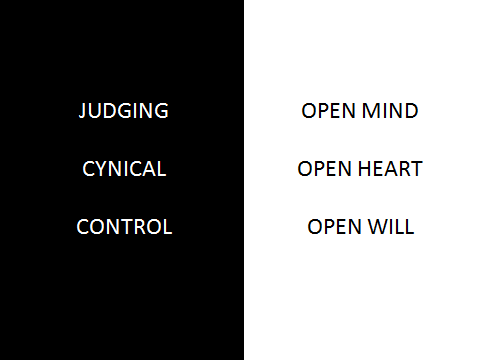
Was thinking about my previous post “Emotional Zombies”, where i wrote about Open Mind, Open Heart, and Open Will.

image

Open Mind, Heart, Will is based on the work of about Theory “U” by Otto Scharmer.

It’s a book about presence, and how – if you dive deep to the level at the bottom of the “U” – you will discover your true purpose. The subtitle is “Leading from the future as it emerges”. Now you know where i got the title of this blog.

In “Emotional Zombies”, I also wrote about the golden cages.

I recently discovered it can get worse. Much worse.

It can get to the stage of BROKEN Mind, BROKEN Heart, and BROKEN Will.

It remember somebody quoting about education just 50 years or so.

In the family instruction books of that time, the general sense was that the parent had to break the will of the child as early as possible in the education of the child, to ensure that the child would be fully under the parents’ and teachers’ control. Luckily, education has evolved, but you get a sense what it means to break somebody’s will.

To further explain that feeling of Broken Will, i will tell a true story. When i was studying architecture (yes, building houses and so) at the art school in Brussels, one year we had to design an art exposition space. We also needed to make a maquette of it.

I worked on mine for days and nights. It was made of the finest balsa wood, and the construction was made of hundreds of mini balsa pillars. Oh boy, was i proud !

Then the jury comes along. The judging was a session in full public where the other 200 students could follow the judgment of the pros.

Professor Jonckers – i even remember his name after 30 years ! – looked at my piece of art. He smiled dangerously and said: “Let’s see if this thing is also as solid from a construction point of view as it looks like” and then he demolished the whole thing by shooting with his fingers all 100 pillars into pieces. I could have kicked him in the face (i should have done it).

That hurts. It hurts when your piece of work gets demolished. It hurts when your contribution gets ignored. It brings me in my state of “Broken will”. Its an emotion beyond broken heart. It cuts deep.

This week, i mourned my broken will.

And what about the cage ? I suddenly remember a line of a poem: “she smiled gently when she discovered that the door of the jail was already open for some days”