Pirates, Rebels, Mercenaries and Innovators

Not many people know this, but in the 70ies, 80ies, I was a quite successful DJ, and me and my friends toured under the brand “Celebration”. Life was – and still is – a big feast.

Embarrassed to say, but my first record bought was “Paranoid” from Black Sabbath. The paranoid thing probably haunted me for the rest of my life.

But I also have the original “God Save The Queen” by the Sex Pistols, on the EMI-label that rejected them before they became a huge hit, part of the disruptive album “Never Mind the Bollocks”


clip_image002clip_image004

Watch the metaphor of the “flag”.

With “Celebration”, we did everything ourselves:

  • We built ourselves the PA system, the lighting system, made our own jingles, we cut out our own slip-mats in cardboard (this was before the first fast-starting Technics turntables)

clip_image006

  • printed our own posters to announce the show
  • distributed at parties all sorts of gadgets to attract audience to our next gig. A famous example is a small plastic bag with 2 sugar cubes suggesting the energy that will be required at the next party.
  • We begged for the small lorry from the grocery shop to be able to transport all that stuff and records from one place to another.
  • A lot was manual. And heavy. Vinyl records are heavy. Especially if you have a couple of thousand and you live on a 5th floor apartment with no elevator, stairs only.

It was a network of friends. We went out on our scooters to paste the posters on the ad boards in the villages around, we borrowed each other’s records. It was the shareable economy avant-la-letter. We played for fun, later for a crate of beer, and much later for a couple of 100 Euro per night. That was for gigs for 3,000+ people. No prima-donna behavior like today’s top-DJ’s like Tiesto and others. Everything was new and innovative.


We wanted to shock

We felt like pirates


Later I joined a group of crazy enthusiasts who founded one of the first free and – at that time – pirate radio station FM-Bruxel. That was with guys like Gust Decoster, Luckas Vander Taelen, Dominique Deruddere, Ray Cokes and Marcel Vanthilt, most of them still playing a prominent role in the local media and film industry.

We really behaved like pirates. We also had our flag and our own logo. Can’t find it back: if somebody from the original gang still has a picture, please mail it to me. I will be grateful for eternity.

And years later, some of these guys found each other as founders and managers of one of the most famous nightclubs of Belgium “Le Beau Bruxel”. Our party animals were from art scene and musicians. I did that for 2 years. And I can tell you, I saw a lot of “characters”, learned a lot about human (non)-behavior. We closed the shop because nightlife became too dangerous in Brussels.

Fast forward many years to 2011: I am having a telephone conversation with a potential speaker for Innotribe at Sibos 2011 in Toronto. And I describe the Innotribe space we had in Amsterdam last year.

My speaker reacted: “wow, that sounds cool! The only things you guys are missing is a pirate flag!”


clip_image007

Indeed, with some – a lot actually – imagination, you could see our 600 m² Innotribe space at Sibos as a flagship, with the front part for the keynote presentations as the “prow” of our ship, the lab-space as the “galley”, the tower with the projector as our mast, and the projection screen as our sails.

Imagine a ship like this sailing in the middle of the exposition hall of Sibos, creating havoc – positive inspirational havoc – throughout the week. The only thing that was missing was the pirates flag on the top of our mast.

 

clip_image009

The pirate flag.

Two days later – completely by coincidence – I started reading “The Pirate’s Dilemma: How Youth Culture Is Reinventing Capitalism” (Amazon Affiliates Link) by Matt Mason, also author of “The Pirate’s Dilemma: How Hackers, Punk Capitalists, Graffiti Millionaires and Other Youth Movements are Remixing Our Culture and Changing Our World”


clip_image011


Fantastic read. Some parts you can skip if you – like me – have been inherently part of the punk and new-wave culture of that period. The names of bands generate a lot of nostalgia!

Some really cool quotes from this book:

changing the very fabric of our economic system, replacing outdated ideas with the twenty-first-century upgrades of Punk Capitalism

Disruptive new D.I.Y. technologies are causing unprecedented creative destruction

D.I.Y. encourages us to reject authority and hierarchy, advocating that we can and should produce as much as we consume

Youth cultures often embody some previously invisible, unacknowledged feeling in society and give it an identity

Building a community of pirate entrepreneurs


In Chapter 2, the author introduced the “Principality of Sealand”, a pirates home in the middle of the English Channel, in waters that are un-sovereign.


clip_image012clip_image013


And have a good look at the intro about “Principality of Sealand” in Wikipedia:

Since 1967, the facility has been occupied by the former British Major Paddy Roy Bates; his associates and family claim that it is an independent sovereign state. External commentators generally classify Sealand as a micro-nation rather than an unrecognised state.[3] While it has been described as the world’s smallest nation,[4] Sealand is not currently officially recognised as a sovereign state by any sovereign state. Although Roy Bates claims it is de facto recognised by Germany as they have sent a diplomat to the micronation, and by the United Kingdom after an English court ruled it did not have jurisdiction over Sealand, neither action constitutes de jure recognition as far as the respective countries are concerned.

Maybe that is what innovation teams have to do: create their own sovereign state, micro-nation, governed by its own rules, taking unclaimed territory, and… act like pirates.

The pirates metaphor also came to mind when I saw last year Laura Merling from Alcatel-Lucent (@magicmerl on twitter and describing herself as “API Strategist, Marketing and Business Dev, Developer Community Geek”) gave a speech at Defrag 2010 in Boulder, CO.

Her talk was titled:


“On Being A Corporate Renegade”


Depending on what dictionary, a “renegade” is a deserter from one faith, cause, or allegiance to another or an individual who rejects lawful or conventional behavior. That’s what I would call a pirate.

You haven’t seen Laura. She is a bit skinny, long rave-black peaky hair, and some really cool belt. A bit like the one below, but much cooler. Since then I refer to her as the “belt-woman”.

clip_image015

Her talk went more or less like this:

When I got hired as manager of the API start-up within Alcatel Lucent, my CEO gave me 90 days to deliver V1 of the platform. 90 Days !

I did not have resources nor budget

I hired 6 mercenaries, good friends with specific proven strengths on marketing, coding, program management etc

We did it for fun and for the challenge

Next meeting with my CEO was on my role as change agent

He said: “Laura, you are successful when in 3 months time there are 70,000 people at my door complaining what this bloody women is doing in my company!”


That’s what I would call a CEO Innovation mind-set ! Maybe the Laura’s story is a bit romanticized, so what ? She gets the story across.

That’s why we invited Laura and her team when we were doing the Cloud Computing study tour earlier this year. This time we had her full team – 15 young and brilliant folks – who could interact with an executive audience that could compete big time with what you sometimes see from incumbents like IBM, Microsoft, Oracle, you name them. Very impressive. And what an energy from this start-up groovy team. So inspiring.

So when Laura was in Europe for business a couple of weeks ago, we asked her to come and meet our innovation team in La Hulpe. Inspired by the culture story, the idea emerged of teaming up together more regularly.

Quickly back to The Pirate’s Dilemma book:

What pirates do differently is create new spaces where different ideas and methods run the show

Pirate radio is an incubator where new music can mutate. Initially, the new strains of music it produces are seen as too risqué for the mainstream to touch, but once this music reaches a critical mass in popularity, anthems from the pirates start hitting the pop charts, pirate DJs become crossover celebrities, and the scenes created by these stations grow into cottage industries and worldwide exports

I started reflecting on this.

Why not create a community of pirates, of rebels with a cause, of innovators. By positioning our Innotribe space at Sibos as the Pirates’ Mother Ship, and like Matt Mason suggests:


“By giving a community

a new space

that was not previously available

to them,

you can empower them,

and they in turn

will propel your idea forward”


A group of people who are relentlessly challenging the status quo, breaking the rules, saying the unsaid, spreaders of the innovation virus and of tribal energy. No fear. Rebels with a cause. Leading by being our true selves.

And with the Innotribe Logo as our Pirate’s Flag and declare sovereignty.

Bring Jack Back (Update: Jack IS back)

Update: just minutes after posting by blog, it was announced that Jack IS back at Twitter, now as “Executive Chairman”. Check-out the news everywhere or here at ReadWriteWeb.

I am getting so inspired by the fabulous Jack Dorsey from Square. Watch this video and the full transcript on Techcrunch. Read David Kirkpatrick’s article in Vanity Fair with the title “Twitter Was Act One”

He makes me think of Liam Gallagher from Oasis. He has something “very British”. He is stylish. The same arrogance. The same pureness. The same design and drive for perfection. And skimming down until only the essence is left over.


One comment reads: “you know what ? Maybe it’s too sounding like the beatles or John Lennon (that was my first reaction). But as a great beatles fan, i’m just glad to see some guys carrying the torch and able to do great music”


beadyeye1stpiconline (1)


And have you seen the interview over the week-end (I think it was BBC) with Liam as part of the launch of the new post-Oasis band Beady Eye ? It seems that the voice of Liam was recorded without any effect, no echo, nothing (not the case in above video).


Pure

The essence

The minimalism of Twitter


Which brings us back to Jack. I believe Jack is the John Lennon of Payments. That Square means for payments what The Beatles mean for music.

Back to the video.


image


Some quotes from the different articles and transcripts, to get you a good idea how genius this guy is.

  • “Little Jack Dorsey was obsessed with maps of cities”. Read my recent posts and thinking about the connected economy, the connected company, the connected team and the connected value. They happen also to be the big trusts for our Innotribe at Sibos 2011 in Toronto, later this year
  • he studied for a year to become a certified massage therapist (Martine will love this)


“Payment is another form of communication,” he says, “but it’s never been treated as such. It’s never been designed. It’s never felt magical. We’re the only payments company in the world that’s concerned with design,”

  • So the architects designed this gorgeous bridge, but the problem with the Golden Gate is that this is an extremely tumultuous area, if you’ve ever sailed through this or taken a boat through this, the waves are immense. Or surfed through it, which is more dangerous. It’s a disaster, I mean all the weather of the Bay is being forced through this one single point. So, all these elements create this perfect storm of turbulence. It’s extremely deep in the middle and it’s an epic span, so this was not an easy challenge.
  • And a lot of people think of design, when they hear the word design as visual, something that looks pretty.


Design is not just visual, design is

efficiency

Design is making something simple

Design is epic

Design is making it easy for a user to

get from point A to point B


Reliability is a feature. This is what Brian said earlier, availability, reliability, and staying up, that’s a feature and that’s a product, and it has to be well-designed and thought after and considered, and that’s what we’re doing.

I think I’m just an editor, and I think every CEO is an editor. I think every leader in any company is an editor. Taking all of these ideas and you’re editing them down to one cohesive story, and in my case, my job is to edit the team, so we have a great team that can produce the great work and that means bringing people on and in some cases having to let people go.

This is the bridge I want to cross. [Shows Golden Gate]


This is how I want to arrive at a destination:


This is classy

This is limitless

This is inspiring

This is gorgeous


My dream is to have him at Innotribe Mumbai, where we’ll talk and discuss about Mobile Payments, connecting the un-banked and financial inclusion.

Would really like to hear Jack’s view on design and perfection for that.

Bring Jack Back. To be classy, limitless, inspiring and gorgeous.

Innotribe Mumbai: Mobile Payments–connecting the unbanked

Innotribe at Sibos 2010 in Amsterdam was such a success that we decided to start running stand-alone Innotribe events. The first event in its kind is Innotribe Mumbai on 1-2 June 2011. It’s not an or/or story. We keep on organizing Innotribe at Sibos.

At Sibos this year, we will have 3 technology inspired topics: Big Data, Digital Identity and Social. We will also have 3 non-technology inspired topics: Corporate Culture, Where does the investment money go for innovation, and New Capitalism.

Some of the Innotribe themes of 2010 will go mainstream at Sibos Toronto: Cloud computing and Mobile are two excellent examples. Other new topics will be introduced: they have the potential to go mainstream in 2012 or 2013.

As you can see, the stand-alone Innotribe events are part of our build-up towards Sibos Toronto.

What we try to do at those stand-alone events ànd Sibos is 3-fold:

  • Extend the type of audience for our events: more innovators, movers and shakers and local entrepreneurs
  • Extend the type of content. Mobile, big data, social, digital identity. Not necessarily that SWIFT wants always to play an active role in these, but to create an active and collaborative conversation with the financial industry on these topics
  • Extend the brand of SWIFT into a brand that relates to innovation

SWIFT is therefore pleased to invite you to attend Innotribe Mumbai, a two-day event that will bring together a powerful combination of people from banks, carriers and mobile device, platform and service providers – as well as local and international entrepreneurs – to explore the ways in which mobile technology are enabling greater financial inclusion. What will the financial and telecoms industries look like in the future, and what can you do to help shape them?

Mobile paymentsInnotribe events are built around an energising mix of education, new perspectives, collaboration and facilitation. Innotribe Mumbai participants will be able to learn from each others’ opinions, ideas and business models. Also expect exposure to longer-term perspectives through discussions about the future of money and the dramatic business model shifts market participants will likely undergo as that future becomes a reality.

The detailed agenda is shaping up, and we have already confirmed the participation of some of the most influential innovators in our industry and beyond.

Mark the date in your calendar and follow us on Twitter. We just published a very tentative program for this event, and registration will formally open on 21 March 2011.

Hope to see many of you there.

May the Innotribe vibe be with you.

Digital Identity Tour Part-4: Austin–Munich–Toronto

This post is a fourth in a series on personal digital identity. Part-1 “The unpolished diamond was published here in August 2010 and Part-2 ‘The Digital Identity Tuner” was published here in September 2010. Part-3 “Personal Data Something” was published here in December 2010.

The journey continues. Now we move into Austin for TEDxAustin and SXSW Interactive.

You can follow the livestream here. It’s a fascinating way to spend your week-end and get inspired.

image

Gary from CLOUD is on stage today 19 Feb 2011 at 4pm Austin time.

Some time ago, I teamed up with the folks of CLOUD, Inc. (www.cloudinc.org), a non-profit technology standard consortia founded in March 2009 and based in Austin, Texas. “CLOUD” stands for Consortium for Local Ownership of Use of Data. I am on their Strategic Advisory Board, together with Charlie Hoffman, Director of Innovation, UBMatrix, a leading provider of XBRL software, Anthony J. Barrett, Senior Vice President, Integration, Walgreens, and Dan Walker, former Chief Talent Officer for Apple and GAP.

image

The power of people. Connected.

If you have read my previous post on team dynamics, then you may have noticed a pattern developing in my thinking. With kudos to co-thinkers Verna Allee from Valuenetworks.com and Mela from the SWIFT Innovation Team. We had a great synchronicity chat in London, and what emerged was a model for organizing our thinking for Innotribe at Sibos 2011 along the theme of the Connected Economy.

album_large_3991397

Suddenly, it all made sense. One could zoom into the Connected Economy into different facets such as:

  • our connected companies: this is where we could talk about company culture and new organizational models that do away with the silo construction of most companies
  • our connected teams: how we create healthy team dynamics, how we collaborate, how we realize full potential with social cognition
  • our connected self: acting from our authentic strong self, this is more about personal and corporate values for the next decades. This is also about our Digital Identity/Footprint. The power of people. Connected. What CLOUD is all about.
  • our connected value: new thinking about capitalism, social currencies, financial inclusion, P2P networking, money vs. value, the accounting for intangibles

What we want to do at Sibos and our Innotribe Events is to create ongoing conversations, with the rigor around these conversations, focused around sense-making. But let the future emerge.


The art of the half finished


Where the event is the middle of a process, not the end-point. Leaving enough room for others to fill in, for ideas having sex. Where humans can get inspired by something else than logic.

CLOUD has been featured as a keynote speaker at SWIFT’s annual Sibos conference in October 2010 in Amsterdam and will be speaking at TEDxAustin on February 19, SXSW Interactive on March 14 and leading a panel at XBRL22 in Brussels the week following the European Identity Conference.

image

For the Munich KuppingerCole conference, Gary submitted a speaking slot by CLOUD and Co, and we just got the news that the proposal was accepted. I let you enjoy what Gary put together:

In March of 2010, SWIFT’s Innotribe hosted last year’s European eID Interoperability Conference. Peter Vander Auwera, Innovation Leader at SWIFT, and former colleague of Kim Cameron has said this about CLOUD, Inc. in his post on Identity Rights 3.0: "I repeat myself by saying that this CLOUD vision goes way beyond the web of pages, goes way beyond the early thinking on Semantic Web. It is in essence proposing an identity architecture for the Internet. Because the internet is broken. It was never designed with identity in mind."

CLOUD sees the issue of identity as one that goes far beyond log-ins and enterprise management. The issues of identity, privacy, security, data portability and governance are not separate issues but simply separate axes of the same problem.

CLOUD sees the answer to these issues coming from a new language for the Internet, so as to extend the revolution started by TCP/IP and accelerated by HTML. CLOUD’s CTML (contextual markup language) is a language for people. however and not another language for web pages, like HTML.

CLOUD also sees the answer going beyond current approaches like OpenID, which assumes the web paradigm in its log-in approach. Even with the same log-in, my ‘identity’ could change over time.

CLOUD also believes that a multi-dimensional approach is vital. WHO I Am™, WHAT I Am™, WHEN I Am™ and WHERE I Am™ are all axes of my identity and vital to a new language for people and "the identity architecture for the Internet" as Peter said about CLOUD.

Our goal is not to replace other standards nor displace for-profit initiatives but to instead put a new foundation in place for the Internet that makes the approaches to privacy, security, data and identity consistent and architecturally-driven.

We would see our thought leadership keynote (and/or panel) outlining what this paradigm would mean to the future of the Internet and how this new language would not only change the approach to identity but will transform industries from banking to health to education. Our recent post on the WHO I Am™ dimension would provide the foundation for our comments and panel: http://cloudinc.org/?/ecosystems/article/cloud-dimensions-who-i-am.

Suggested Panelists:

  • Gary Thompson, CEO CLOUD
  • Peter Vander Auwera, Innovation Leader, SWIFT
  • Kaliya Hamlin (@Identitywoman), Founder Internet Identity Workshops
  • Kim Cameron, Microsoft Distinguished Engineer and Chief Architect Identity 
  • Vint Cerf or Bob Kahn, Founders of TCP/IP

Some people say we try to boil the ocean. I don’t think so. Why would we limit ourselves to a narrowly defined vision of identity being a federated authentication issue ? Identity and Digital Footprint are much more than that and so important for our being as human beings in a permanent digital reality.

n06_freddy-cerdeira

That’s why I am so proud that this advanced vision now get exposure at TEDx Austin, at SWSX Austin, at the European Identity conference, at XBRL, at the KuppingerCole conference in Munich. And we will bring it back to Innotribe at Sibos 2011 as part of the connected self. As part of some new work we just kicked off last week in London.

Some folks give me pushback. They are warned: I am at my best when constrained. My innovation juices then flow at full debit. Then I want to think and work out-of-the-box, no – even better – I want to burn the box.


the optimist in me


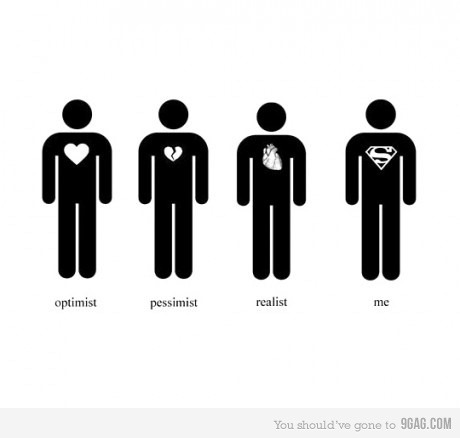
The times of being mister nice guy are over. Of being a mediocre optimist, or pessimist, or realist.

We can’t live

with mediocrity

anymore


Who is going to stop us ? The better question is: who is a believer and wants to support us? Are you ? Then join is on this digital identity journey and


be your digital self !

Enhanced by Zemanta

Team dynamics and the fiction of friendship

Check out this wonderful RSA animation about Steven Pinker’s “Language as a Window into Human Nature”

image

Steven Pinker shows us how the mind turns the finite building blocks of language into infinite meanings.

But I looked at this animation and was triggered by how much this relates to how our economies, companies, teams, ourselves and even exchange of value between these entities are fueled by the relationship mechanisms described in this animation.

In essence, Steven Pinker describes 3 relationship types:

  • Dominance relationships. Pretty self-explanatory and what used to be used by primates, but still existing in some companies
  • Communality relationships. The mode is “You share and I share alike”, for example in a couple or between friends
  • Reciprocity relationships. Business like tit for tat exchanges of goods or services that characterizes reciprocal altruism. This is what we do in commerce. Exchanging money or to a larger extent exchanging of value.

But by not saying the things as they are, and mixing up the conventions that apply to each of these relationships, you end of with…


awkwardness


Awkwardness in the relation, in the team culture, in the team dynamics and illusions of friendship and love. In dating – see my prezi on how to make babies – this awkwardness leads to “the anxieties of dating”.

And it really feels awkward when the confused give a tap on the shoulder or hold an arm, skimming the borderlines of trust.


album_large_3992338


But saying things “as they are”

also means

taking risk,

getting naked with no defense

or fall-back position

in case it goes wrong


That’s why you best do these things with the guidance of an experimented coach. Somebody who can guide and learn you to take personal leadership, daring to step forward, and daring to take care of expressing our own needs. It’s carving in the underlying energy streams under the table, where emotions such as anger, joy, hate, rejection, love, etc live. To discover and get rid of the hidden agreements and closed circles of the past. Nobody likes being rejected or worse being ignored.


6a00d8345189aa69e20148c85f6601970c-320wi


Instead of “getting used to it”, we could develop an emotionally intellectual language for expressing our needs. Something like:

  • Trigger: “this specific behavior causes an emotion with myself”
  • Emotion: “it makes me sad” or “I feel hurt”
  • Underlying need that is not fulfilled: “the need to fully contribute value” or “the need for a unique learning experience” or “the need to be respected” or “the need of not being ignored” etc, etc
  • And attaching to this need a “request”, an “invitation”: like “I invite you to fully include me next time”

All this in full authenticity, without manipulation, hidden agendas, power games, and other sorts of obfuscation of the reality.

 

EGYPT-POLITICS-UNREST


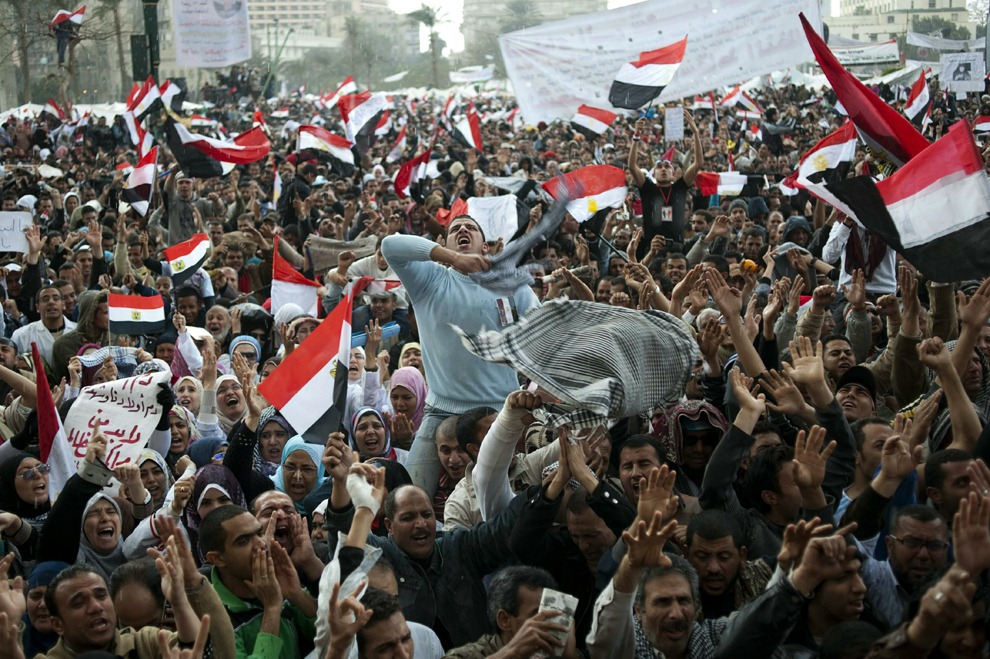
But something fundamental can change when people meet, when they group in crowds. When they can look each other in the eyes. On a broader scale, think Egypt, Tunesia, Bahrein, etc: when people get together at one place, everyone in that crowd knows that everybody knows that everybody knows.


It leads to the collective power

to challenge

the authority

of the dictator


It’s the story of the emperor’s cloths. And explicit language is an excellent way of creating mutual knowledge.


What if we would start applying

these relationship principles

to our connected economy,

to our connected companies,

to our connected teams,

to our connected self,

or even to our connected value?


This would btw be a great way to organize and thinking and collaborations for Innotribe at Sibos 2011 on 19-23 September 2011 in Toronto.

  • Using the theme of the connected “something”, we could bring in technology topics like Digital Identity, Social Cognition, Big Data.
  • We could also experiment with some non-technology trends related to Social Capitalism, Future of Money/Value, Corporate culture, Where companies invest long term.

But to come back to the main flow of this post: the Egypt principle of mutual knowledge in a crowd also plays at a smaller level like a team.

But here is the paradox and at the same time the risk and opportunity:


No mutual knowledge

=

maintaining the fiction

of friendship and love.


However, with mutual knowledge and using an overt language you create the potential of having true team-ship and love. But using overt language also means you can’t take it back when it is out there. We don’t have a fall-back position, we are vulnerable.


1 (3)


But sometimes, one needs to pull a tooth. Pulling the tooth hurts, but you’re happy when it’s gone. Likewise, tapping blood may show black blood, and the tapping may hurt, but once the blood had been rinsed, you’re fit again.


When you let go the masks,

show your authentic self,

only and only then

will we be able

to realize

the full team potential


That’s why next week, our team goes on off-site to work on team dynamics. To discover and become fully aware and conscious of relationship types and dynamics, and to double-check whether here or there we don’t need to pull a tooth or to let go some black blood. We probably won’t find anything, but who knows ;^)

Innotribe Special Session at SOFA: The new thinkers

SOFA stands for SWIFT Operational Forum Americas, a yearly event targeted at a typical operational audience. This year’s SOFA is on 8-9 March 2011 in NYC. The theme for SOFA 2011 is “Defining the next generation of financial services”.


marriot marquis NY


Innotribe is SWIFT’s innovation initiative. Innotribe’s mission is ‘Enabling Collaborative Innovation’. Part of our activities includes events: existing SWIFT events like Sibos and SOFA, third party events like CPA in Canada and EPCA in Europe last year. It usually translated into a “special” session, with lots of professionally facilitated interactivity.


Print


With Innotribe events we have the ambition to “unpack” stereotypes, myths and hypes. These Innotribe Events are an energizing mix of education, perspective, collaboration and facilitation. Our success factors for this new type event are organized along the following three axes of “opening-up” our traditional ecosystem: audience, content and brand recognition.

So, what’s up at SOFA this year ? We have two things going on:

  • At the end of day-1, yours truly will give the presentation “How to make babies” a strong metaphor for SWIFT’s Innovation Framework. Prezi version of this presentation is here. Tip: set sound “on”
  • At the end of day-2, our innovation team will animate a Special Session “The New Thinkers”

Building on the Innotribe @ Sibos tradition of exploring “Tectonic Shifts”, this Special Session will be an energizing mix of education, new perspectives, collaboration and facilitation.

Our goal is to stimulate the generation of new ideas by bringing together a powerful mixture of audience members and by enabling freedom of discussion – allowing the conversation to take the participants into any and all areas that open up on the day.


We believe strongly in the potential

of unexpected encounters,

and the magic that can happen

when people from

different background

are brought together


So the innovators and change agents of our industry will be invited to join the SOFA audience (and also to join us in Toronto for Sibos 2011 in September), and we hope this will foster exciting new discussions between them and the traditional SOFA attendees.


skyscraper lunch


Ideas do not typically come out of the blue. Rather, they are usually variations of existing ideas. Sometimes, simply looking at a familiar idea from a different perspective can spark a new idea or the combination of existing ideas to achieve new goals and create radically different value propositions. All the topics we propose to discuss during this Innotribe Special Session at SOFA are also potential subjects to explore in Toronto – but we are looking for your feedback to tell us if these are the right ideas to stimulate your creative thinking!

Presentations from five great modern thinkers will culminate in an interactive exchange between the SOFA audience and the speakers, led by Innotribe facilitation champ Mariela Atanassova. The audience will be able to drive the discussion according to the themes that most interest them – ensuring everyone will have an opportunity to collaborate in the innovation we hope this session will stimulate.

Here are The new thinkers:

introducing_miemis
Venessa Miemis
(http://emergentbydesign.com/about/): Free agent, Master in Media Studies at the New School, NYC, futurist and digital ethnographer, researching the impacts of social technologies on society and culture and designing systems to facilitate innovation and the evolution of consciousness. Venessa will update us on The Future of Money project (world premiere at Sibos 2010) and The Future of Facebook, a new research project sponsored by Innotribe as Corporate Patron.


rushkoffbiosm

Douglas Rushkoff (http://rushkoff.com/bio/): thought leader and provocateur. Author of best selling books Cyberia : Life in the Trenches of HyperspaceLife, Inc, and Program or be Programmed (all Amazon Affiliate links). Doug will give a talk about New Capitalism, and introduce his latest project on a Summit he is organizing in NYC on 20 October 2011 called “Contact”. Contact Summit will seek to explore and realize the greater promise of social media to promote new forms of culture, commerce, collective action and creativity.


brianzisk

Brian Zisk: organizer of the Future of Money & Technology Summit in San-Francisco (www.futureofmoney.com). Brian will summarise the findings of the Summit that took place on 28 Feb 2011. Psssst ! If you still want to go to Brian’s event, go the the registration page at ttp://futureofmoney.eventbrite.com/ and use the discount code “Innotribe”.


stoweboyd

Stowe Boyd (http://www.stoweboyd.com/ ): probably THE authority on Social media, Stowe is a Social Philosopher and Webthropologist from NY. His work focuses on social tools and their impact on media, business, and society. In 2011, Stowe is focused on a new line of research: Social Cognition. This research is co-sponsored by Innotribe, and we hope to share the final results at Sibos 2011 in Toronto.


kevinslavin

Kevin Slavin (http://about.me/slavin): also from NY, Kevin is founder of AreaCodeInc (recently acquired by Zygna, the undisputed leader of Social Games). Kevin will talk about the New Future and “Those algorithms that govern our lives” – including our personal finances!


5429335705_93ef6aa3cb

(picture from Dave Gray’s blog)

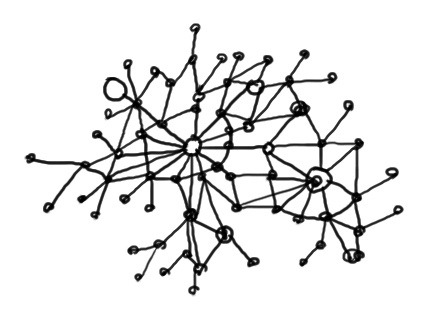
For the interactive part, we will organise the session around the organic growth aspects of cities. I have written about this before in my post “How to make babies”, and recently there was a fantastic post by Dave Gray on “The Connected Company”.  We invited Dave to SOFA as well, but he unfortunately could not make it.

Dave’s post is a fantastic post – and as far as I am concerned – one of those game changing post already for 2011, and I will definitely come back to it later.

Dave for example says:

And today, thanks to social technologies, we finally have the tools to manage companies like the complex organisms they are. Social Business Design is design for companies that are made out of people. It’s design for complexity, for productivity, and for longevity. It’s not design by division but design by connection.

He is also author of “Gamestorming, A Playbook for Innovators, Rulebrakers, and Changemakers” (Amazon Associate Link)


Looks like the book is very much about the principles that our team applies for interactive session design.

And gamestorming

is exactly what we’re going to do

at SOFA

during this special session


What: Innotribe Special Session at SOFA 2011, NYC

When: From 2-5 pm on 9 March 2011 at SOFA (http://www.swift.com/events/2011/SOFA/index.page

Location: Marriott Marquis, Broadway, NYC

Future of Money and/or Value

If you’re interested in discounted tickets for one of the coolest Future of Money conferences of Q1 2011, bear with me and read till the end of this post.

Print

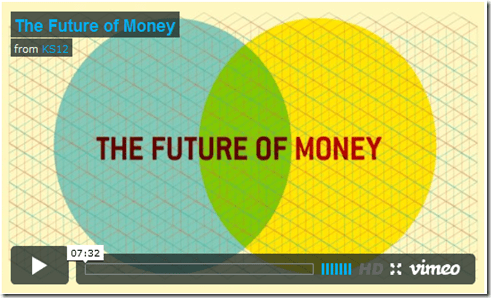
As most of you will remember, SWIFT’s innovation initiative “Innotribe” was one of the Executive Sponsors of Future of Money video production.

image

The Future of Money from KS12 on Vimeo.

The video is in my opinion a milestone. Not only for it’s content and the way it was produced (co-funding), but the whole movement that followed.

It is only now that it became clear to me that the event – in this case Sibos – is not the end-point in a process, but the middle. The post-event discussions and dynamics are at least as important, if not more important. Just check-out for example the animated discussion on Chris Skinner’s blog in November 2010 on “Why banks and socials agree to disagree”.

“Social” – as in Social tools, Social Currencies and Social Capitalism – is in my opinion a very strong force to take into account in our long-term thinking about financial services. It is one of the suggested topics we have in mind for Innotribe at Sibos 2011.

  • I am preparing another blog post “The Long Direction” on this subject and some other deep understreams that are going to change fundamentally how we think about corporations, banks and economy and corporate culture in general.
  • With Innotribe will sponsor a new research on Social Cognition by Stowe Boyd, the most important Social Philosopher and Webthropologist at this moment.

The Future Of Money crew produced post-event the following interesting infographic. I love the sharpness and detail of their analysis. In one view, you see how Creation, Storage and Access of VALUE intersect and how these intersections are each interesting opportunities to be taken up by start-ups or modern capitalists. Some indeed have taken their chances already: see the bottom of the chart with a number of start-ups in this space.

I would like to emphasize that the intersections in the infographic do NOT talk about the Future of MONEY, but about the Future of VALUE. More about this as well in the upcoming “The Long Direction” post. At this stage it’s enough to point you to Umair Hague’s latest book “The New Capitalist Manifesto: Building a Disruptively Better Business” (AmazonAssociates Link).

But I divert… Here is the Future of Money infographic (you can also download a nice PDF version of this by clicking on the graph below).

FOM_infographic_540x764

What an impressive list of start-ups and new contacts ! Indeed,  one of the biggest wins of our Innotribe initiative is the network of people we connect with.

This network is a very powerful force. Here is another example of this network-effect:

Given our work on Future of Money at Sibos, Mike Sigal  – Founder and CEO of Guidewire Group and part of our start-up judge panel at Sibos – introduced me recently to Brian Zisk, founder and organizer of the Future of Money and Technology conference in San-Francisco on 28 Feb 2011.

image

When looking at the conference program and the list of confirmed speakers, I thought “Wow” and two days later I was on a confcall with Brian. Besides being the Executive Producer of this Future of Money & Technology conference, Brian Zisk is a serial entrepreneur and technology industry consultant specializing in digital media, web broadcasting and distribution technologies.

brianzisk

Brian wanted us to speak about Innotribe and Future of Money at Sibos 2010, but unfortunately, given to some other commitments and plans, none of our team could make it to San Francisco on that day.

But we both quickly spotted the possible synergies – wouldn’t it be great to get a subset of these speakers to Sibos into the Innotribe stream for example – and we came to the following pragmatic agreement.

  • I was going to write a blog about his event, and in return my readers could get some discounted tickets for his show. And he would promote our Mumbai and Toronto events later that year. Yes, it can be that dead-easy. No strings attached, pragmatic. Piece of cake if you share the same passion. If you want such a discounted ticket, see the end of this post.
  • But we kept on talking… It suddenly crossed my mind that only 2 weeks later, SWIFT was organizing its SWIFT Operational Forum Americas on 8-9 March 2011 (SOFA). As we had an Innovation slot in the Special Session on day-2 of that event, why not ask Brian to come over and give a wrap-up of his conference ? Btw, watch this space on the Innotribe activities at SOFA: we are working on an impressive list of speakers for this Innovation Slot on 9 March 2011. Will be subject of another post.
  • And why not continue in this direction and see what we can do together for the first stand-alone Innotribe event in Mumbai, later this year on 1-2 June 2011 ? This event – hopefully a first in a long series, will be titled “Unpacked” and this Mumbai edition will focus on Mobile Payments. More on that later as well.
  • And then let the whole movement culminate to a climax at Sibos Toronto from 19-23 Sep 2011 ? I have a first meeting with the Sibos 2011 organizing committee in 2 weeks. Yes, we start early °-)

So how to get a discounted ticket for the Future of Money & Technology conference on 28 Feb 2011 in San-Francisco ?

Enhanced by Zemanta

Digital Identity Tour Part-3: Personal Data “something”

This post is a third in a series on personal digital identity. Part-1 “The unpolished diamond was published here in August 2010 and Part-2 ‘The Digital Identity Tuner” was published here in September 2010.

Today’s post is not reporting about the tour we did in June 2010, but rather some reflections based on a number of serendipitous encounters during the last two months.

D2_G793373VG.1_FC_TRON_OK.jpg.360

I am a strong believer in serendipity or the power of encounters by accident and the resulting idea shifts that can be generated during such meeting of different expertise.

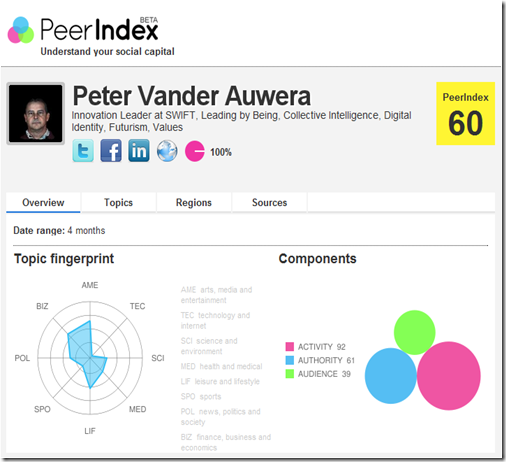
My first encounter was with Azeem Azhar, CEO of Peerindex.

One day I was at a conference, and one of the speakers asked the audience “I would like to know what sort of application you guys want me to built”. It was one of those conferences where folks twitter a lot during the sessions, and I posted a tweet saying: “I would like you to develop my Digital Identity Tuner”.

It got re-tweeted, and in the end got picked-up by Sean Park from Nauiokaspark (he was one of the Innotribe Leaders at Sibos Amsterdam, and he is also an investor in Peerindex), who introduced me to Azeem.

Peerindex helps you understand and benefit from your social and reputation capital online. How much is your online reputation worth ? PeerIndex is a web technology company that is algorithmically mapping out the social web.

The way we see it, the social web now allows everyone endless possibilities in discovering new information on people, places, and subjects. We believe that the traditional established authorities and experts – journalists, academics, are now joined by a range of interested and capable amateurs and professionals. As this locus of authority shifts, many new authorities emerge. PeerIndex wants to become the standard that identifies, ranks, and scores these authorities — and help them benefit from the social capital they have built up

Btw, my Peerindex is 60. That’s based on my digital footprint on Twitter, Facebook, LinkedIn, and my blogging activities. It is obvious to see that this number “60” may one day translate into some virtual social currency.

image

There are similar services like this: Klout is well known. Same principle. Some trend toward social currency of your personal platform. It’s also obvious that this capital will become very important for recruiters to find the people who have real on-line influence and reputation.

image

Like Peerindex, Klout also offers some more drill-down features, showing you influence “style” for example:

image

As you start drilling down in these data, this starts to smell quite a lot like some of the zooming in/out ideas I elaborated on in “Digital Identity Tuner”.

Azeem and I will continue talking about this. What Azeem liked in the “Tuner” were the ideas of control of what pieces of my profile I want to share with whom in what context.


My dream is that we have a prototype/mockup

ready by Sibos Toronto in September 2011,

where we probably will have

an Innotribe theme on Digital Identity

My second encounter was with Phil Windley, CTO and Co-Founder of Kynetx

One day – it was a day after a conference has ended – I was going to have breakfast just before checking out from the hotel and flying back home. At the table next to me, I see a guy working on his PC. I see a big sticker “Kynetx” on the PC. I had heard the name of the company several times before, so I said “good morning” and quickly introduced myself. It happened to be Phil Windley.


image


Kynetx is a private company that provides the first Context Automation Development Platform. This platform, powered by Kynetx Network Services (KNS), provides easy-to-use development tools to create context-sensitive, cross-platform apps that help build relationships between app owners and users.

I would describe it as

an event based integration engine

in the cloud


So we made contact, and once back home we arranged a Webex demo session.

Boy! What I saw really blew me away from my socks ! I saw a demo with a credit card vendor who used Kynetx to establish a new direct channel with the credit card holder, completely disintermediating the banks. I saw another demo with really very deep integration of DBS360 into Salesforce.com

I knew he had something to do with identity, and back home I found out that Phil Windley also co-founded and co-produces the Internet Identity Workshop with “identity woman” Kaliya & VRM-guru Doc Searls.

Phil has a great blog called Technometria

image

He has a great perspective on the key differentiator between today’s social networks and Personal Data Ecosystem the emergence of the personal data store where individuals control their own data.

This is of course very relevant to our eMe winner project of Sibos 2009. As I mentioned already many times before, with hindsight the eMe premise of a single or even distributed Personal Data “Store” or “Locker” is flawed. On Windley’s blog I finally found a good discourse on why it is flowed.

Check out the following two posts:

Like always, there is nothing such convincing like a demo.

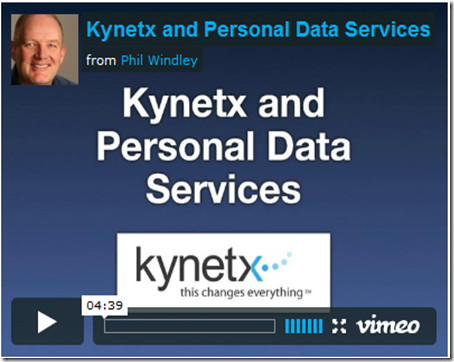
The video below shows a conceptual demo illustrating the opportunities that are available for automating the contextual activities that people undertake every day. At the heart of the demo is a personal data store and Kynetx. The interactions are all done using real Kynetx applications that are plumbed in a realistic manner. The scenario uses 5 different APIs and a dozen individual rulesets in the Kynetx system.

In the scenario, Scott Phillips gets bad news from his radiologist: he needs surgery. You’ll see that a personal data store and a collection of loosely coupled Kynetx apps automate the frustratingly disjointed activities associated with Scott’s bad news and focused his attention so he can complete the tasks with the least amount of effort.

image

Kynetx and Personal Data Services from Phil Windley on Vimeo.


My third encounter was with nobody less than Esther Dyson.

She was talking at the last Defrag conference. She was doing a fantastic talk “On Exploration”. It was about “exploring yourself”, “discovering yourself”. With my Leading by Being background, I was super concentrated.

As part of her talk, she showed her personal DNA generated by 23andMe, one of the companies she is investing in.

image

Btw, one of the other investors in 23andMe is Anne Wojcicki, who is married to Sergey Brin of Google. She has an active interest in health information, and together she and Brin are developing new ways to improve access to it. As part of their efforts, they have brainstormed with leading researchers about the human genome project. "Brin instinctively regards genetics as a database and computing problem. In a recent announcement at Google’s Zeitgeist conference, Sergey Brin said he hoped that some day everyone would learn their genetic code in order to help doctors, patients, and researchers analyze the data and try to repair bugs.

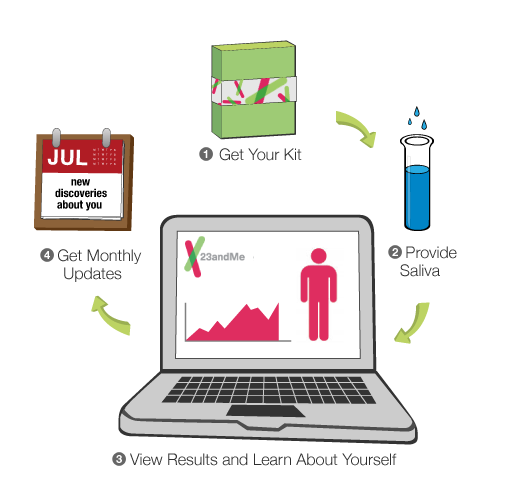
23andMe indeed offers a genetic testing service that provides information and tools to understand your DNA. With a simple saliva sample they’ll help you gain insight into your traits, from baldness to muscle performance. Discover risk factors for 92 diseases. Know your predicted response to drugs, from blood thinners to coffee. And uncover your ancestral origins. These days the promotional rate for such service is 99 USD !

Here is how it works:

image


The system generates personalized reports on your health status, your disease carrier status, your disease risk, your drug response and your traits. In other words,


there is no place to hide anymore


You see the impact of your lifestyle on your DNA. You can change something to your lifestyle, or you can continue to live in a state of denial. As Esther was explaining “its all about motivation” albeit a different motivation than the one meant in Daniel Pink’s latest book “Drive”.

What Esther Dyson was describing was a DNA-version of the Quantified Self, a movement of people who measure all sorts of things about themselves such as heartbeat, blood pressure, time usage, sleep patterns, etc and who put all that information in the cloud.

image

Obviously, it would be great if also these folks would have a Digital Identity Tuner so that they could control in a more granular what what aspect of their identity/footprint they want to share with whom in what context.

For example, you may want to share your heartbeat with your insurance company to get better insurance policy and rates, but maybe you do not want to share this with your bank.

At the end of Esther’s talk, I observed that what she was describing were actually body listeners, sensors about your human “engine”, “machine”. I wonder if there are no similar implementations about the other side of “me”, namely about my mind, my consciousness, my feelings.

I asked Esther Dyson if she was aware of any such consciousness-as-a-service in the cloud thing. She thought it was an interesting question, but that she did not feel ready yet to share all that with the world.

I love the “Know Yourself” theme:

  • From the one hand it takes quantified measurements from the human body, the “engine”
  • On the other hand, it could take quantified (?) measurements from the human mind, the “capabilities” such as social cognition, or capability to be happy, etc


Both will drive status

Both in place and time


Status is all what it is about these days. And being able to share it. And participate to it. And engage with it. What Clay Shirky called “Cognitive Surplus”. What Stowe Boyd calls “Social Cognition”.

So many reasons to start thinking of a Digital Identity Tuner that lets you control status.

Digital Identity, Digital Status, and Digital Footprint start to converge into a personal data “something”. Some started calling the “something” a “store” or a “locker”. Others think more of a “service”.

Others are aware that our vocabulary is very real-world inspired, often based on physical concepts like “storing”, or “location”, or “posting”, etc… They prefer to wait until an appropriate terms pops up and call it “Personal Digital x” with the “x” standing for “something”. I called it Digital Identity Tuner.


tumblr_lckj8mKhNd1qza6bio1_500phil0501


It is clear that this sort of identity is much more than a card, token or PKI certificate.

There is a role for a

neutral, non-for-profit, trustworthy

organization to offer

an identity and trust service

for the financial industry

Who could that be ?


Sean Park’s presentation at next week’s SOFE (SWIFT Operational Forum EMEA) will introduce you to a financial services framework, with trust and identity as foundational services. That’s on 14 December 2010 at 9am in Conference Centre Dolce, close to Brussels.

A number of the above ideas should be part of a Digital Identity Research incubation project that we will probably kick-off at SWIFT in the second half of 2011.

Let the comments flow.

How to make babies ?

UPDATE: the Prezi version of the SOFA presentation mentioned at the end of this post is now available here.


image


Sibos 2010 is over! It was one of the best ever. After that week I felt completely exhausted. Empty. Because I gave my full self. Went deep. Gave and received loads of energy.

This week, it’s time for reflection. For chilling-out. Took some days off: late breakfast, some power naps. A walk here and there. Still lots of reading. Lots of tinkering. Some up-moments, some down-moments. Flowing.

And the future starts to emerge again.

Soon we have to go back to the salt-mine. Soon the treadmill starts all over again. But it does not have to be a copy-cat.

Soon we have SOFE (SWIFT’s Operations Forum Europe), running from 13-15 December 2010 in Conference Center “Dolce” in our home town La Hulpe (close to Brussels).

I have been asked to organize the Innovation Plenary on 14 December. So, here we go again!

Sean Park from the Anthemis Group will be there as well.

He was one of our VC-coaches and Innotribe Leaders for Cloud at Sibos. He will do a keynote during the plenary (a great Prezi presentation on “Platforms, Markets, and Bytes”) and a viewing of his trailer video on “Financial Reformation”. And he will help us run an Innotribe Lab on Cloud computing. Yammy !

Also for me it’s a great opportunity to refresh/reboot. I will do the second part of the innovation plenary armed with


a brand new presentation titled

 “How to make babies”


It will be one of those presentations that have been breeding in my head from some while, and suddenly materialize. Like a painting on a canvas. Like poetry on a sheet of paper. Like joy and harmony in music. Suddenly, it’s there!


clip_image002


“How to make babies” will bring together numerous thoughts collected during many conferences visited this year and ideas distilled from the books I have been reading recently. If you are interested in the books I am reading, I am inviting you to subscribe to my GoodReads.

In essence my story will start with the collision of two ideas.

The first idea was seeded in my brain by Geoffrey West (Distinguished Professor at the The Santa Fe Institute) in a presentation titled “The Secrets of Scale” delivered during the Techonomy conference in June of this year.


clip_image003

Geoffrey West is a theoretical physicist whose primary interests include elementary particles and their cosmological implications; the theory of companies, cities and global sustainability; and biology, including metabolism, aging and sleep. He served as the Santa Fe Institute’s (SFI) President from 2005 to 2009.

It happens that the folks at Techonomy just put up all the videos, including Geoffrey West’s presentation:

It also happens to be the story that opens chapter one of one of the latest books that made a great impression on me: “Where Good Ideas Come From” by Steven Johnston.

clip_image004

At Sibos, we reflected on the Long Now. In the first chapter of “where ideas come from”, Steven Johnson talks about that vantage point the long zoom.

It can be imagined as a kind of hourglass:


clip_image006

Several years ago, the theoretical physicist Geoffrey West decided to investigate whether Kleiber’s law applied to one of life’s largest creations: the superorganisms of human-built cities

And

the quarter-power law governing innovation was positive, not negative. A city that was ten times larger than its neighbor wasn’t ten times more innovative; it was seventeen times more innovative. A metropolis fifty times bigger than a town was 130 times more innovative.

The essence of Geoffrey West’s story is that cities are intensities. That cities never die. That cities are the ideal womb for idea generation, incubation and execution. That innovation scales differently than the size of the city.


Because

the information and the ideas

flow freely and in high intensity.


But how does one create a culture of intensity, of innovation? How does one create the vibrancies of cities within the walls of a castle?

Here is some additional video material featuring Steven Johnson’s ‘”Where do ideas come from”.

And a TED talk on the same subject:


It brings me to the second idea in the collision: the one of incubators.

clip_image008

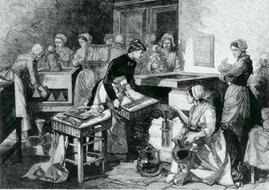
Incubators at the Maternity Hospital, Port Royal, Paris (Maternité de Paris, Port-Royal). An engraving by Eugene Froment (1844-1900) from the Illustrated London News, 1884.

Incubators were invented by Stéphane Tarnier in 1880, and documented by Auvard in the historic 1883 article De La Couveuse Pour Enfants. Incubators help us grow babies. Physical babies. What I am talking about are ideas. Baby ideas that need to be prototyped. And then incubated. Many incubator models for ideas and start-ups exist.

Probably one of the more famous ones is MIT Building 20. Building 20 was designed differently. With flexibility in mind. A bit like the Value Web walls that allow you to create spaces of intensities. And when the job is done, you disperse and build new spaces, new teams. Disperse and re-group. A different composition for each new project. Get rid of the one size fits all.


clip_image010

Old Building 20, Vassar Street facade, 1997.

clip_image011

New Building 20 at MIT

The point I am trying to make here is that physical environment is equally important to have a free flow ideas. Ideas will not flow in a castle with long corridors and closed offices.

Once incubated, you need to scale. Which brings us back to Geoffrey West and “The Secrets of Scale”. You need to create intensities. As I already mentioned in a previous post:

Intensities and intentions. City intensities. Platforms of intensities. Physical or virtual. Almost requires an architectural purism and surroundings to make it work. Has to be physical.

I want to create these environments. Where small groups of intense people can meet. Can radiate. Can nurture and inspire each other. Where one hunch leads to another, and ideas cross-fertilize. Where we play the Medici-Effect for 100%.

We need to build some sort of city, some platform of intensities, some sort of campus. Not a “chalet” next to the castle.


Think big

Think scale

Think city

Embedded in the social and economic fabric of our industry. Where experts can meet and weave the next generation solutions.

Where we not only have a fertile environment for funding “only”, but where we also thought about physical housing, novel resourcing models like dedicated teams combined with shared staff from the castle. Or in-residence programs as another way to resource and bring fresh blood.

Where we have a shared infrastructure for support, project management and IT. And where we nurture a culture of experimentation. Where we have reverse-mentorship of our bankers BY the Gen-Y generation.

Venessa Miemis hit us all hard in the face at Sibos:

There is a class of young, intelligent, creative people who are disillusioned with the debt-based monetary system, and are busy building the infrastructures for a commons-based economy, which is emerging, right now, in parallel to what currently exists. The foundation of this economy is built on trust… and transparency…. and the ability of distributed networks to self organize. And using the Web as a grounds for experimentation, we’re learning more effective ways to link unmet needs with unused resources, innovate, generate wealth, and build resilient communities.

This is the prototype of the future. This is where the opportunities are.

I hope that during the Innotribe sessions the remainder of the week, we can explore ways to create bridges between these two worlds and ways of thinking, and co-evolve the next global economy.”

Venessa & friends already followed up post-Sibos with the idea of an in-residence program for bankers. To understand and connect with the new class of young, intelligent, creative people. To learn their language and adapt their values. Yes, you got it right: the bankers get mentored by Gen-Y.

I think it’s a fantastic idea. To think wealth instead of money.


With trust as the currency

of the 21st century


Where we create bridges in a strengths-based society instead of a problem mindset.


We are in a different Zeitgeist,

and most of our bankers

haven’t noticed yet.

The realization that most senior executives in finance (or elsewhere for that matter) would be completely at a loss – “sans moyens” – faced with an articulate and intelligent Gen-Y as personified by Venessa.

Things like this residence program idea: that’s the sort of babies we need to create. That’s the sort of family harbor we want for our children. And when babies become adolescents and adults, when those ideas have matured into successful companies in their own strength, keep thinking about our off-spring. As it never stops.

And despite big hopes from the singularity movement, there is a fair chance that all who read this in 2010 will die sometime. But as Geoffrey West pointed out and proved mathematically:


Biological beings die

Cities never die


The big “contours” of my SOFE presentation are drawn. This post-Sibos holiday & chilling season is ideal to let it mature. To perfect the visuals. To come to the essence. To get to its full purity. To be different by less not more. So that you can feel the full intensity. So that each of you can realize his full potential.

Let’s practice making babies !

Innotribe @ Sibos 2010 : Meet the Jury of Pitch Your Lab !

As you know by now, Thursday 28 October 2010 is our Innotribe Grand Finale day where everything comes together!

Print

Make sure to be in the Interactive Workspace from 9-10:30am on Thursday 28 Oct 2010 when we run the “Pitch your Lab” session .

This session is the culminating point of the all the work that will have happened in the Innotribe Labs throughout the Sibos week.

  • We will open with a 20 min update and reflections on the Long Now Lab by Paul Saffo, who will also be the keynote speaker in the Sibos closing plenary later that day.
  • After that, we’ll have a “Pitch your Lab” competition. The best ideas from the cloud, mobile, and smart data labs will be pitched to a jury who will select the winner of this year’s SWIFT Innovation Awards.

Listen to Kosta Peric who explains what this "Pitch your Lab" session is all about. It is your chance to win the SWIFT 2010 Innovation Award !


Here are the members of our extraordinary jury, also referred as our Buyer’s Panel:

  • Paul Saffo, Professor, Stanford University
  • Jo Van de Velde, Managing Director, Head of Product Management, Euroclear SA/NV
  • Wilco Dado, Head of Global Payments, Royal Bank of Scotland
  • Gary Greenwald, Chief Innovation Officer, Global Transaction Services, Citi
  • Lázaro Campos, CEO, SWIFT
  • Ian Johnston, Chief Executive, Asia Pacific, SWIFT
  • Gottfried Leibbrandt, Head of Marketing, SWIFT
  • Alain Raes, Chief Executive EMEA, SWIFT
  • Kosta Peric, Head of Innovation, SWIFT

The jury will be assisted and advised by a VC (Venture Capitalist) Advisor’s Panel. These VC’s were part of the Innotribe Labs during the week. Here are the members of the VC Advisor’s Panel:

  • Oren Michels, CEO, Mashery (Cloud Lab)
  • Sean Park, Managing Director & Founder, Anthemis Group (Cloud Lab)
  • Eghosa D. Omoigui, Founder & Managing Partner, EchoVC (Smart Data Lab)
  • Nova Spivack, CEO, Lucid Ventures (Smart Data Lab)
  • Jennifer L. Schenker, Founder and Editor-in-Chief, Informilo (Mobile Lab)
  • Matthaus Krzykowski, Mobile Expert, VentureBeat (Mobile Lab)

Each team will have 5 minutes to pitch their Lab-idea to the jury. After each pitch, we will ask the advice of the VC’s.

Then there will be a short Q&A with the judges, and a voice-of-the-public using our latest “high-tech” applause meter.

The winner of this “Pitch your Lab” competition will be announced during the Sibos Closing Plenary at 16:00 later that day.

We run this competition for the second time this year. Last year this session was referred to as “the best session of Sibos 2009”. We have done everything to match last year’s success. We have invested heavily in a solid design of the labs, and have armed the teams with fantastic facilitators from The Value Web, Innotribe Leaders from the business and the technology eco-systems, and matter expert VC’s.

In the true spirit of less push and more pull, we encourage you to engage in a true dialogue with the Innotribe team and the Pitch your Lab finalists. We look forward to seeing you in Amsterdam.

The Innotribe team

www.sibos2010.com
www.innotribe.com
www.swiftcommunity.net/innotribe
innotribe@swift.com
Twitter: http://twitter.com/innotribe
Hash tags: #innotribe and #sibos