2012: my boss wants me to dance!

We are getting towards the end of the year, and time has come to nail down the Innotribe 2012 objectives of our team members.

Last Friday, I had my regular 1-1 with my boss Kosta Peric @copernicc – Head of Innovation at SWIFT. We had a really good discussion, challenging each other vigorously on what would be the best use of my time and talents in 2012.

Just the fact that we start from a strengths based paradigm is typical for how we get around these things in the Innotribe team. It remembers be the blog of Venessa Miemis on “Framework for a strengths-based society”.

And as digital identity and digital footprint are some of the topics that have deeply infected me virally, I was wondering why not apply the principles of sharing to my objectives 2012. So far, I don’t recall anybody doing this, and reflecting on it: why not?

It’s a good way to articulate your agreement with your manager, and then to share it in the open with your followers: one way or another, this adds to your personal transparency, and on the other hand I feel it makes me commit stronger to these objectives as it’s now in the open, and shared with your followers. And applying the principles of crowdsourcing and open innovation, the worst that can happen is that my followers come up with ideas to better implement my objectives.

My objectives are organized around following clusters:

  • Sensing and curating for Innotribe Events
  • Internal Evangelism
  • Digital Asset Grid
  • Innovation seeds for Lite Application Platform

Sensing and curating for Innotribe Events

Like in previous years, I will use my “antennas” to sense what’s happening at the edges of our ecosystem. Spotting the new themes and inspiring igniters that help shape our Innotribe events.

I will focus and be involved in the following main Innotribe events:

  • Innotribe stand-alone events: Bangkok in April 2012, and Belfast in June 2012
  • Innotribe @ Sibos Osaka, from 29 Oct – 2 Nov 2012

My role is that of “content curator”: these themes are the basis for my “painting” of events. It’s the architectural canvas. After conceptually agreeing on this main direction, the fantastic Innotribe facilitation team gets into action and shapes the events into immersive learning experiences. In many of our events in 2012, we will inject a “Start-Up Competition” under the leadership of Matteo.

  • The “technical” themes I have in mind today – this may still change in the coming weeks/months – are about: API’s, The Age of the Machine, Augmented Reality combined with big data.
  • The “non-technical” themes are about: Organizational Fitness, Hypereconomics, and new approaches to Innovation. And some of the 2011 themes will be re-enforced and go mainstream: Future of Money, Banks for a Better World, Digital Asset Grid.

We have some early wild ideas on how we can excel the 2011 experience of our Innotribe events: in 2012 we are going to play all senses, and looking into performance elements based on art, dance, and music. We also have some ambition to inject young people (20-25 years) into everything we do.

Internal Evangelism

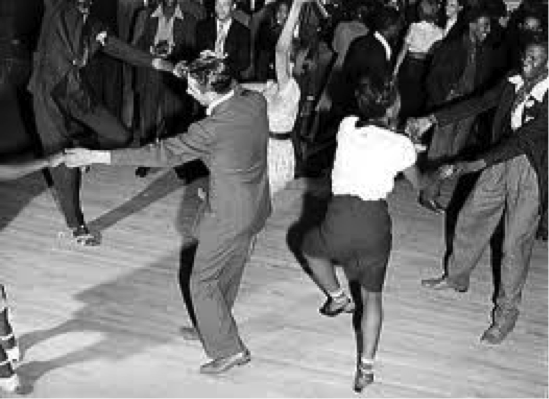
In many of my previous blogs – especially the one on the digital asset grid – I have been using the metaphor of “the dance”.

So far, I “dance” quite well with the outside world of SWIFT, but I will now apply that skill more to the “internal dance”. Getting from just “shooting some bullets” and scaring the hell out of my colleagues, towards “dancing together” and making sure that we can make sense and meaning for SWIFT of everything we sense/spot outside. It’s what I would call: creating a knowledge flow out of our knowledge stock. I have some wild dream to one day have an “Innotribe University”, where we have internal and external 101 and 102 courses on for example big data, digital identity, etc. But I would like it to “emerge” from the brown bag sessions and other initiatives: again, seed a lot, see what works, be a gardener for the new promising species, incubate, grow, repeat.

Part of this cluster is a new initiative that I have under preparation: “corporate rebels united”. I am a big believer of viral infection of companies by planting seed “bombs” throughout the organization. People who act genuinely from their true self, from their true force, with no fear for sticking out their neck. Expect soon a website and on-line community where you can meet inspiring corporate rebels worldwide.

Digital Asset Grid

I have written a lot about digital identity last year, and especially about the Digital Asset Grid (DAG) incubation project at SWIFT. The last post was titled: “Digital Asset Grid: Let’s meet at the SWIFT Dance Hall”

The theme of dancing is back there as well: it will indeed be about dancing with constraints. From rather simple constraints like time and budget, to more complicated challenges like keeping the SWIFT “Castle” deeply involved, and balancing and mixing some other internal projects that have clear touch points with the DAG.

It’s a real challenge for me, as I have a tendency to “give-up” too soon when involving internal resources. But I like the challenge, as it is one of perseverance.

Innovation seeds for Lite Application Platform

Whereas the above is about a 30-30-30% of my time in 2012, I look forward to collaborating with my colleagues on phase-2 of “LAP-15”.

LAP stands for “Lite application platform” and “15” refers to the 2015 strategy of SWIFT, and is a continuation of the Alliance Lite project that I was part of and launched in 2008 at Sibos Vienna. As in our team, we have learned quite a lot in our pilots and prototypes about B2B marketplaces, that thinking can be re-injected in LAP. Also some of the ideas articulated in the Digital Asset Grid project with respect to API’s will most probably be of great interest to LAP15.

A dream mission:

I have said it many times, and repeat again: I have a dream job. After having prepared my brand new presentation “The Soul of Innovation: a story about DJ’s, Painters, Pirates and Corporate Rebels”, I probably have to re-word this.

What we do in the Innotribe team is not a “job”. We are on a mission. So, based on that, I can happily state:

“I don’t have a job, I have a dream mission”.

That combined with a boss and organization that wants me to dance internally and externally: what else do you need 😉

So, who wants to dance with me?

Happy @petervan from the Innotribe Team

Compass Summit: can we win the race?

Last week, I attended Compass Summit.  After Contact Summit in NYC the weekend before, the contrast could not be bigger. Whereas Contact Summit was held in a worn-out synagogue, Compass was held in a 5 star luxury resort close to LA.

Also the audience was fundamentally different: in NY we saw a group of activists and revolutionaries (a good representation of the 99%): and the theme was “the evolution will be social”. In LA, scientists and economist – probably a subset of the 1% – shared the space for a couple of days under the overall tag line “What’s possible, What matters, What’s ahead?”

Innotribe was sponsoring both events. In Compass Summit, we also acted as co-curator and facilitator for 1 plenary on Future of Money, and 4 breakouts (see later)

Agenda and program

The Compass agenda was packed.

For a minute-by-minute coverage of the conference, I suggest to check out the #compass11 Twitter stream or Kosta Peric’s coverage by live e-scribing here.

UPDATE: all videos of all talks are now available here.

Instead of doing a vertical or chronological report on this conference, I will try to give you a horizontal report-cut of the topics discussed, and add some personal opinions to the mix.

The conference was a very high quality event, with super speakers from science and economy.

I left the conference with a mixed feeling: who will win, the positive scientists or the dooming economists? My overall take-away was that we are in a very deep crisis of everything, much deeper than most newspapers let us believe. I am worried for our children and what will happen the next 2-5 years.

Format

Compass Summit is a traditional conference, in the sense of  the format: speakers on stage, 20 min talks, fireside chats, and panel debates. The general sessions felt like a TED, but then one with audience interactions. Which gave the organizers a timing-headache as all the Q&A’s ran out time and so the whole conference program. No problem for me: as long as the content is as interesting as at Compass, I could stay there the whole night ;-). Towards the end of the conference, there was some experimentation with a “sequential conversation”, but there was more potential in that: it just requires more scripting and preparation. The Innotribe breakouts and wrap-up were – how would I say? – very “Innotribe”J . We always try to do something special, and you expect no less from us (more about this at the end of this blog post)

Science

The overall message was positive, although many questions were raised on the impact of the increasing human-machine blurring, and whether real life implementations of great ideas in current R&D will reach us in time to save the planet.

Danny Hills from Applied Minds and one of the originators of the Long Now indicated that “we are already in The Matrix” right now. “Nobody really knows how the Internet works” and “we overestimate the human ability to control and underestimate its adaptability” were some reflections leading to his conclusion “Forget the Enlightenment, we now live in the era of “the Entanglement.”

We also saw some great progress on Solar Energy production and photosynthesis Fuel. To put things in perspective: the energy needs for 2050 are such that if we want to cover it with nuclear energy, we would need to install one nuclear plan per day. The conclusion of the energy debate was clearly solar is the way forward and that energy storage was the Holy Grail for the immediate future.

David Gelernter stood out with a milestone presentation.

His talk was completely scripted, no slides. But it sounded like a novel, a piece of science poetry. So many beautiful metaphors, play of words, and fine humor! The content was mind-blowing as well. His starting premise was that we are witnessing the transition from a space-based organization of information to a time-based organization of information. Search starts smelling like value-based search, with time as just one of the values. The concept of a stream-browser instead of a web-browser was no less than brilliant, and I loved his evolutionary insight from “cybersphere” to “cyberflow”.

This was quite consistent with the messages form Brian Arthur and E. Stevenson: everyone is connected and it’s getting deeper and deeper…the grid starts to look like an organism, neural network. The underlying grid of machines talking to each other was described by Brian Arthur as “the second economy” that will soon be bigger than the real economy. The question “Who will win?” in the session “Race against the machine” – and also title of a new book by Andrew McAfee and Erik Brynjolfsson – was therefore spot on.

Cities and their dynamics and their impact on growth and innovation were also a recurring theme: Geoffrey West – world famous since his memorable TED talk – did his fantastic thing on “Cities never die”. Saskia Sassen added a new dimension for me: “a city talks back”, suggesting that a city tells us in immediate feedback loops what works and what not

Economy

The overall message was extremely negative. I was shocked by some of the facts presented.

Although we still see a growth in wealth creation, the wealth is more and more concentrated with the happy few. The 1% starts looking more and more like the 0.01%. The world is also turning younger, more urban, and more impatient for accountability, in both democracies and authoritarian states. We need a different diplomacy where also NGO’s, Philanthropies like the Bill & Melinda Gates Foundation, and companies like Google and Wall-Mart are represented. I believe that is a good starting point, as the concept of “country” is really dead. But the real question is what are the criteria for who can sit at that table: will be allow organizations like Goldman Sachs, who claims to rule the world, but is creating fake value through speculation, value outside of the real wealth system in my opinion. And whereas countries and UN are as good as dead, there is no transition in governance model between now and then, and we risk falling into a governance no-mans land.

Corporations are piling up cash that is sitting idle. Someone summarized this signal as “between fear and opportunity is paralysis”. In the meantime, the center of power and control is further moving East-wards: 2009 was the first year in 200 years where emerging markets outgrew developed ones. We aren’t going back.

Bernard Lietaer (author of “The Future of Money” and more recently “Creating Wealth: Growing Local Economies with Local Currencies”) was no less than impressive.

He showed that he had empirical evidence that the financial system is systemically instable. He pointed to some solutions to the monoculture of fiat state currencies. The most frightening was probably his statement that “we have 5-10 years to fix this, if not the game is over”.  This was the first (and not the last) time that the idea of war (as in world war) was uttered as a very possible scenario, and although Lietaer did not mention this, I interpreted his message as a warning for fascist behavior and polarizations.

And one day later, Mark Anderson painted a super confrontational picture between the USA and China, and indicated that the IP war was already going on, stronger even, that phase-1 of the war was over and we are already doing corporate body counting.

Add to this the Saudi Arabian oil situation, where the monarchy is a) paying it’s citizen from the oil reserves to avoid a Saudi Arabian spring and where the oil reserves will more and more be used for internal needs. Pierre Larroque added that Saudi Arabia is now in essence a supplier of China, and asked the question “why should we defend them?” Quite a statement!

Add to this water scarcity. Add to these big dysfunctions in education systems. Add to this the fact that the current young generation is the first generation that will enjoy LESS wealth than their parents. Add to this the #occupy movement, Middle East spring, etc. and the picture is not very rosy, the least to say

Values

Following his discourse in currency value debate, Bernard Lietaer also mentioned the need for more “feminine energy, presence and softness”, echoing a message from John Hagel in his blog a week earlier.

“Quod Demonstrandum Est” must have thought Caroline Stephens.

She gave the audience a wake-up call when stating “I have stopped talking about poverty in a 5 star hotel”. Her testimonials of future-less generations in South-America moved everybody in the audience, except the moderator who showed a pedantic lack of empathy and moved to the next point on the agenda by stating “now that we have solved a couple of world-problems…”

A genuine tweet from Heather Vescent sparked the Innotribe team to rally for an ad-hoc session to give Caroline the space needed for her message. It was interesting to see how people quickly tried to recuperate strong personalities like Caroline for their own agenda. It’s a very fine balance to walk. In the end, we failed to get such an ad-hoc session squeezed into the already busy Compass agenda. But we won’t give up: Caroline, we will contact you directly for one of next year’s Innotribe events.

The rest of the conference value discussions debated the rhetorical question whether value-based thinking is eroded by output concentration.

As a lot of the identity discussions were related to privacy, I quickly cover this under this value-section. One participant reacted somewhat sarcastic by saying that during the panel debate she almost believed that Google and Facebook were philanthropic organizations. We were probably closer to the truth when the moderator said “facial recognition will dramatically change what it means to show your face in public”.

Organization

Mark Bonchek introduced the notion of “Social Architecture” and gave a great example how this relates to networks and nation building during warfare. And how the US military has realized that shared situational awareness enables self-synchronization. It appears that the army’s counter-insurgency Field Manual (PDF Link) is “the best single guide for driving large scale corporate change.” After the conference we had a really interesting chat with Mark on corporate change and whether you really can steer change or whether it is just as effective to drop a seed bomb of corporate activists, and just watch what happens and emerges. That will be the subject of another blog

An interesting Risk Management debate revealed that trade-offs have to and are being made whether one should implement latest technology or proven technology only, and that the relentless push for efficiency pushes towards latest technology. If one would take the brain scan of the most adventurous CEO, one would see “40% risk taking, 60% risk aversion”.

Brian Arthur spoke about the “second economy” (see earlier). With some hindsight, I would like to suggest even a third economy underneath (or overlaying) that: “the values/spiritual economy”. What are the real values and intentions we have when completing a transaction? Values like transparency and fairness. Like belonging. Like intrinsic drivers of motivation such as the drive to acquire, to defend, to bond and to learn. Which brings us to education.

Education

It looks to me that the USA has a bigger problem with education than other continents. Or they focus more on it. I don’t think it is the latter. Michael Crow from Arizona State University was inspiring when stating “in stead of exclusion (to the education system), our metrics should be based on the output of our education system”. Other speakers insisted that the education system should celebrate from failure instead of exclusively focusing on and measuring success. Jack Hidary was passionate in his plea to “educate to innovate”.

But by the end of the conference, I got a bit tired of the so generic term “innovation”, used as the deus-ex-machina for world hunger problems, without specifying what the solution exactly is.

Innotribe sessions

In addition of the (rather traditional) plenary session on Future of Money with Bernard Lietaer, Innotribe was also responsible for 4 breakout sessions. Our team really went the extra mile in decorating the rooms, and using sound and visual landscaping to further add to the immersive learning experiences that have become the trademark of Innotribe sessions.

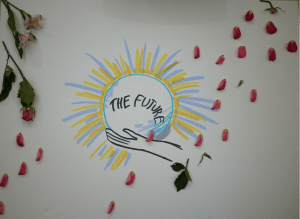
For the identity breakout we repeated our Sibos trick with the music from Tron. For the future of value, our ladies Mela and Martine almost created a zen-like experience with candles, rose leafs, and spiritual music.

From a content point of view, I would like to summarize each of them with a couple of tweet-like statements

–       The Future of Banking

  • “Money is the memory of value”
  • “Trust will define the future of banking”
  • “There are huge opportunities for banks in the unregulated space”

–       The Future of Transactions

  • “From the gift economy to the re-gifting economy”
  • “Transactions are the fuel to the relationship economy”

–       The Future of Identity and Trust

  • “Digitization of identity good or bad?”
  • “Identity should be part of digital inclusion”

–       The Future of Value

  • “The poverty of financial metrics prevents full wealth recognition”
  • “Right conduct + truth + peace +non-violence + love = living system of wealth”

Conclusion

Our economic, financial, energy, and wealth distribution problems are huge. The problems seem bigger and more insurmountable than the general press makes us believe. Scientists try to picture of optimism, but I could not resist the discomfort that the implementation of their inventions will come too late. Fear for war can turn any moment into a real possibility. And still our politicians don’t get it. We witness an aversion against the establishment in general. The cry to do without them gets louder.

But current problems and solutions are still presented as a game of winner and losers, with polarization leading to simplification, populism, and possibly fascism. I would prefer a model based on infinite game thinking. The world is the opposite of flat, and the role of black swans is not included in any of the models discussed today. It’s all about redefining a new value context, new value movement, less re-active, less “protest” than OWS, more pro-active.

It is about a collective awakening, where flow reveals structure. You can’t just start with structure and force everything to fit into it. It would be far better to create a parallel positive: a much safer way that just saying “nuke the system”.

Maybe I should close this blog post with the quote by Leonardo da Vinci that was printed on the back of the Compass Summit conference program:
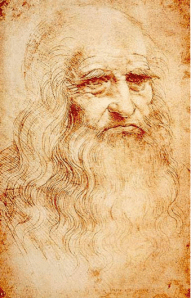
I have been impressed with the urgency of doing. Knowing is not enough; we must apply. Being willing is not enough; we must do.

That’ s probably why the title of this blog post is “Can we win the race?” and why the Innotribe wrap-up ended with “It is only up to us to act”.

@petervan from the Innotribe team

Cross-posted on Innotribe blog here.

Digital Asset Grid: Let’s meet at the SWIFT Dance Hall

This post is a fifth in a series on personal digital identity. Part-1 “The unpolished diamond was published here in August 2010 and Part-2 ‘The Digital Identity Tuner” was published here in September 2010. Part-3 “Personal Data Something” was published here in December 2010. And part-4 “Austin-Munich-Toronto” was published in February 2011 here.

Drawing by Hugh MacLeod (@gapingvoid) during the Innotribe Deep Dive on Digital Identity, Sibos Toronto, September 2011.

That was February 2011. Since then a lot happened. I had so many rich discussions, met so many new fascinating people, and have been aroused by a deluge of new ideas on digital identity.  And my employer SWIFT gave the go-ahead for an incubation project on Digital Identity that is now called the “Digital Asset Grid”.

As I mentioned in my Innotribe Sibos report, the Digital Asset Grid (DAG) is important because:

  • We are moving from money bank to digital (asset) bank
  • The DAG is an infrastructure play for SWIFT to offer a certified pointer system pointing at the location of digital assets and the associated usage rights
  • It’s and economic imperative for SWIFT to expose its core competence via API’s
  • The DAG is a huge opportunity for SWIFT to be a key infrastructure player in offering an end to end hardened infrastructure and end-point to enable the seamless exchange of any sort of digital asset between any number of entities
  • This is also a huge opportunity for financial institutions to plug-in to this infrastructure for offering a new set of services in the data leverage space in un-regulated data market places

For me Digital Identity is so much more than your log-in, or our account-number that is backed by a Know-Your-Customer (KYC) process, or another userid/password or a security token.

I look at it a spectrum. Like you have a spectrum analysis for a star that uniquely identifies it, you can imagine a spectrum for the digital identity of persons:

Digital Identity Spectrum is everything from PKI, account#, Log-In to address, attributes, history, preferences, biometrics, reputation, risk profile, intentions, signals, etc and all this in transaction and time context.

It’s no co-incidence that Facebook recently announced “TimeLine”. Identity in time-context leads to your identity spectrum that is unique at one given time. And yes, you will be able to play it backwards like a movie, but also forward to do trend analysis and forecasting.

VRM (Vendor Relationship Management) is about sharing specific parts of my spectrum with specific vendor(s) in specific transaction context(s). In the Digital Asset Grid project we asked ourselves:

“What if we could apply the VRM principles not only to personal data but to any content, to any piece of information, to ANY digital asset?”

You could then start thinking about sharing specific parts of any digital assets with specific vendor(s) in specific transaction context(s).

In essence, what we are doing, is “weaving” digital contents with associated digital rights and who has the rights to that content.

It’s a map of digital weavings

of digital fabrics

This is how the Digital Asset Grid was born.

Is this not too consumer oriented for an organization like SWIFT? I believe this is the wrong question. The discussion “consumer vs. enterprise” has kept us blind. Same by all sorts of other customer segmentations like “small-medium-large”. In the identity ubiquity game, all this is segmentation is irrelevant.

We have to start thinking in terms of different sorts of entities that participate to the identity-dance. Those entities can be:

  • Person (humans)
  • Loose group of persons (for ex Google Circles), that have no legal construct
  • Commercial companies
  • Non-Profit companies
  • Governments
  • Educational institutions
  • Programs (code)

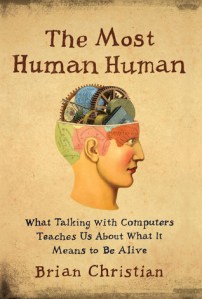
The last one – programs – is quite fundamental. We are witnessing the blurring between humans and computers. It smells like early singularity. And in this debate we should not only be concerned on how programs augment humans, but also how humans augment programs. But that is another more philosophical discussion, and some good reading on this can be found in the book “The Most Human Human” by Brian Christian. (Amazon Affiliate link)

Back to our Digital Asset Grid…

The vision of the Digital Asset Grid

is to move the SWIFT network and SWIFT services

from a closed, single-purpose, and messaging-based system

to an open, general-purpose, API-based system

It’s a natural evolution. That’s it. No disruption. No—“the next big thing.”

Just apply out-of-band our core competency to the modern age of connectivity. Instead of destabilizing the market by disruptive innovations, provide the basic infrastructure missing for a global transaction-based platform on the Internet.

Of course, its vision is grand, with plenty of innovative elements and thinking. Here are some examples how we move from the traditional identity “space” to the new “Digital Identity Grid”

I would like to zoom-in on one of the bullet points above: from one way request-response to full duplex dance.

The web – a collection of pages – is based on some simple request-response mechanisms. I request a page and the server responds and gives me the page. End of that transaction.

With the dataweb – a collection of Digital Assets with associated usage rights – we will need something where exchanging entities can perform a dance around and with the Digital Assets. And we want to be sure that they are who they say they are, and that they have the right usage rights to the digital assets. So we move from a two dimensional view of the world (in computer terms a “table”) to a multi-dimensional view (in computer terms a “graph”)

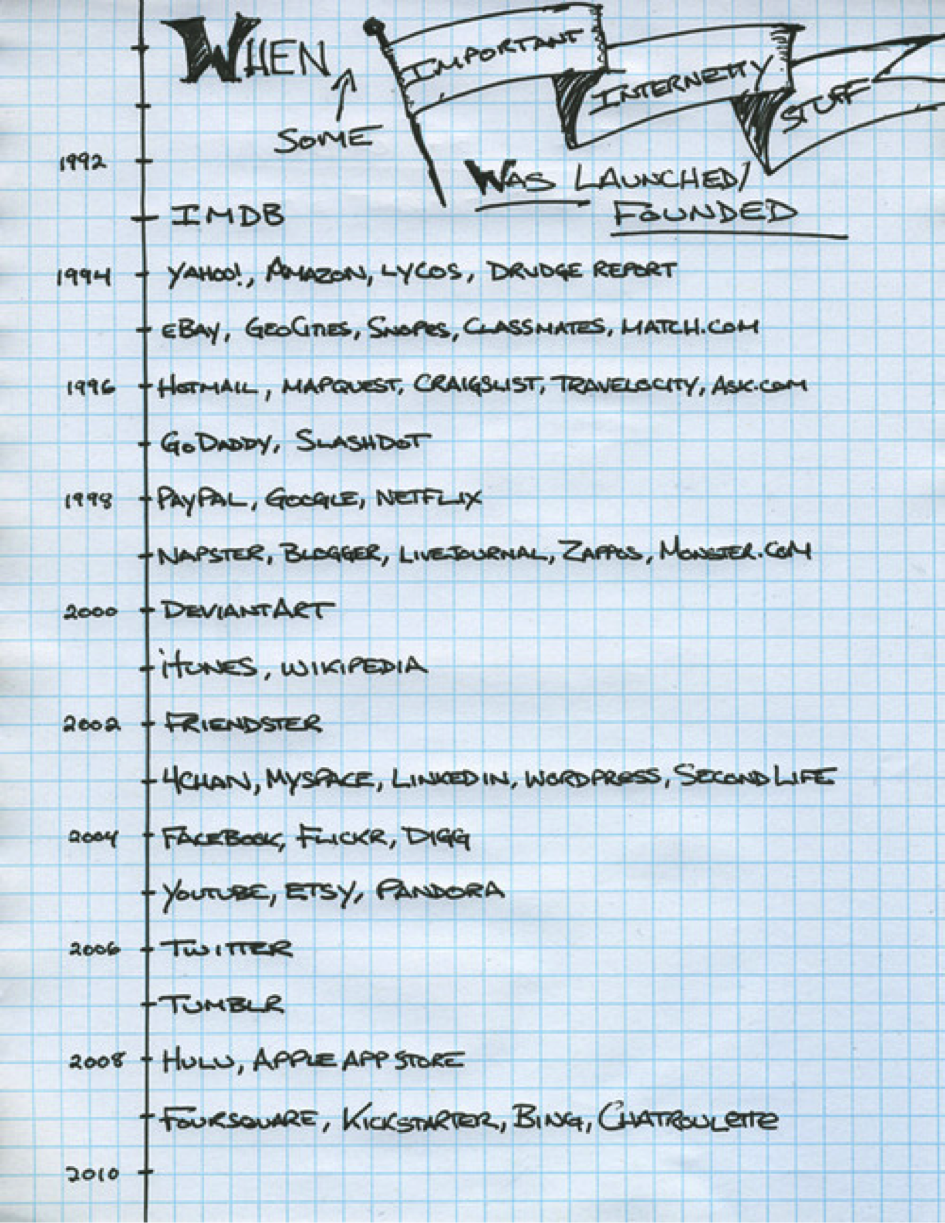
The Digital Asset Data Web is the next phase in the evolution of important internet stuff. It’s probably what comes next in the following series:

To continue the dance metaphor, the SWIFT infrastructure is the Dance Hall where entities meet to perform certain specific dances.

One of the many use cases for the Digital Asset Grid would be to solve compliance, In stead of moving messages from A to B, we keep the data where they are and “point” to them with SWIFT certified pointers to where the data are located and the associated usage rights.

The dance protocol (full duplex) for this use case, from opening of the dance with (a “webhook” in technical terms), to the actual picking-up of the content, and closing the dance and everything in-between, could look like something like this:

  • PartyA: “hey, I am sending a signal that I wanna dance the tango (slang for payment instructions) with any party in the Swift dance hall at 9pm”
  • PartyB: “yep, I wanna dance with you, let’s meet in the SWIFT dance hall at the bar”
  • PartyA: “ok, here we are, cool place ;-)”
  • PartyA: “Let’s get to business”
  • PartyA: “I just gave you following rights my payment instructions at this XRI: you have XDI pick-up rights”
  • PartyB: “ok, gotja. Will pick it up right away”
  • PartyB: “knock knock, I am coming to fetch those payment instructions”
  • PartyA: “let’s check if you have the usage rights….”
  • PartyA: “everything looks fine, go ahead”
  • PartyB: “loading, loading, loading…”
  • PartyB: “Ok I am done”
  • PartyA: “So am I”
  • PartyB: “tomorrow, same place same time to dance ?”
  • PartyA: “would love to 😉 9pm again ?”
  • PartyB: “sure, bye bye”
  • PartyA: “bye bye”

And, what’s really cool about it, it’s fully auditable, end-to-end.

When telling this story to one of my colleagues, I got the following reaction: “Hey, but you are changing the basic messaging paradigm of SWIFT… I am not sure that I want to support an innovation like this… one that is cutting off the branch from the tree I am sitting on…”

Here is something essential for innovation. Any innovation team in any company should not only look at some nitty-gritty small incremental innovations, but

daring to be great and to re-think

the cash cows of our companies

Like Guy Kawasaki used to say: “the best way to innovate is to set-up a company that is trying to kill your cash-cow”

All the above is about the infrastructure story that SWIFT could play in and in that sense is a bit navel staring. But the biggest opportunity however in all this is probably for banks, financial institutions, and new upcoming innovative financial service providers.

This is a HUGE opportunity to offer new digital services in non-regulated markets

Many examples and use-cases here :

  • Personal Data Lockers, Digital Asset Lockers, Digital Asset Services aka Digital Bank, « Who-touched-my-data » services, Personal Data Trading Platforms, Digital Asset Trading Platforms, Corporate and Bank Klout Services, Audit services, Tracking services, Big Data and Analytics services, EBAM, Corporate Actions, etc.
  • Also e-Wallets of all kinds. Not only « wallets » for money but wallets for all sorts of Digital Assets. An e-Wallet is nothing else than a browser on a personal money store. What if we start thinking a browser for a personal data (asset) store?
  • And I spoke recently to one of our managers in Securities Business : also there plenty of examples, even in looking at trading assets.

So far, the Digital Asset Grid was just the result of a research project at SWIFT. Today, I am very pleased to announce that the SWIFT Incubation Team just gave the green light to move this project in prototype stage.

It means that during Q1 2012, we’ll have a working prototype targeted at a specific use case, but we will expose the API’s of the infrastructure and give them in the hands of developers and challenge them to come up with some cools apps that can be built on top of this infrastructure.

A lot of the thinking in this blog is the condensation of a lot of teamwork of many many people who participated to this Digital Asset Grid project. With the risk of missing out somebody, I’d like to send out a digital invitation signal to those people for a thank-you dance in the SWIFT Dance Hall: Mary Hodder, Kaliya Hamlin, Doc Searls, Drummond Reed, Craig Burton, Andreas Weigend, Gary Thompson, Tony Fish, and also lurking-in Don Thibeau, Scott David, and Peter Hinssen.

I would like to say Thank you! Maybe with David Bowie’s 1983 hit “Let’s Dance”? http://www.youtube.com/watch?v=N4d7Wp9kKjA

Let’s dance put on your red shoes and dance the blues
Let’s dance to the song they’re playin’ on the radio

Let’s sway while colour lights up your face
Let’s sway sway through the crowd to an empty space

If you say run, I’ll run with you
If you say hide, we’ll hide
Because my love for you
Would break my heart in two
If you should fall
Into my arms
And tremble like a flower

Innotribe Feel Good and painting for next year

Innotribe at Sibos is over. We had a lot of fun: as you can see from the Feel Good video below, all laughing faces.


From now on you can also re-enjoy those moments via Virtual Sibos, where ALL of the Innotribe session are now posted. Or check out some of the sessions you may have missed. You will need your MySibos account and password to access the Virtual Sibos site.

Once you are in, check the tab “conference”:

  • The sessions that took place in the Innotribe Space, can be found under “Innotribe Space”
  • We also had two “main conference sessions”: The Future of Money and the Innotribe Opening session. Those you can find under “conference sessions”

There is also some cool Innotribe material from Sibos TV that you can easily find via the Sibos.com home page:

As content curator for Innotribe at Sibos, I am already on my quest for speakers/ignitors and main themes for next year’s Sibos in Osaka.

I am indeed again in my painting and brainstorming mode, and the next couple of weeks I will attend a couple of smaller targeted conferences, where I hope I will find the inspiration for next year’s event. Of course, if you have ideas, don’t hesitate to drop them in the comments section of this blog post, or contact me directly. I am sure you will find me 😉

It was an honor to be your painter this year, and hope to see many of you back next year in Osaka.

I suggest you already reserve the dates: 29 October – 2 November 2012

Innotribe at Sibos 2011

Innotribe is SWIFT’s initiative to foster collaborative innovation in financial services – through debating the options (at Innotribe events) and supporting the creation of innovative new solutions (through incubation).

Hugh MacLeod Innotribe Ignite Man

Print

Now in its third year, Innotribe at Sibos, Innotribe’s flagship event, runs throughout Sibos week and offers a comprehensive programme exploring a range of topics crucial to the financial industry. Innotribe at Sibos in Toronto will once again bring together a powerful combination of world experts to participate in an exciting mix of keynote sessions, case studies, and interactive discussions.

image

Some aspects of Innotribe at Sibos in Toronto will be familiar to those who’ve attended before – for example, we are keeping the Innotribe Labs and the magic they create.

But we will also explore new formats and new topics. We will experiment with new facilitation techniques such as game-storming and open space discussions. We will build on our history of creating compelling line-ups of exciting speakers to bring together a set of our most exciting innovators yet to participate. We will close the event with the Innotribe Celebration – our most ambitious interactive experience yet.

Here are Mela and Kosta explaining the high level what and how: http://innotribe.wordpress.com/2011/09/06/innotribesibos-toronto-2011-the-what-and-the-how/

In many sessions we will engage with students from the Social Data Lab from Stanford University and with young entrepreneurs bringing to the table the energy of Silicon Valley. And Chris Skinner will have a very special role: besides blogging, interviewing and tweeting he will also be our professional challenger to keep you and our speakers sharp.

image

This year’s Innotribe technology inspired topics are Social Data and Collaboration, Big Data, and Digital Identity. And for the first time, Innotribe will explore non-technology topics – corporate culture, new economies, and a Start-Up competition .

Two technology topics from previous Innotribe editions now move to the main conference: Cloud and Mobile. For the technology topics above, we have teamed up with our IT colleagues who are launching this year the “Technology Stream”, covering Cloud Computing, Time to Market, and Catastrophic Risk handling. And with our Banking Markets colleagues for the Mobile session on Thursday 22 Sep at 11am. Just another proof, that:

Innotribe at Sibos is the place

where new trends can be discovered

and explored,

before they hit mainstream

Who should attend?

Innotribe at Sibos is open to all who come to Toronto. It brings together strategists, business and technology leaders, trend-setters and trend-watchers, thinkers interested in shaping the future and doers looking to implement it – in short, anyone keen to find out how the world is changing and what that means to our industry.

Why attend?

Join us to discover new business and technology trends; share and discuss ground-breaking ideas for co-investment; and challenge each other to build theoretical concepts into tangible prototypes in professionally facilitated workshops.

Programme

image

Innotribe opening: The Power of the Tribe
In 2010, this session was standing room only. 2011 will be no different. Through a couple of inspiring keynotes, spiced up with some novel interactive formats and techniques, we will introduce this year’s Innotribe topics. A session not to be missed!

Already confirmed:

  • Brett King, Author of Bank 2.0
  • Heather Vescent, Futurist
  • Dan Robles, CEO – Social Flights
  • James Gardner, MD International – Spigit

Discovering the new Physics of Big data
The quantity of data available to our businesses is sky-rocketing. Data volumes continue to explode, doubling every 14 months. So what tools are out there to enable us to use the patterns that can be identified in huge data sets such as Twitter, blogs, and other forms of social media to make correlations and even predict trends? Also get the lowdown on the SWIFT Index – a research project into how SWIFT traffic data can correlate with economic indicators such as GDP. And find out the latest on SWIFT’s Business Intelligence tools and how they can help you turn data into decisions.

Already confirmed:

  • Michael Chui, Senior Fellow – McKinsey&Company
  • Jeff Jonas, Chief Scientist IBM Analytics Group – IBM Research Labs, Los Angeles
  • Sean Park, Founder – Anthemis Group
  • Larry Ryan, Chief Technologist Financial Service Industry – HP
  • Amir Halfon, Senior Director of Technology – Oracle
  • David Campbell, Technical Fellow – Microsoft
  • Michael Ouliel, CEO – Ripple Homeland Security Group
  • Michael Driscoll, CTO – Metamarketsgroup
  • Francis Martin, SWIFT

Related topics:

  • SWIFT Index will be have it’s own deep dive session later that week in the SWIFT Auditorium
  • Other SWIFT colleagues focused on Business Intelligence will have 2 other related sessions in the SWIFT Auditorium:
    • Leveraging SWIFT’s Business Intelligence solutions – Monday 10AM
    • Define the future of your correspondent banking business with SWIFT Business Intelligence – Wednesday 10AM

Social data and Collaboration
Facebook, Twitter, LinkedIn, Quora, Chatter and many other social data and collaboration platforms make it possible for banks to bring customer engagement to new levels of excellence. So far so familiar: but what is the bigger impact of social media on the banking business? What opportunities does this phenomenon enable for reputation and influence, talent discovery and development? And what is the best way to balance the opportunities with managing the inevitable compliance and regulation issues that social media create in the financial world?

Already confirmed:

  • Dan Marovitz, MD – Deutsche Bank
  • Boxley LLewellyn, Director of Growth Initiatives Financial Services – IBM
  • Dion Hinchcliffe, Senior Vice President – Dachis Group
  • Tom Coombes, CEO – Cognito Media
  • Pol Navarro, Head of Direct Channels and Innovation – Banc Sabadell
  • Stanford Students
  • Sarah Carter, Vice-President Marketing, Actiance
  • Drummond Reed, CEO and Founder, Connect.me
  • Doc Searls, VRM initiative and Alumnus Fellow – Berkman Center for Internet and Society at Harvard
  • Azeem Azhar, CEO- Peer Index
  • Howard Lindzon, CEO -StockTweets
  • James Gardner, MD International – Spigit
  • Darius A. Miranda, VP Social Business Strategist – Wells Fargo
Digital identity

This interactive session will explore the edges of the digital identity eco-system, looking into personal data stores, trust frameworks, and multi-channel authentication techniques. We will also present the findings of the research phase of SWIFT’s Digital Identity Incubation project.

Already confirmed:

  • Tony Fish, AMF Ventures, Author of “My Digital Footprint”
  • Drummond Reed, Connect.me
  • Doc Searls, VRM initiative and Alumnus Fellow – Berkman Center for Internet and Society at Harvard
  • Azeem Azhar, CEO – Peerindex
  • Gary Thompson, Co-Founder and CEO – CLOUD.Inc
  • Michael Ouliel, CEO – Ripple Homeland Security Group
  • Mary Hodder, Chair – Personal Data Ecosystem Consortium
  • Craig Burton, Founder of Novell, and Founder of The Burton Group
  • Kevin Sharp, SVP Sales EMEA – DAON Identity X
  • Scott David, Partner – K&L Gates LLP law firm

Corporate culture
We will explore how we can create true company culture change beyond powerpoint and processes. How do we allow for the human in our organisations, and show respect for the passion and vulnerability of the individual? How can you turn your company in to a talent factory? How can we create a community of change agents?

Already confirmed:

  • Mark Dowds, CEO Brainspark
  • Harold Jarche, Principal Life in Perpetual Beta
  • Stowe Boyd, Web Anthropologist and Edgling
  • Tom LaForge, Global Director of Human & Cultural Insights, The Coca-Cola Company
  • Sean Park, Founder Anthemis
  • TA Mitchell, Partner – Co Company

New economies
Is money the only form of transaction value and wealth? What about social currencies? We will expose you to new thinking on new economies such as the trust economy, the intention economy, the relationship economy, the social economy and the ethical economy.

Already confirmed:

  • Jerry Michalski, Founder – The REXpedition
  • Art Brock, Co-Founder – Metacurrency Project
  • Dan Robles, Founder – Director – The Ingenesist Project
  • Umair Haque, Director Havas Media Lab and Author New Capitalist Manifesto > Via Skype
  • Gregory J. Rader, Blogger – InTheSpiral
  • Doc Searls, VRM initiative and Alumnus Fellow – Berkman Center for Internet and Society at Harvard
  • Craig Burton, Founder of Novell, and Founder of The Burton Group

Future of Money: is there still a role for banks ?

New payment schemes are trying to enable peer-to-peer money transfers, dis-intermediating the banks. Money is no longer seen as the sole representation of value. New alternative currencies are being created. Facebook credits are now used by more than 250 million people. New payments schemes are being proposed at the infrastructure level of the internet. Currency is open-sourced. How can we create new systems of wealth generation and abundance? What does the future hold for banks and other financial institutions in the wake of massive peer-to-peer exchange? How do we (re)define the role of banks in this fast moving eco-system of new value providers?

Already confirmed:

  • Udayan Goyal, Founder – Anthemis Group
  • Venessa Miemis, Social Technologies Researcher – Future of Facebook
  • Antonio F. Benjamin, Global Chief Technology Officer – Citi
  • Darrell MacMullin, Managing Director – Paypal Canada
  • Heather Vescent, Futurist
  • Donald Norman, Co-Founder and CEO – Bitcoin Consultancy
  • Shamir Karkal, CFO Banksimple
  • Stan Stalnaker, President and Creative Director – Hub Culture

Banks for a better world

This session will explore how Banks and Financial institutions can create a fund and a framework for supporting sustainable and responsible businesses. Together with several inspiring speakers we would like to engage you, the audience to create a vision of what Banks for a Better World may mean. We would like to engage in a conversation around the following topics: How can we create a new generation of wealth and value platforms and services to support sustainable and responsible business? Could we create a fund to invest in developing and supporting new organisations and business models that focus on delivering different value to society, such as “better banks”, ethical businesses, etc? Could today’s financial institutions play an active role in enabling new value transactions – exchanging social reputation for cash, money for social currency?

Already confirmed:

  • Alain Dresse, CEO – Bamboost.org
  • Stowe Boyd, Web Anthropologist and Edgling
  • Stan Stalnaker, President and Creative Director – Hub Culture
  • Bruce Cahan, Found and CEO – Good Bank

Start Me Up: Innotribe start-up competition
The first round of the ‘Start Me Up’ Start-Up Competition! An invitation-only pre-selection session for start-ups, to elect the best top two of which will receive the Innotribe Award later in the week during the Innotribe Celebration…

image

The 2011 Innotribe $100K Start-up Challenge will introduce the most promising FinTech and Financial Services start-ups to SWIFT’s community of more than 9,700 banking organisations, securities institutions and corporate customers in 209 countries.

image

On September 21, 2011 at Sibos in Toronto, 10 finalists, selected by their peers and expert judges, will present to an invitation-only audience of dozens of decision makers from the world’s largest financial institutions, serial entrepreneurs, investors and media. And on September 22nd, two of those companies will each be presented with a check for $50,000 in front Sibos’ audience of 8000 financial industry. Learn more.

If your start-up is ready for the recognition and rewards it deserves from the global financial services industry, register and apply to the 2011 Innotribe $100K Start-up Challenge today!

Watch Matteo’s intro video here: http://innotribe.wordpress.com/2011/09/08/innotribe-startup-competition-at-sibos-curious/

The Innotribe Celebration
All the 2011 Innotribe themes will come together on the fourth day of the conference in an exciting non-stop “celebration” from 11am till 15:30pm – featuring open-space sessions, prototype and incubation booths, chatrooms, music, video and other animation, and of course the Award winners of our Start-Up Competition. The celebration will explore “the future of everything”. The buzz and excitement of this day at Sibos will set a new standard for interactivity in the conference space.

image

Informilo Media Partner for Innotribe

Informilo is the official media partner of Innotribe, is publishing an independent 16 to 20 page print report at Sibos entitled:

“The Networked Economy:

How Technology

Will Radically Transform Banks

and the Future of Money”

The glossy print publication is being overseen by Jennifer L. Schenker, a journalist with 30 years experience who has worked full-time, at various points in her career, for the Wall Street Journal Europe, Time Magazine, International Herald Tribune, Red Herring and BusinessWeek.

image

The magazine will use first-rate independent journalists who have worked at some of the world’s most prominent newspapers and magazines.  The publication will put business and technological developments in context, explaining how everything from mobile money to cloud computing will forever
change the world of banking.

The outline of the publication is as follows:

  • The future is here: are banks ready for it?
  • Getting the most from Big Data
  • Digital Identity
  • Mobile Money: monetizing a widening digital slipstream
  • Beyond Kenya: mobile money in the developing world
  • The future of money: is there still a future for banks?
  • Top-25: the hottest start-ups in the financial space
  • Re-inventing management in the digital age
  • Banks for a better world?

A range of opportunities are available for sponsors wishing to effectively reach and influence potential clients in this targeted publication.

Conclusion

Innotribe at Sibos 2011 will rock! Make sure to bring your energy pills!

Innotribe is about being infected

by irresistible contagious enthusiasm

of open-minded, curious

and passionate people

image

You can follow the progress of our program as speaker announcements continue between now and September on the Sibos website. Many more speakers and inspirational thought leaders will get confirmed in the coming weeks. Follow our daily tweets at http://twitter.com/innotribe or regularly check-out the Sibos website where we have grouped all sessions that are related to Innotribe at Sibos:

http://www.sibos.com/conferencedata/pages/stream_innovation.page?

We look forward

to seeing you in Toronto!

Download and check-out our latest PDF flyer here:

image

The Innotribe team

www.sibos.com

www.innotribe.com

www.swiftcommunity.net/innotribe

innotribe@swift.com

JP on Gamification, Lipstick and Pigs

And here is another fantastic talk by JP Rangaswami, Chief Scientist Salesforce.com (twitter @jobsworth) on the gamification of companies and why this can’t be something superficial like putting lipstick on a pig.

Was looking for a transcript, did not find it, so decided to do it myself. Below a summary of JP’s talk. Hope I captured the essential, and you appreciate my style of curating/highlighting.

Have asked JP to deliver something similar at Innotribe at Sibos 2011 in Toronto when we will discuss Corporate Cultures. Hope he will accept the invitation.


image

http://cdn.livestream.com/embed/readwriteweb?layout=4&clip=pla_07224833-fd06-42c0-b38f-fc03955fb5a9&autoplay=false

Watch live streaming video from readwriteweb at livestream.com


Some highlights:

  • We have always tried to take a material shift of paradigm by attaching some labels of the past
  • The inflection point is about significant changes in work, rather than significant changes in technology
  • This is not about putting something superficial on tasks that your really don’t want to do
  • Extrinsic rewards have significant risks,
  • Referring to the works of Kathy Sierra.


Have a look at Kathy Sierra’s latest guest-post on Hugh McLeod’s blog about “Pixie Dust & The Mountain of Mediocrity”

  • Find rewards inside yourselves
  • “badges” of excellence should be about reaching levels of mastery


I have no intent or wish

to put

the lipstick of gamification

on the pig of work


  • The control paradigms of the past are being challenged
  • Some assumptions on why the firm exists: Firms exist primarily in order to reduce transaction costs
  • As a result of vertical integration, a number of things used to be possible: easier access to capital,
    • Today, most people in this room have a better credit rating that the bank they use
  • Global reach and scope
    • That with the digital world is again available to everybody in this room
  • The firm was designed against the background of the industrial revolution
  • Knowledge work is in essence “lumpy”

We have such fear

if at work it is not possible to doing nothing,

we take the gaps at work,

and we fill this

with this 20st century mechanism,

called “meetings”

  • If you could fill your days with meetings, then you look busy
  • For real work, you have to stay late, as you filled your white-space
  • You have used up your time for cognitive surplus that Clay Shirky talks about
  • The kind of choices we have today are fundamentally different from the past
  • Everything on the assembly line was predicated by the division of labour

Having 1 person doing

the same thing 16,000 times a day

was felt to be acceptable in those days,

to me it feels inhuman

  • The most expensive thing was the equipment, the switching cost of equipment was very high and the collateral damage done to workers was trivial
  • Now the most expensive asset are the people in this room
  • Because we are able to switch, we are capable of doing non-linear work


It not about an inability to concentrate,

its about the inability

to hold a tension

on the garbage

that is being spewed at them

  • You never have a steady stream of work as a knowledge worker
  • The principles of the assembly line are deeply in our ethos, our very being, we get conditioned to that from our schooling system onwards
  • An ability to switch away from that is not trivial
  • The first thing that you notice about Heroku offices is that there are no desks

–> now think about

what it means

to have

a “desktop” computer


  • That’s change is possible because choice of the edge devices is with the individuals
  • Processes are king only where there are repeatable tasks and the repetition is of value
  • Part of the big shift from the static to the flow is we start spending more time dealing with the exceptions rather than with the core flow
  • The choices today are far to vast to believe in a linear progression
  • Much richer knowledge worker environment in which we must be able to recognize patterns
  • Given enough eye-balls, all bugs are shallow
  • The value of inspection when something is shared in a large group comes to the foreground
  • Wikipedia exists because of cognitive surplus: people are prepared to donate or contribute their time, and their brain, and their knowledge and their effort in order to collaborate for some common good

It strikes me

when I am typing this,

that this is exactly

what I am doing right now:

investing my cognitive surplus

for the common good

  • This truth is a valid in enterprises as it is at home
  • The use of gamification is to help generation that are already at work, because the generations coming in know this already
  • This is the generation born since 1982
  • But we live in a hybrid world
  • Genres are values
  • Hearts, Spades, Clubs and Diamonds
  • Hearts are people that like bonding and teamwork
  • Spades are people who really like to go to the bottom of things and complete their analysis
  • Diamonds are people who after surprises, wealth, aggregation and collection
  • Clubs are people who like beating up on others
  • It is a metaphor for serious thinking on what motivates people in the book “Driven” by Nitin Nohria (Amazon Affiliates link)


The 4 drivers of motivation:

the drive to acquire,

the drive to defend,

the drive to bond,

and the drive to learn


  • When you are looking for a company to work for, then you have to do this sort of “genre matching”
  • The genre of games is in fact the values and ethics of companies
  • When you join, they put you through some form of induction, and the induction is what in a gaming context you would call a sandbox, because you want to minimize damage to the person and environment, while you teach people and allow people to learn more effectively on how the firm operates
  • The discovery process of “how to”, the discovery of how the game works, in a safe sandbox environment
  • We have to think about induction in a deeper way and say “it is a sandbox”

Work has morphed

over the last hundred years,

from hierarchies of products and customers,

to

businesses becoming

networks of capabilities and relationships


  • There is a lot of work to be done on how to value this, how do you value relationships
  • Things like Klout,, influence, reputation, capability to create and maintain a group of followers, a weighted understanding of the value of your network
  • A whole new science of beginning to genuinely measuring relationships
  • Let’s put all this now in context of team selection, and missions and quests
  • Hierarchies existed because the cost of coordination was very high

In today’s world

those coordination costs are trivial,

we are moving from a world

where everybody has to go

through an MBTI or similar

and then somebody

decides about team composition,

to

a world

where the team selection

is carried out

by the individual


  • The tools have to be in place to discover who you would like to work with and what you would like to work on
  • A certificate or badge indicating that that person has the skills and the mastery to perform that task
  • Mastery at work gets meaningful
  • Most video games don’t allow you to go to level-X unless you have acquires the skills for level X-1
  • The reason to keep you at that lower level is to get you to that master level
  • Next: a reasonable understanding of where you are at
  • The idea of “save and replay” when at work

I always wanted to live

in a zero-blame culture


  • And work never has been such a zero-blame culture because of these structural weaknesses
  • Now I can get to the point where I can say “I have not failed, I have found 10,000 ways that do not work”
  • You save that which has not worked, together with the conditions within it did not work, and you can analyze and replay and deeper understand
  • Because – when the conditions change – what did not work may work this time
  • So never say “we won’t do that, we tried it before and it did not work”
  • The value of being able to aggregate any life-stream partially lies in the ability to inspect and make analysis of it
  • Conserving seeds so that they do NOT get naturally selected out
  • What did not work today may work in different conditions tomorrow
  • Somebody smart did not throw away that code of that stupid idea
  • Gamification of the enterprise is not a fad
  • It is not about providing extrinsic rewards for crap work
  • If work is crap, let’s fix that problem


From hierarchical,

linear,

top-down work

to

non-linear,

networked,

personally selected teams,

tasks

and outcomes


  • We are nearly there, but this change is going to require use to learn a lot of new things,
  • And what games can teach us is a smarter way of being able to extract those learning and bring them into the enterprise
  • Thank you

Organizations Fit for the Future

Awesome “Must-see” video by Gary Hamel. Contains a lot of the wisdom of Vineet Nayar of HCL, who wrote the book “Employees First, Customers Second”.

Btw: have invited Vaneet to Innotribe at Sibos Toronto on Corporate Culture. Hope he accepts.

I’d love to get to a stage where

Innotribe is the place

where you discover

what futures emerge

on the fringe


"Modern” management is one of humanity’s most important inventions, Gary Hamel argues. But it was developed more than a century ago to maximize standardization, specialization, hierarchy, control, and shareholder interests.

While that model delivered an immense contribution to global prosperity, the values driving our most powerful institutions are fundamentally at odds with those of this age—zero-sum thinking, profit-obsession, power, conformance, control, hierarchy, and obedience

don’t stand a chance against community, interdependence, freedom, flexibility, transparency, meritocracy, and self-determination.

It’s time

to radically rethink

how we mobilize people

and organize resources

to productive ends

It’s one one-line after the other, this talk is so inspirational. Check-out:

  • Fit for future, but also fit for human beings
  • We have to re-invent management
  • Management legacies
  • Change has changed
  • Hyper-competition
  • You have to earn your place in the market every single day
  • Knowledge itself is becoming a commodity
  • How fast am I creating new knowledge
  • An organization where people are willing to bring the gifts of their creativity and passion
  • Real reverse accountability
  • Holding your managers accountable for you succeeding in your job
  • Challenge management dogma
  • What problem is management trying to solve?
  • How do you turn human beings into semi-programmable robots?
  • You have to have aspiration, you have to be contrarian, you have to be willing learning from the fringe
  • The future happens on the fringe
  • Management is a feudalistic system
  • The web is sort of the global operating system of innovation


We have to bake

into our management values

the deep web values of

Openness,

Meritocracy,

Flexibility,

and Collaboration

  • We have been told that we can’t change our organization: that’s nonsense
  • Being resilient as human beings

We hope

that you become

a champion

for the future

Silence, I am painting

I have a week off, so it gives me some time to reflect and muse about things that are close to my heart.

This is a post about my intensity in creating and curating Innotribe events.


It is about creating

memorable events

that are memorable

because they deliver

an authentic experience


I got inspired when discussing the drive behind my work with a good old friend. At a certain moment, i described event production as some form of composition, like a piece of music, like a painting. It’s where this story starts…

clip_image002

Jan Van Eyck – Arnolfini portret

Flemish painting flourished from the early 15th century until the 17th century. Flanders delivered the leading painters in Northern Europe and attracted many promising young painters from neighboring countries. These painters were invited to work at foreign courts and had a Europe-wide influence. The so-called Flemish "Primitives" were the first to popularize the use of oil paint. Their art has its origins in the miniature painting of the late Gothic period. Chief among them were Jan van Eyck, Hans Memling, Hugo van der Goes, Robert Campin and Rogier van der Weyden.

From the early 16th century, the Italian Renaissance started to influence the Flemish painters. The result was very different from the typical Italian Renaissance painting. The leading artist was Pieter Brueghel the Elder, who avoided direct Italian influence, unlike the Northern Mannerists.

clip_image004

The painting above is by Pieter Breugel the Elder: “The Blind lead the Blind.”

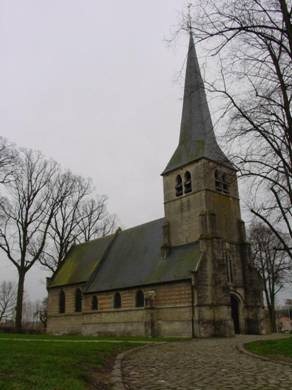
What is interesting in this painting is that the little church actually exists. It is located in a small village “Sint-Anna-Pede”, in the heart of the “Pajottenland”, West South-West of Brussels, and where famous beers like Geuze and Lambic have their origins.

It is also the place where I spent most of my youth till +/- 21 years old.


clip_image006clip_image008

A later generation of Flemish painters were the Flemish Expressionist, with Permeke  from ‘Group of Latem’,  as generally the best known:


clip_image010

Permeke – Laying Farmer

I love the “primitiveness” of Permeke. The primitiveness makes me think about some deep and profound thoughts from Jerry Michalski himself, who planted the seed to go back to the primitive level of our understanding of a bank.

clip_image011

The word “Bank” comes from “Banca” which means “Bench”.

People used to sit on a bench, and had a conversation. It was relationship building avant-la-letter, it as about wealth creation for everybody, it was a community play. The metaphor also applies to “stocks” which originally was a “stick” with carves indicating what values where loaned between parties. See also my blog post “Banks for a Better World”

The Flemish Primitives originated in Flanders. As you all know, Brussels is the capital of Flanders (this statement in itself – albeit factual true – may cause a whole political debate in Belgium, a debate i definitely do not want to get in now ;-).

All the above just to say I was born in Brussels, raised in Flanders, where the Flemish Primitives originated.


It’s sort of back to my roots

It’s somewhere deep in my DNA


And it is the sort of DNA that i want to build into our Innotribe events. This is the sort of deep “primitiveness” i want to be the understream of Innotribe events.

Building on this DNA, I was trained as an architect at the Sint-Lucas School of Architecture in Ghent and Brussels.

Sint-Lucas School of Architecture educates designers in a spirit of critical reflection and personal responsibility. Students question their limits and the limits of the discipline. They gain insight into both material and immaterial, physical and social structures. Teaching and research are organized in a spirit of artistic and intellectual openness, of tolerance and inclusion. 

This is more the artistic direction rather than the engineering section of architecture. It’s about designing space, experiences, total experiences. It’s probably why I often “clash” with engineers. We have a different mind-set, training, framework.

It is probably why i like so much the job that i am doing today. Because in my mind, creating a quality event is about creating a total experience.


Yep,

that’s where I am setting the bar


The end result must be an experience like a very good concert. Or a painting with many layers. Although concerts and paintings are one-directional. To be consumed only. It’s push-only. Modern life has evolved to more pull. Paintings and concerts in general miss the participatory element that we try to build in all our Innotribe events.

Building an event is like doing a production. I’d like to see my role as “written by”. With a team/crew of highly sensitive, critical, creative people, who do not accept compromise. Who do not need always the team to be aligned on everything up-front.

Who can express

their very personal emotions in an emerging landscape

of diversity


When the team is blended, we don’t need alignment up-front. The forces of the understream propel us forward in the right direction. Always. Unless some team members or the enabling organization do not have this deep force, energy. Or when the team you are asking to innovate has to waste its creative energy scrambling to find resources.

Harvard Business Review wrote about this basic idea of building in constraints to instigate innovation (credits to Mela of our team for finding this quote):

Scarcity seems to have replaced necessity as the mother of invention in today’s organizations. Far too many managers believe that depriving projects of resources [such as time – Mela’s comment] will inspire innovation. While that’s true sometimes, you’re better off using constraints rather than starvation. The human brain reacts to stimuli, so while a blank sheet can terrify, one or two constraints can stimulate. Experiment with introducing a clearly defined problem and an urgent need. But, don’t create false urgency by refusing to fund a project [or not giving time to work on it – again Mela’s comment].

Can we push the limit of events further ? Yes, of course. We are just getting started.

In my wildest dreams, an Innotribe event is multi-sensory. Appealing not only to visual and audio senses, but also to smell, touch, and taste. We can have total experiences, with music as a background/foreground canvas,


building and architecting

the rhythm of the event

like a rave


With moveable and touchable walls that give way and light-up when you touch them, with people dancing and raving, sharing a Californian style new-age, un-conference open-space tribe.  OMG, I hear you thinking, what good stuff did he smoke today?


It is about the power of the tribe

The deep power of the tribe

The Innotribe


clip_image013


So it happens that some of the finest Flemish chefs put together this fantastic site and tribe of The Flemish Primitives, which is all about the very-very best of Flemish gastronomic cuisine and experiment. World-class. If you have ever seen the drive, intensity, uncompromising drive of a chef like Peter Goossens of 3-star Michelin Restaurant Hof Van Cleve then you know what i mean.

clip_image014

“It was a great experience to participate in The Flemish Primitives 2010. It’s a high-energy, high-spirited meeting, and a unique mixture of people and points of view. A very stimulating day!”

Having that drive and that result is my inspiration. That’s how we want our audience to come out of an Innotribe event.

We don’t want to go for less!


clip_image016

The atelier – be it an art atelier or a gastronomic kitchen – is a nice metaphor for our group: a couple of artists cooking and painting together. Really together-together, but in the end the composition, the final plate, goes through the hands of the master curator, the “written by” guy, the one who composes.


clip_image018

I do this with

an extreme deep intensity


I have all my antennas “on” for 24 hours a day, 365 hours a year. When i read, tweet, blog, view, listen, taste, etc it looks like i have always that lens of “how can i use this or that for the next innotribe event?”.

For me, writing a new Innotribe composition is like being in a creative flow, my most individualistic expression of my emotions.


When I am in that flow,

I do not want to be distracted

by personal drama


People exposing personal drama usually don’t have anything else better to do.

clip_image020

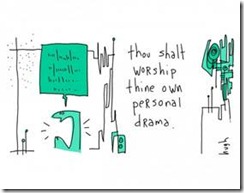
Hugh McLeod posted a couple of days ago:

Why are some people such drama queens? Why do some people get so obsessed with the little stuff, the gossip, who said what to who, who’s sleeping with who, who’s no longer sleeping with who…? The short answer: Because it gives them something to do. Life is short. You’d think we would have learned by now, how to make better use of our VERY limited time here on Earth.

That’s where i am setting the bar. Workaholic ? Maybe. Arrogant ? Maybe.

“I don’t expect everybody using the same standards” is often a standard phrase used in corporate landscape. But is that really so ? Maybe i DO expect everybody using the same high standards.

Or at least, I expect respect from others when I am trying and getting into this high state of flow and expression.


Respect for my time and space

Respect for my high standards


That’s probably why I hate “enterprise tourists”. The ones that make a lot of noise, but have no content. When they deliver something – if they deliver something – set the bar at creating a ripple where I want a wave.

Why I hate “seagull managers”, who pop-in, drop some comments like seagulls drop shit, and leave you behind alone with the clean-up until they show-up next year for another annual review of KPI’s or whatever artificial measurement criteria.

Why I hate an even worse category of “enterprise rats”. The ones that don’t add any value but only bring process and problems and challenges. The ones that are the messengers, the go-betweens. The ones that forward you mails where they clearly contain actionable items that could have been resolved by the rat herself in the first place. The energy suckers.

So, for you enterprise rats and tourists out there: next time you come into my space and interrupt me in my painting, be aware you are interrupting me in my creative process. Next time you create havoc in my atelier, beware you are messing up the medici effect. I don’t want energy suckers in our atelier

Team is not about celebrating individualism. Team is not the sum of the individuals. Team is about a safe harbor where every individual keeps its own identity. Team is not about dependence. Or about using the team consensus or lack thereof as an excuse.


Team is about “inter-dependence”


The team and each member of the team is one of the conditions for me – and each of us – to develop my/our full potential and make a great painting.

The team is more than the sum of the parts, the individuals. The team should not be a bowling team: where every player is after her personal best score. They miss positive feedback loops. That flows and fuels back the team.

Don’t mess around with/in team.

Messing around with/in the team is messing around with our full potential.

Innotribe Mumbai : Indian Waves and Genuine Smiles

After Kosta’s wrap-up about the event some days ago, i’d like to share with you some personal impressions and lessons learned from this event.

We have been designing this event for a couple of months. Not every day 100% – though that may have been true the last two weeks when everything comes together – but a quite substantial piece of our time.

As many of our events, it all looks a bit like chaos – organized chaos.


It looks like

things happen by magic,

but there is no magic


There is just an awful amount of preparation and design.  We spent quite some time to think through the design of our Innotribe events.

But despite all the preparation, debriefs, visuals from the location, hotel rooms, etc, etc the whole thing comes really alive once you actually are on-site and see/feel the actual space that will be hosting your event.

I landed in Mumbai around 1am the morning of 31st May 2011. Baggage got lost in London Heathrow. It was 2:30am before i was in my hotel room. Tired. The rest of the team already flew in the day or some days before.

After a short night, team briefing. So far everything in pretty good shape. We have hijacked 2 rooms and use them as our headquarters. Don’t have pictures of this, but everybody is crew: Kosta and Matteo sitting on the ground cutting hardboard. In the meantime, the facilitation crew is changing once more the design of the event. It’s getting better and better.

Lessons learned so far:

  • Everybody in the team is crew.
  • I have to let go at this stage. Have the impression my interventions don’t add value anymore. My presence is becoming distracting. Let the team do what they need to do. Don’t intervene. Trust the process

Next checkpoint: room set-up at 7pm. Problems. The previous event has not even started breaking down. And the hotel turned off the airco in the ballroom: no need for airco for night workers… Room is steamy hot. There is nothing we can do. It will take at least till midnight before our audio/visual and stage guys will have set up our stuff. Decision: let’s go to bed early and gather back at 4am for general set-up.

clip_image002

Here is Alex keeping the morale up !

June 1, 4am: room is not ready yet. Some team members worked till 2am. Has hardly 2 hours sleep. You can feel the fatigue and the irritation settling in. 7:30am and we have not done even the sound-check and dry-run. Airco is back on.

clip_image004

Somehow – as by magic – all pieces of the puzzle fall in place. It’s 8:30am and the registration desk open. Quickly to room for shower and changing cloths so i don’t smell on stage.

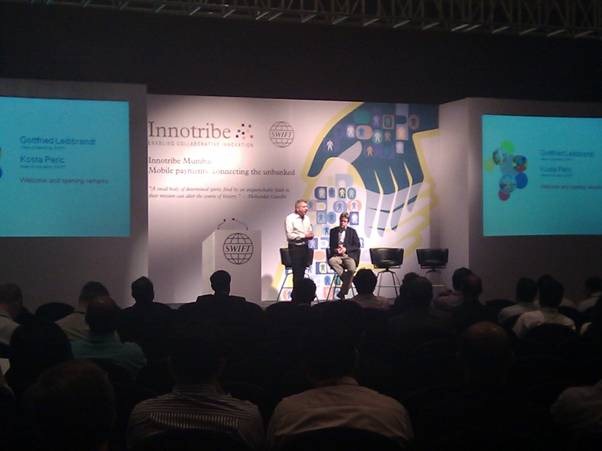
Here is a picture of the opening session

clip_image006

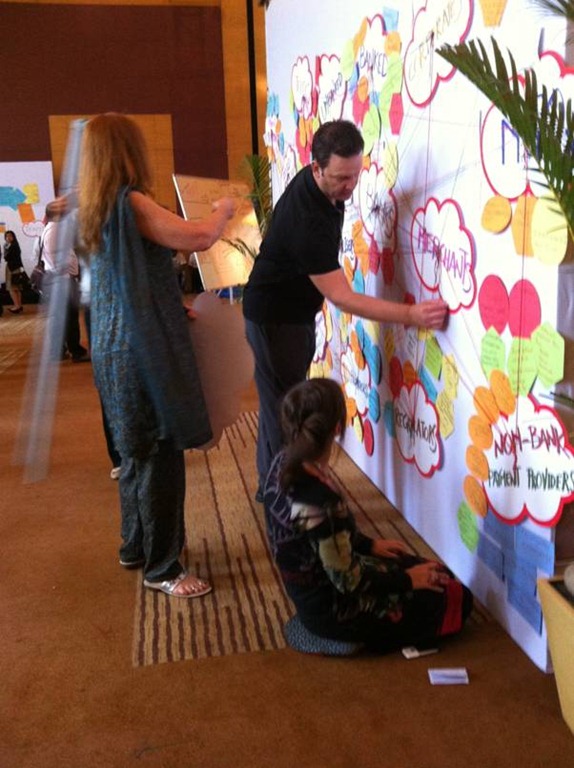
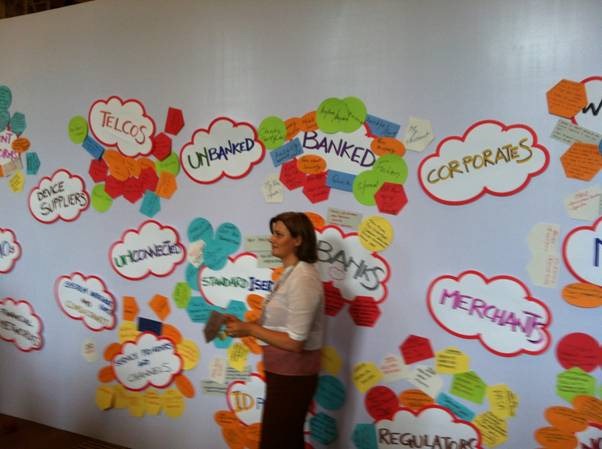
Events runs smoothly for the rest of day. End result is quite cool “knowledge wall”. Again, all team is crew.

clip_image008

clip_image010

17:30pm: Staff de-brief on day-1. Surprising how many folks turn up that i have not seen through the rest of the day. Obviously, those are the people who have most comments on day one. My role:

Assume

Take in

Don’t take it personal


What the hell do i care about the typography on some slides or the size of the coffee cups when this event is about financial inclusion? This is good inspiration for me to prepare another blog on event intensities.

Anyway, team will take comments on board and come-up with a redesign after the dinner.

19:00pm dinner. Have a deep discussion with one of the speakers. He has prepared video for the event, but i am lacking the authentic person behind the video. It looks like a documentary. Suggest speaker not to hide behind the lectern and to come in full vulnerability into the audience. Be vulnerable in saying “i don’t know”.


Be vulnerable in

being and standing there

as your authentic self


Do we all have the courage to do so ?

20:30pm after dinner. Debrief on new design. Don’t like it.


Seems we are having

a big illusion


Is financial inclusion the real agenda, or is it just a smoke-curtain to package a discussion between banks and telcos?

These are the real hard questions. It’s about the integrity and authenticity of the event. Should we put it on the table the next day?

We decide yes. We re-design the bloody thing once more. Late again, not enough hours of sleep. Back next morning at 6am.

The room has been re-arranged. From theatre into semi-circle context.

clip_image012

Have briefed all speakers that i will go into conversation with them during their presentation. Yes, i will interrupt them in their flow if they don’t manage to bring home their message fast and clear enough.

We also “play” with silence. With looking each of the participants in the eyes and call for honesty and integrity.

Highlight of the morning is (designed) conversational talk between Dan Marovitz and Neal Livingston.

clip_image014

Afternoon highlights are The Mixer – i love the station-format where you can go from station to station every 10 minutes.

clip_image016

Crown jewel of the event is the Mobile Arena. Matteo his usual self as master entertainer and master of ceremony of the Mobile Arena. There is lot of video material in Kosta’s previous blog.

But not only Matteo is in top shape. I have seen other people growing during this event.

For example Greet, who we bombarded to Audio/Visual manager: growing from shy and hyper-nervous rabbit with open eyes looking in the white light beam at 4am on day one, to the commander in chief controlling the A/V troops by the end of day-2.

clip_image018

Kosta, now in the crowd – anonymous, almost liberated from his staff – in symbiosis with the Indians, truly enjoying, his genuine smile, his body moving with some latency with the Indian Wave.

We end the day and the event with some powerful “Indian Waves”, sheering to everybody who contributed to the event.

Time to relax. We have a cool evening dinner. Lots of fun, jokes, drinks,… Landing…

The day after, i go with Muriel on a guided tour in Mumbai. First time i leave the hotel. Amazed by the crowd, the traffic, the contrasts in wealth and poverty.

clip_image020

The Ghandi house leaves me deeply impressed.

clip_image022

clip_image024

clip_image026

The days after: I see some shrewd attempts water down what we did at this event. Even questioning whether we should do this at all. They try to hide behind a smoke screen of revenue and pragmatic deliverables.

They won’t succeed.


The genius has left the bottle


What they don’t understand is that we are on a mission. We are at war. Against the old game. For a better world and company. With an enthusiasm and belief seldom witnessed before.


True enthusiasm is irresistible

it’s contagious

So, yes this is about energy. About creating a new dynamic. About enabling a new culture. About reaching new audiences. About bringing new and refreshing content. About a different brand awareness of SWIFT, that makes you look never the same way again at this company.


It’s about

the irresistible

contagious

enthusiasm

that breaks down

rusty structures

and corporate walls


It’s about Indian Waves and genuine smiles.

Pump up the (innovation) Volume

I would like to start with one of the slides of the innovation framework presented in “How to make babies?”.

image

The graphic and model is of course based on – but adapted to the specific SWIFT environment – the work of on Henry Chesbrough, the godfather of the concept of “Open Innovation”, and author of the 2003 book “Open Innovation: The new imperative for creating and profiting from technology” (Amazon Affiliates Link)

clip_image004

Chesbrough says:

Open innovation is a paradigm that assumes that firms can and should use external ideas as well as internal ideas, and internal and external paths to market, as the firms look to advance their technology”. The boundaries between a firm and its environment have become more permeable; innovations can easily transfer inward and outward. The central idea behind open innovation is that in a world of widely distributed knowledge, companies cannot afford to rely entirely on their own research, but should instead buy or license processes or inventions (i.e. patents) from other companies. In addition, internal inventions not being used in a firm’s business should be taken outside the company (e.g., through licensing, joint ventures, spin-offs)

Innovation Framework

The graph above illustrates an innovation framework:

  • With lots of idea generation tools on the left side of the graph
  • An innovation funnel, progressing the ideas from left to right, and making healthy adults from incubated babies
  • A north and a south side, where “north” stands for a traditional gating process product evolution for the core activities of a company, and where “south” stands for any innovation that basically does not fit the blueprint of the core.

In my blog post “How to create deep sustainable change”, I discussed the “Why” and the “expected outcome” of deep change and innovation.

  • The “why” has to do with creating a more agile organization, waking up the entrepreneurial spirit, in other words to “un-trap” the creative juices. And to do so, work is needed at the foundations: the roots of a tree. It’s about making the organization healthy, fit and un-trapped. This has nothing to do with six-sigma, lean, or other way to improve the efficiency of the organization, the efficiency of the organizational “body”. What we are talking about here is the fitness of the organizational “mind”.
  • The expected outcome of pumping up the volume and the fitness of the organizational mind is a connected organization, connected teams, connected people, connected values, operating in a connected economy.

Pump up the Volume

What follows is a personal interpretation of a team brainstorm we did in February 2011. So, it’s collective wisdom that I happen to be able to put in a format that’s more or less readable. Thank you team !

In this blog post, I will talk about the “How”, the set of tools that an organization can use to achieve the why and the desired outcome.

“Tools” can be actual tools such as an idea generation portal, but it can be other techniques at the front-end of innovation (the ideation), as well as processes and governance for moving ideas from ideation, via proof-of-concept, incubation, acceleration, and scale to full fruition.

What follows is also a model that can be used to underpin a strategy of “shake the tree” or – what I prefer – to “Pump up the (innovation) Volume”.

The volume knob is another metaphor to help us gauge our innovation focus, efforts and investments. What is important? What is nice to have?


clip_image006


Turning the knob to the max is what I would call being serious about innovation. But you have to start somewhere.

The Rose of Innovation

So, let me introduce you to the “Rose of Innovation”. Somebody has to give the romantic spin in all of this.

And let me mix it with the epicenter of an earthquake.


clip_image008clip_image010


Indeed, “Shaking the Tree” is like starting a quake from the middle, and the seismic innovation waves swarm to the edges of the system, where in the end they cause “Fault Lines”. You “feel” the move.


You know that inertia has been broken

You know you have crossed the chasm


clip_image012


And let’s segment the rose or the epicenter in different slices. Each slice is a cluster of innovation tools. You can have as many slices as you want, but I suggest to limit it to six in this case, merely to keep the overview and the focus.

For each slice, one has to decide how far to the right you want to turn the volume knob. Do you want to move from 2 this year to 8 next year? Probably, you want a multi-year perspective on this: from 2 to 4 next year, 4 to 6 in two years, towards 8 in 2015 ?

Let me walk you through the different slices.

Challenges

We already do internal and sometimes external – with customers – innovation challenges. It’s a call for teams and ideas around a pre-defined topic. What could be our ambition level if we pump up the volume to 8 by 2015?

  • Our ambition should be to be seen as one of the Top-10 innovation companies in financial industry. Long way to go, but possible with focus and will.
  • Build a real “Exchange” of ideas, competences, teams,…
  • Make a real competition of if. Like Cisco’s X-Prize. And with real money, I mean indeed a 250K EUR price for the champ of the year to help her incubate the idea of the challenge.
  • Open up the Incubation Centre, not only for incubation projects, but also for challenges. The cocktail of innovators in Building 8 will be irresistible.
  • Start-up something like frequent flyer pass. A frequent innovator pass. Points gathered this way add to your annual appraisal points, and reward repetitive innovators.
  • We should become so good we are being “called”: by other companies, at conferences, etc So good that people see the value and want to pay us for this.
  • Launch internal SWIFT “bucks”. Innovators can invest “bucks” in their projects. Later, when the project incubates these “bucks” get converted in actual shares in the project-company. These ideas are not new: ideation tools like Spigit and Brightidea already implement this. We just have to turn on the feature.

Events

This is more or less my shop today: let’s call it “Petervan Productions” Our events even more become “immersive experiences”. This unique mix of high-quality matter experts and speakers, together with our facilitation techniques. We could do much much more in this space. What about:

  • 8 Innovation events per year like Innotribe Mumbai ?
  • 1 Partner innovation event of 3 days
  • 1 Customer innovation event of 3 days
  • Deep conversations with: 3 days off-site with a guru on a topic and a select group of top-15 Heads of Innovations of banks
  • 4 hackatons per year where we ask developers to code/hack together an application in 2 days
  • More study tours, not only for the executive or L1/L2 level but accessible for all staff
  • The frequent innovator pass should help us identity who can go on such a tour
    • More gamification of our events: work with game experts such as Jane McGonical from Reality is Broken (latest book), Dave Gray from XPLANE and Gamestorming, and Verna Allee from Value Networks

Dave Gray author headshotVerna Allee

From left to right: Jane McGonical, Dave Gray, Verna Allee

  • Have a 3 day SWIFT employee festival? Like AMPlify.
  • Do sort of Woodstock at Sibos. Like Pirate Ship. With concerts
  • Sponsor other innovation events
  • Embed and sell our techniques to third-party event organizers

The overall objective is to create serendipity. To reach other audiences, bring other content, start exploring the edges, create brand recognition. For SWIFT. For Innotribe.

clip_image014

We also should more and more look at our events as something that is the middle of the process, not the end-game. Usually we come out of an event, exhausted, as we build up all the energy towards that one day, one week. But then it only starts: the event is only the place where the connected community meets for the first time, gets initially built.

Proof-of-Concept

Again, we already do this. We have a yearly budget that lets us invest moderate amounts of money in proof-of-concepts: these can be prototypes, animations, whitepapers, etc

  • Turning up the volume in this space is merely doing more: more prototypes, hence more budget and resources

Incubation

We just started this year. See also the “Babies” presentation. Initiated by Matteo, and now with the help from Cathal as program manager, this is our “Mathal Productions”. Their projects are located in Building 8.

Turning up the volume would mean:

  • Team with Silicon Valley incubators
  • Team with Incubators in Eastern Europe, APAC, South America. The example of Solkovo in Russia comes to mind
  • We could do much much more in bringing young entrepreneurs and start-ups together. You can create a marketplace of start-ups, accessible by the SWIFT community.
  • You could create – together with the 9,000+ banks on SWIFT – an alternative start-up funding and loan model. With better rates for those who have a good standardize Innotribe quality score.

Facilitation

This is what Mariela and team already do. For fun, let’s call it “Mela Productions”. Why for fun? Or “Innotribe Facilitation Studios”

  • Mela should make a business out of it. Think big. A worldwide team of 50-60 facilitators. Why not. If we were able to deploy similar numbers of lean navigators for cost reduction and efficiency, why can’t we do something like this for value creation?
  • This is also something we could start selling. This is an area where we are being “called”. Internal business units, but also banks from our ecosystem already now ask Mela to run facilitated workshops. Even from outside or our industry. We should charge for it.

Office Space

This is about having a critical look at our office space and the – communication – tools we have. On one hand we are spoiled. If you have ever been to the SWIFT HQ, you will for sure have been impressed by the main building and campus surroundings.

But the main building inside sometimes feels like a temple or a castle, with long corridors and closed doors that not really incentivize for cross-collaboration and sharing. I know there is a big project started to look deeply into this.

But also office-tools should be looked at. Today we have something called “Internet on the desktop”. It is a Citrix implementation of your browser.

  • We should turn it 100% upside down. Internet should be the default, and we should have a “SWIFT on the desktop” for the couple of apps that require tighter security or access control. It’s inevitable. It’s part of the movement towards cloud.
  • Skype, Drop-Box, Google Docs, etc should be our standard tools. Complemented by Salesforce, Chatter, Twitter, Quora. We should all be equipped with iPADs, Androids, etc. We never should have to use a PC anymore.
  • This modernization will also have a major impact in image and brand.

Culture

I have been quite deeply involved in an effort to look at company culture, and those who follow my blog know that I have something to say in this space.

  • Lately, the culture team was re-organized, and volunteers from GEN-Y and GEN-X were called upon. I applied for GEN-X (those born in 1961 and beyond)
  • Great was my astonishment that I was considered “too old to innovate”. I am born in 1957 so indeed, strictly to the letter, I am not GEN-X anymore. But I am lucky, I still get “copied” on the stuff (sic)

Any pump-up-the-volume in his space

will be worthless

as long as we do not

apply a strategy of “seed and infect”

  • If not, what we will end-up with are loads of powerpoint slides, processes etc. It will show great in an annual report or so, and it’s a bit the same as “how real is your innovation?”. Ask yourself the question “How real is your culture change”.

What we need is

a viral infection of the company


  • 40 people in 2011 should get the chance to follow a personal discovery journey like Leading by Being, so that they lead from their open mind, open heart, and open will.
  • In 2012 another 100 people. And in 2013 another 100.
  • That’s 240 folks. Deeply passionate about changing the company. That’s more than 10% of the workforce. That will change the culture for sure.

And have a look what companies like J&J do. They have in a couple of years a group of more than 750 change agents. They can be flown-in or video-conferenced at any moment to form tiger teams.

Banks for a better world

This is a big bad new idea. It must be possible to have a deep merge between Innovation, Talent Management and CSR.

Think big, really big

I think it must be possible to create

a 1 Billion $ Fund

that invests in financial inclusion

  • I know that some of our banks have invested big time in some of the above examples.

Why can’t we pool together

funds and resources as an industry?

Would that not be

immensely more powerful?

  • That would be quite a different story than what you hear/read these days about “too big to fail”, greed, lack of trust, etc

It would also lead and propel the community into a modern thinking about capitalism, rethinking value, and waste that we produce for the next one in the value chain (for ex bail outs) or even pushing debt towards future generations.

Studios and Production Houses

I am getting convinced that for each of these slices, we have to start thinking in terms of independent and complementary “Studios”. Like the studios of Pixar, Dreamworks, etc


clip_image015


Or in terms of <name> “productions”. For example for facilitation, you could pitch the “SWIFT Facilitation Studios” or “Mela Productions”. Events could be “Petervan Productions”, etc.

I like somehow the personalization aspect of this, as usually these teams are geared around a particular person with specific strengths.

If you like it or not, organizations are – or should be – built around people.


It’s indeed some sort of

strengths-based

studio or production environment


The Studio or Production metaphor also works well: you could consider the Head of Innovation as the “impresario”, and the studios the teams that collectively deliver a streamlined total experience. Or you could – like in big Hollywood studios – talk about “Building 123”, or like “Building 20” which is the innovation building of MIT.

At SWIFT, the incubation building is referred to as “Building 8”.

Budget

  • What does it take in monetary investment
  • Additional resources
  • This is reality check. Where the CEO mantra “I want you guys to shake the tree” is tested with reality. This is where people get scared. This is where you hear: “I know him/her (the CEO), and we can’t go with such an ambitious plan and attached budget”.


This is the real test

  • Here you will find out how real is your innovation. Or is it just a window-dress because innovation is fashionable and always works well in front of a board of directors or in an annual report.

You will probably end up somewhere between the window-dress and the edge-nirvana. And that is fine. The important thing is that you gauge it. Use it as a baseline. And don’t accept less when entering the next budget round.

Step by Step vs. not knowing what end result is

The challenge with all this is that


innovation

can not managed like the core


The core is – and should be – managed as the optimization engine. In this space you know where you want to end-up over a given period of time. You make a phased project plan, allocate the budgets and resources, put a project manager on it, and you execute as planned. It’s Failure is not an Option. It’s highly predictable, with yearly budget cycles, than in essence most of the time built upon last year budget models. It’s a stepped approach.


clip_image017


The challenge with innovations is that they are not planned. You usually know the “direction”, but you’re not sure where you land. It’s like Christopher Columbus heading West to discover India, but he found America. It’s like a (pirate?) ship meandering. It’s Failure IS an option. It’s unpredictable. It’s a meander approach.

Conclusion

That’s what I wanted to say today. It’s a blog post that was cooking for several weeks. Happy it’s done. It’s a long post, I know. And maybe next, I should put all these blog piece together in a book. Who knows, maybe I’ll do that one day.

But one thing is sure: The combination of “How to create deep sustainable change”, “Pirates, Rebels, Mercenaries and Innovators”, and this post “Pump up the Volume” will form the basis of a brand new Innotribe presentation, the follow-up of “How to make babies”. I will let you know when it is ready.

All for the same purpose: the fitness of the organizational “mind”. And a deeply changed organization, connected and full of energy!

clip_image019

Let’s Pump-of-the-Volume!

Let’s take those innovation energy pills!

Let’s shake the tree!