Team dynamics and the fiction of friendship

Check out this wonderful RSA animation about Steven Pinker’s “Language as a Window into Human Nature”

image

Steven Pinker shows us how the mind turns the finite building blocks of language into infinite meanings.

But I looked at this animation and was triggered by how much this relates to how our economies, companies, teams, ourselves and even exchange of value between these entities are fueled by the relationship mechanisms described in this animation.

In essence, Steven Pinker describes 3 relationship types:

  • Dominance relationships. Pretty self-explanatory and what used to be used by primates, but still existing in some companies
  • Communality relationships. The mode is “You share and I share alike”, for example in a couple or between friends
  • Reciprocity relationships. Business like tit for tat exchanges of goods or services that characterizes reciprocal altruism. This is what we do in commerce. Exchanging money or to a larger extent exchanging of value.

But by not saying the things as they are, and mixing up the conventions that apply to each of these relationships, you end of with…


awkwardness


Awkwardness in the relation, in the team culture, in the team dynamics and illusions of friendship and love. In dating – see my prezi on how to make babies – this awkwardness leads to “the anxieties of dating”.

And it really feels awkward when the confused give a tap on the shoulder or hold an arm, skimming the borderlines of trust.


album_large_3992338


But saying things “as they are”

also means

taking risk,

getting naked with no defense

or fall-back position

in case it goes wrong


That’s why you best do these things with the guidance of an experimented coach. Somebody who can guide and learn you to take personal leadership, daring to step forward, and daring to take care of expressing our own needs. It’s carving in the underlying energy streams under the table, where emotions such as anger, joy, hate, rejection, love, etc live. To discover and get rid of the hidden agreements and closed circles of the past. Nobody likes being rejected or worse being ignored.


6a00d8345189aa69e20148c85f6601970c-320wi


Instead of “getting used to it”, we could develop an emotionally intellectual language for expressing our needs. Something like:

  • Trigger: “this specific behavior causes an emotion with myself”
  • Emotion: “it makes me sad” or “I feel hurt”
  • Underlying need that is not fulfilled: “the need to fully contribute value” or “the need for a unique learning experience” or “the need to be respected” or “the need of not being ignored” etc, etc
  • And attaching to this need a “request”, an “invitation”: like “I invite you to fully include me next time”

All this in full authenticity, without manipulation, hidden agendas, power games, and other sorts of obfuscation of the reality.


EGYPT-POLITICS-UNREST


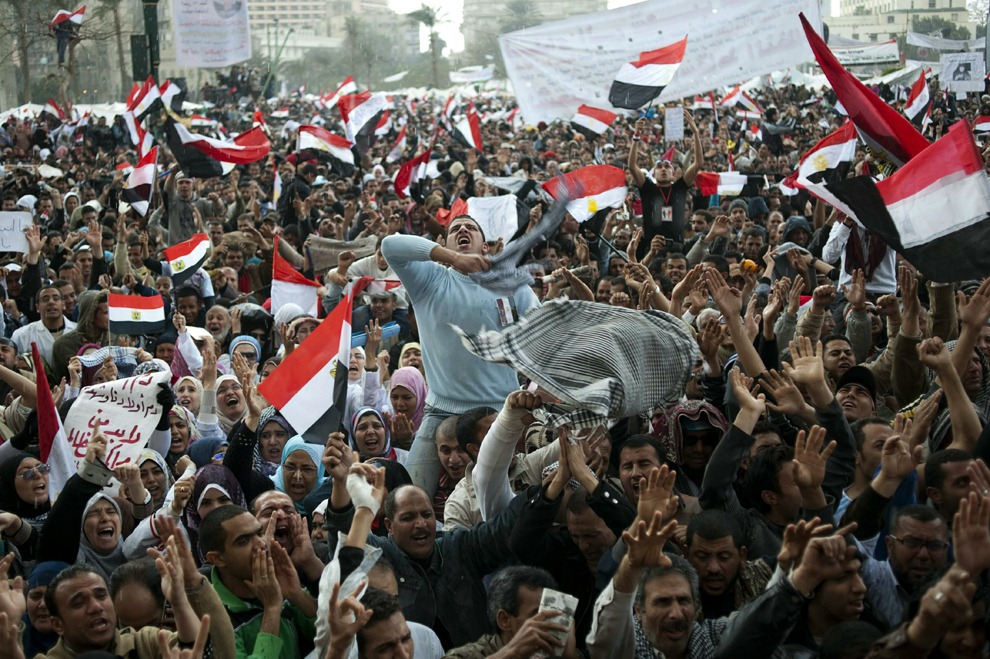
But something fundamental can change when people meet, when they group in crowds. When they can look each other in the eyes. On a broader scale, think Egypt, Tunesia, Bahrein, etc: when people get together at one place, everyone in that crowd knows that everybody knows that everybody knows.


It leads to the collective power

to challenge

the authority

of the dictator


It’s the story of the emperor’s cloths. And explicit language is an excellent way of creating mutual knowledge.


What if we would start applying

these relationship principles

to our connected economy,

to our connected companies,

to our connected teams,

to our connected self,

or even to our connected value?


This would btw be a great way to organize and thinking and collaborations for Innotribe at Sibos 2011 on 19-23 September 2011 in Toronto.

  • Using the theme of the connected “something”, we could bring in technology topics like Digital Identity, Social Cognition, Big Data.
  • We could also experiment with some non-technology trends related to Social Capitalism, Future of Money/Value, Corporate culture, Where companies invest long term.

But to come back to the main flow of this post: the Egypt principle of mutual knowledge in a crowd also plays at a smaller level like a team.

But here is the paradox and at the same time the risk and opportunity:


No mutual knowledge

=

maintaining the fiction

of friendship and love.


However, with mutual knowledge and using an overt language you create the potential of having true team-ship and love. But using overt language also means you can’t take it back when it is out there. We don’t have a fall-back position, we are vulnerable.


1 (3)


But sometimes, one needs to pull a tooth. Pulling the tooth hurts, but you’re happy when it’s gone. Likewise, tapping blood may show black blood, and the tapping may hurt, but once the blood had been rinsed, you’re fit again.


When you let go the masks,

show your authentic self,

only and only then

will we be able

to realize

the full team potential


That’s why next week, our team goes on off-site to work on team dynamics. To discover and become fully aware and conscious of relationship types and dynamics, and to double-check whether here or there we don’t need to pull a tooth or to let go some black blood. We probably won’t find anything, but who knows ;^)

Farsight 2011 Highlights: what explosion of information really means

Have a look at a couple of the excellent videos on this wrap-up site about Farsight2011.

image

I could spent days and days in this space. All my favorites, including Hedge Fund Manager and PayPal co-founder Peter Thiel, Recorded Future co-founder and CEO Chris Ahlberg, journalist entrepreneur Esther Dyson, and many more in one big long session about long term future. Yammy – Yammy !

Search is no longer the simple act of typing words into a text box. New user interfaces and mobile devices are expanding the web into all aspects of daily life, and even changing the way we think. An explosion of innovation has allowed us to dream big about the role of robotics and Artificial Intelligence. And yet the future of search is fraught with challenges. The stakes can’t be higher. Is the search industry locked in a race to the bottom or are conditions ripe for a breakthrough? This question took center stage at a gathering in San Francisco on February 1, 2011 which was streamed live on BigThink.com.


image

(Peter Thiel at Farsight 2011 in “How to end the Google monopoly”)

Some quotes from Thiel:

  • You need a 35% market share in search to make break-even
  • The core problem is how to cut down the massive fixed costs
  • Until you solve the fixed cost problem, you have a natural monopoly
  • Underestimating fixed costs is a mistake that I intend not to make twice
  • I am not so much focused on the revenue side, as I am on the cost side
  • Everybody can do the front-end and the revenue with it
  • 5-10B$ yearly cost is the barrier to entry
  • Microsoft is probably the only company with the capital resources that can compete with Google at this moment in time.

Or have a look at Salim Ismail, Executive Director, Global Partnerships, Singularity University, talking about The Future of Privacy.

image

  • Computing is getting exponentially faster, smaller, cheaper, better
  • Our assumption is that these new technologies can scale at global level
  • Turning our lives more and more into an information property
  • From Discover to Aggregate to Process
  • Retrospective vs. Prospective search
  • Quantified self, Health Data, Sensor Networks, Internet of Things
  • Total explosion of information

About total explosion of information: I also invite you to watch the video of Hasan Elahi’s talk at the Lift11 Conference this Feb 2011 in Geneva, at about the same time as this BigThink Farsight 2011 Summit. The title of his talk is “Giving away your privacy to escape the US Terrorist watch list”;

he is in essence explaining that

by releasing

an explosion of information

about his where-abouts

he makes it impossible

for these authorities

to make sense

out of this massive set of data


image

The intro is a bit long (but worthwhile to set the scene) but if you are short in time, jump in as from minute 8’30…

  • To be formally cleared, you need to be formally charged
  • A very unbalanced relationship: I give and I give and I give, and I don’t get anything in return
  • They have the ultimate authority, I knew who was in power, and you turn to very animal primal instincts of survival
  • And in my case, survival meant co-operate
  • And I decided to put everything public

Here is where the video gets mind-blowing: as from minute 12’30

  • I wrote a little code that would track me all the time
  • It’s kinda bizar seeying yourself as a pixel
  • Every flight I have been on since birth
  • I am ok with giving you every bit of my data, but you have to do some work to digest it
  • My financial records are public
  • All my calls
  • There is an independent party (bank, phone company, etc) that is verifying that yes indeed I was there…
  • I have taken this to a level of absurdity, of detail, that I leave such level of detail about my life, that I live a rather private life.
  • After you do the analysis of all this detail, you actually get very little in return.
  • Having a little information about somebody is very dangerous as it can be mis-contextualized
  • You can’t delete, but you can bury it in an explosion of information
  • Or to conclude:

This is another way

of getting back into control

of your identity

Digital Identity Tour Part-3: Personal Data “something”

This post is a third in a series on personal digital identity. Part-1 “The unpolished diamond was published here in August 2010 and Part-2 ‘The Digital Identity Tuner” was published here in September 2010.

Today’s post is not reporting about the tour we did in June 2010, but rather some reflections based on a number of serendipitous encounters during the last two months.

D2_G793373VG.1_FC_TRON_OK.jpg.360

I am a strong believer in serendipity or the power of encounters by accident and the resulting idea shifts that can be generated during such meeting of different expertise.

My first encounter was with Azeem Azhar, CEO of Peerindex.

One day I was at a conference, and one of the speakers asked the audience “I would like to know what sort of application you guys want me to built”. It was one of those conferences where folks twitter a lot during the sessions, and I posted a tweet saying: “I would like you to develop my Digital Identity Tuner”.

It got re-tweeted, and in the end got picked-up by Sean Park from Nauiokaspark (he was one of the Innotribe Leaders at Sibos Amsterdam, and he is also an investor in Peerindex), who introduced me to Azeem.

Peerindex helps you understand and benefit from your social and reputation capital online. How much is your online reputation worth ? PeerIndex is a web technology company that is algorithmically mapping out the social web.

The way we see it, the social web now allows everyone endless possibilities in discovering new information on people, places, and subjects. We believe that the traditional established authorities and experts – journalists, academics, are now joined by a range of interested and capable amateurs and professionals. As this locus of authority shifts, many new authorities emerge. PeerIndex wants to become the standard that identifies, ranks, and scores these authorities — and help them benefit from the social capital they have built up

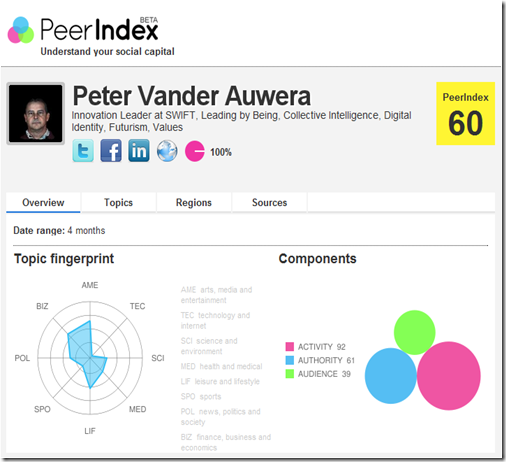
Btw, my Peerindex is 60. That’s based on my digital footprint on Twitter, Facebook, LinkedIn, and my blogging activities. It is obvious to see that this number “60” may one day translate into some virtual social currency.
image

There are similar services like this: Klout is well known. Same principle. Some trend toward social currency of your personal platform. It’s also obvious that this capital will become very important for recruiters to find the people who have real on-line influence and reputation.

image

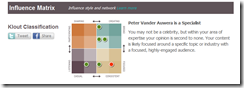
Like Peerindex, Klout also offers some more drill-down features, showing you influence “style” for example:
image

As you start drilling down in these data, this starts to smell quite a lot like some of the zooming in/out ideas I elaborated on in “Digital Identity Tuner”.

Azeem and I will continue talking about this. What Azeem liked in the “Tuner” were the ideas of control of what pieces of my profile I want to share with whom in what context.


My dream is that we have a prototype/mockup

ready by Sibos Toronto in September 2011,

where we probably will have

an Innotribe theme on Digital Identity

My second encounter was with Phil Windley, CTO and Co-Founder of Kynetx

One day – it was a day after a conference has ended – I was going to have breakfast just before checking out from the hotel and flying back home. At the table next to me, I see a guy working on his PC. I see a big sticker “Kynetx” on the PC. I had heard the name of the company several times before, so I said “good morning” and quickly introduced myself. It happened to be Phil Windley.

 

image


Kynetx is a private company that provides the first Context Automation Development Platform. This platform, powered by Kynetx Network Services (KNS), provides easy-to-use development tools to create context-sensitive, cross-platform apps that help build relationships between app owners and users.

I would describe it as

an event based integration engine

in the cloud


So we made contact, and once back home we arranged a Webex demo session.

Boy! What I saw really blew me away from my socks ! I saw a demo with a credit card vendor who used Kynetx to establish a new direct channel with the credit card holder, completely disintermediating the banks. I saw another demo with really very deep integration of DBS360 into Salesforce.com

I knew he had something to do with identity, and back home I found out that Phil Windley also co-founded and co-produces the Internet Identity Workshop with “identity woman” Kaliya & VRM-guru Doc Searls.

Phil has a great blog called Technometria

image

He has a great perspective on the key differentiator between today’s social networks and Personal Data Ecosystem the emergence of the personal data store where individuals control their own data.

This is of course very relevant to our eMe winner project of Sibos 2009. As I mentioned already many times before, with hindsight the eMe premise of a single or even distributed Personal Data “Store” or “Locker” is flawed. On Windley’s blog I finally found a good discourse on why it is flowed.

Check out the following two posts:

Like always, there is nothing such convincing like a demo.

The video below shows a conceptual demo illustrating the opportunities that are available for automating the contextual activities that people undertake every day. At the heart of the demo is a personal data store and Kynetx. The interactions are all done using real Kynetx applications that are plumbed in a realistic manner. The scenario uses 5 different APIs and a dozen individual rulesets in the Kynetx system.

In the scenario, Scott Phillips gets bad news from his radiologist: he needs surgery. You’ll see that a personal data store and a collection of loosely coupled Kynetx apps automate the frustratingly disjointed activities associated with Scott’s bad news and focused his attention so he can complete the tasks with the least amount of effort.
image

Kynetx and Personal Data Services from Phil Windley on Vimeo.


My third encounter was with nobody less than Esther Dyson.

She was talking at the last Defrag conference. She was doing a fantastic talk “On Exploration”. It was about “exploring yourself”, “discovering yourself”. With my Leading by Being background, I was super concentrated.

As part of her talk, she showed her personal DNA generated by 23andMe, one of the companies she is investing in.
image

Btw, one of the other investors in 23andMe is Anne Wojcicki, who is married to Sergey Brin of Google. She has an active interest in health information, and together she and Brin are developing new ways to improve access to it. As part of their efforts, they have brainstormed with leading researchers about the human genome project. "Brin instinctively regards genetics as a database and computing problem. In a recent announcement at Google’s Zeitgeist conference, Sergey Brin said he hoped that some day everyone would learn their genetic code in order to help doctors, patients, and researchers analyze the data and try to repair bugs.

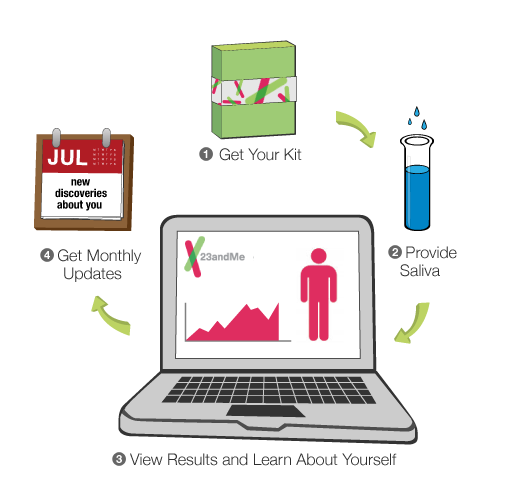
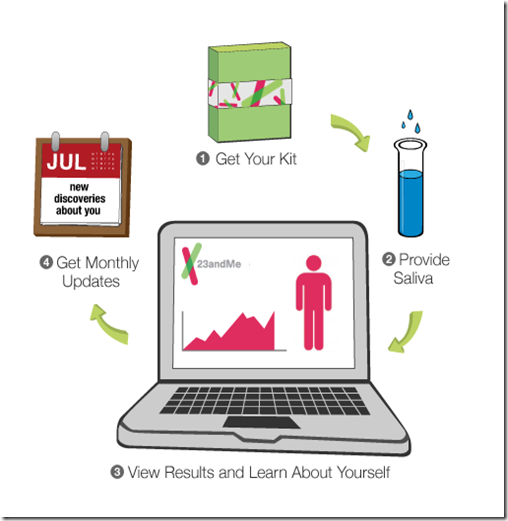
23andMe indeed offers a genetic testing service that provides information and tools to understand your DNA. With a simple saliva sample they’ll help you gain insight into your traits, from baldness to muscle performance. Discover risk factors for 92 diseases. Know your predicted response to drugs, from blood thinners to coffee. And uncover your ancestral origins. These days the promotional rate for such service is 99 USD !

Here is how it works:
image


The system generates personalized reports on your health status, your disease carrier status, your disease risk, your drug response and your traits. In other words,


there is no place to hide anymore


You see the impact of your lifestyle on your DNA. You can change something to your lifestyle, or you can continue to live in a state of denial. As Esther was explaining “its all about motivation” albeit a different motivation than the one meant in Daniel Pink’s latest book “Drive”.

What Esther Dyson was describing was a DNA-version of the Quantified Self, a movement of people who measure all sorts of things about themselves such as heartbeat, blood pressure, time usage, sleep patterns, etc and who put all that information in the cloud.

image

Obviously, it would be great if also these folks would have a Digital Identity Tuner so that they could control in a more granular what what aspect of their identity/footprint they want to share with whom in what context.

For example, you may want to share your heartbeat with your insurance company to get better insurance policy and rates, but maybe you do not want to share this with your bank.

At the end of Esther’s talk, I observed that what she was describing were actually body listeners, sensors about your human “engine”, “machine”. I wonder if there are no similar implementations about the other side of “me”, namely about my mind, my consciousness, my feelings.

I asked Esther Dyson if she was aware of any such consciousness-as-a-service in the cloud thing. She thought it was an interesting question, but that she did not feel ready yet to share all that with the world.

I love the “Know Yourself” theme:

  • From the one hand it takes quantified measurements from the human body, the “engine”
  • On the other hand, it could take quantified (?) measurements from the human mind, the “capabilities” such as social cognition, or capability to be happy, etc


Both will drive status

Both in place and time


Status is all what it is about these days. And being able to share it. And participate to it. And engage with it. What Clay Shirky called “Cognitive Surplus”. What Stowe Boyd calls “Social Cognition”.
So many reasons to start thinking of a Digital Identity Tuner that lets you control status.

Digital Identity, Digital Status, and Digital Footprint start to converge into a personal data “something”. Some started calling the “something” a “store” or a “locker”. Others think more of a “service”.

Others are aware that our vocabulary is very real-world inspired, often based on physical concepts like “storing”, or “location”, or “posting”, etc… They prefer to wait until an appropriate terms pops up and call it “Personal Digital x” with the “x” standing for “something”. I called it Digital Identity Tuner.
 

tumblr_lckj8mKhNd1qza6bio1_500phil0501


It is clear that this sort of identity is much more than a card, token or PKI certificate.

There is a role for a

neutral, non-for-profit, trustworthy

organization to offer

an identity and trust service

for the financial industry

Who could that be ?


Sean Park’s presentation at next week’s SOFE (SWIFT Operational Forum EMEA) will introduce you to a financial services framework, with trust and identity as foundational services. That’s on 14 December 2010 at 9am in Conference Centre Dolce, close to Brussels.

A number of the above ideas should be part of a Digital Identity Research incubation project that we will probably kick-off at SWIFT in the second half of 2011.

Let the comments flow.
Digital Identity Tour Part-2: Digital Identity Tuner 7.0

This blog post is Part-2 of a series that started as the ongoing thinking after our Digital Identity Tour in June 2010. In Part-1, I developed the idea of the Unpolished Diamond.

Today, I will entertain you on the concept of a Digital Identity Tuner, which in its own is also a further evolution of the Identity Rights System 3.0 post of March 2010.

It all started coming together when – during the tour – we visited PayPal.

This visit was at the end of the tour. We were welcomed by Eve Maler, Distinguished Engineer, Identity Services at PayPal, and Andrew Nash, Senior Director Identity Services at PayPal

Eve MalerAndrew Nash

These folks of PayPal basically told us to forget what we had seen earlier in the week. These are probably some of the smartest identity folks around, so you pay attention.

Indeed, I was amazed how much further ahead they were, not only in their conceptual thinking, but also in the pace at which they define and rapidly test new protocol standards.

The eye-opener for me was that there is no business in identity, but there is some significant potential when flipping the discussion to sharing and managing of user data.


It is not that much about identity,

but more about digital footprint.


Happens that a couple of weeks later I read Tony Fish’s book My Digital Footprint, where the author explains razor sharp that there is a difference between digital identity and digital footprint.

At about the same time, I saw appearing on the internet all sorts of semantically tagged enabled viewers, like this one from Recorded Future.


Recorded Future lets you search and find for events, based on the WHAT, the WHO/WHERE and the WHEN.


What if we could do this

for a person’s digital footprint ?


Here is where my Digital Identity Tuner comes into the picture:

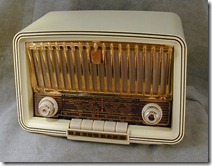
phil0501

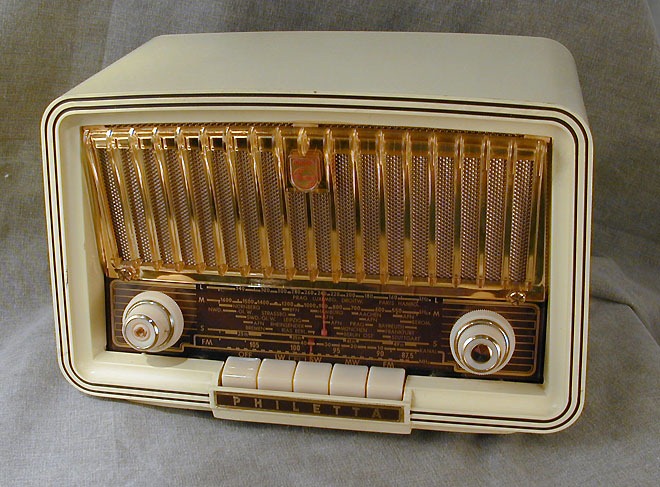
Remember those old radios ? You could “tune” into a radio channel, and there was a big button, and if you turned that button an arrow would move over a “map” of pre-defined radio stations.

What if we could do the same on your digital footprint ?

Petervan Digital Persona AUG 2010

The spectrum above is my “Digital Persona” as generated recently by MIT’s Digital Personas project. Personas shows you how the internet sees you.

Every color in the spectrum is about a certain dimension of your digital footprint: books you read, education, political preferences, musical preferences, professional attributes, etc, etc…

What if you could make that spectrum “clickable” ? Not only via a browser, but also via API’s. What if you could zoom in/out that spectrum or certain aspects of it ?

So far, we have “tuned” in two dimensions:

  • On the horizontal axis, hovering over the different color dimensions
  • On the “depth” axis, zooming in/out to get more or less detail

Let me add the third dimension of Time.

m01_16895561

I could tune into the past, but I could also tune into the future, as my digital footprint does not only contain past behavior, but also contains real-time data (such as devices that I may wear to beam my heartbeat-data to the Microsoft or Google or Wallgreens or whoevers Healthvault when running a couple of miles on my cloud enabled Nike shoes.

PolarS625Ximage

It also contains data about my future, as I keep my calendar in Google Calendar, for example. Or the event for which I bought tickets. Or even on-line streaming events for which I subscribed.


image


UPDATE-2: or check out this TED Video, on the Quantified Self, with Gary Wolf’s intriguing new pastime: using mobile apps and always-on gadgets to track and analyze your body, mood, diet, spending — just about everything in daily life you can measure — in gloriously geeky detail.

image

So, the third dimension is time.


What if I would have a sort of

“Remote Control”


that could let me navigate through my digital footprint on those three dimensions. It’s like steering a helicopter via remote control.


Or maybe more dimensions. You would end-up with something that navigates you through a fractal or so…

Of course, we don’t live alone on this planet.


We are part of tribes

of swarms

with leaders and followers


I love the metaphor of “SWARM”


Imagine that we have a similar digital tuner for navigating the swarm. For seeing links between the WHO’s in the swarm.

UPDATE: just a couple of hours after my initial posting of this blog entry, I came across this great post by Greg on Digital Tonto about “The Story of Networks”. At the end he refers to a great TED talk by Nicholas Christakis “How social networks predict epidemics” 


In essence, it shows the “swarm” of communities, leaders and followers and their relationships. And how germs, ideas, memes, etc spread in a community based on the same S-curves as innovations happen. Nicholas A. Christakis, MD, PhD, MPH, is an internist and social scientist at Harvard University who conducts research on social factors that affect health, health care, and longevity.

So far, we looked at “navigating”. But the system would also allow me to define and manage who gets access to what parts of my digital footprint in what specific contexts or constraints. Not only “access”, but also “usage”.

For all that to happen, we need to fundamentally rethink how we deal with digital footprint.


We have to navigate away from identity systems that mimic our brick-and-mortar world, that are still based on the metaphor of identity cards, or passports, or electronic equivalents based on PKI systems and certificates.


No, we almost need a new semantic tagging language. Not to “tag” pages or servers, but to tag my digital footprint.

And not only “tag” it but allocate and manage “usage” rights to it. And I should be the owner of those data, whether they sit on my computer, in Facebook, or distributed open source models like Diaspora.


image


So that I end up with a collection of different “where’s” where data about me is kept. It may lead to some new form of DNS, but then a DNS of people. Not pages or servers.

Maybe all this is a bit of futuristic/iconoclastic thinking. Maybe. But when reading the book “Iconoclast: A Neuroscientist Reveals How to Think Differently” by Dr. George Berns, I came across the following two sentences and took them a little bit out of … context.

But they are so relevant to our identity context:

There are two paths in spectrum: one for identity/categorization and the other for digital footprint / Trail / history/future (time dimension, recording, in the future,…)

The high road is concerned with extracting where objects are located and throws away the elements related to their identity. The low road, on the other hand, is concerned with identification and categorization, and less so with objects’ spatial locations

As Tony Fish so well articulated in his book: we have to separate identity an footprint.

The discussion

about internet identity

has moved from identity to footprint

how we are going to manage that

with a privacy ethic

that is adapted

to our hyper-connected world


Privacy is not dead. It needs to be redefined.

Recorded Future

Check out this interesting company Recorded Future.

This is very relevant to my upcoming post on Digital Identity Tuner 7.0

Start thinking of this metaphor when looking at your digital footprint.

Digital Identity Tour: the unpolished diamond part-1

Summer is coming to an end.

I had some good times off, disconnected with lots of reading, biking, and hanging around. Also the best way to let new ideas emerge.

g10_24056801

Lately, i have been immersed in digital identity. First, I attended the EEMA European e-Identity Management Conference in London . The week after, I was the “tour guide” for a study week on the subject with 4 other colleagues.

We discovered a rich subject – in full (r)evolution – and we met really very smart people who were extremely knowledgeable about the subject.

Since then, I have been reading and thinking a lot about the subject.

This blog post – in different parts – is a detailed report of those conversations, reflections, interpreted in a very personal way. In other words, this is my very personal consolidation and internalization on the subject.

The subtitle of the blog is “the unpolished diamond”. Indeed, what I will present here is a multifaceted subject. It’s like a rough diamond, which still needs to be polished into a beautiful multifaceted shiny precious diamond.

The different facets of the diamond are organized in “chapters”. I feel like this can become the basis of a more in-depth whitepaper, or – time and ambition permitting – a book at some day. Please let me know and/or encourage me if you want me to go ahead with this crazy idea of a book.

I will come up with some other metaphores in subsequent posts. The one on “Digital Identity Tuner 7.0” is in the making, where I will really push the identity envelope.

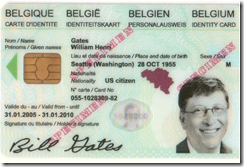
Anyway, my identity story starts in 2001 or so. That’s when I got infected by the identity-virus: I was working for Microsoft (2001-2005) on the Belgian e-Identity Card (eID) project.

image13

This was a once-in-a-life project, sponsored by Bill Gates himself, who saw the advent of 8 million eID citizen cards being distributed in a mandatory way to the Belgian citizens over a period of 5 years as a ideal test/pilot market. (BTW: Belgium is already renewing the first cards that were issued at the time; this means this has to be looked at as an infrastructure thing, that needs to be maintained for several generations)

We wanted to discover how citizens reacted to such eID card, assess what sort of applications were being build that consume this eID card, and what would be needed to support this sort of card in Microsoft products. This was far reaching, as we looked across the board at Windows OS, Microsoft Office, MSN (Safe chat for children), workflow, audit and regulatory requirements, and last but not least privacy.

My role was one of Business Development Manager, not so much in a sales mode, but rather in a research and discovery mode.

It was during this time that I met Kim Cameron (Microsoft’s Chief Architect Identity), just at a moment when Kim had published his seminal whitepapers “Laws of Identity” and “Towards an e-identity meta-system”.

Kim has become a friend since then, and I highly recommend his blog www.identityblog.com.

I was permeated with the early concepts of claims based identities, and ever since, I felt a natural attraction towards anything that was related to identity, not only e-identity but also identity in it’s philosophical and existential sense “who am I really ?”

Already at that time (2001),

I felt that the eID card

(a smart card with certificates issued

by the Belgian government)

was an anachronism.


We seemed to use

concepts of a physical world,

and tried to use them

in an on-line world

fundamentally different because

hyper-distributed and

highly interconnected


In addition one can question today whether the government (or a bank, or another “trusted” party should be the originator of the identity).

It’s like maintaining a 2D view on a world that has since long moved to 3D. It’s like looking at the sunset in 2D: what you see is a circle that gets smaller and smaller until it’s a dot and then finally disappears.

But in this 2D view, one has lost the 3D dimension of our planetary system, and the highly dynamic and interdependent set of moving parts.

This view is shared by David Birch, who runs a very interest Digital Identity Blog when he says:

The analog-digital comparison does not work when thinking about 21st century e-identity

There are indeed some novel views that


instead of having “an e-identity

issued by the government

to offer value to the citizens”,

it would not be better to have “an e-identity

issued and managed by the citizens

to offer value to the government”


This view is highly related to a tectonic shift of power back to the owner of the data, or more in general the revolution from “Push to Pull” business models that are so well described in John Hagel’s seminal book “The Power of Pull”, in my opinion THE business book of 2010 (although not shortlisted in FT’s 2010 best business books –> FT is wrong 😉

In the next editions of the “unpolished digital identity series”, I will tackle following “chapters”:

  • Digital identity in Cloud computing
  • Digital Identity Tuner 7.0
  • Privacy
  • Business case/model
  • Architectural perspectives
  • The role of a registration authority (if any)
  • Claims based identity: more than PKI
  • Personal data sharing
  • The “pile” of standards
  • Vendor readiness
  • User comfort
  • Mental reference framework for SWIFT
  • Trust Frameworks
  • Form factors
  • Liability
  • Developer perspective
  • Digital identity and Digital footprint
  • Social currency
  • Semantic tagging of the WHO

Hmmm… it starts indeed looking like a book. Any input and suggestions welcome.

People and Culture: too wooly ?

Here is your deejay with the brainwave helmet again: look at the wide open eyes of Sam from Sam The Sham and the Pharaos with their 60’ies monster hit “Wooly Bully”. His eyes wide open. Uno, Duo, Très, Quatro ! Let’s have some fun here. And be a bit crazy !

image

I recently got somewhat involved in the People & Culture thinking of our company. Already at our first attempt during our fantastic off-site in April, we identified excitement as one of the components that need to be part of our culture.

We should all re-read that blog post titled “Get a Life and Get Alive”, as we seem to loose lots of the sharpness of our ideas when we start putting them through committees, and the whole thing seems to get watered down.

So, for 4 months+, we kept ongoing and had a good solid understream of ideas, depicted by different people in different ways, depending on their left or right brain orientations.

After a couple of weeks, this was my best effort:

image


It was a combination of keeping the best, improving drastically the mediocre, and getting rid of the worst. The most important in this slide were the


“quality lenses”


They reflect the deeper purpose that guides our transformation process and choices, and these lenses can be used as a compass to be sure we still navigate in the right direction.

The direction was an ambitious one, a radical one.

But most executives do not like the words “radical” or “disruptive”.

  • Does that mean we should adapt our packaging, our wording or worse our meaning and purpose to please our audience ?
  • What happens with ambition when filtered through endless reviews ?

By the end of last week, we had our seventh or so iteration of the slide deck to be presented to the executive committee.

I though we had quite an “acceptable” outcome in a culture of consensus.

As I write this, I notice how polluted I have become myself by the consensus-virus. In the end, one compromises so much that all you end up with is a grey mouse. 

Herman Van Rompuy arrives at the EU summit in Brussels on Thursday evening.   Photo AP

So, to hell with outcomes that are “acceptable”. We don’t want grey mouse. They don’t inspire.

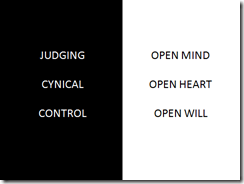
Nevertheless, I was surprised that version seven still included our famous words “Open Mind, Open Heart, Open Will”. You had to search for them (see the big fat arrow above), but they were there.

Too optimistic though.

Throughout the week, folks kept on saying this was “too wooly”

So we tried to put different words. In version eight, we ended up with some things like “Intrinsically motivated people” and “Co-creation with Customers”, etc. Not bad, but “acceptable” in my opinion.

What made me write this post was the following comment on exactly this part of that version:

This part is a bit too vague

and b-school jargonistic

for my taste

Can we turn that into our

company terminology ?

(the other parts already were in company-speak)


My answer: NO, absolutely NO !


As I wrote in back in April, the real root cause (to use some Lean terminology) was about the openness of our minds, hearts, and minds.

image

Some indeed call this “wooly” or “b-school”. I don’t know what is meant here.

There seems to be some negative connotation here:

  • “b-school” could mean several things. In the most optimistic case is stands for Business School, and then the wording may be perceived as too academic. In the worst case, it means b-grade school or even worst kindergarten or naivety. But I believe that many of our corporations would thrive well if they would resource themselves with some naivety of better

freshness and purity

like a young child

discover with eyes wide open

and without prejudices

  • “wooly” has something to do with a certain form of “softness”. I sense all sorts of touch points with New-Agism, or the Hippies 2.0 movementExecutives seem to have e a natural aversion to topics related to softness, philosophy, emotion, feeling, sensing, or anything that has to do with mind, heart, and will. It is probably exactly this that needs to change in many company cultures if we want to make our companies more “human”. Or as Jeff Bezos so eloquently said: “It’s harder to be kind than to be clever” Read every word and sentence of his Princeton speech here. Listen to the emotion in his voice. You sense here stands a man who embodies and believes what he says. You want to follow him. Maybe he is Hippies 2.0 ? Maybe. But he’s inspiring.

Leaders will be followed, not because they have dictated so or by hierarchical power, but because they are authentic in everything they do, because they are inspirational, because they are charismatic, because they are truly “at service” and not “in command”.

The new game is about new hierarchies, not based on ranks and power but based on true service value.


The hierarchical PYRAMID changes

into a collaboration and service SPHERE

where there is no upper or lower level

where the value comes

from the strong interdependency and

100% service mind to make the OTHER win

What we need is a culture based on a fundamental shift from Old Game thinking to New Game thinking. We will not succeed if we stay “acceptable”.

Our ambition level in this should be nothing but an extreme makeover, respecting our company’s financial, operational and reputational integrity.

You can use whatever words for it, but the messages and its wording must be fresh, inspiring, ambitious, rejuvenating. Not only on its messaging surface but especially in its deep culture core.

I don’t believe that you can capture your “culture” in one word. Culture is a complex thing. It’s a combination of tacit, implicit and explicit values, attitudes, and knowledge. Is combines the good positive heritage of the past with the vibrant youth-ness of the future. So, here are some words that “capture” that culture.

image


That’s also why Talent and Culture are so closely interwoven. Because culture is the result of the people you have on board. If you want to change the culture, there are basically two things you can do:

  • Try to change the people you have on board. Although this is very difficult, I believe we have enough cultural creatives to at least inspire more than 50% of the company to change gears. For the others, we’ll have to wait till the Hippie 1.0 generation is retired and made room for the new generation.
  • Bring on board new young people with fresh insights. We should be extremely aggressive about this. Hire “en-masse” young people. If possible younger than 20 years, as even some 25+ “don’t get it”

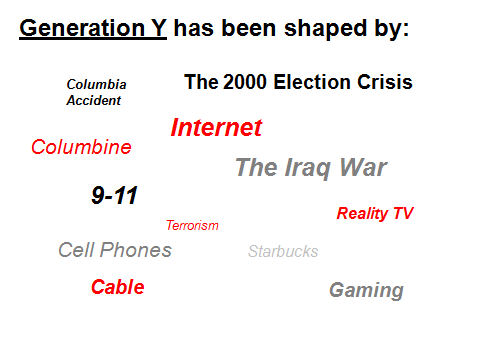
Both generations where shaped by different time and historical contexts:

image

image

With courtesy: NASA Generation-Y Perspectives. Full slidedeck here.

Of course, when implementing such aggressive plans, we need to make sure that these programs do not become the exclusivity labs for personal and professional development for the young only, and that everybody gets her chance to fully realize their potential, so that they don’t have to ask us


“and where do I play ?”


Like many things, I think you recognize an inspiring culture when you see it. When you see the people of that culture. They have sparkles in their eyes. When you interact with them. They go the extra mile.

We need word and spirit that reflects:

  • Excitement
  • Intrinsically motivated people, as mean by Daniel Pink in “Drive”
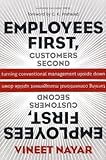
  • Extreme Management Make-Over and Employees First, as meant and intended by Vineet Nayar in his latest book, considered now as THE reference for modern HR

I was lucky to see Vineet deliver his message in person to the audience at Techonomy last week. The story goes like this:

  • The goal of our company is to deliver value to our customers
  • Where is that value created ? At the interfaces of our company.
  • Who is at those interfaces ? Our employees
  • Therefore the whole company should be organized to be “at the service” of the employees.

This is about a management extreme make-over.

  • From managers giving instructions to employees and measuring their efficiency
  • To managers at the service of employees

When I spoke to HR, my contact said: “Oh, that is what is called Service Management, I know about that”. When I asked whether he already proposed this as a management culture to the executives, he said


“Oh no !

That would be too radical

that’s a revolution !”


But I am afraid many of our corporations need nothing less than such a revolution, a fundamental make-over.

In the end

Culture = Company = People


People with a Life and Alive. Not wooly sheep following the dress code and complacent in being “acceptable”. People who share the “wooliness” of “kindness” vs. “cleverness”.

Our culture has to be provoking and inspiring. You should be able to rally your troops behind it. As soon as it becomes “acceptable” that won’t work.

In the song Sam sings about a “wooly saw”. What we need now is a very sharp saw.

To give the sharpness back to the Wooly Bully !

What choices will you make today ?

An emotional Jeff Bezos during graduation speech Princeton: “it is harder to be kind than clever”

Full transcript here

Every word is important and inspiring. Read and enjoy the full thing, but here are some extracts, mainly the grand-finale of his speech:

Tomorrow, in a very real sense, your life — the life you author from scratch on your own — begins.

How will you use your gifts? What choices will you make?

Will inertia be your guide, or will you follow your passions?

Will you follow dogma, or will you be original?

Will you choose a life of ease, or a life of service and adventure?

Will you wilt under criticism, or will you follow your convictions?

Will you bluff it out when you’re wrong, or will you apologize?

Will you guard your heart against rejection, or will you act when you fall in love?

Will you play it safe, or will you be a little bit swashbuckling?

When it’s tough, will you give up, or will you be relentless?

Will you be a cynic, or will you be a builder?

Will you be clever at the expense of others, or will you be kind?

The Value of Your Social Graph

image

If you have the time, please watch this presentation" How not to be seen” by futurist Mark Pesce. I mentioned it already yesterday in my post “The DJ with the Brainwave Helmet”, but now I took the time to watch the +/- 1 hour presentation.


Do it


It profoundly explains what’s going on in our ever more connected world.

It makes so clear that your social graph is your most important possession”

No need to further quote, as the full transcript is here.

This guy is super-smart. Follow him on twitter and on his blogs.

Social Graph is also about Sibos 2009 winning project “eMe”, but then on steroids.

Completely revised. Definitely in the vision of Mark Pesce.

With privacy and user control seen in a distributed internet world. NOT one single digital vault, or even several digital vaults. Whether they are “owned” and “controlled” by Governments, Banks, FaceBooks, Googles and alike.

Completely revising the “business model”. Where the value flows to the users, the owners of their social graph. Not to banks. Not to governments. Not to some controlling party in the middle.

The is no “where”, no “middle” on the internet. That’s where we got eMe wrong.

No, we have to revisit the whole concept of eMe along the open Plexus lines that Marc Pesce is describing in his “How not to be seen” presentation.

I will talk to Peter Hinssen, when he’s back from down under. So that we have something to say about eMe at Innotribe at Sibos 2010 in Amsterdam.

Oh, and if you like this sort of stuff, here is another presentation “Dense and Thick” by Mark Pesce at Webstock2010.  As a matter of fact, this presentation is even better, as Mark does a fabulous job in giving us a perspective of the current state of the web, how we got here and where this might lead us. Not just by throwing boring statistical data at us, but with deep insights and with a speaker’s passion that is difficult to match.

Without really mentioning (ok, only once), Mark Pesce is describing a vision of the semantic web that is not push-oriented like Tim Berners Lee, but truly “pulling” us – human beings – in this super-exciting world where meaning becomes explicit and exploitable and can be manipulated (hopefully in the positive sense of the word).

The summary of his talk goes like this:

It may be hard to believe, but we’re only just at the very beginnings of the web revolution. In the first fifteen years (1994-2009), the human world of culture and civilization was sucked into the black hole of cyberspace. Now the real world is poised to follow. Augmented Reality (AR) shows that when we peer through a portal, and look upon the world, it’s almost embarrassingly empty of our annotations. That data is there – the world is the database of itself – but it can’t be brought immediately to hand with a search or a gesture. That’s the next place we will go: we will build a virtual body for the real world, a dense database of everything, both natural and artificial. In fifteen years’ time, we’ll wonder how we got along without it.

This means that the clock has been reset. Everything we thought we knew about how the Web works, what the Web does for us, and who controls the Web is up for grabs, once again. We will see bright shining stars – and sudden, brief supernovas – just as we did in the Web’s early years. The opportunities are breathtaking, the innovations will be flying fast and thick. All of this is now within our grasp.

This guy is a real discovery for me, and hopefully to you as well.

I will ping Mark to check whether he is interested in the eMe update and hopefully lively ensuing debate at Innotribe at Sibos2010 in October.

Might be a challenge, as his intellect humbles me deeply, and maybe he is just not interested in such a mundane conference.

The DJ with the Brainwave Helmet

Found this TED 2010 video via Kurt Vega’s tweets.

From the TED site: “Tan Le’s astonishing new computer interface reads its user’s brainwaves, making it possible to control virtual objects, and even physical electronics, with mere thoughts (and a little concentration). She demos the headset, and talks about its far-reaching applications.”

Out-of-the-box support for facial expressions and emotional experiences, with some sensitivity adjustments available for personalization.

The demo is focusing  on the “cognitive suite”: the ability to move virtual objects with your mind.

And it just costs only a few hundred dollars. Like an iPAD, but it’s a hPAH “head-PAD”

Start mixing this with the ongoing discussions on personal digital identity. As you will notice, the demo starts with making a personal profile for this headset owner. And tuning to a neutral signal, a signal where you’re doing nothing particular, your are relaxed, hanging-out: a but like my holidays at home where I basically don’t do anything particular other than hanging around.

It’s interesting to see that the test is about “pulling” an object forward instead of “pushing”. I may be too influenced by John Hagel’s latest book “The Power of Pull” 😉

The cool stuff starts when the helmet man starts visualizing something that does not exist in real life: making something disappear.

Applications are obvious in virtual reality games, domotica systems, all sort of gesture and thought based interactions, control an electric wheel-chair. In banking it would be nice is I could raise the balance on my account just by thinking about it.

What I do NOT like about it is that the “system” has some built-in leveling system. It makes me think of Jaron Renier’s fantastic rant / manifesto that I mentioned in my previous blog “you have to be somebody before you can share yourself”

Start mixing this up with some of the cool ideas like Mark Pesce’s Plexus which is a quite novel way of looking and using your social graph in a sort of

event driven pub-sub system

where you decide as a user

what you listen to and

who and what you want to share

with

Sometimes, I think of myself as a disc-jockey (which I was as a matter of fact for more than 15 years starting in the late 70’ies), and I very much like Ethan Zuckerberg’s description of a DJ in this also great TED 2010 video on our distorted world-views.

His talk is basically about

getting you out of your normal orbit, of stepping out of your usual “flock” of people you normally interact with (both on- and off-line).

Around min 15:30, he describes a DJ as a guide:

A skilled human curator, who knows what material is available to her, who is able to listen to the audience, and who is able to make a selection and push people forward in one fashion or another

Of course, I could now make jokes on Faithless “God is a DJ”, and/or refer to one of my previous posts called “We are as gods and might as well get good at it”, but I won’t do that.

Instead, I’d like to share with you the feeling of giving pleasure to my audience.

It’s something I feel while writing these blogs, and it’s a very similar feeling as being a DJ in front of an audience and pushing people forward.

Its has a same sort of stage-fright

when starting a gig,

and the same sort of excitement

when you see your crowd getting

excited

As a DJ, I was doing some quite big gigs for 3,000 people or so, and my following community is not that big yet. But the feeling is the same, and everyday there are some more folks following my tweets. Some more reacting to my blog. Some more getting inspired by what’s on these pages.

So, I just continue doing that, and hope to inspire you to dream and execute your dreams.