People and Culture: too wooly ?

Here is your deejay with the brainwave helmet again: look at the wide open eyes of Sam from Sam The Sham and the Pharaos with their 60’ies monster hit “Wooly Bully”. His eyes wide open. Uno, Duo, Très, Quatro ! Let’s have some fun here. And be a bit crazy !

image

I recently got somewhat involved in the People & Culture thinking of our company. Already at our first attempt during our fantastic off-site in April, we identified excitement as one of the components that need to be part of our culture.

We should all re-read that blog post titled “Get a Life and Get Alive”, as we seem to loose lots of the sharpness of our ideas when we start putting them through committees, and the whole thing seems to get watered down.

So, for 4 months+, we kept ongoing and had a good solid understream of ideas, depicted by different people in different ways, depending on their left or right brain orientations.

After a couple of weeks, this was my best effort:

image


It was a combination of keeping the best, improving drastically the mediocre, and getting rid of the worst. The most important in this slide were the


“quality lenses”


They reflect the deeper purpose that guides our transformation process and choices, and these lenses can be used as a compass to be sure we still navigate in the right direction.

The direction was an ambitious one, a radical one.

But most executives do not like the words “radical” or “disruptive”.

  • Does that mean we should adapt our packaging, our wording or worse our meaning and purpose to please our audience ?
  • What happens with ambition when filtered through endless reviews ?

By the end of last week, we had our seventh or so iteration of the slide deck to be presented to the executive committee.

I though we had quite an “acceptable” outcome in a culture of consensus.

As I write this, I notice how polluted I have become myself by the consensus-virus. In the end, one compromises so much that all you end up with is a grey mouse. 

Herman Van Rompuy arrives at the EU summit in Brussels on Thursday evening.   Photo AP

So, to hell with outcomes that are “acceptable”. We don’t want grey mouse. They don’t inspire.

Nevertheless, I was surprised that version seven still included our famous words “Open Mind, Open Heart, Open Will”. You had to search for them (see the big fat arrow above), but they were there.

Too optimistic though.

Throughout the week, folks kept on saying this was “too wooly”

So we tried to put different words. In version eight, we ended up with some things like “Intrinsically motivated people” and “Co-creation with Customers”, etc. Not bad, but “acceptable” in my opinion.

What made me write this post was the following comment on exactly this part of that version:

This part is a bit too vague

and b-school jargonistic

for my taste

Can we turn that into our

company terminology ?

(the other parts already were in company-speak)


My answer: NO, absolutely NO !


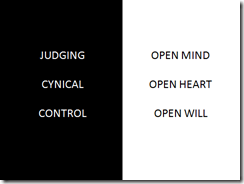
As I wrote in back in April, the real root cause (to use some Lean terminology) was about the openness of our minds, hearts, and minds.
image

Some indeed call this “wooly” or “b-school”. I don’t know what is meant here.

There seems to be some negative connotation here:

  • “b-school” could mean several things. In the most optimistic case is stands for Business School, and then the wording may be perceived as too academic. In the worst case, it means b-grade school or even worst kindergarten or naivety. But I believe that many of our corporations would thrive well if they would resource themselves with some naivety of better

freshness and purity

like a young child

discover with eyes wide open

and without prejudices

  • “wooly” has something to do with a certain form of “softness”. I sense all sorts of touch points with New-Agism, or the Hippies 2.0 movementExecutives seem to have e a natural aversion to topics related to softness, philosophy, emotion, feeling, sensing, or anything that has to do with mind, heart, and will. It is probably exactly this that needs to change in many company cultures if we want to make our companies more “human”. Or as Jeff Bezos so eloquently said: “It’s harder to be kind than to be clever” Read every word and sentence of his Princeton speech here. Listen to the emotion in his voice. You sense here stands a man who embodies and believes what he says. You want to follow him. Maybe he is Hippies 2.0 ? Maybe. But he’s inspiring.

Leaders will be followed, not because they have dictated so or by hierarchical power, but because they are authentic in everything they do, because they are inspirational, because they are charismatic, because they are truly “at service” and not “in command”.

The new game is about new hierarchies, not based on ranks and power but based on true service value.


The hierarchical PYRAMID changes

into a collaboration and service SPHERE

where there is no upper or lower level

where the value comes

from the strong interdependency and

100% service mind to make the OTHER win

What we need is a culture based on a fundamental shift from Old Game thinking to New Game thinking. We will not succeed if we stay “acceptable”.

Our ambition level in this should be nothing but an extreme makeover, respecting our company’s financial, operational and reputational integrity.

You can use whatever words for it, but the messages and its wording must be fresh, inspiring, ambitious, rejuvenating. Not only on its messaging surface but especially in its deep culture core.

I don’t believe that you can capture your “culture” in one word. Culture is a complex thing. It’s a combination of tacit, implicit and explicit values, attitudes, and knowledge. Is combines the good positive heritage of the past with the vibrant youth-ness of the future. So, here are some words that “capture” that culture.

image


That’s also why Talent and Culture are so closely interwoven. Because culture is the result of the people you have on board. If you want to change the culture, there are basically two things you can do:

  • Try to change the people you have on board. Although this is very difficult, I believe we have enough cultural creatives to at least inspire more than 50% of the company to change gears. For the others, we’ll have to wait till the Hippie 1.0 generation is retired and made room for the new generation.
  • Bring on board new young people with fresh insights. We should be extremely aggressive about this. Hire “en-masse” young people. If possible younger than 20 years, as even some 25+ “don’t get it”

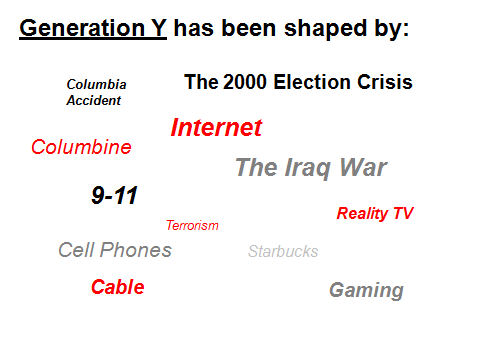
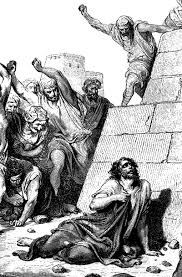
Both generations where shaped by different time and historical contexts:

image

image

With courtesy: NASA Generation-Y Perspectives. Full slidedeck here.

Of course, when implementing such aggressive plans, we need to make sure that these programs do not become the exclusivity labs for personal and professional development for the young only, and that everybody gets her chance to fully realize their potential, so that they don’t have to ask us


“and where do I play ?”


Like many things, I think you recognize an inspiring culture when you see it. When you see the people of that culture. They have sparkles in their eyes. When you interact with them. They go the extra mile.

We need word and spirit that reflects:

  • Excitement
  • Intrinsically motivated people, as mean by Daniel Pink in “Drive”
  • Extreme Management Make-Over and Employees First, as meant and intended by Vineet Nayar in his latest book, considered now as THE reference for modern HR
I was lucky to see Vineet deliver his message in person to the audience at Techonomy last week. The story goes like this:

  • The goal of our company is to deliver value to our customers
  • Where is that value created ? At the interfaces of our company.
  • Who is at those interfaces ? Our employees
  • Therefore the whole company should be organized to be “at the service” of the employees.

This is about a management extreme make-over.

  • From managers giving instructions to employees and measuring their efficiency
  • To managers at the service of employees

When I spoke to HR, my contact said: “Oh, that is what is called Service Management, I know about that”. When I asked whether he already proposed this as a management culture to the executives, he said


“Oh no !

That would be too radical

that’s a revolution !”


But I am afraid many of our corporations need nothing less than such a revolution, a fundamental make-over.

In the end

Culture = Company = People


People with a Life and Alive. Not wooly sheep following the dress code and complacent in being “acceptable”. People who share the “wooliness” of “kindness” vs. “cleverness”.

Our culture has to be provoking and inspiring. You should be able to rally your troops behind it. As soon as it becomes “acceptable” that won’t work.

In the song Sam sings about a “wooly saw”. What we need now is a very sharp saw.

To give the sharpness back to the Wooly Bully !
Intelligence Multipliers

Great book Multipliers: How the Best Leaders Make Everyone Smarter.

Summary here.


  • Multipliers are Talent Magnets: They look beyond their own capabilities to see the deep capabilities —or genius—of others. And then they utilize people at their highest point of contribution.
  • Multipliers are Liberators: They eradicate stress and fear from their organization and instead create an intense environment that requires people’s best thinking and work. They keep the pressure on but make it safe to make mistakes. The result is a climate that is intense without being tense.
  • Multipliers are Challengers: Instead of telling people what to do, they show them what they can do. They seed opportunities and let people discover needs for themselves. Then, they lay down challenges that cause people to stretch beyond what they thought was possible.
  • Multipliers are Debate Makers: Instead of making isolated decisions that leave others in the dark, they engage people in debating high-stakes decisions up front. This leads to decisions that people understand and can execute efficiently.
  • Multipliers are Investors: Instead of getting things done by micromanaging, they give other people the ownership for results and invest in their capability and success.

Management Innovation: Extreme Management Makeover

Stumbled upon this great blog post by Gary Hamel in the WSJ. Extremely relevant if your business is a service business run by first-level employees.

It’s based on the work of Vineet Nayar at HCL Technologies (HCLT).

It’s now all documented in this great book Employees First Customer Second: Turning Conventional Management Upside Down

If you thought I was sometime being a bit extreme in challenging existing ways of doing things, have a look at following recommendations:

  • We must destroy the concept of the CEO
  • Employees First, Customers second
  • Exalt those with hierarchical power rather than those who created customer value
  • Turn sober-suited executives into rabid management heretics
  • “reverse accountability.” Managers should be accountable to those in the value zone
  • Give every employee a detailed set of financial metrics for their own team and other teams across the company
  • A non-censored censored “U&I” site, taking also the dirty questions
  • Install a web-based “Smart Service Desk” and SLA’s with powerful corporate departments, like HR and finance, who often seem more interested in enforcing blanket policies than in making life easier for employees.
  • Rate the performance of any manager whose decisions impact their work lives, and to do so anonymously
  • Crowdsourced review of divisional business plans
  • Employee First Councils: to help employees connect with team members who shared similar interests and passions

The last two concluding paragraphs are enlightening:

The world has become too complex for the CEO to play the role of “visionary-in-chief.” Instead, the CEO must become a “management architect”—someone who continually asks, “What are the principles and processes that can help us surface the best ideas and unleash the talents of everyone who works here?” Today, as never before, the world needs leaders who refuse to be seduced by the fatal allure of the familiar.

It really is possible to change the management DNA in a large, established company. When you dig into “Employees First” you’ll learn that it’s possible to reinvent management without blowing up the existing management system, without having a detailed master plan at the outset and without taking inordinate risks. If you’re a would-be management renegade—this means you’ve just run out of excuses.

Heretic Team Glue

Last week we had a great team off-site.

We arrived late afternoon in the fantastic location of Chateau de la Poste, close to Namur, Belgium. Built in 1895, the Château de la Poste was the residence, for more than forty years, of Princess Clementine, daughter of King Léopold II. It later was sold to the postal services, who used it as a vacation resort for the children of the employees of the Belgian Post (times have changed). It recently was refurbished completely by a French wine maker, and it houses now a wonderful hotel, meeting centre and quality restaurant.

The amazing landscape, the silence and the soft welcome on the summer terrace set us all in the right mood. We all felt our physical and mental muscles relaxing, winding down.

Don’t know where I read it anymore, but I recently found a quote: “If you are not able anymore to take some time out for an off-site team gathering, you’re cooked”

For once, we did NOT have a packed agenda, and plenty of time for  real Quality Time Sessions.

We even made an acronym for it (QTS) to joke a bit with the “acronymitis” of the lean methodology.

More seriously, we invented QTS because we felt that the pure lean method was too much focused on a problem-mindset, and not enough on an opportunity-mindset, opportunities to develop some deeper quality thinking on subjects relevant to our business and team.

One of the items on the agenda was about “how to tell bad news”. In the subsequent discussion, one team member reflected on some sort of “fear” and “If I do this, then this and that may happen, and then…” thinking. Being in the acronym mode, we had a good discussion on


FEAR = Fantasy Experienced As Real


and how such behavior leads to blocking, status-quo situations.

Almost “emergent by design” our team culture principles unfolded, and we articulated them along the themes of “old” and “new” game.


  • Old game = fear, tricks, manipulation, raising stinky fish, machiavelism, creating and maintaining negative energy in general

  • New game = solution oriented, integrity and authenticity, fast correction (like Guy Kawasaki used to say”churn baby churn” a variation on the famous 1976 disco song “Disco Inferno” by the The Tramps), the holy fire, positive energy, who is the owner of the idea, who cares ? It’s about focusing on believers, and investing heavily in those VIP followers that will help us create a viral innovation infection/storm, like a raging holy fire that cannot be stopped anymore. Burn baby Burn…


We replaced “raising stinky fish” by regular update and feedback sessions, focusing on polishing rough idea diamonds, focusing on what works vs. what does not work, focusing solutions vs. problems.


If you think deeply about it, all this is about

the major cultural shift

from pushing towards pulling your ideas,

it’s about a strengths based society and team,

it’s about connecting ideas

and excel in making them real.


Another correction we made to lean was our understanding of a skills matrix.

We were very inspired by Venessa Miemis’ blog post “Framework for a Strengths Based Society” that included following diagram.

We decided to add these skills to our existing lean skills matrix that was too focused on identifying and solving problems and tools mastery. “We are not the tools, the builders are us” is another quote from one of Venessa’s presentations.

The subtle nuance is that we did NOT implement these skills as comparative/ competitive skills of different team members but


in terms of personal areas of

strength and potential

for each team member individually.


Our little team is SWIFT’s “Innovation Team”. Some time ago, we shared the details of the mission here and in summary it goes like this:

Build the Skills , Tools , Processes, Metrics , Values , Network , required to support collaborative innovation and transform SWIFT in an agile company, able to succeed in a changing environment.

I often make reflections on how real our innovation work really is. And although we are having lots of fun and some sizeable impact on how the company little by little opens up for innovative behavior, I always seem to be in search for that little extra in life and work.

Too many of our innovation experiments and proof-of-concepts remain just that: proof-of-concepts and prototypes. They never get into production. Worse, some outcome are just ‘filed vertically” or even never get the any executive attention.

I would like to hear from other innovators what is the secret sauce to get beyond the prototype stage. Because staying in prototype stage sometimes makes me wonder if I am in some sort of “busyness” therapy.

And I have come at an age where I cannot content myself with busyness.

I could sit here till my pension, having a good pay, and living honestly speaking in a quite luxurious working environment. But I am in search for more. I am in search for


meaning and significance


With the couple of years still to go, I still have the arrogant (?) ambition that I want to leave a legacy. On a personal level in my family. On a professional level that my passing in this company has substantially changed something. It’s about a deep sense of motivation, beyond pay and perks.

There is something heroic, even heretic about all this. That’s why the title of this post is Heretic Team Glue.

See full size image

Heretics are the ones that were expulsed from the Catholic Church because they did not follow the rules and challenged faith and established dogmas.

There are several dictionary definitions of “heretic”. The one I have in mind here is “anyone who does not conform to an established attitude,doctrine, or principle”.

I think we in our team are all some sort of heretics in the castle. It’s something very special in our team, that creates a very strong bonding.

At times it even has some masochistic flavor. Why on earth do we keep on trying again and again ? Even if the odds are against us. Why are we prepared to go time after time through the innovation pains over and over again ?

I truly believe it is because we do it for the right reason. Not for the pay. Not for the glory.


Because we believe there is a chance

we can succeed 


And believe we can create a tribe of followers in the same belief. It’s for some of us the only reason why we stay !

Are the above reflections caused by my age and my 3/4 life contemplations ?  Don’t think so. We invited some GEN-Y colleagues to join our off-site. And see: they too are driven by honesty, they too want promises to be kept, they too look for meaning and fulfillment in their lives.

But it was shocking to hear how some of them have been seduced to join a company based on huge expectations and promises that they would work soon for 3 years in the US, and have rapid accelerated career paths, and deep young graduate immersion programs. It’s unacceptable to make such promises if you know you can’t realize them.

And this is their first contact with corporate life !

How can we ever correct this ? How on earth can we regain the trust of these young people ? Our generation has planted the seeds of suspicion in these long lives. Big mistake.

Me too I have been mislead several times in my life, and I recognize the power-less emotion of trust that was betrayed. Lessons of life ? Normal life injuries ? The way it is ? Why do we need to accept that ? Why do we repeat the same errors over and over again ? Sooner or later, these young people will present us the invoice.

These folks actually think. Think deeply. Some GEN-Y people are for example  insulted when calling them “GEN-Y”. Because they see themselves as individual human beings, with their own identities and values systems, not prepared to be tagged as a category. And they have great ideas. We organized some sort of Innotribe Lab with them: more than 20 ideas on how to improve quality of work came out. I am honored that I can channel these ideas into the People & Culture “movement” team of the company.

Last but not least, we had a great discussion about “reverse mentorship”.

Instead of older experienced professionals mentoring new young people joining the company, why not letting young people mentor the already older – sometimes (mis)formatted – generation, and teach them how to use new technologies and apply 21st value systems ?

We had a fierce debate: how can one say that the young generation is the future, and five minutes later challenge reverse mentorship by not accepting that one can learn an awful lot from these fresh and well trained minds.

Maybe that’s where my future is ? In being mentored by a GEN-Y ? It will ask of course an attitude of

vulnerability


It’s also part of a give-ànd-take culture that includes transparency and openness. Especially give. Like a gift, where you don’t expect something in return.


When is the last time you made a Gift ?


How can we create an environment where we encourage learning from each other (in normal and reverse mentoring mode) ? An environment where we celebrate confidence building on your own rhythm, dare to be vulnerable, asking for feedback that is clarifying, supporting, challenging.

I am convinced I can learn something from every human being. Especially young people who have a renewed and fresh sense of civic responsibility, transparency, honesty, openness.

I have committed to take the challenge and invite one of our GEN-Y’s to monitor me during 6 months and give me feedback on my behavior and to keep me honest.

So that I walk the talk. Every manager should do this.

Get a Life and Get Alive

It’s quite some time ago i did a post with brand new content. It’s partly because i also have a family and a job, but mainly because i only feel the urge to blog when i have real content to contribute.

These days i also share an awful lot via twitter: that’s where the day-to-day action is. So if you are interested in my lens on technology and values for the 21st century, you can also follow we on twitter @petervan . There is an almost daily stream of tweets on these subjects.

I “reserve” the blog to share some more elaborated thoughts on stuff that keeps me going or that touches me one way or another way emotionally, in the way i am.

This time, the post is about


People, Culture, Excitement and

Sculptural Integrity


And I’d like to share what happens if you truly stand for who you are and have the courage to stand up and stick out your neck.

The title of this post is of course a word-spiel on get-a-life and get alive. The discussion was part of an off-site recently attended in the wonderful city of Barcelona.

It was about 20 years ago i was in Barcelona, and the only thing i remembered were the ‘”Ramblas” and the “Plaza de Espagna”. Given my education as an architect (non many people know this ;-), i of course knew that Barcelona was the city of the Sagrada Familia of Gaudi.

The off-site was facilitated by Dan Newman and his team from The Value Web.

image

The off-site was our reflection moment about our company for the next 5 years.

Dan really “got me” with his opening speech: he used two words that deeply resonated very strong with me – at an emotional level.

The architect aims for


“Sculptural Integrity”


Especially in sculpting the old with the new. Old game and new game. And that the old and the new should be connected by more than just a link or a tunnel. That the end-result should show a deep sense of unity. And that this “sculptural integrity” and other architectural thoughts were the also the basis of facilitation work and techniques of the Value Web, because that was also how group dynamics could be looked upon.

The words entered by body and mind, as they reminded me of a piece of my true self and my youth 30 years ago when i was making drawings and sketches myself of the most bizarre and bold architectural designs.

Dan mentioned also a book: “The Timeless Way of Building” by Christopher Alexander.

The real and ultimate question in this book is:


What is it that makes a building “work” ?


When you see something that works, you just know it. And it’s something that has a timeless quality.

I was intrigued by the subject, and kept researching, and quickly discovered the site of Tomorrow Makers.

image

And especially the blog post titled “Happiness Pandemic (HP101) Hits Worldwide”. Just read and internalize the first two bullets:

The tendency to let yourself be guided by intuition instead of acting under pressure of fear, forced ideas and pre-conditioned behavior.

A total loss of interest in: – judging others, convicting yourself and preoccupation with things that create conflict.

During the off-site, Dan did something else that was brilliant. He took us out of the hotel into the city. In our case we went to the CosmoCaixa Barcelona, the Museum of Science.

Panorámica CosmoCaixa

Besides being a perfect metaphor for blending old and new with “sculptural integrity”, it also put all of us in a different context and mindset to look in quite different and innovative ways to our off-site subject.

I don’t know what happened exactly, but when we returned to the conference hotel, we were looking for topics likes

space

freedom

excitement

playfulness

culture

people

At a certain moment, we could form a small group of people, sort of a tribe around a subject that was not yet addressed.

I put the word “excitement” on a post-it, and look: 10 min later, we had 7 or so colleagues interested in discussing the subject.

I asked a simple question: “how excited do you get by the work done so far at this off-site” and rate it on a scale of 1-10. To my astonishment, the average rating was 3.

So we then looked for the root-cause of this score. A lot had to do with company culture, but also by the need for a new vocabulary, and not just words, but a vocabulary that was inspired by the value set that is needed for the 21st century.

In a follow-up session on people and culture this topic re-appeared in full force.

Although initially we were looking at symptoms and superficial quick fixes, it suddenly dawned to us that


the real root cause was about

the openness of

our minds, hearts, and minds.


I have used the following slide many times in my postings.

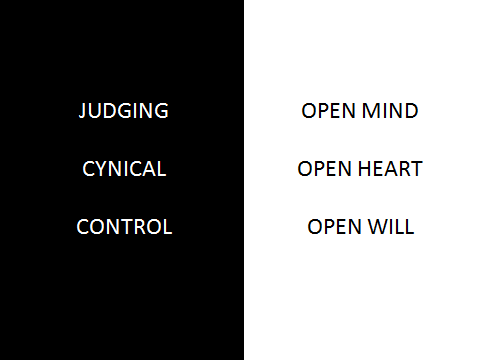
In black the old game: full of macho behavior and Machiavellian attitudes and states of mind.

In white the new game. With true, genuine interest in the other and the true self – not based on tricks or quick fixes.

image

The discussions on these topics were deep and full of enthusiasm. We were looking at talent development, both the professional skills ànd the Personal Development side of it.

And i keep on fighting that “Personal Development” is NOT about “soft” skills.


It’s really about having and keeping

cutting-edge “good” people

on board


and nurturing them so that they can function optimally in today’s highly connected networked society.

You need to “train” and get exposed to a number of essential hard skills and values for the 21st century.

In this context, i get very inspired by the work of Vanessa Miemis, a Gen-Y student with a fantastic blog “Emergent by Design”. Look for example at her latest blog entry “Essential Skills for 21st Century Survival: Part-3 Network Weaving”

Or the post “Framework for a Strengths Based Society”

Do you feel how powerful this is ?


“Strengths Based Society”


Should we not invite her to Sibos ? To be part of Innotribe at Sibos. As part of our “Gen-Y meet Bankers” Face-to-Face interactive workshop ? Maybe with the help of some strong Gen-Y-power, we will be able to keep the sharpness of our ideas and dreams.

Because at the end of the off-site, each team had to boil it down its ideas to a pitch of 5 minutes and I was surprised to witness how in this pitching work, we lost quite some of the “cutting" edge”. Also surprised on how fear creeps in when people are volunteered to deliver the pitch to the executives.

And a strange behavior of watering down the message, and even scratching the most provocative words in the end deliverable.


We seem to have lost

our desire for

boldness


We also “frame” too conservatively. So, in order not to loose some of these more provocative statements, here are some examples:

  • In 5 years time, 10% of our workforce should be Generation-Y folks
  • By 2015, our company should be in the Top-10 of best companies to work for in the financial industry. Worldwide.
  • Gen-Y should drive the composition of the Leadership council of the future
  • 90% of the people in the 2015 leaders team should be new. Only 10% of today’s group should be the same
  • Doing things 10,000 time better rather than twice as good
  • “Do no evil” is not good enough anymore. “Great to Good” is the new paradigm.
  • “Get-a-Life and Get Alive !” Was the original title of our pitch. Somebody changed the title to the more boring “people and values for 2015”
  • Chief Corporate Activist
  • About framing: from “our company is 37 years old, are we in a mid-life crisis” to “our company is 37 years old, we are just-born, who do we want to feel “right” or “it works” in 500 years from now?”

At this moment, I decided to have a short break in my blogging activity, and go for my Sunday trip to the bakery. I bumped into a friend, who shared me a wonderful story about going for your dreams.

The story was basically about context. Of not waiting to be called. Of doing what you intuitively know is right. What works. In his case it was about seeing a wonderful motorbike, feeling it was just designed perfectly, and following your intuition and impulse and buying the motorbike. It happened to be a Can-Am Spyder Roadster. This was not just about buying something desirable. It was a story about contextual living. About flow. About following your compass. And not delaying your dreams till when you’re dead.

image

The story reminded me of the book “Zen and the Art of Motorcycle Maintenance”

You can find “flow” is everything you do. From the most banal activities like cleaning or motorbike maintenance to writing an inspiring blog and making a pitch that makes others dream and wanting to go after their dream.

When i started this blog in April 2009, i wanted it to be in line with my purpose in life “Inspire other people to dream” – and execute their dreams. I hope i have not disappointed you so far.

Last week, somebody said i should start writing a book. Maybe i will do that. Maybe using the funding model experimented by Stowe Boyd fro writing his report on Social Architecture: Microstreams In Business.

Last week, somebody gave me the greatest compliment somebody can give to a man of the 21st century:


“you have the most feminine mindset

of all the men i ever met”


Let’s eradicate the macho culture of judging, being cynical, and control freaks.

Let’s build a culture based on open mind, open heart and open will.

Are you also fed-up waiting on the side-line and do you feel the hunger to join me on the drawing board to help us sketch the “sculptural integrity” required for the 21st century ?

Then please use abundantly the comments feature of this blog.

Doing what you want to do, not waiting to be called. Stand-up and stand as you are. In your true self. Without fear. Living your dreams.


Get-a-Life !

Get ALIVE !


If you feel energized by this blog, you can get an extra doze at following previous posts:

No more collateral damage

Who am i really ?

Great to Good: New Value Kit

Broken Will

Our company is infected

Ethical Re-Boot

The Holy Fire

Emotional Zombies

HR and Innovation

Brand, Workforce and Innovation

Emotional Zombies

Great post on “Who needs employees anyway ?”. Discovered via Fred Zimny’s Blog.

This is based on a recent “Global Workforce Survey” conducted by Towers Perrin, an HR consultancy. In an attempt to measure the extent of employee engagement around the world, the company polled more than 90,000 workers in 18 countries. The survey covered many of the key factors that determine workplace engagement, including: the ability to participate in decision-making, the encouragement given for innovative thinking, the availability of skill-enhancing job assignments and the interest shown by senior executives in employee well-being.

Barely 21%

of employees are truly engaged in their work, in the sense that they would “go the extra mile” for their employer.


Nearly 38%

are mostly or entirely disengaged, while the rest are in the tepid middle.


Surprisingly, 86%

of the employees in the Towers Perrin study said they loved or liked their job.


So, next time you evaluate your yearly employee satisfaction survey, beware of the numbers saying that the majority of employees is happy. Even if you sense in every office, corridor and corner that is not true.


Anyway, why these rather shocking results ? The article suggests a number of reasons:


Ignorance

It may be that managers don’t actually realize that most of their employees are emotional zombies

Indifference

Another explanation: managers know that a lot of employees are flatlining at work, but maybe they simply don’t care

Impotence

It could be that managers do care, but can’t imagine how they could change things for the better. After all, a lot of jobs are just plain boring.

Reputation

The company’s reputation and its commitment to making a difference in the world—is this a company that deserves the best efforts of its people;

Leaders’ Trust

Are the behaviors and values of the organization’s leaders—are they people employees respect and want to follow?


Anybody who has ever read a Dilbert strip knows that cynicism and passivity are endemic in large organizations.


image


However – in my opinion – we too easily get away with joking about cynicism. In my opinion, it is the cancer of today’s organizations that seem great at the outside, but grim at the inside. They look like golden cages. They offer all the perks possible, but they ignore 3 basic attitudes for any human being to function well.

#1: To have an open mind. Companies/People who do not have an open mind tend to retract into highly judgmental.

#2: To have an open heart. The next level is that of the heart. People who do not have an open heart have developed cynicism as a defense. They have learned NOT to show their heart.

#3: To have an open will. Last but not least, when there is no room for open will, we become control freaks.

In today’s society, driven more and more by openness and transparency, these “tricks” of judging, being cynical and control don’t work anymore.

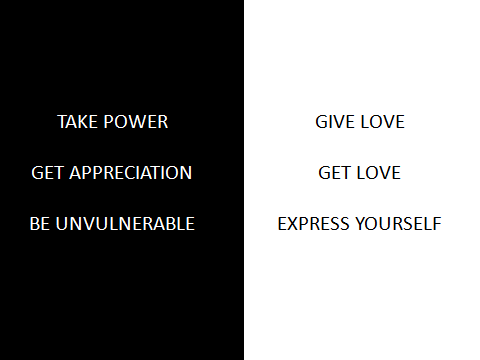
It all boils down to 3 fundamental needs for every human being:


image


People who are not able to express themselves (anymore), position themselves as “invulnerable”. In stead of being able to receive love, they compromise on getting appreciation. And in stead of giving love, the defense mechanism becomes one of taking power. As long as we have power games between the silos, the CEO can shout “change” and “innovation” as long as he wants, at the bottom of the pyramid nothing will change.

Surprisingly, the origins of these needs – and their fulfillment or not – is formed during the first 1-3 years of your life. In other words beyond the control of the organization you work for today.

But organizations should be conscious about these facts, and offer their employees probably the most interesting perk they can give: to follow a personal development program that lets the employee explore it’s true self.

  • Who am I ?
  • Who am I in a group ?
  • Who am I in the world ?
  • Finding your true passion.
  • Finding your true purpose in life.

And hopefully finding (or founding) a company that welcomes you respectfully as an employee, and gives you the chances to develop your true potential in line with your purpose.

It reminds me of Jim Collins and a 2003 blog post found back earlier today.

The start of the New Year is a perfect time to start a stop doing list and to make this the cornerstone of your New Year resolutions, be it for your company, your family or yourself. It also is a perfect time to clarify your three circles, mirroring at a personal level the three questions asked by Smith:

1) What are you deeply passionate about?
2) What are you are genetically encoded for — what activities do you feel just "made to do"?
3) What makes economic sense — what can you make a living at?

Those fortunate enough to find or create a practical intersection of the three circles have the basis for a great work life.

An to come back to the Global Workforce Survey:

  • In every industry, there are huge swathes of critical knowledge that have been commoditized—and what hasn’t yet been commoditized soon will be.
  • Given that, we have to wave goodbye to the “knowledge economy” and say hello to the “creative economy.”
  • What matters today is how fast a company can generate new insights and build new knowledge—of the sort that enhances customer value.
  • To escape the curse of commoditization, a company has to be a game-changer, and that requires employees who are proactive, inventive and zealous.
  • Problem is, you can’t command people to be enthusiastic, creative and passionate.
  • These critical ingredients for success in the creative economy are gifts that people will bring to work each day only if they’re truly engaged. (Eric Raymond made this point way back in 2001 when he argued that in the new economy, “enjoyment predicts productivity.”)

For passionate readers, i can recommend in this context Eric Raymond’s book The Cathedral and the Bazaar.

Or a bit an older – but still very relevant book – “The Cultural Creatives


Must be that I am some sort of +


positive guy when i turn a title like Emotional Zombies” into something positive like “The cultural creatives”

As Seth Godin was saying in his today’s blog:


One of the most common things I hear is, "I’d like to do something remarkable like that, but my xyz won’t let me." Where xyz = my boss, my publisher, my partner, my licensor, my franchisor, etc.

Well, you can fail by going along with that and not doing it, or you can do it, cause a ruckus and work things out later.

In my experience, once it’s clear you’re willing (not just willing, but itching, moving, and yes, implementing) without them, things start to happen. People are rarely willing to step up and stop you, and often just waiting to follow someone crazy enough to actually do something.

I’m going

Come along if you like


Reblog this post [with Zemanta]

HR and Innovation

In my previous blog “Brand, Workforce and Innovation”, i started making a case for a leadership role for HR in Innovation.

I wrote:

I’d love to see more HR in a true leadership role. Leadership as opposite to management in its narrow definition of executing a course set out by somebody else. See also below the very important message about the role for HR in creating the eminence of our workforce.

Checkout my previous post on what is meant with “eminence of our workforce”.

Rowan-blue-background124

I would like to mix this with some thoughts from Rowan Gibson recently on Blogging Innovation. His full posting can be found here but i will explore some key findings below. Rowan Gibson is the author of “Innovation to the Core”.

UPDATE: what a co-incidence. Just today, Rowan Gibson did a new post in essence giving a one-page summary of his book. Here is the link to “Do you have a Corporate Innovation System?”


Innovation to the core” is about putting

radical innovation in the core of

your organization 


and is not to be confused with the discussing

Innovation in the core or beyond the core

of your product portfolio

UPDATE: “Beyond the Core” is a book by Chris Zook, and is based on the principle of adjacencies. It seems to be the bible for anybody not wanting to do anything beyond the core. It dates back from begin 2005, and is in my opinion completely outdated as a guide for innovation.

Rowan says in his blog:

In essence, that means developing a particular mix of resources, processes and values that makes it hard for rivals to match what the company does.

This has to do – amongst others – to create this eminence in the work-force.

But it is much more.

Lastly, i was attending one of our company meetings, and our CEO was doing a pitch on the focus of innovation in 2010. Great to have your CEO on board to get innovation rolling ! Really, it makes a big difference. But at the same time, the company runs a 2-year lean-program to build greater efficiencies in the company processes.

In French, we call this “Le grand écart”.

kim

It’s difficult, but not impossible if you’re fit and trained.

People do not understand this, cannot digest, don’t see the big picture, as the efficiency programs are much closer to their daily lives and – most of all – their jobs.

You could see the glaze in the eyes of some folks when we were talking innovation after having explained the lean-part.


As long as we do not succeed as positioning innovation as “buying our future”, as essential to building the greatest workforce on earth and giving the people the possibility of being part of that – with reward mechanisms – we won’t succeed in those apparent conflicting objectives.


Rowan Gibson goes on:

Making innovation a systemic organizational capability is a complex and multifaceted challenge. It simply cannot be solved with some Band-Aid or silver bullet. Instead, it requires deep and enduring changes to leadership focus, performance metrics, organization charts, management processes, IT systems, training programs, incentive and reward structures, cultural environment and values.

It’s not “good enough” to have your CEO on board. You need the full buy-in of your full Executive Committee, and – in a more complex co-operative organization like SWIFT – the buy-in of your Members, represented by the Board. We still have a lot of work to do, but i believe we are getting there. Innovation is now getting at the agenda of those deciding constituencies.

What i have not yet seen is a focus on how HR can help and be instrumental for innovation.

What companies need is not merely a pro-innovation mindset, or better brainstorming techniques, or "hot teams". It’s about making innovation a new organizational way of life; something that permeates everything a company does, in every corner of its business, every single day. It’s about infusing the entire lifeblood of an organization with the tools, skills, methods and processes of radical innovation. That’s the true imperative for rethinking the role of Human Resources. As soon as we recognize the strategic value and the immense organizational transition that’s involved in building a corporate-wide innovation capability, HR automatically moves to center stage.

And what would be the role of HR in such an Innovation context ?

Who else but HR leaders would be capable of turning a company’s strategic intent with regard to innovation into tangible everyday action? Who else could make the necessary changes to executive roles and goals, political infrastructures, recruitment strategy, broad-based training, performance appraisals, awards and incentives, employee contribution and commitment, value systems, and so on? Who else could build and foster the cultural and constitutional conditions – such as a discretionary time allowance for innovation projects, maximum diversity in the composition of innovation teams, and rampant connection and conversation across the organization – that serve as catalysts for breakthrough innovation? Who else could ensure that each employee understands the link between his or her own performance (as well as compensation) and the attainment of the company’s innovation strategy?

In short, who else but HR

leaders could create a company

where everyone, everywhere,

is responsible for innovation

every day whether as an

innovator, mentor, manager, or

team member?


I have become a big believer that companies need an innovation system where


everybody in the company

becomes an innovator


It’s almost a human right of any employee in a company, i would even venture it is a moral obligation for any employee in a company to be an innovator himself. It is NOT the sole privilege of the innovation team to come up with ideas, on the contrary. See in this context my previous blog on The Holy Fire.

Rowan Gibson has a great closing in his blog post:

The sad reality is that too many CEOs overlook HR’s potential in this regard. They still think of HR solely in terms of regulatory compliance, hiring and firing, employee comfort, compensation and benefits. Notably, Jack Welch, illustrious ex-CEO of GE and arguably one of the greatest corporate leaders of our times, sees things differently. In a recent column in BusinessWeek, he writes that


"every CEO should elevate his

head of HR to the same stature

as the CFO."


Hope somebody reads this.