Innovations 2009: my Top-7

The full top-100 is published on POPSCI.

Here is my personal selection top-7 out of those 100 and my personal why. Why seven ? Because 7 is my lucky number. No, i just did not like cutting out one of these 😉


vue_0

Short description: It’s the ultimate plug-’n’-play nanny-cam. The Vue personal video network lets users place cordless cameras virtually anywhere and view video in real time on the Web.

Why: Dead of Privacy. At DEMO 2009, i saw another plug-and-play security camera for less than 199 USD. Why complain about all those public cameras in the UK, if any person can put one anywhere anytime ?


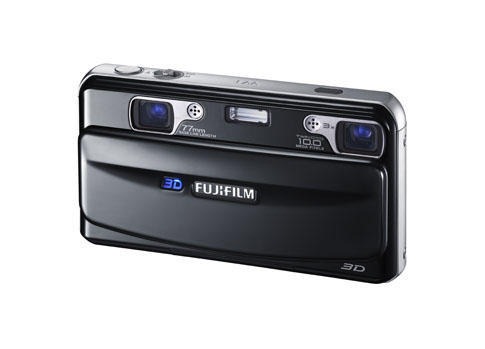
fujifilm

Short description: Fujifilm 3D Camera is the first 3-D digital point-and-shoot camera, with two separate lenses—and two image sensors—placed three inches apart. They snap either stills or videos in tandem, and a processor combines their images into a single file.

Why: This and the release of the 3D Movie Avatar will really put 3D in the mainstream in 2010.


 Planck satellite in  the Large Space Simulator at ESA's test centre in Noordwijk, the Netherlands.

Short description: Herschel Space Observatory, the European Space Agency’s Planck Observatory will study the radiation left over from the first 370,000 years after the big bang—known as the cosmic microwave background, or CMB—with three times the sharpness of previous satellites. Can detect temperature differences in the CMB as small as millionths of a degree (the equivalent of detecting the body heat of a rabbit on the moon, from Earth).

Why: i expect a breakthrough in 2010 in cosmic breakthrough research that will challenge our traditional thinking about time and space.


Short description: it’s about the headpiece, not the chair. The nonsurgical NeuroStar Transcranial Magnetic Stimulation system is as easy as a teeth cleaning. The patient sits in a chair as an electromagnetic coil pulses magnetic fields to his or her left prefrontal cortex, the part of the brain that regulates mood. This stimulates neurons to make more mood-enhancing dopamine. After 30 40-minute daily sessions, half of the patients in a clinical trial experienced significantly reduced symptoms; a third reported complete resolution. Last fall, it became the first TMS therapy to earn FDA approval.

Why: breakthroughs in brain research, implants and stimulation are just around the corner. At Singularity Summit 2009, i saw another example of light stimulation of very specific brain zones (up to the cell level !)


Short description: Nintendo Wii on steroids.  A prototype system dubbed Project Natal lets Xbox 360 games respond to anything from full-body lunges to subtle hand gestures, voice input and even facial expressions. Unlike the Wii, you don’t hold anything. Your movements and voice control the game.

Why: New forms of UI will we omnipresent in 2010. Expect this sort of stuff to be standard in any modern OS, tablet or PDA as from 2011.


Short description: The City Safety system of the 2010 Volvo XC60 can stop itself before you smack the stopped car in front of you. A laser sensor tracks the distance between you and the car ahead; approach too quickly, and the system hits the brakes.

Why: Computer assisted cars becoming mainstream. Also look at the loads of technology squeezed in the latest Opel Astra (standard model). Main reason: somehow my dream car, and i hope somebody from Volvo reads this and gives me one 🙂


Short description: Should be no surprise to anybody reading this blog. I am a big fan of Google Wave.

Why: 2010 will be Wave year. The criticasters of 2009 will cry and be ashamed once Google fixes this one.

Google Wave integrations for the Enterprise

Interesting blog straight from the Enterprise 2.0 Conference taking place this week in San Francisco. Wish i was there :-/

Integrations by SAP, Thoughtworks, and Novell. Boy, and knowing there are still people who don’t believe Wave is going to happen big time.

Watch till the end, where there is an BPEL export of the business process that was collaboraively edited on the Gravity canvas in a cross-company wave. Piece of cake !

More details here on the Enterprise 2.0 Blog.

Btw: thx to my good friend Roger, i got an invite for Wave. You can find me there at: p.vanderauwera@googlewave.com (don’t use as an email address 😉

Google and Finance 2.0

Umair Haque has written an Open Letter to Google titled “Can Google take on Wall Street – and Win ?”

It starts with: “Dear Google,…”

and goes on with:

Every day, you handle more searches than the NYSE handles trades — and that difference, I’m guessing, is about to hit an order of magnitude more. Every day, you connect people, businesses, and communities in deeper and tighter ways than besuited beancounters do. From my tiny perspective, it seems that you just might be in the best position of any organization in the world to take on Finance 2.0.

Umair’s open letter is nothing more (or less) than

asking Google to implement

his Finance 2.0 Manifesto

written some months ago, and commented in this blog here. I strongly recommend to read the Manifesto.

And he continues:

What would a Googlier

finance industry resemble?

What would a more Googly set of capital markets look like? That’s the $12 trillion dollar question. After all, markets are just search engines — remember?

You still think you’re in the media business. You’re not. In the 21st century, everyone’s in the same business: the awesomeness business. It doesn’t matter what you make, as long as it offers maximum awesomeness. And right now, better finance would be pretty awesome.

Yesterday, you used to change the world. If you think a bit harder, a bit smarter, a bit more disruptively — you still can. If you don’t — well, the biggest catfish in a parched, dried up pond sure ain’t the smartest catfish.

And he gives some “leading” examples:

Tracked, ValueCruncher, StockTwits, and many more are the leading edge of a revolution — a revolution in what finance has been for the last several centuries, and what it must become in the 21st.

Something i don’t like in Umair’s post is the polarizing tone as if all in financials services is bad, and Google is “doing good” and Google being positioned as the solution to cure world hunger. Although i have already promoted many times on his blog that

polarization fosters innovation

Also, the “leading” examples offered above are putting Google in its traditional role of information manager, searcher of information.

I believe we could also look at Google as a utility. They have some great tools that could be applied in a big way to financial services. What if for example a neutral party would host a federated Google Wave as a SaaS solution for the financial market ? Running on a secure messaging platform like SWIFT ? Next generation person to person communication ? Or apply the same technology to do Collateral Margin calls for example ? Where every new call is a new Call “wave”. Think about it.

There is of course a lot i like in this article, especially the implicit push for extreme – even “impossible” innovation. Last week, i was attending the 11th European Conference on Creativity and Innovation. One of the keynotes came from Mark Raison, titled “The Power of Impossible”

Look at this presentation. Internalize it. And then let’s play-back Umair’s open letter with The Power of the Impossible in mind.

What would happen then ?

PS: Mark Raison is on my target speaker list for Innotribe @ Sibos 2010.

Google Wave for Dummies

Apparently this video gets 1 billion hits per day ? Hardly can believe that. 1 billion is big number. Anyway, let me add 10-20 additional hits by linking to it from my blog 😉

This animation is cute, but does not add much to the content that was part of the May2009 Google IO Launch event.

Since Sep 30, 2009 Google has released 100,000 test accounts. The web is full these days of Wave enthusiasts.

There are believers and non-believers. I count myself to the believers. But there are some pretty solid non-believers. One of them is Robert Scoble. There an interesting discussion going on at Scobleizers blog.

His first blog “Google Wave crashes on beach of overhype” had a pretty hefty start.

But this service is way overhyped and as people start to use it they will realize it brings the worst of email and IM together: unproductivity.

Apparently his created such an avalanche of comments on his blog that he gave it a second try. He stays a non-believer. His Oct 3 post title is Google Wave’s unproductive email metaphors. His conclusion now is:

I took the day off and said “what if they are right?” and “is Google Wave a really great way to collaborate with other people?” On coming back to Google Wave with fresh eyes tonight and even after collaborating with people on a few things my answer is “no, they are not right” and “no, Google Wave is even less productive than email.”

What is really interesting is that Google Wave polarizes opinions. This is one of the key tenets of innovative things. They polarize.

You still can continue to use mail (one of Scobleizer’s arguments was “anyone can send mail”). It’s like one of the very nice Outlook add-ons i saw being demo’d at DEMO2009 from Liaise. Somewhere half-way the video, the presenter pauses for a second to point out that your counterparty does not need Liaise installed. But yourself, you benefit from the Liaise features.

Why i am a believer ? Besides all the cool features in the May2009 Google/IO video, for me the most important thing is that non only Google Wave will run a Google domain, but any enterprise can have Wave running in it’s own domain. It’s a paradox, but this is one of the reasons of success of e-mail. That an enterprise can run and manage its own email-server or domain. These days for small business more and more as a SaaS offering.

I believe the power of Google Wave is its potential for enterprise interoperability cross-domains. And why not have some vertical business anchors to run Google Wave as a SaaS offering for a vertical industry, even just to bootstrap that vertical community ?

It would probably offer a solution for the business problem of having secure and efficient collaboration processes, within and across the own corporate domain. And with a partner like Google that really can scale.

Scale, interoperability and open-API’s are for me the reasons why i believe Google Wave will be a big hit. Of course, in the current version there are plenty of bugs and inefficiencies as Scoble rightfully points out. But i am a believer that Google will fix these. And yes, me too I would like to get one of those beta accounts, please Google. Is the above good enough publicity to get one ?

Google: Microsoft all over ?

There are 2 recent interesting posts on Google becoming too big.

Anil Dash had this post about “Google’s Microsoft Moment” on July 9, 2009.

google-microsoft-chrome-480

It’s all about the idea that Google’s self-proclaimed identity of “Don’ be evil” does not match some realities of monopoly.

Also, some of its behaviors start smelling Microsoft’s way of doing things in the old days.

Google’s recent development work on applications for mobile devices has often been delivered exclusively as applications for their own Android platform instead of as iPhone applications, despite the fact that iPhones are roughly forty times more popular in the marketplace. iPhones are also much more popular outside of the United States than Android, further limiting the actual audience served by these applications. Now, it’s obviously good company policy to make sure to support Google’s own platforms, and Google does an admirable job of using generic open web technologies where possible to avoid having to choose between platforms at all. But choosing to leave the majority of users in a given market unaddressed because they are on a platform that is not part of your corporate goals is short-sighted and leaves a lingering sense of mistrust

Another great and quite in-depth article is in Wired about Obama’s Top Antitrust Cop Christine A. Varney.

2009208196

The intro of that posting says its all: "I think you are going to see a repeat of Microsoft." Red highlighting by myself.

Christine Varney’s blunt assessment sent a buzz through the audience at the National Press Club in Washington, DC. Varney, a partner at Hogan & Hartson and one of the country’s foremost experts in online law, was speaking at the ninth annual conference of the American Antitrust Institute, a gathering of top monopoly attorneys and economists. Most of the day was filled with dry presentations like "Verticality Regains Relevance" and "The Future of Private Enforcement." But Varney, tall and professorial, did not hide her message behind legalese or euphemism. The technology industry, she said, was coming under the sway of a dominant behemoth, one that had the potential to stifle innovation and squash its competitors. The last time the government saw a threat like this—Microsoft in the 1990s—it launched an aggressive antitrust case. But by the time of this conference, mid-June 2008, a new offender had emerged. "For me, Microsoft is so last century," Varney said. "They are not the problem. I think we are going to continually see a problem, potentially, with Google."

And also interesting parallel at the end of the article:

Google is playing nice so far. Its public policy blog soothingly acknowledges regulators’ concerns. "As Google has grown," it reads, "the company has naturally faced more scrutiny about our business principles and practices. We believe that Google promotes competition and openness online, but we haven’t always done a good job telling our story." Schmidt is a regular presence in Washington; he served as a member of Obama’s transition team and now sits on his technology advisory council. And publicly, Schmidt welcomes the oversight. "We understand the role here," he says. "We are not judge and jury."

mf_googlopoly4_f

But that doesn’t mean Google will neuter itself to please the government. Just like Gates before him, Schmidt says he has no plans to change his company’s trajectory in the face of regulatory challenges. Microsoft’s belligerence was a function of its will to power, a refusal to believe that the government had the authority or intelligence to take it down. Google still thinks it can get regulators to see it as it sees itself: not as a mere company but as a force for good.

And what about Mozilla’s Firefox ? Now that Google has launched it Chrome Browser and had announced it’s own Chrome OS, doesn’t all this look so similar to Microsoft killing Netscape ?

One of the big differences is that Microsoft was not funding Netscape, whereas a big part of Mozilla’s revenues seem to come from Google. The contract seems to run till 2011, but in essence they exist by the grace of Google.

Mozilla and Google have long had an agreement that makes Google the standard home page when people start Firefox, and sends them to Google when they type something into the search box at the top of the browser.

Google pays Mozilla hefty fees in return.

The deal accounted for 88 percent of Mozilla’s $75 million in revenue in 2007, according to its most recent tax filings, and it was recently renewed through 2011. (The gusher of income from Google prompted the nonprofit Mozilla Foundation to set up a taxpaying subsidiary, the Mozilla Corporation, in 2005.)

Have this great article in the New York Times following a press update as Mozilla moved offices away from the shadow of the Google campus.

Kevin Kelleher already wrote in 2004 in Wired’s Googlemania:

mf_googlopoly3_f

"Microsoft looks at Google and sees its own past, full of promise. Google looks at Microsoft and sees the future—a swaggering company that dominates the tech landscape" (bingo!).”

“Bingo” ? Could he foresee Microsoft’s rebranding of their search engine into Bing ?

The (ir)relevance of the desktop


How relevant will the desktop be in the next 5 years ? I don’t know about you, but I do more an more in online tools such as hotmail, gmail, googledocs, etc

I want to offer you 3 perspectives to this trend:

– A business to business point of view (Salesforce)

– A 2007 (!) vision by Aza Raskin from Mozilla Labs

– The announcement of Google Wave and OS

I have included 3 video is this post. The first one is short (1:54), the others are longer (1 hour 20 min) and (1 hour 20 min) respectively. But i can assure you they are worth every minute.

Let’s start with Salesforce. On 9 June 2009, I attended the free Salesforce-event “CloudTour 2009” in Eindhoven, Netherlands.


This was a very, very professionally run event with very professional speakers (drilled like an army). They flew over a number of hotshots from San Francisco for this event.

Some key facts about Salesforce:

  • 1,2 Billion $ revenue in FY 2009
  • 59,000+ customers
  • 1,5 Million users
  • 100 Million API transactions per day
  • Average response time: 300 Milliseconds
  • 3 releases per year, without any disruption for customers
  • Customers: big to small. Some examples: Solvay, VUM, Polycom, DELL, Corporate Express

All this to say this is not Mickey Mouse business: these folks exist for 10 years. This is mature business.

Their tag-line is: NO SOFTWARE.

Everything runs in the cloud.

There was a great demo on deep integration in Services Cloud of Twitter, Facebook discussions in Salesforce app, direct visibility in Google search. All in real-time.

Another demo was about “Building an app in 30 minutes”. They built in essence an expense report app like most companies have. Built and on-line in 30 minutes: With currency conversions, linked to accounts for which the expenses are incurred, with approval workflow, access management etc. All this was point and click. Not one single line of coding.

Peter Coffee, Director Platform Research had some strong messages about the economics of cloud. He stated that all of the following is commodity and does not add business value, and is ready to go to the cloud: Email, twitter, backup, security, virtualization, OS patches, running an Operating Centre, messaging. He also stated that SaaS, IaaS, PaaS are not relevant in itself. It’s about the apps and the business value add you create with that. And that cloud is NOT about IT budget cost reduction !

It is about moving from “less low level people on less value tasks” to “high value level people on high value tasks”

Your IT budget may go UP over the years, as you spent more on high value tasks

Beware of the expectation it is easy or cheap

When strolling through the exhibitor space, picked up a comment from a customer:

Now that I have this, I never want to go back to on-premise. This works. Never any probs of crashes and alike or things that do not work. Unbelievable I ever accepted doing business the old way.

Let’s have a  look at what Aza Raskin had to say about the desktop.

“Had” because this is dated May 2007, more than 2 years ago.

I am a big fan of Aza. See also my post on Mash-ups and Cloud and Semantic Web.

His bio is fantastic:

Aza is currently the Head of User Experience for Mozilla Labs, where he works on crafting the future of the web. He’s led projects ranging from semantic language-based interfaces (Ubiquity), to redesigning the Firefox extension platform (Jetpack). Aza gave his first talk on user interface at age 10 and got hooked. At 17, he was talking and consulting internationally; at 19, he coauthored a physics textbook because he was too young to buy alcohol; at 21, he started drinking alcohol and co-founded Humanized. Two years later, Aza founded Songza.com, a minimalist music search engine that had over a million song plays during it’s first week of operation. In another life, Aza has done Dark Matter research at both Tokyo University and the University of Chicago, from where he graduated with degrees in math and physics.

His GoogleTalk in 2007 was titled “Away with Applications: The Death of the Desktop”. On the opening picture, he looks even a bit like the very young Bill Gates ;-). Aza was born in 1984. So 25 years old now !

And it is NOT about bashing on Microsoft. He is explaining why it does not make sense anymore to follow what has been.

He is using some pretty powerful metaphors: the shovel analogy, “it’s not Microsoft’s fault”, Analog vs. Digital watch, “Start with the manual”.

If you don’t have the time to view the full video, go straight to minute 21 or so. In essence most user interfaces force the user to adhere to the program hierarchy of the developer.

He goes on with seeing natural language as a universal access to application: like you search the web, you could also search services. Basically, there are 4 “do this” commands: create, select, navigate, and transform.

Aza will this week also speak at TEDGlobal 2009 in the Connected Consequences track. I have also invited Aza to speak at SWIFT’s Sibos 2009, in the Innotribe track for which i am the overall content owner.

Enjoy Aza !

The other announcement that created a twitter & blog storm on the internet was Google Wave. Just google “Google Wave” and you will see what i mean 😉

I don’t get all the criticasters. This is really very cool stuff and it is going to change fundamentally how we think of online communication. I strongly recommend to watch every minute of this launch event video.

On May 29, a couple of days after the announcement, i spotted a Facebook comment from a person with a quite high-level position in the Belux Microsoft organization: "Not impressed by Google Wave. More of the same in a different jacket. Ever watched conversations in Outlook 2010 ?"

As i am an ex-Microsoft employee, and still have some friendly contacts there, i wrote him an e-mail and explained that i was soon going to write something on my blog on this and the relevance of the desktop.

I asked to share some links to Outlook 2010 to be able to link my readers to what Microsoft has to offer in this area so that my readers can make up their own mind ? This is the answer i got: “Outlook 2010 is in Technical Preview – we cannot show outside. But if you look on the web you will find a couple of things about it.”

So it’s “help yourself” at http://www.microsoft.com/office/2010/. Oh yeah, you probably will have to pay for Office 2010. Last week, Microsoft also announced they will offer a FREE on-line version of Office as part of the upcoming Microsoft Office 2010 release.

To close this post, a really good opinion on this in Hutch Carpenter’s blog “I’m actually not a geek”. One of his latest posts relate to SaaS and also relates to Google’s more recent announcement of the Chrome OS.

He positions all this in the context of Clayton Christensen’s “disruptive innovation” model, and goes on:

Which brings us to the PCs of today. They are marvels, providing a slick experience for users and able to accommodate a host of new applications. But if I were a betting man, I’d say the most common activities people do with their computers are:

  • Surf the web, engage in social media
  • Email
  • Write documents
  • Build spreadsheets
  • Create presentations
  • Consume and work with media (video, music, graphics)
  • Use web-based business apps

Among those activities, what’s the magic of client-based computing? The media-related activities perhaps require the horsepower of a client app. But even those are getting better with web apps.

I recently decided to switch from hotmail to gmail.

Competition is good.