Digital Identity Weavers

I have a job where i regularly meet fascinating people.

I recently had the opportunity to chat with Gary Thompson from CLOUD, Inc.

image

CLOUD Inc. is the Consortium for Local Ownership and Use of Data, a non-profit organization that has filed for 501(c)(6) status with the IRS and is open to people, companies, and other organizations. CLOUD has been formed to create standards to give people property rights in their personal information on the Web and in the cloud, including the right to decide how and when others might use personal information and whether others might be allowed to connect personal information with identifying information.

So all this is about your personal digital identity, and giving back control of these data to the user. Kim Cameron (Chief Architect Identity at Microsoft and the man behind www.identityblog.com will love this – and i am not cynical 😉

A couple of weeks ago, i had a fascinating chat on identity. How identity is all about context. Where you are, what you do, etc. During that conversation, Gary suddenly used a metaphor of what i would call “identity weavers”.

I found this metaphor really powerful. And i suggested Gary he should blog about it, and that i would offer him a guest post 😉

So, here is Gary with his post on Reweaving the Fabric of the Internet on his personal blog The End of Linearity. Peter Hinssen will love this story, as so closely related to the Explore the Limits story.

I just have cut&pasted some strong one-liners. For the full story, check out Gary’s blog.

From health to education to finance and beyond, the ability to bring together people, concepts, and ideas (threads) in new ways is an invigorating journey.  Our “weavers” of the future can design beautiful new fabrics from cures to cancer to dynamic global learning communities to rapidly evolving financial models.  When thread and fabric are unleashed, when weaver and woven can dynamically change places, when loom and head are released from the bonds of the physical, the Internet can take a vital step forward.  By applying an end of linearity to how we think about the Internet, we can see the true beauty of Vint Cerf and Bob Kahn’s creation. It is a connector of people, not of web pages, and it is at the heart of a new future, a rewoven future.

This compelling vision goes way beyond the web of pages, goes way beyond the early thinking on Semantic Web. It is in essence proposing an identity architecture for the Internet. Because the internet is broken. It was never designed with identity in mind.

By now, you will notice that Digital Identity is much more than distributing hardware tokens, or putting an PKI infrastructure in place.

Its about user control of personal data. It’s about context awareness. It’s about who i am, how i am, and what i do and intend to do in an on-line world.
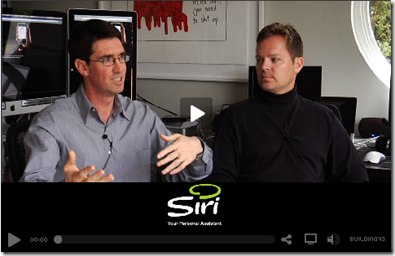
SIRI: your personal assistant in the cloud

Found via Scobleizer.

image

Watch the video till the very end. In the last 4 minutes or so there is a demo.

In essence its a free iPhone app with a fantastic voice recognition engine, that is orchestrating API’s in the cloud.

Normal – not geek – people ask me regularly: “But Peter, what do you mean with “cloud computing” and “semantic web ?”

SIRI is a wonderful example of what’s next. If you want to have an idea what semantic web means in practice, here you go. It’s location aware, it’s self learning, has some eMe elements like profile awareness, all of this in the privacy control of the owner of the profile data.

The dream of the personal butler coming true.

Why this is important ? In the words of Robert Scoble:

Don’t get confused by the awesome voice recognition engine that figures out your speech and what you want with pretty good accuracy. No, that’s not the really cool thing, although Microsoft and other companies have been working on natural language search for many years now and have been failing to come up with anything as useful as Siri.

No, the real secret sauce and huge impact on the future of the web is in the back end of this thing. A few months back the engineers at Siri gave me a secret look at how they stitch the APIs into the system. They’ve built a GUI that helps them hook up the APIs from, say, a new source like Foursquare, into the language recognition engine.

And listen to the two founders on how the back-end of this thing is working, and the other cool stuff they have in mind.

And now start thinking on what you could do with this in financial services:

  • Give me the best loan for car so and so
  • I want to buy this piece of art and need a credit line
  • Find me the cheapest routing for USD payment with cut-off time x
  • Get me to …

Would be very curious of guys like Richard Branson of Virgin Bank start to play with this. Or Sean Park with his view on software components in the cloud. How does this change our thinking on building an AppStore for Financial Services ?

I don’t have an iPhone (yet). But i know super-geeks Nick and PeterH have one. Nick, can you test this one, and let me know your candid feedback ?

Check out www.siri.com


Reblog this post [with Zemanta]

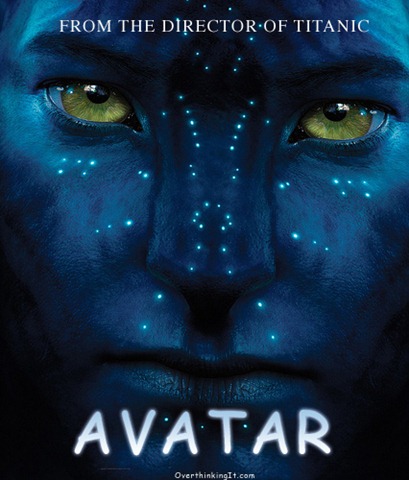
Avatar

Went to see Avatar this afternoon. Here is the link to the official website, which is an experience on itself: put the audio ON please. Have also a look at the Wikipedia site about the film.

avatar-poster

And i was lucky to see it in 3D. What an experience! First of all, it was quite some time since i ever went to the “cinéma”, and this was also my first 3D movie ever. I was absolutely surprised by the quality of it.

For me, this movie had the same impact as 1968 ! movie “2001: A Space Odyssey”

Without telling too much about the story and the plot, how i would like to fly that chopper !

And how i’d wish that the tablet PC in the movie is what Apple is going to release in Jan 2010 ! Or to have one of those fantastic displays 😉

You will also recognize music that makes you think of the final sequence of Titanic.

It’s mind-blowing. In the beginning of the film, you feel really surprised how real the characters, and the fauna and flora are. That’s ok for 5 min, but then you start realizing this goes on for about 2 hours, and the makers of the film immerse you in some semi-real environment, and you feel as being part of it, and you feel part of the story and engaged. A masterpiece.

You have to see it. Don’t compromise on a non-3D version.

And stay till the end, and have a look at the credits. An endless list of specialists that have contributed to the movie. A true 2010 Enterprise.

And to close, here is a quiz: at the end of the film, the main character Jake Sully does his last “videolog”. What is the exact date that is shown on the videolog display ?

Education, Elites and Bologna

I was watching this morning a television program with Christine Van Den Wyngaert.

christine

The program was in essence about her views and role in the Criminal Tribunal for the former Yugoslavia, but mu attention was triggered by something she said in the introductory part of the interview.

She was referring to the dramatic decrease of the quality of our education, mainly due to the Bologna Treaty. Just have a look at the Wikipedia link or do a google on Bologna Treaty. Or have a look at the Europa site. The first sentence on that site reads:

The Bologna process aims inter alia at making divergent higher education systems converge towards a more transparent system by 2010, based on three cycles: Degree/Bachelor – Master – Doctorate.

I always get irritated when people talk about “convergence” or “consensus” or “compromise”. For me these terms have a built-in notion of quality-loss.

Indeed, Christine Van Den Wyngaert explains that “thanks” to this treaty it was not possible anymore – no, even forbidden – to offer education with the same high quality standards as we used to have.

All this in the name of democratization of education and to give everybody access to higher education.


She went on by stating that many base foundation courses of general knowledge were being reduced to the level of “kindergarten”.

And that for some professions – definitely for a judge or a lawyer – good solid foundation education about history, society, etc are quite fundamental for doing the profession.

It is getting pedantic in a sense that even talking about creating an “elite” of scientists, judges, of whatever profession starts being banned straight-away.


I do not want my child being educated in mediocrity.


It made me think of the book “The Five Minds of the Future” by Howard Gardner.

21E fDecyLL._SL160_AA115_

I am reading it on my Kindle as we speak.

In that book, Howard Gardner arguments that education should not only be based on memorizing lots of information, but that education (whether at school or at home) should more focus on some essential skills that will be needed in the future (of real-time, high-information-based-society).

He calls these the 5 “minds” for the future. They are:

  • The disciplined mind
  • The Synthesizing mind
  • The Creating mind
  • The Respectful mind
  • The Ethical mind

About these “minds”, Gardner says:

Any individual with a deep understanding of a topic or method can think about it in a variety of ways. Conversely, an individual exhibits her current limitations when she can only conceptualize her topic in a single way.

This is very similar to having a very limited palette of ways to express yourself. Sometimes you hear somebody saying “I cannot dance on this or that sort of music. If i have to dance to that music, i cannot be myself (in an authentic way")”.

That’s pretty poor, if you ask me.

The art is to expand your palette of ways of being yourself in different situations.

Having the right to (the old) high standards of education, being trained in the 5 minds of the future, learning to be authentic in many different ways: all this should be part of the educational package of any young person having some ambitions for the longer term future.

I have come to a point where i do NOT believe anymore that our politicians and the whole system of lobby groups will help us getting there.

I was making the same reflection some weeks ago, when we were having our meeting of the Think Tank on Long Term Future, when i heard my friends complaining on how bad is it is getting in Flanders with respect to getting innovation on the political or any other agenda.


The innovation and education and

cultural agenda

get drowned into a political swamp

of consensus and power games


The end result is often or nothing, or something very grey (because of the consensus), or something very Kafkaesque.


I am getting convinced we have to do it


ourselves

Bring together some smart people in our think tank, and get private funding for the innovation, education and cultural development of the Generation-M.

Because they are looking for the things that really matter.


Reblog this post [with Zemanta]

Zemanta and the Semantic Web

image


If you want to have an idea what Semantic Web can mean for you and your business, have a look at www.zemanta.com.

It comes as a Google Chrome Extension, or a Firefox extension, or a IE Plug-in or Safari Bookmarklet.

I tested the Google Chrome extension on my PC. In this case a Mini-HP with Windows 7 installed. I also use Windows Live Writer to do my blogs. Zemanta also has a Live Writer Plug-in that i also installed.

This looks quite similar to the viewer of Open Calais that i commented on already way back in April 2009.

UPDATE: just today, there was an article on ReadWriteWeb referring back to Open Calais, Google and Wolfram Alpha. Note that “Semantic Web” is now renamed into “Structured Data”.

But is is way more user-friendly, and so well integrated with Live Writer. Anybody writing blogs should install this.

To get you an idea of the powerful stuff under the hood of this semantic engine, go to the home page and click on the try demo button.


image


You then get presented with an free-text box that you can fill with any text you want. In my case, i just cut and pasted the intro-section of our Think Tank document.

image

You just hit “Run Demo”, and what you get then is really unbelievable !

Your content gets enhanced with images. See example below.

image

Or you get links to related articles:

image


The beauty really comes and the end of the page of the demo:


image


Yep, you got it. It shows all in-text links, and all words that have automatically semantically tagged, based on the sources you have given during set-up (or later when logging into your personal account). And yes, it also looks into Twitter and Facebook.

When you install Zemanta for Live Writer, you are presented with a list of recommended articles while you are blogging. You can then select interesting and related articles to reference in your blogs posts with just a click of the mouse. The benefits of being included within our recommended content pool are: trackback links to your blog, discovery of your blog by new readers, and connecting topical blogs together.

Zemanta expands the author’s regular blogging dashboard, populating it on the fly with content suggestions relevant to the current text. It presents images, links, articles, tags in a simple interface. It encourages re-use and linking to other content with as little effort as possible – a single click.

Zemanta supports Blogger, WordPress, TypePad, Movable Type, Ning, Drupal, LiveJournal, Tumblr and email platforms Google Mail and Yahoo!Mail.

Here is a screenshot of my screen as i was making this blog, and how it automatically added in-text links to the word “Blogger” etc above…


image

Main features of Zemanta are:
● on the fly contextual suggestions of related articles, images, links and tags;
● affiliate linking support;
● re-blogging – cross-platform quoting for blogs;
● spam-free database of 10000 news sources and blogs;
● copyright filtering of suggested images.

Use cases for email include:
● Individualized personal “postcards” as you can easily add images from your Flickr collection or from others.
● Persuasive professional introductions with easy addition of personal images and links to social networks.
● Informative report-style mails with links to other points on Internet for further reading.

These are the use cases suggested on the Zemanta site and during the install procedure.

However, i strongly believe that these sort of technologies will change in a very disruptive way how we think about standards. In the context of my employer SWIFT, standards are one of the pillars of our value proposition. So far, we “only” looked at standards for message formats, but we could/should apply our 30+ years experience in semantics and ontologies for financial services into this new domain of semantics of … well, anything.

UPDATE: by renaming “Semantic Web” into “Structured Data”, it all becomes even more obvious what role SWIFT could play in this area. XBRL and CLOUD are already moving big way into this space.

BTW: the “REBLOG” button at the end of this posting was also added automatically by Zemanta.


Reblog this post [with Zemanta]

Real-Time Trade

Fascinating article on how stock market is getting completely automated in a matter of seconds. Who was saying something about real-time.

04_traderfaces

Article found on MIT Technology Review. 5 pager can be found here.

Some extracts:

The profits go to the company with the fastest hardware and the best algorithms–advantages that enable it to spot and exploit subtle market patterns ahead of everyone else

TheTabb Group, a consultancy based in Westborough, MA, estimates that high-frequency automated trading now accounts for 61 percent of the more than 10 billion shares traded daily across the numerous exchanges that make up the U.S. market.

Trading is now essentially a virtual art, and its practitioners put such a premium on speed that NASDAQ has considered issuing equal 100-foot lengths of cable to the brokers who send orders to its exchange servers.

Hardware used at the facility will operate at a 40-gigabyte-per-second standard, enabling it to handle as many as a million messages a second.

New York City-based Lime Brokerage, wrote the SEC in 2009 to voice concerns over the proliferation of brokers who allow major clients to engage in high-frequency trading without validating their margins–that is to say, without making sure they actually have enough money to back a trade

Jacobs regularly sees algorithms executing more than 1,000 orders a second. At that rate, one algorithm trading the wrong way could execute 120,000 orders in two minutes. At 1,000 shares per order and an average price of, say, $20 a share, that’s $2.4 billion inunintended trades in 2 … SECONDS.

Institutional traders like Fidelity, which buy large blocks of shares for their mutual funds, use algorithmic trading to split their enormous orders into blocks of 100 to 300 shares so that other traders don’t recognize the true demand and take advantage of that knowledge for their own profit.

These are big numbers. And it happens every day. Scary.

Brain Chips

image


All images courtesy of www.gigaom.com. found via my subscription to the fantastic spacecollective.org site. Full link here.

I somehow like #2, but get discouraged when i read the description: “The technology is basically the same as that used to treat Parkinson’s disease.”

Seriously, it’s a great post, and indicated that brain chips are getting real and that the singularity is getting nearer and nearer.

Web Squared for advanced

Very cool presentation on the impact of the web on the world. Web Wide World revisited so to speak. Enjoy.
View more documents from gloriagdiago.

Wikipedia for Data

My colleague Mariela popped into my office the other day: “Peter, when we talk cloud computing we should highlight something fundamental: it’s about making DATA more accessible/interoperable, more than making applications interoperable”.

In essence, she saw that Cloud computing is in essence about

OPEN DATA

Mariela is right on.

This is btw one of the big beliefs as well of Russell Daniels from HP, who was a speaker at our Innotribe @ Sibos. Short video interview with Russ below right after the cloud panel discussion:

Over the last couple of days, i found some more evidence on several blogs.

image

There are positive ways to proceed. Google, for example, a leader in cloud computing, has recently launched a specific project — The Data Liberation Front — explicitly including as a key facet the goal of making sure that users can quickly and easily export data from Google products. This ambitious and extremely important effort should be a model for the rest of the cloud computing industry.

See also Wolfram Alpha API to be released later today and the actual release page

image

And also the release of the WolframAlpha iPhone app:

image

My friend Peter Hinssen installed the iPhone app and tweeted yesterday this is the COOLEST thing he has ever seen.

Lots of writers have compared Alpha to Google, but I think that’s a mistake. it’s a data source, not a search engine, and that’s a significant difference. What matters with a data source is the ability to ask a question, get an answer back, and use it as easily as possible. An API minimizes the impedance mismatch: you can do computing directly with Alpha’s curated data.

But there’s another comparison that’s even more relevant: Twitter. What has made Twitter success isn’t so much the web application that lives at twitter.com. What has made Twitter valuable is the huge ecosystem that has grown up around that application: alternate clients for all sorts of platforms, web sites for searching, slicing, dicing, and remixing. Those have all been enabled by a simple and well-thought-out API for dealing with Twitter programmatically. The web isn’t about web pages; it’s about interactions between data sources.

Some other newcomers on the scene:

 image

Good Data raises $2.5M for business intelligence by Andreessen Horowitz, the firm run by Netscape billionaire Mark Andreessen. Btw the same firm is one of the candidates for acquiring Skype, but the Skype founders don’t seem to like it very much. Have a look at the great video on Gooddata’s homepage.

image

There is Factual.

image

Factual wants to be the center of the web’s open data. Not a minor detail: Elbaz, who co-founded Applied Semantics and sold it to Google, has self-funded the company. Well-known technology commentator and investor Esther Dyson recently joined Factual’s advisory board. Also Nova Spivack blogged about Factual here. Nova Spivack and Ester Dyson are two of the smartest people when it comes to semantic web and new technologies

250px-Nova_spivack 200px-Esther_Dyson-20050316

And Techcrunch Erik Schonfeld had a blog as well last week. With a link to a great video:

This is like Wikipedia but then for structured data ! It not about mashing-up user interfaces anymore. The next web is about being able to source good data sources and mash them up.

Imagine if we would start using this for all sort of financial services.

Semantic data/web will definitely be a topic for Innotribe @ Sibos 2010 in Amsterdam. Book already the dates in your calendars: 25-29 Oct 2010.

Privacy is dead

This blog post is triggered by a start-up demonstration i saw at DEMOFall2009 some weeks ago.

The demo was about an iPhone application called “datecheck” aka “creepfinder”

You can find the video here.

Not that i am interested in on-line or real-life dating – i am happily married – but in essence the application allows me to do a check on my date. It basically crawls the internet, twitter, facebook, and  – in the US – public data such as your real-estate tax income and even criminal records.

The end-result is that i find data about criminal records about my future fiancée, full real-estate data about what house he/she lives in, family composition, real-estate tax-income etc

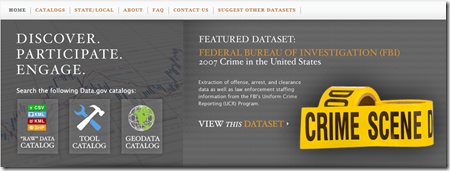
The US government also is getting quite open and transparent on its own data. Have a look at www.data.gov

image

And these days all these data are accessible via API’s to take data OUT of these systems. Some API’s like twitter, facebook etc also allow you to INPUT data via for example Tweetdeck, Seismic, and many others. I would love to have something that not only allows me to INPUT my Tweets, but also something that allows me to input and maintain my personal profile data, across services. See also at the end of this post.

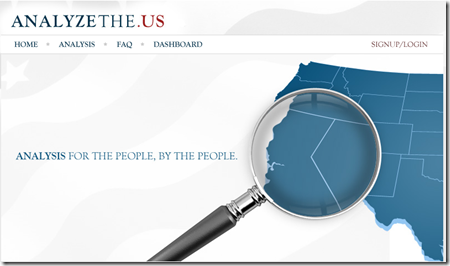
For the US government data, you see start appearing end-consumer apps that let you search through this massive amount of for example government contractor’s data with quite advanced intelligence tools in the hand of the citizen.

In stead of FBI (Federal) it’s becoming

CBI (Citizen’s Bureau of Investigation).

It says “analysis for the people, by the people”. I would add “"about the people”

image

All this is sold as “transparency” and “democracy”, and those are of course very important values.

But – and I don’t know about you – I start more and more FEELING quite uncomfortable about all this. Not that i have to hide anything, or that i have a criminal record (at least not that I am aware of ;-), but I do FEEL all this is quite intrusive.

As most of you know, in my previous life i was quite close to the Belgian eID project (electronic identity card). The card also allows you to access the on-line government database, where I can look at my OWN data and check who in the government has accessed those data.

But i believe we should make a big plea for the appliance of Law #1 of Kim Cameron’s Laws of Identity:

image

That’s easy said, but how do you enforce that. I took the pain to look at the privacy policy of Twitter (see http://twitter.com/privacy). In essence – as a user – i have nothing to say. I have 2 choices: to use twitter and accept the privacy policy, or not use it. But how many of the many million Twitter users have ever read the privacy policy ? How many know what sort of deep intelligence engines are crawling all these data that i released to the net WITH A DIFFERENT PURPOSE ?

This is not Twitter specific. It applies to Facebook, Friendfeed, or any other form of social network or service.

In my opinion, i would like to have something where i can control what data about myself i want to release to what service and in what context. I update my information there once, and have also guarantee that my profile information is consistent across Twitter, Facebook or even event/conference sites that these days more and more use their own social media piece of technology.

Of course you would need a highly trusted party to deal with these data. I think i would even be prepared to pay a price for my privacy.

This concept of a central digital vault comes pretty close to eMe, the winner of the Innotribe idea-contest at Sibos 2009 some weeks ago. But they started from “mydata” and information and documents related to financial services. If you start thinking privacy and putting control of data back into the user’s hands, you get a much more powerful proposition.

I would like to hear the opinion of a number of identity and privacy experts that are following this blog

UPDATE: Can’t help it, but just at the same time as i published this post, Guy Kawasaki tweeted the following URL:

 http://holykaw.alltop.com/why-you-should-think-before-you-tweet