Social Currency: My Personal Identity

Recently came across this great site by Dan Robles.

image

One of his latest posts Will Social Capitalism Replace Market Capitalism? (Parts 1&2) included great video material on how social currency can change industries.

image

His forecasting example is the airline industry. And it’s even not so far fetched. What if you could “Time-Share” seats in private jets ?

It’s easy to think how this social currency model would apply to any other business and radically innovate by creative destruction.

It’s a very novel way to show how a number of trends come together:

  • The influence of gaming theories and practices in new business models
  • The value and tradability of my personal information
  • The power shift from Push to Pull that is so well described in John Hagel’s latest book “The Power of Pull” (I repeat it, in my opinion THE business book of 2010)
By the way, we recently had a face to face meeting with John exploring the possibility to have him with us at Innotribe at Sibos in Amsterdam, 25-29 October 2010.

image

We have asked John to consider a talk in our Innotribe Opening Keynotes, and to be part of our special Innotribe Lab on The long now in Financial Services.

To come back to the subject of the power of identity, I’d like to spend a bit more time on the tradability of my personal information.

The essence of the story is that some parts of my personal data have value and can be traded under the user’s control to get a better service.

It opens questions to:

  • How tradable is my personal identity ?
  • How tradable is my digital footprint ?
  • How tradable are my on and off-line relationships ?

I have been immersed in “personal digital identity” the last couple of weeks. Recently i attended the EEMA’s The European e-Identity Management Conference in London.

The week after i was the “tour guide” for a "Digital Identity Tour” we organized with some colleagues on the West-Coast”. I am preparing a set of blog posts on these conferences and 1-1 conversations with thought leaders in e-Identity space.

In this blog i will just simplify my summary thoughts with the statement that e-identity is much, much more that a certificate on a smart-card, or for sake of the argument any other form factor.

We are witnessing a power-shift:

In stead of the government (or the bank, or any other service offering entity) creating digital identities to give more value to the citizen, we see the emergence of  identities created by the user to give greater value to the government (or the bank, or any other service offering entity)

We have to carefully think this through, as identity – and relations between and with persons – is really a complex animal.

Have a look at this fantastic 210+ slides presentation “The Real Life Social Network V2” by a Google analyst @Padday aka Paul Adams, working for the UX team at Google. The essence of his story is that there is nothing such as a generic “Friends”. You have all sorts of friends and different depths in relations. Whether those relations are between people-people or people-companies.

It’s a great story, and all slides are annotated. As a teaser, here are his 3 summarizing slides:

image

image

image

It’s interesting how the words identity, privacy, care, relationships, collaboration, strong/week ties, Klout, etc are now all coming together. As a matter of fact, these are all attributes that make us truly human.

As a sherry on today’s cake, i’d like to link you once more to Venassa Miemis site “Emergent by Design” and the great recent blog post on Guidelines for Group Collaboration and Emergence, that is building on both her previous work on “Strenghts Based Society”, “”Skills for a 21st century connected world”, and her work on the open source collaborative tool “Junto”.


image

As we are preparing Innotribe at Sibos, i had the pleasure to talk to Venassa during a Skype session. We are discussing her participation at several levels of our Innotribe Program.

It is great to see how these novel ideas become “totally” relevant when you start thinking about their value for a “community” like SWIFT and an innitiative like Innotribe where “Enabling Collaborative Innovation” is our “Leifmotto”.

From the conversation with Venassa, i can tell you she “totally” got it, and she is preparing some material and levels of interactivity for Sibos that you even never dreamed of.

We are now 16 weeks from Sibos. The idea is to begin hosting a junto every week, invite different thinkers to discuss the future of money, record all conversations and develop a presentation based on them, but also make the videos available for the attendees of the conference to be able to watch whenever they want to see what those conversations were like.

If we think about the Long Now, will there still be currency as we know it? Or will social currency become central to our trade? And what impact does that have on banks ? Should be have personal data stores where we deposit our digital footprint and open personal accounts and do payments for services from there?

Feel free to jump in.

Creative juices everywhere

These days, when i kick-off an innovation workshop, i ask the participants “tell me about your hobbies/interests when you were 16-18 years old”.

The answers and the resulting effect are surprising.

  • First, it opens up people in a way they are not used to. The come out of their “i-am-at-work” comfort zone. Some people that you expect to be “emotional zombies”, suddenly have sparkles in their eyes and show leadership throughout the workshop. Having genuine interest in people unleashes nuclear creative energy.
  • Second, it is amazing how many creative juices you gave in your average workshop. People tell me about their dancing, painting, music instruments, fashion design, about crazy little (and big) things they did in life

I don’t know where it comes from, that attitude of “withholding” the best of yourself. Something that is for sure, is that once you tap into this creative well, the energy and engagement and idea generation increase by a factor 10.

Another example: a colleague from our German office came to see me on what our innovation team could mean for one of his customers. In stead of showing him a whitepaper or a slide show, i decided to show him some of our past productions. Again those sparkling eyes.

With hindsight, it is interesting to see how we almost unconsciously added some creative art/visual/audio layer to most of the things we do. You can call them “innovation productions”.

My German colleague was clearly surprised on the quality productions we do with relatively small means. “I have to let this sink” he said. “It’s all a bit overwhelming at this moment, but i am trying to grasp it all and how i can transfer the same excitement to my customer when going back to Frankfurt this evening”.

The point i am trying to make is that there are creative juices everywhere, and it only takes a little scratching or motivation to get the best out of people.

Here is an example of getting out the best in people. You remember by blog post on the Medici Effect ? Apparently it inspired my colleague Mela to some really video collage.


It’s beautiful. It touched me emotionally. Watch it. It’s only 5 min. You can use it as an inspiring start of your day as well. Or imagine starting a workshop after having played this video. The energy in the room is high. It’s a soft energy that makes you feel comfortable to share.

This video is used in our company to launch the next wave of internal innovation challenges.

Innovation Challenges are small competitions where we incentivize our creative people at all levels and locations in the organization to come up with ideas around a certain theme. The projects are presented to a judge panel that includes the CEO. The winner gets implemented. So the price is not money but personal fulfillment.

The Challenges of this wave are all run under the banner of “Create the Medici Effect”: bring together people of different expertise and with different creative and/or engineering skills, and let the power of intersections play.

It’s a powerful model.

You can expect this video at many of our events and workshops. Also at Innotribe @ Sibos this year in Amsterdam, where one of our labs will have a specific focus to amplifying the Medici Effect.

Nobody asked Mela to do this video. But she followed her own compass and did not wait to be called. Mela should not only start to blog. She should start her own “Mela Productions” company.

“Inspire other people to dream” seems to have worked. Creative juices are everywhere. Imagine if you could unleash this energy in a systemic way in your company and in your eco-system. Maybe we have to do a creative lab at Sibos where we ask teams to make a similar video on the topic Generation-Y and Banking and have it ready by the end of the conference for the closing plenary ? Any thoughts ?

I have to run now, but will polish up this post later in my usual way, but i wanted to get this off my chest and into the world as soon as possible.

Becoming Better Builders

This is about an amazing idea of a 23-year young big thinker who created a fantastic community on-line and almost by accident stumbled upon a new platform for on-line communication that could change our world.

I stumbled upon this absolutely great video of a speech given by Vanessa Miemis in NYC during the Social Business Edge Conference on 19 April 2010.

image

I am a big fan of Mrs. Miemis and fervent reader of her blog “Emergent by Design”.

image

It’s the first time I see and hear her speak. It’s adds a different dimension. It’s a different type of engagement, and that different type of engagement is exactly what “Junto” is a about: a conversational platform between “real” people (see later on this blog).

She has roughly 4 supporting slides, and talks from the heart, with only a small sheet of paper with probably a couple of keywords and key statements. That’s how really super keynoters do their thing.

In this video she talks in an almost shy way about what drives her, and makes one after the other bold statement about the way this society does (not) work anymore.

The story is in essence about

the old game and the new game


As my friend, coach and mentor Andre Pelgrims used to say:


our (mental) software has evolved, but our hardware did not (our value systems, our hierarchies, our corporate models)


Vanessa’s speech in in 3 chapters:

  • We are shaped by our tools
  • We learn by modeling behavior
  • We align around a shared vision

I was mainly blown away by the section on Modeling behavior, some elements in the vision alignment, and definitely by her description of Junto.


Modeling behavior


Some real deep thinking here:


This is how children learn. It makes interactions transparent

Encourage a culture of collaboration, there is a certain type of behavior that we are modeling, and one that is based on a value system that is predominantly different than the one that exists in society and business today.

And its difficult to expect a paradigm shift when the current model rewards selfishness, and hording of information and exploitative behavior.

This virtual space is actually like some kind of training ground to build trust and to have a different behavior where the outcome is more than the zero-sum (in the existing model)

We align around a shared vision


There is this new way. For the greater good. A new global conversation and collaboration platform. that would sit on top of the web and that would accelerate the rate of taking an idea to action. And we are calling it JUNTO.

Enter Junto’s vision: a 3D space, where it’s live-streaming video, with video streams of us human beings.


It’s actually you,

who you really are


On top of that a profile system, automatically generated by the conversations you are having. It’s a different kind of transparency on who your really are. On top of this this reputation system that would be build into these trust networks, and virtual currencies, … and it goes on.

It’s like 5 people having a public conversation about a topic that interests them, and 500 people sitting in the back-channel. It’s all open source. They don’t want to monetize the tool.


They co-create value

by what they do with each other


It’s sounds a lot like our “enabling collaborative innovation” theme of Innotribe. It sounds a lot like the “advancing critical dialogue” tag-line of Sibos.

I truly believe that this tool could bee the basis from which a new global economy and a new global society can emerge from.

Wouldn’t it be cool to address this a a theme at Sibos. In front of 8,000 bankers ? Wouldn’t it be cool to experiment with Junto – yes, live i mean – during Innotribe at Sibos ? We plan other cool remote interactive stuff anyway this year. Just have to keep you curious here, as we have not yet fully worked out the concept, but if we pull it off, it will be really cool. Sort of first off.

Her final idea to consider:

Technology is the tool, but not the builder. We are the builders.


I challenge you and ask how we get better use to tools to connect and to inspire, so that collectively we can become better builders.

I need to discuss with the Sibos team, but I’d like to invite Vanessa to our Innotribe @ Sibos 2010 in Amsterdam to be part of the keynotes on “the big tectonic shifts” and in our Gen-Y stream.

Let’s Prepare the Future !

image

This article is a cross-post of an essay that i prepared for The Fifth Conference and that was published this week.


image


The Fifth Conference is a forum for vision. Part publisher and part conference, The Fifth Conference tackles the ‘big issues’, the factors that drive our future. Think ten, twenty, even fifty years ahead and try to imagine how we will live and work. What will this world look like? How will we have solved the economic, social and environmental challenges that we confront today? To answer those questions we talk to entrepreneurs, policy makers and experts. We analyse the facts, the forecasts and the arguments. And most importantly, we collect vision.

As mentioned in my previous blog post “No more collateral damage”, this is so close to my idea of the Think Tank for Long Term Future that it was for me a no-brainer to passionately accept the invitation of Frank Boermeester (co-founder of The Fifth Conference) to draft an essay on Technology, with a focus on Technology Readiness in our region, and being conscientious aware of the “understream” that is driving all the changes and evolutions in Growth, Mobility, Green, Technology, Health. So here is the article:


Over the past 20 years we have witnessed a fantastic growth in and wealth of technologies. ICT technologies have started permeating our daily lives. Medical science and biotechnologies have increased longevity significantly. Other technologies (Nanotechnology, AI, Robotics, etc.) have kick-started.

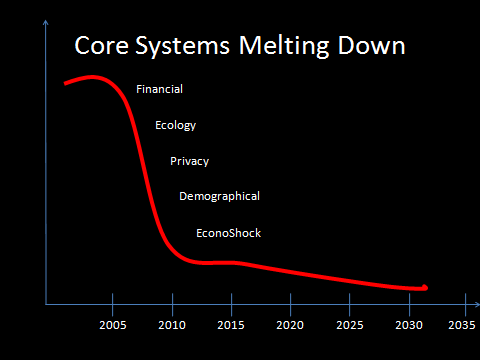
However, in the last couple of years, we have witnessed the breakdown of a number of core systems:

image

  • Our worldwide financial system is going through a “meltdown”. The old game of greed is being replaced by an all important requirement: trust.
  • Ecological, ethnological and demographical shocks (see also Geert Noels, author of Econoshock) are turning our systems upside-down: Green and Energy conservation thinking are now the mainstream.

image

  • The East-West shock: economic power is shifting from the Western world to the new economies of APAC and BRIC+ countries.
  • New forms of communication via the internet (blogs, wikis, social networks such as Facebook, Twitter, Netlog, etc.) propose a new paradigm in respect to privacy.

All these fundamental changes give us feelings of discomfort, disorientation, confusion and loss of control. Although our “collective intelligence” indicates that our old models do not apply anymore, our “hardware” seems not to have caught on. We have not adapted the way we are organized hierarchically; how we look at governance. Our traditional ‘system thinking’ got stuck and did not follow our ‘collective intelligence’.

On the other hand a new set of systems and tools are emerging:

image

  • Barack Obama describes it as the ‘audacity of hope’; innovators, planners, academics and authors are referring to ‘dreamtelligence’ as a new, vital, and visionary way to use play, fantasy, dream-thinking and innovation to kick-start ideas and stimulate community engagement.
  • A fantastic call for and revival of authenticity for ourselves and our leaders. Furthermore, having true leaders; with charisma, the power to attract, integrity and authenticity.
  • The Net-Generation (now young adults, 15-30 years old) have grown up as ‘digital natives’. They will be tomorrow’s leaders. What THEY think will co-form our future. The future will not be invented by today’s generation. This Net-Generation lives differently. They are “wired” differently. For them multitasking (multi-window chatting, gaming at the same time as listening to music, looking up information on the internet, being mobile, etc.) is very common. They also think differently (deeper and more authentically), and have a very strong sense of the common good and of collective and civic responsibility.

image

image

Our technological revolution has just started. To illustrate:

  • Today our technologists are capable of crafting a human ear in their labs. We are now in a position to create and grow cells, tissues and even bodies.
  • Artificial Intelligence is back: by 2030 our computers will be able to think, be self-learning, self-healing – some will even be able to have a consciousness.
  • Self-learning robots will soon be mainstream technology. Mercedes and BMW already have cars in the pipeline for 2012 that can drive entirely automatically, better than a human counterpart.
  • The emergence of Google brings forth the concept of the “Global Brain”. The internet today is already a tremendous source of information. Today’s search experience will pale in comparison to the mechanisms we’ll have in 20 years. All knowledge will be available anywhere, anytime, wirelessly via brain-implants.
  • Social networking is already revolutionizing the way people and companies are communicating. It is interesting to note that these technologies let us evolve from a system-to-system communication paradigm towards a human-to-human one.
  • Today you can order your personal DNA genome sequence in the USA for only $399. The company doing this is a Google backed start-up. Think of DNA in the ‘cloud’, with DNA comparisons between ancestors, relationships, etc …
  • Brain-wave helmets and chip-implants will give humans better sensory perception. By 2030 we will see the emergence of “super-humans”. In such a dramatically changed context, what will make us “human”?

A lot of these future scenarios are described by Ray Kurzweil’s “Singularity” concept. This is the moment when man and machine truly blend. Kurzweil claims this will happen around the year 2030.

And the pace of all these technological innovations is just increasing exponentially. In the next 20 years we will witness technological breakthroughs tenfold those of the same previous span of time.

All this evolution calls for a re-thinking of our value-compass for the future: We must carefully re- think how all this will influence the way we will work and live. What sort of quality of life should we aim for? What will be the socio-economic impact of all this? How will we want education to be structured? What areas of society will we still want (and be able to) influence?


How are we going to ensure that the

Technical and Value ‘Readiness’

of our region

are competitive in this new era?


Will we lead the change, as opposed to being mediocre followers? I believe it is time for action.

image

I believe The Fifth Conference and its organic network of inspiring leaders has deep within itself the embryo for a sort of “think-tank/foundation” addressing the long term future:


A movement and an energy

that prepares our Net-Generation

for the next 20 years,

with an emphasis on

our technical and value readiness


A place where “smart people” can meet. Where experts from different technological domains share their insights for 2030, cross-pollinating each other’s disciplines. Indeed, “savants” from different contexts & worldviews can act as our “eyes” and offer a perspective on how we will live and work in 2030.

image

How our education is best organized will also be addressed. We will investigate what our ideal value kit for that era should be, beyond traditional corporate culture. Moreover, with a culture of sharing and exploring – where we live committed to teams, groups, communities, regions and countries –a deep respect for the participating individual humanistic identities will nevertheless be maintained.

We don’t have to wait until our politicians have made up their minds as to whether or not they should invest more in innovation.


We can do this ourselves


I cannot accept that it would not be possible to raise private funding for such an organization/movement/tribe.

The resulting new models and scenarios will demand speed, creativity, dynamism, perseverance, courage, knowledge and working together in a multi-cultural context. This new society makes a plea for the respect for individuality, freedom, mobility and quality of life.

This paradigm is all about designing, exploring and organizing change, learning and fine-tuning as we go. Giving guidance to teams, organizations and leaders on how to surf these waves is part and parcel with this. Missing the first technology wave of speed and creativity will result in loss of economic relevance. Missing the wave of the new value kit will result in losing our Net-Generation; our brains for the future.

This is about preparing ourselves and our region for 2030.

image

Who wants to join the tribe? Who is a believer? Let’s debate this idea on- and off-line for a couple of weeks. If there is enough interest, let’s meet and make this happen.

Get a Life and Get Alive

It’s quite some time ago i did a post with brand new content. It’s partly because i also have a family and a job, but mainly because i only feel the urge to blog when i have real content to contribute.

These days i also share an awful lot via twitter: that’s where the day-to-day action is. So if you are interested in my lens on technology and values for the 21st century, you can also follow we on twitter @petervan . There is an almost daily stream of tweets on these subjects.

I “reserve” the blog to share some more elaborated thoughts on stuff that keeps me going or that touches me one way or another way emotionally, in the way i am.

This time, the post is about


People, Culture, Excitement and

Sculptural Integrity


And I’d like to share what happens if you truly stand for who you are and have the courage to stand up and stick out your neck.

The title of this post is of course a word-spiel on get-a-life and get alive. The discussion was part of an off-site recently attended in the wonderful city of Barcelona.

It was about 20 years ago i was in Barcelona, and the only thing i remembered were the ‘”Ramblas” and the “Plaza de Espagna”. Given my education as an architect (non many people know this ;-), i of course knew that Barcelona was the city of the Sagrada Familia of Gaudi.

The off-site was facilitated by Dan Newman and his team from The Value Web.

image

The off-site was our reflection moment about our company for the next 5 years.

Dan really “got me” with his opening speech: he used two words that deeply resonated very strong with me – at an emotional level.

The architect aims for


“Sculptural Integrity”


Especially in sculpting the old with the new. Old game and new game. And that the old and the new should be connected by more than just a link or a tunnel. That the end-result should show a deep sense of unity. And that this “sculptural integrity” and other architectural thoughts were the also the basis of facilitation work and techniques of the Value Web, because that was also how group dynamics could be looked upon.

The words entered by body and mind, as they reminded me of a piece of my true self and my youth 30 years ago when i was making drawings and sketches myself of the most bizarre and bold architectural designs.

Dan mentioned also a book: “The Timeless Way of Building” by Christopher Alexander.

The real and ultimate question in this book is:


What is it that makes a building “work” ?


When you see something that works, you just know it. And it’s something that has a timeless quality.

I was intrigued by the subject, and kept researching, and quickly discovered the site of Tomorrow Makers.

image

And especially the blog post titled “Happiness Pandemic (HP101) Hits Worldwide”. Just read and internalize the first two bullets:

The tendency to let yourself be guided by intuition instead of acting under pressure of fear, forced ideas and pre-conditioned behavior.

A total loss of interest in: – judging others, convicting yourself and preoccupation with things that create conflict.

During the off-site, Dan did something else that was brilliant. He took us out of the hotel into the city. In our case we went to the CosmoCaixa Barcelona, the Museum of Science.

Panorámica CosmoCaixa

Besides being a perfect metaphor for blending old and new with “sculptural integrity”, it also put all of us in a different context and mindset to look in quite different and innovative ways to our off-site subject.

I don’t know what happened exactly, but when we returned to the conference hotel, we were looking for topics likes

space

freedom

excitement

playfulness

culture

people

At a certain moment, we could form a small group of people, sort of a tribe around a subject that was not yet addressed.

I put the word “excitement” on a post-it, and look: 10 min later, we had 7 or so colleagues interested in discussing the subject.

I asked a simple question: “how excited do you get by the work done so far at this off-site” and rate it on a scale of 1-10. To my astonishment, the average rating was 3.

So we then looked for the root-cause of this score. A lot had to do with company culture, but also by the need for a new vocabulary, and not just words, but a vocabulary that was inspired by the value set that is needed for the 21st century.

In a follow-up session on people and culture this topic re-appeared in full force.

Although initially we were looking at symptoms and superficial quick fixes, it suddenly dawned to us that


the real root cause was about

the openness of

our minds, hearts, and minds.


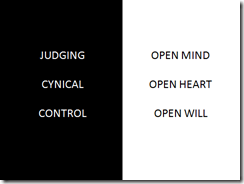
I have used the following slide many times in my postings.

In black the old game: full of macho behavior and Machiavellian attitudes and states of mind.

In white the new game. With true, genuine interest in the other and the true self – not based on tricks or quick fixes.

image

The discussions on these topics were deep and full of enthusiasm. We were looking at talent development, both the professional skills ànd the Personal Development side of it.

And i keep on fighting that “Personal Development” is NOT about “soft” skills.


It’s really about having and keeping

cutting-edge “good” people

on board


and nurturing them so that they can function optimally in today’s highly connected networked society.

You need to “train” and get exposed to a number of essential hard skills and values for the 21st century.

In this context, i get very inspired by the work of Vanessa Miemis, a Gen-Y student with a fantastic blog “Emergent by Design”. Look for example at her latest blog entry “Essential Skills for 21st Century Survival: Part-3 Network Weaving”

Or the post “Framework for a Strengths Based Society”

Do you feel how powerful this is ?


“Strengths Based Society”


Should we not invite her to Sibos ? To be part of Innotribe at Sibos. As part of our “Gen-Y meet Bankers” Face-to-Face interactive workshop ? Maybe with the help of some strong Gen-Y-power, we will be able to keep the sharpness of our ideas and dreams.

Because at the end of the off-site, each team had to boil it down its ideas to a pitch of 5 minutes and I was surprised to witness how in this pitching work, we lost quite some of the “cutting" edge”. Also surprised on how fear creeps in when people are volunteered to deliver the pitch to the executives.

And a strange behavior of watering down the message, and even scratching the most provocative words in the end deliverable.


We seem to have lost

our desire for

boldness


We also “frame” too conservatively. So, in order not to loose some of these more provocative statements, here are some examples:

  • In 5 years time, 10% of our workforce should be Generation-Y folks
  • By 2015, our company should be in the Top-10 of best companies to work for in the financial industry. Worldwide.
  • Gen-Y should drive the composition of the Leadership council of the future
  • 90% of the people in the 2015 leaders team should be new. Only 10% of today’s group should be the same
  • Doing things 10,000 time better rather than twice as good
  • “Do no evil” is not good enough anymore. “Great to Good” is the new paradigm.
  • “Get-a-Life and Get Alive !” Was the original title of our pitch. Somebody changed the title to the more boring “people and values for 2015”
  • Chief Corporate Activist
  • About framing: from “our company is 37 years old, are we in a mid-life crisis” to “our company is 37 years old, we are just-born, who do we want to feel “right” or “it works” in 500 years from now?”

At this moment, I decided to have a short break in my blogging activity, and go for my Sunday trip to the bakery. I bumped into a friend, who shared me a wonderful story about going for your dreams.

The story was basically about context. Of not waiting to be called. Of doing what you intuitively know is right. What works. In his case it was about seeing a wonderful motorbike, feeling it was just designed perfectly, and following your intuition and impulse and buying the motorbike. It happened to be a Can-Am Spyder Roadster. This was not just about buying something desirable. It was a story about contextual living. About flow. About following your compass. And not delaying your dreams till when you’re dead.

image

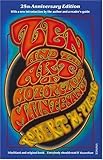
The story reminded me of the book “Zen and the Art of Motorcycle Maintenance”

You can find “flow” is everything you do. From the most banal activities like cleaning or motorbike maintenance to writing an inspiring blog and making a pitch that makes others dream and wanting to go after their dream.

When i started this blog in April 2009, i wanted it to be in line with my purpose in life “Inspire other people to dream” – and execute their dreams. I hope i have not disappointed you so far.

Last week, somebody said i should start writing a book. Maybe i will do that. Maybe using the funding model experimented by Stowe Boyd fro writing his report on Social Architecture: Microstreams In Business.

Last week, somebody gave me the greatest compliment somebody can give to a man of the 21st century:


“you have the most feminine mindset

of all the men i ever met”


Let’s eradicate the macho culture of judging, being cynical, and control freaks.

Let’s build a culture based on open mind, open heart and open will.

Are you also fed-up waiting on the side-line and do you feel the hunger to join me on the drawing board to help us sketch the “sculptural integrity” required for the 21st century ?

Then please use abundantly the comments feature of this blog.

Doing what you want to do, not waiting to be called. Stand-up and stand as you are. In your true self. Without fear. Living your dreams.


Get-a-Life !

Get ALIVE !


If you feel energized by this blog, you can get an extra doze at following previous posts:

No more collateral damage

Who am i really ?

Great to Good: New Value Kit

Broken Will

Our company is infected

Ethical Re-Boot

The Holy Fire

Emotional Zombies

HR and Innovation

Brand, Workforce and Innovation

The Medici Effect


The Medicis were a banking family in Florence who funded creators from a wide range of disciplines. Thanks to this family and a few others like it, sculptors, scientists, poets, philosophers, financiers, painters, and architects converged upon the city of Florence. There they found each other, learned from one another, and broke down barriers between disciplines and cultures.

Together they forged a new world based on new ideas—what became known as the Renaissance. As a result, the city became the epicenter of a creative explosion, one of the most innovative eras in history. The effects of the Medici family can be felt even to this day.

These introductory words come from a book “The Medici Effect: What Elephants and Epidemics Can Teach Us About Innovation: What You Can Learn from Elephants and Epidemics” by Frans Johansson (Author).

The book is not that new (it dates from 2006), but it is very relevant to today’s innovation challenges. You can find the book on Amazon.com via the links above, but there is also a free PDF summary here and a Google Book edition here. And obviously, there is the website www.themedicieffect.com .

There was also a 2004 book The Medici Effect: Breakthrough Insights at the Intersection of Ideas, Concepts, and Cultures

The core of these books is about two types of ideas:

  • Directional ideas
  • Intersectional ideas

Directional innovation improves a product in fairly predictable steps, along a well-defined dimension. Examples of directional innovation are all around us because they represent the majority of all innovations. This is what we call incremental improvements (Innovation is in my opinion a bit on the optimistic, even window-dressing side).

The goal is to evolve an established idea by using refinements and adjustments. The rewards for doing so are reasonably predictable and attained relatively quickly. People and organizations do this all the time through increasing level of expertise and specialization. It is absolutely necessary if one does not wish to squander the value of an idea. Even an intersectional idea will, once it has become established, develop and evolve along a specific direction.

Intersectional innovations, on the other hand, change the world in leaps along new directions. This is what Guy Kawasaki calls “jumping the curve”. These ideas are game changers. I am preparing a whitepaper on how NIBC (Nano, Info, Bio, Cogno)) technologies are major game changers.

Although intersectional innovations are radical, they can work in both large and small ways. They can involve the design of a large department store or the topic of a novella; they can include a special-effects technique or the product development for a multinational corporation.

In summary, intersectional innovations share the following characteristics:

  • They are surprising and fascinating.
  • They take leaps in new directions.
  • They open up entirely new fields.
  • They provide a space for a person, team, or company to call its own.
  • They generate followers, which means the creators can become leaders.
  • They provide a source of directional innovation for years or decades to come.
  • They can affect the world in unprecedented ways.

The Medici Effect is about bringing together people of different fields of expertise and

let the magic of

cross-fertilization of ideas

happen


What sort of people do we need to invite ? In essence, we are looking for people who succeeded at

breaking down

their associative barriers


because they did one or more of the following things:

  • Exposed themselves to a range of cultures
  • Learned differently
  • Reversed their assumptions
  • Took on multiple perspectives

The explosion of concept combinations at the Intersection can offer a myriad of uniquely combined, extraordinary ideas.


I have a dream


That we can turn Innotribe.com into a Medici Effect: the place where different disciplines find each other, and through that intersection come up with intersectional innovations.


I have a dream


That we can turn the SWIFT Campus into a hosting environment, where we facilitate those intersections to happen.


I have a dream


That i can blend my personal interest of creating a Think Tank on Long Term Future with my professional endeavors at SWIFT.


I have a dream


That together we can write The Readiness Manifesto. The strategies and focus areas to prepare the Net.Generation – the 20-25 years old of today – to stand up as our leaders in 20 years from now in 2030.

But NIBC technologies are not the holy grail. There was a fantastic quote in one of Fred Destin’s latest blogs on Venture Capital 2.1:

The fundamentals of the business have changed.  Technology is a quasi-commodity, the spread of ideas is instantaneous, competition is global, in other words the market is more efficient.

“Technology is a quasi-commodity”


Wow ! So what will be your differentiator ?

I believe it will be in the HOW of delivering products and services. And i can’t help re-quoting Umair Hague in his Good to Great Manifesto and my related post some days ago. Umair Hague proposes a number of new corporate principles:

  • First how, then who: “Do our people have the capacity to judge right and wrong, no matter how great they are?”
  • The Yoda/Hedgehog concept: “companies should only do what they can be great at, what makes tons of money, and what they’re passionate about.”
  • Ethical accelerators: “”transparency, openness, rules, and accountability. Most companies have not a single one of these”
  • A culture of meaning: “Production and consumption are meaningful when they actually yield durable, tangible benefits to people, communities, and society”
  • Confront reality:” Banks, for instance, confronted the “brutal fact” that selling toxic financial instruments was great for their bottom line. But they never confronted the simple reality that a classic asset bubble in housing was failing to do good.”

So, the question is not only “What will be the technical readiness kit that we will need to provide ?”.

The question really is:

What will be the value kit

that will have to underpin

this highly technological environment ?


As i mentioned in a previous post, I have accepted an opinion article/essay on technical readiness for The Fifth Conference. See also my posting “No more collateral damage”.

Below an extract of my initial input for this essay:

We must carefully analyze and think-through on how all this will influence the way we will and want to live and work in the future. What sort of life-quality we aim for? What the socio-economic impact of all this may be? How we want education to be organized? Where we still can and want to influence? How are we going to deal with the Technical and Value Readiness of our region to be competitive in this new era ? To lead the change, and not only be mediocre followers?

I believe it’s time for action. I believe The Fifth Conference and its natural network of inspiring leaders bears deep in itself the embryo for a sort of “think-tank/foundation” on long term future. A movement and an energy that prepares our Net-Generation for the next 20 years. To focus on our technical and value readiness. A place where “smart people” can meet. Where experts from different technological domains share their insights for 2030. Cross-fertilizing each other’s disciplines. With “savants” from different contexts & worldviews that can act as our “eyes” and offer a perspective on how we will live, work in 2030.

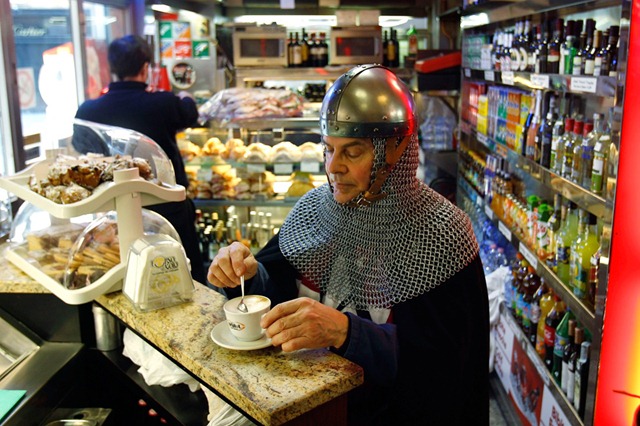
Or will we find ourselves in 2030 like this medieval knight trying to get his cup of coffee in the local deli ?


c03_22043139

No, in 2030 we want our children to be in a position to lead and not be the “behaving” followers in some old-European country that is by-passed by countries and regions that work at the speed of light, that have higher education standards, higher ethical standards, in other words who have found the “how-differentiator”.

My desire is to create

a movement

a tribe

a Medici Effect


where the dream can come true.

Who feels connected ? Who would like to join this tribe ?

Let me know via the comments of the blog, or contacting me directly. Please also let me know where the model flaws. What you would add to it ? Do you believe i am on to something or just living an illusion ? Let me know.

No more collateral damage

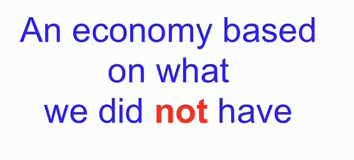
There was this week a really interesting article in Trends Magazine about “The Blue Economy”, about a guy called Gunter Pauli, and his ZERI foundation.

I started googling this stuff, and was amazed about what i found.

Apparently, Gunter Pauli is busy doing what he does for quite some time, as can be seen in the Fastcompany article dating back 1993 !

Surprise, surprise: Gunter is from Flanders, Belgium. He was co-founder of Ecover. In 1991, Pauli launched the concept of zero waste and zero emissions for industry through the clustering of activities at his detergent factory in Belgium.

image

Gunter Pauli is Member of the Club of Rome, a Fellow of the World Academy of Arts and Sciences, a Creative Fellow of the Club of Budapest and a long term advisor to the Japanese Government and the United Nations. He is professor at the Politecnico di Torino in charge of “systems design” at the Faculty of Architecture and the School of Design.

“The Blue Economy” is introduced as:

a new business model to inspire entrepreneurs to shape a new economy based on competitive innovations, creating JOBS and SOCIAL CAPITAL”

“The Blue Economy: Cultivating a New Business Model for a Time of Crisis” is based on the new book “The Blue Economy: 10 years, 100 Innovations. 100 Million Jobs”, published by Paradigm Publications (New Mexico, USA) with the support of UNEP and IUCN.

I could not yet find the book on Amazon, but the paper that was input to the Club of Rome can be downloaded here.

From the intro:

The form of capitalism that has dominated world societies is entirely disconnected from peoples’ real needs. Some two billion people struggle to get by on less than two dollars a day, lacking access to food, water, health, and energy, the most basic requirements for survival. Over 25% of the world’s youth are unemployed. Yet one billion of us are over nourished and swim in 400 million tons of electronic waste with higher metal concentrations than the ores extracted from the earth. Conservatively, the top 70% of the world’s wealth is concentrated in the top 10% of the population.

Fortunately, times are changing. This book is about that change. As the second decade of the 21st century sets the stage for a new economy, the core question we answer is, “What is the business
framework we really need?”

And the Zero Emissions Research & Initiatives (ZERI) is introduced as:

a global network of creative minds seeking solutions to world challenges. The common vision shared by the members of the ZERI family is to view waste as resource and seek solutions using nature’s design principles as inspiration.

I continued clicking through the different ZERI sites, and was thrilled by the ZERI Education Initiative:

The opening song is


“I want to live in a better world”


This is about an innovative learning project for children, developed by Gunter Pauli and a team from ZERI Network of scientists, scholars, pedagogues and artists.

It’s about learning children to ask the right questions.

It’s about teaching children

the 5 intelligences

  • Academic Knowledge
  • Emotional Intelligence
  • Artistic Expression
  • Eco-Literacy
  • Capacity to implement change

image

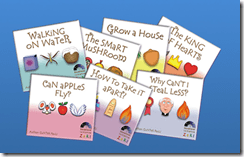
Apparently Pauli and friends published a whole series of books “Gunter’s Fables”. And yes, you can buy them at Amazon 😉

image

Also check-out this fantastic talk "How Can We Use Finite Resources To Propel Ourselves In The Future?" of TEDxTokyo 2009, held on May 22 at National Museum of Emerging Science and Innovation.

It all makes me think very much about the book “Cradle to Cradle” by William McDonough (Author), Michael Braungart (Author), a book that was a real eye-opener for me at the time, and a book that i already mentioned several times in this blog.

“Let the future emerge” is the tagline for this blog. And things seem to emerge with an astounding sense for synchronicity. Just last week, i discovered The Fifth Conference.

image

The Fifth Conference is a forum for vision. Part publisher and part conference, The Fifth Conference tackles the ‘big issues’, the factors that drive our future. Think ten, twenty, even fifty years ahead and try to imagine how we will live and work. What will this world look like? How will we have solved the economic, social and environmental challenges that we confront today? To answer those questions we talk to entrepreneurs, policy makers and experts. We analyse the facts, the forecasts and the arguments. And most importantly, we collect vision.

It is so close to my idea of the Think Tank for Long Term Future !

So, last week, i had a chat with Frank Boermeester, co-founder of The Fifth Conference.

Lots of synergies!


Frank invited me to draft an essay on Technology, with a focus on Technology Readiness in our region, for the next publication. Will certainly do so, and cross-post on this blog.

However, as we were chatting, we suddenly became aware of

the “understream”

that is driving all the changes and evolutions in Growth, Mobility, Green, Technology, Health.

Its about the theme of Cradle-to-Cradle that “reducing waste” is not good enough anymore, we need to “add value”. Its about the notion that Google’s “Don’t do evil” is not good enough anymore, and we need to “Do Good”.

It’s about what keeps Gunter Pauli going, and what he refers to in his video as


“no more

collateral damage”


And not anymore

image

and yes, create a sustainable society.

image

See also some related blog posts on this site on:

Reblog this post [with Zemanta]

Thought experiment: who am i really ?

i34_21657263

About a year ago, I did my “coming-out” of the Leading by Being program. That program led to the start of this blog in April 2009.

Leading by Being is in essence a deep search for yourself and how you function in groups and in the world in general. It’s trying to answer the question “Who am I ?”.

Read that again:

“Who am i REALLY ?”


A couple of weeks, i “lost” my right foot – luckily only temporarily. Reflecting a bit during my extra free time sitting in my sofa with my right leg in the air, i started doing the following thought experiment:


What if i would loose not only my foot but everything ?

My job, my lovely wife and daughter, my family, my friends,…

Would that change who i am ?


And more related to this blog:


Would i write about the same things

in my blog as today ?

And if about the same things,

would i write about them

with the same intensity ?


The answer for me is yes.

  • Yes, i would write about different things
  • Yes, i would write about the same things but with a different intensity

What different things ?

  • Probably much much more about the realness of innovation.
  • Probably more on the themes like “Sex, Money, Happiness, and Death”
  • Probably more about ethics and ethical reboot
  • Probably more about meaning
  • Probably more about Love/Hate relationships
  • Probably more about digital identity. Not so much as a technology, but more as a philosophical aspiration
  • Probably more about soft things like poetry, romance, melancholy, more introspecting
  • Probably about my daughter and my wife. Without compromising them.
  • Probably about some nice sentences i read in novels.
  • Probably some writing of my own. As in my very first post:

I want to be playful like the birds,

showing little tricks,

challenge and pursue

but not limited

by any form of danger

In essence, it’s about a free mind.

What different intensity ?

  • I would be more radical on the innovation themes. Yes, even more radical 😉 I feel i still withhold, because of – real or imaginary ? – fear for reactions of my employer.

album_large_3571670

  • I would set-up the Think Tank Long Term Future on my own. With less dependency on others. Going my own way. I would look at setting up a open innovation web-site with online fund raising.

All the above is basically struggling with the fear of

“how naked do i dare to go ?”

There seems to be an interesting book on this topic: “Getting Naked: A Business Fable About Shedding The Three Fears That Sabotage Client Loyalty” by by Patrick M. Lencioni (Author)


“Naked” is a term that refers to the idea of being vulnerable with clients, being completely open and honest with no sense of pretense or cover. The book looks at 3 basic and well-known fears:

1) Fear of Losing the Business – No service provider wants to lose clients or revenue. Interestingly, it is this very notion that prevents many service providers from having the difficult conversations that actually build greater loyalty and trust. Clients want to know that their service providers are more interested in helping succeed in business than protecting their revenue source.

2) Fear of Being EmbarrassedThis fear is rooted in pride. No one likes to publicly make mistakes, endure scrutiny or be embarrassed. Naked service providers are willing to ask questions and make suggestions even if those questions and suggestions turn out to be laughably wrong. Clients trust naked service providers because they know that they will not hold back their ideas, hide their mistakes, or edit themselves to save face.

3) Fear of Being Inferior – Similar to the previous fear, this one is rooted in ego. Fear of being inferior is not about being intellectually wrong (as in Fear of being Embarrassed) it is about preserving social standing with the client. Naked service providers are able to overcome the need to feel important in the eyes of their client and basically do whatever a client needs to help the client improve – even if that calls for the service provider to be overlooked or temporarily looked down upon.

The last one is in my opinion also related to your relation with your employer and how prepared you are to stick out your neck, and to evangelize your ideas, because you have a genuine desire to make your employer succeed and improve.

The worst than could happen is when your employer gives you a negative appraisal for sticking out your neck, or pushing change too hard. Especially if you are part of the innovation team. Though everybody in the company has creative juices and is an innovator.

And what do you do when this happens ? What do you do when you discover that the innovation your company proclaims is not real ? What do you do when you find out or get confirmed it’s all a big illusion ?

How much do you once again want to compromise your own authenticity and just go on ? Or are you prepared to go through the resistance of big changes and boldly daring to pursue your own dreams as suggested in Seth Godin’s Linchpin ?

Or how long are you prepared to you hide in your own shadows and have your will broken ?

In Leading by Being, one of the exercises was to think about one of your “shadow”-sides, some negative something about yourself, something that you would not like others to identify you with, such as being arrogant or manipulative or … and then the do a play-role yourself “playing” / “acting” that shadow role for 3 hours. It’s pretty confrontational !


What if i would start blogging under an alias

to express those shadow thoughts ?


It’s an interesting thought experiment that helps you assess how Trapped or Free your are in your worldviews.


Yes, i am still trapped

But much less then a year ago


What would you like me to explore further ? What different things would you like most ? Where would you like to see a different intensity ?

Let me know. Give me clarifying, supportive and challenging feedback.

Great to Good: new value kit

Umair Hague did it again. He just published the Great to Good Manifesto.

He starts with “Pepsi‘s great at producing something that’s bad for you (sugar water)”. And goes on by stating that “Do no evil”  “Don’t do evil” is not the same as “Doing Good”.

Umair’s blog is in essence about an Ethical Re-Boot. We all feel that we cannot go on with the greed-economy. We cannot go on with killing our earth. We cannot go on with hurting other people.

It is about a new value kit for the 21st century. About old game vs. new game.

In the table below, you’ll find some other examples.

image

I made this table about 2 years ago during my Leading by Being adventure. In fact it even started before that. The trigger was the book “Cradle to Cradle: Remaking the way we make things” by by William McDonough (Author), Michael Braungart (Author)

The book is from 2003 (almost 10 years old !), and i bought it after seeing a BBC documentary on the work of William McDonough. The key insight that opened my eyes was when McDonough explained that

reducing waste

was not good enough

There is a better alternative, and that is producing products that do not generate (less) waste, but that add value, that add goodness.

This is the essence of Great to Good. The difference between “Do no evil” “Don’t do evil” and “Doing good”.

In that sense, also the famous TED one-liner “Ideas Worth Spreading” is not good-enough anymore. Better is “Ideas Worth Executing”.

This must become a huge PR issue for Google, who have surfed the wave of “do no evil” “Don’t do evil” for 10 years now. They are also more and more seen as the “Beast of Mountain View”. If you read the wave of protest following the release of Buzz and the resulting privacy issues, you’ll get a good feel why

“don’t do evil”

does not work anymore

Umair Hague proposes a number of new corporate principles:

  • First how, then who: “Do our people have the capacity to judge right and wrong, no matter how great they are?”
  • The Yoda/Hedgehog concept: “companies should only do what they can be great at, what makes tons of money, and what they’re passionate about.”
  • Ethical accelerators: “”transparency, openness, rules, and accountability. Most companies have not a single one of these”
  • A culture of meaning: “Production and consumption are meaningful when they actually yield durable, tangible benefits to people, communities, and society”
  • Confront reality:” Banks, for instance, confronted the “brutal fact” that selling toxic financial instruments was great for their bottom line. But they never confronted the simple reality that a classic asset bubble in housing was failing to do good.”

Umair asks the right questions:

  • How many of the principles are at work in your company, industry, or sector?
  • What would your company, country, or life look like if each of the principles was applied to it?
  • How would applying each principle disrupt “business as usual”?

Defining, building, evangelizing, and nurturing this

new value kit

for the next 10-20 years

is all what our Think Tank on Long Term Future is about.

Reblog this post [with Zemanta]

Sex, Money, Happiness, and Death

The title will give me probably the most hits this blog ever had. Before you read any further, this is a book about authenticity.

I found it via Fred Zimny’s blog.

In this book Kets de Vries says:

I realise the importance of authenticity in my own life and the lives of others.

I have seen how easy it is for someone

to follow a route to

self-deception and illusion.


Fooling ourselves, as many of us learn the hard way, isn’t sustainable in the long run.

He continues:

To me, being authentic implies being honest, truthful with myself and others, living … with my own values and principles, and experiencing a sense of meaning in what I’m doing.

Authenticity implies

a willingness to accept

what I am

and not attempt

to pass for something

or someone else

Authenticity means not only trusting my strengths but also my weaknesses and being patient with my imperfections. It has to do with having the courage to say how things are, to say no, to face the truth, and to do the right thing because it is right.

Sounds like a cool book. Not available on Kindle yet.

Looks to me like a Leading by Being program for CxO’s.