The Medici Effect


The Medicis were a banking family in Florence who funded creators from a wide range of disciplines. Thanks to this family and a few others like it, sculptors, scientists, poets, philosophers, financiers, painters, and architects converged upon the city of Florence. There they found each other, learned from one another, and broke down barriers between disciplines and cultures.

Together they forged a new world based on new ideas—what became known as the Renaissance. As a result, the city became the epicenter of a creative explosion, one of the most innovative eras in history. The effects of the Medici family can be felt even to this day.

These introductory words come from a book “The Medici Effect: What Elephants and Epidemics Can Teach Us About Innovation: What You Can Learn from Elephants and Epidemics” by Frans Johansson (Author).

The book is not that new (it dates from 2006), but it is very relevant to today’s innovation challenges. You can find the book on Amazon.com via the links above, but there is also a free PDF summary here and a Google Book edition here. And obviously, there is the website www.themedicieffect.com .

There was also a 2004 book The Medici Effect: Breakthrough Insights at the Intersection of Ideas, Concepts, and Cultures

The core of these books is about two types of ideas:

  • Directional ideas
  • Intersectional ideas

Directional innovation improves a product in fairly predictable steps, along a well-defined dimension. Examples of directional innovation are all around us because they represent the majority of all innovations. This is what we call incremental improvements (Innovation is in my opinion a bit on the optimistic, even window-dressing side).

The goal is to evolve an established idea by using refinements and adjustments. The rewards for doing so are reasonably predictable and attained relatively quickly. People and organizations do this all the time through increasing level of expertise and specialization. It is absolutely necessary if one does not wish to squander the value of an idea. Even an intersectional idea will, once it has become established, develop and evolve along a specific direction.

Intersectional innovations, on the other hand, change the world in leaps along new directions. This is what Guy Kawasaki calls “jumping the curve”. These ideas are game changers. I am preparing a whitepaper on how NIBC (Nano, Info, Bio, Cogno)) technologies are major game changers.

Although intersectional innovations are radical, they can work in both large and small ways. They can involve the design of a large department store or the topic of a novella; they can include a special-effects technique or the product development for a multinational corporation.

In summary, intersectional innovations share the following characteristics:

  • They are surprising and fascinating.
  • They take leaps in new directions.
  • They open up entirely new fields.
  • They provide a space for a person, team, or company to call its own.
  • They generate followers, which means the creators can become leaders.
  • They provide a source of directional innovation for years or decades to come.
  • They can affect the world in unprecedented ways.

The Medici Effect is about bringing together people of different fields of expertise and

let the magic of

cross-fertilization of ideas

happen


What sort of people do we need to invite ? In essence, we are looking for people who succeeded at

breaking down

their associative barriers


because they did one or more of the following things:

  • Exposed themselves to a range of cultures
  • Learned differently
  • Reversed their assumptions
  • Took on multiple perspectives

The explosion of concept combinations at the Intersection can offer a myriad of uniquely combined, extraordinary ideas.


I have a dream


That we can turn Innotribe.com into a Medici Effect: the place where different disciplines find each other, and through that intersection come up with intersectional innovations.


I have a dream


That we can turn the SWIFT Campus into a hosting environment, where we facilitate those intersections to happen.


I have a dream


That i can blend my personal interest of creating a Think Tank on Long Term Future with my professional endeavors at SWIFT.


I have a dream


That together we can write The Readiness Manifesto. The strategies and focus areas to prepare the Net.Generation – the 20-25 years old of today – to stand up as our leaders in 20 years from now in 2030.

But NIBC technologies are not the holy grail. There was a fantastic quote in one of Fred Destin’s latest blogs on Venture Capital 2.1:

The fundamentals of the business have changed.  Technology is a quasi-commodity, the spread of ideas is instantaneous, competition is global, in other words the market is more efficient.

“Technology is a quasi-commodity”


Wow ! So what will be your differentiator ?

I believe it will be in the HOW of delivering products and services. And i can’t help re-quoting Umair Hague in his Good to Great Manifesto and my related post some days ago. Umair Hague proposes a number of new corporate principles:

  • First how, then who: “Do our people have the capacity to judge right and wrong, no matter how great they are?”
  • The Yoda/Hedgehog concept: “companies should only do what they can be great at, what makes tons of money, and what they’re passionate about.”
  • Ethical accelerators: “”transparency, openness, rules, and accountability. Most companies have not a single one of these”
  • A culture of meaning: “Production and consumption are meaningful when they actually yield durable, tangible benefits to people, communities, and society”
  • Confront reality:” Banks, for instance, confronted the “brutal fact” that selling toxic financial instruments was great for their bottom line. But they never confronted the simple reality that a classic asset bubble in housing was failing to do good.”

So, the question is not only “What will be the technical readiness kit that we will need to provide ?”.

The question really is:

What will be the value kit

that will have to underpin

this highly technological environment ?


As i mentioned in a previous post, I have accepted an opinion article/essay on technical readiness for The Fifth Conference. See also my posting “No more collateral damage”.

Below an extract of my initial input for this essay:

We must carefully analyze and think-through on how all this will influence the way we will and want to live and work in the future. What sort of life-quality we aim for? What the socio-economic impact of all this may be? How we want education to be organized? Where we still can and want to influence? How are we going to deal with the Technical and Value Readiness of our region to be competitive in this new era ? To lead the change, and not only be mediocre followers?

I believe it’s time for action. I believe The Fifth Conference and its natural network of inspiring leaders bears deep in itself the embryo for a sort of “think-tank/foundation” on long term future. A movement and an energy that prepares our Net-Generation for the next 20 years. To focus on our technical and value readiness. A place where “smart people” can meet. Where experts from different technological domains share their insights for 2030. Cross-fertilizing each other’s disciplines. With “savants” from different contexts & worldviews that can act as our “eyes” and offer a perspective on how we will live, work in 2030.

Or will we find ourselves in 2030 like this medieval knight trying to get his cup of coffee in the local deli ?

 

c03_22043139

No, in 2030 we want our children to be in a position to lead and not be the “behaving” followers in some old-European country that is by-passed by countries and regions that work at the speed of light, that have higher education standards, higher ethical standards, in other words who have found the “how-differentiator”.

My desire is to create

a movement

a tribe

a Medici Effect


where the dream can come true.

Who feels connected ? Who would like to join this tribe ?

Let me know via the comments of the blog, or contacting me directly. Please also let me know where the model flaws. What you would add to it ? Do you believe i am on to something or just living an illusion ? Let me know.

Maslow for Stakeholder Relations

If you have any role in Stakeholder Relations (in some companies this is called “PR” and/or “Investor Relations” and/or “HR”), i can recommend reading Chip Conley’s book “Peak: How Great Companies Get Their Mojo from Maslow”

Conley, the CEO and founder of Joie de Vivre Hospitality, turned to psychologist Abraham Maslow’s iconic Hierarchy of Needs. This book explores how Conley’s company "the second largest boutique hotelier in the world" overcame the storm that hit the travel industry by applying Maslow’s theory to what Conley identifies as the key Relationship Truths in business with Employees, Customers and Investors.

To be honest, the essence of the book is in the first chapter. The other chapters are endless variations and illustrations of the same with rather simplistic, naive, and even romantic examples.

For those not-familiar with the work of Abraham Maslow:

Maslow studied mentally healthy individuals instead of people with serious psychological issues. This enabled him to discover that people experience “peak experiences,”high points in life, when the individual is harmony with himself and his surroundings. A visual aid Maslow created to explain his theory, which he called the Hierarchy of Needs, is a pyramid depicting the levels of human needs, psychological and physical. When a human being ascends the steps of the pyramid he reaches self actualization.

Maslow for dummies is summarized in the table below (all tables below come from Chip Conley’s “Peak” book).

image

In his book “Peak”, Chip Conley applies this hierarchy of needs to the three main groups of Stakeholders for any company:

  • Employees
  • Customers
  • Investors

Conley may be over-simplifying, as he reduces Maslow’s five layers to three.

But in the end, i found this an interesting way to assess and improves a company’s stakeholder relations.

1. Employee pyramid

image

Chris Conley basically says that most companies offer a salary and perks in compensation for the employee’s time. Fewer companies succeed in giving true recognition to their staff, and only a very few know that their company should shape the conditions for the employee to find meaning in his work.

2. Customer pyramid

image

The same principles apply to the customer pyramid.  At the top, the customer is truly delighted. Not because you got a “”license to operate” (btw the minimum level pursued in the Lean “Kano” model, but because you address unrecognized needs. You will NOT identify those unrecognized needs through customer surveys, consultations or market research. And the risk exists -  if your organization has been “leaned” to offer in a scalable way the “license to kill” satisfaction – that you won’t have any resources left to try to “create evangelism” by your customers.

3. Investor Pyramid

image

When we look at the relation with the investors, most companies are transaction oriented in their Shareholder’s Relations: when they assess the relation, they ask whether the Board member gets regular and sufficient information or whether the dining and site-seeing arrangements are to everybody’s satisfaction. However, the ultimate nirvana in Investor relations is that your investors are PROUD of being your investor. This is much more than “being treated well”. It’s much more that just being a happy shareholder, or somebody who would recommend doing business with you.

Reaching the top-levels for each of the three categories of stakeholders is already an unreachable dream for many organizations.

However, shareholder relations should aim for an even higher goal.

Anybody who has been reading Maslow, should be familiar with Richard Barrett. Chip Conley missed that opportunity. One of the best books to get familiar with the thinking of Barrett, i can recommend “Building a Values-Driven Organization: A Whole System Approach to Cultural Transformation”.

In essence Barrett is saying that Maslow levels focus on our personal self-interest – meeting the needs of the ego.

Beyond Maslow’s level-5 (transformation/self-actualization), Barrettt sees 3 higher levels:

  • Level-6: Internal Cohesion: this is about finding personal meaning in existence
  • Level-7: Making a Difference: about making a positive difference in the world
  • Level-8: Service: leading a life of self-less service

Barrett’s levels beyond transformation are about being ego-less, at the service of others.

The fears of the ego lead us to believe that we do not have enough of what we need. Consequently, we are never fully happy because we do not have enough money, we do not have enough love, and we do not have enough respect.

In this situation, we lead a dependency-based existence.

What if we would apply these upper-levels from Barrett to our Stakeholders Relations ambitions ?

  • Do you have the courage to assess your stakeholder relations based on the Maslow of the Barrett models ?
  • What would you change in your shareholder relations if you would just aim for one higher level then where you are today ?

It’s becoming a trend/pattern: today’s business is not anymore about transactional and technical readiness.

The more important under stream is to develop and execute a solid stakeholders architecture. It’s about an openness and transparency. Often Social Media tools are used to support such strategy and ambition. But they are just tools. They are worthless and only become “tricks for the quick fix” in the absence of a genuine stakeholders architecture.

Execution on this is what you could call innovation in stakeholder relations

In the end, our new-game economy is about doing good, giving meaning, and realizing your relationships.

In the end, its all a matter of

ambition


The level of ambition will define how innovative your company wants to be.

No ambitions leads to no innovation or incremental improvements at best.

Ambition will force you to look into other corners, will let you discover how you truly can redefine your marketplace and change the game.

Ambition will lead to radical innovation: in your products, services, and in your stakeholder relations.

So, what’s your ambition ?

Reblog this post [with Zemanta]

No more collateral damage

There was this week a really interesting article in Trends Magazine about “The Blue Economy”, about a guy called Gunter Pauli, and his ZERI foundation.

I started googling this stuff, and was amazed about what i found.

Apparently, Gunter Pauli is busy doing what he does for quite some time, as can be seen in the Fastcompany article dating back 1993 !

Surprise, surprise: Gunter is from Flanders, Belgium. He was co-founder of Ecover. In 1991, Pauli launched the concept of zero waste and zero emissions for industry through the clustering of activities at his detergent factory in Belgium.

image

Gunter Pauli is Member of the Club of Rome, a Fellow of the World Academy of Arts and Sciences, a Creative Fellow of the Club of Budapest and a long term advisor to the Japanese Government and the United Nations. He is professor at the Politecnico di Torino in charge of “systems design” at the Faculty of Architecture and the School of Design.

“The Blue Economy” is introduced as:

a new business model to inspire entrepreneurs to shape a new economy based on competitive innovations, creating JOBS and SOCIAL CAPITAL”

“The Blue Economy: Cultivating a New Business Model for a Time of Crisis” is based on the new book “The Blue Economy: 10 years, 100 Innovations. 100 Million Jobs”, published by Paradigm Publications (New Mexico, USA) with the support of UNEP and IUCN.

I could not yet find the book on Amazon, but the paper that was input to the Club of Rome can be downloaded here.

From the intro:

The form of capitalism that has dominated world societies is entirely disconnected from peoples’ real needs. Some two billion people struggle to get by on less than two dollars a day, lacking access to food, water, health, and energy, the most basic requirements for survival. Over 25% of the world’s youth are unemployed. Yet one billion of us are over nourished and swim in 400 million tons of electronic waste with higher metal concentrations than the ores extracted from the earth. Conservatively, the top 70% of the world’s wealth is concentrated in the top 10% of the population.

Fortunately, times are changing. This book is about that change. As the second decade of the 21st century sets the stage for a new economy, the core question we answer is, “What is the business
framework we really need?”

And the Zero Emissions Research & Initiatives (ZERI) is introduced as:

a global network of creative minds seeking solutions to world challenges. The common vision shared by the members of the ZERI family is to view waste as resource and seek solutions using nature’s design principles as inspiration.

I continued clicking through the different ZERI sites, and was thrilled by the ZERI Education Initiative:

The opening song is


“I want to live in a better world”


This is about an innovative learning project for children, developed by Gunter Pauli and a team from ZERI Network of scientists, scholars, pedagogues and artists.

It’s about learning children to ask the right questions.

It’s about teaching children

the 5 intelligences

  • Academic Knowledge
  • Emotional Intelligence
  • Artistic Expression
  • Eco-Literacy
  • Capacity to implement change

image

Apparently Pauli and friends published a whole series of books “Gunter’s Fables”. And yes, you can buy them at Amazon 😉

image

Also check-out this fantastic talk "How Can We Use Finite Resources To Propel Ourselves In The Future?" of TEDxTokyo 2009, held on May 22 at National Museum of Emerging Science and Innovation.

It all makes me think very much about the book “Cradle to Cradle” by William McDonough (Author), Michael Braungart (Author), a book that was a real eye-opener for me at the time, and a book that i already mentioned several times in this blog.

“Let the future emerge” is the tagline for this blog. And things seem to emerge with an astounding sense for synchronicity. Just last week, i discovered The Fifth Conference.

image

The Fifth Conference is a forum for vision. Part publisher and part conference, The Fifth Conference tackles the ‘big issues’, the factors that drive our future. Think ten, twenty, even fifty years ahead and try to imagine how we will live and work. What will this world look like? How will we have solved the economic, social and environmental challenges that we confront today? To answer those questions we talk to entrepreneurs, policy makers and experts. We analyse the facts, the forecasts and the arguments. And most importantly, we collect vision.

It is so close to my idea of the Think Tank for Long Term Future !

So, last week, i had a chat with Frank Boermeester, co-founder of The Fifth Conference.

Lots of synergies!


Frank invited me to draft an essay on Technology, with a focus on Technology Readiness in our region, for the next publication. Will certainly do so, and cross-post on this blog.

However, as we were chatting, we suddenly became aware of

the “understream”

that is driving all the changes and evolutions in Growth, Mobility, Green, Technology, Health.

Its about the theme of Cradle-to-Cradle that “reducing waste” is not good enough anymore, we need to “add value”. Its about the notion that Google’s “Don’t do evil” is not good enough anymore, and we need to “Do Good”.

It’s about what keeps Gunter Pauli going, and what he refers to in his video as


“no more

collateral damage”


And not anymore

image

and yes, create a sustainable society.

image

See also some related blog posts on this site on:

Reblog this post [with Zemanta]

Innovation Traumas

Interesting blog post from James Gardner in Bankersvision a couple of days ago.

My Photo

Formerly Head of Innovation and CIO of Investment at Lloyds Banking Group in London, James Gardner is now Chief Technology Officer at the Department for Work and Pensions in the UK Government.

James has also written “Innovation and the Future Proof Bank”, a book that is on top of the pile of to-read books next to my “broken-foot-sofa”.

Anyway, the title of his last post was “When failure is not an option” (FNAO), a theme that i addressed many times before on this blog before:

The blog entry is triggered by the following question:

What are your thoughts on organizations were failure maybe is not an option. For example nuclear physics, NASA or a government organization that pays benefits. In these situations failure could be disastrous. What strategy would you recommend in these types of organizations?

James adds an interesting perspective: failure early in your project is better then close to delivery.

…the further you get into delivery, the more money you’ve spent. If you have to stop then, its very bad indeed. As innovators, you don’t want that situation occurring if you can help it. It leads to what academics call “innovation trauma” – the scenario where everyone is so burned by a failed innovation that no-one will ever sign up for anything new again.

And – what is scary if you are in your early days of an innovation program in an organization that has FNAO as one of its core assets:

Even one bad failure, though, can close down an innovation program. And clearly, in the cases that Malcolm mentions, that kind of failure has very dire consequences indeed.

One last point on this: “failure is not an option” is a mentality that leads to – you guessed it – failure. Trying new things is a process that requires lots of stops and starts. There will, inevitably, be more stops than starts, actually.  In an organization that doesn’t celebrate good failure, what you get is a scenario where nothing new starts at all.

That, clearly, is a very bad situation to be in, and is one of the main reasons people complain they “don’t have enough innovation”

It’s also via this post i discovered James Gardner’s “The Little Innovation Book”.

image

This little on-line experiment has absolutely great content for innovators. Every page adds a perspective to innovation that i was not familiar with. A recommendation. You can also comment on-line as James is writing this on-line innovation book.

Would you be interested to have James Gardner at Innotribe @ Sibos 2010 in Amsterdam (25-29 October 2010) ?

Let me know. We can invite him 😉 But would he accept ?

Great to Good: new value kit

Umair Hague did it again. He just published the Great to Good Manifesto.

He starts with “Pepsi‘s great at producing something that’s bad for you (sugar water)”. And goes on by stating that “Do no evil”  “Don’t do evil” is not the same as “Doing Good”.

Umair’s blog is in essence about an Ethical Re-Boot. We all feel that we cannot go on with the greed-economy. We cannot go on with killing our earth. We cannot go on with hurting other people.

It is about a new value kit for the 21st century. About old game vs. new game.

In the table below, you’ll find some other examples.

image

I made this table about 2 years ago during my Leading by Being adventure. In fact it even started before that. The trigger was the book “Cradle to Cradle: Remaking the way we make things” by by William McDonough (Author), Michael Braungart (Author)

The book is from 2003 (almost 10 years old !), and i bought it after seeing a BBC documentary on the work of William McDonough. The key insight that opened my eyes was when McDonough explained that

reducing waste

was not good enough

There is a better alternative, and that is producing products that do not generate (less) waste, but that add value, that add goodness.

This is the essence of Great to Good. The difference between “Do no evil” “Don’t do evil” and “Doing good”.

In that sense, also the famous TED one-liner “Ideas Worth Spreading” is not good-enough anymore. Better is “Ideas Worth Executing”.

This must become a huge PR issue for Google, who have surfed the wave of “do no evil” “Don’t do evil” for 10 years now. They are also more and more seen as the “Beast of Mountain View”. If you read the wave of protest following the release of Buzz and the resulting privacy issues, you’ll get a good feel why

“don’t do evil”

does not work anymore

Umair Hague proposes a number of new corporate principles:

  • First how, then who: “Do our people have the capacity to judge right and wrong, no matter how great they are?”
  • The Yoda/Hedgehog concept: “companies should only do what they can be great at, what makes tons of money, and what they’re passionate about.”
  • Ethical accelerators: “”transparency, openness, rules, and accountability. Most companies have not a single one of these”
  • A culture of meaning: “Production and consumption are meaningful when they actually yield durable, tangible benefits to people, communities, and society”
  • Confront reality:” Banks, for instance, confronted the “brutal fact” that selling toxic financial instruments was great for their bottom line. But they never confronted the simple reality that a classic asset bubble in housing was failing to do good.”

Umair asks the right questions:

  • How many of the principles are at work in your company, industry, or sector?
  • What would your company, country, or life look like if each of the principles was applied to it?
  • How would applying each principle disrupt “business as usual”?

Defining, building, evangelizing, and nurturing this

new value kit

for the next 10-20 years

is all what our Think Tank on Long Term Future is about.

Reblog this post [with Zemanta]

Innovation to the Core

I just finished “Innovation to the Core” by by Peter Skarzynski (Author), Rowan Gibson (Author)

This is a modern, up-to-date, and indispensible book on Innovation.

More precisely on how to make Innovation a core capability of everything you do in your company.


Anybody who is deeply or remotely

involved with innovation

must read this book.


It’s a book that explains why radical innovation is the only option forward.

It’s a book that clearly explains the tension between efficiency and innovation, and what to do about it.

Both efficiency and innovation have value. More, they should be equal partners ! If you are serious about innovation, then you should spend at least as much on your innovation program as on your efficiency program. Check out how much resources you spent this and last year on efficiency. Take that amount and number of FTE’s and there is your budget for innovation for the next 2 years.

So it is not about being Lean OR Mean,


it’s about being Lean ànd Mean !


My biggest lessons learned from this book:

  • Dare to challenge everything, and especially your company “orthodoxies”, the taboos that have been taken for granted for the last 10-20 years.
  • Let the focus area of your innovation emerge bottom-up. Don’t define your innovation priorities in a leadership group. If you want everybody to be an innovator, you need input from everybody at all levels in your company when defining your innovation architecture. If not you end up with an impossible sell exercise towards the basis afterwards.
  • Make your executives and regional heads accountable for innovation. Some companies make 30% of the bonus dependent on innovation objectives.
  • There is an enormous responsibility for HR in getting the creative and innovation skills trained across the company at all levels.

But THE biggest lesson learned is probably about the difference between managing the supply and the demand for innovation ideas:

  • I believe most of us do a decent job on the supply side: we have plenty of initiatives and tools to gather, generate and follow-up on new ideas. That’s the supply side
  • But there remains a lot to be done on the demand side. I love the suggestions in the book that each division, region, product manager, etc is held accountable for at least picking-up 3-4 ideas coming from the supply side. Stronger: each of these groups has to reserve 10% or more of their existing budgets to spend on innovation projects. And this without changing the existing performance metrics.

Getting innovation into the objectives of managers is key. The book refers to this as the


“Management Process Make-Over”


Regular readers of this blog know that i have a strong opinions about:


Radical innovation vs. incremental innovation

The role HR has to play

Getting innovation deep into the DNA of your company, at ALL levels, all regions, all divisions.


This book only confirms and reinforces the thinking that i have previously shared in following posts on this blog:

Cubicle 3B23: Chief Happiness Officer

There is a great comments from Joe on one of the previous Cubicle 3B23 stories. It’s too good to be hidden in the comments section.

You are a CHO; now what?

Yesterday I was asked what was my title, and got a puzzled pair of raised eyebrows when I responded that my unofficial self-adopted title and vocation in life is Chief Happiness officer… It got me thinking – what exactly is a CHO? (And no, I’m not the corporate clown that everyone likes to pick on or that is famous for telling the best jokes – even though occasionally I find myself at the receiving end of a joke… :-) )


Happiness officer is a very serious and heavy responsibility – a temperature meter, detecting the health of an organization, noticing the first signs of trouble and trying to heal them. It is like the shaman of a tribe, the healer or the local witch.

A healthy organization is one that not just functions and produces but is energized, gives a feeling of belonging and meaning to all the people that make it. A happy organization is made of happy balanced people – happy not in the sense of joking around all the time, but in the sense of having a deep feeling of satisfaction.

It is like a healthy bee swarm. Even though the swarm is nearly a creature in its own right, with mind and memory of its own, it is made of little individual parts who influence greatly its health. The swarm is very resilient, but only if its bees are healthy. When they are not, the swarm falls apart. When all the workers leave the hive in despair, it doesn’t matter if the queen is still there and healthy. A queen alone does not make a swarm – it stars it, but does is not equal to it.

Bee doctors watch the behavior of the individual worker bees to know the health of the hive. It is the same with the Happiness officer… He watches for small tell-tale signs: more and more people who have the nagging thought that even though rationally speaking they should feel perfectly satisfied with their position in life, they are somehow not; more and more people with the uncomfortable feeling that there is something missing, a feeling which gradually grows into discomfort and distress.

And distress is a powerful force – a force that pushes you to change.

This is what the happiness officer watches for and helps – by encouragement, nudge, energy boost – helping people one by one find what makes them tick and nurturing their belief that it is worth going for.It is a fine balance between wild optimism and integrity

The ultimate success for a CHO? A company that does not need him; a company where everyone is their own CHO…

Joe – the CHO in Cubicle 3B21

Sex, Money, Happiness, and Death

The title will give me probably the most hits this blog ever had. Before you read any further, this is a book about authenticity.

I found it via Fred Zimny’s blog.

In this book Kets de Vries says:

I realise the importance of authenticity in my own life and the lives of others.

I have seen how easy it is for someone

to follow a route to

self-deception and illusion.


Fooling ourselves, as many of us learn the hard way, isn’t sustainable in the long run.

He continues:

To me, being authentic implies being honest, truthful with myself and others, living … with my own values and principles, and experiencing a sense of meaning in what I’m doing.

Authenticity implies

a willingness to accept

what I am

and not attempt

to pass for something

or someone else

Authenticity means not only trusting my strengths but also my weaknesses and being patient with my imperfections. It has to do with having the courage to say how things are, to say no, to face the truth, and to do the right thing because it is right.

Sounds like a cool book. Not available on Kindle yet.

Looks to me like a Leading by Being program for CxO’s.

Google’s 90 days planning

When i was attending Le Web in Paris in December 2009, i attended one of the Google sessions.

To the question “what is your roadmap”, the Google speaker answered:


“As you probably know

we do not use

any roadmaps anymore”


Just last week, i found this interesting blog from Don Dodge on how Google sets goals and measures success. Yep, that’s the same guy that wrote that article on Failure is not an Option, and that i reproduced and commented on my blog here.

Don knows what he talks about. Like me, he was at Microsoft, and if there is one thing that you learn at Microsoft is to work with numbers and living through the “rhythm of the business”. When i was there, you had in essence YEARLY planning sessions, complemented with mid-year reviews. It’s way more complex than that with lots of consultations back to the field, but for this moment remember one-year plan and mid-year reviews.

Some countries (Russia, China, etc) go through much longer planning cycles. Who does not remember the Russian 5-years plans and strategies ?

Some corporations still apply 5 year strategies, especially companies of a co-operative nature. 5-year plans with yearly operating plans.

Here comes Google: 90-days plans ! It’s not only about the timing, it’s also about the aggressively setting the objectives.

OKRs are Objectives and Key Results. I submitted my Q1 OKRs with what I thought were aggressive yet achievable goals. Not good enough. My manager explained that we needed to set stretch goals that seemed impossible to fully achieve. Hmmm…I said “This is just a 90 day window and we can predict with reasonable accuracy what is achievable. Why set unrealistic goals?” Because you can’t achieve amazing results by setting modest targets. We want amazing results.

We want to tackle the impossible.


Don is then adding some meat to the Failure is not an Option discussion.

“Taking great risks, pushing innovation, and striving to achieve the impossible will never happen at companies like that have a culture of FNAO”

Don has also some words on rewarding success at Google:

Financial rewards are significant, but they are not the primary motivator. Working with the best people in the world and achieving greatness is the ultimate reward.

At the next strategy meeting, ask yourself:

  • “do we have the very very best people on board to achieving greatness and innovation ?”
  • “do we have the very best people on our leadership and executive committees to celebrate experiment and innovation?”

A lot of companies have every day discussions and big statements that innovation is important and about how innovative we should become. A lot of it is theory.

The only reality check is when you actually “ship” something innovative.

Ask yourself: “What is the last time we shipped something innovative that added substantial NEW value to our customers?”

I have tried to input some “sharper” vocabulary like “radical” innovation vs. “incremental” innovation into numerous consultation rounds. Same about innovating in “the Core” and “Beyond the Core”.

It is surprising to see how through these consultation/review process all the sharpness gets deleted, to end up with something very grey. The “best” argument i have heard recently was “you bring too much new terminology into the company, you have to express your ideas in a language they understand”.

  • I am convinced leadership IS open for this new vocabulary. It just gets filtered out before it reaches them.
  • I am convinced that the age of consensus is over.

I have not given up, on the contrary. I am becoming more vocal, beyond the “resistance” that one has to play the blueprint, that one has to remain invisible and behave.

You need more polarized discussions, and dare to go for the ideas that cause this polarization.

Don’t go for the obvious, go for the impossible.

I was quite proud that in my recent 360° review my polarization was seen as something negative. It encourages me that i am on the right track.(see also Guy Kawasaki’s speech at Sibos 2009).

  • I have a strong opinion that you can NOT innovate without polarizing
  • I have a strong opinion that you have to bring in new young blood
  • I have a strong opinion that innovating also includes bringing a new culture of “celebrate failure and experiment”.
  • I have a strong opinion that we have to explore the edges of our natural eco-system
  • And that innovation comes with a new vocabulary.

Innovation is about agility. By making decisions fast. By planning 90 days ahead not 5 years. By daring to take risks and celebrate the experiment.

It’s about radical innovation. It’s about polarizing. It’s about strong language. It’s about kicking ass.

Innovation is about following your own daemon (or “genius” as Seth Godin calls it) and about breaking through the resistance of “behaving normally”

Body Part Maker

In the current economic climate, one restructuring follows the other. In my country there are some notable examples like AB Inbev, Opel (GM) Antwerp, HP, etc.

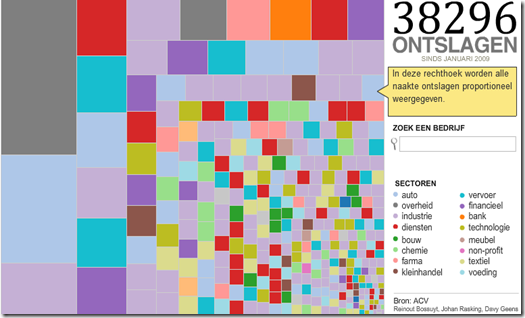
At the time of writing this post, the counter of lost jobs in Belgium since January 2009 stood at


38,296


lost jobs


And this is “only” from structured and collective redundancies. The following table comes from quality newspaper De Standaard. The visualization also represents what sectors “contribute” most to these redundancies.

image

It’s therefore “normal” that i see/meet/mail more and more friends and (now ex-) colleagues being hit by the recession, crisis, or whatever you prefer to call the current economic climate and resulting restructuring or transformation programs. It happens everywhere. Except at the one employer i ever had that still today shows double digit growth.

However, some of these friends were living in Golden Cages for years but were bored to hell. The shame is that they let this happen over them. Others indulged all sorts of manipulations, political maneuvers, and other techniques that did not take them for full or were just ignoring them and their ideas. Others just had the courage of sticking out there neck, but not being appreciated by the blueprint and/or differing too much with the “normal way of doing things here”.

Indeed, it seems recurring many companies that diversity in thoughts is not always welcome, despite all the window dressing about values etc. That is of course a pity, because this diversity in thoughts and ideas is fundamental to being innovative.

And it happens everywhere. Except at that one record retailer. They seem to be some kind of Tribe. Have always been since the 60’ies, with self-development programs and alike. They also continuously innovate. With green IT and own windmills etc already 10 years ago. “Cradle-To-Cradle – Remaking the Way We Make Things” applied before the book was written.


So it’s all about sustainability, made possible through R&D and Innovation in new sciences and technologies. And being part of a tribe that has innovation in its DNA. See also later in this post when we discuss the jobs and trends of the future: science and technology are at the heart of the sustainable development debate.

However, if you’re not part of such a tribe, and you get fired where you were bored, then there is light at the end of the tunnel. Getting fired could really be a fresh start of your professional life, although somebody else made the decision for you.

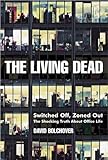
Have a read at “The Living Dead: Switched Off, Zoned Out – The Shocking Thruth about Office Life” by David Bolchover.

Joe read the book and here is his review:

This book is about – the millions of talented and bored to tears people rotting away in large offices, completely disconnected, disenchanted, disengaged, shuffling papers away, staring at screens, writing memos and Powerpoints, sitting in meetings deliberating in jargon that means nothing, and generating serious pretend-work….

and how our world and organizations have made this a taboo topic, refuse to recognize its existence and aggravate this problem through inadequate structure and processes (specialized business jargon, office politics, hierarchy, etc).

image


This is one of the most blunt books I’ve ever read – a Dilbert with the sharp facts substantiated! And you will not find one business jargon word that can qualify for a b-sh**t bingo in there.

The most interesting part is that the book is written already 5 years ago – and looking at Peter Van’s blog and the book gives a clear indication of a very alarming trend. Not for the weak-hearted! Contains some seriously ego-busting words on our Great Leaders ( the big companies CEOs) and Even Greater Gurus (the Management book writers).

What would you do if you got fired ? What would be the one thing that you would like to do for free for the next 10 years ?


Could give you a real good indication

of where your true

passion and purpose is.


But where to look first ? The report FastFuture.com report “The Shape of Jobs to Come” (Final Version January 2010, you can download the PDF here) would be a good starting point.

image

The report lists the 100 most likely jobs to emerge and be successful by 2030. Some of these jobs will already see the light as soon as this year 2010.

And if you have the luxury to take first take a couple of months sabbatical, then the report has in Appendix-3 an excellent time-line on what will happen when, what skills you need to master by when, and what the most probable and most looked after jobs of the future may be.

The outcome may be that you may want to follow some course on NIBC convergence technologies. (NIBC = nanotechnology-biotechnology-information technology-cognitive science) or to study Chinese, Spanish and Portuguese if you want to mean anything in the economies of growth of 2015.

Some extracts with – as usual – some personal comments.

For the longer term, the centrality of science and technology in helping to tackle the most pressing planetary challenges from poverty to clean water, environment to human health, climate change to energy supply and housing to transport are ensuring that science and technology are at the heart of the sustainable development debate

Finally they are expected to help us survive and thrive in the cyber world, whether through legal protection, counseling or management of our virtual data and ‘personal brand image‘. As a result, the survey suggests that many of these roles will be popular, well-rewarded and aspirational.

The ten key patterns of change identified in the report are:

1. Demographic Shifts

2. Economic Turbulence

3. Politics Gets Complex

4. Business 3.0 – An Expanding Agenda

5. Science and Technology go Mainstream

6. Generational Crossroads

7. Rethinking Talent, Education and Training

8. Global Expansion of Electronic Media

9. A Society in Transition

0. Natural Resource Challenges


Looks like the list we suggested for our Think Tank on Long Term Future 😉

Under “economic turbulence, we find:

Further economic turbulence and potential downturns between 2010 – 2020, followed by a more stable period to 2030 as excessive risks have been removed from the financial markets and most economies have repaired their finances

Out of the list of 100 future jobs, i personally liked very much: the body part maker, the teleportation specialist, the currency designer, the non-military defense specialist, the director of responsible investments, the mind reading specialist,

Take the Body Part Maker (possible emergence as a profession: 2020, that’s only 10 years from now !):

Due to the huge advances being made in bio-tissues, robotics and plastics, the creation of high performing body parts – from organs to limbs – will soon be possible, requiring body part makers, body part stores and body part repair shops.

While a typical organ such as a liver or kidney might be grown, other parts such as an arm would involve the complex integration of a nano-engineered skeleton, high performance robotic joints, fibre-optic nerves, artificially grown skin, synthetic flesh and muscles.

Or the Memory Augmentation Surgeon (emerging profession in 2030). It really reads like Ray Kurzweil’s “The Singularity is Near” (book written in 2005 !)

This is a new category of surgeons whose role is to add extra memory to people who want to increase their memory capacity. A key service would be helping those who have literally been overloaded with information in the course of their life and simply can no longer take on any more data – thus leading to


sensory shutdown


Although the job descriptions are somewhat funny and even “cute”, the real value of the report is in its Appendices: they hide a wealth of trends for 2030.

Truly amazing. If only 10% of this becomes true, the world in 2030 will look quite different from 2010. Especially Appendix-2 is a summary of all things you should be aware of as 2015 approaches. Appendix-3 shows a very comprehensive timeline per trend.

It is in these Appendices that you can learn for example about Generational Cross-Roads:

The challenge for employers will be to create an environment where each group can feel valued and be effective. Indeed, a Randstad USA survey found that 51% of baby boomers and 66% of the generation that preceded them reported having little to no interaction with colleagues from Generation Y.

What is your company doing to get these young generations

deeply into your workforce’s DNA ?

And about Society in Transition:

Higher ethical standards and a sense of the greater good are two of these evolving trends. Increasing expectations are concurrent with a decline in trust of key institutions.

“Higher ethical standards…”  See also my previous blog post on Ethical Re-Boot.

About Evolving Technological Ecosystem, the appendices reveal that:

Handheld devices expected to become the control centre of a rapidly expanding personal ecosystem – where projection / pullout screens and keyboards could accelerate laptop replacement. Key enablers include augmented reality, intuitive interfaces, semantic computing and the increasing embedding of intelligence in a range of devices – often known as ambient intelligence or IP Everywhere.

What is your company doing to get these technologies

deeply into your innovation DNA ?

And about Quantum Cryptography that:

In “traditional cryptography” the data itself is encrypted using complicated mathematical functions. In “quantum encrypted communications”, a key is sent by beaming a string of photons, representing a code, from the source to the target. If it gets to the other end and matches what the target expects, then the data gets unencrypted. The Guardian notes that if anyone tries to intercept or break it, thanks to the laws of quantum physics, the mere act of observing the stream of photons changes it – and so it fails

If you company is doing something related to internet security

your strategy for the next 5-10 years

should have some bullets and focus on this.


And it is not always about throwing another GUI at your application. Have a look at this article that suggest that Mind and Square are NOT innovative and the true meaning of innovation in financial services lies in the plumbing, not the UI.

Remember my discourse about Innovation at the Core vs. Innovation beyond the Core ?

And then there is a section on R&D and Innovation trends. Most countries and regions seem to invest more in Innovation:

R&D Takes Centre Stage: Germany is investing EUR900M by 2010 to fund R&D projects commissioned by medium-sized business and EUR65M to expand and develop research infrastructure. Norway is set to increase its Research and Innovation Fund capital by EUR685M and create over 200 new research positions each with EUR90,000 funding. France is committing EUR731M in 2009-10 to refurbish universities and research institutions. China’s 10Tn Yuan 2009-11stimulus package includes major investments in science and technology, including "key research projects related to enlarging the domestic market.‖ (University World News).

And where is Flanders ? The Flemish Government decided to REDUCE the budgets for Innovation and R&D for the next couple of years ! And some companies plan to do the same in reaction to the economic climate.


Reducing your innovation budgets

means the beginning of the end

It means that you don’t believe

in the future

of your region, company or project.


Calling in a bus of consultants to tell you how to innovate will not work. First check out How real your Innovation is. And start from there. Especially if your company has a culture of incremental innovation.

image

We have to invest now. As mentioned before, i believe this requires a private (non-public) initiative. Many public – government driven – initiatives seem to lead to lots of consensus and compromise, often leading to a watered down vision, or no vision at all.

I was – and still am – hoping that our Think Tank on Long Term future can kick-start this private process.

Let’s also watch-out for the Belgian Presidency of the EU for the second half of 2010. I heard they bring on board some really smart people that can make the difference. Hopefully we get in the news because we really could make that difference, rather than through scandals about drunk MP’s.

If not, we may have to start imagining a miserable future in 2030 where we will be feeling like in 2010 without Internet (kicked into our lives around 1995 for most of us).

So, if you are/get fired, the next best thing to do is probably to look into the direction of your purpose and to surround you by the people of the right tribe. Those that make you live longer not shorter. Those that truly bind not seek conflict. Those that want you to succeed, not fail. Those that are capable of saying yes, and have not been trained to find the “no”.

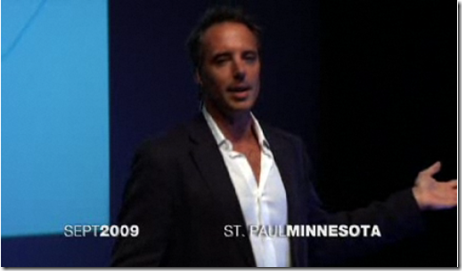
For further inspiration about being mentally healthy and finding the right tribe, have a look at this TED talk by Dan Buettner on “How to live to be 100+”. With thanks to the friends in Iceland for spotting this one.

Or you may just not even make it to 2030 !

image


Reblog this post [with Zemanta]