New Value Movement

At Innotribe in Toronto, we had a fantastic group of speakers. We call them “igniters”.

It was energizing and inspiring to see how some of them were each other’s fans on-line, some just met for the first time face-to-face at Sibos. Many of the discussions between speakers were definitely as interesting as the public appearances they made during the Tribe. We have to do something with these deep conversations…

During one of the few break moments, i got myself in a quite engaging discussion with Dan Robles from The Ingenesist Project and Social Flights. We shared our passions and our scarves, and i told Dan about my dream. I like to connect with people at their scarves- and passion-level… Finding the real soul, the real person and what is driving his/her dreams.

The dream of evolving this whole Innotribe event thing in something almost architectural.
Something artistic. Something that combines in a deep way high quality content, super facilitation, and performance. Emotional engagement. Deep conversations. Making an impact. Way beyond our little Inno-“tribe”. Societal impact. Awesomeness. With a richness of values of what it means to be human.

It all boils down to this old idea of mine of setting up a think tank on long term future, to prepare the next Values kit for our children.

I am worried and concerned. For our children. For my girl of six years old.

And apparently, i am not alone. Had a wonderful chat this week with Sam. Went all directions… until we talked about my princess.

In my Prezi “How to Make Babies” (based on my blog post with the same title), i show what happens when she grabs an iPAD and starts drawing.

And the most intriguing is what she said:

“My fingers don’t get dirty”

It was immediately clear to me she was born in digital. And I was thinking that in a couple of years from now, our children will say “my fingers do get dirty” when they make a real painting, on a canvas with wet paint…

It did not take years. Here we are, one year later, and here is a viral video of a two year old baby, who expects a paper magazine to behave like an iPAD.

I am worried and concerned. For our children. For my girl of six years old.

I am reading the posts “hypereconomics” by Mark Pesce. Already seven years ago, he asked that question:

“What happens after we’re all connected?”

Just one quote, as i know Mark hates to be overquoted and expects people to add their own content:

As we move further into a hypereconomy, we need to assemble value chains from the resources available to us.  We need to be able to bring this material together with that design expertise, married to a fabrication capability, delivered via the appropriate transportation logistics.  When we can do that, every individual will have the same capabilities to fashion an assembly line that Henry Ford once commanded

Read the post. It’s scary and challenging at the same time.

We need to prepare our children and our pre GEN-Y’s for taking up leadership during the next 10-20 years. When the blurring between man-machine will have materialized. Maybe not the singularity, at least Paul Allen does not think so. But for sure when the frictionless economy will be there. And when it will be important to know what makes us more human humans.

A good book in this context is “The Most Human Human” by Brian Christian. (Amazon Affiliate link)
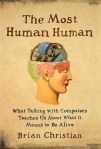
Brian says:

The story of the Turing test, of the speculation and enthusiasm and unease over artificial intelligence in general, is, then, the story of our speculation and enthusiasm and unease over ourselves. What are our abilities? What are we good at? What makes us special?

“Think Tank” is probably the wrong word. Too much talk-club. I was more thinking along the lines of a “movement”. A New Value Movement?

This desire to be part of such movement, that realization was indeed the main trigger to start this blog in the first place. Check out for example some older posts about “Singing my own song” and here about the Think Tank idea and here about “Great to Good: a new value kit”

The concept for a New Value Movement must have sticked on Dan’s ribs, and i was pleasantly surprised to receive a quite extensive thank-you letter from Dan referring to our conversation. I reproduce the letter below in its entirety (my highlights):

Hello Peter;

I don’t believe that I properly thanked you for your confidence in me to present to your truly important attendees at Innotribe. 

I tried to go a bit further over the edge of provocation and I hope that I did not go too far.  No sooner had we finished those amazing Innotribe sessions did the Occupy Wall Street movement largely validate much of your theme about a New Value movement.  It is almost scary to see our prediction that people will re-organize around new value and directly challenge financial currency with social current (currency). 

In addition, I learned tremendously at innotribe and my eyes were opened to many new ways of interpreting our goals. I have since updated much of my ongoing positions to reflect what I learned at Innotribe.  The Big Data sessions, DAG, and Craig Burton’s API work were especially moving for me. 

I believe that the time and technology are right for shifting factors of production away from Land, Labor, and Capital and toward Social, Creative, and Intellectual Assets.  We are developing a simple web app which I believe can catalyze this shift at a remarkable rate.  Please let me know if you would be willing to offer some comments or suggestions to this project. 

Thanks again and please extend my gratitude to Kostas for his wonderful hospitality.

Dan Robles

I am humbled and energized by encouragements like this and it goes without saying that i enthusiastically accept Dan’s invitation to comment on his project.

I also got several calls and reach-outs post-Sibos. From people who i spoke to some months ago about this Think Tank idea. And suddenly, all at the same time they want to talk about it again. It must have to so something with synchronicity. With emergence.

Somehow i feel like i have to take a big jump. Beyond the “classic” Innotribe events. Something bigger, with more impact on society. More depth and meaning.

Is it fear to jump ? Is it not being able to articulate it? And then – recently – somebody close to my heart wrote me:

i caught on to that from you, but you haven’t shared too much with me. it’s paradoxical that you talk about wanting depth and meaning, because you have come across as very closed to me when i see you in person… but maybe you are just distracted and focused? or maybe you are afraid to act as your true self in the swift/innotribe setting?

Am i just distracted and focused? I feel i am both.

  • Very focused – like i wrote about my intensity in “Silence, I am painting”.
  • Very distracted, as trying to keep-up with this information stream in my RSS feeds, the twitter stream, etc.
  • Very distracted, as i have probably 20 drafts of blog posts sitting ready to publish.
  • Very distracted, as i feel my creative energy becoming un-stoppable and ready to burst out something new, big, exciting, energizing, inspiring.

A colleague recently told me:

Peter, i think you need to re-connect with yourself.

Same thing. Fear to act as my true self in the swift/innotribe setting? Or in any setting ?

From time to time i use this blog to re-connect with myself. And to share some of these musings with you all out there.

In the hope that somebody reaches out. Shows me an open door.

Or like last week, reminds me that i am the “heavy artillery” when i think i have become persona-non-grata, because too deep, because too demanding and probably even more so because i don’t always live the values that i preach. Even rarely live them. And it is probably that what undermines trust. I expect trust and am surprised i don’t get it when i don’t live the values that i preach.

What suddenly stopped me in staying alive? Where have you see me changing?

My starting point for this blog in April 2009 was the realization that my mission was to “inspire others to dream”. Now i want to add emotion. In Dutch there is a word for this: “ontroering”. I tried to translate, and the closest i got was “thrill”.

Who wants to help me seeing clearly? Who wants to engage with me in this adventure? Who wants to help articulating what this New Values Movement is?

I am hungry for your feedback. Send me something in the comments of this blog post. Send me an email or DM me. And i need time to think.

JP on Gamification, Lipstick and Pigs

And here is another fantastic talk by JP Rangaswami, Chief Scientist Salesforce.com (twitter @jobsworth) on the gamification of companies and why this can’t be something superficial like putting lipstick on a pig.

Was looking for a transcript, did not find it, so decided to do it myself. Below a summary of JP’s talk. Hope I captured the essential, and you appreciate my style of curating/highlighting.

Have asked JP to deliver something similar at Innotribe at Sibos 2011 in Toronto when we will discuss Corporate Cultures. Hope he will accept the invitation.


image

http://cdn.livestream.com/embed/readwriteweb?layout=4&clip=pla_07224833-fd06-42c0-b38f-fc03955fb5a9&autoplay=false

Watch live streaming video from readwriteweb at livestream.com


Some highlights:

  • We have always tried to take a material shift of paradigm by attaching some labels of the past
  • The inflection point is about significant changes in work, rather than significant changes in technology
  • This is not about putting something superficial on tasks that your really don’t want to do
  • Extrinsic rewards have significant risks,
  • Referring to the works of Kathy Sierra.


Have a look at Kathy Sierra’s latest guest-post on Hugh McLeod’s blog about “Pixie Dust & The Mountain of Mediocrity”

  • Find rewards inside yourselves
  • “badges” of excellence should be about reaching levels of mastery


I have no intent or wish

to put

the lipstick of gamification

on the pig of work


  • The control paradigms of the past are being challenged
  • Some assumptions on why the firm exists: Firms exist primarily in order to reduce transaction costs
  • As a result of vertical integration, a number of things used to be possible: easier access to capital,
    • Today, most people in this room have a better credit rating that the bank they use
  • Global reach and scope
    • That with the digital world is again available to everybody in this room
  • The firm was designed against the background of the industrial revolution
  • Knowledge work is in essence “lumpy”

We have such fear

if at work it is not possible to doing nothing,

we take the gaps at work,

and we fill this

with this 20st century mechanism,

called “meetings”

  • If you could fill your days with meetings, then you look busy
  • For real work, you have to stay late, as you filled your white-space
  • You have used up your time for cognitive surplus that Clay Shirky talks about
  • The kind of choices we have today are fundamentally different from the past
  • Everything on the assembly line was predicated by the division of labour

Having 1 person doing

the same thing 16,000 times a day

was felt to be acceptable in those days,

to me it feels inhuman

  • The most expensive thing was the equipment, the switching cost of equipment was very high and the collateral damage done to workers was trivial
  • Now the most expensive asset are the people in this room
  • Because we are able to switch, we are capable of doing non-linear work


It not about an inability to concentrate,

its about the inability

to hold a tension

on the garbage

that is being spewed at them

  • You never have a steady stream of work as a knowledge worker
  • The principles of the assembly line are deeply in our ethos, our very being, we get conditioned to that from our schooling system onwards
  • An ability to switch away from that is not trivial
  • The first thing that you notice about Heroku offices is that there are no desks

–> now think about

what it means

to have

a “desktop” computer


  • That’s change is possible because choice of the edge devices is with the individuals
  • Processes are king only where there are repeatable tasks and the repetition is of value
  • Part of the big shift from the static to the flow is we start spending more time dealing with the exceptions rather than with the core flow
  • The choices today are far to vast to believe in a linear progression
  • Much richer knowledge worker environment in which we must be able to recognize patterns
  • Given enough eye-balls, all bugs are shallow
  • The value of inspection when something is shared in a large group comes to the foreground
  • Wikipedia exists because of cognitive surplus: people are prepared to donate or contribute their time, and their brain, and their knowledge and their effort in order to collaborate for some common good

It strikes me

when I am typing this,

that this is exactly

what I am doing right now:

investing my cognitive surplus

for the common good

  • This truth is a valid in enterprises as it is at home
  • The use of gamification is to help generation that are already at work, because the generations coming in know this already
  • This is the generation born since 1982
  • But we live in a hybrid world
  • Genres are values
  • Hearts, Spades, Clubs and Diamonds
  • Hearts are people that like bonding and teamwork
  • Spades are people who really like to go to the bottom of things and complete their analysis
  • Diamonds are people who after surprises, wealth, aggregation and collection
  • Clubs are people who like beating up on others
  • It is a metaphor for serious thinking on what motivates people in the book “Driven” by Nitin Nohria (Amazon Affiliates link)


The 4 drivers of motivation:

the drive to acquire,

the drive to defend,

the drive to bond,

and the drive to learn


  • When you are looking for a company to work for, then you have to do this sort of “genre matching”
  • The genre of games is in fact the values and ethics of companies
  • When you join, they put you through some form of induction, and the induction is what in a gaming context you would call a sandbox, because you want to minimize damage to the person and environment, while you teach people and allow people to learn more effectively on how the firm operates
  • The discovery process of “how to”, the discovery of how the game works, in a safe sandbox environment
  • We have to think about induction in a deeper way and say “it is a sandbox”

Work has morphed

over the last hundred years,

from hierarchies of products and customers,

to

businesses becoming

networks of capabilities and relationships


  • There is a lot of work to be done on how to value this, how do you value relationships
  • Things like Klout,, influence, reputation, capability to create and maintain a group of followers, a weighted understanding of the value of your network
  • A whole new science of beginning to genuinely measuring relationships
  • Let’s put all this now in context of team selection, and missions and quests
  • Hierarchies existed because the cost of coordination was very high

In today’s world

those coordination costs are trivial,

we are moving from a world

where everybody has to go

through an MBTI or similar

and then somebody

decides about team composition,

to

a world

where the team selection

is carried out

by the individual


  • The tools have to be in place to discover who you would like to work with and what you would like to work on
  • A certificate or badge indicating that that person has the skills and the mastery to perform that task
  • Mastery at work gets meaningful
  • Most video games don’t allow you to go to level-X unless you have acquires the skills for level X-1
  • The reason to keep you at that lower level is to get you to that master level
  • Next: a reasonable understanding of where you are at
  • The idea of “save and replay” when at work

I always wanted to live

in a zero-blame culture


  • And work never has been such a zero-blame culture because of these structural weaknesses
  • Now I can get to the point where I can say “I have not failed, I have found 10,000 ways that do not work”
  • You save that which has not worked, together with the conditions within it did not work, and you can analyze and replay and deeper understand
  • Because – when the conditions change – what did not work may work this time
  • So never say “we won’t do that, we tried it before and it did not work”
  • The value of being able to aggregate any life-stream partially lies in the ability to inspect and make analysis of it
  • Conserving seeds so that they do NOT get naturally selected out
  • What did not work today may work in different conditions tomorrow
  • Somebody smart did not throw away that code of that stupid idea
  • Gamification of the enterprise is not a fad
  • It is not about providing extrinsic rewards for crap work
  • If work is crap, let’s fix that problem


From hierarchical,

linear,

top-down work

to

non-linear,

networked,

personally selected teams,

tasks

and outcomes


  • We are nearly there, but this change is going to require use to learn a lot of new things,
  • And what games can teach us is a smarter way of being able to extract those learning and bring them into the enterprise
  • Thank you

Organizations Fit for the Future

Awesome “Must-see” video by Gary Hamel. Contains a lot of the wisdom of Vineet Nayar of HCL, who wrote the book “Employees First, Customers Second”.

Btw: have invited Vaneet to Innotribe at Sibos Toronto on Corporate Culture. Hope he accepts.

I’d love to get to a stage where

Innotribe is the place

where you discover

what futures emerge

on the fringe


"Modern” management is one of humanity’s most important inventions, Gary Hamel argues. But it was developed more than a century ago to maximize standardization, specialization, hierarchy, control, and shareholder interests.

While that model delivered an immense contribution to global prosperity, the values driving our most powerful institutions are fundamentally at odds with those of this age—zero-sum thinking, profit-obsession, power, conformance, control, hierarchy, and obedience

don’t stand a chance against community, interdependence, freedom, flexibility, transparency, meritocracy, and self-determination.

It’s time

to radically rethink

how we mobilize people

and organize resources

to productive ends

It’s one one-line after the other, this talk is so inspirational. Check-out:

  • Fit for future, but also fit for human beings
  • We have to re-invent management
  • Management legacies
  • Change has changed
  • Hyper-competition
  • You have to earn your place in the market every single day
  • Knowledge itself is becoming a commodity
  • How fast am I creating new knowledge
  • An organization where people are willing to bring the gifts of their creativity and passion
  • Real reverse accountability
  • Holding your managers accountable for you succeeding in your job
  • Challenge management dogma
  • What problem is management trying to solve?
  • How do you turn human beings into semi-programmable robots?
  • You have to have aspiration, you have to be contrarian, you have to be willing learning from the fringe
  • The future happens on the fringe
  • Management is a feudalistic system
  • The web is sort of the global operating system of innovation


We have to bake

into our management values

the deep web values of

Openness,

Meritocracy,

Flexibility,

and Collaboration

  • We have been told that we can’t change our organization: that’s nonsense
  • Being resilient as human beings

We hope

that you become

a champion

for the future

Silence, I am painting

I have a week off, so it gives me some time to reflect and muse about things that are close to my heart.

This is a post about my intensity in creating and curating Innotribe events.


It is about creating

memorable events

that are memorable

because they deliver

an authentic experience


I got inspired when discussing the drive behind my work with a good old friend. At a certain moment, i described event production as some form of composition, like a piece of music, like a painting. It’s where this story starts…

clip_image002

Jan Van Eyck – Arnolfini portret

Flemish painting flourished from the early 15th century until the 17th century. Flanders delivered the leading painters in Northern Europe and attracted many promising young painters from neighboring countries. These painters were invited to work at foreign courts and had a Europe-wide influence. The so-called Flemish "Primitives" were the first to popularize the use of oil paint. Their art has its origins in the miniature painting of the late Gothic period. Chief among them were Jan van Eyck, Hans Memling, Hugo van der Goes, Robert Campin and Rogier van der Weyden.

From the early 16th century, the Italian Renaissance started to influence the Flemish painters. The result was very different from the typical Italian Renaissance painting. The leading artist was Pieter Brueghel the Elder, who avoided direct Italian influence, unlike the Northern Mannerists.

clip_image004

The painting above is by Pieter Breugel the Elder: “The Blind lead the Blind.”

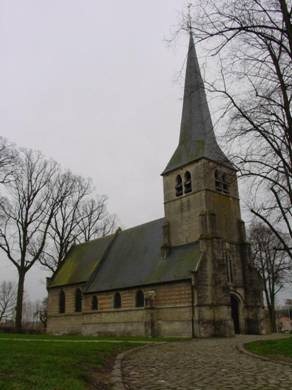
What is interesting in this painting is that the little church actually exists. It is located in a small village “Sint-Anna-Pede”, in the heart of the “Pajottenland”, West South-West of Brussels, and where famous beers like Geuze and Lambic have their origins.

It is also the place where I spent most of my youth till +/- 21 years old.


clip_image006clip_image008

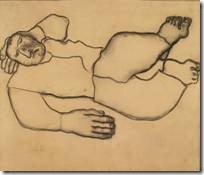
A later generation of Flemish painters were the Flemish Expressionist, with Permeke  from ‘Group of Latem’,  as generally the best known:


clip_image010

Permeke – Laying Farmer

I love the “primitiveness” of Permeke. The primitiveness makes me think about some deep and profound thoughts from Jerry Michalski himself, who planted the seed to go back to the primitive level of our understanding of a bank.

clip_image011

The word “Bank” comes from “Banca” which means “Bench”.

People used to sit on a bench, and had a conversation. It was relationship building avant-la-letter, it as about wealth creation for everybody, it was a community play. The metaphor also applies to “stocks” which originally was a “stick” with carves indicating what values where loaned between parties. See also my blog post “Banks for a Better World”

The Flemish Primitives originated in Flanders. As you all know, Brussels is the capital of Flanders (this statement in itself – albeit factual true – may cause a whole political debate in Belgium, a debate i definitely do not want to get in now ;-).

All the above just to say I was born in Brussels, raised in Flanders, where the Flemish Primitives originated.


It’s sort of back to my roots

It’s somewhere deep in my DNA


And it is the sort of DNA that i want to build into our Innotribe events. This is the sort of deep “primitiveness” i want to be the understream of Innotribe events.

Building on this DNA, I was trained as an architect at the Sint-Lucas School of Architecture in Ghent and Brussels.

Sint-Lucas School of Architecture educates designers in a spirit of critical reflection and personal responsibility. Students question their limits and the limits of the discipline. They gain insight into both material and immaterial, physical and social structures. Teaching and research are organized in a spirit of artistic and intellectual openness, of tolerance and inclusion. 

This is more the artistic direction rather than the engineering section of architecture. It’s about designing space, experiences, total experiences. It’s probably why I often “clash” with engineers. We have a different mind-set, training, framework.

It is probably why i like so much the job that i am doing today. Because in my mind, creating a quality event is about creating a total experience.


Yep,

that’s where I am setting the bar


The end result must be an experience like a very good concert. Or a painting with many layers. Although concerts and paintings are one-directional. To be consumed only. It’s push-only. Modern life has evolved to more pull. Paintings and concerts in general miss the participatory element that we try to build in all our Innotribe events.

Building an event is like doing a production. I’d like to see my role as “written by”. With a team/crew of highly sensitive, critical, creative people, who do not accept compromise. Who do not need always the team to be aligned on everything up-front.

Who can express

their very personal emotions in an emerging landscape

of diversity


When the team is blended, we don’t need alignment up-front. The forces of the understream propel us forward in the right direction. Always. Unless some team members or the enabling organization do not have this deep force, energy. Or when the team you are asking to innovate has to waste its creative energy scrambling to find resources.

Harvard Business Review wrote about this basic idea of building in constraints to instigate innovation (credits to Mela of our team for finding this quote):

Scarcity seems to have replaced necessity as the mother of invention in today’s organizations. Far too many managers believe that depriving projects of resources [such as time – Mela’s comment] will inspire innovation. While that’s true sometimes, you’re better off using constraints rather than starvation. The human brain reacts to stimuli, so while a blank sheet can terrify, one or two constraints can stimulate. Experiment with introducing a clearly defined problem and an urgent need. But, don’t create false urgency by refusing to fund a project [or not giving time to work on it – again Mela’s comment].

Can we push the limit of events further ? Yes, of course. We are just getting started.

In my wildest dreams, an Innotribe event is multi-sensory. Appealing not only to visual and audio senses, but also to smell, touch, and taste. We can have total experiences, with music as a background/foreground canvas,


building and architecting

the rhythm of the event

like a rave


With moveable and touchable walls that give way and light-up when you touch them, with people dancing and raving, sharing a Californian style new-age, un-conference open-space tribe.  OMG, I hear you thinking, what good stuff did he smoke today?


It is about the power of the tribe

The deep power of the tribe

The Innotribe


clip_image013


So it happens that some of the finest Flemish chefs put together this fantastic site and tribe of The Flemish Primitives, which is all about the very-very best of Flemish gastronomic cuisine and experiment. World-class. If you have ever seen the drive, intensity, uncompromising drive of a chef like Peter Goossens of 3-star Michelin Restaurant Hof Van Cleve then you know what i mean.

clip_image014

“It was a great experience to participate in The Flemish Primitives 2010. It’s a high-energy, high-spirited meeting, and a unique mixture of people and points of view. A very stimulating day!”

Having that drive and that result is my inspiration. That’s how we want our audience to come out of an Innotribe event.

We don’t want to go for less!


clip_image016

The atelier – be it an art atelier or a gastronomic kitchen – is a nice metaphor for our group: a couple of artists cooking and painting together. Really together-together, but in the end the composition, the final plate, goes through the hands of the master curator, the “written by” guy, the one who composes.


clip_image018

I do this with

an extreme deep intensity


I have all my antennas “on” for 24 hours a day, 365 hours a year. When i read, tweet, blog, view, listen, taste, etc it looks like i have always that lens of “how can i use this or that for the next innotribe event?”.

For me, writing a new Innotribe composition is like being in a creative flow, my most individualistic expression of my emotions.


When I am in that flow,

I do not want to be distracted

by personal drama


People exposing personal drama usually don’t have anything else better to do.

clip_image020

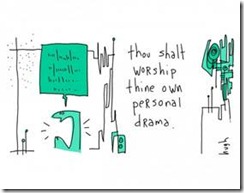
Hugh McLeod posted a couple of days ago:

Why are some people such drama queens? Why do some people get so obsessed with the little stuff, the gossip, who said what to who, who’s sleeping with who, who’s no longer sleeping with who…? The short answer: Because it gives them something to do. Life is short. You’d think we would have learned by now, how to make better use of our VERY limited time here on Earth.

That’s where i am setting the bar. Workaholic ? Maybe. Arrogant ? Maybe.

“I don’t expect everybody using the same standards” is often a standard phrase used in corporate landscape. But is that really so ? Maybe i DO expect everybody using the same high standards.

Or at least, I expect respect from others when I am trying and getting into this high state of flow and expression.


Respect for my time and space

Respect for my high standards


That’s probably why I hate “enterprise tourists”. The ones that make a lot of noise, but have no content. When they deliver something – if they deliver something – set the bar at creating a ripple where I want a wave.

Why I hate “seagull managers”, who pop-in, drop some comments like seagulls drop shit, and leave you behind alone with the clean-up until they show-up next year for another annual review of KPI’s or whatever artificial measurement criteria.

Why I hate an even worse category of “enterprise rats”. The ones that don’t add any value but only bring process and problems and challenges. The ones that are the messengers, the go-betweens. The ones that forward you mails where they clearly contain actionable items that could have been resolved by the rat herself in the first place. The energy suckers.

So, for you enterprise rats and tourists out there: next time you come into my space and interrupt me in my painting, be aware you are interrupting me in my creative process. Next time you create havoc in my atelier, beware you are messing up the medici effect. I don’t want energy suckers in our atelier

Team is not about celebrating individualism. Team is not the sum of the individuals. Team is about a safe harbor where every individual keeps its own identity. Team is not about dependence. Or about using the team consensus or lack thereof as an excuse.


Team is about “inter-dependence”


The team and each member of the team is one of the conditions for me – and each of us – to develop my/our full potential and make a great painting.

The team is more than the sum of the parts, the individuals. The team should not be a bowling team: where every player is after her personal best score. They miss positive feedback loops. That flows and fuels back the team.

Don’t mess around with/in team.

Messing around with/in the team is messing around with our full potential.

Innotribe Mumbai : Indian Waves and Genuine Smiles

After Kosta’s wrap-up about the event some days ago, i’d like to share with you some personal impressions and lessons learned from this event.

We have been designing this event for a couple of months. Not every day 100% – though that may have been true the last two weeks when everything comes together – but a quite substantial piece of our time.

As many of our events, it all looks a bit like chaos – organized chaos.


It looks like

things happen by magic,

but there is no magic


There is just an awful amount of preparation and design.  We spent quite some time to think through the design of our Innotribe events.

But despite all the preparation, debriefs, visuals from the location, hotel rooms, etc, etc the whole thing comes really alive once you actually are on-site and see/feel the actual space that will be hosting your event.

I landed in Mumbai around 1am the morning of 31st May 2011. Baggage got lost in London Heathrow. It was 2:30am before i was in my hotel room. Tired. The rest of the team already flew in the day or some days before.

After a short night, team briefing. So far everything in pretty good shape. We have hijacked 2 rooms and use them as our headquarters. Don’t have pictures of this, but everybody is crew: Kosta and Matteo sitting on the ground cutting hardboard. In the meantime, the facilitation crew is changing once more the design of the event. It’s getting better and better.

Lessons learned so far:

  • Everybody in the team is crew.
  • I have to let go at this stage. Have the impression my interventions don’t add value anymore. My presence is becoming distracting. Let the team do what they need to do. Don’t intervene. Trust the process

Next checkpoint: room set-up at 7pm. Problems. The previous event has not even started breaking down. And the hotel turned off the airco in the ballroom: no need for airco for night workers… Room is steamy hot. There is nothing we can do. It will take at least till midnight before our audio/visual and stage guys will have set up our stuff. Decision: let’s go to bed early and gather back at 4am for general set-up.

clip_image002

Here is Alex keeping the morale up !

June 1, 4am: room is not ready yet. Some team members worked till 2am. Has hardly 2 hours sleep. You can feel the fatigue and the irritation settling in. 7:30am and we have not done even the sound-check and dry-run. Airco is back on.

clip_image004

Somehow – as by magic – all pieces of the puzzle fall in place. It’s 8:30am and the registration desk open. Quickly to room for shower and changing cloths so i don’t smell on stage.

Here is a picture of the opening session

clip_image006

Events runs smoothly for the rest of day. End result is quite cool “knowledge wall”. Again, all team is crew.

clip_image008

clip_image010

17:30pm: Staff de-brief on day-1. Surprising how many folks turn up that i have not seen through the rest of the day. Obviously, those are the people who have most comments on day one. My role:

Assume

Take in

Don’t take it personal


What the hell do i care about the typography on some slides or the size of the coffee cups when this event is about financial inclusion? This is good inspiration for me to prepare another blog on event intensities.

Anyway, team will take comments on board and come-up with a redesign after the dinner.

19:00pm dinner. Have a deep discussion with one of the speakers. He has prepared video for the event, but i am lacking the authentic person behind the video. It looks like a documentary. Suggest speaker not to hide behind the lectern and to come in full vulnerability into the audience. Be vulnerable in saying “i don’t know”.


Be vulnerable in

being and standing there

as your authentic self


Do we all have the courage to do so ?

20:30pm after dinner. Debrief on new design. Don’t like it.


Seems we are having

a big illusion


Is financial inclusion the real agenda, or is it just a smoke-curtain to package a discussion between banks and telcos?

These are the real hard questions. It’s about the integrity and authenticity of the event. Should we put it on the table the next day?

We decide yes. We re-design the bloody thing once more. Late again, not enough hours of sleep. Back next morning at 6am.

The room has been re-arranged. From theatre into semi-circle context.

clip_image012

Have briefed all speakers that i will go into conversation with them during their presentation. Yes, i will interrupt them in their flow if they don’t manage to bring home their message fast and clear enough.

We also “play” with silence. With looking each of the participants in the eyes and call for honesty and integrity.

Highlight of the morning is (designed) conversational talk between Dan Marovitz and Neal Livingston.

clip_image014

Afternoon highlights are The Mixer – i love the station-format where you can go from station to station every 10 minutes.

clip_image016

Crown jewel of the event is the Mobile Arena. Matteo his usual self as master entertainer and master of ceremony of the Mobile Arena. There is lot of video material in Kosta’s previous blog.

But not only Matteo is in top shape. I have seen other people growing during this event.

For example Greet, who we bombarded to Audio/Visual manager: growing from shy and hyper-nervous rabbit with open eyes looking in the white light beam at 4am on day one, to the commander in chief controlling the A/V troops by the end of day-2.

clip_image018

Kosta, now in the crowd – anonymous, almost liberated from his staff – in symbiosis with the Indians, truly enjoying, his genuine smile, his body moving with some latency with the Indian Wave.

We end the day and the event with some powerful “Indian Waves”, sheering to everybody who contributed to the event.

Time to relax. We have a cool evening dinner. Lots of fun, jokes, drinks,… Landing…

The day after, i go with Muriel on a guided tour in Mumbai. First time i leave the hotel. Amazed by the crowd, the traffic, the contrasts in wealth and poverty.

clip_image020

The Ghandi house leaves me deeply impressed.

clip_image022

clip_image024

clip_image026

The days after: I see some shrewd attempts water down what we did at this event. Even questioning whether we should do this at all. They try to hide behind a smoke screen of revenue and pragmatic deliverables.

They won’t succeed.


The genius has left the bottle


What they don’t understand is that we are on a mission. We are at war. Against the old game. For a better world and company. With an enthusiasm and belief seldom witnessed before.


True enthusiasm is irresistible

it’s contagious

So, yes this is about energy. About creating a new dynamic. About enabling a new culture. About reaching new audiences. About bringing new and refreshing content. About a different brand awareness of SWIFT, that makes you look never the same way again at this company.


It’s about

the irresistible

contagious

enthusiasm

that breaks down

rusty structures

and corporate walls


It’s about Indian Waves and genuine smiles.

Pump up the (innovation) Volume

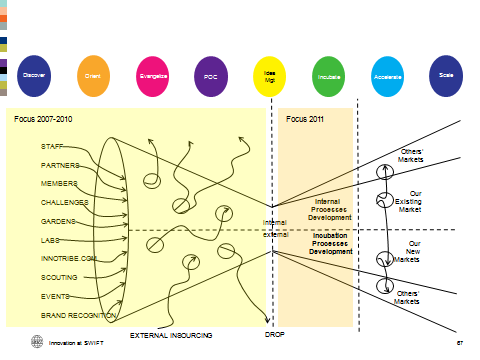
I would like to start with one of the slides of the innovation framework presented in “How to make babies?”.

image

The graphic and model is of course based on – but adapted to the specific SWIFT environment – the work of on Henry Chesbrough, the godfather of the concept of “Open Innovation”, and author of the 2003 book “Open Innovation: The new imperative for creating and profiting from technology” (Amazon Affiliates Link)

clip_image004

Chesbrough says:

Open innovation is a paradigm that assumes that firms can and should use external ideas as well as internal ideas, and internal and external paths to market, as the firms look to advance their technology”. The boundaries between a firm and its environment have become more permeable; innovations can easily transfer inward and outward. The central idea behind open innovation is that in a world of widely distributed knowledge, companies cannot afford to rely entirely on their own research, but should instead buy or license processes or inventions (i.e. patents) from other companies. In addition, internal inventions not being used in a firm’s business should be taken outside the company (e.g., through licensing, joint ventures, spin-offs)

Innovation Framework

The graph above illustrates an innovation framework:

  • With lots of idea generation tools on the left side of the graph
  • An innovation funnel, progressing the ideas from left to right, and making healthy adults from incubated babies
  • A north and a south side, where “north” stands for a traditional gating process product evolution for the core activities of a company, and where “south” stands for any innovation that basically does not fit the blueprint of the core.

In my blog post “How to create deep sustainable change”, I discussed the “Why” and the “expected outcome” of deep change and innovation.

  • The “why” has to do with creating a more agile organization, waking up the entrepreneurial spirit, in other words to “un-trap” the creative juices. And to do so, work is needed at the foundations: the roots of a tree. It’s about making the organization healthy, fit and un-trapped. This has nothing to do with six-sigma, lean, or other way to improve the efficiency of the organization, the efficiency of the organizational “body”. What we are talking about here is the fitness of the organizational “mind”.
  • The expected outcome of pumping up the volume and the fitness of the organizational mind is a connected organization, connected teams, connected people, connected values, operating in a connected economy.

Pump up the Volume

What follows is a personal interpretation of a team brainstorm we did in February 2011. So, it’s collective wisdom that I happen to be able to put in a format that’s more or less readable. Thank you team !

In this blog post, I will talk about the “How”, the set of tools that an organization can use to achieve the why and the desired outcome.

“Tools” can be actual tools such as an idea generation portal, but it can be other techniques at the front-end of innovation (the ideation), as well as processes and governance for moving ideas from ideation, via proof-of-concept, incubation, acceleration, and scale to full fruition.

What follows is also a model that can be used to underpin a strategy of “shake the tree” or – what I prefer – to “Pump up the (innovation) Volume”.

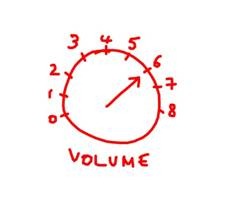
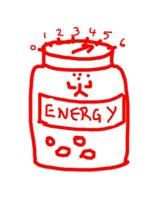
The volume knob is another metaphor to help us gauge our innovation focus, efforts and investments. What is important? What is nice to have?


clip_image006


Turning the knob to the max is what I would call being serious about innovation. But you have to start somewhere.

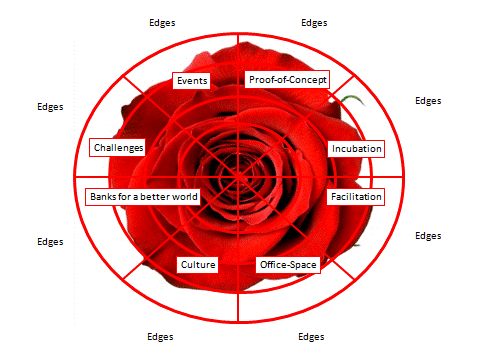
The Rose of Innovation

So, let me introduce you to the “Rose of Innovation”. Somebody has to give the romantic spin in all of this.

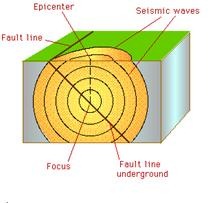
And let me mix it with the epicenter of an earthquake.


clip_image008clip_image010


Indeed, “Shaking the Tree” is like starting a quake from the middle, and the seismic innovation waves swarm to the edges of the system, where in the end they cause “Fault Lines”. You “feel” the move.


You know that inertia has been broken

You know you have crossed the chasm


clip_image012


And let’s segment the rose or the epicenter in different slices. Each slice is a cluster of innovation tools. You can have as many slices as you want, but I suggest to limit it to six in this case, merely to keep the overview and the focus.

For each slice, one has to decide how far to the right you want to turn the volume knob. Do you want to move from 2 this year to 8 next year? Probably, you want a multi-year perspective on this: from 2 to 4 next year, 4 to 6 in two years, towards 8 in 2015 ?

Let me walk you through the different slices.

Challenges

We already do internal and sometimes external – with customers – innovation challenges. It’s a call for teams and ideas around a pre-defined topic. What could be our ambition level if we pump up the volume to 8 by 2015?

  • Our ambition should be to be seen as one of the Top-10 innovation companies in financial industry. Long way to go, but possible with focus and will.
  • Build a real “Exchange” of ideas, competences, teams,…
  • Make a real competition of if. Like Cisco’s X-Prize. And with real money, I mean indeed a 250K EUR price for the champ of the year to help her incubate the idea of the challenge.
  • Open up the Incubation Centre, not only for incubation projects, but also for challenges. The cocktail of innovators in Building 8 will be irresistible.
  • Start-up something like frequent flyer pass. A frequent innovator pass. Points gathered this way add to your annual appraisal points, and reward repetitive innovators.
  • We should become so good we are being “called”: by other companies, at conferences, etc So good that people see the value and want to pay us for this.
  • Launch internal SWIFT “bucks”. Innovators can invest “bucks” in their projects. Later, when the project incubates these “bucks” get converted in actual shares in the project-company. These ideas are not new: ideation tools like Spigit and Brightidea already implement this. We just have to turn on the feature.

Events

This is more or less my shop today: let’s call it “Petervan Productions” Our events even more become “immersive experiences”. This unique mix of high-quality matter experts and speakers, together with our facilitation techniques. We could do much much more in this space. What about:

  • 8 Innovation events per year like Innotribe Mumbai ?
  • 1 Partner innovation event of 3 days
  • 1 Customer innovation event of 3 days
  • Deep conversations with: 3 days off-site with a guru on a topic and a select group of top-15 Heads of Innovations of banks
  • 4 hackatons per year where we ask developers to code/hack together an application in 2 days
  • More study tours, not only for the executive or L1/L2 level but accessible for all staff
  • The frequent innovator pass should help us identity who can go on such a tour
    • More gamification of our events: work with game experts such as Jane McGonical from Reality is Broken (latest book), Dave Gray from XPLANE and Gamestorming, and Verna Allee from Value Networks

Dave Gray author headshotVerna Allee

From left to right: Jane McGonical, Dave Gray, Verna Allee

  • Have a 3 day SWIFT employee festival? Like AMPlify.
  • Do sort of Woodstock at Sibos. Like Pirate Ship. With concerts
  • Sponsor other innovation events
  • Embed and sell our techniques to third-party event organizers

The overall objective is to create serendipity. To reach other audiences, bring other content, start exploring the edges, create brand recognition. For SWIFT. For Innotribe.

clip_image014

We also should more and more look at our events as something that is the middle of the process, not the end-game. Usually we come out of an event, exhausted, as we build up all the energy towards that one day, one week. But then it only starts: the event is only the place where the connected community meets for the first time, gets initially built.

Proof-of-Concept

Again, we already do this. We have a yearly budget that lets us invest moderate amounts of money in proof-of-concepts: these can be prototypes, animations, whitepapers, etc

  • Turning up the volume in this space is merely doing more: more prototypes, hence more budget and resources

Incubation

We just started this year. See also the “Babies” presentation. Initiated by Matteo, and now with the help from Cathal as program manager, this is our “Mathal Productions”. Their projects are located in Building 8.

Turning up the volume would mean:

  • Team with Silicon Valley incubators
  • Team with Incubators in Eastern Europe, APAC, South America. The example of Solkovo in Russia comes to mind
  • We could do much much more in bringing young entrepreneurs and start-ups together. You can create a marketplace of start-ups, accessible by the SWIFT community.
  • You could create – together with the 9,000+ banks on SWIFT – an alternative start-up funding and loan model. With better rates for those who have a good standardize Innotribe quality score.

Facilitation

This is what Mariela and team already do. For fun, let’s call it “Mela Productions”. Why for fun? Or “Innotribe Facilitation Studios”

  • Mela should make a business out of it. Think big. A worldwide team of 50-60 facilitators. Why not. If we were able to deploy similar numbers of lean navigators for cost reduction and efficiency, why can’t we do something like this for value creation?
  • This is also something we could start selling. This is an area where we are being “called”. Internal business units, but also banks from our ecosystem already now ask Mela to run facilitated workshops. Even from outside or our industry. We should charge for it.

Office Space

This is about having a critical look at our office space and the – communication – tools we have. On one hand we are spoiled. If you have ever been to the SWIFT HQ, you will for sure have been impressed by the main building and campus surroundings.

But the main building inside sometimes feels like a temple or a castle, with long corridors and closed doors that not really incentivize for cross-collaboration and sharing. I know there is a big project started to look deeply into this.

But also office-tools should be looked at. Today we have something called “Internet on the desktop”. It is a Citrix implementation of your browser.

  • We should turn it 100% upside down. Internet should be the default, and we should have a “SWIFT on the desktop” for the couple of apps that require tighter security or access control. It’s inevitable. It’s part of the movement towards cloud.
  • Skype, Drop-Box, Google Docs, etc should be our standard tools. Complemented by Salesforce, Chatter, Twitter, Quora. We should all be equipped with iPADs, Androids, etc. We never should have to use a PC anymore.
  • This modernization will also have a major impact in image and brand.

Culture

I have been quite deeply involved in an effort to look at company culture, and those who follow my blog know that I have something to say in this space.

  • Lately, the culture team was re-organized, and volunteers from GEN-Y and GEN-X were called upon. I applied for GEN-X (those born in 1961 and beyond)
  • Great was my astonishment that I was considered “too old to innovate”. I am born in 1957 so indeed, strictly to the letter, I am not GEN-X anymore. But I am lucky, I still get “copied” on the stuff (sic)

Any pump-up-the-volume in his space

will be worthless

as long as we do not

apply a strategy of “seed and infect”

  • If not, what we will end-up with are loads of powerpoint slides, processes etc. It will show great in an annual report or so, and it’s a bit the same as “how real is your innovation?”. Ask yourself the question “How real is your culture change”.

What we need is

a viral infection of the company


  • 40 people in 2011 should get the chance to follow a personal discovery journey like Leading by Being, so that they lead from their open mind, open heart, and open will.
  • In 2012 another 100 people. And in 2013 another 100.
  • That’s 240 folks. Deeply passionate about changing the company. That’s more than 10% of the workforce. That will change the culture for sure.

And have a look what companies like J&J do. They have in a couple of years a group of more than 750 change agents. They can be flown-in or video-conferenced at any moment to form tiger teams.

Banks for a better world

This is a big bad new idea. It must be possible to have a deep merge between Innovation, Talent Management and CSR.

Think big, really big

I think it must be possible to create

a 1 Billion $ Fund

that invests in financial inclusion

  • I know that some of our banks have invested big time in some of the above examples.

Why can’t we pool together

funds and resources as an industry?

Would that not be

immensely more powerful?

  • That would be quite a different story than what you hear/read these days about “too big to fail”, greed, lack of trust, etc

It would also lead and propel the community into a modern thinking about capitalism, rethinking value, and waste that we produce for the next one in the value chain (for ex bail outs) or even pushing debt towards future generations.

Studios and Production Houses

I am getting convinced that for each of these slices, we have to start thinking in terms of independent and complementary “Studios”. Like the studios of Pixar, Dreamworks, etc


clip_image015


Or in terms of <name> “productions”. For example for facilitation, you could pitch the “SWIFT Facilitation Studios” or “Mela Productions”. Events could be “Petervan Productions”, etc.

I like somehow the personalization aspect of this, as usually these teams are geared around a particular person with specific strengths.

If you like it or not, organizations are – or should be – built around people.


It’s indeed some sort of

strengths-based

studio or production environment


The Studio or Production metaphor also works well: you could consider the Head of Innovation as the “impresario”, and the studios the teams that collectively deliver a streamlined total experience. Or you could – like in big Hollywood studios – talk about “Building 123”, or like “Building 20” which is the innovation building of MIT.

At SWIFT, the incubation building is referred to as “Building 8”.

Budget

  • What does it take in monetary investment
  • Additional resources
  • This is reality check. Where the CEO mantra “I want you guys to shake the tree” is tested with reality. This is where people get scared. This is where you hear: “I know him/her (the CEO), and we can’t go with such an ambitious plan and attached budget”.


This is the real test

  • Here you will find out how real is your innovation. Or is it just a window-dress because innovation is fashionable and always works well in front of a board of directors or in an annual report.

You will probably end up somewhere between the window-dress and the edge-nirvana. And that is fine. The important thing is that you gauge it. Use it as a baseline. And don’t accept less when entering the next budget round.

Step by Step vs. not knowing what end result is

The challenge with all this is that


innovation

can not managed like the core


The core is – and should be – managed as the optimization engine. In this space you know where you want to end-up over a given period of time. You make a phased project plan, allocate the budgets and resources, put a project manager on it, and you execute as planned. It’s Failure is not an Option. It’s highly predictable, with yearly budget cycles, than in essence most of the time built upon last year budget models. It’s a stepped approach.


clip_image017


The challenge with innovations is that they are not planned. You usually know the “direction”, but you’re not sure where you land. It’s like Christopher Columbus heading West to discover India, but he found America. It’s like a (pirate?) ship meandering. It’s Failure IS an option. It’s unpredictable. It’s a meander approach.

Conclusion

That’s what I wanted to say today. It’s a blog post that was cooking for several weeks. Happy it’s done. It’s a long post, I know. And maybe next, I should put all these blog piece together in a book. Who knows, maybe I’ll do that one day.

But one thing is sure: The combination of “How to create deep sustainable change”, “Pirates, Rebels, Mercenaries and Innovators”, and this post “Pump up the Volume” will form the basis of a brand new Innotribe presentation, the follow-up of “How to make babies”. I will let you know when it is ready.

All for the same purpose: the fitness of the organizational “mind”. And a deeply changed organization, connected and full of energy!

clip_image019

Let’s Pump-of-the-Volume!

Let’s take those innovation energy pills!

Let’s shake the tree!

Pirates, Rebels, Mercenaries and Innovators

Not many people know this, but in the 70ies, 80ies, I was a quite successful DJ, and me and my friends toured under the brand “Celebration”. Life was – and still is – a big feast.

Embarrassed to say, but my first record bought was “Paranoid” from Black Sabbath. The paranoid thing probably haunted me for the rest of my life.

But I also have the original “God Save The Queen” by the Sex Pistols, on the EMI-label that rejected them before they became a huge hit, part of the disruptive album “Never Mind the Bollocks”


clip_image002clip_image004

Watch the metaphor of the “flag”.

With “Celebration”, we did everything ourselves:

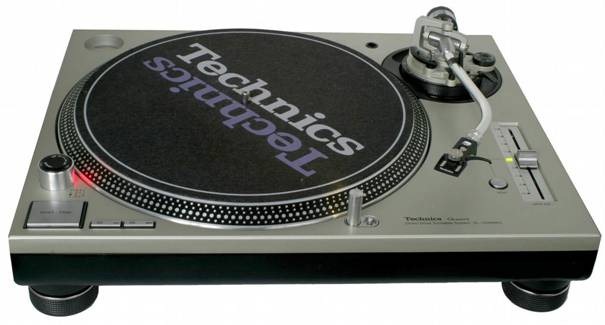
  • We built ourselves the PA system, the lighting system, made our own jingles, we cut out our own slip-mats in cardboard (this was before the first fast-starting Technics turntables)

clip_image006

  • printed our own posters to announce the show
  • distributed at parties all sorts of gadgets to attract audience to our next gig. A famous example is a small plastic bag with 2 sugar cubes suggesting the energy that will be required at the next party.
  • We begged for the small lorry from the grocery shop to be able to transport all that stuff and records from one place to another.
  • A lot was manual. And heavy. Vinyl records are heavy. Especially if you have a couple of thousand and you live on a 5th floor apartment with no elevator, stairs only.

It was a network of friends. We went out on our scooters to paste the posters on the ad boards in the villages around, we borrowed each other’s records. It was the shareable economy avant-la-letter. We played for fun, later for a crate of beer, and much later for a couple of 100 Euro per night. That was for gigs for 3,000+ people. No prima-donna behavior like today’s top-DJ’s like Tiesto and others. Everything was new and innovative.


We wanted to shock

We felt like pirates


Later I joined a group of crazy enthusiasts who founded one of the first free and – at that time – pirate radio station FM-Bruxel. That was with guys like Gust Decoster, Luckas Vander Taelen, Dominique Deruddere, Ray Cokes and Marcel Vanthilt, most of them still playing a prominent role in the local media and film industry.

We really behaved like pirates. We also had our flag and our own logo. Can’t find it back: if somebody from the original gang still has a picture, please mail it to me. I will be grateful for eternity.

And years later, some of these guys found each other as founders and managers of one of the most famous nightclubs of Belgium “Le Beau Bruxel”. Our party animals were from art scene and musicians. I did that for 2 years. And I can tell you, I saw a lot of “characters”, learned a lot about human (non)-behavior. We closed the shop because nightlife became too dangerous in Brussels.

Fast forward many years to 2011: I am having a telephone conversation with a potential speaker for Innotribe at Sibos 2011 in Toronto. And I describe the Innotribe space we had in Amsterdam last year.

My speaker reacted: “wow, that sounds cool! The only things you guys are missing is a pirate flag!”


clip_image007

Indeed, with some – a lot actually – imagination, you could see our 600 m² Innotribe space at Sibos as a flagship, with the front part for the keynote presentations as the “prow” of our ship, the lab-space as the “galley”, the tower with the projector as our mast, and the projection screen as our sails.

Imagine a ship like this sailing in the middle of the exposition hall of Sibos, creating havoc – positive inspirational havoc – throughout the week. The only thing that was missing was the pirates flag on the top of our mast.


clip_image009

The pirate flag.

Two days later – completely by coincidence – I started reading “The Pirate’s Dilemma: How Youth Culture Is Reinventing Capitalism” (Amazon Affiliates Link) by Matt Mason, also author of “The Pirate’s Dilemma: How Hackers, Punk Capitalists, Graffiti Millionaires and Other Youth Movements are Remixing Our Culture and Changing Our World”


clip_image011


Fantastic read. Some parts you can skip if you – like me – have been inherently part of the punk and new-wave culture of that period. The names of bands generate a lot of nostalgia!

Some really cool quotes from this book:

changing the very fabric of our economic system, replacing outdated ideas with the twenty-first-century upgrades of Punk Capitalism

Disruptive new D.I.Y. technologies are causing unprecedented creative destruction

D.I.Y. encourages us to reject authority and hierarchy, advocating that we can and should produce as much as we consume

Youth cultures often embody some previously invisible, unacknowledged feeling in society and give it an identity

Building a community of pirate entrepreneurs


In Chapter 2, the author introduced the “Principality of Sealand”, a pirates home in the middle of the English Channel, in waters that are un-sovereign.


clip_image012clip_image013


And have a good look at the intro about “Principality of Sealand” in Wikipedia:

Since 1967, the facility has been occupied by the former British Major Paddy Roy Bates; his associates and family claim that it is an independent sovereign state. External commentators generally classify Sealand as a micro-nation rather than an unrecognised state.[3] While it has been described as the world’s smallest nation,[4] Sealand is not currently officially recognised as a sovereign state by any sovereign state. Although Roy Bates claims it is de facto recognised by Germany as they have sent a diplomat to the micronation, and by the United Kingdom after an English court ruled it did not have jurisdiction over Sealand, neither action constitutes de jure recognition as far as the respective countries are concerned.

Maybe that is what innovation teams have to do: create their own sovereign state, micro-nation, governed by its own rules, taking unclaimed territory, and… act like pirates.

The pirates metaphor also came to mind when I saw last year Laura Merling from Alcatel-Lucent (@magicmerl on twitter and describing herself as “API Strategist, Marketing and Business Dev, Developer Community Geek”) gave a speech at Defrag 2010 in Boulder, CO.

Her talk was titled:


“On Being A Corporate Renegade”


Depending on what dictionary, a “renegade” is a deserter from one faith, cause, or allegiance to another or an individual who rejects lawful or conventional behavior. That’s what I would call a pirate.

You haven’t seen Laura. She is a bit skinny, long rave-black peaky hair, and some really cool belt. A bit like the one below, but much cooler. Since then I refer to her as the “belt-woman”.

clip_image015

Her talk went more or less like this:

When I got hired as manager of the API start-up within Alcatel Lucent, my CEO gave me 90 days to deliver V1 of the platform. 90 Days !

I did not have resources nor budget

I hired 6 mercenaries, good friends with specific proven strengths on marketing, coding, program management etc

We did it for fun and for the challenge

Next meeting with my CEO was on my role as change agent

He said: “Laura, you are successful when in 3 months time there are 70,000 people at my door complaining what this bloody women is doing in my company!”


That’s what I would call a CEO Innovation mind-set ! Maybe the Laura’s story is a bit romanticized, so what ? She gets the story across.

That’s why we invited Laura and her team when we were doing the Cloud Computing study tour earlier this year. This time we had her full team – 15 young and brilliant folks – who could interact with an executive audience that could compete big time with what you sometimes see from incumbents like IBM, Microsoft, Oracle, you name them. Very impressive. And what an energy from this start-up groovy team. So inspiring.

So when Laura was in Europe for business a couple of weeks ago, we asked her to come and meet our innovation team in La Hulpe. Inspired by the culture story, the idea emerged of teaming up together more regularly.

Quickly back to The Pirate’s Dilemma book:

What pirates do differently is create new spaces where different ideas and methods run the show

Pirate radio is an incubator where new music can mutate. Initially, the new strains of music it produces are seen as too risqué for the mainstream to touch, but once this music reaches a critical mass in popularity, anthems from the pirates start hitting the pop charts, pirate DJs become crossover celebrities, and the scenes created by these stations grow into cottage industries and worldwide exports

I started reflecting on this.

Why not create a community of pirates, of rebels with a cause, of innovators. By positioning our Innotribe space at Sibos as the Pirates’ Mother Ship, and like Matt Mason suggests:


“By giving a community

a new space

that was not previously available

to them,

you can empower them,

and they in turn

will propel your idea forward”


A group of people who are relentlessly challenging the status quo, breaking the rules, saying the unsaid, spreaders of the innovation virus and of tribal energy. No fear. Rebels with a cause. Leading by being our true selves.

And with the Innotribe Logo as our Pirate’s Flag and declare sovereignty.

Bring Jack Back (Update: Jack IS back)

Update: just minutes after posting by blog, it was announced that Jack IS back at Twitter, now as “Executive Chairman”. Check-out the news everywhere or here at ReadWriteWeb.

I am getting so inspired by the fabulous Jack Dorsey from Square. Watch this video and the full transcript on Techcrunch. Read David Kirkpatrick’s article in Vanity Fair with the title “Twitter Was Act One”

He makes me think of Liam Gallagher from Oasis. He has something “very British”. He is stylish. The same arrogance. The same pureness. The same design and drive for perfection. And skimming down until only the essence is left over.


One comment reads: “you know what ? Maybe it’s too sounding like the beatles or John Lennon (that was my first reaction). But as a great beatles fan, i’m just glad to see some guys carrying the torch and able to do great music”


beadyeye1stpiconline (1)


And have you seen the interview over the week-end (I think it was BBC) with Liam as part of the launch of the new post-Oasis band Beady Eye ? It seems that the voice of Liam was recorded without any effect, no echo, nothing (not the case in above video).


Pure

The essence

The minimalism of Twitter


Which brings us back to Jack. I believe Jack is the John Lennon of Payments. That Square means for payments what The Beatles mean for music.

Back to the video.


image


Some quotes from the different articles and transcripts, to get you a good idea how genius this guy is.

  • “Little Jack Dorsey was obsessed with maps of cities”. Read my recent posts and thinking about the connected economy, the connected company, the connected team and the connected value. They happen also to be the big trusts for our Innotribe at Sibos 2011 in Toronto, later this year
  • he studied for a year to become a certified massage therapist (Martine will love this)


“Payment is another form of communication,” he says, “but it’s never been treated as such. It’s never been designed. It’s never felt magical. We’re the only payments company in the world that’s concerned with design,”

  • So the architects designed this gorgeous bridge, but the problem with the Golden Gate is that this is an extremely tumultuous area, if you’ve ever sailed through this or taken a boat through this, the waves are immense. Or surfed through it, which is more dangerous. It’s a disaster, I mean all the weather of the Bay is being forced through this one single point. So, all these elements create this perfect storm of turbulence. It’s extremely deep in the middle and it’s an epic span, so this was not an easy challenge.
  • And a lot of people think of design, when they hear the word design as visual, something that looks pretty.


Design is not just visual, design is

efficiency

Design is making something simple

Design is epic

Design is making it easy for a user to

get from point A to point B


Reliability is a feature. This is what Brian said earlier, availability, reliability, and staying up, that’s a feature and that’s a product, and it has to be well-designed and thought after and considered, and that’s what we’re doing.

I think I’m just an editor, and I think every CEO is an editor. I think every leader in any company is an editor. Taking all of these ideas and you’re editing them down to one cohesive story, and in my case, my job is to edit the team, so we have a great team that can produce the great work and that means bringing people on and in some cases having to let people go.

This is the bridge I want to cross. [Shows Golden Gate]


This is how I want to arrive at a destination:


This is classy

This is limitless

This is inspiring

This is gorgeous


My dream is to have him at Innotribe Mumbai, where we’ll talk and discuss about Mobile Payments, connecting the un-banked and financial inclusion.

Would really like to hear Jack’s view on design and perfection for that.

Bring Jack Back. To be classy, limitless, inspiring and gorgeous.

How to create deep sustainable change

iStock_000011991468Medium

In my job, I hear many executives asking “to shake the tree”. What does that mean ? The temptation to just “Pump-up-the-volume” or let the innovation engine run “red hot” is just around the corner. “Let’s come up with a list of hundreds of initiatives and “tricks”, and we’re done.”

Tick ? Don’t think so.

Before discussing the “how”, any organization should first have a look at the “why”.

Usually, the why has to do with creating a more agile organization, waking up the entrepreneurial spirit, in other words to “un-trap” the creative juices.

And to do so, work is needed at the foundations. It’s about making the organization healthy, fit and un-trapped. This has nothing to do with six-sigma, lean, or other way to improve the efficiency of the organization, the efficiency of the organizational “body”.

What we are talking about here is


the fitness

of the organizational “mind”


iStock_000007248761Medium


The expected outcome of pumping up the volume and the fitness of the organizational mind is a


connected organization,

connected teams,

connected people,

connected values.


With connected healthy internal and external primary and secondary circuits.

In between the “why” and the “outcome” is the “how”: the set of tricks, tools, and processes that enable a connected and innovative organization.

As mentioned above, I can easily produce a list of hundreds of new or enhanced innovation initiatives and that set of “hows” will be the subject of one of my next blog posts called “Pump up the (innovation) volume”.

But first, we must focus on the “why”.

We must make sure

that the roots

of the mind-tree to be shaken

are healthy


Make sure that the “connections” between the people of the organization are open and healthy. That the rotten apples – both people and processes and cultural dysfunctions – are eradicated. That the connections are such that they encourage acceptance.


Acceptance at several levels


Let’s look at a framework for these connections, the circle of acceptance.

image

All credits for this framework go to André Pelgrims, who is our team coach for team-dynamics. You can read more about André here. Every organization should hire one or more “André’s” to make their culture programs real. (Disclosure: I have no shares or business relation with André, but he was one of the coaches of the Leading  by Being (LBB) program I already mentioned so many times on my blog; stronger, LBB was the reason to start this blog)

The first level of acceptance is being accepted as a person. In our full authenticity. Watch carefully yourself when you meet a person for the first time. What is your screening mechanism: is it respect, space, trust, or something else ? And how much are you trapped in this specific mechanism ? A person that “passes” this initial 15 sec check will be accepted by you as a person. The effect is that person will give you energy.

However, if that person pumps-up its space, trust etc, then that person will start being an energy drain for her colleagues. It happens when people bring into the team the baggage that is not related to work. They don’t even have to talk about it, they bring it unconsciously with them. The art is to be aware of it, in the present moment. And not let it develop as the personal drama. Then it becomes an energy drain. Personally, I need space and silence. If not, I get drained.

“Energy Drains”

The second level of acceptance is being accepted in your role. Only then you can create impact. When people make themselves (ie. their role) look bigger than they are, then we enter the space of

“Power Games”

The third level of acceptance is being accepted as a change agent. Only then you can create a new type of dynamics, only then you have the right to shake the tree. It’s the moment where you don’t have to sell yourself anymore, you are being called. Again, when one tries to show bigger than one is, one ends up with

“Illusion Building”


The awareness of these circles of acceptance are particularly important for innovation teams, who are supposed to keep the fire of innovation burning throughout the organization. Not only the innovation team must maintain healthy connections within the team, but especially in all its relations with its stakeholders. You can shout “change” as much as you want in an organization, if you are not accepted as a person, in your role as innovator, and genuinely being called, you can forget about all the “tricks” you have in your pocket. They remain what they are. Tricks.

Therefore, I prefer to being called as-a-person. The tricks are a bonus. Some people think they have no tricks. I don’t believe that. But even in the hypothetical case that you don’t have tricks, you can still give energy, have impact and being called as a change agent IF you are accepted as a person.


I want to be called as a person

I want to be loved


Recognition is not good enough. Recognition is like a compromise: if I am not capable of receiving love, I compromise on recognition. That’s why a tap on a shoulder, a holding arm, a hug are only relevant if they are real. The animal in us just senses when these are un-real.


So, what does it take to be real ?


In addition of having acceptance at all levels, what else is required ? For me what makes the real difference is the way a person approaches me with a healthy mix of love and courage, combined with an equally healthy balance of guilt, shame, and vulnerability. With respect for primary and secondary circuits.


The Love/Courage mix:

image

  • I may have a lot of courage when giving feedback to a colleague, a partner, a business partner, etc. But if this courage is not rooted in a feeling of love for that other person, then I end up with “active destruction”, the effect of a dirty forward tackle in football. Many companies have unfortunately a culture of forward tackle.
  • On the other hand, when I approach the person with love but without courage, then the effect of my intervention is one of “passive destruction”, unaware of the emotion

The Guilt/Shame mix

image


In a very similar way, guilt and shame go together. Guilt without shame is inwards focus. It leads to depression, in a slow and creepy way. Leading to aggression against yourself. On the other hand, shame without guilt is again like the forward-tackle. Not creepy, but blow in the face, active aggression against yourself.

Vulnerability. I have already very often mentioned vulnerability in my blog posts. Suffice to say here that showing vulnerability in the safe primary circuit should be ok. Only works of course if the connections in that primary circuit are healthy.

canv-09-314x400

Illustration by Hugh MacLeod

Secondary circuits. Last but not least, let’s pay some attention to secondary circuits. There is nothing wrong with secondary circuits. On the contrary, they need to exists to feed a healthy primary circuit, to be supportive of the primary circuit. The problem starts with secondary circuits that are NOT supportive to the primary, and even are counter-productive. Those are the rotten apples. But the secondary circuits need to be made explicit. And for a really healthy system, it would be better that many of the secondary circuits’ discussions are held in the primary circuit for the benefit of the whole team.


Our goal should be

to make the primary circuit stronger

than the secondary circuits


and not the other way around in many organizations.

What happens a lot in “shake the tree” experiments, is that one or more levels of acceptance are skipped. Or that awareness about the effects of energy drains, power games, and illusion building are being denied. Or that we don’t expose the right mix of love/courage, of guilt/shame, of vulnerability in our day to day connections. That we start jumping into the “how” before questioning the “why” and the desired outcome.

Therefore, let’s first check if our connections are pure, healthy and real. This is the only possible foundation for a deep change that is sustainable on the long term.

Team dynamics and the fiction of friendship

Check out this wonderful RSA animation about Steven Pinker’s “Language as a Window into Human Nature”

image

Steven Pinker shows us how the mind turns the finite building blocks of language into infinite meanings.

But I looked at this animation and was triggered by how much this relates to how our economies, companies, teams, ourselves and even exchange of value between these entities are fueled by the relationship mechanisms described in this animation.

In essence, Steven Pinker describes 3 relationship types:

  • Dominance relationships. Pretty self-explanatory and what used to be used by primates, but still existing in some companies
  • Communality relationships. The mode is “You share and I share alike”, for example in a couple or between friends
  • Reciprocity relationships. Business like tit for tat exchanges of goods or services that characterizes reciprocal altruism. This is what we do in commerce. Exchanging money or to a larger extent exchanging of value.

But by not saying the things as they are, and mixing up the conventions that apply to each of these relationships, you end of with…


awkwardness


Awkwardness in the relation, in the team culture, in the team dynamics and illusions of friendship and love. In dating – see my prezi on how to make babies – this awkwardness leads to “the anxieties of dating”.

And it really feels awkward when the confused give a tap on the shoulder or hold an arm, skimming the borderlines of trust.


album_large_3992338


But saying things “as they are”

also means

taking risk,

getting naked with no defense

or fall-back position

in case it goes wrong


That’s why you best do these things with the guidance of an experimented coach. Somebody who can guide and learn you to take personal leadership, daring to step forward, and daring to take care of expressing our own needs. It’s carving in the underlying energy streams under the table, where emotions such as anger, joy, hate, rejection, love, etc live. To discover and get rid of the hidden agreements and closed circles of the past. Nobody likes being rejected or worse being ignored.


6a00d8345189aa69e20148c85f6601970c-320wi


Instead of “getting used to it”, we could develop an emotionally intellectual language for expressing our needs. Something like:

  • Trigger: “this specific behavior causes an emotion with myself”
  • Emotion: “it makes me sad” or “I feel hurt”
  • Underlying need that is not fulfilled: “the need to fully contribute value” or “the need for a unique learning experience” or “the need to be respected” or “the need of not being ignored” etc, etc
  • And attaching to this need a “request”, an “invitation”: like “I invite you to fully include me next time”

All this in full authenticity, without manipulation, hidden agendas, power games, and other sorts of obfuscation of the reality.


EGYPT-POLITICS-UNREST


But something fundamental can change when people meet, when they group in crowds. When they can look each other in the eyes. On a broader scale, think Egypt, Tunesia, Bahrein, etc: when people get together at one place, everyone in that crowd knows that everybody knows that everybody knows.


It leads to the collective power

to challenge

the authority

of the dictator


It’s the story of the emperor’s cloths. And explicit language is an excellent way of creating mutual knowledge.


What if we would start applying

these relationship principles

to our connected economy,

to our connected companies,

to our connected teams,

to our connected self,

or even to our connected value?


This would btw be a great way to organize and thinking and collaborations for Innotribe at Sibos 2011 on 19-23 September 2011 in Toronto.

  • Using the theme of the connected “something”, we could bring in technology topics like Digital Identity, Social Cognition, Big Data.
  • We could also experiment with some non-technology trends related to Social Capitalism, Future of Money/Value, Corporate culture, Where companies invest long term.

But to come back to the main flow of this post: the Egypt principle of mutual knowledge in a crowd also plays at a smaller level like a team.

But here is the paradox and at the same time the risk and opportunity:


No mutual knowledge

=

maintaining the fiction

of friendship and love.


However, with mutual knowledge and using an overt language you create the potential of having true team-ship and love. But using overt language also means you can’t take it back when it is out there. We don’t have a fall-back position, we are vulnerable.


1 (3)


But sometimes, one needs to pull a tooth. Pulling the tooth hurts, but you’re happy when it’s gone. Likewise, tapping blood may show black blood, and the tapping may hurt, but once the blood had been rinsed, you’re fit again.


When you let go the masks,

show your authentic self,

only and only then

will we be able

to realize

the full team potential


That’s why next week, our team goes on off-site to work on team dynamics. To discover and become fully aware and conscious of relationship types and dynamics, and to double-check whether here or there we don’t need to pull a tooth or to let go some black blood. We probably won’t find anything, but who knows ;^)