“Corporate Rebels United” – the start of a corporate spring?

People call you an instigator, a protagonist, a renegade, a pirate, a mercenary, a rebel, or an empowered employee. We know you for what you really are: a change agent who sees speed, change and innovation as the new corporate norm. We know because we are you. We know the challenges – and the excitement – of driving change in an incumbent or start-up company. We know what it means to go for “The Innovator’s Risk”

We call ourselves “Corporate Rebels United”.

The concept of Corporate Rebels is not new. Many people have written about or have alluded to it:

John Hagel referred to the concept of the “Empowered Employee” in one of his recent Forbes posts.

The key answer that defines the post-digital enterprise is to shift attention from the cost side to the value side. Rather than treating employees as cost items that need to be managed wherever possible, why not view them as assets capable of delivering ever-increasing value to the marketplace? This is a profound shift in focus. For one thing, it moves us from a game of diminishing returns to an opportunity for increasing returns. There is little, if any, limit to the additional value that people can deliver if given the appropriate tools and skill development.

and

The post-digital divide will force them to choose sides – on the side of employee empowerment, or on the side of tactical cost cutting, job cutting, and diminishing returns. If not, the divide will choose for them.

But a Corporate Rebel has something extra. It is about daring to stick out your neck. It is about taking personal leadership.

Nilofer Merchant differentiated between a rebel and a leader

So perhaps we could use a more neutral word: protagonist. A protagonist is a principal champion of a cause or program or action. The protagonist does not wait for permission to lead, innovate, or strategize. They do what is right for the firm, without regard to status. Their goal is to do what’s good for the whole.

Lois Kelly (@loiskelly) from Foghound and Mike Maney (@the_spinmd) from Alcatel-Lucent also discussed recently whether the word “rebel” is not too negative. Mike made some very deep reflections why the hard dividing line between good and bad rebels does not always make sense.

Argument aside, we believe that – positioned well – the word “corporate rebel” exactly reflects who we are.

The aim of “Corporate Rebels United” is to create a global community of extraordinary corporate change agents. It is not an academic exercise or research effort. It’s something deeply actionable.

Our mission is to build the most amazing community of corporate rebels worldwide to ensure that true change and innovation happens virally

The initial idea for Corporate Rebels United emerged when innovation teams of Alcatel-Lucent and Swift met and worked closely in the context of Swift’s Innotribe program. We were excited by the exchange of ideas and energy that emerged when like-minded folks came together. And that got us thinking about some big “what if’s”:

  • What if we could create a tribe of the best and most exceptional corporate rebels worldwide – people like us, people like you?
  • What if we could start leveraging each other’s ideas, energy and best practices?
  • What if we could design a movement to support each other when the going gets tough?
  • What if we could cross-fertilize and infect our organizations with the change-virus from within?

We want to identify exceptional people worldwide that already have an impressive impact on change and innovation in their corporations, no matter in what field or industry. The movers and the shakers. The do-ers of today. The ones who take initiative. Who create deep change from within. People who energize their organizations by leading from their true selves. The crazy ones. The rebels. The troublemakers. The ones who see things differently, and who are crazy enough to think they can change the world. People like you.

Our plan is to start small – 15 founding rebels cross-industry – because we want to ensure quality and resilience in the initial starters group. We’d like to get the spirit right from the start. We have scheduled a kickoff call on March 30, 2012 with 15 founding rebels. We will follow that call with an off-site meeting where we’ll jointly build a set of agreed upon principles and a longer-term action plan to open and expand Corporate Rebels United to a wider audience.

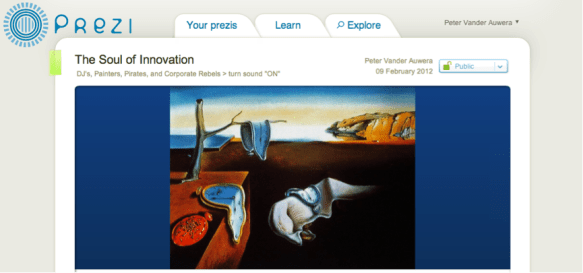
A lot of “getting the spirit right” was already included in one of my latest prezi’s on the “Soul of Innovation”. Without any publicity, this prezi already generated more than 3,000 hits in less than one month. We seem to have touched something that resonates. Some of it was withheld for my TEDxNewWallStreet talk last week in Mountain-View. Innovation is more than a set of tools and processes. Innovation is an attitude with tribal energy!

For viewing this prezi, turn audio “on”, as I experimented a lot with sound and visual landscapes.

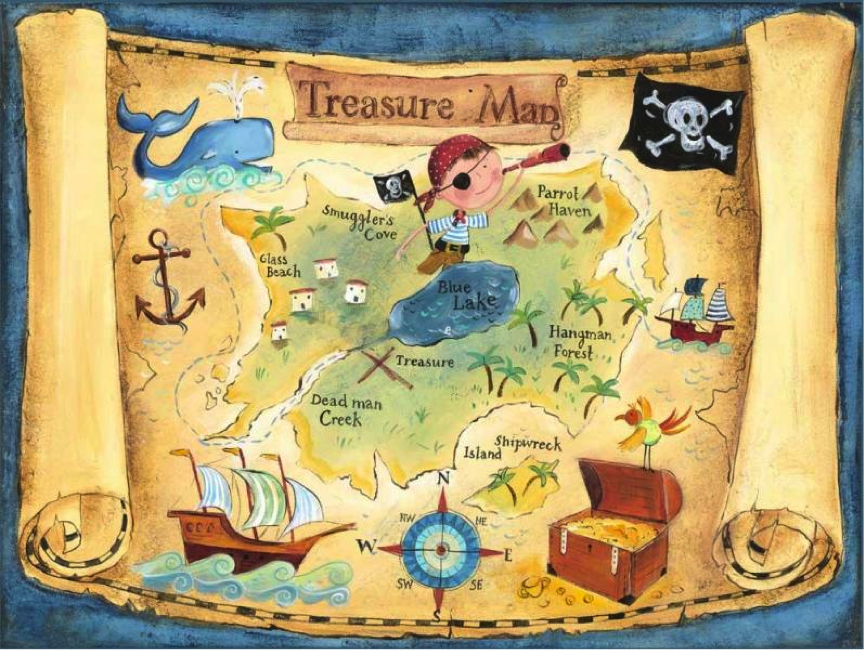
Somewhere halfway in that prezi, you will discover the Rebels Manifesto in the Pirates Treasure Map

Rebels Manifesto

Relentlessly

Challenging the status quo

Breaking the rules

Saying the unsaid

Spreading the innovation virus

Seeding Tribal energy

With No fear

With a cause to do good

Leading by Being from our True Selves

Going after the un-named quality

Relentlessly

What exactly Corporate Rebels United will do is the essence of our discussion at our kick-off call and event. Initial ideas include:

  • We want to build an action-driven community.
  • We want to create an incredible energy bomb of corporate change.
  • We aim for a very high level of integrity and authenticity. We want this to be morally, intellectually, and artistically right
  • We want to re-enforce the energy of known rebels in a non-zero sum community.
  • We want to identify and unleash the energy from the hidden rebels and the hidden pearls in our organizations and give them a voice
  • We want to create exchange programs between our corporations
  • We want to have deep positive business impact on the corporations and organizations that host and pay our salaries.
  • We want to create a culture in our corporations where change is the norm.
  • We want to measure the progress and propulsionwe make/create:
    • Individually
    • The folks we influence
    • The corporate change heartbeat
  • We want to evolve our corporations into places of constant change, resilience, responsiveness, reflection and vibrant energy.
  • We want to create a place for play, fun, rock, and rich personal expression

At the start, Corporate Rebels United will be a closed community: we’re looking for atypical people who make us go WOW!

Because they act from their true self and without fear, and make amazing change happen within their organizations and the ecosystems they are part of.

People with a moral, architectural, almost artistic integrity. People with a BIG innovation heart in the right place.

We’re looking for people who inspire us as human beings. With open mind, open heart, and open will.

Like Seth Godin said in his last book (We are all Weird):

“they have to be a bit weird”.

We plan to go full-steam as from our Kick-Off call on 30 March 2012, right after the start of the 2012 spring. Our ambition is to be able to shine and radiate as a strong community with first results by end October – Mid November, not co-incidentally the busy conference season with Innotribe at Sibos, Techonomy, Defrag and Blur.

Like Bill Gates wanted to see a PC on every desktop, and Eric Schmidt wants to see an (Android) mobile in every pocket, we want to see a corporate rebel in every company. That’s a lot of corporate rebels 😉

Of course, I am not Bill Gates, nor Eric Schmidt. But there is still enough room for a normal human being like me to create significant impact. And although I am 55 years old now,  I still want to change the world. And yes – at 55 – I still would like to instigate a Corporate Spring. There is no age for Corporate Rebels.

We jump and want to feel the daily adrenaline of being and coaching Corporate Rebels every day of our life.

As we get started up, get some inspiration on our curated site for Corporate Rebels United on Scoop-it.

If you are interested to join Corporate Rebels United, leave a note and some argumentation on why you’d like to join in the comments section of this blog post. And/or let us know what you can bring to the table to make this a big success.

As the Corporate Rebels United get up-to-speed, they will start blogging on http://corporaterebelsunited.wordpress.com and we will soon open our website at http://www.corporaterebelsunited.com

Let’s 21 March 2012 be the start of our Corporate Spring! Because we believe it matters to infect our organizations with “change-as-the-norm” from the bottom-up!

@petervan of the Innotribe team

Laura Merling (@magicmerl) and Mike Maney (@the_spinmd) from the Alcatel-Lucent team

Brené Brown: to stand in the middle of the arena

It takes about 4:00 minutes before she gets into it, but here is once again a great TED talk by Brené Brown (@brenebrown)

Some highlights:

  • I engineered myself to staying small, staying under the radar screen
  • vulnerability is NOT weakness, it our most accurate measurement of courage
  • vulnerability is the birthplace of innovation, creativity and change are buzzwords
  • it’s about creating something that did not exist before, that takes courage
  • shame is the swamp lane of the soul
  • the myth that powerful folks don’t need checklists
  • TED is the failure conference
  • the credit goes to the man in the arena
  • shame is the gremlin that says “you’re not good enough”
  • shame is a focus on self, guilt is a focus on behavior
  • shame is “i AM bad”, guilt is “i DID something bad”
  • shame is “i AM a mistake”, guilt is “i DID a mistake”
  • people who don’t experience shame are people who have no capacity for connection or empathy
  • shame is different for men and women
  • empathy is the antidode to shame > the two most powerful words when we are in struggle are “me too”
  • secrecy, silence, and judgement make shame grow exponentially
  • don’t wait to stand in the arena, in the middle of the fire, until you are perfect
  • we want you to go in and to dare greatly
In the beginning it’s a bit irritating that she does so much chit-chatting, but after a while i am aware it is a presentation technique to balance more relaxed moments with very introspective moments. A little bit less strong than her first appearance at TED a year ago, bit hey, what do you want: that was a milestone, a top that is very difficult to reach over and over again.
Enjoy


Fear is not an option

Previous posts were impressions of some great conferences I recently attended.

This blog post is different. It is more a personal reflection.

I invite you to join me on my journey.

In our company, failure is not an option (FNOA). That’s quite normal given the nature of our business: a worldwide business-to-business network for mainly international financial transactions. That’s not something you mess around with: rightfully so.

Recently, when attending the Compass Summit, there were a couple of sessions on risk management. Some examples were given how risk is assessed in other businesses such as investments in oil refineries, also an important and critical infrastructure. The similarities with our business were obvious.

There is always the tension between investing in proven technologies and taking some risk with less proven innovative technologies. Moreover, any investment in such space usually commits you for long periods:  10-40 years.  So, you better make the right choice.

All the risk managers I have met are highly responsible people. I can imagine that people making such decisions do their homework and base their assessments on extensive risk analysis. There are for sure many techniques, processes and best practices for this.

But what about the more unconscious parts

of these and other decision processes?

Do emotional and less rational processes play a role? Such as doubt? Such as uncertainty? Such as fear?

  • Fear to make the wrong choice.
  • Fear of taking the leap of faith and switch to the next wave of technologies.
  • Fear of holding back.

I did some introspection in my own state of mind and what’s holding me back some days.

I realize that by sharing this, I do show some personal vulnerability (see video Brené Brown), but i take the risk. Because I am a strong believer of open mind, open heart, and open will. And would like to make more “human” connections with all those who I care about: my family, my friends, my colleagues, my followers, the followed. Because I believe openness leads to transparency, better connections, better choices, and more conscious corporations with a real soul. I would like more people showing some vulnerability.

It feels so much more human.

As some of you may have noticed, I am quite active on twitter. I read a lot. I follow more than 1,000 RSS feeds. I try to stay up to date. I believe my readers appreciate. I believe my employer appreciates the holistic view I bring to the table. I appreciate their feedback and it gives me energy.

Staying up-to-date is a matter of discipline.  In principle, I reserve time early in the morning, during lunch breaks, and late in the evening when the kid is to bed, and everything is silent. I estimate it’s about 3-4 hours per day before and after working hours: quite an investment and intensity.

And with this sort of intensity, I realize every day that there is so much good stuff out there on the edges of our ecosystem. There are so many inspiring people out there, so many inspiring ideas.

Is it just a dream that one could live

in such a permanent inspiring environment?

When I come back to the office, into the “real” world, I often wonder how I can make that knowledge stock more relevant for our company, for our community. How can I create a knowledge flow from my knowledge stock? What’s a better way of sharing? With some more rubber hitting the road. And to see more significant progress and results of our innovation activities.

It becomes almost

an existential question

“What am I doing here if nothing or very little of these spotted innovations, prototypes, and incubations ever hit our mainstream business?”

As Nick Carr wrote in The Shallows (Amazon Affiliate link), all this exposure to scattered new stuff does something with your brain. You start getting used to “scanning”.

It’s a different type of attention, a different type of presence or even “non-presence”. And it becomes difficult to focus for some longer time on something specific, even something as simple as reading a book.

Scanning leads to distraction. Overflow. Not seeing clear anymore. But on the other hand, you become much better in making connections between topics, memes and trends.

Just the other day, a friend called me, and she was in awe for the progress we had made with Innotribe. And also for the personal growth progress I had made myself.

I am not sure. I am in doubt. Maybe I don’t see it. Maybe I don’t see the progress anymore, to close to see clear.  Forgetting the take the time to take the helicopter view.

  • Maybe that’s why I feel more like stagnating.
  • Maybe I am too hungry.
  • Maybe I don’t walk the talk of letting emerge what needs to be.
  • Maybe I don’t celebrate enough progress.
  • Maybe I am too closed.

Even more closed with people I like a lot. Then I feel afraid.

  • Afraid of jumping and making bold moves
  • Afraid of sticking out my neck even more.
  • Afraid of showing some/all my vulnerabilities.
  • Afraid of being hurt.
  • Afraid of giving too much, and not getting back.
  • Afraid of opening up
  • Afraid of the unknown in opening up.
  • Afraid of discovering emptiness.
  • Afraid of loosing control.
  • Afraid of jumping in the empty hole.
  • Afraid of standing in the full fire.
  • Afraid of my true self.
  • Afraid of being free.

I am hungry to be free. 100% free. In the sense of being “alive”, being 100% in my true flow, free from internal blockages such as fear. Free like in letting myself go in dancing. Free like in my most creative moments.

And then, just the other night, coincidently – there are no co-incidences, I believe a lot in synchronicity and that the things that come to you had to come to you – I was picking up again that book of Christopher Alexander in “The Timeless Way of Building” (Amazon Affiliates link) about patterns in architecture.

Chapter 2 is about “The quality without a name”. It made me aware that what I am chasing is more than “free”. I recommend anybody to read this chapter, for me it’s like an ideal compass for life:

There is a central quality which is the root criterion of life and spirit in a man, a town, a building, or a wilderness. This quality is objective and precise, but it cannot be named

and

It is a subtle kind of freedom from inner contradictions

and

… the most primitive feeling which an animal or a man can have, as primitive as the intuition which tells us when something is false or true.

Attributes of this quality without a name are:

  • Alive
  • Whole
  • Comfortable
  • Free
  • Exact (like in “right”)
  • Egoless
  • Eternal

But maybe I should not try to chase “free” or to chase that unnamed quality.

Maybe that unnamed quality is an illusion.

I don’t think so. I would surely hope not so.

The day

I am not after

that unnamed quality,

I better stop

Going relentlessly

after that unnamed quality

IS my reason for being

But the hunt for better and more quality sucks ànd gives energy.

And sometimes I need a pause. Time to reboot. Step out of the treadmill. Take distance. Re-connect with my true self. Pure silence and no distraction. Presence. More conscious.

Sometimes, I imagine living in a convent or on a desolated island. Nothing fancy. Almost minimalistic: small Spartan room, clean, bare furniture, some simple fair food and some wine. And reading. Musing. Reflecting. Having a tribe following.

Maybe that’s enough.

  • But wouldn’t I feel bored pretty soon?
  • Wouldn’t I become a fugitive of myself?
  • Prisoner of my own fear?

So, I have come to the conclusion that

fear is not an option

I believe that one has to hit the bottom of fear, and stay there for some time. And be present in that bottom moment. And let emerge and let happens what comes.

You can’t “steer” everything in live. Probably nothing. I don’t believe anymore one can “steer” innovation, that one can steer change. That a subject for a subsequent post 😉

Some things cannot be planned. You have to let go, and take the leap of faith.

The only way to make personal and professional progress is to jump. Take the risk. Stick out your neck. And fail sometimes. Fail many times. Re-start. Retry. Fail. Retry. Success. Repeat.

Do you have fear? Do you have doubts? Do you need time to reboot? To re-connect with your true self?

What does this do with you? How does this resonate with you? Does this want you to respond and share your own perspective and experiences?

Or is it more, OMG…

Let me know.

@petervan

Pump up the (innovation) Volume

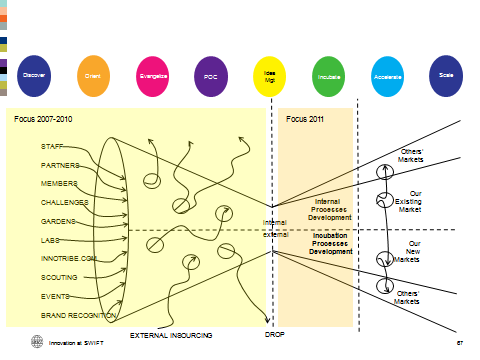
I would like to start with one of the slides of the innovation framework presented in “How to make babies?”.

image

The graphic and model is of course based on – but adapted to the specific SWIFT environment – the work of on Henry Chesbrough, the godfather of the concept of “Open Innovation”, and author of the 2003 book “Open Innovation: The new imperative for creating and profiting from technology” (Amazon Affiliates Link)

clip_image004

Chesbrough says:

Open innovation is a paradigm that assumes that firms can and should use external ideas as well as internal ideas, and internal and external paths to market, as the firms look to advance their technology”. The boundaries between a firm and its environment have become more permeable; innovations can easily transfer inward and outward. The central idea behind open innovation is that in a world of widely distributed knowledge, companies cannot afford to rely entirely on their own research, but should instead buy or license processes or inventions (i.e. patents) from other companies. In addition, internal inventions not being used in a firm’s business should be taken outside the company (e.g., through licensing, joint ventures, spin-offs)

Innovation Framework

The graph above illustrates an innovation framework:

  • With lots of idea generation tools on the left side of the graph
  • An innovation funnel, progressing the ideas from left to right, and making healthy adults from incubated babies
  • A north and a south side, where “north” stands for a traditional gating process product evolution for the core activities of a company, and where “south” stands for any innovation that basically does not fit the blueprint of the core.

In my blog post “How to create deep sustainable change”, I discussed the “Why” and the “expected outcome” of deep change and innovation.

  • The “why” has to do with creating a more agile organization, waking up the entrepreneurial spirit, in other words to “un-trap” the creative juices. And to do so, work is needed at the foundations: the roots of a tree. It’s about making the organization healthy, fit and un-trapped. This has nothing to do with six-sigma, lean, or other way to improve the efficiency of the organization, the efficiency of the organizational “body”. What we are talking about here is the fitness of the organizational “mind”.
  • The expected outcome of pumping up the volume and the fitness of the organizational mind is a connected organization, connected teams, connected people, connected values, operating in a connected economy.

Pump up the Volume

What follows is a personal interpretation of a team brainstorm we did in February 2011. So, it’s collective wisdom that I happen to be able to put in a format that’s more or less readable. Thank you team !

In this blog post, I will talk about the “How”, the set of tools that an organization can use to achieve the why and the desired outcome.

“Tools” can be actual tools such as an idea generation portal, but it can be other techniques at the front-end of innovation (the ideation), as well as processes and governance for moving ideas from ideation, via proof-of-concept, incubation, acceleration, and scale to full fruition.

What follows is also a model that can be used to underpin a strategy of “shake the tree” or – what I prefer – to “Pump up the (innovation) Volume”.

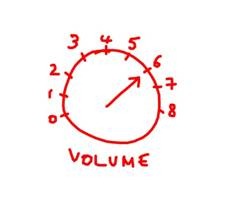
The volume knob is another metaphor to help us gauge our innovation focus, efforts and investments. What is important? What is nice to have?


clip_image006


Turning the knob to the max is what I would call being serious about innovation. But you have to start somewhere.

The Rose of Innovation

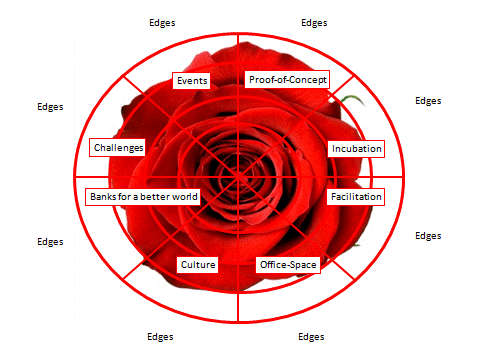
So, let me introduce you to the “Rose of Innovation”. Somebody has to give the romantic spin in all of this.

And let me mix it with the epicenter of an earthquake.


clip_image008clip_image010


Indeed, “Shaking the Tree” is like starting a quake from the middle, and the seismic innovation waves swarm to the edges of the system, where in the end they cause “Fault Lines”. You “feel” the move.
 

You know that inertia has been broken

You know you have crossed the chasm


clip_image012


And let’s segment the rose or the epicenter in different slices. Each slice is a cluster of innovation tools. You can have as many slices as you want, but I suggest to limit it to six in this case, merely to keep the overview and the focus.

For each slice, one has to decide how far to the right you want to turn the volume knob. Do you want to move from 2 this year to 8 next year? Probably, you want a multi-year perspective on this: from 2 to 4 next year, 4 to 6 in two years, towards 8 in 2015 ?

Let me walk you through the different slices.

Challenges

We already do internal and sometimes external – with customers – innovation challenges. It’s a call for teams and ideas around a pre-defined topic. What could be our ambition level if we pump up the volume to 8 by 2015?

  • Our ambition should be to be seen as one of the Top-10 innovation companies in financial industry. Long way to go, but possible with focus and will.
  • Build a real “Exchange” of ideas, competences, teams,…
  • Make a real competition of if. Like Cisco’s X-Prize. And with real money, I mean indeed a 250K EUR price for the champ of the year to help her incubate the idea of the challenge.
  • Open up the Incubation Centre, not only for incubation projects, but also for challenges. The cocktail of innovators in Building 8 will be irresistible.
  • Start-up something like frequent flyer pass. A frequent innovator pass. Points gathered this way add to your annual appraisal points, and reward repetitive innovators.
  • We should become so good we are being “called”: by other companies, at conferences, etc So good that people see the value and want to pay us for this.
  • Launch internal SWIFT “bucks”. Innovators can invest “bucks” in their projects. Later, when the project incubates these “bucks” get converted in actual shares in the project-company. These ideas are not new: ideation tools like Spigit and Brightidea already implement this. We just have to turn on the feature.

Events

This is more or less my shop today: let’s call it “Petervan Productions” Our events even more become “immersive experiences”. This unique mix of high-quality matter experts and speakers, together with our facilitation techniques. We could do much much more in this space. What about:

  • 8 Innovation events per year like Innotribe Mumbai ?
  • 1 Partner innovation event of 3 days
  • 1 Customer innovation event of 3 days
  • Deep conversations with: 3 days off-site with a guru on a topic and a select group of top-15 Heads of Innovations of banks
  • 4 hackatons per year where we ask developers to code/hack together an application in 2 days
  • More study tours, not only for the executive or L1/L2 level but accessible for all staff
  • The frequent innovator pass should help us identity who can go on such a tour
    • More gamification of our events: work with game experts such as Jane McGonical from Reality is Broken (latest book), Dave Gray from XPLANE and Gamestorming, and Verna Allee from Value Networks

Dave Gray author headshotVerna Allee

From left to right: Jane McGonical, Dave Gray, Verna Allee

  • Have a 3 day SWIFT employee festival? Like AMPlify.
  • Do sort of Woodstock at Sibos. Like Pirate Ship. With concerts
  • Sponsor other innovation events
  • Embed and sell our techniques to third-party event organizers

The overall objective is to create serendipity. To reach other audiences, bring other content, start exploring the edges, create brand recognition. For SWIFT. For Innotribe.

clip_image014

We also should more and more look at our events as something that is the middle of the process, not the end-game. Usually we come out of an event, exhausted, as we build up all the energy towards that one day, one week. But then it only starts: the event is only the place where the connected community meets for the first time, gets initially built.

Proof-of-Concept

Again, we already do this. We have a yearly budget that lets us invest moderate amounts of money in proof-of-concepts: these can be prototypes, animations, whitepapers, etc

  • Turning up the volume in this space is merely doing more: more prototypes, hence more budget and resources

Incubation

We just started this year. See also the “Babies” presentation. Initiated by Matteo, and now with the help from Cathal as program manager, this is our “Mathal Productions”. Their projects are located in Building 8.

Turning up the volume would mean:

  • Team with Silicon Valley incubators
  • Team with Incubators in Eastern Europe, APAC, South America. The example of Solkovo in Russia comes to mind
  • We could do much much more in bringing young entrepreneurs and start-ups together. You can create a marketplace of start-ups, accessible by the SWIFT community.
  • You could create – together with the 9,000+ banks on SWIFT – an alternative start-up funding and loan model. With better rates for those who have a good standardize Innotribe quality score.

Facilitation

This is what Mariela and team already do. For fun, let’s call it “Mela Productions”. Why for fun? Or “Innotribe Facilitation Studios”

  • Mela should make a business out of it. Think big. A worldwide team of 50-60 facilitators. Why not. If we were able to deploy similar numbers of lean navigators for cost reduction and efficiency, why can’t we do something like this for value creation?
  • This is also something we could start selling. This is an area where we are being “called”. Internal business units, but also banks from our ecosystem already now ask Mela to run facilitated workshops. Even from outside or our industry. We should charge for it.

Office Space

This is about having a critical look at our office space and the – communication – tools we have. On one hand we are spoiled. If you have ever been to the SWIFT HQ, you will for sure have been impressed by the main building and campus surroundings.

But the main building inside sometimes feels like a temple or a castle, with long corridors and closed doors that not really incentivize for cross-collaboration and sharing. I know there is a big project started to look deeply into this.

But also office-tools should be looked at. Today we have something called “Internet on the desktop”. It is a Citrix implementation of your browser.

  • We should turn it 100% upside down. Internet should be the default, and we should have a “SWIFT on the desktop” for the couple of apps that require tighter security or access control. It’s inevitable. It’s part of the movement towards cloud.
  • Skype, Drop-Box, Google Docs, etc should be our standard tools. Complemented by Salesforce, Chatter, Twitter, Quora. We should all be equipped with iPADs, Androids, etc. We never should have to use a PC anymore.
  • This modernization will also have a major impact in image and brand.

Culture

I have been quite deeply involved in an effort to look at company culture, and those who follow my blog know that I have something to say in this space.

  • Lately, the culture team was re-organized, and volunteers from GEN-Y and GEN-X were called upon. I applied for GEN-X (those born in 1961 and beyond)
  • Great was my astonishment that I was considered “too old to innovate”. I am born in 1957 so indeed, strictly to the letter, I am not GEN-X anymore. But I am lucky, I still get “copied” on the stuff (sic)

Any pump-up-the-volume in his space

will be worthless

as long as we do not

apply a strategy of “seed and infect”

  • If not, what we will end-up with are loads of powerpoint slides, processes etc. It will show great in an annual report or so, and it’s a bit the same as “how real is your innovation?”. Ask yourself the question “How real is your culture change”.

What we need is

a viral infection of the company


  • 40 people in 2011 should get the chance to follow a personal discovery journey like Leading by Being, so that they lead from their open mind, open heart, and open will.
  • In 2012 another 100 people. And in 2013 another 100.
  • That’s 240 folks. Deeply passionate about changing the company. That’s more than 10% of the workforce. That will change the culture for sure.

And have a look what companies like J&J do. They have in a couple of years a group of more than 750 change agents. They can be flown-in or video-conferenced at any moment to form tiger teams.

Banks for a better world

This is a big bad new idea. It must be possible to have a deep merge between Innovation, Talent Management and CSR.

Think big, really big

I think it must be possible to create

a 1 Billion $ Fund

that invests in financial inclusion

  • I know that some of our banks have invested big time in some of the above examples.

Why can’t we pool together

funds and resources as an industry?

Would that not be

immensely more powerful?

  • That would be quite a different story than what you hear/read these days about “too big to fail”, greed, lack of trust, etc

It would also lead and propel the community into a modern thinking about capitalism, rethinking value, and waste that we produce for the next one in the value chain (for ex bail outs) or even pushing debt towards future generations.

Studios and Production Houses

I am getting convinced that for each of these slices, we have to start thinking in terms of independent and complementary “Studios”. Like the studios of Pixar, Dreamworks, etc


clip_image015


Or in terms of <name> “productions”. For example for facilitation, you could pitch the “SWIFT Facilitation Studios” or “Mela Productions”. Events could be “Petervan Productions”, etc.

I like somehow the personalization aspect of this, as usually these teams are geared around a particular person with specific strengths.

If you like it or not, organizations are – or should be – built around people.


It’s indeed some sort of

strengths-based

studio or production environment


The Studio or Production metaphor also works well: you could consider the Head of Innovation as the “impresario”, and the studios the teams that collectively deliver a streamlined total experience. Or you could – like in big Hollywood studios – talk about “Building 123”, or like “Building 20” which is the innovation building of MIT.

At SWIFT, the incubation building is referred to as “Building 8”.

Budget

  • What does it take in monetary investment
  • Additional resources
  • This is reality check. Where the CEO mantra “I want you guys to shake the tree” is tested with reality. This is where people get scared. This is where you hear: “I know him/her (the CEO), and we can’t go with such an ambitious plan and attached budget”.


This is the real test

  • Here you will find out how real is your innovation. Or is it just a window-dress because innovation is fashionable and always works well in front of a board of directors or in an annual report.

You will probably end up somewhere between the window-dress and the edge-nirvana. And that is fine. The important thing is that you gauge it. Use it as a baseline. And don’t accept less when entering the next budget round.

Step by Step vs. not knowing what end result is

The challenge with all this is that


innovation

can not managed like the core


The core is – and should be – managed as the optimization engine. In this space you know where you want to end-up over a given period of time. You make a phased project plan, allocate the budgets and resources, put a project manager on it, and you execute as planned. It’s Failure is not an Option. It’s highly predictable, with yearly budget cycles, than in essence most of the time built upon last year budget models. It’s a stepped approach.


clip_image017


The challenge with innovations is that they are not planned. You usually know the “direction”, but you’re not sure where you land. It’s like Christopher Columbus heading West to discover India, but he found America. It’s like a (pirate?) ship meandering. It’s Failure IS an option. It’s unpredictable. It’s a meander approach.

Conclusion

That’s what I wanted to say today. It’s a blog post that was cooking for several weeks. Happy it’s done. It’s a long post, I know. And maybe next, I should put all these blog piece together in a book. Who knows, maybe I’ll do that one day.

But one thing is sure: The combination of “How to create deep sustainable change”, “Pirates, Rebels, Mercenaries and Innovators”, and this post “Pump up the Volume” will form the basis of a brand new Innotribe presentation, the follow-up of “How to make babies”. I will let you know when it is ready.

All for the same purpose: the fitness of the organizational “mind”. And a deeply changed organization, connected and full of energy!

clip_image019

Let’s Pump-of-the-Volume!

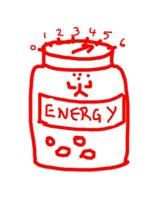
Let’s take those innovation energy pills!

Let’s shake the tree!

Pirates, Rebels, Mercenaries and Innovators

Not many people know this, but in the 70ies, 80ies, I was a quite successful DJ, and me and my friends toured under the brand “Celebration”. Life was – and still is – a big feast.

Embarrassed to say, but my first record bought was “Paranoid” from Black Sabbath. The paranoid thing probably haunted me for the rest of my life.

But I also have the original “God Save The Queen” by the Sex Pistols, on the EMI-label that rejected them before they became a huge hit, part of the disruptive album “Never Mind the Bollocks”


clip_image002clip_image004

Watch the metaphor of the “flag”.

With “Celebration”, we did everything ourselves:

  • We built ourselves the PA system, the lighting system, made our own jingles, we cut out our own slip-mats in cardboard (this was before the first fast-starting Technics turntables)

clip_image006

  • printed our own posters to announce the show
  • distributed at parties all sorts of gadgets to attract audience to our next gig. A famous example is a small plastic bag with 2 sugar cubes suggesting the energy that will be required at the next party.
  • We begged for the small lorry from the grocery shop to be able to transport all that stuff and records from one place to another.
  • A lot was manual. And heavy. Vinyl records are heavy. Especially if you have a couple of thousand and you live on a 5th floor apartment with no elevator, stairs only.

It was a network of friends. We went out on our scooters to paste the posters on the ad boards in the villages around, we borrowed each other’s records. It was the shareable economy avant-la-letter. We played for fun, later for a crate of beer, and much later for a couple of 100 Euro per night. That was for gigs for 3,000+ people. No prima-donna behavior like today’s top-DJ’s like Tiesto and others. Everything was new and innovative.


We wanted to shock

We felt like pirates


Later I joined a group of crazy enthusiasts who founded one of the first free and – at that time – pirate radio station FM-Bruxel. That was with guys like Gust Decoster, Luckas Vander Taelen, Dominique Deruddere, Ray Cokes and Marcel Vanthilt, most of them still playing a prominent role in the local media and film industry.

We really behaved like pirates. We also had our flag and our own logo. Can’t find it back: if somebody from the original gang still has a picture, please mail it to me. I will be grateful for eternity.

And years later, some of these guys found each other as founders and managers of one of the most famous nightclubs of Belgium “Le Beau Bruxel”. Our party animals were from art scene and musicians. I did that for 2 years. And I can tell you, I saw a lot of “characters”, learned a lot about human (non)-behavior. We closed the shop because nightlife became too dangerous in Brussels.

Fast forward many years to 2011: I am having a telephone conversation with a potential speaker for Innotribe at Sibos 2011 in Toronto. And I describe the Innotribe space we had in Amsterdam last year.

My speaker reacted: “wow, that sounds cool! The only things you guys are missing is a pirate flag!”


clip_image007

Indeed, with some – a lot actually – imagination, you could see our 600 m² Innotribe space at Sibos as a flagship, with the front part for the keynote presentations as the “prow” of our ship, the lab-space as the “galley”, the tower with the projector as our mast, and the projection screen as our sails.

Imagine a ship like this sailing in the middle of the exposition hall of Sibos, creating havoc – positive inspirational havoc – throughout the week. The only thing that was missing was the pirates flag on the top of our mast.


clip_image009

The pirate flag.

Two days later – completely by coincidence – I started reading “The Pirate’s Dilemma: How Youth Culture Is Reinventing Capitalism” (Amazon Affiliates Link) by Matt Mason, also author of “The Pirate’s Dilemma: How Hackers, Punk Capitalists, Graffiti Millionaires and Other Youth Movements are Remixing Our Culture and Changing Our World”


clip_image011


Fantastic read. Some parts you can skip if you – like me – have been inherently part of the punk and new-wave culture of that period. The names of bands generate a lot of nostalgia!

Some really cool quotes from this book:

changing the very fabric of our economic system, replacing outdated ideas with the twenty-first-century upgrades of Punk Capitalism

Disruptive new D.I.Y. technologies are causing unprecedented creative destruction

D.I.Y. encourages us to reject authority and hierarchy, advocating that we can and should produce as much as we consume

Youth cultures often embody some previously invisible, unacknowledged feeling in society and give it an identity

Building a community of pirate entrepreneurs


In Chapter 2, the author introduced the “Principality of Sealand”, a pirates home in the middle of the English Channel, in waters that are un-sovereign.


clip_image012clip_image013


And have a good look at the intro about “Principality of Sealand” in Wikipedia:

Since 1967, the facility has been occupied by the former British Major Paddy Roy Bates; his associates and family claim that it is an independent sovereign state. External commentators generally classify Sealand as a micro-nation rather than an unrecognised state.[3] While it has been described as the world’s smallest nation,[4] Sealand is not currently officially recognised as a sovereign state by any sovereign state. Although Roy Bates claims it is de facto recognised by Germany as they have sent a diplomat to the micronation, and by the United Kingdom after an English court ruled it did not have jurisdiction over Sealand, neither action constitutes de jure recognition as far as the respective countries are concerned.

Maybe that is what innovation teams have to do: create their own sovereign state, micro-nation, governed by its own rules, taking unclaimed territory, and… act like pirates.

The pirates metaphor also came to mind when I saw last year Laura Merling from Alcatel-Lucent (@magicmerl on twitter and describing herself as “API Strategist, Marketing and Business Dev, Developer Community Geek”) gave a speech at Defrag 2010 in Boulder, CO.

Her talk was titled:


“On Being A Corporate Renegade”


Depending on what dictionary, a “renegade” is a deserter from one faith, cause, or allegiance to another or an individual who rejects lawful or conventional behavior. That’s what I would call a pirate.

You haven’t seen Laura. She is a bit skinny, long rave-black peaky hair, and some really cool belt. A bit like the one below, but much cooler. Since then I refer to her as the “belt-woman”.

clip_image015

Her talk went more or less like this:

When I got hired as manager of the API start-up within Alcatel Lucent, my CEO gave me 90 days to deliver V1 of the platform. 90 Days !

I did not have resources nor budget

I hired 6 mercenaries, good friends with specific proven strengths on marketing, coding, program management etc

We did it for fun and for the challenge

Next meeting with my CEO was on my role as change agent

He said: “Laura, you are successful when in 3 months time there are 70,000 people at my door complaining what this bloody women is doing in my company!”


That’s what I would call a CEO Innovation mind-set ! Maybe the Laura’s story is a bit romanticized, so what ? She gets the story across.

That’s why we invited Laura and her team when we were doing the Cloud Computing study tour earlier this year. This time we had her full team – 15 young and brilliant folks – who could interact with an executive audience that could compete big time with what you sometimes see from incumbents like IBM, Microsoft, Oracle, you name them. Very impressive. And what an energy from this start-up groovy team. So inspiring.

So when Laura was in Europe for business a couple of weeks ago, we asked her to come and meet our innovation team in La Hulpe. Inspired by the culture story, the idea emerged of teaming up together more regularly.

Quickly back to The Pirate’s Dilemma book:

What pirates do differently is create new spaces where different ideas and methods run the show

Pirate radio is an incubator where new music can mutate. Initially, the new strains of music it produces are seen as too risqué for the mainstream to touch, but once this music reaches a critical mass in popularity, anthems from the pirates start hitting the pop charts, pirate DJs become crossover celebrities, and the scenes created by these stations grow into cottage industries and worldwide exports

I started reflecting on this.

Why not create a community of pirates, of rebels with a cause, of innovators. By positioning our Innotribe space at Sibos as the Pirates’ Mother Ship, and like Matt Mason suggests:


“By giving a community

a new space

that was not previously available

to them,

you can empower them,

and they in turn

will propel your idea forward”


A group of people who are relentlessly challenging the status quo, breaking the rules, saying the unsaid, spreaders of the innovation virus and of tribal energy. No fear. Rebels with a cause. Leading by being our true selves.

And with the Innotribe Logo as our Pirate’s Flag and declare sovereignty.

Team dynamics and the fiction of friendship

Check out this wonderful RSA animation about Steven Pinker’s “Language as a Window into Human Nature”

image

Steven Pinker shows us how the mind turns the finite building blocks of language into infinite meanings.

But I looked at this animation and was triggered by how much this relates to how our economies, companies, teams, ourselves and even exchange of value between these entities are fueled by the relationship mechanisms described in this animation.

In essence, Steven Pinker describes 3 relationship types:

  • Dominance relationships. Pretty self-explanatory and what used to be used by primates, but still existing in some companies
  • Communality relationships. The mode is “You share and I share alike”, for example in a couple or between friends
  • Reciprocity relationships. Business like tit for tat exchanges of goods or services that characterizes reciprocal altruism. This is what we do in commerce. Exchanging money or to a larger extent exchanging of value.

But by not saying the things as they are, and mixing up the conventions that apply to each of these relationships, you end of with…


awkwardness


Awkwardness in the relation, in the team culture, in the team dynamics and illusions of friendship and love. In dating – see my prezi on how to make babies – this awkwardness leads to “the anxieties of dating”.

And it really feels awkward when the confused give a tap on the shoulder or hold an arm, skimming the borderlines of trust.


album_large_3992338


But saying things “as they are”

also means

taking risk,

getting naked with no defense

or fall-back position

in case it goes wrong


That’s why you best do these things with the guidance of an experimented coach. Somebody who can guide and learn you to take personal leadership, daring to step forward, and daring to take care of expressing our own needs. It’s carving in the underlying energy streams under the table, where emotions such as anger, joy, hate, rejection, love, etc live. To discover and get rid of the hidden agreements and closed circles of the past. Nobody likes being rejected or worse being ignored.


6a00d8345189aa69e20148c85f6601970c-320wi


Instead of “getting used to it”, we could develop an emotionally intellectual language for expressing our needs. Something like:

  • Trigger: “this specific behavior causes an emotion with myself”
  • Emotion: “it makes me sad” or “I feel hurt”
  • Underlying need that is not fulfilled: “the need to fully contribute value” or “the need for a unique learning experience” or “the need to be respected” or “the need of not being ignored” etc, etc
  • And attaching to this need a “request”, an “invitation”: like “I invite you to fully include me next time”

All this in full authenticity, without manipulation, hidden agendas, power games, and other sorts of obfuscation of the reality.


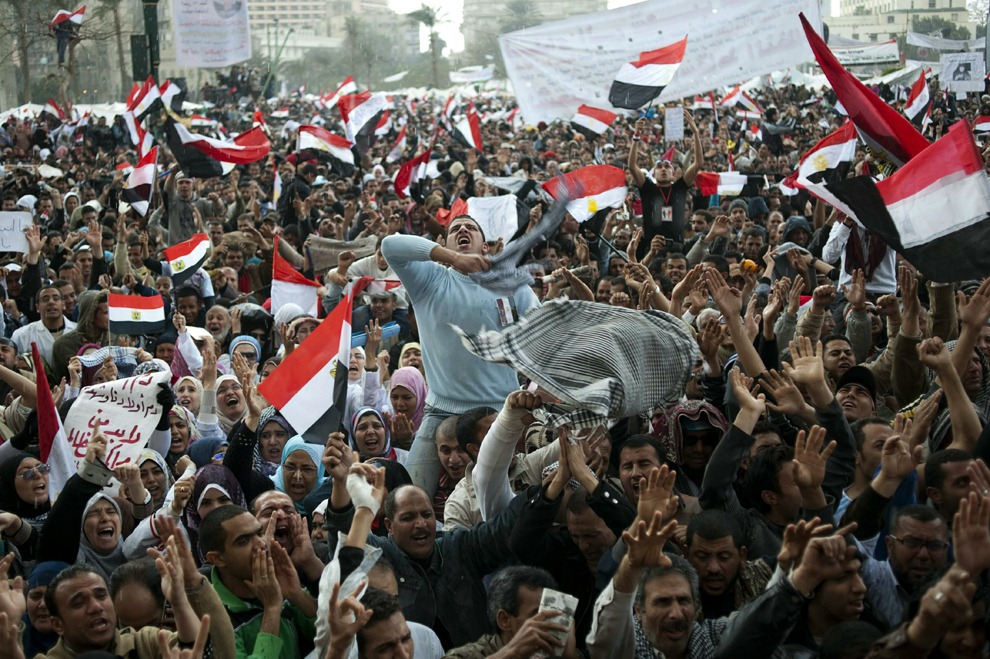
EGYPT-POLITICS-UNREST


But something fundamental can change when people meet, when they group in crowds. When they can look each other in the eyes. On a broader scale, think Egypt, Tunesia, Bahrein, etc: when people get together at one place, everyone in that crowd knows that everybody knows that everybody knows.


It leads to the collective power

to challenge

the authority

of the dictator


It’s the story of the emperor’s cloths. And explicit language is an excellent way of creating mutual knowledge.


What if we would start applying

these relationship principles

to our connected economy,

to our connected companies,

to our connected teams,

to our connected self,

or even to our connected value?


This would btw be a great way to organize and thinking and collaborations for Innotribe at Sibos 2011 on 19-23 September 2011 in Toronto.

  • Using the theme of the connected “something”, we could bring in technology topics like Digital Identity, Social Cognition, Big Data.
  • We could also experiment with some non-technology trends related to Social Capitalism, Future of Money/Value, Corporate culture, Where companies invest long term.

But to come back to the main flow of this post: the Egypt principle of mutual knowledge in a crowd also plays at a smaller level like a team.

But here is the paradox and at the same time the risk and opportunity:


No mutual knowledge

=

maintaining the fiction

of friendship and love.


However, with mutual knowledge and using an overt language you create the potential of having true team-ship and love. But using overt language also means you can’t take it back when it is out there. We don’t have a fall-back position, we are vulnerable.


1 (3)


But sometimes, one needs to pull a tooth. Pulling the tooth hurts, but you’re happy when it’s gone. Likewise, tapping blood may show black blood, and the tapping may hurt, but once the blood had been rinsed, you’re fit again.


When you let go the masks,

show your authentic self,

only and only then

will we be able

to realize

the full team potential


That’s why next week, our team goes on off-site to work on team dynamics. To discover and become fully aware and conscious of relationship types and dynamics, and to double-check whether here or there we don’t need to pull a tooth or to let go some black blood. We probably won’t find anything, but who knows ;^)

Innotribe Special Session at SOFA: The new thinkers

SOFA stands for SWIFT Operational Forum Americas, a yearly event targeted at a typical operational audience. This year’s SOFA is on 8-9 March 2011 in NYC. The theme for SOFA 2011 is “Defining the next generation of financial services”.


marriot marquis NY


Innotribe is SWIFT’s innovation initiative. Innotribe’s mission is ‘Enabling Collaborative Innovation’. Part of our activities includes events: existing SWIFT events like Sibos and SOFA, third party events like CPA in Canada and EPCA in Europe last year. It usually translated into a “special” session, with lots of professionally facilitated interactivity.


Print


With Innotribe events we have the ambition to “unpack” stereotypes, myths and hypes. These Innotribe Events are an energizing mix of education, perspective, collaboration and facilitation. Our success factors for this new type event are organized along the following three axes of “opening-up” our traditional ecosystem: audience, content and brand recognition.

So, what’s up at SOFA this year ? We have two things going on:

  • At the end of day-1, yours truly will give the presentation “How to make babies” a strong metaphor for SWIFT’s Innovation Framework. Prezi version of this presentation is here. Tip: set sound “on”
  • At the end of day-2, our innovation team will animate a Special Session “The New Thinkers”

Building on the Innotribe @ Sibos tradition of exploring “Tectonic Shifts”, this Special Session will be an energizing mix of education, new perspectives, collaboration and facilitation.

Our goal is to stimulate the generation of new ideas by bringing together a powerful mixture of audience members and by enabling freedom of discussion – allowing the conversation to take the participants into any and all areas that open up on the day.


We believe strongly in the potential

of unexpected encounters,

and the magic that can happen

when people from

different background

are brought together


So the innovators and change agents of our industry will be invited to join the SOFA audience (and also to join us in Toronto for Sibos 2011 in September), and we hope this will foster exciting new discussions between them and the traditional SOFA attendees.


skyscraper lunch


Ideas do not typically come out of the blue. Rather, they are usually variations of existing ideas. Sometimes, simply looking at a familiar idea from a different perspective can spark a new idea or the combination of existing ideas to achieve new goals and create radically different value propositions. All the topics we propose to discuss during this Innotribe Special Session at SOFA are also potential subjects to explore in Toronto – but we are looking for your feedback to tell us if these are the right ideas to stimulate your creative thinking!

Presentations from five great modern thinkers will culminate in an interactive exchange between the SOFA audience and the speakers, led by Innotribe facilitation champ Mariela Atanassova. The audience will be able to drive the discussion according to the themes that most interest them – ensuring everyone will have an opportunity to collaborate in the innovation we hope this session will stimulate.

Here are The new thinkers:

introducing_miemis
Venessa Miemis
(http://emergentbydesign.com/about/): Free agent, Master in Media Studies at the New School, NYC, futurist and digital ethnographer, researching the impacts of social technologies on society and culture and designing systems to facilitate innovation and the evolution of consciousness. Venessa will update us on The Future of Money project (world premiere at Sibos 2010) and The Future of Facebook, a new research project sponsored by Innotribe as Corporate Patron.


rushkoffbiosm

Douglas Rushkoff (http://rushkoff.com/bio/): thought leader and provocateur. Author of best selling books Cyberia : Life in the Trenches of HyperspaceLife, Inc, and Program or be Programmed (all Amazon Affiliate links). Doug will give a talk about New Capitalism, and introduce his latest project on a Summit he is organizing in NYC on 20 October 2011 called “Contact”. Contact Summit will seek to explore and realize the greater promise of social media to promote new forms of culture, commerce, collective action and creativity.


brianzisk

Brian Zisk: organizer of the Future of Money & Technology Summit in San-Francisco (www.futureofmoney.com). Brian will summarise the findings of the Summit that took place on 28 Feb 2011. Psssst ! If you still want to go to Brian’s event, go the the registration page at ttp://futureofmoney.eventbrite.com/ and use the discount code “Innotribe”.


stoweboyd

Stowe Boyd (http://www.stoweboyd.com/ ): probably THE authority on Social media, Stowe is a Social Philosopher and Webthropologist from NY. His work focuses on social tools and their impact on media, business, and society. In 2011, Stowe is focused on a new line of research: Social Cognition. This research is co-sponsored by Innotribe, and we hope to share the final results at Sibos 2011 in Toronto.


kevinslavin

Kevin Slavin (http://about.me/slavin): also from NY, Kevin is founder of AreaCodeInc (recently acquired by Zygna, the undisputed leader of Social Games). Kevin will talk about the New Future and “Those algorithms that govern our lives” – including our personal finances!


5429335705_93ef6aa3cb

(picture from Dave Gray’s blog)

For the interactive part, we will organise the session around the organic growth aspects of cities. I have written about this before in my post “How to make babies”, and recently there was a fantastic post by Dave Gray on “The Connected Company”.  We invited Dave to SOFA as well, but he unfortunately could not make it.

Dave’s post is a fantastic post – and as far as I am concerned – one of those game changing post already for 2011, and I will definitely come back to it later.

Dave for example says:

And today, thanks to social technologies, we finally have the tools to manage companies like the complex organisms they are. Social Business Design is design for companies that are made out of people. It’s design for complexity, for productivity, and for longevity. It’s not design by division but design by connection.

He is also author of “Gamestorming, A Playbook for Innovators, Rulebrakers, and Changemakers” (Amazon Associate Link)


Looks like the book is very much about the principles that our team applies for interactive session design.

And gamestorming

is exactly what we’re going to do

at SOFA

during this special session


What: Innotribe Special Session at SOFA 2011, NYC

When: From 2-5 pm on 9 March 2011 at SOFA (http://www.swift.com/events/2011/SOFA/index.page

Location: Marriott Marquis, Broadway, NYC

Future of Money and/or Value

If you’re interested in discounted tickets for one of the coolest Future of Money conferences of Q1 2011, bear with me and read till the end of this post.

Print

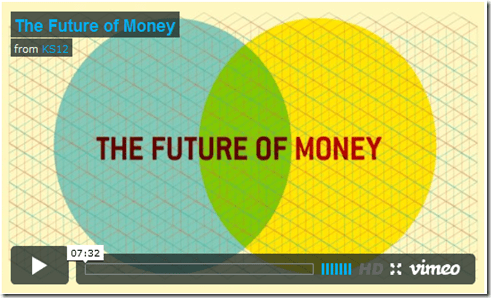
As most of you will remember, SWIFT’s innovation initiative “Innotribe” was one of the Executive Sponsors of Future of Money video production.

image

The Future of Money from KS12 on Vimeo.

The video is in my opinion a milestone. Not only for it’s content and the way it was produced (co-funding), but the whole movement that followed.

It is only now that it became clear to me that the event – in this case Sibos – is not the end-point in a process, but the middle. The post-event discussions and dynamics are at least as important, if not more important. Just check-out for example the animated discussion on Chris Skinner’s blog in November 2010 on “Why banks and socials agree to disagree”.

“Social” – as in Social tools, Social Currencies and Social Capitalism – is in my opinion a very strong force to take into account in our long-term thinking about financial services. It is one of the suggested topics we have in mind for Innotribe at Sibos 2011.

  • I am preparing another blog post “The Long Direction” on this subject and some other deep understreams that are going to change fundamentally how we think about corporations, banks and economy and corporate culture in general.
  • With Innotribe will sponsor a new research on Social Cognition by Stowe Boyd, the most important Social Philosopher and Webthropologist at this moment.

The Future Of Money crew produced post-event the following interesting infographic. I love the sharpness and detail of their analysis. In one view, you see how Creation, Storage and Access of VALUE intersect and how these intersections are each interesting opportunities to be taken up by start-ups or modern capitalists. Some indeed have taken their chances already: see the bottom of the chart with a number of start-ups in this space.

I would like to emphasize that the intersections in the infographic do NOT talk about the Future of MONEY, but about the Future of VALUE. More about this as well in the upcoming “The Long Direction” post. At this stage it’s enough to point you to Umair Hague’s latest book “The New Capitalist Manifesto: Building a Disruptively Better Business” (AmazonAssociates Link).

But I divert… Here is the Future of Money infographic (you can also download a nice PDF version of this by clicking on the graph below).

FOM_infographic_540x764

What an impressive list of start-ups and new contacts ! Indeed,  one of the biggest wins of our Innotribe initiative is the network of people we connect with.

This network is a very powerful force. Here is another example of this network-effect:

Given our work on Future of Money at Sibos, Mike Sigal  – Founder and CEO of Guidewire Group and part of our start-up judge panel at Sibos – introduced me recently to Brian Zisk, founder and organizer of the Future of Money and Technology conference in San-Francisco on 28 Feb 2011.

image

When looking at the conference program and the list of confirmed speakers, I thought “Wow” and two days later I was on a confcall with Brian. Besides being the Executive Producer of this Future of Money & Technology conference, Brian Zisk is a serial entrepreneur and technology industry consultant specializing in digital media, web broadcasting and distribution technologies.

brianzisk

Brian wanted us to speak about Innotribe and Future of Money at Sibos 2010, but unfortunately, given to some other commitments and plans, none of our team could make it to San Francisco on that day.

But we both quickly spotted the possible synergies – wouldn’t it be great to get a subset of these speakers to Sibos into the Innotribe stream for example – and we came to the following pragmatic agreement.

  • I was going to write a blog about his event, and in return my readers could get some discounted tickets for his show. And he would promote our Mumbai and Toronto events later that year. Yes, it can be that dead-easy. No strings attached, pragmatic. Piece of cake if you share the same passion. If you want such a discounted ticket, see the end of this post.
  • But we kept on talking… It suddenly crossed my mind that only 2 weeks later, SWIFT was organizing its SWIFT Operational Forum Americas on 8-9 March 2011 (SOFA). As we had an Innovation slot in the Special Session on day-2 of that event, why not ask Brian to come over and give a wrap-up of his conference ? Btw, watch this space on the Innotribe activities at SOFA: we are working on an impressive list of speakers for this Innovation Slot on 9 March 2011. Will be subject of another post.
  • And why not continue in this direction and see what we can do together for the first stand-alone Innotribe event in Mumbai, later this year on 1-2 June 2011 ? This event – hopefully a first in a long series, will be titled “Unpacked” and this Mumbai edition will focus on Mobile Payments. More on that later as well.
  • And then let the whole movement culminate to a climax at Sibos Toronto from 19-23 Sep 2011 ? I have a first meeting with the Sibos 2011 organizing committee in 2 weeks. Yes, we start early °-)

So how to get a discounted ticket for the Future of Money & Technology conference on 28 Feb 2011 in San-Francisco ?

Enhanced by Zemanta

You don’t have to suffer

Have you also noticed ? How many people you see dragging themselves through the office, through their lives ? They seem to have lost sense of engagement.

5131778313_fb1c97decd_z

It makes me so sad. Such a shame not to enjoy life.

Sad in the sense of empathy, and the feeling there is little I can do about it. Maybe just write a blog and hope that some of my readers will get inspired and re-find that spark that makes yourself worthy.

We all know what caused this feeling of uncompleted, not being worthy, being imperfect.

It’s caused by the disconnect between the soft/hardware of your company and the world outside there.

  • The software is what is between your ears. But  even more so about the fine sensors you have in your whole body. This is not about “mind”, this is about “heart” and “feeling”. Deep feeling.
  • The hardware is about how your company is structured. The hierarchies. The power games. The team dynamics. The motivational models. The focus on the optimization engine with efficiency programs like Lean and SixSigma that such the soul out of great companies. At the end there is only efficiency and no soul.

That’s why people are “dragging” their feet. They just FEEL its not right. And they have lost the energy to fight. The hope to regain their souls.

But of course there is something you, we, all of us can do about it.


We can start a movement


From within. Find the peers who care about people, about life, about soul.

And of course we can ask help. Outside help if needed.

Check out the site of TeamPelgrims:

image

The NEW ECONOMY demands speed, creativity, dynamism, perseverance, courage, knowledge and the ability to work with others on a multicultural basis.

The NEW SOCIETY, prompted by the Human Interest movement, demands respect for individuality, freedom, mobility and quality of life

The last thing a fish can see is the water he is in… It’s very difficult to understand the “cultural mechanisms” in which we live and breath. Leaders should be made aware that they are “trapped” in cultural viruses. We see in too many occasions that cultural viruses are multiplying and contaminating substantial parts of the organization or company. Be accountable to manage and master this non-transparent but very present dimension in the engine of the organization.

It brings me to the topic of team dynamics.

album_large_3884809

I am very lucky to be part of a great team.

But due to the stress of the last months, we seem to regress a bit as a team. Just a little bit. In the sense that we start to grow more individualistic.

Luckily some of us have good “consciousness” antennas, and the team is strong enough to 1) bring this to the table and 2) openly discuss them.

My alarm-bell went off when a new team member joined, and I witnessed myself not 100% caring for the newcomer. I said something like “Throw him in the water, and he will learn to swim”. That’s not fair. Because there are so many new things to learn, so many unwritten conventions, rules, habits, cultures.


The problem was

that I did not have any time left

to give quality time to each other


  • Luckily our team is great, and we are working on great inspirational topics.
  • Luckily the newcomer is outspoken and has the courage to send invitations for feedback.

But I can imagine if you are not in such a team, if your have not this courage, if you have lost some of your closest colleagues is the latest restructuring, and you can’t work with your new boss and the new efficiency rules, that you get dragged.

We should not let this happen. We have to redefine, revive the company culture from within. Push it to the next level. Be viral. Infect he company, as it will not work by a top down approach or rolling out a big program.

Live the spark, the energy, the enthusiasm. And hope – be sure – that it will have a rippling effect – no, an unstoppable wave – within your team, spreading out to other teams, to other departments, to other regions, to other companies, to everybody you meet everyday.

n06_freddy-cerdeira

Enthusiasm is contagious.

And don’t be afraid to ask for help. And to offer help. Probably one of the best ways I can offer help is by transferring authority to others. To hold the bike saddle and then let go. But WITH transfer of authority.

Be not afraid to show vulnerability. Create safe harbors for vulnerability. These harbors become like the womb for the fetus.

iStock_000004280142Small

Your team could be a womb.

And especially:

be nice to yourself


It’s ok to be imperfect.

I am excelling in being imperfect by NOT being nice to myself. It has to do with the word “mildness”. Be “mild” for yourself. For yourself first. I used to say to others: “apply mildness to the 3rd degree”. But it did not come across as authentic. As I was not able to be nice for myself. People, human beings just “feel” when you’re not authentic.

Brené Brown has written a whole book about this.

Brené Brown, Ph.D., LMSW is a research professor at the University of Houston Graduate College of Social Work. She has spent the past ten years studying vulnerability, courage, authenticity, and shame. Brené spent the first five years of her decade-long study focusing on shame and empathy, and is now using that work to explore a concept that she calls Wholeheartedness.

Ordinary Courage

Have a look at the “look” of her website. The illustrations have something “round”. The site creates some feeling of safety. Of roundness. Of “womb”-ness. It has a feminine softness/roundness that we seem to have lost in our company hard- and software.

I was very touched and moved by her TEDxHouston talk of June 2010.

The video is a 20 min summary of her book: The Gifts of Imperfection: Let Go of Who You Think You’re Supposed to Be and Embrace Who You Are

The video has subtitles, so the words have more impact. Without trying to make a transcript of her talk, here are some lines that resonated very strong with me:

  • Shame as the fear of disconnection
  • Don’t try to outsmart vulnerability
  • Do you believe YOU are worthy of love and belonging ?
  • Courage, compassion, connection.. who you are with all your heart
  • The courage to be imperfect
  • Be kind to yourself first
  • Connection as the result of authenticity
  • Let go who you think you should be
  • What makes me vulnerable makes me beautiful
  • Do something where there are no guarantees
  • Research is about control and predict
  • You know who you are when you think you need help
  • See a therapist who sees therapists: no family, no childhood shit, I just need some strategies
  • Vulnerability is the care of shame and fear and your struggle for worthiness
  • But also source and birthplace of joy, creativity, belonging, love
  • Vulnerability and tenderness are important
  • We “numb” the vulnerability. We “numb” everything
  • Blame is a way to discharge pain and discomfort
  • But then there is no conversation, discourse
  • We try to perfect our children, but babies are hardwired for struggle
  • We pretend that what we do does not have an effect on people
  • Let ourselves be seen, deeply seen, vulnerably seen
  • “I am enough”

Suddenly it became clear to me:

The difference is in

the (lack of) indifference

It’s about the capability

to be able

to relate to this


I am playing with the idea of building into Innotribe at Sibos 2011 in Toronto a topic on “New Corporate Culture” or “Towards a new corporate culture of difference”. Where we would invite people like Brené Brown, Vineet Nayar, Andre Pelgrims, Keith Yamashita, Marc Dowds and others ?

Something else than technology. Something else than payments. Something that touches our lives everyday. Probably more hours at work than at home. To feel happy, fulfilled, and worthy should resonate with all of us, no ? Or are you not afraid of becoming one of these “dragging” people ?

Let’s put back the “juice” in our companies.

What do you think ? Sibos ? About new corporate culture ? You really don’t have to suffer alone !

How to make babies ?

UPDATE: the Prezi version of the SOFA presentation mentioned at the end of this post is now available here.


image


Sibos 2010 is over! It was one of the best ever. After that week I felt completely exhausted. Empty. Because I gave my full self. Went deep. Gave and received loads of energy.

This week, it’s time for reflection. For chilling-out. Took some days off: late breakfast, some power naps. A walk here and there. Still lots of reading. Lots of tinkering. Some up-moments, some down-moments. Flowing.

And the future starts to emerge again.

Soon we have to go back to the salt-mine. Soon the treadmill starts all over again. But it does not have to be a copy-cat.

Soon we have SOFE (SWIFT’s Operations Forum Europe), running from 13-15 December 2010 in Conference Center “Dolce” in our home town La Hulpe (close to Brussels).

I have been asked to organize the Innovation Plenary on 14 December. So, here we go again!

Sean Park from the Anthemis Group will be there as well.

He was one of our VC-coaches and Innotribe Leaders for Cloud at Sibos. He will do a keynote during the plenary (a great Prezi presentation on “Platforms, Markets, and Bytes”) and a viewing of his trailer video on “Financial Reformation”. And he will help us run an Innotribe Lab on Cloud computing. Yammy !

Also for me it’s a great opportunity to refresh/reboot. I will do the second part of the innovation plenary armed with


a brand new presentation titled

 “How to make babies”


It will be one of those presentations that have been breeding in my head from some while, and suddenly materialize. Like a painting on a canvas. Like poetry on a sheet of paper. Like joy and harmony in music. Suddenly, it’s there!


clip_image002


“How to make babies” will bring together numerous thoughts collected during many conferences visited this year and ideas distilled from the books I have been reading recently. If you are interested in the books I am reading, I am inviting you to subscribe to my GoodReads.

In essence my story will start with the collision of two ideas.

The first idea was seeded in my brain by Geoffrey West (Distinguished Professor at the The Santa Fe Institute) in a presentation titled “The Secrets of Scale” delivered during the Techonomy conference in June of this year.


clip_image003

Geoffrey West is a theoretical physicist whose primary interests include elementary particles and their cosmological implications; the theory of companies, cities and global sustainability; and biology, including metabolism, aging and sleep. He served as the Santa Fe Institute’s (SFI) President from 2005 to 2009.

It happens that the folks at Techonomy just put up all the videos, including Geoffrey West’s presentation:

It also happens to be the story that opens chapter one of one of the latest books that made a great impression on me: “Where Good Ideas Come From” by Steven Johnston.

clip_image004

At Sibos, we reflected on the Long Now. In the first chapter of “where ideas come from”, Steven Johnson talks about that vantage point the long zoom.

It can be imagined as a kind of hourglass:


clip_image006

Several years ago, the theoretical physicist Geoffrey West decided to investigate whether Kleiber’s law applied to one of life’s largest creations: the superorganisms of human-built cities

And

the quarter-power law governing innovation was positive, not negative. A city that was ten times larger than its neighbor wasn’t ten times more innovative; it was seventeen times more innovative. A metropolis fifty times bigger than a town was 130 times more innovative.

The essence of Geoffrey West’s story is that cities are intensities. That cities never die. That cities are the ideal womb for idea generation, incubation and execution. That innovation scales differently than the size of the city.


Because

the information and the ideas

flow freely and in high intensity.


But how does one create a culture of intensity, of innovation? How does one create the vibrancies of cities within the walls of a castle?

Here is some additional video material featuring Steven Johnson’s ‘”Where do ideas come from”.

And a TED talk on the same subject:


It brings me to the second idea in the collision: the one of incubators.

clip_image008

Incubators at the Maternity Hospital, Port Royal, Paris (Maternité de Paris, Port-Royal). An engraving by Eugene Froment (1844-1900) from the Illustrated London News, 1884.

Incubators were invented by Stéphane Tarnier in 1880, and documented by Auvard in the historic 1883 article De La Couveuse Pour Enfants. Incubators help us grow babies. Physical babies. What I am talking about are ideas. Baby ideas that need to be prototyped. And then incubated. Many incubator models for ideas and start-ups exist.

Probably one of the more famous ones is MIT Building 20. Building 20 was designed differently. With flexibility in mind. A bit like the Value Web walls that allow you to create spaces of intensities. And when the job is done, you disperse and build new spaces, new teams. Disperse and re-group. A different composition for each new project. Get rid of the one size fits all.


clip_image010

Old Building 20, Vassar Street facade, 1997.

clip_image011

New Building 20 at MIT

The point I am trying to make here is that physical environment is equally important to have a free flow ideas. Ideas will not flow in a castle with long corridors and closed offices.

Once incubated, you need to scale. Which brings us back to Geoffrey West and “The Secrets of Scale”. You need to create intensities. As I already mentioned in a previous post:

Intensities and intentions. City intensities. Platforms of intensities. Physical or virtual. Almost requires an architectural purism and surroundings to make it work. Has to be physical.

I want to create these environments. Where small groups of intense people can meet. Can radiate. Can nurture and inspire each other. Where one hunch leads to another, and ideas cross-fertilize. Where we play the Medici-Effect for 100%.

We need to build some sort of city, some platform of intensities, some sort of campus. Not a “chalet” next to the castle.


Think big

Think scale

Think city

Embedded in the social and economic fabric of our industry. Where experts can meet and weave the next generation solutions.

Where we not only have a fertile environment for funding “only”, but where we also thought about physical housing, novel resourcing models like dedicated teams combined with shared staff from the castle. Or in-residence programs as another way to resource and bring fresh blood.

Where we have a shared infrastructure for support, project management and IT. And where we nurture a culture of experimentation. Where we have reverse-mentorship of our bankers BY the Gen-Y generation.

Venessa Miemis hit us all hard in the face at Sibos:

There is a class of young, intelligent, creative people who are disillusioned with the debt-based monetary system, and are busy building the infrastructures for a commons-based economy, which is emerging, right now, in parallel to what currently exists. The foundation of this economy is built on trust… and transparency…. and the ability of distributed networks to self organize. And using the Web as a grounds for experimentation, we’re learning more effective ways to link unmet needs with unused resources, innovate, generate wealth, and build resilient communities.

This is the prototype of the future. This is where the opportunities are.

I hope that during the Innotribe sessions the remainder of the week, we can explore ways to create bridges between these two worlds and ways of thinking, and co-evolve the next global economy.”

Venessa & friends already followed up post-Sibos with the idea of an in-residence program for bankers. To understand and connect with the new class of young, intelligent, creative people. To learn their language and adapt their values. Yes, you got it right: the bankers get mentored by Gen-Y.

I think it’s a fantastic idea. To think wealth instead of money.


With trust as the currency

of the 21st century


Where we create bridges in a strengths-based society instead of a problem mindset.


We are in a different Zeitgeist,

and most of our bankers

haven’t noticed yet.

The realization that most senior executives in finance (or elsewhere for that matter) would be completely at a loss – “sans moyens” – faced with an articulate and intelligent Gen-Y as personified by Venessa.

Things like this residence program idea: that’s the sort of babies we need to create. That’s the sort of family harbor we want for our children. And when babies become adolescents and adults, when those ideas have matured into successful companies in their own strength, keep thinking about our off-spring. As it never stops.

And despite big hopes from the singularity movement, there is a fair chance that all who read this in 2010 will die sometime. But as Geoffrey West pointed out and proved mathematically:


Biological beings die

Cities never die


The big “contours” of my SOFE presentation are drawn. This post-Sibos holiday & chilling season is ideal to let it mature. To perfect the visuals. To come to the essence. To get to its full purity. To be different by less not more. So that you can feel the full intensity. So that each of you can realize his full potential.

Let’s practice making babies !