Social Currency: My Personal Identity

Recently came across this great site by Dan Robles.

image

One of his latest posts Will Social Capitalism Replace Market Capitalism? (Parts 1&2) included great video material on how social currency can change industries.

image

His forecasting example is the airline industry. And it’s even not so far fetched. What if you could “Time-Share” seats in private jets ?

It’s easy to think how this social currency model would apply to any other business and radically innovate by creative destruction.

It’s a very novel way to show how a number of trends come together:

  • The influence of gaming theories and practices in new business models
  • The value and tradability of my personal information
  • The power shift from Push to Pull that is so well described in John Hagel’s latest book “The Power of Pull” (I repeat it, in my opinion THE business book of 2010)
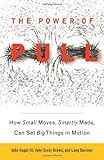
By the way, we recently had a face to face meeting with John exploring the possibility to have him with us at Innotribe at Sibos in Amsterdam, 25-29 October 2010.

image

We have asked John to consider a talk in our Innotribe Opening Keynotes, and to be part of our special Innotribe Lab on The long now in Financial Services.

To come back to the subject of the power of identity, I’d like to spend a bit more time on the tradability of my personal information.

The essence of the story is that some parts of my personal data have value and can be traded under the user’s control to get a better service.

It opens questions to:

  • How tradable is my personal identity ?
  • How tradable is my digital footprint ?
  • How tradable are my on and off-line relationships ?

I have been immersed in “personal digital identity” the last couple of weeks. Recently i attended the EEMA’s The European e-Identity Management Conference in London.

The week after i was the “tour guide” for a "Digital Identity Tour” we organized with some colleagues on the West-Coast”. I am preparing a set of blog posts on these conferences and 1-1 conversations with thought leaders in e-Identity space.

In this blog i will just simplify my summary thoughts with the statement that e-identity is much, much more that a certificate on a smart-card, or for sake of the argument any other form factor.

We are witnessing a power-shift:

In stead of the government (or the bank, or any other service offering entity) creating digital identities to give more value to the citizen, we see the emergence of  identities created by the user to give greater value to the government (or the bank, or any other service offering entity)

We have to carefully think this through, as identity – and relations between and with persons – is really a complex animal.

Have a look at this fantastic 210+ slides presentation “The Real Life Social Network V2” by a Google analyst @Padday aka Paul Adams, working for the UX team at Google. The essence of his story is that there is nothing such as a generic “Friends”. You have all sorts of friends and different depths in relations. Whether those relations are between people-people or people-companies.

It’s a great story, and all slides are annotated. As a teaser, here are his 3 summarizing slides:

image

image

image

It’s interesting how the words identity, privacy, care, relationships, collaboration, strong/week ties, Klout, etc are now all coming together. As a matter of fact, these are all attributes that make us truly human.

As a sherry on today’s cake, i’d like to link you once more to Venassa Miemis site “Emergent by Design” and the great recent blog post on Guidelines for Group Collaboration and Emergence, that is building on both her previous work on “Strenghts Based Society”, “”Skills for a 21st century connected world”, and her work on the open source collaborative tool “Junto”.


image

As we are preparing Innotribe at Sibos, i had the pleasure to talk to Venassa during a Skype session. We are discussing her participation at several levels of our Innotribe Program.

It is great to see how these novel ideas become “totally” relevant when you start thinking about their value for a “community” like SWIFT and an innitiative like Innotribe where “Enabling Collaborative Innovation” is our “Leifmotto”.

From the conversation with Venassa, i can tell you she “totally” got it, and she is preparing some material and levels of interactivity for Sibos that you even never dreamed of.

We are now 16 weeks from Sibos. The idea is to begin hosting a junto every week, invite different thinkers to discuss the future of money, record all conversations and develop a presentation based on them, but also make the videos available for the attendees of the conference to be able to watch whenever they want to see what those conversations were like.

If we think about the Long Now, will there still be currency as we know it? Or will social currency become central to our trade? And what impact does that have on banks ? Should be have personal data stores where we deposit our digital footprint and open personal accounts and do payments for services from there?

Feel free to jump in.

Creative juices everywhere

These days, when i kick-off an innovation workshop, i ask the participants “tell me about your hobbies/interests when you were 16-18 years old”.

The answers and the resulting effect are surprising.

  • First, it opens up people in a way they are not used to. The come out of their “i-am-at-work” comfort zone. Some people that you expect to be “emotional zombies”, suddenly have sparkles in their eyes and show leadership throughout the workshop. Having genuine interest in people unleashes nuclear creative energy.
  • Second, it is amazing how many creative juices you gave in your average workshop. People tell me about their dancing, painting, music instruments, fashion design, about crazy little (and big) things they did in life

I don’t know where it comes from, that attitude of “withholding” the best of yourself. Something that is for sure, is that once you tap into this creative well, the energy and engagement and idea generation increase by a factor 10.

Another example: a colleague from our German office came to see me on what our innovation team could mean for one of his customers. In stead of showing him a whitepaper or a slide show, i decided to show him some of our past productions. Again those sparkling eyes.

With hindsight, it is interesting to see how we almost unconsciously added some creative art/visual/audio layer to most of the things we do. You can call them “innovation productions”.

My German colleague was clearly surprised on the quality productions we do with relatively small means. “I have to let this sink” he said. “It’s all a bit overwhelming at this moment, but i am trying to grasp it all and how i can transfer the same excitement to my customer when going back to Frankfurt this evening”.

The point i am trying to make is that there are creative juices everywhere, and it only takes a little scratching or motivation to get the best out of people.

Here is an example of getting out the best in people. You remember by blog post on the Medici Effect ? Apparently it inspired my colleague Mela to some really video collage.


It’s beautiful. It touched me emotionally. Watch it. It’s only 5 min. You can use it as an inspiring start of your day as well. Or imagine starting a workshop after having played this video. The energy in the room is high. It’s a soft energy that makes you feel comfortable to share.

This video is used in our company to launch the next wave of internal innovation challenges.

Innovation Challenges are small competitions where we incentivize our creative people at all levels and locations in the organization to come up with ideas around a certain theme. The projects are presented to a judge panel that includes the CEO. The winner gets implemented. So the price is not money but personal fulfillment.

The Challenges of this wave are all run under the banner of “Create the Medici Effect”: bring together people of different expertise and with different creative and/or engineering skills, and let the power of intersections play.

It’s a powerful model.

You can expect this video at many of our events and workshops. Also at Innotribe @ Sibos this year in Amsterdam, where one of our labs will have a specific focus to amplifying the Medici Effect.

Nobody asked Mela to do this video. But she followed her own compass and did not wait to be called. Mela should not only start to blog. She should start her own “Mela Productions” company.

“Inspire other people to dream” seems to have worked. Creative juices are everywhere. Imagine if you could unleash this energy in a systemic way in your company and in your eco-system. Maybe we have to do a creative lab at Sibos where we ask teams to make a similar video on the topic Generation-Y and Banking and have it ready by the end of the conference for the closing plenary ? Any thoughts ?

I have to run now, but will polish up this post later in my usual way, but i wanted to get this off my chest and into the world as soon as possible.

Get a Life and Get Alive

It’s quite some time ago i did a post with brand new content. It’s partly because i also have a family and a job, but mainly because i only feel the urge to blog when i have real content to contribute.

These days i also share an awful lot via twitter: that’s where the day-to-day action is. So if you are interested in my lens on technology and values for the 21st century, you can also follow we on twitter @petervan . There is an almost daily stream of tweets on these subjects.

I “reserve” the blog to share some more elaborated thoughts on stuff that keeps me going or that touches me one way or another way emotionally, in the way i am.

This time, the post is about


People, Culture, Excitement and

Sculptural Integrity


And I’d like to share what happens if you truly stand for who you are and have the courage to stand up and stick out your neck.

The title of this post is of course a word-spiel on get-a-life and get alive. The discussion was part of an off-site recently attended in the wonderful city of Barcelona.

It was about 20 years ago i was in Barcelona, and the only thing i remembered were the ‘”Ramblas” and the “Plaza de Espagna”. Given my education as an architect (non many people know this ;-), i of course knew that Barcelona was the city of the Sagrada Familia of Gaudi.

The off-site was facilitated by Dan Newman and his team from The Value Web.

image

The off-site was our reflection moment about our company for the next 5 years.

Dan really “got me” with his opening speech: he used two words that deeply resonated very strong with me – at an emotional level.

The architect aims for


“Sculptural Integrity”


Especially in sculpting the old with the new. Old game and new game. And that the old and the new should be connected by more than just a link or a tunnel. That the end-result should show a deep sense of unity. And that this “sculptural integrity” and other architectural thoughts were the also the basis of facilitation work and techniques of the Value Web, because that was also how group dynamics could be looked upon.

The words entered by body and mind, as they reminded me of a piece of my true self and my youth 30 years ago when i was making drawings and sketches myself of the most bizarre and bold architectural designs.

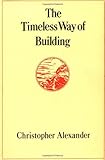
Dan mentioned also a book: “The Timeless Way of Building” by Christopher Alexander.

The real and ultimate question in this book is:


What is it that makes a building “work” ?


When you see something that works, you just know it. And it’s something that has a timeless quality.

I was intrigued by the subject, and kept researching, and quickly discovered the site of Tomorrow Makers.

image

And especially the blog post titled “Happiness Pandemic (HP101) Hits Worldwide”. Just read and internalize the first two bullets:

The tendency to let yourself be guided by intuition instead of acting under pressure of fear, forced ideas and pre-conditioned behavior.

A total loss of interest in: – judging others, convicting yourself and preoccupation with things that create conflict.

During the off-site, Dan did something else that was brilliant. He took us out of the hotel into the city. In our case we went to the CosmoCaixa Barcelona, the Museum of Science.

Panorámica CosmoCaixa

Besides being a perfect metaphor for blending old and new with “sculptural integrity”, it also put all of us in a different context and mindset to look in quite different and innovative ways to our off-site subject.

I don’t know what happened exactly, but when we returned to the conference hotel, we were looking for topics likes

space

freedom

excitement

playfulness

culture

people

At a certain moment, we could form a small group of people, sort of a tribe around a subject that was not yet addressed.

I put the word “excitement” on a post-it, and look: 10 min later, we had 7 or so colleagues interested in discussing the subject.

I asked a simple question: “how excited do you get by the work done so far at this off-site” and rate it on a scale of 1-10. To my astonishment, the average rating was 3.

So we then looked for the root-cause of this score. A lot had to do with company culture, but also by the need for a new vocabulary, and not just words, but a vocabulary that was inspired by the value set that is needed for the 21st century.

In a follow-up session on people and culture this topic re-appeared in full force.

Although initially we were looking at symptoms and superficial quick fixes, it suddenly dawned to us that


the real root cause was about

the openness of

our minds, hearts, and minds.


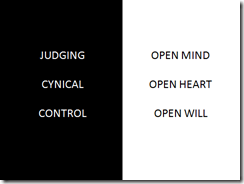
I have used the following slide many times in my postings.

In black the old game: full of macho behavior and Machiavellian attitudes and states of mind.

In white the new game. With true, genuine interest in the other and the true self – not based on tricks or quick fixes.

image

The discussions on these topics were deep and full of enthusiasm. We were looking at talent development, both the professional skills ànd the Personal Development side of it.

And i keep on fighting that “Personal Development” is NOT about “soft” skills.


It’s really about having and keeping

cutting-edge “good” people

on board


and nurturing them so that they can function optimally in today’s highly connected networked society.

You need to “train” and get exposed to a number of essential hard skills and values for the 21st century.

In this context, i get very inspired by the work of Vanessa Miemis, a Gen-Y student with a fantastic blog “Emergent by Design”. Look for example at her latest blog entry “Essential Skills for 21st Century Survival: Part-3 Network Weaving”

Or the post “Framework for a Strengths Based Society”

Do you feel how powerful this is ?


“Strengths Based Society”


Should we not invite her to Sibos ? To be part of Innotribe at Sibos. As part of our “Gen-Y meet Bankers” Face-to-Face interactive workshop ? Maybe with the help of some strong Gen-Y-power, we will be able to keep the sharpness of our ideas and dreams.

Because at the end of the off-site, each team had to boil it down its ideas to a pitch of 5 minutes and I was surprised to witness how in this pitching work, we lost quite some of the “cutting" edge”. Also surprised on how fear creeps in when people are volunteered to deliver the pitch to the executives.

And a strange behavior of watering down the message, and even scratching the most provocative words in the end deliverable.


We seem to have lost

our desire for

boldness


We also “frame” too conservatively. So, in order not to loose some of these more provocative statements, here are some examples:

  • In 5 years time, 10% of our workforce should be Generation-Y folks
  • By 2015, our company should be in the Top-10 of best companies to work for in the financial industry. Worldwide.
  • Gen-Y should drive the composition of the Leadership council of the future
  • 90% of the people in the 2015 leaders team should be new. Only 10% of today’s group should be the same
  • Doing things 10,000 time better rather than twice as good
  • “Do no evil” is not good enough anymore. “Great to Good” is the new paradigm.
  • “Get-a-Life and Get Alive !” Was the original title of our pitch. Somebody changed the title to the more boring “people and values for 2015”
  • Chief Corporate Activist
  • About framing: from “our company is 37 years old, are we in a mid-life crisis” to “our company is 37 years old, we are just-born, who do we want to feel “right” or “it works” in 500 years from now?”

At this moment, I decided to have a short break in my blogging activity, and go for my Sunday trip to the bakery. I bumped into a friend, who shared me a wonderful story about going for your dreams.

The story was basically about context. Of not waiting to be called. Of doing what you intuitively know is right. What works. In his case it was about seeing a wonderful motorbike, feeling it was just designed perfectly, and following your intuition and impulse and buying the motorbike. It happened to be a Can-Am Spyder Roadster. This was not just about buying something desirable. It was a story about contextual living. About flow. About following your compass. And not delaying your dreams till when you’re dead.

image

The story reminded me of the book “Zen and the Art of Motorcycle Maintenance”

You can find “flow” is everything you do. From the most banal activities like cleaning or motorbike maintenance to writing an inspiring blog and making a pitch that makes others dream and wanting to go after their dream.

When i started this blog in April 2009, i wanted it to be in line with my purpose in life “Inspire other people to dream” – and execute their dreams. I hope i have not disappointed you so far.

Last week, somebody said i should start writing a book. Maybe i will do that. Maybe using the funding model experimented by Stowe Boyd fro writing his report on Social Architecture: Microstreams In Business.

Last week, somebody gave me the greatest compliment somebody can give to a man of the 21st century:


“you have the most feminine mindset

of all the men i ever met”


Let’s eradicate the macho culture of judging, being cynical, and control freaks.

Let’s build a culture based on open mind, open heart and open will.

Are you also fed-up waiting on the side-line and do you feel the hunger to join me on the drawing board to help us sketch the “sculptural integrity” required for the 21st century ?

Then please use abundantly the comments feature of this blog.

Doing what you want to do, not waiting to be called. Stand-up and stand as you are. In your true self. Without fear. Living your dreams.


Get-a-Life !

Get ALIVE !


If you feel energized by this blog, you can get an extra doze at following previous posts:

No more collateral damage

Who am i really ?

Great to Good: New Value Kit

Broken Will

Our company is infected

Ethical Re-Boot

The Holy Fire

Emotional Zombies

HR and Innovation

Brand, Workforce and Innovation

Innotribe your event: CPA and SWIFT

Print

Innovation is a key theme in SWIFT’s discussions with the community on how they can collectively address both complex and basic challenges. Via the launch of the Innotribe Program, SWIFT has embarked on a new way of promoting innovation amongst the financial industry. Innotribe is an initiative that leverages the collective intelligence of the SWIFT community to find new ideas, projects, and the infrastructure to let them grow.

“Innotribe your event” is a bit similar to “Pimp your car”, but then for events.

Through a soft collaboration with the Innotribe team, you can add some additional dynamics to your event. It’s part of our renewed SWIFT Innovation mission. Kosta Peric (Head of Innovation at SWIFT – i.e. my boss) wrote about this mission here and it goes like this:

“Build the Skills , Tools , Processes, Metrics , Values , Network , required to support collaborative innovation and transform SWIFT in an agile company,
able to succeed in a changing environment.”

This mission is btw inspired by the book “Innovation to the Core”, that i already mentioned several times on this blog.

The sentence in that book that got us inspired was:

In our experience, it can take an organization three to five years to build the kinds of skills, tools, management processes, metrics, values, and IT systems that are required to support ongoing, across-the-board innovation.

As you have noticed, we added the network dimension to it. I’d like to focus today a bit on that dimension of our mission, and more particularly what we do with events.

Of course we have our own SWIFT events, such as SOFA, SIBOS, the regional events and the business fora worldwide. In each of these events we try to put some innovation spices. For the complete list of SWIFT event, check out the SWIFT website events section.

But what is new this year is that we very selectively partner with third-party events. A good example is our event partnership with CPA (Canadian Payments Association) where we work together on CPA’s Biennial Conference. The conference is tagged as the 2010 Payments Panorama and CPA is inviting you to join industry leaders from June 16 to 18 in Vancouver as we explore the latest trends, technology and processes in the payments industry.

The year’s conference theme – Leadership, Change and Vision – forms the basis for plenary discussions and breakout sessions on mobile and person to person (P2P) payments, evolution and innovation in merchant retail payments, the need for international standards, who is driving technology, and crime and payments. Full program here.

image

SWIFT is excited to launch the Innotribe Progam to the Canadian Community during a half-day session on Wednesday, 16 June2010. SWIFT’s Innotribe Leaders, in partnership with the Canadian Payments Association (CPA), will immerse you in a workshop that is inventive, interactive and collaborative. We will demonstrate how collaborative innovation works in practice.

The workshop will help you promote your ideas, be it a new service, product or a small internal project. You will learn how to grow it, nurture it, develop it, promote it, get others excited about it and sell it – to your colleagues, to the internal stakeholders, to customers, to venture capitalists.

In a workshop, called “The Art of Pitching,” orchestrated by experienced facilitators and innovation coaches, you will be able to develop an idea from a rough sketch to a selling pitch. The ideas will be around two hot trends:

· Cloud computing  and

· Collaborative Risk/Fraud and Security services

The workshop will conclude with a contest where a panel of judges will select a winning pitch. The winner will be showcased together with champions of Innotribe contests from around the world at this year’s Innotribe at Sibos 2010 Amsterdam, running from 25-29 Oct 2010.

What’s important is that this event is one of Innotribe events building up towards Sibos 2010.

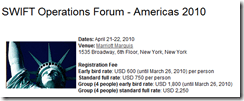
  • The output of the Innotribe workshops of SOFA in NYC on 21-22 April 2010 will be the input of the CPA Innotribe workshop. Detailed agenda of SOFA here. You will notice that “The New Normal” and “Innovation” are prominent themes on this event as well.

image

  • We had a very good similar experience lately in our event collaboration with the EPCA Conference (presentations here) in Paris, France on 22-23 March 2010 and the related Florin Awards. In collaboration with Innotribe, they organized the “Best Product Pitch” Award which was won by the folks of AcceptEmail. We will showcase them as well during Innotribe @ Sibos 2010.

image

image


We are still looking forward for an Innotribe collaboration with an Financial Services APAC organized event, ideally before summer.

Obviously, we are open to any other suggestion that helps creating a win-win situation: improving your event with Innotribe “spices” and confirming our credibility and innovative organization and catalyst in the financial services industry.

Don’t hesitate to contact me or one of the Innotribe team members to find our more.

Innovation Traumas

Interesting blog post from James Gardner in Bankersvision a couple of days ago.

My Photo

Formerly Head of Innovation and CIO of Investment at Lloyds Banking Group in London, James Gardner is now Chief Technology Officer at the Department for Work and Pensions in the UK Government.

James has also written “Innovation and the Future Proof Bank”, a book that is on top of the pile of to-read books next to my “broken-foot-sofa”.

Anyway, the title of his last post was “When failure is not an option” (FNAO), a theme that i addressed many times before on this blog before:

The blog entry is triggered by the following question:

What are your thoughts on organizations were failure maybe is not an option. For example nuclear physics, NASA or a government organization that pays benefits. In these situations failure could be disastrous. What strategy would you recommend in these types of organizations?

James adds an interesting perspective: failure early in your project is better then close to delivery.

…the further you get into delivery, the more money you’ve spent. If you have to stop then, its very bad indeed. As innovators, you don’t want that situation occurring if you can help it. It leads to what academics call “innovation trauma” – the scenario where everyone is so burned by a failed innovation that no-one will ever sign up for anything new again.

And – what is scary if you are in your early days of an innovation program in an organization that has FNAO as one of its core assets:

Even one bad failure, though, can close down an innovation program. And clearly, in the cases that Malcolm mentions, that kind of failure has very dire consequences indeed.

One last point on this: “failure is not an option” is a mentality that leads to – you guessed it – failure. Trying new things is a process that requires lots of stops and starts. There will, inevitably, be more stops than starts, actually.  In an organization that doesn’t celebrate good failure, what you get is a scenario where nothing new starts at all.

That, clearly, is a very bad situation to be in, and is one of the main reasons people complain they “don’t have enough innovation”

It’s also via this post i discovered James Gardner’s “The Little Innovation Book”.

image

This little on-line experiment has absolutely great content for innovators. Every page adds a perspective to innovation that i was not familiar with. A recommendation. You can also comment on-line as James is writing this on-line innovation book.

Would you be interested to have James Gardner at Innotribe @ Sibos 2010 in Amsterdam (25-29 October 2010) ?

Let me know. We can invite him 😉 But would he accept ?

Innotribe.com: a Lift-Off in perspective

Print

Today our team launched www.innotribe.com ! Different announcements on swift.com and on swiftcommunity.net here.

This is an important lift-off. At first sight, it may look like the launch of yet another tool or process. But this is much more. It is part of an overall Innovation Architecture based on the principles of Open Innovation.

In many industries, innovation is generally recognized as a critical ingredient for corporate suc­cess. Until relatively recent times, most companies used internal research and development as their only method of innovation. However, companies are now proactively considering all sources of innovation, both internal and external, to remain competitive. Usually this is referred to as “Open Innovation”, a term coined by Henry Chesbrough, Open Innovation: Researching a New Paradigm.

Idea Generation is an effort to uncover new and unexploited innovation opportunities. This is not about conducting traditional market research—that is, asking customers to go through a questionnaire, either on paper, online, or by phone. Neither is it about going out and directly asking customers what they want. Methods like these rarely yield the most useful customer insights. Typically, the answers they generate are the obvious suspects: “I want it cheap,” “It should be easy to buy and use,” and “Make it work really well, too.”

Innovation Idea Generation is about “serendipity”. Serendipity happens by understanding that innovation is largely a numbers game—it it takes a thousand ideas to find a hundred with enough commercial promise to merit a small-scale experiment. From those one hundred experiments, only ten projects will be judged worthy of pursuing seriously with a substantial financial commitment, and of those, only one or two will turn out to be unqualified successes.

SWIFT has been very successful in late 2008 and through 2009 in engaging community and staff in an “open” innovation model. Under the “Innotribe” label, SWIFT is encouraging individuals and companies to submit their ideas pertaining to SWIFT or the SWIFT eco-system.

The idea generation part of the process is thus focusing on engaging the community, through social networking (e.g. swiftcommunity.net) or specific events (such as Innotribe@Sibos) and tracking the resulting ideas in a transparent and open environment (innotribe.com).

Experience at SWIFT and the industry shows that this open approach does generate results (in terms of the number of ideas generated), The same experience shows that 1 or 2 ideas out of 10 prove to be successful ideas. So it is very important to establish a screening mechanism – the “innovation funnel”.

As ideas flow through the funnel, they can reach different “maturity levels”:

  • Discovery: the actual idea generation stage
  • Orient: document the ideas gathered and “orient” them in the SWIFT context. For example some ideas may give innovative insights for standards, for interfaces, for networking, etc
  • Evangelize: some ideas may need further evangelization to fully grasp the possible impact on SWIFT’s strategy and roadmap
  • Proof of Concept (POC). A way to make an idea more tangible. Can be a whitepaper as the outcome of a number of dedicated workshops, a mock-up prototype, an animation, or a fully working prototype.
  • Idea management: the stage where we decided whether an idea will go for internal or external development. The external route is usually the scope of “incubation”
  • Idea incubation: process to bring an idea from the concept stage to a first implementation (prototype, “beta” etc)
  • Implementation: anything beyond idea incubation

There are many ways to do idea generation:

  • Ideas from Staff, Partners, and Member companies: in the spirit of “open innovation”, we want to collect ideas from the SWIFT eco-system at large.
  • Innovation Challenges: mainly SWIFT internal challenges to collect ideas from staff.
  • Innovation Gardens: An Innovation Garden is 1-2 days of off-site meeting with 4-5 executives of the customer and a mixed team from SWIFT.
  • Innovation Labs: similar to gardens, Innovation Labs bring together multiple customers in an idea generation setting looking for ideas in a pre-defined focus area. Labs have been highly successful for example at Innotribe@Sibos 2009, SOFE, etc
  • Innotribe.com. The subject of the launch of today. Ideas above will be collected via the brand new Innotribe.com site, a sophisticated web-based idea management tool. The idea management process links seamlessly into the transversal product management process
  • Innotribe Events: Innotribe@Sibos was a huge success. We intend to run localized Innotribe events, and to participate and collaborate with other industry events where we aim at joined branding to enforce the SWIFT Innotribe brand as the innovation initiative for the financial industry
  • Scouting: many companies that are aggressively looking outside their walls for new technology are using Innovation Scouts, specialists tasked to identify new opportunities for partnership, co-devel­opment, licensing or acquisition.

All the above activities are related to the supply-side of idea management. However, the Innovation Architecture should be very specific on the demand-side of idea management. I already highlighted this topic in my previous post on “Innovation to the Core”. How we deal with that will be explored in a future post.

In the meantime, go to www.innotribe.com, look around, and start submitting loads of innovative ideas.

Reblog this post [with Zemanta]

Innovation to the Core

I just finished “Innovation to the Core” by by Peter Skarzynski (Author), Rowan Gibson (Author)

This is a modern, up-to-date, and indispensible book on Innovation.

More precisely on how to make Innovation a core capability of everything you do in your company.


Anybody who is deeply or remotely

involved with innovation

must read this book.


It’s a book that explains why radical innovation is the only option forward.

It’s a book that clearly explains the tension between efficiency and innovation, and what to do about it.

Both efficiency and innovation have value. More, they should be equal partners ! If you are serious about innovation, then you should spend at least as much on your innovation program as on your efficiency program. Check out how much resources you spent this and last year on efficiency. Take that amount and number of FTE’s and there is your budget for innovation for the next 2 years.

So it is not about being Lean OR Mean,


it’s about being Lean ànd Mean !


My biggest lessons learned from this book:

  • Dare to challenge everything, and especially your company “orthodoxies”, the taboos that have been taken for granted for the last 10-20 years.
  • Let the focus area of your innovation emerge bottom-up. Don’t define your innovation priorities in a leadership group. If you want everybody to be an innovator, you need input from everybody at all levels in your company when defining your innovation architecture. If not you end up with an impossible sell exercise towards the basis afterwards.
  • Make your executives and regional heads accountable for innovation. Some companies make 30% of the bonus dependent on innovation objectives.
  • There is an enormous responsibility for HR in getting the creative and innovation skills trained across the company at all levels.

But THE biggest lesson learned is probably about the difference between managing the supply and the demand for innovation ideas:

  • I believe most of us do a decent job on the supply side: we have plenty of initiatives and tools to gather, generate and follow-up on new ideas. That’s the supply side
  • But there remains a lot to be done on the demand side. I love the suggestions in the book that each division, region, product manager, etc is held accountable for at least picking-up 3-4 ideas coming from the supply side. Stronger: each of these groups has to reserve 10% or more of their existing budgets to spend on innovation projects. And this without changing the existing performance metrics.

Getting innovation into the objectives of managers is key. The book refers to this as the


“Management Process Make-Over”


Regular readers of this blog know that i have a strong opinions about:


Radical innovation vs. incremental innovation

The role HR has to play

Getting innovation deep into the DNA of your company, at ALL levels, all regions, all divisions.


This book only confirms and reinforces the thinking that i have previously shared in following posts on this blog:

Ethical Re-boot

UPDATE: Cool ! It seems that my site has been blocked from Myanmar 2 hours after posting this article. Now i really feel what freedom of speech means.

UPDATE-2: added some other interesting links at the end of this post.

I fully agree with Robert Scoble that Google’s threat to withdraw from China is a world changer. A huge milestone.

chinagoogle

Image courtesy WSJ

I believe that – when we will look back some years from now – this move will be seen as the “tipping point” in Corporate Ethical Re-Boot.

In this post, is will share some of my personal views on the Google-China event, and some other ethical old game/new game type of events i observed recently in my country.

There is a tsunami of responses to Google’s position. Some good recent blogs on the subject can be found here: Wall Street Journal’s overview and clearing up the confusion/myths, Scoble’s push/pull article, Kara Swisher’s China’s Internet Behavior, and John Paczkowski U.S. State Department to complain article.

UPDATE-3: another interesting one is from Christopher Meyer “Why is Google doing Government’s Job ?”

Walter Wriston (CEO of Citicorp in the 1970s) , in his 1992 book The Twilight of Sovereignty, predicted that business institutions would take over many of the roles of the state. He had a front-row seat — maybe the whole front row — as private financial institutions became more powerful than every central bank in the world save the US Fed (until now, at least). Governments’ power in shaping world affairs wanes as access to information broadens. As another affirmation of this, Carne Ross, a former UK diplomat, now does business as an "Independent Diplomat," offering professional-class diplomacy to state and non-state actors.

A new thesis by Miranda Meyer of the University of Chicago (umm…yes, relation) asserts that non-sovereign organizations like Hamas and Hezbollah belong to a class of actors that have important impacts but are not recognized in the Political Science literature.

Miranda Meyer’s thinking is very much in line with Joshua Cooper Ramo’s book “The age of the unthinkable”

Back in 1993, Wriston’s subtitle was "How the Information Revolution is Transforming Our World." Indeed, 17 years on, who can doubt that it has? One of his favorite observations was that "information about money is more important than money itself." Google’s influence is a sign that information about information may be more powerful still.

I found two other blog posts remarkably interesting.

First there was Fred Destin’s blog on Communist China, the misbehaving superpower.

The global outcome of a fast-growing command economy has been the government-determined explosion of asset bubbles all over the world – not because China is growing, the cause assumed by most economists, but because the government is buying resources (and their future options) on the global market, forward for 5-20 years. The result: instant commodity asset bubbles, worldwide, and further destabilization for non-Chinese consumers of these commodities. Of course, if the Chinese play the bubbles wrong, they will lose even more as prices collapse.

Could the Chinese create a global catastrophe by commanding all of this leverage into the wrong assets at the wrong time, by deflating the value of high-IP goods, by forcing global competition against unsustainable cost bases, and destroying non-Chinese business infrastructure? Sure. In fact, this is almost a “when,” and not an “if,” question.


What could possibly be more

dangerous to the world than a

command economic system run

on a global scale?


This is one view, a bit driven by


FEAR


Fear is also coming into the picture when you see that US Government is starting to take position, with all it’s possible impact on the US-China relations, the world economy and the quite fragile balance in world peace (at least between the super-powers).

But there is also the view driven by the opposite of fear:


LOVE


Translated into hope for an ethical reveille, beautifully articulated in Umair Hague’s MUST READ post “Google, China, and the new High Ground of Advantage” and you start seeing a pattern:

But the high ground has shifted. The new high ground is an ethical edge. It’s not about having more; it’s about doing better. It’s not about protecting exports, pressuring buyers and suppliers, price discriminating against the powerless, and programming consumers to buy, buy, buy — it’s about making people, communities, and society authentically better off. It’s not about caring less — but caring more. It’s not about ruthlessness. It’s about mindfulness.

The 20th century high ground might let China build a few dozen Microsofts, Fords, and Gaps: industrial-era companies that make industrial-era stuff — and play by industrial-era rules. Yawn. We know how that story ends, because we’re living it: an economy, polity, society, and natural world in stagnation and decline. Dear Wen Jiabao: want fries with that Zombieconomy?

The only way to step past the industrial era’s zombified endgame is the new high ground, because only an ethical edge can do all the good stuff above. The old high ground was built for 20th century economics: sell more junk, earn more profit, "grow" — and then crash. An ethical edge operates at a higher economic level.

It is concerned with

what we sell,

how profits are earned, and

which authentic, human benefits "grow."


It’s a concept built for the economics of an interdependent world.

Ethical edge is advantage reconceived for the 21st century. It’s an institutional innovation: the institution of "advantage" rebuilt for a threadbare, fraying, global economy. It’s a radical new definition of "advantage" that blows past the stale, tired idea of competitive advantage.

For me personally, i am on the hope side, and what’s going on here is really opening the Ethical Firehose.

I have always been inspired by the work of Peter Singer, especially his books “One World” and “Writings on Ethical Life”, but had somehow lost hope due to being confronted with the sad and disappointing realities of corporate life. I guess we all got our wounds as we lived our professional lives.

Umair Hague already pointed at it: one of the cultivated behaviors in corporate life is cynicism. As i have mentioned at several occasions before, cynicism is applied by folks who have lost the ability of "opening their heart”.

The other corporate disease is “Machiavellian" behavior. I have met recently professionals who even seem to be proud of their Machiavellian “skills”.


I think it’s wrong, very wrong


I looked up in some dictionaries what Machiavellian really means.

Being or acting in accordance with the principles of government analyzed in Machiavelli’s The Prince, in which political expediency is placed above morality and the use of craft and deceit to maintain the authority and carry out the policies of a ruler is described. Characterized by subtle or unscrupulous cunning, deception, expediency, or dishonesty: He resorted to Machiavellian tactics in order to get ahead.

And in the Business Dictionary, i found:

Conduct or philosophy based on (or one who adopts) the cynical beliefs of Niccolò Machiavelli (1469-1527) whose name (in popular perception) is synonymous with deception and duplicity in management and statecraft. Born in Florence (Italy), Machiavelli was its second chancellor and (in 1531) wrote the book ‘The Prince’ that discusses ways in which the rulers of a nation state can gain and control power. Although The Prince contains some keen and practical insights into human behavior, it also displays a pessimistic view of human nature and condones opportunistic and unethical ways of manipulating people. One of its suggestions reads, "Whoever desires to found a state and give it laws, must start with assuming that all men are bad and ever ready to display their vicious nature."

It’s fundamentally about dishonesty and manipulation. It’s about trust (or the lack of it) . Would you be able to trust Machiavellians ? Do you trust your leaders if they don’t apply the basic ethical principles ?

Some shocking examples come from my own country.

Last week we had our Minister of Pensions Michel Daerden showing up drunk in Parliament. It even made BBC News. I am so proud of our leaders (hmmm. this is cynicism again).

Or our ex-prime minister Jean-Luc Dehaene whose famous arrogant answer to journalists was usually “no comments”: he is now on the board of AB Inbev as “independent” advisor. We have in Belgium an “ethical code of conduct” called the “Code Lippens”. 

The Corporate Governance Committee was established on 22 January 2004. Maurice Lippens was appointed chairman. The Committee was created at the initiative of the Banking, Finance and Insurance Commission, the Federation of Enterprises in Belgium and Euronext Brussels.The Committee issued a single reference code for listed Belgian companies. The Code is to set out principles of good governance and transparency, which will contribute to the development of companies and to the quality of their image among investors and the general public.

Guess what ? based on the information in Belgian quality newspaper De Standaard, Directors of the Board get a yearly fixed compensation of 70,000 to 80,000 EUR plus a variable compensation, let’s say a bonus. How can you be an independent advisor to the board in these circumstances ?


Who does still trust these people ?


Getting closer to the business of financial services i am working in – and the importance of trust in this new decade – there was this related article in the Confused of Calcutta titled Musing about Trust.

There’s something very human about trust. Something more related to the Age of Biology rather than the Age of Physics. We’ve seen what happens when we rely on mathematics for ratings and values and decisions. Last time round it was called the Credit Crunch. A decade earlier it was called LTCM. Whatever.

Some of us believe passionately in the power of what’s happening today, in terms of democratized tools and access and community-based approaches to many things, from home to work to government and beyond. In fact, I’m personally somewhat at a loss as to why no one has really put together the right community-based vehicle for “climate change”, built as an open and transparent platform, on open source principles and in a global inclusive manner.

Trust is about covenant relationships, not about contract relationships. In a contract you await breach and effect recourse. The question answered is “who pays?” In a covenant the question that’s answered is “how do we fix it?”

I think we’re going to spend a lot of time in 2010 learning about covenant relationships and their role in society. At home. In the community. At work. As a nation. As the world.

Which brings me to Michael Moore’s recent film “Capitalism: a love story”.

michael-moore.jpg

I was chatting with a colleague in Cubicle 3B23 about this.

The person’s reaction was:

I am ashamed to work

for this industry

I think i am going to watch the movie too. Because, somewhere somehow it all starts feeling wrong and not in line with my true compass.

Other related articles

Reblog this post [with Zemanta]

Sean Park’s Sixth Paradigm

As preparation of 2010, i very strongly recommend to get familiar with Sean Park’s The Sixth Paradigm post of 28 Dec 2009.

I am a big fan of Sean and his site the Park Paradigm. He was the guy who made the famous AmazonBay2015 video.

image

That was 2006.

Since a couple of days the video of his Oct 2009 presentation at Amsterdam eComm Europe is available on his post above and also the Prezi presentation is here.

The video of his presentation is 20 min. It’s worth your time.

Two extracts of this presentation should get your attention, and incentivize you to read on:

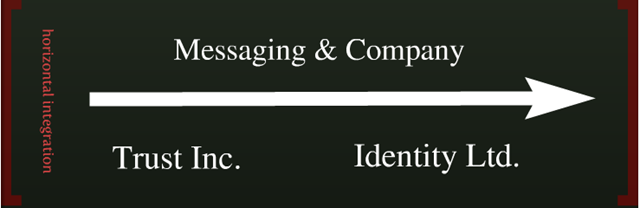
– What is the difference between a bank and a telecom company really ?

– The difference between bank messaging and telcos is disappearing.

image


image

I believe this presentation is VERY VERY relevant to financial services and concepts such a marketplaces for financial services.

This presentation gives you an absolute macro-evolution view on why this is a bound to be happen, and why the inherent structures of our current – usually vertical integrated – behemoth companies will struggle very hard to get their arms around this if they even ever succeed it spotting this as a HUGE opportunity.


The essence of the story is that those

vertically integrated companies

will be replaced/challenged

by horizontally connected entities

offering themselves

to the marketplace

via APIs


The innovation will happen

at the edges of the marketplace.

The marketplace is not even

innovative anymore.

It’s an essential piece of

the plumbing.

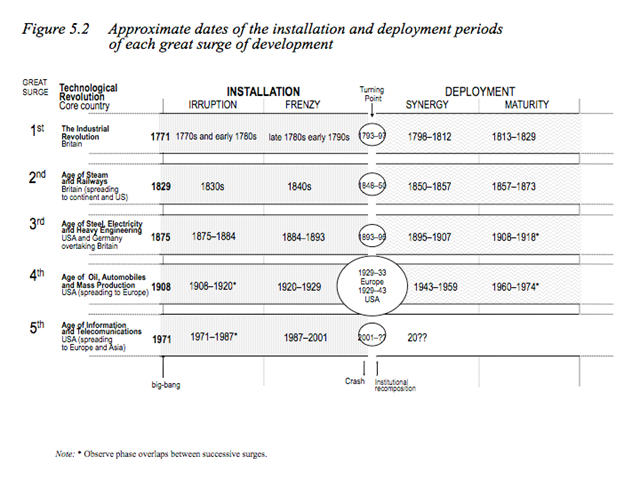
A lot of Sean’s thinking is based on the work of Carlota Perez and her book “Technological Revolutions and Financial Capital: The Dynamics of Bubbles and Golden Ages”

Professor Carlota Perez is a Venezuelan scholar and expert on technology and socio-economic development most famous for her concept of Techno-Economic Paradigm Shifts and her theory of great surges, a further development of the Kondratieff waves.

Carlota Perez Recurring Phases


Carlota Perez the 5 previous paradigms

Courtesy The Park Paradigm & Carlota Perez book.


Sean Park’s claim is that we are  now getting into the 6th paradigm, and this is also a switching point between 2 phases.


image


Sean Park believes the drivers will be 3-fold:

1) Cloud computing, with EVERYTHING as a Service

2) Exchange Ubiquity. The marketplace as plumbing, i would call this

3) Digitization

The last one “Digitization” seems “obvious”, unless you push this to the limits, as Sean Park does:


image


He takes the example of ISBN numbers as one of the success factors of Amazon’s book shop. Sure, there is big logistical tail to the book shop, the the core of the Amazon model is digitized, i.e the ISBN is just an identifier, linked to plenty of content and metadata, that can be accessed by an eco-system through APIs.

Where it even becomes more interesting, is where Sean mixes this up with theories of complex adaptive systems. It’s basically saying that


those horizontally integrated value chains

are chains of nearly decomposable services

And please read this in the context of nearly decomposable

financial services


And (traditional) vertically integrated companies (offering financial services) will not be able to compete successfully in rate of adaptation and fitness with these horizontally integrated “engines” or “eco-systems”.


image


Sean asks the question:

Where is the AppStore for Financial Services ?

here is the digital platform + API’s for the financial industry ?

Where are the decomposable financial services that can thrive on such marketplace ?


image


Sean has some other great disruptive statements. Like this one:


image


Its about the shift


from

image   To

image


It looks like Sean’s company is looking to invest in companies that understand how to build and offer these decomposable services.


But who should invest in the marketplace,

the plumbing,

the “dumb” but highly secure pipes

for the financial industry ?


We could let every Bank behemoth have it’s chance at it. That may be great for lock in. But in the long term, we will need something that is highly interoperable.


With interoperability

built-in

into the DNA

of this Digital Platform.


That is run as a service for the community. And to be the “invisible engine” for financial services cloud computing.

Invisible Engines: How Software Platforms Drive Innovation and Transform Industries


It’s only a very personal opinion, but i believe SWIFT is quite uniquely positioned to play this role.


Print


We are already in full prep for our 2010 SWIFT Innovation activities. It should be obvious from the above that we have Sean Park on our list of speakers to be contacted for our Innotribe event series, and who know at Sibos 2010 in Amsterdam ?

Need for a new currency based on abundancy

Thanks to my subscription to Fredzimmy’s blog, I found this wonderful blog from Esko Kilpi.

image

I really recommend you to explore this site from A to Z.

  • Look at the wonderful slidedeck on Slideshare
  • Have a look at the Flickr photos
  • Have a look at the Bookmarks

image

MIT Media Lab Human Dynamics Group, Howard Rheingold (one of the first ever “internet”-books i ever bought,…, Barbarian Blog.

Yummy, Yummy. This is great stuff for a Sunday afternoon. So inspiring. Delicious 😉

This way, i discovered the FANTASTIC Web 2.0 Expo speech of Douglas Rushkoff about Radical Abundance.

It is a 15 min video, and worth every minute:

Not sure if the video embed worked, so in any case you can find it here by clicking the below image.

image


Some mind-blowing quotes (in 140 characters ;-):

  • The operating system for money is obsolete…
  • Abundance based currencies and monopoly based currencies…
  • Central Bank Monarch imprinted currencies are scarcity based currencies…
  • The money we use today was created so that rich people to stay rich by being rich (and lending) rather than doing anything…


google-coin

  • Our economy is based on the growth of interest
  • The people lending money get richer, the people creating value are getting poorer
  • But, what happens if you get something that’s abundant ? That you can’t make scarce.
  • The computers and networks change the “centrality” of value creation
  • You are now able to exchange value directly between one another rather than through a centralized currency
  • Optimize human beings to technology
  • Technology is more compatible with the values of efficiency than with all the other human values
  • Now you’re open and free to Google-Ads
  • Web³ will be won by the power of those who can index and aggregate. Is that what we want ?
  • Open Source and Crowdsourcing are not the same things
  • This notion of “free” leads to a society of copying, to no creativity, to no originality, to DJ’ing of culture
  • The abundance of genuinely creative output is declining
  • What we need is the development of a digital culture that respects the labor of individuals
  • What we need is the creation of new modes of currency based on abundance rather than scarcity.
  • I am talking about the original PayPal dream before banks asked them to be regulated like… banks
  • The next BIG thing are from people who will create genuine alternative electronic currencies and P2P exchange that do not involve cash.
  • I am talking about primitive local currencies such as Timebanks, Itex, Superfluid’s Quids
  • Cash has already lost its utility value, as it has been sucked out into investment capital, in the speculative marketplace
  • The only real competition against a Google universe (and their ideas of openness – see last weeks Google Blog post about openness btw) would be peer to peer exchange
  • We are not suffering from an abundance of creativity, just from an abundance of productivity, efficiency and openness.
  • If Web² leads to aggregation and indexers, then genuine P2P will lead to bottom-up value creation.
  • The next era is not about scaling-up anymore, it’s about figuring out how to exchange value, in stead of extracting value.
  • We are at a crossroads: right now we have the opportunity to optimize our systems, technologies, currencies to humans in stead of optimizing humans to them.


Reblog this post [with Zemanta]