
The last couple of weeks I have been aroused with many ideas and reflections on Personal Digital Assets and on Digital Assets in general.

The journey started some weeks ago with my prezi talk at TEDxNewWallStreet and included my participation to the WEF “tiger team” on Personal Data, where a group of 30 experts are looking at what is needed to make realize the vision of Personal data as a new economic “asset class”. Personal data created by and about people, touching all aspects of society. That group is stitching the pieces together for a framework of business, technical and legal elements that are needed to underpin this vision.
However, the following video from Kynetx was the big aha-moment during my 4-weeks tour on the subject.
I never thought of a Personal Data Store as a “Personal Event Network”.
This changes everything ™
indeed as Phil Windley (@windley), CTO of Kynetx says.
One years ago, there was this beautiful video animation by David Siegel (@pullnews), a great vision of distributed nodes of personal data content talking to each other through API’s.
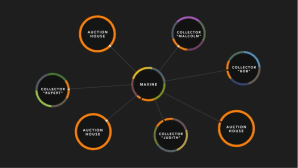
In the meantime, there is a rich ecosystem of start-ups that are building something very similar as we speak.
Maybe not yet to its fullest grand vision, but definitely going way beyond the traditional concept of a “personal data store”.
Check out leading start-ups such as Personal.com. Btw I dream of one day seeing an integration of Personal.com with an on-line bank. Anybody needing a brokering service here ? 😉
What Kynetx is adding to the mix are three important things:
- the “event” based thinking
- the prototol for the data-web
- Cloud Operating System
Event based thinking:
He really nailed it down for me last time I met him:
- In the past we had RPC (Remote Procedure Calls), in essence fire and forget
- Then came request/response: you ask for something, and you get it
- Now there is the “event-signal”. It does not ask for something, it just says “something’s happened”, and any entity in the network can subscribe to the event and decide itself to do something with it.
Protocol for the data-web:
The other aha-moment was when Phil was doing his talk at the New Digital Economies conference on 27 March 2012.
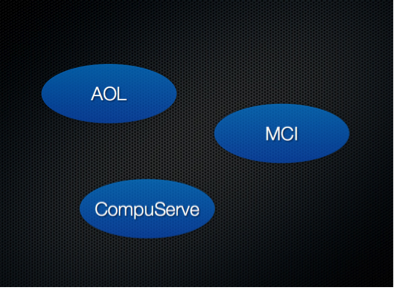

For those who remember, in the past we had silo-d email systems. AOL, Compuserve, etc. They did not interoperate. We got rid of those silos when there was a standard protocol, allowing competing commercial and open source servers to talk to each other in SMTP.
We now see the same with data, personal data, social graphs. We have data-silos (Facebook, Google, Bank systems, Health systems, Government systems, etc). What we need is a “Data-Server” and a “Protocol” that allows these data servers to be interoperable.
Cloud Operating Systems:
Phil has explained all this beautifully in a series of blogs on www.windley.com and I get very inspired when he makes a call for thinking about personal clouds as “cloud operating systems”
All this, Phil calls “The Live Web” (Amazon Associates link). He is so excited about this that he has written a book about it.

In other words, start thinking about your “Personal Data Locker” become a “Personal Event Cloud”: your personal data-server in the cloud that can talk and do things on your behalf, can make decisions, interpret rules, etc…
And it can talk to any entity, any node in the web (or at least nodes in any discoverable namespace). In real-time. In multiplexing mode (meaning the node can be both a server and a client).
It suddenly dawned to me that over the last years we have been hyping “The Programmable WEB”, and that if we are serious about customer centric identity or “customer centric” or “personal” whatever, we may wish to start with the “me”.
Suddenly it was flashing in my brain: “The Programmable Me”
“Me” is becoming a node in the grid. We are all nodes in the grid, sending and receiving signals. Like neurons passing an electrical or chemical signal to another cell. And start thinking “synapses” when you talk about the API’s of your Programmable Me.
From Wikipedia:
“Synapses are essential to neuronal function: neurons are cells that are specialized to pass signals to individual target cells, and synapses are the means by which they do so”
The APIs of your “Programmable Me”, of your Personal Event Cloud are indeed the means to make all these nodes interoperable.
Add to this the graph-thinking of Drummond Reed (@drummondreed), Co-Chair of the XDI/XRI Technical Committee of OASIS. Check-out http://wiki.oasis-open.org/xdi/XdiGraphModel and more specifically some of the Powerpoints out there:

Each circle in this drawing represents a node in the grid. I really encourage you to look at this as a graph – this ensemble of inter-connected nodes – as something 3-dimensional, possibly multi-dimensional.

We have all been trained to think hierarchical. Flat files with a root, that sort of thing.
We have to learn to think in graph-models.
You can start anywhere in the galaxy. Every point can be the center of the universe. There is no root. At least, not in absolute terms. Yes, in relative terms with respect to the other nodes in the universe…
A grand vision starts to develop when you realize that the nodes can be any type of entities:
- Humans (or their agents)
- Circles (like Google Circles) of humans (entities without legal form)
- Corporations, non-profits, governmental or educational institution (aka organizational constructs of humans with specific legal form)
- We should also include less traditional forms of organizational constructs such as co-operatives, P2P communities, Commons,…
- Programs (yes, software code), that perform tasks on behalf of the entities above or that operates as fully independent entities.
Each of these nodes/entities can participate in transactions – or better, “value dances”. “Dance” because the protocol is multiplexing, not one-way request-response.
Of course all these entities will require identity, in the broadest sense, not only URI or ID number, but in the sense of a spectrum, a graph that can be shared in context with other nodes/entities.
Sharing the spectrum becomes the essence of trade
What we are witnessing is a 180° turn in the power balance between client and server, slave and master, buyer and supplier, consumer and merchant.
All entities are equal.
We are all equal
Doc Searls (@dsearls) has written a book about it. The Intention Economy. (Amazon Associates Link)

But look at the subtitle: “When Customers Take Charge”.
I like Doc a lot, but his subtitle may suggest that somebody else is in charge: the empowered customer. I am afraid that we may end-up with another un-balance, where the pendulum has swung the other side: where the customer has an unfair data-advantage versus the merchant. But let their be no doubt that today the merchant has the unfair data-advantage, and I read Doc’s book more like a plea for getting the balance right rather than a socialist rant against establishment represented by the “big boys”, the vendors, the merchants, the silos like Facebook and Google.
In all the discussions about the Empowered Customers, we see classic commerce use cases like buying a book, buying flowers for grandma, etc
But I would like to make the jump to truly balanced financial transactions and what “dances between equals” would mean in that space. I invite you to think about your bank as the merchant, the merchant of financial services, and the consumer as the retail or wholesale customer of the bank.
In such scenario, the fundamental shift in thinking already happens at the Point of Sale (POS). We even have the question the term “Point of Sale”. It stems from an old thinking where the merchant “owns” the customer.
YOU are the point of sale
YOU are the point of data integration!
In the past the POS was the master,
now it will be YOU who is in charge,
or your agent,
the “Programmable Me”.
What if we start thinking about banking where YOU are the point of data-integration? What if your bank would offer you a service that enables you to manage your Personal Event Cloud?
I don’t know how it would look like, but it probably would be something triggered from your mobile phone. It probably would look like one of the Next-Gen banks (Simple, Movenbank, Fidor) with a Personal Event Network out-of-the-box.
Some of these Next-Gen banks are already accepting the CRED of your Social Graph as a much richer (in all senses of the word) basis for “Know you Customer”. Although we probably also have to inverse that: from the captive notion of “know your customer” to the user-centric meaning of “know your bank”. Then we may come back to the “primitive” of the meaning of “bank”: a bench where two people meet to build a relationship of value.

So, the discussion is NOT about the next coolest thing for doing a copy-cat of existing money-transactions through the latest greatest gadget like NFC or Bump, or whatever.
Some of all this already permeates in a recent Techcrunch article suggesting the “NFC is already out-moded”
“The thing to keep in mind here” says Crone, “is that NFC was developed more than 20 years ago. It was first deployed 10 years ago. 10 years ago, we didn’t have ubiquitous access to data plans. We didn’t have more smartphones in circulation than feature phones and we had to depend on an ‘offline’ connection for processing payments. But now, there are 124 million households that have more than one device connected to the internet. Typically, that’s a smartphone, but very quickly it’s becoming a tablet.”
Also Christopher Carfi (@ccarfi) starts thinking in this direction in his recent post “Musings in Small Data”. In there, he refers to a video of Jerry Michalski (@jerrymichalski) of the REXpedition doing a demo his “Personal Brain”. (Disclosure: I am member of the REXpedition). The video is titled “Gardening My Brain” and the talk was given at Personal Digital Archiving on February 22, 2012 in San Francisco.
It’s a pity that this talk is in the context of a personal digital archiving conference. Because, in my opinion, we have dramatically evolved from archiving to sharing.
Sharing of information and digital assets is becoming the new normal in this world of Abundance of information.
Christopher Carfi nails it when he says:
As these issues become more widely understood, more individuals will be tracking their own information. Perhaps it won’t be to the level that Jerry has done it in the video above, but it will be happening. This means that we, while wearing our business hats, will need to be developing real relationships with our customers. We need to listen to what they are saying, what they are asking for, and working collaboratively with them in order to help them fulfill their needs. In the best cases, we’ll have built up levels of trust with our customers and will have been given the explicit permission to access our customers’ personal data stores. In doing so, we’ll be able to actually take the guesswork out of the equation that was noted so clearly above in the Facebook example and will, instead, be able to connect directly with our customers’ intentions and deliver value on their terms.
Creating an economy based on the principles of relations is of course at the heart of the REXpedition. It is probably the next territory for competitive advantage beyond the mundane money transaction.
All this is about creating “Relationship Channels”, channels the vendor can tune into of the user has opened the channel.
All the above are of course very much related to our Innotribe incubation project “Digital Asset Grid” (DAG), which is about the sharing of any digital asset with any party.
All of the above is also very relevant to Mark Pesce’s (@mpesce) thinking about “hypereconomics”, described in one of my previous posts “The future rarely arrives when planned”.
The real question is then: “Where will value be created when all the connections between nodes have become frictionless?” Mark has some ideas on this, and he describes them as “irreducibles”
“No matter how ‘smooth’ and frictionless hyperconnected commerce becomes, certain frictions in the business world will persist. These represent both speed humps and opportunities. The businesses of the 21st century will find leverage and differentiation by identifying and exploiting them.”
What those “irreducibles” are, you will be able to discover at our upcoming Innotribe event in Bangkok on 26-27 April 2012, where together with Mark Pesce we will have some great interactive learning experiences. Be there, or read the report that we will make on this post-conference.
If you really want to take a meta-view on all this, I believe all the examples above illustrate our species being in search for a deeper meaning, a thicker value in everything we experience:
- We are in search for a higher level of consciousness, a further evolution in Spiral Dynamics, in search for a richer value system, much richer than the pure transaction world that is the narrow lens of today
- We start looking at companies being nodes in the grid, in fair-trade constellations of equals, trying to maximize the commons and contribution and giving back to society
- We want to go beyond the “advertising” thinking of “let’s hit the target with an ad”. We are in search for a better world with more Thick value and less Thin value
- We are starting to see the emergence of “The universe as a Computer” as wonderfully described by Nova Spivack (@novaspivack) in one of his milestone posts last month.
All the above is about defining, articulating, and living lives of greater meaning. With the “M” of meaning. Umair Hague (@umairh) already in 2009 called this “Generation-M”, which in essence is anchored in “constructive capitalism”
Generation M is more about what you do and who you are than when you were born. So the question is this: do you still belong to the 20th century – or the 21st?
I would like to close with a reference to The Wellbeing Revolution (Amazon Associates Link) by James McWhinney (@JamesMcWhinney).

What I liked about this book is that it encourages you to look at where you are in your life, and to look at it through the “M” lens. The lens of meaning.
I then discover that what I am writing today, what job I am doing, who I am married to, was probably all meant to be this way. Not “meant” in a deterministic way. No, “meant” as everything I have done, the decisions I have made, my architecture studies, my infection by the identity virus, my journey in Leading By Being, etc… all these things have made me who I am.
What if I could capture all this richness about me, and have a tool and an infrastructure to share that on my terms and conditions, in context, and with the parties or nodes in the grid that I choose to? What if I could share my meaning in a programmable way?
I would end up with something called “the programmable me”


![Reblog this post [with Zemanta]](https://i0.wp.com/img.zemanta.com/reblog_e.png)


 Petervan Studios