
This post is a third in a series on personal digital identity. Part-1 “The unpolished diamond was published here in August 2010 and Part-2 ‘The Digital Identity Tuner” was published here in September 2010.
Today’s post is not reporting about the tour we did in June 2010, but rather some reflections based on a number of serendipitous encounters during the last two months.

I am a strong believer in serendipity or the power of encounters by accident and the resulting idea shifts that can be generated during such meeting of different expertise.
My first encounter was with Azeem Azhar, CEO of Peerindex.
One day I was at a conference, and one of the speakers asked the audience “I would like to know what sort of application you guys want me to built”. It was one of those conferences where folks twitter a lot during the sessions, and I posted a tweet saying: “I would like you to develop my Digital Identity Tuner”.
It got re-tweeted, and in the end got picked-up by Sean Park from Nauiokaspark (he was one of the Innotribe Leaders at Sibos Amsterdam, and he is also an investor in Peerindex), who introduced me to Azeem.

Peerindex helps you understand and benefit from your social and reputation capital online. How much is your online reputation worth ? PeerIndex is a web technology company that is algorithmically mapping out the social web.
The way we see it, the social web now allows everyone endless possibilities in discovering new information on people, places, and subjects. We believe that the traditional established authorities and experts – journalists, academics, are now joined by a range of interested and capable amateurs and professionals. As this locus of authority shifts, many new authorities emerge. PeerIndex wants to become the standard that identifies, ranks, and scores these authorities — and help them benefit from the social capital they have built up
Btw, my Peerindex is 60. That’s based on my digital footprint on Twitter, Facebook, LinkedIn, and my blogging activities. It is obvious to see that this number “60” may one day translate into some virtual social currency.
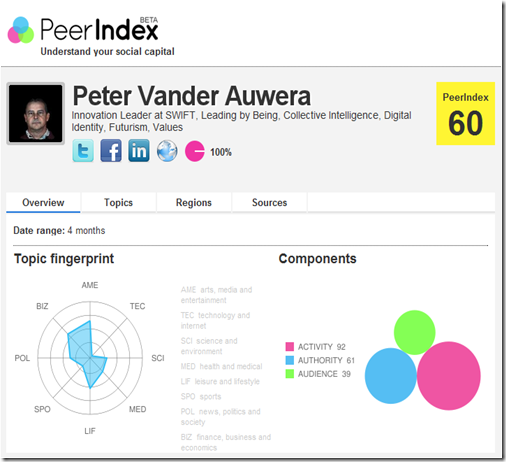
There are similar services like this: Klout is well known. Same principle. Some trend toward social currency of your personal platform. It’s also obvious that this capital will become very important for recruiters to find the people who have real on-line influence and reputation.

Like Peerindex, Klout also offers some more drill-down features, showing you influence “style” for example:

As you start drilling down in these data, this starts to smell quite a lot like some of the zooming in/out ideas I elaborated on in “Digital Identity Tuner”.
Azeem and I will continue talking about this. What Azeem liked in the “Tuner” were the ideas of control of what pieces of my profile I want to share with whom in what context.
My dream is that we have a prototype/mockup
ready by Sibos Toronto in September 2011,
where we probably will have
an Innotribe theme on Digital Identity
My second encounter was with Phil Windley, CTO and Co-Founder of Kynetx
One day – it was a day after a conference has ended – I was going to have breakfast just before checking out from the hotel and flying back home. At the table next to me, I see a guy working on his PC. I see a big sticker “Kynetx” on the PC. I had heard the name of the company several times before, so I said “good morning” and quickly introduced myself. It happened to be Phil Windley.
Kynetx is a private company that provides the first Context Automation Development Platform. This platform, powered by Kynetx Network Services (KNS), provides easy-to-use development tools to create context-sensitive, cross-platform apps that help build relationships between app owners and users.
I would describe it as
an event based integration engine
in the cloud
So we made contact, and once back home we arranged a Webex demo session.
Boy! What I saw really blew me away from my socks ! I saw a demo with a credit card vendor who used Kynetx to establish a new direct channel with the credit card holder, completely disintermediating the banks. I saw another demo with really very deep integration of DBS360 into Salesforce.com
I knew he had something to do with identity, and back home I found out that Phil Windley also co-founded and co-produces the Internet Identity Workshop with “identity woman” Kaliya & VRM-guru Doc Searls.
Phil has a great blog called Technometria

He has a great perspective on the key differentiator between today’s social networks and Personal Data Ecosystem the emergence of the personal data store where individuals control their own data.
This is of course very relevant to our eMe winner project of Sibos 2009. As I mentioned already many times before, with hindsight the eMe premise of a single or even distributed Personal Data “Store” or “Locker” is flawed. On Windley’s blog I finally found a good discourse on why it is flowed.
Check out the following two posts:
Like always, there is nothing such convincing like a demo.
The video below shows a conceptual demo illustrating the opportunities that are available for automating the contextual activities that people undertake every day. At the heart of the demo is a personal data store and Kynetx. The interactions are all done using real Kynetx applications that are plumbed in a realistic manner. The scenario uses 5 different APIs and a dozen individual rulesets in the Kynetx system.
In the scenario, Scott Phillips gets bad news from his radiologist: he needs surgery. You’ll see that a personal data store and a collection of loosely coupled Kynetx apps automate the frustratingly disjointed activities associated with Scott’s bad news and focused his attention so he can complete the tasks with the least amount of effort.
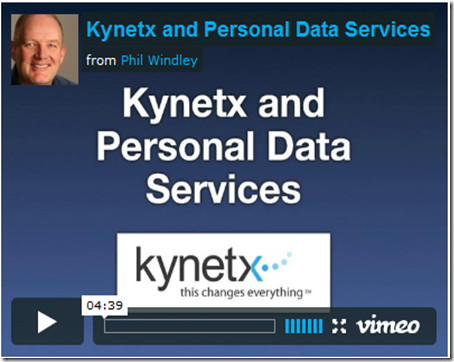
Kynetx and Personal Data Services from Phil Windley on Vimeo.
My third encounter was with nobody less than Esther Dyson.

She was talking at the last Defrag conference. She was doing a fantastic talk “On Exploration”. It was about “exploring yourself”, “discovering yourself”. With my Leading by Being background, I was super concentrated.
As part of her talk, she showed her personal DNA generated by 23andMe, one of the companies she is investing in.

Btw, one of the other investors in 23andMe is Anne Wojcicki, who is married to Sergey Brin of Google. She has an active interest in health information, and together she and Brin are developing new ways to improve access to it. As part of their efforts, they have brainstormed with leading researchers about the human genome project. "Brin instinctively regards genetics as a database and computing problem. In a recent announcement at Google’s Zeitgeist conference, Sergey Brin said he hoped that some day everyone would learn their genetic code in order to help doctors, patients, and researchers analyze the data and try to repair bugs.
23andMe indeed offers a genetic testing service that provides information and tools to understand your DNA. With a simple saliva sample they’ll help you gain insight into your traits, from baldness to muscle performance. Discover risk factors for 92 diseases. Know your predicted response to drugs, from blood thinners to coffee. And uncover your ancestral origins. These days the promotional rate for such service is 99 USD !
Here is how it works:
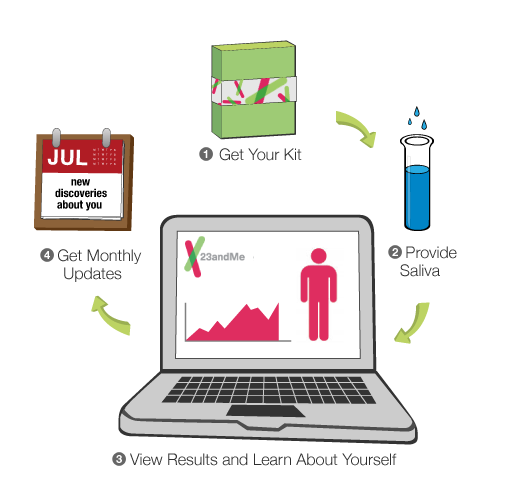
The system generates personalized reports on your health status, your disease carrier status, your disease risk, your drug response and your traits. In other words,
there is no place to hide anymore
You see the impact of your lifestyle on your DNA. You can change something to your lifestyle, or you can continue to live in a state of denial. As Esther was explaining “its all about motivation” albeit a different motivation than the one meant in Daniel Pink’s latest book “Drive”.
What Esther Dyson was describing was a DNA-version of the Quantified Self, a movement of people who measure all sorts of things about themselves such as heartbeat, blood pressure, time usage, sleep patterns, etc and who put all that information in the cloud.

Obviously, it would be great if also these folks would have a Digital Identity Tuner so that they could control in a more granular what what aspect of their identity/footprint they want to share with whom in what context.
For example, you may want to share your heartbeat with your insurance company to get better insurance policy and rates, but maybe you do not want to share this with your bank.
At the end of Esther’s talk, I observed that what she was describing were actually body listeners, sensors about your human “engine”, “machine”. I wonder if there are no similar implementations about the other side of “me”, namely about my mind, my consciousness, my feelings.
I asked Esther Dyson if she was aware of any such consciousness-as-a-service in the cloud thing. She thought it was an interesting question, but that she did not feel ready yet to share all that with the world.
I love the “Know Yourself” theme:
- From the one hand it takes quantified measurements from the human body, the “engine”
- On the other hand, it could take quantified (?) measurements from the human mind, the “capabilities” such as social cognition, or capability to be happy, etc
Both will drive status
Both in place and time
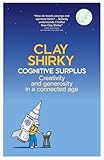
Status is all what it is about these days. And being able to share it. And participate to it. And engage with it. What Clay Shirky called “Cognitive Surplus”. What Stowe Boyd calls “Social Cognition”.
So many reasons to start thinking of a Digital Identity Tuner that lets you control status.
Digital Identity, Digital Status, and Digital Footprint start to converge into a personal data “something”. Some started calling the “something” a “store” or a “locker”. Others think more of a “service”.
Others are aware that our vocabulary is very real-world inspired, often based on physical concepts like “storing”, or “location”, or “posting”, etc… They prefer to wait until an appropriate terms pops up and call it “Personal Digital x” with the “x” standing for “something”. I called it Digital Identity Tuner.


It is clear that this sort of identity is much more than a card, token or PKI certificate.
There is a role for a
neutral, non-for-profit, trustworthy
organization to offer
an identity and trust service
for the financial industry
Who could that be ?
Sean Park’s presentation at next week’s SOFE (SWIFT Operational Forum EMEA) will introduce you to a financial services framework, with trust and identity as foundational services. That’s on 14 December 2010 at 9am in Conference Centre Dolce, close to Brussels.
A number of the above ideas should be part of a Digital Identity Research incubation project that we will probably kick-off at SWIFT in the second half of 2011.
Let the comments flow.






 Petervan Studios