Week-3 of Delicacies: There is so much noise out there. Getting back to some basics: a self-curated weekly list of max 5 articles that i found interesting and worth re-reading. Minimalism in curation. Enjoy!
Week-2 of Delicacies: There is so much noise out there. Getting back to some basics: a self-curated weekly list of max 5 articles that i found interesting and worth re-reading. Minimalism in curation. Enjoy!
There is so much noise out there. Getting back to some basics: a self-curated weekly list of max 5 articles that i found interesting and worth re-reading. Minimalism in curation. Enjoy!
Artwork Petervan 2015 - Thinking Man - Pencil and watercolour
Since a couple of months, I am chewing on a couple of themes that feel interrelated. Themes like scale, uniqueness, and beauty, eternal, ephemeral, one-ness, and only-ness.
I started wondering:
What if scale is not the answer?
What if I would start focusing on my uniqueness?
What if beauty becomes more important than function?
I was on a track where I believed that scale and uniqueness where opposites, and I only wanted to do things that were unique, one-time, never repeating, and NOT trying to create efficiencies. NOT trying to create economies of scale and/or scope.
I spoke to many people about this, and every time I saw their eyes glazing, wondering what world I was living in, and whether I was completely disconnected from business reality, or from reality full stop.
I was more or less told to conform, to behave, to try to do what everybody else was doing: running around at being very busy and being hyper-efficient in doing and scaling things that in my mind were not very meaningful.
During a walk-n-talk months ago with Nilofer, she hinted that uniqueness and scale are in different categories.
Some others hinted me at the concept of doing something that is NOT designed to repeat and permanence made them also think about the opposite, when one created with the objective of only happening once, designed to be ephemeral. Like making a drawing on the beach that is washed away by the waves. If you were not there, you have not seen it. At best it’s documented on video. But the performance itself was unique, only happened once.
Like the snow Art by Simon Beck: working hours on one snow drawing, enjoying the ephemeral beauty of it, but with the certainty that it will be gone with the new thaw of the next snowstorm
It was also a different “ephemeral”, different from the ephemeral messaging like Snapchat who were just valued at 10B USD.
I was reading Amanda Palmer’s foreword in Cory Doctorow’s latest “Information does NOT want to be free”, where she mentioned there will always only be one Grateful Dead.
They realize that companies won’t be manufacturing millions of identical things, but will need to make hundreds, perhaps thousands, of slightly different things
Learning how to do that—how to make an evening interesting for an audience, with just me and a stage and things I’d written, partly because it seemed to me that one day it might not be as easy to make money from selling stories in the traditional way
Many of us became authors in order to avoid getting up on stages in the first place
I started looking in to the concept of “One-Ness”, which is about integrated meditative consumption, unity, even Greek mysticism.
Onlyness is that thing that only that one individual can bring to a situation. It includes the journey and passions of each human. Onlyness is fundamentally about honoring each person: first as we view ourselves and second as we are valued. Each of us is standing in a spot that no one else occupies. That unique point of view is born of our accumulated experience, perspective, and vision. Some of those experiences are not as “perfect” as we might want, but even those experiences are a source for what you create. For example, the person whose younger sibling has a disease might grow up to work in medicine to find the cure. The person who is obsessed with beautiful details might end up caring about industrial design and reinvent how we all use technology. The person who has grown up under oppression might end up advocating for freedom of speech and thus advance the condition of his country. This individual onlyness is the fuel of vast creativity, innovations, and adaptability.
Embracing onlyness means that, as contributors, we must embrace our history, not deny it. This includes both our “dark” and our “light” sides.
Each onlyness is essential for solving new problems, as well as for finding new solutions to old problems. Without it, people are simply cogs in a machine – dispensable and undervalued – and we’re back to the 800-pound gorilla approach in organizations (and our economy). With it, gazelles [employees, community members, and partners] are singularly unique and able to contribute meaningfully.
And then it suddenly dawned on me: I was mixing up several dimensions.
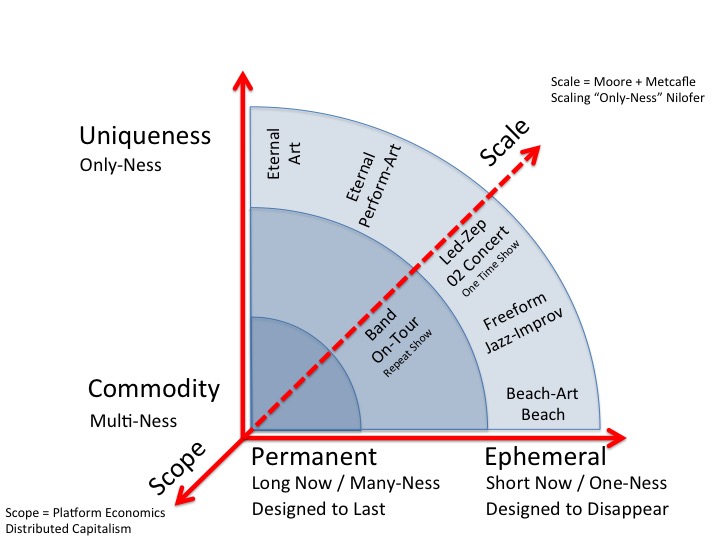
I tried to articulate my insights in a Powerpoint slide:
There are 3 dimensions in this slide. I was balancing in the zone between uniqueness and ephemeral. But found it difficult to integrate the 3rd dimension of Scale/Scope. In fact, the slide was two-dimensional only. I needed a sphere. I decide to hand draw it:
Dimension-1: the spectrum from Permanent to Ephemeral
Permanence, the same tone as “Long Now”, “Many-Ness”, things that are designed to last
Ephemeral, the same tone as Short Now”, “One-Ness”, things that are designed to disappear, not to last, like the snow art
Dimension-2: the spectrum from Uniqueness to Commodity
Uniqueness, the same tone as Nilofer’s Only-Ness
Commodity, the same tone as “Multi-Ness”
Dimension-3: the spectrum from Scope to Scale
Scale: what everybody seems to focus on. Investors don’t invest if it does not have the potential to scale, to be viral. The tone of “economies of scale”. For some sort of efficiency game. Still don’t like it, even if I can imagine something when Only-ness starts to Scale
Scope: what seems to count when one thinks platform business or platform economics.
I don’t want to scale nor scope my Only-Ness, my Petervan-Ness.
I want to create unique performances, multi-media, trans-media experiences, where I touch my audience at another (additional) level than the pure cognitive. I’d love to resonate at a subconscious level, with very unique storytelling and narratives. All build up from my own writing, artwork and self-composed music, sound and light landscapes.
I am entering a period in my career of “multiple gigs”.
I have installed a small studio at home. Maybe the embryo of Petervan Productions. Trying to master new tools. Trying to have the first story ready for dry-runs by March 2015. And a first live performance around summer. For small audiences only. Not to scale but to un-scale my Only-Ness.
Let me know if you want to be part of one of the dry-runs.
As many of you know, my “night-job” is Corporate Rebels United, a movement to unite Corporate Rebels worldwide to ensure that true change happens virally from deep within the fabric of our organisations.
At the end of 2014, we had something to celebrate: without any marketing we stealthily became a flat army of 1,000+ corporate rebels! From San Francisco to New Zealand and everything in-between, and really cross-industry. We had a toast on that one!
Every month we would try to celebrate a Corporate Rebel who went the extra-mile: in helping our movement, in completing a hack, in pulling together a value practice, or doing something really awesome in the organisation they work for. “Rebel of the Month” is recognition for a Corporate Rebel exposing the sort of behaviours we would like to encourage in our movement.
Our first “Rebel of the Month” in 2015 is Khurshed Dehnugara from London.
Khurshed has had two careers, ten years as a senior executive for a complex, global corporate followed by fifteen years coaching and facilitating those leading them. He describes himself in both cases as having one foot inside and one foot outside the established system and culture. He describes that position as one of a Challenger – akin to our concept of being a corporate rebel.
His latest book “Flawed but Willing – Leading Large Organizations in the Age of Connection” (Amazon Affiliate Link) has at its heart the premise that there is a different quality of leadership needed as our corporations move from an industrial age to one that is defined by connection. One that is defined by our flaws rather than our perfection, where power is a function of quality of contact rather than hierarchy. An age in which we are never able or expected to be in control and yet can generate more creativity and growth than the Industrial Age imagined was possible.
The writing is full of stories as the primary currency of contact, a voice more aligned with contemporary fiction than traditional business writing. It is playful and vulnerable, reflecting both his and his clients flaws as they do the hard work of being a rebel in a corporate culture that often wants to reject them. And at the same time there is an optimism; a persistence that comes from knowing it was never going to be easy and that overcoming repetitive defeats is part of our work.
Khurshed has a shout of for Corporate Rebels United on page 35 of his book, reproducing our Manifesto and linking it back to his table of the way organizations are integrating the new age into the old one.
Industrial Age
Age of Connection
Machine metaphor
Environment metaphor
Inherently stable
Inherently unstable
Efficient dominant
Adaptability dominant
Leader as controller
Leader as wizard
Control through sign-off
Control through self policing
Teacher as expert
Community as expert
Architects
Artists
Perfectionism
Fast failure
Hierarchy
Network
Fleas live of elephants
Fleas can kill elephants
High growth, minimal fluctuation
Low growth, maximum fluctuation
Relatively closed-off, defended from the outside world
Highly permeable to the outside world
Rigid but mostly secure employment
Voluntary, flexible, insecure employment
Leader as jerk. Can survive and thrive across whole career
Leader as jerk. Gets exposed and rejected quickly
Self-interest
Collective Interest
Khurshed is Partner at Relume Ltd. He is based in London.
Picture from Tomorrowland Music Festival, Boom, Belgium, by imgkid.com
During the last summer, there was a sort of house-festival organized in the small village where I live. A sort of Tomorrowland, but then very small scale and for the local youth only.
The organization looked professional, I had been listening to the soundchecks during the hot summer afternoon, and I decided to check it out, very much aware that at any moment one of the millennials may ask “hey granddaddy, what are you doing here?” 😉 That did not happen. More interestingly, I started to wonder what inspired these young folks here.
Maybe the weather had something to do with it. After a hot summer day, a thunderstorm had transformed the ground into a muddy spectacle. The moisture was still very much in the air and in the clothes of people, and I could smell a sickening mix of boredom, mud, booze, and a general lack of style and class.
Disappointed back home, I switched on the television set, and stopped zapping at an old Frank Zappa concert on Channel 12. In stark contrast with the boredom on the mud fest earlier that evening, I saw a concert full of technical mastery and pushing the bar in all aspects.
A delight for 2 hours of pleasantly (dis)ordered madness and artistry
And after concert, Frank Zappa back alone in his caravan, exhausted, but with a face full of satisfaction and pleasant mischief.
It made me dream away about work becoming an artistic performance, which is more and more the intention and ambition I have about work and contribution.
But many of us are hit with emptiness.
Not so long ago, I had a chat with an old acquaintance. I knew him for being sharp, original, and fresh, somebody who had found his freedom. Now his eyes were dim, faint and dull. He was a bit pale, and he said it was because of the year-end reflections after a heavy year. And he needed some headspace to think about what’s next.
But I sensed there was more.
He seemed to have become infected by the corporate viruses and antibodies against innovation and change in big dysfunctional organizations he was serving as a business.
There was a need for recalibration, a desire for seeking, a hunger for quality headspace, reaching out for a purification process for body and mind.
I met several folks the last couple of weeks who are all in search for deeper and more meaningful work. Not that we are unhappy and unfulfilled. Writing this makes me at times think it is just a luxury problem. Or is it?
The luxury that it’s more or less all there, but some dissatisfaction with the general flavor of our corporate contributions, goals and ambitions still being very tactical, a list of to do’s, with no or little intention, or what it enables…
Maybe that is a sort of language that is difficult to grasp for some more cognitive and tactical minds on our modern (sic) organizations.
But is still think such a quality language and narrative is important. The internal friction comes when I notice that I have come to a point that I don’t want to convince anymore the others of this new sort of language. I content myself to just use the words they use and understand, and live in an illusion that we are aligned. At least at the tactical level. But I can’t help myself thinking that is not good enough anymore.
We should invite each other to reflect and be self-critical – not necessarily about our individual contributions and the corporate reactions to them – but about our collective company culture in general:
Where do we want to stop or should we go the full way and really let others look into our soul?
We should be disappointed if we only get buy-in on a tactical list and not on the bigger “story”, or better “narrative”, that withstands the signs of the time of being fashionable and “street-cred” without credibility
I know, maybe that’s what the current short-attention-span-culture is able/unable to digest or even give attention. Nicolas Carr just wrote a whole book about it called “The Glass Cage”
I know, we may get comments about the need for being more pragmatic, not getting too philosophical, etc which is more or less the same as saying “shut up, I am not interested in your depth”
It is precisely that lack of depth, context and intention, looking for a higher ideal and potential, making something memorable and worthwhile, and even having the ambition of offering some moral compass that me and many others are deeply missing these days.
It makes me nervous: having so many ideas and the sensation of something really ambitious coming together in redefining myself. The sort of ambition of the Foo Fighters in putting together their last “Sonic Highways” album and documentary.
At 2:50 “the making of our most ambitious album”. That great spirit of making of your next gig the most ambitious thing you have ever done.
Daring to do complex things. Dare to do ambitious things.
Daring to dream big and kill mediocrity and simplistic goals.
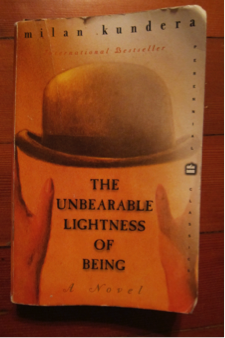
“Challenging Friedrich Nietzsche’s concept of eternal recurrence (the idea that the universe and its events have already occurred and will recur ad infinitum), the story’s thematic meditations posit the alternative: that each person has only one life to live and that which occurs in life occurs only once and never again — thus the “lightness” of being. In contrast, the concept of eternal recurrence imposes a “heaviness” on our lives and on the decisions we make (to borrow from Nietzsche’s metaphor, it gives them “weight”). Nietzsche believed this heaviness could be either a tremendous burden or great benefit depending on the individual’s perspective.”
I feel I am on a crossroads of doing something with this only-one-life. Unshake the bag of heaviness. To do something where I can leave my full and authentic Petervan “signature”.
Own artwork, Black Ink on old book page
Away from the illusion of depth on/at/in the surface, where “It is all good” but where the fire of ambition extinguishes, quenches.
A place where we can play “freeform Jazz”, where nothing repeats or scales, a new operating model indeed. Away from the emptiness of scribed facilitations, away from the tricks, the manuals and the templates.
What if we would – for once – NOT try to facilitate our way out of a given problem.
What if our agenda is not one of facilitating a solution for a given problem?
What if our agenda is one of being in what Nilofer calls our “Only-Ness”, in my case my “Petervan-Ness”?
What if we would go beyond this Unbearable Lightness of Tactics?
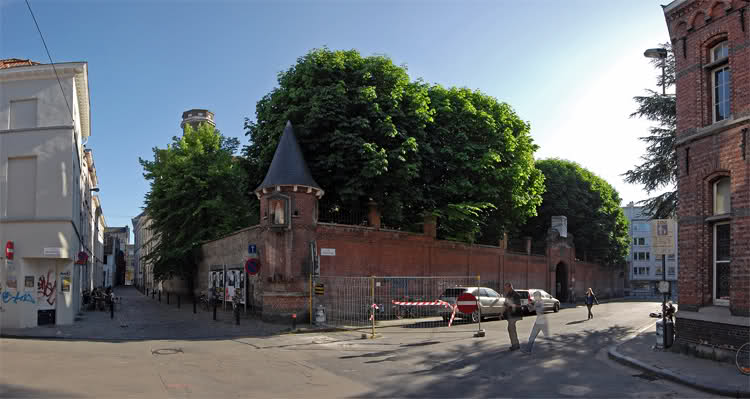
Way back in the seventies, i studied architecture at Sint-Lucas School of Architecture in Brussels and Ghent. Apparently – after 150 years of existence – the school is since 2012/2013 part of the LUCA School of Arts in association with the Catholic University of Leuven as the “Faculty of Architecture”
At the time the Ghent campus was located at the Zwarte Zusterstraat (picture) above, an intimate included safe zone between walls, trees in the middle the old city centre. I still remember the smell of paper and ink of the old attic where the architecture courses and practice labs took place.
Anyway, i dropped-out after 4 out of 5 years study, because i did not like the admin/legal part of the studies. I come from a normal middle class family, and paying for these studies was not just a tick-box for my parents. When i decided to quit, they were not happy and they “encouraged” me to find a job and an apartment and live as a big boy paying for his own cost and living.
Last year, after almost 35 years of professional career, and 7+ years fighting the battle for innovation at SWIFT, i felt physically and mentally exhausted, I requested a sabbatical leave for 6 months, which was kindly accepted by my employer – thank you.
I wanted to get in better contact with my other self, not the cognitive part, but the more un/sub-conscious part of myself. I wanted to inject other forms of expression in my work. One of the ambitions was to go back to Art School, to give some counterweight to that cognitive part of my professional life. Unfortunately by that time of the year, it was to late to get registered and i just messed around a bit on my own.
But this year, i was early and got registered early. So, i started Art School in Sep 2014 at the local but quite well equipped and staffed academy “BKO” (link Dutch only) of my home town Overijse.
It’s relatively intense: 9 hours practice per week on Tuesday morning, Wednesday evening and Saturday morning. For the Tuesday morning, i just take 1/2 days off. It’s practice, not theory. Not too much fuss, just try and experiment with materials, and some good honest coaching.
I still have architecture drawing and sketching in the fingers.
But that is about straight lines. I found it much harder to do curved lines. Of human bodies for example. It probably says more about how my brain is wired than i dare to admit.
The coaches encouraged me to “let-go”. Here are some early experiments. Let me know what you think.
The above is all small format: A4 or A3. At a drawing table. It’s a bit hiding. We will soon start experimenting with big format, and working on easels. Did some early try-outs last week, and the big format and standing drawing position are so unnatural for me, it really pushes me out of my comfort zone.
This blog post is about beauty, about excellence and uniqueness in their battle against efficiency, scale and functional Lego bricks.
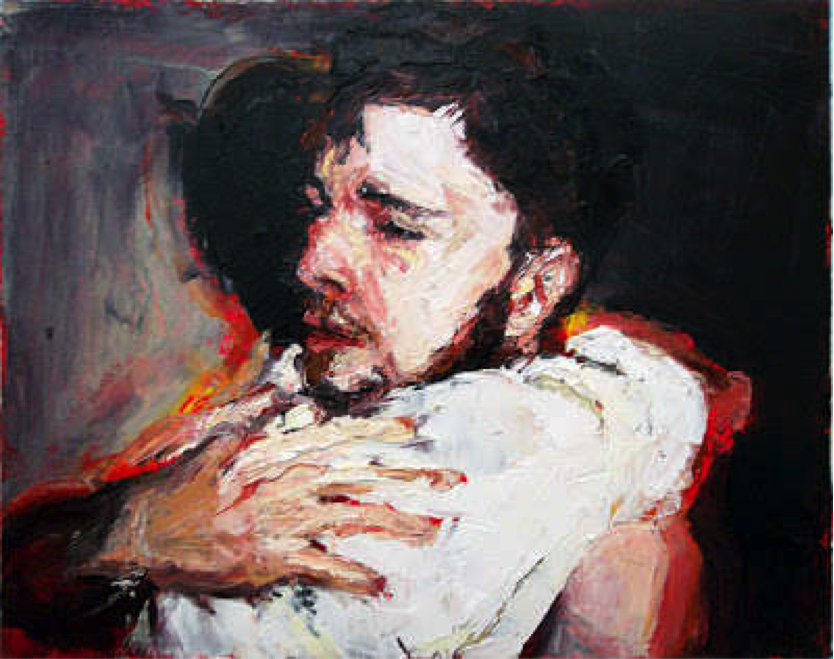
Oil Painting by Adam Brooks
It’s about my hunger for systems that add value to society versus systems and environments that only suck value out of society.
It probably all started many years ago with Cradle to Cradle, the 2002 pivotal non-fiction book by German chemist Michael Braungart and U.S. architect William McDonough. I learned how reducing waste is not good enough, because at the end of reducing waste, there is still waste left. What if we would design systems that are regenerative, and add value and not waste at the end of the process cycle.
And of course there is my all time favorite architect-author Christopher Alexander with “The Battle for the Life and Beauty of the Earth: A Struggle Between Two World-Systems”, and Daniel Kahneman’s “Thinking, Fast and Slow”, again about two world systems/views competing with each other.
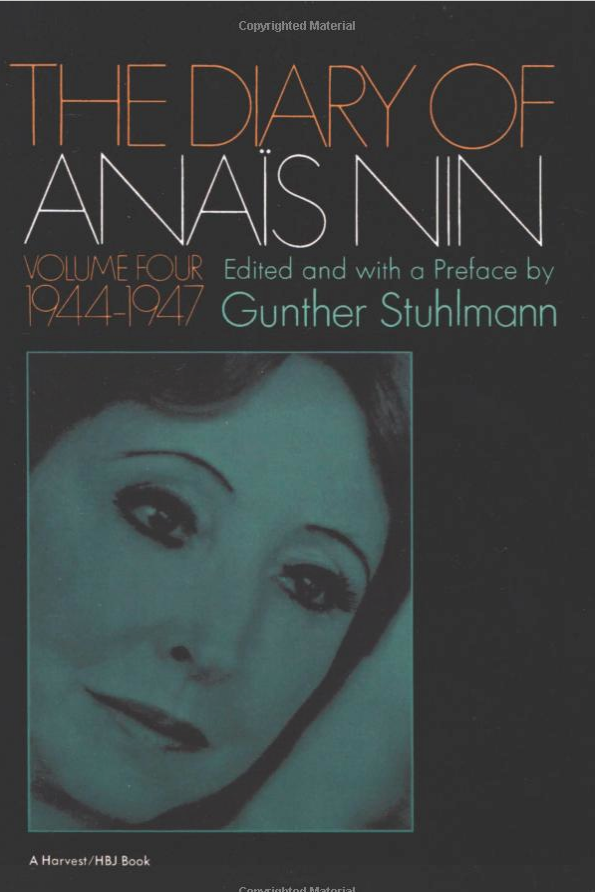
I got my final kick when getting in to Brainpickings’ post on “Beauty, Quality, Poetry, and Integrity: Anaïs Nin Meets Frank Lloyd Wright, Jr. (1947)”, with some great insights in the world of art and role of the artist.
It was about architecture that had been taken over by businessmen, and artists not being allowed to carry out their rich hunger for beauty. A bit like Evgeny Morosov’s fight against “solutionism”, where the world is taken over by VCs and commerce in stead of asking the real big questions related to ethos and quality of life.
“Strength was obvious in him, but sensitivity and imagination were in his drawings. A universe of lyrical beauty in total opposition to the sterile, monotonous, unimaginative ‘box’-buildings now seen all over the world.”
“In Lloyd’s work there was space, invention, poetry, a restrained and effective use of the romantic, surprises always in the forms, new and imaginative use of structural parts, rooms, windows, and materials. He has a gift for involvement in many-leveled lives, for the variations, caprices, and nuances necessary to the human spirit. Every stone, every roof-tile, every window, every texture or material was designed for the consistent development of his building, its environment, and designed to elevate the quality of people’s lives. Uniformity and monotony kill individuality, dull the senses.
Lloyd designed his work to reinforce individuality with poetry, beauty, and integrity. It was planned to create a more beautiful and satisfying human environment. Architecture as poetry. …
If he sounds like a moralist, it is because beauty, quality, and ethics are inseparable. Beauty and integrity. And for them one has to be willing to make sacrifices.
Many months ago, I had a chat about this with REXpedition friend Tom LaForge (Global Director, Human & Cultural Insights at The Coca-Cola Company), in 2011 an Innotribe speaker at Sibos Toronto. He inspired me with contextualizing our preferred system-1 as one of “drawing, flow and music”, where one “drinks from the fire hose of beauty”.
What if we would found a new collective of inspired thinkers, creators and sensemakers, the collective of QWAN (Quality Without A Name)? Surfing on the idea of “standing in your onlyness” as coined by Nilofer Merchant. A collective where we could connect with the other nodes, create another sort resonance with other nodes, a QWAN cohort as a way to connect with other quality nodes in tune with our true selves, allowing ourselves to to loose ourselves: in stead of “collective” we may want to call it the “connective”…
Loosing yourself…. Here is Brian Eno about loosing yourself:
“Sex, drugs, art, and religion—those are all activities in which you deliberately lose yourself. You stop being you and you let yourself become part of something else. You surrender control. I think surrendering is a great gift that human beings have. One of the experiences of art is relearning and rehearsing surrender properly. And one of the values perhaps of immersing yourself in very long periods of time is losing the sense of yourself as a single focus of the universe and seeing yourself as one small dot on this long line reaching out to the edges of time in each direction.“
Steering away from “in-group mentality”, and nurturing the ability to flow in/out other groups, and creating “permeable barriers” between the inner and outer self/shell referring to Jung’s dualism. Building lives in currencies that matter: respect, dignity, and kindness. With exchange rates and markets for these value currencies.
Using un-words like music, art, performance and poetry to access access the true self, buying into something experiential, loosing yourself.
In architecture it’s about the battle for beauty, against the “commonplace, shoddy, temporary movie-set houses around him were painful to see. He called them ‘cracker boxes,’ shabby, thin, motel-type homes for robots”
Marc Andreessen, well know for the phrase “Software is eating the world” also made a plea for saying he did not believe that robots will eat all the jobs”.
“Since our basic needs are taken care of, all human time, labor, energy, ambition, and goals reorient to the intangibles: the big questions, the deep needs. Human nature expresses itself fully, for the first time in history. Without physical need constraints, we will be whoever we want to be.”
“The main fields of human endeavor will be culture, arts, sciences, creativity, philosophy, experimentation, exploration, and adventure.”
“A planet of slackers you say. Not at all. Rather than nothing to do, we would have everything to do. Curiosity, artistic and scientific creativity have full rein resulting in new forms of status-seeking (!).”
“Imagine 6 billion or 10 billion people doing nothing but arts and sciences, culture and exploring and learning. What a world that would be. The problem seems unlikely to be that we’ll get there too fast. The problem seems likely to be that we’ll get there too slow.”
All this is about – in my opinion a new quest for romanticism, also in business. I can’t wait for Tim Leberecht’s upcoming book “The Business Romantic, Give Everything, Quantify Nothing, and Create Something Greater Than Yourself”, scheduled for release in Jan 2015.
What if the future model would not be based on exponentially, speed, scale, and efficiency?
What if uniqueness becomes more important than functional Lego-bricks and efficiency?
What if beauty becomes more important than function?
Like art, where the primary objective is to make something that is beautiful and resonates deeply at a non-cognitive, sub-conscious level and created happiness and fulfillment at a whole different intensity and quality. Where we want to resonate at an emotional level with each other, with a well-measured level of sharing, beyond legality and morality, but at a level of human intimacy.
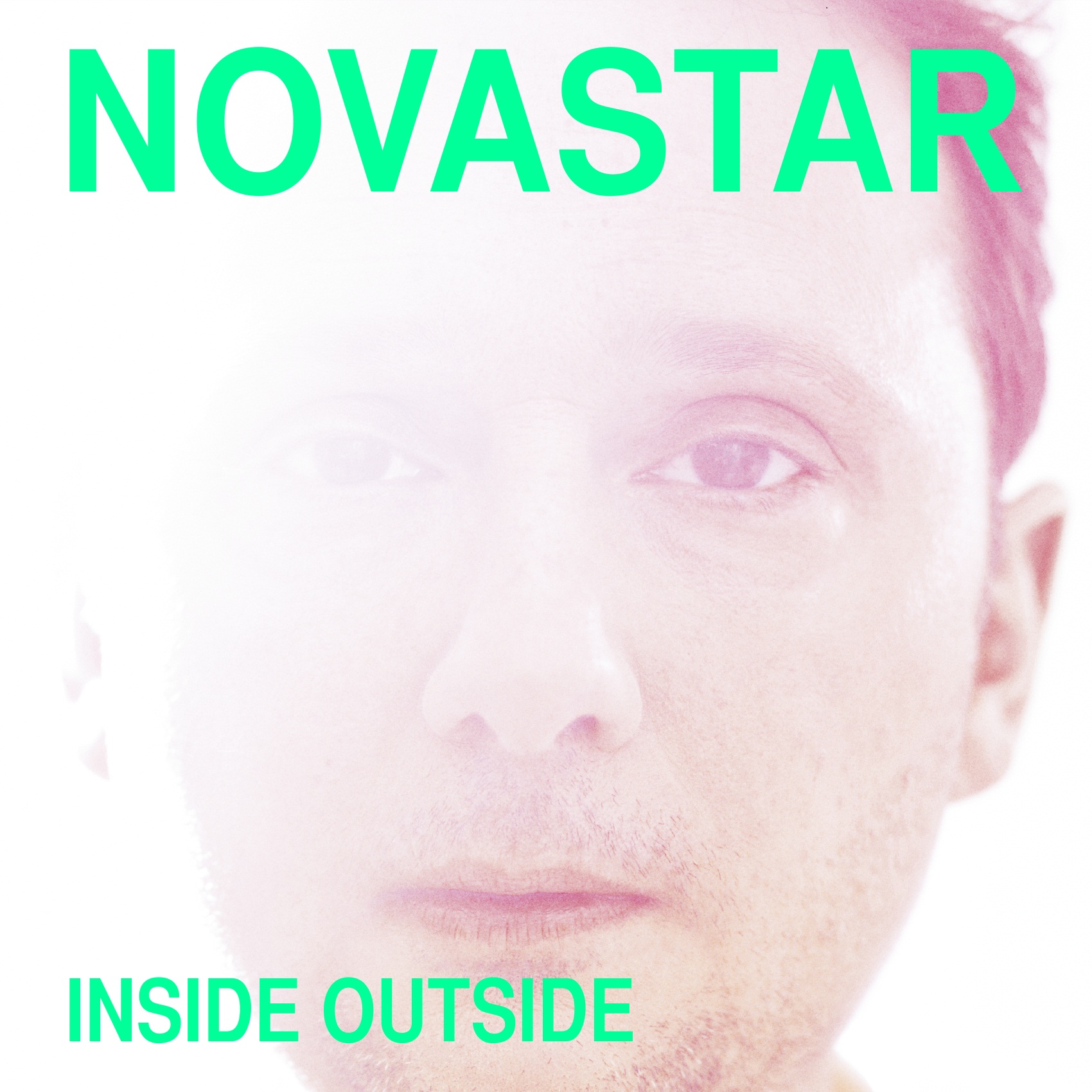
I just saw a very nice documentary on Belgian Television Channel CANVAS about the making of Novastar’s latest album ‘Inside Outside”, released in March 2014.
None other than John Leckie produced the album, the legendary producer who earned his spurs in the Abbey Road studios with Pink Floyd and George Harrison. Leckie was also behind the buttons for the monumental albums of The Verve, The Stone Roses and Radiohead.
The documentary reconstructs the musical influences, inspiration and obsessions of the bandleader Joost Zweegers, a quite intense Dutch-born Flemish guy who started as a street musician, and who perfected his style, and got noticed by Neil Young who invited him for his support act.
The program resonated strongly with me; I made some notes, and got in some sort of poetry mood…
Picture: Solsbury Hill via Barnflakes
Drone cameras,
Intensity of Solsbury Hill
The artist
With fascination, Mystique and Commitment
Get outside
For inside rest by solitude
His heart is in Belgium, and his fantasy in England
My heart comes from a Flemish Primitive, and my fantasy is in Spain
White page for content, space design and experience design
With performers, craftsmen and artists,
Reinventing once more
To unleash the unknown self in me
This is autumn,
Point of light in the depth
Creating intensities
Everything has to be perfect, rehearsed, must be right.
But leaving room for happenstance and personal emotion and interpretation in the moment,
“Right” like in Music: the art of getting all the notes out within the constraints of the right tempo and with my very personal interpretation
“Right” like in Poetry, just for the beauty of the language, the rhythm,
There is no usage for it…
No efficiency games, nor pragmatism, nor KPI’s
Just for the beauty of it.
Romanticism.
But music is without words
I am tempted to make another composition without words.











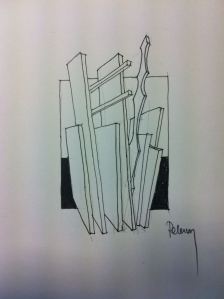
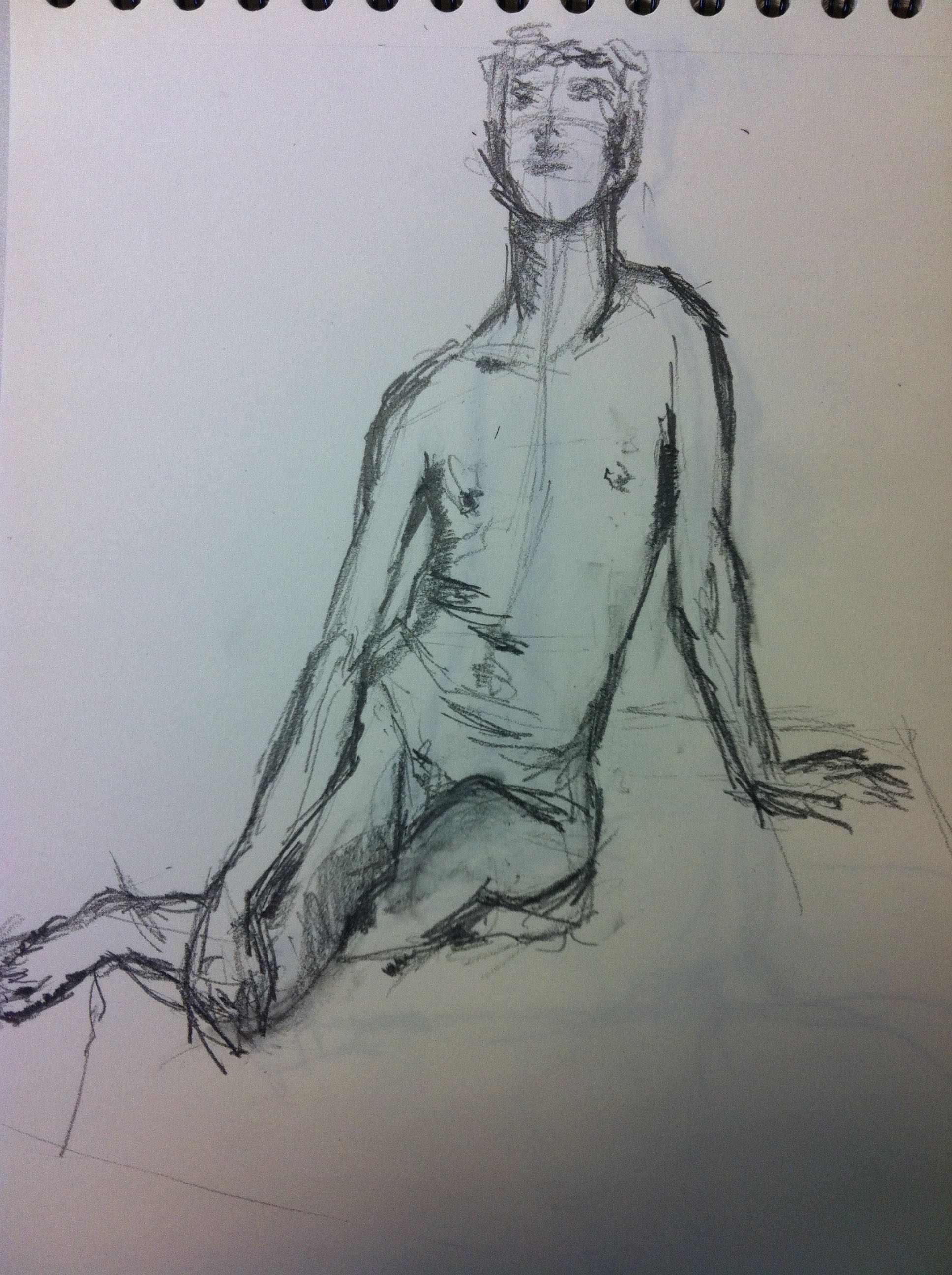
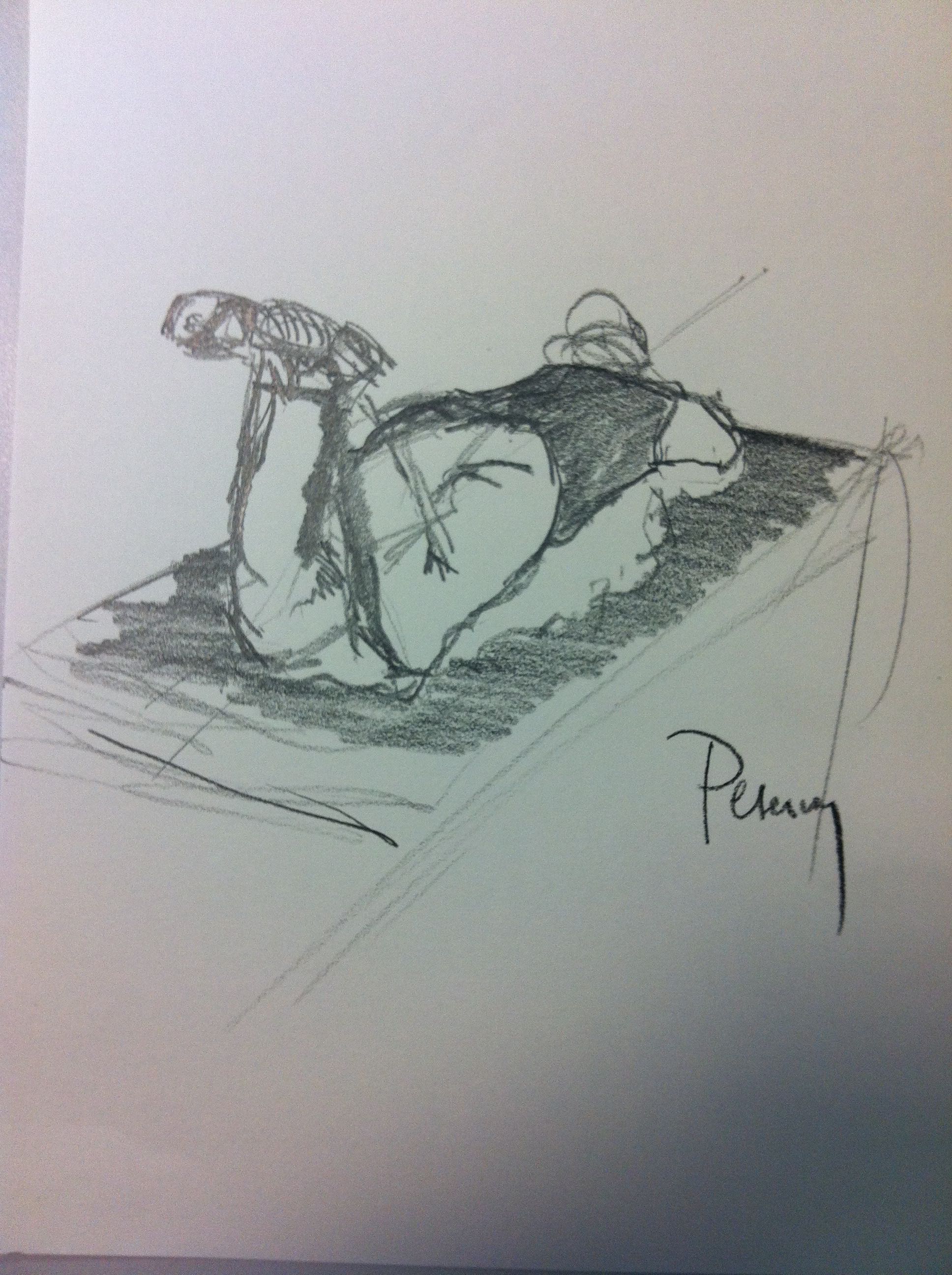

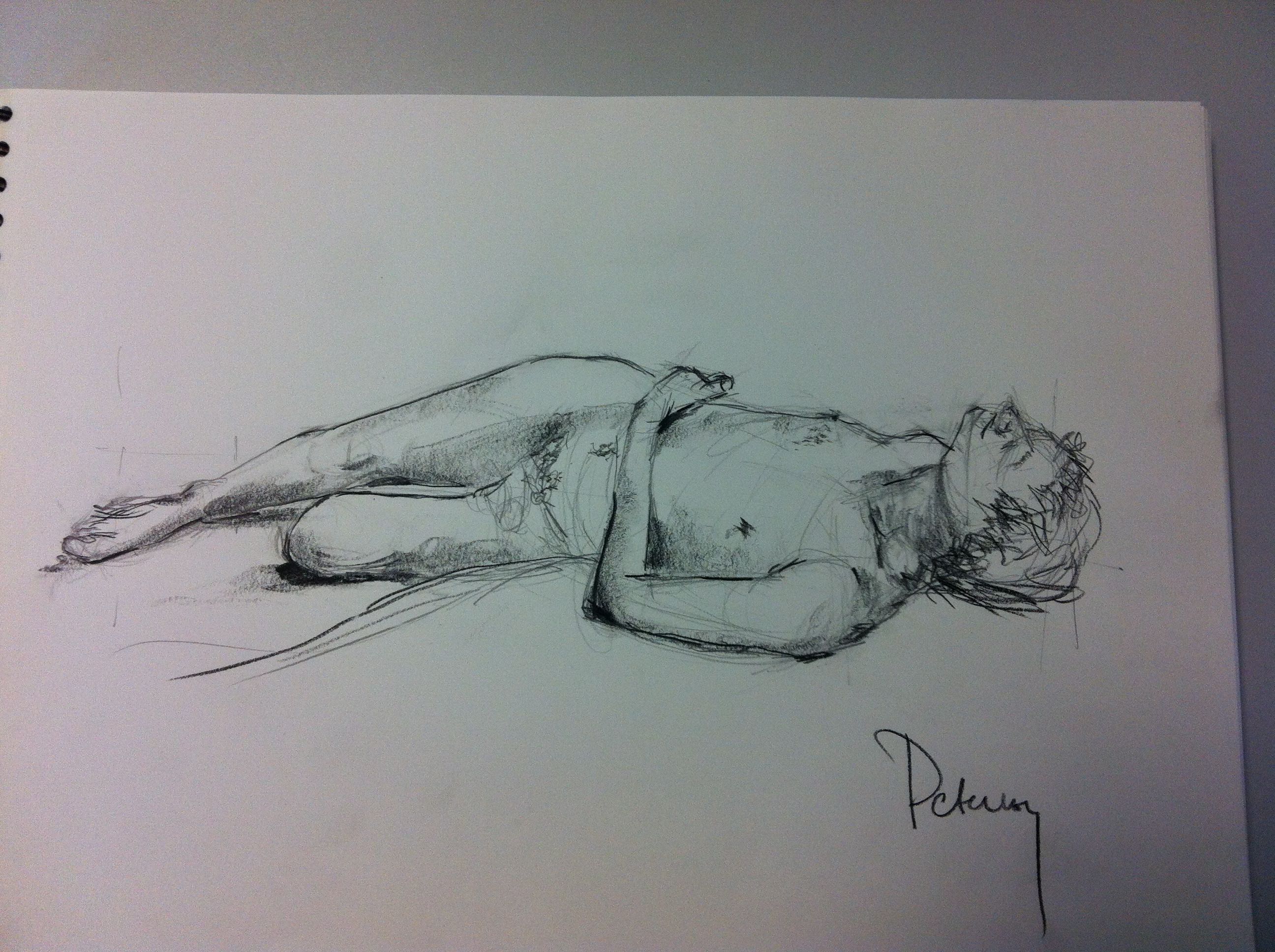



 Petervan Studios