Digital Identity: Buzzuminar with Dan Marovitz

Yesterday, i had the pleasure to be interviewed by Dan Marovitz, the founder of Buzzumi, a knowledge monetization platform, and a board member of rbidr, and the Professional Diversity Network. He is currently on sabbatical from Deutsche Bank where he was, until June of this year, Head of Product Management for Deutsche Bank’s Global Transaction Banking business.

The subject was digital identity, and the chat covered several subjects from privacy, KYC, user centric identity, and of course our latest incubation project the Digital Asset Grid.

The chat is available online here.

We could have gone on for hours, as the subject is so rich. Buzzumi is a new kid in town for doing online webinars, a bit like WebEx or Skype, with the big difference you don’t have to install any client. The session yesterday was more or less flowless, with some small audio hick-ups (minor). But they are still in beta. I like the idea of “one click and on”.

It also learned me that i am in beta myself for this sort of on-line interviews. I have done some media interviews in the past, and we got here at SWIFT a proper media training, but this is different. You have to watch several inputs at the same time, the chat box is also a source of streaming info. The most important thing is that i need to be better prepared. Really walk through in advance the questions with the interviewer, prepare my key messages i want to convey, prepare content blobs (just keyword is enough) around certain themes that i can tap into at will as the conversation flows.

“Messaging” is fundamentally changing in nature. Video will be an integral component of it, and i can’t wait to see the first blending of this with Twitter and semantic video searching. On good track, Dan !

Milo: gesture based interfaces 2.0

image


Have a look at this stunning gesture based interface with character Milo. First of all, it is more than gesture based. Milo also reacts to voice intonation, movements, etc

It is difficult to assess how much of this is a word-by-word script, or how much real interaction is going on here.

The most stunning effects are:

  • The women trying to capture goggles that thrown by Milo
  • The women moving the water with her hands
  • The women handing over a piece of paper, that gets scanned and taken over by Milo

It gives a sense where we are heading. Imagine this on your iPAD. My conservative guess is this will be real within the next 5 years.

This is very similar to what Oblong is doing with gesture based interfaces. See my previous blog on Oblong here. John Underkoffler indeed also said 5 years before this hits any PC.

Oh yes, in case I forget, Oblong will be at Innotribe at Sibos 2010 in the Smart Data track.

Precision Information Environments

Stumbled upon this very well made video (make sure you look at the annotated version of it).

image

Found via Brainpickings. Great example on how many emerging technologies and concepts — including ubiquitous displays, crowdsourcing, pervasive sensor networks and adaptive user interfaces come together.

When you look at this, think iPAD 2.0, think Identity 3.0, think your office of tomorrow.

iPAD what’s next ? Oblong !

oblong-logo.JPG

Seen at many blogs and feeds during the last week. Of all, i like most the post of MG Siegler of Techcrunch.

MG Siegler writes:

The demo I saw a couple years ago was stunning, but it was still just a video. Apparently, at TED, the audience got to see it in action. NYT’s Bits blog detailed some of it in a post yesterday. For those not at TED, Oblong has also made a few demo videos in the past, which I’ll embed below. Again, this is Minority Report.

Oblong’s coming out party couldn’t come at a better time. Following the unveiling of Apple’s iPad, there has been a lot of talk about the future of computing at a fundamental level. That is to say, after decades of dominance by the keyboard and mouse, we’re finally talking about other, more natural, methods of input. The iPad is one step to a multi-touch gesture system (as is this 10/GUI awesome demo), but this Oblong system is the next step beyond that.

TED2010_18647_D31_5144_1280

So how does it look like ? I found 2 videos, and waiting for the video of Underkoffler when he unveils the interface, called the g-speak Spatial Operating Environment, at Friday’s annual TED conference.

g-speak overview 1828121108 from john underkoffler on Vimeo.

and

oblong’s tamper system 1801011309 from john underkoffler on Vimeo.

More cool stuff from Oblong on their home page.

Reblog this post [with Zemanta]

Future of e-Magazines

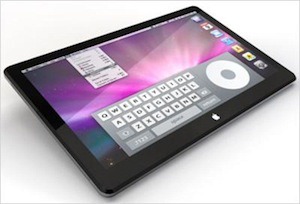
Great video on how e-Magazines may look like in 2010 when the iTablet gets released.

image 


I recently bought myself a Kindle, and i am VERY disappointed. 259 USD is a lot of money for a device you can only read Amazon books on. And it does not even have a zoom for it’s “built-in” Adobe reader.

For 259 USD, you get a netbook these days.

Does anybody know what the device is used in this video ?

UPDATE: Appkle iTablet planned for Jan 2010 ? Can’t wait.

http://venturebeat.com/2009/12/23/apple-tablet-january/

apple-tablet

Google Chrome: who is right and who is wrong?

All over the tech websites last week: Google previewing their Chrome OS and releasing it’s code to the open source community.

Planning, pre-viewing and releasing an OS is a big thing. Especially if everybody is looking at you as the provider of THE cloud OS.

It stroke me that some of the comments are so diverging. Some examples. Who is right and who is wrong ? With – as usual – some additional thoughts and spices by yours truly.

Negative

When the title says “Why Chrome OS will fail” you know what to expect.

However, it also inherits that platform’s (Linux) many warts, including spotty hardware compatibility.

It’s a move born of desperation. Google knows it can’t possibly establish a viable hardware ecosystem and still meet its self-imposed release deadline of "mid-2010”.

…no surprise that the primary interface to the Chrome OS is … Chrome, as in the Google browser. Unlike a traditional OS, there’s no desktop. The "applications" running under the Chrome OS are really just interactive Web pages,…

The bottom line is that while there is virtually nothing that you’ll be able to do with the Chrome OS that you won’t be able to do equally well with Windows, there are literally millions of things that you can do with Windows today that you’ll likely never be able to do with the Chrome OS.

It should come as no surprise that this is the article that is tweeted around Twitterspace with great and almost malicious pleasure by current Microsoft employees. Still loyal to their employer.

But think twice when you use the word loyalty in this context. See how fast the love can turn into competition when the company does not treat its ambassadors rightly (Don Dodges 180° love/hate turn around after being hired by Google)

See also James Gardner on the “Evidence of the (Microsoft) chip (in Microsoft employees)” and the introduction of a new term:

the Borgocrat

Fake Steve Jobs, one of my favourite blogs on the internet, summarised the whole thing very nicely I thought, in a post where he calls Don a Borgocrat (Fake Steve refers to everything Microsoft as the Borg), and compares previous posts Don has made with his new position on products for the company.

If this isn’t evidence that the “chip” still exists, I don’t know what is.

The more a read those opinions of some of head-in-the-sand Microsoft opinion makers , the more they are irritating and even not credible.

What to think of a Microsoftie making fun of Google Gmail being down, when their Hotmail has been down and hacked so many times.

But it’s a more general irritation.

What to think of traditional network vendors making fun of some cloud outages, knowing that their legacy technology is 30 years old, and the cloud players are doing relatively well, if you would add an adoption ratio of number of users and the incredible short time to market for users to take up.

That sort of arguments are so passé,

so old game

Neutral

Starting with a safe “Personally, I think it’s too early to tell.” The more interesting part in this posting is the effect that “geeks” can have on mainstream.

Yes, the "geek" audience is without a doubt a niche market. So it’s easy for Microsoft or Apple to write off Chrome OS. But that’s a mistake. As John Gruber wrote in his excellent piece, "Microsoft’s Long, Slow Decline":

People who love computers overwhelmingly prefer to use a Mac today. Microsoft’s core problem is that they have lost the hearts of computer enthusiasts. Regular people don’t think about their choice of computer platform in detail and with passion like nerds do because, duh, they are not nerds. But nerds are leading indicators.

Microsoft’s losses to Apple aren’t based on "regular people" choosing the Mac. Rather, these "regular people" were encouraged to do so by the geeks in their lives who had made the switch to a Mac years ago. Consumer technology vendors can ignore the alpha geek niche at their peril.

Positive

Louis Gray has a long term view.

Google’s preview of the Chrome OS was more than a product release. It was a milestone in a vision of a Web-centric world, one in which we are increasingly living.

For the vast majority of my own activity, I am online, not using software. I intentionally use some applications, like Microsoft’s Office suite or Adobe Photoshop, quickly, and then close them just as quickly, as to not slow down my computer’s performance. Google’s Chrome OS is the latest development in a vision that says our activity will be online, our data will be stored in the cloud, and applications that have traditionally been desktop software will make their way online.

Under no uncertain terms, I agree with their vision. This is happening and it is happening fast.

Robert Scoble (an ex-Microsoft himself) has as usual a more documented insight on his blog.

Google is playing a different game. Google Chrome OS is NOT about killing Microsoft or Apple.

What is it about? Developers, developers, developers, developers, developers.

This reminds me of the famous video where Steve Ballmer cheers up the developer’s audience in the good old days. It looks however – like pointed out in the neutral article above – that Microsoft has lost its’ “clout” with the developers at large.

It’s even getting worse: last week at PDC, Ray Ozzie was saying that apps won’t be a differentiating factor on smart phones. Sounds a bit arrogant to me when you know that iPhone Appstore has 100,000+ apps in store, and Android Marketplace building up fast.

Scobleizer continues:

I have not seen a single thing demonstrated on stage yet that won’t run on Google Chrome OS.

This is a winner, but on a new field

Natural Language Interface Microsoft Research

With thx to xstof for spotting this one. Looks like i cannot embed the video, so please go here or click the picture below.

image

It turns out 2019 is getting closer every day. At the moment, Microsoft’s chief research and strategy officerCraig Mundie is doing the rounds at a number of prestigious colleges in the States showing off Microsoft’s vision for technology to solve the world’s biggest problems. Of course, one must use the latest in natural user interfaces for this task.

A feature of this year’s tour appears to be a next-generation computer – one that docks and undocks from a transparent glass display and allows for not only pen and voice input as you’d come to expect from natural user interfaces, but also incorporates touchless gestures and eye-tracking to interact with the information at hand.

Getting closer to the Minority Report type of interfaces 😉

Google Wave integrations for the Enterprise

Interesting blog straight from the Enterprise 2.0 Conference taking place this week in San Francisco. Wish i was there :-/

Integrations by SAP, Thoughtworks, and Novell. Boy, and knowing there are still people who don’t believe Wave is going to happen big time.

Watch till the end, where there is an BPEL export of the business process that was collaboraively edited on the Gravity canvas in a cross-company wave. Piece of cake !

More details here on the Enterprise 2.0 Blog.

Btw: thx to my good friend Roger, i got an invite for Wave. You can find me there at: p.vanderauwera@googlewave.com (don’t use as an email address 😉

The (ir)relevance of the desktop


How relevant will the desktop be in the next 5 years ? I don’t know about you, but I do more an more in online tools such as hotmail, gmail, googledocs, etc

I want to offer you 3 perspectives to this trend:

– A business to business point of view (Salesforce)

– A 2007 (!) vision by Aza Raskin from Mozilla Labs

– The announcement of Google Wave and OS

I have included 3 video is this post. The first one is short (1:54), the others are longer (1 hour 20 min) and (1 hour 20 min) respectively. But i can assure you they are worth every minute.

Let’s start with Salesforce. On 9 June 2009, I attended the free Salesforce-event “CloudTour 2009” in Eindhoven, Netherlands.


This was a very, very professionally run event with very professional speakers (drilled like an army). They flew over a number of hotshots from San Francisco for this event.

Some key facts about Salesforce:

  • 1,2 Billion $ revenue in FY 2009
  • 59,000+ customers
  • 1,5 Million users
  • 100 Million API transactions per day
  • Average response time: 300 Milliseconds
  • 3 releases per year, without any disruption for customers
  • Customers: big to small. Some examples: Solvay, VUM, Polycom, DELL, Corporate Express

All this to say this is not Mickey Mouse business: these folks exist for 10 years. This is mature business.

Their tag-line is: NO SOFTWARE.

Everything runs in the cloud.

There was a great demo on deep integration in Services Cloud of Twitter, Facebook discussions in Salesforce app, direct visibility in Google search. All in real-time.

Another demo was about “Building an app in 30 minutes”. They built in essence an expense report app like most companies have. Built and on-line in 30 minutes: With currency conversions, linked to accounts for which the expenses are incurred, with approval workflow, access management etc. All this was point and click. Not one single line of coding.

Peter Coffee, Director Platform Research had some strong messages about the economics of cloud. He stated that all of the following is commodity and does not add business value, and is ready to go to the cloud: Email, twitter, backup, security, virtualization, OS patches, running an Operating Centre, messaging. He also stated that SaaS, IaaS, PaaS are not relevant in itself. It’s about the apps and the business value add you create with that. And that cloud is NOT about IT budget cost reduction !

It is about moving from “less low level people on less value tasks” to “high value level people on high value tasks”

Your IT budget may go UP over the years, as you spent more on high value tasks

Beware of the expectation it is easy or cheap

When strolling through the exhibitor space, picked up a comment from a customer:

Now that I have this, I never want to go back to on-premise. This works. Never any probs of crashes and alike or things that do not work. Unbelievable I ever accepted doing business the old way.

Let’s have a  look at what Aza Raskin had to say about the desktop.

“Had” because this is dated May 2007, more than 2 years ago.

I am a big fan of Aza. See also my post on Mash-ups and Cloud and Semantic Web.

His bio is fantastic:

Aza is currently the Head of User Experience for Mozilla Labs, where he works on crafting the future of the web. He’s led projects ranging from semantic language-based interfaces (Ubiquity), to redesigning the Firefox extension platform (Jetpack). Aza gave his first talk on user interface at age 10 and got hooked. At 17, he was talking and consulting internationally; at 19, he coauthored a physics textbook because he was too young to buy alcohol; at 21, he started drinking alcohol and co-founded Humanized. Two years later, Aza founded Songza.com, a minimalist music search engine that had over a million song plays during it’s first week of operation. In another life, Aza has done Dark Matter research at both Tokyo University and the University of Chicago, from where he graduated with degrees in math and physics.

His GoogleTalk in 2007 was titled “Away with Applications: The Death of the Desktop”. On the opening picture, he looks even a bit like the very young Bill Gates ;-). Aza was born in 1984. So 25 years old now !

And it is NOT about bashing on Microsoft. He is explaining why it does not make sense anymore to follow what has been.

He is using some pretty powerful metaphors: the shovel analogy, “it’s not Microsoft’s fault”, Analog vs. Digital watch, “Start with the manual”.

If you don’t have the time to view the full video, go straight to minute 21 or so. In essence most user interfaces force the user to adhere to the program hierarchy of the developer.

He goes on with seeing natural language as a universal access to application: like you search the web, you could also search services. Basically, there are 4 “do this” commands: create, select, navigate, and transform.

Aza will this week also speak at TEDGlobal 2009 in the Connected Consequences track. I have also invited Aza to speak at SWIFT’s Sibos 2009, in the Innotribe track for which i am the overall content owner.

Enjoy Aza !

The other announcement that created a twitter & blog storm on the internet was Google Wave. Just google “Google Wave” and you will see what i mean 😉

I don’t get all the criticasters. This is really very cool stuff and it is going to change fundamentally how we think of online communication. I strongly recommend to watch every minute of this launch event video.

On May 29, a couple of days after the announcement, i spotted a Facebook comment from a person with a quite high-level position in the Belux Microsoft organization: "Not impressed by Google Wave. More of the same in a different jacket. Ever watched conversations in Outlook 2010 ?"

As i am an ex-Microsoft employee, and still have some friendly contacts there, i wrote him an e-mail and explained that i was soon going to write something on my blog on this and the relevance of the desktop.

I asked to share some links to Outlook 2010 to be able to link my readers to what Microsoft has to offer in this area so that my readers can make up their own mind ? This is the answer i got: “Outlook 2010 is in Technical Preview – we cannot show outside. But if you look on the web you will find a couple of things about it.”

So it’s “help yourself” at http://www.microsoft.com/office/2010/. Oh yeah, you probably will have to pay for Office 2010. Last week, Microsoft also announced they will offer a FREE on-line version of Office as part of the upcoming Microsoft Office 2010 release.

To close this post, a really good opinion on this in Hutch Carpenter’s blog “I’m actually not a geek”. One of his latest posts relate to SaaS and also relates to Google’s more recent announcement of the Chrome OS.

He positions all this in the context of Clayton Christensen’s “disruptive innovation” model, and goes on:

Which brings us to the PCs of today. They are marvels, providing a slick experience for users and able to accommodate a host of new applications. But if I were a betting man, I’d say the most common activities people do with their computers are:

  • Surf the web, engage in social media
  • Email
  • Write documents
  • Build spreadsheets
  • Create presentations
  • Consume and work with media (video, music, graphics)
  • Use web-based business apps

Among those activities, what’s the magic of client-based computing? The media-related activities perhaps require the horsepower of a client app. But even those are getting better with web apps.

I recently decided to switch from hotmail to gmail.

Competition is good.