Disruptive times call for positive, creative disruptors: Rebel Jam Update

UPDATE: you can find the links to the recordings of all the Rebel Jam talks here:

https://docs.google.com/spreadsheet/ccc?key=0At_G3sEqOh0YdFQ1T3ZUYWFUNW1aR1pLN3JNV0pIbUE&usp=sharing

It’s easy to be an innovator and entrepreneur in start-up. Not so inside large organizations — companies, government agencies, healthcare systems.  The competencies and mindset you need to create change and succeed are different for rebels inside the organization.

The good news is that in today’s hyper-connected world we have the possibility to join forces – across distances and time zones – and create a critical mass of change agents capable of accelerating innovation & transformation globally

That’s why we’re holding a free, online 24-hour Rebel Jam with fascinating speakers, inspiring entertainment and provocative discussions every hour, with hosts from Europe, North America and Asia.  Our aim: empower the rebel to be able to create positive change, understanding the considerable risks and challenges that will arise.

On May 30-31, 2013, Rebels at Work and Corporate Rebels United will hold a 24 hour on-line Rebel Jam via WebEx. All you’ll need is to be able to connect to the Internet and clear your calendar.

You can tune in any time – or all 24 hours if you’re one of the crazy ones – to learn from Rebels about:

  • What has helped them to be successful?
  • Setbacks and obstacles they’ve experienced and how they’ve navigated through them.
  • Habits that help them stay creative, positive and respected.

There will be time after each speaker for questions and conversations to encourage as much learning and camaraderie as possible in an online way. We’ll also be inviting performers and artists to share and perform their work with us to fill our rebel spirits, and just have some fun.

The conference kicks off on May 30 at noon in Europe; 6 a.m. North America East Coast; 3 a.m. North America Pacific, and 8 p.m. Sydney. 

Here is the attendee information for the Webcast:

https://ciscosales.webex.com/ciscosales/onstage/g.php?t=a&d=207449320

Event password: rebeljam

You can register via the Rebel Jam Eventbrite site here: http://rebeljam.eventbrite.com/

The online rebel jam is a joint effort of Rebels at Work, and Corporate Rebels United  and being sponsored by Cisco IBSG who is contributing both speakers and the WebEx collaboration and communication platform that enables this global virtual event

The latest program overview is available in the following Google Doc:

https://docs.google.com/spreadsheet/ccc?key=0At_G3sEqOh0YdDIzbTN1M2FSQUxUT2xKOFh6aUNoTVE#gid=0

Some cities are setting up local events to follow and participate in the WebEx Rebel Jam.

–       Brussels:

–       Other cities to be announced

You can tweet about and during the event with Twitter hashtag #rebeljam

For more about corporate rebels, check out some of these posts, research reports, and videos:

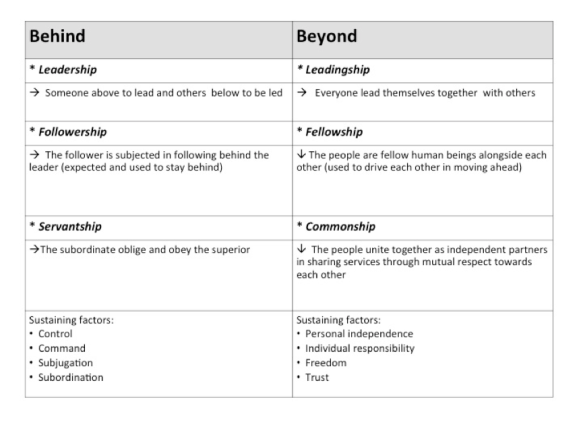
9 Lessons from Rune on Leadingship

Since my post “The End of Leadership”, the topic of Leadership vs. Leadingship keeps buzzing in my head. I further elaborated on the topic in a subsequent post “Leading from the Edge”.  As many of my readers know, the inspiration muze for these posts was Rune Kvist Olsen from Norway.

tumblr_mk56n9nE7b1rse1ipo1_500

Rune is fine-tuning the concept by sending regular comments to those posts. He now has collected and gathered his writings from February and March into 9 lessons for Leadingship.

Rune lives a bit isolated in a self-designed and self-built house on a lake in Norway. A bit disconnected from technology and social media and all the rest, but probably more humanly connected than many of us hyper-connected digital stress rabbits.

It is a pleasure to respond with a wholeheartedly “yes” to Rune’s request to post his lessons on my blog as a guest post. It is probably his only voice to the world.

It’s a long read, and you need your attention and intention with you when reading, but Rune has developed such a rich language to articulate the differences between Leadership and Leadingship that I find it always worthwhile to immerse myself in his thinking.

So, here they are, the 9 lessons for Leadingship. Red and italic highlights by myself.

+++ Start of 9 lessons from Rune on Leadingship – Feb/March 2013 +++

Lesson-1: The consistency in interactions between personal conceptions of reality and the influence of personal power in the organization.

The general conceptual principle: We are envisaging the reality as we are our self, and not as the reality is in it self. The particular conceptual principle: We are seeing the reality in our organization based on Who we are as persons and What we have as persons.

The organizational design principle: Our reality conceptions at work varies and fluctuates with our specific and factual organizational circumstances.

1. The reality conceived from a Leadership point of view:

As superior persons appointed to leadership positions we see the reality from above and downward. We are envisaging the reality based on our position and rank as superiors and will understand, interpret, explain and defend our conceptions and perceptions of the reality context accordingly to his respective circumstance of power over subordinates below.

The superior person in a leadership position is given the power to determine and ascertain the correct version and view of the truth and the power to enforce the authoritative description of the reality.

The subordinate person must accept and comply to the version of the true reality conception established by the ruling order with loyalty and obedience, with the purpose of sustaining one owns job and work.

The reality conception powered by Leadership is based on What we are and have by the virtue of positions and ranks.

2. The reality conceived from a Leadingship point of view:

The power of Leadingship is based on the principle that everyone in the organization are entitled and authorized personal power within a respective field of work, and entrusted with individual freedom and personal responsibility in making autonomous decisions.

Everyone are relating as equals and peers and are envisaging their reality context from a similar point of view (neither upwards or downwards – but sideward’s) from the same platform of out looking the organizational reality.

A shared reality conception between individual human beings occurs when individuals are able to understand that other’s conception of reality can be as real, true and valuable as their own conceptions and perceptions.

The common awareness that our reality are composed of a myriad of different views, conceptions and opinions, are the dynamical cord that are linking and connecting us together through our individual personalities in shaping our common identity as a working community.

The reality conception powered by Leadingship is based on Who we are as individual human beings based on our personal competence and capacity in doing our respective jobs.

Lesson-2: The Truth powered by Leadership versus Leadingship:

A. The Truth powered by Leadership:

The Subjective and Superior Truth as a matter of an Objective Supremacy Fact. The superior leadership person sees and rules the truth, and the subordinate person is told and ruled by this commanding truth:

If and when a superior person in a leadership position don’t  like, disagrees and disputes a critical and controversial report from subordinates, the superior person will most likely terminate and close the matter, and file the case in the archive as invalid, unreliable and unaccountable. The subordinates will be labeled as disobedient, disloyal, dishonest and not trustworthy.

B. The Truth powered by Leadingship:

Subjectivity is a personal matter as an individual expression of reality conception. Objectivity is a collective matter as a result of shared understanding amongst the people involved.

When people have gained the personal force to operate and function independently and entrusted the liberty to take responsibility of actions as equals and peers, they have at that moment of conscious state of mind attained enough personal confidence and will force to accept and trust the reality description of others without fear, rejection, condemnation, denunciation. damnation and contempt.

Lesson-3: The consequence of a polarized reality conception powered by Leadership versus a shared reality conception powered by Leadingship.

1. The Leadership reality conception directed downwards and upwards:

  • Mastering hegemony by monopolizing the truth.
  • Colliding values and believes.
  • Minimizing, discrediting and ridiculing alternative statements as rhetorical and semantical matters (depriving and renouncing confronting aspects their authority in being serious and real).
  • Conflicting priorities.
  • Contradicting truthfulness.
  • Compromising reliability and credibility.
  • Alienation by separation.
  • Ruling by dividing, conquering and domination.
  • Verticalization of relationships.

2. The Leadingship reality conception directed sideward’s:

  • Sharing by beneficial benevolence.
  • Communication by leveling.
  • Collaboration by coordination.
  • Corporation by complementation.
  • Connecting by integration.
  • Equalizing by reciprocally.
  • Horizontalization of relationships.

The structure in organizing, managing and leading work and people are a consequential reflector of the structuring of power as the premise shaper of the reality design in the organization.

Lesson-4: The necessity and essentiality of substituting and replacing obsolescent and anachronistic believes and dogma (f.ex: Leadership) with new and alternative options and solutions (f.ex: Leadingship) – which are not part of the illness and disease that inflicts and infects the mental health of the human mind in contemporary organizational life.

The excellent and brilliant statement of Buckminster Fuller says everything about the necessity in creating alternative options (model, concept, system, structure) when dealing with obsolescent matters opposing and counteracting new future realities:

“You never change things by fighting the existing reality. To change something, build a new model that makes the existing model obsolete.”

The power and force embedded in the concept of Leadingship enables us in moving beyond existing mental boundaries in reaching the emergent future of a new workplace reality, where everyone are relating equally and mutually on the same level of co-existence.

At that point of evolution in the state of mind of the individual human being, we have released the chain of control and command from someone above to lead and others below to be led. This significant action have made the existing model of Leadership for Someone superfluous by compensating this obsolescent dogma with a new model of Leadingship for Everyone.

Lesson-5: Notorious governing administrative mechanisms and ruling Leadership techniques in enforcing silencing, subjugation and subordination in the workplace – in relation to Leadingship practice.

The purpose of well known and famous governing mechanisms administered by the system and ruling leadership techniques applied by the superior (leader, boss, supervisor, controller, director etc.) person in charge, is quieting and silencing people against advocating personal, individual and collective concerns, anxieties and worries about their work, working conditions and working contracts. The intention of such subtitle and often concealed leadership action, are enforcing, protecting and preserving the interest of the power holding and the powerbase that ensures supreme privileges and advantages for the people in charge in leadership positions.

In practicing Leadingship everyone must take responsibility and operate independently because there are none to command and control, and subsequently there is an absence of manipulative mechanisms and techniques of silencing people to muteness. One main purpose behind Leadingship is to take each other seriously and not dismiss controversial, challenging and critical arguments as invalid.

There are some factual and actual factors (mechanisms/techniques) applied by superiors above in governing/ruling subordinates below by legitimate leadership strategies and tactics:

1. Dismantling the existing workplace setting.
2. Dispersing/dissolving the working group.
3. Exiling persons from the workplace (office/station).
4. Removing access to working instruments.
5. Depriving of tasks and functions.
6. Redrawing authorization, certification and security clearance.
7. Degradation/depromotion downwards.
8. Excluding/out locking from job.
9. Expelling from department.
10.Relocation to another physical setting.
11.Discharging/firing from job.
12.Dismissing/teminating contract
13.Disgraced/dishonored professional reputation.

Revealing and exposing pretentions, intentions and reasons behind the monumentation and cementation of the Truth of Reputation by the correct version of history description, is the only option in establishing transparency and prevent future veiling of manipulated truth powered by Leadership.

I will end this enigmatic lesson with a statement from some years ago:

“The truth is only threatened by its own essence when revealed as a deception and falsehood in concealing the real and sincere intentions and reasons behind a manipulative action in preserving the status quo.”.

Lesson-6: Identifying and mapping the consequences of institutionalizing the correct version of the Truth by the legitimate and authorized act of either superiority or equality in the organization.

Evidencing the Truth of reality by Leadership versus Leadingship. Our conception of reality becomes our truth depending on how we are letting and accepting the reality being described and interpreted by someone keeping the power based on (leadership) position, or by everyone sharing the power based on experience and knowledge (leadingship competence).

The act of indentifying the common reality experienced by everyone individually in the organization, can be done by proposing relevant questions in revealing and exposing the real truth about powering, organizing, managing and leading work and people:

  1. Can you envision a workplace where all people are powered with authority by their own abilities to operate and function independently and responsible?
  2. Can you envision a workplace without superiors and subordinates where some people have power to dominate, control and command others in the act of subjugating them to subordination?
  3. Can you envision a workplace reality where the power to make and take decisions is linked exclusively to personal competence (in contrast to position and rank)?
  4. How are your present workplace powered, organized, managed and led?
  5. What are the intentions and reasons behind the existing structuring of power in your organization?
  6. What would you regard as the most important, crucial and vital assets and requirements in changing your workplace to a reality where everyone have equal access to personal freedom and individual responsibility?
  7. How can you contribute in addressing issues at work that you need to resolve in creating a transparent and ethical social conscience amongst the people in your organization?

The strategic option in this organizational context is either staying behind by maintaining and conserving Leadership for Someone or moving beyond by initiating and implementing Leadingship for Everyone.

Lesson-7: Why Leadership versus Leadingship are interconnected opposite poles in a dynamical learning progression interfacing each other through reciprocal  interdependency and mutual influentially.

A key to a dualistic relationship between diametrical contrasting opponents is challenging each other by their opposing differences and inequalities, lies in the insight, knowledge and experience of how the essence on one specific entity is shaped and formed in the relation to its absolute contrast.

For example to understand white we must understand black, god versus bad, nice versus evil, sharing versus keeping, cold versus warm etc. Our conceptions and perceptions are constructed by this code of symbiotic dualism. Subsequently the insight and understanding of Leadingship is found in the knowledge of Leadership. The simple pedagogical motto is therefore: ”Knowing the one by knowing the other and visa versa”.

The paradigm of dualism unites separation and integration as two opposite aspects of the same matter, both contradicting and presupposing each other at the same time in a dynamic and progressive process of attraction and repulsion. The pedagogical flow are the initiating energy behind all human learning as a composition of mutual interaction and interference between distinctive reciprocal components. These influencing factors generates a synergic and symbiotically impact of unified consciousness by the momentum of learning.

In balancing and harmonizing a dualistically process between opposite poles that are contesting the essence and nature of each other constantly, we must establish counterbalance that are enabling the potential and options of alternative choices granting us the freedom to choose. In choosing and selecting one specific option, we must at the same time be aware of alternative options.

Alternative options gives of the freedom of choice, while absence of alternative options will be forcing us to submit to the only given solution at hand.

The lack of options is the opposite of freedom of choice.

In balancing and harmonizing our choice in organizing, managing and leading work and people, the option of Leadingship contra Leadership is significant and essential in sustaining the free will and the freedom of choice. Subsequently the counterbalance of interconnected opposite poles in a learning perspective, is substantial in generating “learning of the one” by the “learning of the other” and visa versa.

We learn our self in relation to others by questioning What, Why and How we our self can perform, accomplish, achieve and pursue our intentions and purposes.

We are not truly learning by letting others tell us what to do. Learning from others are just reproduction and copying old learning’s. Others can help us to learn, but the learning is ours to do within our self.

Learning is a personal process done inside the human embodiment. By internalizing and processing all types of inputs from outside and inside, we will be molding our impressions to distinct emotions and thoughts that can transpire to learning’s that enables specific actions. By converting the learning’s to actions, we are creating competence as we are testing our theories into practical operations for our self and others.

Competence is a individual and personal matter that never can be conveyed and transferred to other people, because of the nature of the process as a personal matter inside the individual person. Everyone must do their job and learn by themselves from birth to death. However we can share and exchange our knowledge and experiences so that others can internalize and process their own impressions, and later can convert their thoughts into competent expressive actions.

Learning as a dualistic matter is all about learning and understanding One Self through the relationship to others in true and affectionate mutuality of susceptibility and receptivity. In this way we learn by challenging and questioning the truth conveyed by others, and instead be searching for our own personal truth in becoming authentic individuals.

Lesson-8: The Learning Design of Leadership versus the Learning Design of Leadingship.

The vital and crucial questions are:

1. Am I my self able in taking responsibility for my own learning or not?

2. Am I the person who know best what I need to learn most and in a way that suits me best?

Answers to these questions will be determining and forming the applied learning design principles regarding which force of power that will be ruling and governing our learning process and learning lessons. The selected force of power will have two alternative options of choice:

1. My inner self capacity in taking care of my learning responsibility.
2. Someone outside my self who is assigned my tutor and appointed my superior being considered as best qualified.

I. The Leadership Learning Design:

Someone above as the superior authoritative person in charge is telling, instructing, training others below as subordinates what to do, why to do it and how to do it.

The learning belief is that the person in the leadership position has the best knowledge and competence to determine what is best for the people below in performing their jobs, while the subordinate person is not personally equipped and endowed with the adequate and sufficient talent in taking care of one owns learning in an independent and responsible manner.

This difference in preference and reference signalize the distinction between trust and distrust in people and in the emphasizing of the significance of position and rank. This differences in conception of who to trust as superior and who to mistrust as inferior, are the main reasons that someone is valued and regarded as best qualified to leadership positions and subsequently most trustworthy in taking care of others learning.

The leadership learning design principle is focused on organizing learning as a system of teaching, training and education from top down the hierarchical ladder by the appointed person in charge of the facilitation training program in employee education. The superiors themselves are summoned to exclusive Leadership programs in learning the design principles of organizing, managing and leading the subordinates below.

II. The Leadingship Learning Design:

Everyone are considered qualified in taking care of their own learning actions as trusted equals and peers based on their respective competence and personal characteristics in adding value to the common good and the corporate benefit.

The learning belief is that everyone are doing their learning from inside themselves based on personal choice of individual development. The learning must be subjected to personal choice and processes in order to evolve as a personal matter of competent individual actions. People will be operating independently and responsible in generating their learning and be converting their learning into applicative competencies.

The leadingship learning design principle is to situate and arrange necessary space for personal learning and collective sharing of individual learning, where the internalized learning outcome from everyone can be coordinated and integrated as a collective force of organizational competence. The leadingship design of learning is focused on organizing learning as a consecutive process of learning by experiencing progress and regress in personal achievements, and by reflection on continuous improvements in personal accomplishments.

The Leadingship programs of training and education are inclusive for everyone since everyone are learning by themselves together with others all the way through their working life and private life.

The ultimate choice of the Design principle of Learning is subsequently a choice between either Leadership learning program for Someone or Leadingship learning program for Everyone.

Lesson-9: As in Heaven – So on Earth. Leading and Learning through parallel perspectives of Reality.

In this time of solemn and holy reverential sentiment to come for the celebration of the Easter holiday, I would like to summarize my posted lessons in both an earthly perspective as a spiritual perspective. I will be starting this angling approach with the spiritual part in relevance to the theme; Leading and learning in parallel perspectives of reality, by making a connection between references to spiritual experiences extracted from conveyed interviews with persons under superconscious hypnosis.

The distinguished author and scientist Dr. Michael Newton has uncovered the mysteries of our state of being in the spirit world, and has written several books covering experiences from living human beings who convey reports from their spiritual realm. The texts of Dr. Newton gives a fascinating and an intriguing insight of how a parallel reality such as the spiritual world, could be organized, managed and led. The following statement is quotations from the book; “Destiny of Souls”:

“While in a superconscious state during deep hypnosis, my subjects tell me that in the spirit world no soul is looked down upon as having less value that any other soul. We are all in a process of transformation to something greater than our current state of enlightenment. Each of us is considered uniquely qualified to make some contribution toward the whole, no matter how hard we are struggling with our lessons. If this was not true we would not have been created in the first place. (page 6)… Advancement through the taking of personal responsibility does not involve dominance or status ranking but rather a recognition of potential. They see integrity and personal freedom everywhere in their life between lives. (page 7)”.

A rather solemn and reverential statement at this time of sentimental and ceremonial reflection and contemplation, I would say. In either way these words of Dr. Newton can perhaps give us a touch in raising our senses in expanding our perspectives of existential matter.

I will be ending this lesson with an earthly part in relevance to the theme; Leading and learning in parallel perspectives of reality. The earthly duality of values and believes states the overture:

“Someone are leading others and others are led by someone” powered by Leadership versus “Everyone are leading themselves together with others” powered by Leadingship.

At the moment when the majority of people are deprived their power of self-decision and ranked below as subordinates with superiors in charge, the structuring of power is shaped vertical and organized hierarchical. At this momentum of subjugation by subordination, someone is appointed the authority of leading others by the virtue of their superior position and rank, and others are subjugated to be led by the virtue of their corresponding inferior position and rank. This way of organizing, managing and leading work and people represent the rule of Leadership where the organization is adopting and adapting Leadership for Someone.

At the moment of revelation of the apparently devastating and damaging consequences of Leadership for Someone for the human energy and spirit in the workplace, where the majority of people are subdued to inferiority and subjugated to subordination, people will at the moment of despair understand that this vertical and hierarchical way of organizing is obsolete and destructive regarding human engagement at work.

The mantra of Leadership for Someone would at this point be at its breaking point of revolution, and ripe and ready for replacement by the essence of Leadingship for Everyone.

The essence of Leadingship for Everyone is that all people are enabled the authority of self-decision at work. At this moment of transformation in the way we operate as free individual human beings, the structuring of power is shaped horizontal and organized egalitarian with people sharing power, exchanging resources and complementing each other in unified actions.

This way of organizing, managing and leading work and people, represent the era of a humanized work life, where the organization is adopting and adapting the vision of Leadingship for Everyone.

At this moment of truthfulness including and equalizing Everyone and Everybody in the organization, we are in a way aligned with the spiritual vision of leading and learning beyond our own comprehension of reality.

+++ End of 9 lessons from Rune on Leadingship – Feb/March 2013 +++

Amplify Festival 2013: Shift Happened > Transformation Required

Amplify Festival of Innovation & Thought Leadership-powered by AMP and now is Australia’s largest business innovation gathering of world-leading experts, entrepreneurs and thought leaders.

amplify
Theme

Amplify Festival 2013 is themed: Shift Happened > Transformation Required. It will explore the irreversible shifts triggered by the triple revolution of digital, social and mobile technologies and the implications for business models and business transformation, including the Future of Work.


Who attends

Now in its 10th year, Amplify is both AMP’s internal catalyst for change AND open to the public. Already 12 CEOs and 24 C-suite executives from Australia, Singapore, Japan, and China’s leading corporations have snatched up the limited number of tickets (only 80) reserved for business leaders of the Asia-Pacific region.


Please don’t keep this a secret- your clients and friends will love you for passing on this opportunity to deeply engage with today’s business transformation challenges!

International cast of 35

Check out the depth of international thought leaders around Emerging Trends and Disruptive Technologies, Skills for the Future, Business Model Transformation; Enterprise Systems, Multi-channel Immersive experiences and Organisational Change that will be speaking at Amplify Festival.

People like Lucy Marcus ( From Reuters’ “In the Boardroom with Lucy Marcus”); Jason Pontin ( Editor-in-Chief MIT Technology Review); Saul Kaplan ( Founder Business Innovation Factory) , Peter Vander Auwera ( Founder Corporate Rebels and Innovation Catalyst for SWIFT’s Innotribe); Howard Lindzon ( Founder & CEO Stocktwits), JP Rangaswami (Chief Scientist Salesforce) ; Sherwood Neiss (Founder & CEO Crowd Capital); John Heinsen ( Digital Producer OSCARS), Michael Schrage ( MIT Media Lab) , to name but a few of the international cast of 35!
Tickets

The full programme can be viewed and tickets purchased via the website at http://www.amplifyfestival.com.au

The Early Bird (Festival pass) offer closes 15 April. We also offer day passes, breakfasts, workshops, our ever popular $10 event, The Bright Sparks Pitch Night for PhD Students and free access to the EXPO in Sydney on 7 June.

Call to action

This is going to be the biggest ever Amplify! If you are a leader in a large corporation today, can you afford NOT to be there?

Cheers!

Annalie Killian
AMP Director of Innovation & Amplify Festival,
Twitter: @Amplifyfest @Maverickwoman

Help, I failed !

We have all been reading the books and hearing the innovation experts and gurus speak and preach about the need for experimentation and failing wisely in innovation environments. All that is good in theory. What about the real life? What happens in your organization when you fail? How does your leadership assist you in this transition? What happens in the team dynamics? What happens with you?

FALLING_0014

I failed big time recently. And it traumatizes and immobilizes me. It gets me on a rollercoaster of emotions. It’s difficult to deal with the abrupt changes between being celebrated the one day, and being the pariah the other day. Or should I find solace in the fact that at least, I still have highs (and lows) in corporate life?  Some friends and colleagues don’t even have that luxury: they are being beaten up all the time.

It’s not the first time this happens to me: failing big time. Being awarded and congratulated for stellar performance in one fiscal year and then being dropped a couple of days later due to changed priorities in the new fiscal year. So where is the pattern? What can I learn from it? How don’t I get “trapped” in the same mechanism of self-defense over and over again?

When the failing hits, I indeed tend to “protect” my vulnerability and myself by avoiding contact, by being silent, not expressing myself, while at the same time feeling deep anger inside. I am turning in circles, can’t concentrate nor focus, and become cynical. It damages my performance. How can I voice my soul, my emotional state and psychology of failing, the human emotions, and the intimate collateral damage that go with all this? How can I resurrect from failure?

It happens that Adam Dachis (@adachis) just wrote a post about this, titled “The Psychology Behind the Importance of Failure”, and quotes Heidi Grant Halvorson (@hghalvorson), shared with me by Jennifer Sertl (@jennifersertl).

The problem with the Be-Good mindset is that it tends to cause problems when we are faced with something unfamiliar or difficult. We start worrying about making mistakes, because mistakes mean that we lack ability, and this creates a lot of anxiety and frustration. Anxiety and frustration, in turn, undermine performance by compromising our working memory, disrupting the many cognitive processes we rely on for creative and analytical thinking. Also, when we focus too much on doing things perfectly (i.e., being good), we don’t engage in the kind of exploratory thinking and behavior that creates new knowledge and innovation.

So here you are: you have read all the books, seen all the greatest speakers, got the best personal coaches, followed all the personal development journeys you can imagine, you even preached yourself to others the benefits and adrenaline effects of going for your true self. And then you get hit. And you don’t know what to do, how to react, how to stand-up, how to reboot, how to get alive again.

Here are a couple of questions for all you innovators out there. Some areas where I would like to know how YOU coped with that situation, and what we all can learn from it.

  • You have a project of a lifetime. You stick out your neck big time and after lots of blood, sweat and tears, corporate priorities change, and your project is stopped from one day to another. How do you cope with that? Do you have examples of how you turned that sort of failure into a success? A crisis into an opportunity? I don’t know yet a good way how to do this, other than sweating out your time and hoping for the better.
  • Igniting change and innovating also means being a corporate rebel. You walk the edges of corporate accepted behaviors  in 95% of the cases, you succeed keeping that balance. But sometimes you go over the edge. How does that behaviour impact the perception others have of you? Does it impact your performance reviews? How can you avoid paying the price?
  • In innovation, the pedestal of success and the bin of the pariah are oh-so-close. On the pedestal of success, you are full of energy, even arrogant at times, sometimes preaching. But always with your heart at the right place and a deep intention for doing good for your company and the folks who work for it. Some people call it “irresistible enthusiasm”, and get energized when they hear your voice and they see the sparks in your eyes. Others – the criticasters – believe you are member of the “ego-tribe”. You sense jealousy from those who don’t have your opportunities, who don’t have a flexible boss like yours, who don’t enjoy executive sponsorship, some call it executive “protection”. When you fail, all that positive juice flows away. You’re empty handed. It’s time for revenge, for presenting the emotional invoices. Nobody comes to sit at your table at lunch; nobody wants to be seen with the one who just failed. You have been burned. What’s your experience with that? How do you cope with that?
  • What is your experience and reaction with abrupt changes of priorities, change of guards, change of budgets? What do you do when your marching orders change from one day to another? What if you don’t feel aligned with the new directions suggested or imposed? Especially when you just failed and are super vulnerable? Should you just brace for a while and hope for the turn of tides, of keep acting based on what your intimate true self tells you about what is right or wrong for yourself or for the organization you work for and deeply care about? Who has ever done and experienced something like that? Please share your wounds and healings.
  • Corporate world has the reputation of being a world of extroverts. But at least half of the workforce is introvert. I am and never was superman. I am not the vocal extrovert; I am more the reflecting introvert. Many of us are sensitive human beings. Many men have more feminine energy than women and the other way around. Where do you go when you fail? Where do you find a shoulder to cry on? When and how do you deal with pretending to be untouchable in formal settings and/or as team leader? Should you dare to show your vulnerability with trusted colleagues or friends?  Can we look through the crack in you and wonder at the light inside?
  • Is there überhaupt something like trust in business, or is it indeed like one of my first managers in my career told me “never trust anybody in business”. Have I become old and cynical? Judgmental? Control freak? In other words have I become all the things I never wanted to become and ended up on the flip sides of my ideals “Open Heart, Open Mind, Open Will” inspired by Otto Sharmer’s “Theory U”?

The bottom line question really is: how do I keep being present and aligned with my true self, when the going gets though in periods of failure? And who is holding a space for me when I long for help in healing my injuries?

“Life of a frontrunner is hard one; he/she will suffer & many of these injuries will not be accidental” ~ Pele

I know that many Corporate Rebels struggle with this. We can support each other by sharing what works and what does not work in these circumstances. Because I have the deep belief that resurrecting from failure is one of the core elements of creating a practice for value creation.

Credit: Fallen picture by Kerry Skarbakka http://www.skarbakka.com/

The End of Leadership

I am coming to a stage in my life where I discover that most if not all of the knowledge, models, methods, and principles I learned at school and the last 30 years of my career are completely outdated and irrelevant for the new reality we live in.

baby

That also applies to the concept of leadership. We’ve all learned about heroic and charismatic leaders.  That leaders are leaders when they have followers and when they can create the conditions to engage her followers in a new direction, a place where no one has ever been before, to make 1,000 flowers blossom, etc, etc

With some notable dropout exceptions (Jobs, Gates, Bezos, etc), “leaders” all have the “right” attitude and have MBAs or other impressive certificates. They have the right profile. They went to right schools and the top universities like Harvard, Stanford, INSEAD, etc. Career progress and evolution is systematically reserved to this elite. Even upon today, I see companies that reserve certain professional or personal development programs to those who have the right certificates. How sad.

Most of these “leaders” fit a certain “style”, and most have been moulded in the same factories. Well-dressed, always smiling, ready to help, forthcoming, making it in every aspect of the professional and private lives, always reserved, never angry or upset, in control of their emotions, etc. They make impressive careers, mainly by pleasing their hierarchies, by staying in the blueprint and taking no risks.

But over time, I have become suspicious and bitter about these perfectly casted people. In many organisations I have seen how cheer-“leaders” joyfully smile in the face of their subordinates and at the same time put a knife in the back of the same human beings.

Some “leaders” have even “developed” an almost sadistic pleasure in ignoring and destroying well-crafted pieces of work. I would like to illustrate this with a story from during my studies as architect.

We got an assignment to build an exposition hall and the creation of the space had to be based on some repeating element of construction. As part of the coming-out we had to make artistic sketches, draw the precise floor plans and construction details, and work out the whole thing as a model on scale, including the repeating construction element. I think a worked 3 weeks day and night to make the deadline, and I was quite proud of the result. The model was made out of fine balsa wood. During the review session, my “leader” – the professor and coach, I still remember his name – found an immense pleasure in shooting apart with his fingers the fragile construction. I was not amused; in fact I felt deeply hurt and humiliated.

This is of course quite extreme and even psychopathic behaviour  but I am sure each of us can find one or more examples in their career where their project-of-a-lifetime was shot in pieces apart. If it would happen again, I would probably kick and scream, or no, be subtler and present a glass of purifying water, as in this great advertisement from Spa Reine.

Some of the perfectly trained leaders also never take the pain to reach out to those who are more introverts who hunger for depth and they only listen to the extroverts who are most vocal that reach out to them. Decisions about subordinates are made in secrecy.

But the secrecy-trick does no longer work out in this hyper-connected environment, and news that is supposed to be kept confidential in the catacombs of the power hierarchies is dripping through the more and more porous walls of our organisations.

This new self-emerging transparency leads of course to a huge credibility crisis for the leader, as she does not know that you already know, and her “in-control” pose becomes painfully revealing of the true nature of those so called leaders.

Of course, Pepsodent, Spa Reine and the external look-and-feel vestimentary attributes are only metaphors for something deeper going on.

The problem with this sort of leadership is that it is leadership based on what you are (your power position in a hierarchy) versus who you are, your true internal power as a human.

A monkey in a suit remains a monkey in a suit.

We need a more humanistic approach, inspired by meaning and purpose; an “eudaimonic” economy as so well described by Umair Hague in “Is a Well Lived Life Worth Anything?”

That’s an alternate vision, one I call eudaimonic prosperity, and it’s about living meaningfully well. Its purpose is not merely passive, slack-jawed “consuming” but living: doing, achieving, fulfilling, becoming, inspiring, transcending, creating, accomplishing – all the stuff that matters the most. See the difference? Opulence is Donald Trump. Eudaimonia is the Declaration of Independence.

We have too many Donald Trumps in our organisations  We need a culture that is based on deep respect and dignity for the human being. In this context, I recently had a conversation with a very senior businessperson of a multi-billion-technology company, who told me the parable of the Indian King.

The king had hired a consultant to advice him on the performance of the kingdom. The expert told the king to fire ½ of his workforce, as they did not have the same performance and added value to the kingdom as the top performers. The king responded “And what will those people do, once they get fired?”. The consultant answered, “Is that our/your problem? Your kingdom will be more efficient, that’s what you hired me for, no?”. The king did not follow the advice of the consultant, as he deliberately chose for a societal role in giving his citizens an job, a meaning, and a future, even if that meant a little bit of overhead. His choice was driven by people’s dignity.

The leadership that we all learned about starts smelling like a myth: the myth of charismatic leadership. But don’t blame them. That’s how they have been trained and educated. And the “training” or “brainwash” already started at those business schools, provided that you were lucky enough to be born in a family with wealthy parents that could pay the bill, or you were prepared to put yourselves in life-long debts as slaves to the financial institutions of this world.

harvard

The first thing I notice about the Harvard Business School campus is the way people walk. No one ambles, strolls, or lingers. They stride, full of forward momentum. The students are even better turned out than their surroundings, if such a thing is possible.

No one is more than five pounds overweight or has bad skin or wears odd accessories. The women are a cross between Head Cheerleader and Most Likely to Succeed. They wear fitted jeans, filmy blouses, and high-heeled peekaboo-toed shoes that make a pleasing clickety–clack on Spangler’s polished wood floors.

Some parade like fashion models, except that they’re social and beaming instead of aloof and impassive. The men are clean-cut and athletic; they look like people who expect to be in charge, but in a friendly, Eagle Scout sort of way.

I have the feeling that if you asked one of them for driving directions, he’d greet you with a can-do smile and throw himself into the task of helping you to your destination—whether or not he knew the way.

“This school is predicated on extroversion,” and “Your grades and social status depend on it. It’s just the norm here. Everyone around you is speaking up and being social and going out.” “Isn’t there anyone on the quieter side?” I ask. They look at me curiously. “I couldn’t tell you,” says the first student dismissively.

quiet

These are extracts from “Quiet: The Power of Introverts in a World That Can’t Stop Talking” a fantastic book by Susan Chain. The book is an eye-opener in itself about the lost and untapped energy/potential of introverts in organisations.

The essence of the HBS education is that leaders have to act confidently and make decisions in the face of incomplete information. HBS was once called the Spiritual Capital of Extroversion” where Top of Form “Socializing here is an extreme sport” and where verbal fluency and sociability are the two most important predictors of success.” writes Susan Chain, and goes on: “It’s so easy to confuse schmoozing ability with talent. Someone seems like a good presenter, easy to get along with, and those traits are rewarded. Exceptional CEOs are known not for their flash or charisma but for extreme humility coupled with intense professional will: quiet, humble, modest, reserved, shy, gracious, mild-mannered, self-effacing, understated. We don’t need giant personalities to transform companies. We need leaders who build not their own egos but the institutions they run.”

Leadership as we know it does not work anymore. We need something else. We also need a language to articulate what this new “thing” is. Some are starting to look into that.

MIX

The MIX http://www.managementexchange.com/ was co-founded by Gary Hamel and Michael Zannini (ex-McKinsey). They have set up a platform to share best practices on innovation, management and leadership. “It’s time to re-invent management” is their tag line, and Gary Hamel has written several books and rants on the subject. And as part of the M-Prize competition series, they just launched a new challenge on “Innovating Innovation”. I will write more about this and the related M-Prize where both Innotribe and Corporate Rebels United will make a submission before the end of the year.

But if you look carefully, many of the contributors are from mainly male-driven organisations with very extrovert people. They fit the HBS mould. We seem to keep on tapping into the same high-testosterone pool of resources.

That becomes very challenging for those who do not fit that mould: the ones who are introvert, and who are rarely listened too (if they ever get the chance to be heard); the ones who don’t have the right MBA or certificate; the ones who have a more feminine rather than masculine energy (some man have lots of feminine energy, like some women hive high doses of testosterone); the ones of the other gender, race, religion, age, education, etc

nilofer2

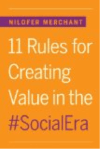
Nilofer Merchant, author of  “11 Rules for Creating Value in the #SocialEra” (Amazon Associates link) rightly pointed out to me:

I hope our future economy is also about including the people who are unseen today. Those who are right in front of us, creating value but then ignored when it comes to be included as leaders, or thinkers to shape the future. No one does this out of bad intent, but out of blindness. Few people will realize that while Hagel and Kelly and Gray etc are mentioned, many well-respected best-selling women management thinkers were not. Our thriving systems HAVE to be open enough to include those that are currently blocked out. Blindness shifts when we start to be more conscious. Instead of perpetuating talking about the change, we have to embodying the change. 

Indeed, something deeper is going on….

Flowchain

Bob Marshall (aka @FlowchainSensei) is addressing a somewhat similar dimension of “leadership” in his post “Leadership of Fellowship” and especially the section about dysfunctions of leadership.

The concept of leadership introduces a number of dysfunctions. Rarely are these discussable or discussed in our romanticized conception of the mythological leader:

  • Leadership inevitably produces implicit (or even explicit) Parent-Child relationships. “Just one of many examples of this type of parent/child exchange is the unwritten pact that if employees do whatever their bosses ask of them (regardless of whether it makes good business sense) the boss will take care of their next promotion/career move.”

  • Leadership validates “followership” and thus increased risk of “social loafing“

  • Leadership cultivates “learned helplessness”

  • Leadership can increases alienation, tribalism and the formation of in-groups

  • Leadership often encourages favoritism, patriarchy, deference, sycophancy and obsequiousness, with a consequent reduction in both the quality and quantity of meaningful dialogue.

  • Leadership compounds and perpetuates the Analytic mindset

  • Leadership subtly undermines systems thinking, by breaking the social body into discrete parts (leaders, followers), and focusing attention on those parts rather than on e.g. the relationships between them, and the whole itself.

But the master of language and insight is for sure Rune Kvist Olsen from Norway. Checkout this excellent article “Leading-Ship: reshaping relationships at work”. Rune’s work is inspired by Mary Parker Follett (1868-1933), a visionary in the field of human relations, democratic organization, and management. The tagline of the Mary Parker Follet Network is:

Unity, not uniformity, must be our aim

Rune’s s elaborated thinking blew me away: he is rethinking “leadership” into “leadingship”. It cuts deep in what motivates people. Rune challenges big time all our preconceptions about leaders and followers. I felt deeply inspired by it. So, I got into a conversation with Rune.

During this post-Sibos period of the year, I take off every Friday of the week to create some space for myself to reflect, to catch up on some reading, at times just being there and sitting in silence and trying to make contact with myself again, and then – in that moment of awareness – getting inspired by books and art. One could call it a personal retreat in silence and/or reflection and/or depth.

It was during one of those Fridays that I had scheduled a very long Skype call with Rune so that I could give him my full attention and listen in full presence to the rich language and set of concepts Rune had developed over the years. Since then Rune keeps on sending me wonderful essays and manifestos: describing what is really going on under the hood of human beings in leadership context. It’s very fascinating, and I all encourage you to dive in and discover Rune’s work.

The biggest outcome of Rune’s work is in my opinion that he has developed a language to express this new type of being as a leader in your organisations. It is so new and refreshing, that it needs its own language and vocabulary. Only then you can engage in a conversation trying to understand each other.

A good example of this language is in the following slide (a small extract of a very long presentation)

slide rune

That language is further elaborated in an essay called “Extracts from Humanistic Management Responsibility in the workplace”. It is about Imposed Responsibility (forced upon from outside) versus Chosen Responsibility:

The practice of “taking control” is a significant way in stimulating and inspiring self-esteem and self-confidence in the art of becoming a responsible and independent person.

Receiving and getting control from managers above implies that the person who is giving, still has control and can withdraw it at any suitable time.

Giving or delegating authority creates and sustain a superior/inferior relationship between the people involved.

This practice of giving as a form of domination is easily encumbered with the feeling of humiliation from the receiver’s point of view. The receiver could suffer the humiliation of not having personal control and not being able to take personal responsibility for the specific action at hand.

By granting power to people in gaining personal control and in becoming personally responsible for their actions, we are at the same time granting them real freedom to become true equals and fully human beings.

It is not difficult to understand that being an object of delegation and a recipient of giving (as a token of shared power), a person can naturally feel the humiliating bitterness engendered by being a powerless and subservient receiver and not having the authority in exercising personal freedom.

The result of this type of submissive role-behaviour, would possible entail the undermining of self- esteem, self-worth, and self-respect.

The most obvious flaw in the context of power concentration in the hands of persons in charge of others is the assumption that delegated responsibility is analogous to a commodity that can be shared among individuals or groups.

Giving or delegating responsibility can be conceived as a disguised way of pretending that people below will be empowered by the person above when this person is handling out some responsibility occasionally.

This is a deception in the sense that managers of other people are not actually entitled to give away any power because their power is connected to the managers’

Rune also signed up for Corporate Rebels United. We are btw now a worldwide group of about 200 people now and counting. And several pods being started up worldwide. More about that later.

rebels website

As his contribution to the rebels’ story, Rune produced the following essay “The Story of a Corporate Heresy”.

rune heresy

The full version in PDF is here The Story of a Corporate Heresy, but to whet your appetite here are already some salient extracts:

These types of corporate activist movements emerges as a result of profound crisis in the way corporate communities are organizing, managing and leading their organizations. Corporate Rebel United is pointing out the problem:

“Our companies no longer serve our needs. They cannot keep pace with a high- velocity, hyper-connected world. They no longer can do what we need them to do. Change is required.” Corporate Rebel Manifesto 2012.

Why, what and how can offensive, progressive and constructive actions be a part of the solution and not the problem?

“You never change things

by fighting the existing reality.

To change something,

build a new model

that makes the existing model obsolete.”

stamp fuller

Buckminster Fuller.

The next and last question of the solution in reinforcing engagement and passion amongst everyone in the corporation is: “How can we unblock and reopen the free flow of creativity and innovation for everyone, and create engagement, enthusiasm and passion amongst one and all?”

The resolving answer could be lying in removing the factors that institutionalize the system of vertical power, and in replacing this system with a model that are granting everyone personal authority in exercising power through individual competence, ability and capacity.

All the above are useful reflections about our future leadingship models. But how do we get to that ideal model of leadingship?

As Einstein once said:

“A problem can not be solved

with the same methods

that created the problem”.

Rune – and Bucky, and Einstein – indeed indicated, that part of the solution is to get rid of the leadership that has brought us where we are today. But this is dangerous territory, as those are the leaders who still are in the hierarchical power position to eradicate the subordinates that do not fit the HBS blueprint, and try to challenge the existing system. It makes me think of recursive loops, or the drawings of M.C. Esher. At what point does the transition between night and day really happen?

esher

“Day and Night” by M.C. Escher

Rune started sticking out his neck many years ago, in a period where he could not yet amplify his message through social media. Because he attacked the powers and hierarchies without defence, the system expelled him, and he ended up somewhat isolated, albeit in a beautiful self-built house on the borders of a beautiful Nordic lake (the story is correct, the picture below not)

house by lake

It is not my ambition to get expelled, and I am trying to walk on thin ice every blog again to get your attention for being your true self.

It is in that context that my questions to you are:

  • How can we get these new practices out of the reflection room and into the daily value creation practice?
  • Who has already implemented these principles?
  • What worked and what did not work when rolling it out or letting it emerge?

Let’s share and learn from each other. Let’s document this practice for value creation. This practice of Leadership. Jump in.

Seven Ways Organizations Can Survive Until 2100

Last week, I was attending my third Techonomy conference.

Techonomy explores “the role of technology in business and social progress.”

I love the word “progress.”

It has that gentle flavor of positivism; in the direction of better. I am more and more convinced that we don’t need innovation; we need progress.

How is progress reflected in a modern company? What does a 21st century company look like? Or maybe we should start thinking about what a 22nd century company would look like. (22nd century indeed: somebody born in 2012 will only be 88 years old in 2100. If Ray Kurzweil’s predictions are realized, it will be a piece of cake by then.)

People might grow older, but companies will die younger.

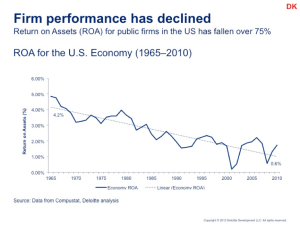
John Hagel proves with the Shift Index that the firm performance (based on Return on Assets) has declined systemically over the last 50 years.

Most companies don’t last longer than 40 years. Most of today’s companies will not exist in 2100.

The question is: What are the characteristics of sustainable companies?

Here is a list of some memes I’ve come across in recent months: the Adaptable Company, the Decentralized Company, the Sharing Company, the Participating Company, the Collaborative Company, the Connected Company, the Connecting Company, the Coherent Enterprise, the Elastic Company, the Human Company, the Learning Company, the Living Company. I could go on.

I propose that there are at least seven characteristics that will be typical in the 22ndcentury company:

1. Peer-to-Peer Networks

Decentralized organizations with peer-to-peer networks of highly skilled knowledge workers will best create and sustain knowledge flows and enable employees to self-organize. The jury is still out on whether knowledge workers will most often be hyper-specialists or hyper-generalists, but the successful company of the future will behave as a living organism where peers organize themselves in “cells.”

In The Connected Company (Amazon Associates Link) Dave Gray calls such organizations “pods”: Hyper-connected cells building relations with other cells based on a common principles, a common set of values, a common pattern language.

2. Architects of Serendipity

Being an architect of serendipity is about creating connections and providing opportunities for collisions between nodes in a network that learn from the collisions and continually adapt. The collisions are not random. Instead, this is designed serendipity, which might sound like an oxymoron.

Tony Hsieh, CEO of Zappos, the shoe company acquired by Amazon last year, is setting the scene for architected serendipity with his Downtownproject.

Instead of venturing in yet another luxury corporate campus with everything on-site from shops, restaurants, doctors, and central idea-incubation, Hsieh sees the value in integrating the Las Vegas fabric to catalyze collisions. He is investing about $350 million in local startups, small businesses, education, arts, culture, and residential and commercial real estate.


This campus of the future

starts to look more and more

like a complex living organism


Forget the old alliteration, the 4 P’s and 5 C’s of Kottler and Drucker. The C’s of this new era are those of hyper-connected learning organizations: Curated content, Community, Culture of openness, Collaboration, Creativity and optimism, Co-Learning, Co-Working, Co-Creation, Collisions, Connections. 

3. Empowered Radicals Instigating a Corporate Spring

Some call them Corporate Catalysts, Catalyst Peers, or Corporate Rebels. Steve Johnson described these instigators in his excellent new book Future Perfect: The Case For Progress in the Networked Age (Amazon Associates Link):


the most striking thing about these new activists and entrepreneurs was the personal chord that reverberated in me when I listened to them talk about their projects and collaborations—and their vision of the progress that would come from all that work.”

In September, I wrote a blog post called Companies Are Movements of Greatness. Catalyst peers in our organizations instigate these movements, whether these organizations are hierarchies or peer-to-peer networks.

The point is we have to unleash the energy of these “positive deviants.” I joined with a group of enthusiasts around the globe to put together a Corporate Rebels Manifesto. It’s all about a common set of principles, a pattern language for helping our companies succeed in the Hyper-Connected economy. It’s about creating a new global practice for value creation. It’s about progress.

4. Empowered Platforms

Amazon, Google, Apple, and Facebook are celebrated for their platform approach, exposing their core functionality through application program interfaces (APIs) so that other players in their networks–customers, partners, developers–can create new value on top of their platform.

We are only at the beginning of this trend, which will encompass all trade and commerce supply chains. In the end, I believe a wide variety of entities, including people, businesses, devices, and programs will have their own clouds and APIs.

What should come next in this evolution is an interoperability among clouds, a layer of services, protocols, and standards that let a Cambrian Explosion of Everything share data in real time, securely and with the appropriate governance and trust.


Every company may have to carve out

a role as a platform player


5. Empowered and participative customers

Doc Searls has written extensively about The Intention Economy (Amazon Associated Link) and customers taking back control of their data. Many organizations have implemented Open Innovation techniques, calling upon the intelligence in their networks to discover and develop new ideas.

The motto “We know more than me” applies the principles of Crowdsourcing. Barclays Bank recently launched BarclayCardRing, a crowdsourced credit card that empowers customers with highly transparent services and shares the program’s profits and losses and monthly financial statistics. In simple language, the data explain how the program is performing. Customers become producers, in partnership with the companies that serve them. 

6. Deeply Digital and Human

It’s been almost 20 years since Techonomist Nicholas Negroponte wrote Being Digital.

We now swim in a sea of data and the sea level, so to speak, is rising rapidly. Billions of connected people, far more billions of sensors, and trillions of transactions now add up to create unimaginable amounts of information. This new environment will require extraordinary adaptability: It is as if we are a species from dry land that has to learn to live in the ocean.

The digital age environment requires a new design for companies, which presents both threats and opportunities. Companies will be disintermediated, will see the erosion of their market share as new entrants muscle in, and technology companies will threaten the position of incumbents in more and more industries, threatening profitability.

But there are also opportunities: sources of rich information are multiplying, and more information is being digitized all the time. Every business is becoming a digital business.

However, the potential benefits of the explosion in number of nodes and the volume of data is being squandered due to low levels of trust, concerns about security, and barriers to monetization. That’s why my employer, SWIFT, has launched a project called the “Digital Asset Grid.” The Grid is a research initiated by Innotribe, SWIFT’s Innovation initiative for collaborative innovation.

With the Grid, Innotribe proposesa new infrastructure for banks to provide a platform for secure peer-to-peer data sharing between trusted people, business, and devices.

7. Diverse Contribution and Leadingship in the Social Era

My initial post on Techonomy only included six ways organizations can survive. Nilofer Merchant kindly drew my attention to the diversity aspect. What follows is an edited version of an e-mail she sent me:

We are all talking about thriving, being more deeply connected in community and thus allowing our organizations to be more adaptive. And my question is… is this system of change more about the same or about something fundamentally shifted in who is allowed to contribute.

I hope our future economy is also about including the people who are unseen today. Those who are right in front of us, creating value but then ignored when it comes to be included as leaders, or thinkers to shape the future. No one does this out of bad intent, but out of blindness. Few people will realize that while Hagel and Kelly and Gray etc are mentioned, many well-respected best-selling women management thinkers were not. Our thriving systems HAVE to be open enough to include those that are currently blocked out.

And we will be surprised by what we create. I remember the story of Fold It. The original inventors of that “game” imagined Phd students more like them than not would be the ones creating value. But in the end, it was a woman who was an admin during the day and the best protein folder at night. If the system had first vetted, she would have been screened out, but when all the rules are evened out… she contributed valuable stuff because she could. (http://blogs.hbr.org/cs/2012/04/just_how_powerful_are_you.html).

Blindness shifts when we start to be more conscious. In stead of perpetuating talking about the change, we have to embodying the change. 

Nilofer stroke a cord.

Her new book “11 Rules for Creating Value in the #SocialEra” (Amazon Associates link) indeed offers new rules for creating value, leading, and innovating in our rapidly changing world. These social era rules are both provocative and grounded in reality—they cover thorny challenges like forsaking hierarchy and control for collaboration; getting the most out of all talent; allowing your customers to become co-creators in your organization; inspiring employees through purpose in a world where money alone no longer wields power; and soliciting community investment in an idea so that it can take hold and grow.


The Industrial Era and the Information Age are over

and their governing rule are passé


Leading in the Social Era requires a rethink and re-imagination of what can be.

During the same period, I discovered Rune Kvist Olsen in the following YouTube video (1 hour video, you need to be present to fully appreciate the message from Rune)

There is also the excellent article “Leading-Ship: reshaping relationships at work” His thinking blew me away in rethinking leadership into “leadingship”. It cuts deep in what motivates people. There is also an associated slide deck here http://goo.gl/Ds1Qd . Rune   challenges big time all our preconceptions about leaders and followers. I feel deeply inspired by it.

I really enjoyed the 2012 edition of Techonomy. The conference convenes discussions among leaders focusing on the implications of technology change. Kevin Kelly put technology “in charge” in his seminal work What Technology Wants (Amazon Associates Link) challenging the notion that humans control the direction of technology. I look at it more and more as a form of symbiosis.

It happens that I met Kevin Kelly face-to-face later that week at Defrag 2012, where he delivered an awesome talk on “The Emerging Technological Superorganism” but that is the subject for a future blog.

The Internet – with it’s built-in peer-to-peer network architecture – made new forms of peer-to-peer collaboration possible. The creative energy unleashed by the edges of our network represent a transformative change and challenge in how we organize our intelligences in a mix of peer-to-peer intensities, supplemented with some structured “companies” that orchestrate some of the overarching memes in our society.

The rules have changed. To quote Robert Safian (Editor-in-Chief, Fast Company) in his Oct 15 blog post “The Secrets of Generation Flux”:

“Business today is nothing if not as paradoxical. We require efficiency and openness, thrift and mind-blowing ambition, nimbleness and a workplace that fosters creativity. Organizational systems based on the Newtonian model are not equipped for these dualities.”

Corporate Rebels Manifesto

Since my initial post “Corporate Rebels United – the start of a corporate spring?” of 17 March 2012, and the subsequent “A New Global Practice for Value Creation”, the core team has been working on fine-tuning  our mission.

UPDATE: we are now also present on other social media channels:

I am very grateful to the whole team for getting us where we are today, and especially for initial instigators Laura Merling and Mike Maney, and our advisors/mentors Nilofer Merchant, John Hagel, Mark Bonchek, and Dave Gray.

A special word of thanks to Dave Gray (author of the just released “The Connected Company”), who inspired us with his concept of “Pods”:  independent self-organizing cells who act autonomously but in context of shared platform of common, core, connected principles. Dave was also the person who landed the first version of this manifesto, based on previous culture-hacking work by the core group.

Mathias Vestergaard is the first Corporate Rebel from the core group starting the a Corporate Rebels Pod in New-York City. Who’s next?

Some of us will be present at the CultureCon2012 (co-organized by fellow rebel Dan Mezick and author of “The Culture Game”) and at BIF-8, the fantastic story tellers event by Saul Kaplan and team. Let’s continue the conversation there or online.

The release of this Corporate Rebels Manifesto coincides magically by the release of “The Labor Day Manifesto Of the Passionate Creative Worker” by John Hagel, mentor and my source of inspiration for many years, who writes:

We celebrate the passionate and dedicated individuals in all fields who have both led us to where we are now, and are creating and shaping the future. They are explorers, pushing back the limits of our current understanding. They pioneer new ideas, discover new truths, and tirelessly innovate. They actively seek out new challenges and connect broadly with others to solve them. Though they come from every occupation and background, they are unified by the sincere belief that they can leave the world a better place than they found it

So, without further due, here is our/your Corporate Rebels Manifesto:

+++ start manifesto

What is the problem?

Our companies no longer serve our needs. They cannot keep pace with a high-velocity, hyper-connected world. They no longer can do what we need them to do. Change is required.

What is the vision?

We love our companies and want them to succeed. We want to reboot our corporate and organizational culture to install a 21st century, digitally native version, to accelerate positive viral change from deep within the fabric of our organizations, and to reclaim our passion for work.

What is Corporate Rebels United?

We are building a global network of change catalysts that act from deep personal awareness and presence, and an irresistible enthusiasm. Our actions will lead to new product and services and new global practices for value creation, agility and velocity. We are architects and scouts into the future, and we want to guide our organizations in navigating a safe path from now to then.

Relentlessly

Challenging the status quo

Breaking the rules

Saying the unsaid

Spreading the innovation virus

Seeding tribal energy

With no fear

With a cause to do good

Leading by being from our true selves

Going after the un-named quality

Relentlessly

We are holding a space.

We are making and holding a space where everybody can have a voice in service of value creation. The DNA of our movement is a platform of core principles that are the basis for us to connect, to practice, to embrace, and to inspire other to dream and make our dreams come true.

How do we define success?

When we have a community of 10,000 pods worldwide, with a good distribution across industries and regions. When we feel whole at work. When the DNA is established, when the pods start to divide, enabled by the lightweight space we are holding. Holding a space is a about context; the job is done when the space is holding itself, when people start saying: “I suddenly feel free to be awesome.” When our practice gets the same attention in annual reports as efficiency practices such as Lean and SixSigma.

Help us articulate the principles.

We are now defining the DNA: A platform of common principles that define who we are and what we stand for. We could use your help.

  • Principle-1: We love our companies and want them to succeed in this high-velocity, hyper-connected world.
  • Principle-2: We dare to be great.
  • Principle-3: We have the mandate to be brave and to challenge the status quo.
  • Principle-4: We will reboot our corporate and organizational culture to install a 21st century, digitally native version.
  • Principle-5: We accelerate positive viral change from deep within the fabric of our organizations.
  • Principle-6: We enable and empower the rest of our organizations to move at rapid pace, but with room for patience and reflection.
  • Principle-7: We unleash the enormous potential that lies within every human being within our organizations.
  • Principle-8: We re-ignite the passion in our organizations.
  • Principle-9: We are not just talkers, but doers.
  • Principle-10: We are building a global network of change catalysts that act from their true selves.
  • Principle-11: Our actions lead to new product and services and new global practices for value creation, agility and velocity.
  • Principle-12: Our community acts from deep personal awareness and presence, and an irresistible enthusiasm opening up old rusty structured.
  • Principle-13: We are architects and scouts into the future,
  • Principle-14: and we want to guide our organizations in navigating a safe path from now to then.
  • Principle-15: We are very well intentioned individuals.
  • Principle-16: We are united people with shared purpose, starting with our own being.
  • Principle-17: We maintain integrity and relevance..
  • Principle-18: We keep our community a safe environment, where you can become who you want to become. Where you are not alone in being a catalyst.
  • Principle-19: Our core values are integrity, clarity of reason, brightness and great positive energy.
  • Principle-20: Reflection, reporting back and adding-on to each others input and opinions is our natural way of collecting and discussing opinions.

Join us.

Start a pod. Organize yourself. Decide on your own activities, your own resources, and your own relationships. And link them back to the mothership, the DNA platform of common, core, connected principles.

+++ end manifesto

If this Manifesto speaks to you, we ask that you become a “signatory” by indicating your support in the comment section below.  We’ll add you to the growing list of Corporate Rebels. And we’re in the process of creating an online holding space for our common principles and convictions. Stay tuned.

Corporate Rebels United – A New Global Practice for Value Creation

Since my initial post “Corporate Rebels United – the start of a corporate spring?” of 17 March 2012, a lot of exciting things happened.

I’d like to share with you where we are, and what’s the plan for the upcoming weeks and months. When most of you will be on the beaches, we’ll do some digging and set the basis for some of our infrastructure needs 😉

What happened?

The 17 March post was without any doubt the most viewed post ever on my personal blog. I got loads of comments. I got in contact with some very high profile people who offered their mentorship, coaching and mindshare in their communities. Many very cool people contacted me and wanted to know how they could be part of the movement. Clearly, something strong and positive resonated with you.

We now have a “core” group of +/- 30 Corporate Rebels: it’s a cross-industry group, with folks from the Americas, EMEA, and APAC. All the way from San Francisco to Sydney, with Europe in-between. Maybe still a bit weak in South-America, Africa, and Asia. We’re getting there 😉

We had several calls and Skypes, and we had our first face-to-face meeting in London on 22 June 2012. We had about 10 core rebels attending physically and 15-20 via call: one call for the Americas and one for APAC. It was a great experience, refreshing, and reinvigorating. With thanks to SWIFT for the meeting facilities.

We have worked hard with that “core” group to articulate why and how we want to create this movement. We also looked in detail into the “what”, the deliverables. We wanted to ensure that the message we sent out was “right” before we throw into the open.

I now want to share with all of you the progress we have made so far. With deep gratitude to the core group of Corporate Rebels United: as all this is obviously the result of teamwork. I also would like to talk everybody who took the time and effort to listen to me and give feedback.

Our mission, vision, and strategy

“To transform our companies into hyper-organizations and create new value for the people they serve.”

We love our companies and want them to succeed in this high-velocity, hyper-connected world. We want to reboot our corporate and organizational culture to install a 21st century, digitally native version. We want to accelerate positive viral change from deep within the fabric of our organizations. We want to enable and empower the rest of our organizations to move at rapid pace, but room for patience and reflection. We want to unleash the enormous potential that lies within every human being within our organizations. We want to re-ignite the passion in our organizations. We are actionable.”

“We are building a global network of change catalysts that act from their true selves. Our actions will lead to new product and services and new global practices for value creation, agility and velocity. Our community acts from deep personal awareness and presence, and an irresistible enthusiasm opening up old rusty structured. We are architects and scouts into the future, and we want to guide our organizations in navigating a safe path from now to then.”

“We are making and holding a space where everybody can have a voice in service of value creation. “

Our game plan

We are making and holding a space where everybody can have a voice in service of value creation.

  • This space is called “Life”. This is where the new practices for value creation exist.
  • A community of cells upholds the space. These communities are self-organizing. These cells are built on the DNA of our movement.
  • The DNA of our movement is the platform of core principles that are the basis for us to connect, to practice, to embrace, and to inspire other to dream and make their dreams come true

DNA: A core (the common practice, the “commons” practices that cannot change, everything else can change. The DNA gives birth to cells. The cells can organize themselves.

They decide upon their own activities, their own resources, and their own relationships. And they always connect back to the mothership, the DNA of common core principles. Together, the cells create “Life” – our new global practice for value creation.

Our deliverables

We plan 8 types of deliverables:

  • Our manifesto
  • A common language
  • The 20 core principles of our DNA
  • A New Global Practice for Value Creation
  • A Belonging and Support program
  • A Discovery program
  • An Exchange program
  • A series of Events

I would like to summarize some of these deliverables:

The Manifesto

It has not changed really, but I’ll share it once more, as it, especially the “relentless” part of it, inspired so many people 😉

Relentlessly

Challenging the status quo

Breaking the rules

Saying the unsaid

Spreading the innovation virus

Seeding Tribal energy

With No fear

With a cause to do good

Leading by Being from our True Selves

Going after the un-named quality

Relentlessly

Common language, lexicon

It is our ambition to get buy-in and support from our corporate leaders for our proposed company transformations. We also want to articulate the direction. In a language clearly indicating the road from where we are today towards the destination we aim for. More specifically, we want to show the safe path and help our companies navigate from here to there.

This above is just a summary of some from-to destinations. The core group worked out a quite detailed and compelling list.

The 20 Core Principles of our DNA

We don’t want to be an exclusive club or so. It’s just in these early days we keep the group to 30 to be able to hack-out a first solid foundation. We will then throw it fully into the open.

But something needs to hold us together. These are the DNA principles of our practice. In the language section above you’ve seen that one of the to-from destinations is the journey from “Distrust as a default” to “Trust as a default”. Networks only work when there is trust. We want to walk the talk. When we will open-up our movement, everybody how signs-up is “in” by default. You will be “trusted” by default as long as you act in line with our 20 core principles:

  • Principle-1: We love our companies and want them to succeed in this high-velocity, hyper-connected world
  • Principle-2: We dare to be great
  • Principle-3: We have the mandate to be brave and to challenge the status quo
  • Principle-4: We reboot our corporate and organizational culture to install a 21st century, digitally native version.
  • Principle-5: We accelerate positive viral change from deep within the fabric of our organizations.
  • Principle-6: We enable and empower the rest of our organizations to move at rapid pace, but with room for patience and reflection.
  • Principle-7: We unleash the enormous potential that lies within every human being within our organizations.
  • Principle-8: We re-ignite the passion in our organizations.
  • Principle-9: We are actionable
  • Principle-10: We are building a global network of change catalysts that act from their true selves.
  • Principle-11: Our actions lead to new product and services and new global practices for value creation, agility and velocity.
  • Principle-12: Our community acts from deep personal awareness and presence, and an irresistible enthusiasm opening up old rusty structured.
  • Principle-13: We are architects and scouts into the future,
  • Principle-14: and we want to guide our organizations in navigating a safe path from now to then
  • Principle-15: We are very well intended individuals
  • Principle-16: We are united people with shared purpose starting with your own being
  • Principle-17: We maintain integrity and relevance of the reason.
  • Principle-18: We keep our community a safe environment, where you can become who you want to become. Where you are not alone in being a catalyst
  • Principle-19: Our core values are integrity, clarity of reason, brightness and great positive energy
  • Principle-20: Reflection, reporting back and adding-on to each others input and opinions is our natural way of collecting and discussing opinions.

New Global Practices for Value Creation

The core of our ambition is to create/let emerge a new Global Practice for Value Creation.

It’s “practice” like in Lean “practice” and SixSigma “practice”. However these are  for increasing efficiency in our organizations. We are on the innovation side. Innovation is less about “optimizing” the core engine; it’s more about new value creation.

Imagine having “black-belts”, “champions” in value creation and deep transformation of our companies based on our mission and principles. In the end, a company should be proud and outspoken of having x number of “black-belt Rebels” on board!

We want it to be global. From a meta-story perspective, wanting it to be something “global” that holds the values is probably one of the strongest thoughts of our movement.

We would like that these practices develop in a self-emerging way through the activities of the cells. Our expectation is that these practices are grounded in following principles:

  • Practice of Courage, Fear-is-not-an-Option, No fear to jump
  • Behavior/attitude: “Shift Makers”, “Accelerating Purposeful Innovation”, “Inside and Outside the company”, “Accelerators”, “Catalysts”, “Igniters”, carrying “The soul of Innovation”, “Re-Build”, “Re-Work, “Corporate Activists”, “Positive Deviants”
  • Emergent from the cells
  • Includes stealth approaches etc
  • Practices that lead to mastery
  • Focus on what works
  • Be part of curriculum
  • Certification levels vs. Reputation system
  • To be added as program to universities etc

In writing this blog post, it suddenly becomes clear to me that we found the sweet spot between “singing my own song”,  my loosely defined concept of a “New Value Movement”, and the irresistible enthusiasm of corporate rebels who want their companies to succeed in the 21st century by creating viral change from within.

What’s next?

I just sent a much more detailed consolidation of the 22 June London meeting to the core team. Given the summer holiday period we gave ourselves time till Mid August to co-edit all that material.

By somewhere mid-September our web site should be done.

We have planned our next face to face on 22 Sep 2012 in Providence, Rhode Island (USA), back to back with the BIF8 Summit.

Now in its eighth year, the BIF Summit has earned it reputation as “one of the top 7 places to watch great minds in action” (according to Mashable). The BIF Summit is an annual gathering of innovation junkies and transformation artists all in service of better – across industry, sector, and community. Eighty percent of Summit participants are senior executives; all are designing next generation business models. The summit provides participants with the space to be curious and crazy, get inspired, and collide with unusual collaborators. A shoe designer learns innovation processes from a car designer. A police officer teaches a business guru about transforming industries. This year’s storyteller line up features diverse system thinkers like Intel’s Brandon Barnett and ZipCar’s Robin Chase, Zappos CEO Tony Hsieh and the Food Network’s Simon Majumdar, GE Healthcare CTO Michael Harsh and Drupal Creator Dries Buytaert.

BIF8 is September 19th and 20th in Providence, Rhode Island. For those who want to move their inspiration into action, there is a third day, post-Summit Workshop on Business Model Innovation. This workshop is hosted and facilitated by BIF Founder and author Saul Kaplan and the creator of the Business Canvas, Alex Osterwalder.

Many BIF Summit participants come as teams from the same organization or affiliated group – using the BIF magic to challenge norms, inspire creativity, and think across disciplines. Recognizing how hard it is to bottle the magic, and harder still to operationalize it upon the return to business as usual, BIF offered us an interesting Team Package, helping us prepare for and act on insights and random collisions experienced at the Summit. Thank you BIF for your generosity.

The BIF8 conference is on 19-20 Sep 2012 http://www.businessinnovationfactory.com/bif-8

It’s probably around that time we will throw it into the open.

And in November, we’ll do some solid campaigning in the heavy event season with Innotribe at Sibos, Techonomy, Defrag and Blur. And back-to-back to that week, we plan our 3rd face to face on 17 Nov 2012 in Boulder, Colorado (USA).

For 2013, we already received a generous offer from the Australian AMPlify Festival to host one of our next coming together.

Hopefully by then, we’ll find some sponsors to cover some of the basic costs for keeping this going.

Some resources:

  • Prezi: some of the visuals is this post were created in Prezi. I did a talk at the EU Marie-Curie event in Brussels on 3 July that included our rebels story. That talk has 3 sections:
  • I am still maintaining a Scoop.it curation on Corporate Rebels United. As I am doing my daily RSS Feed reading, tweeting, etc, I am reading them with a specific “Corporate Rebels”-lens and put them all together in one place: http://www.scoop.it/t/corporate-rebels-united > check it out

Feel free to use and share it with anybody who can help and support our cause. Let’s rock this place together and let’s get a life / get alive ! And feel free to post events on this blog or contact me via mail or twitter.