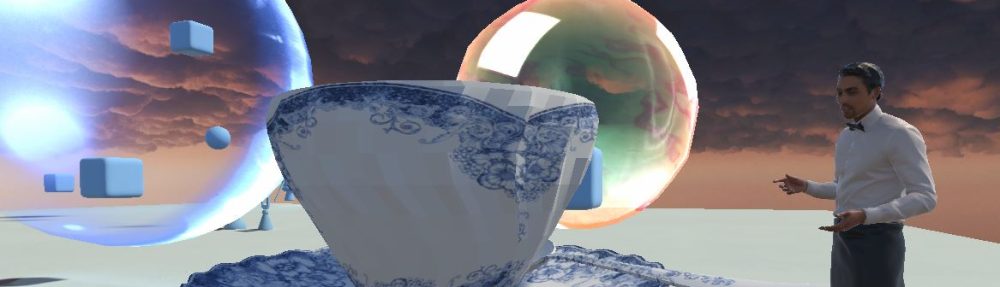
As mentioned in my August 2019 update, I am helping a client with an immersive leadership offsite. I am starting to label this sort of work “Artistic interventions, interruptions, and provocations that lead to higher states of alertness and aliveness.”

Coincidently, Sarah Perry just posted her swan song essay on “Meaning as Ambiguity”, referring to the work of Christopher Alexander (one of my all-time heroes) and coiner of “The Quality Without a Name” and “The Fifteen Geometric Properties of Wholeness” from Chapter-22 of his fantastic book “The Battle for the Life and Beauty of the Earth”

Back to meaning and ambiguity. In the design of this off-site, we confront the participants with increasing levels of ambiguity in the BANI world. In their responses, we expect the participants to progress from learning into problem-solving into “Worlding”. See also my post on “The Tyranny of the Problem Solver”.
I first came across the term “Worlding” in the book “Emissary’s Guide to Worlding” by Artist Ian Cheng http://iancheng.com/.
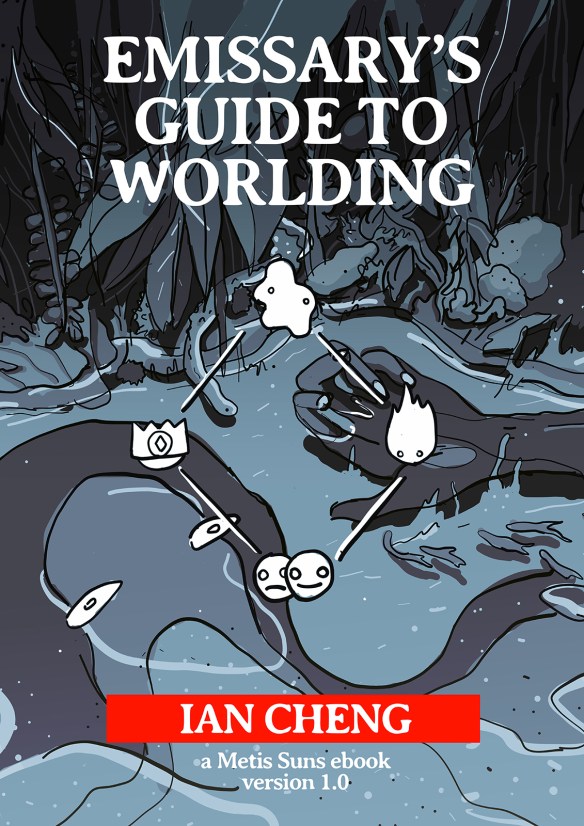
It is one of those books where one makes annotations on every page, a big eye-opener and page-turner. Highly recommended.
Worlding is about imagining a future world you can believe in.
Some inspirational quotes from Ian Cheng’s book:
A World is a future you can believe in: One that promises to survive its creator, and continue generating drama.
A World is a future you can believe in by promising to become an infinite game
A World evokes a place.
A World has borders.
A World has laws.
A World has values.
A World has a language.
A World can grow.
A World can collapse.
A World has mythic figures.
A World has visitors.
A World has members who live in it.
A World looks arbitrary to a person outside of it.
A World satisfies both the selfish and collective interests of its members.
A World grants magic powers, especially the power to filter what matters to it.
A World gives permission to live differently than the wild outside.
A World creates an agreement about what is relevant.
A World counts certain actions inside it as meaningful.
A World undergoes reformations and disruptions.
A World incentivizes its members to keep it alive.
A World is a container for stories of itself.
A World expresses itself in many forms, but is always something more.
For us humans, life is filled with the familiar contests of finite games: Deadlines. Deals. Rankings. Dating. Elections. Sports. College. War. Poker. Lotteries.
When our finite games are won and done, what is strange is that we don’t exit back into base Reality. We wake up in a field of infinite games that perpetually mediate our contact with base Reality.
We choose to live in these infinite games because they give us leverage, structure, and meaning over a base Reality that is indifferent to our physical or psychological health.
We have many names for these infinite games: Families, Institutions, Religions, Nations, Subcultures, Cultures, Social Realities
Let’s call them WORLDS
When a World can “survive its creator,” that means it has achieved sufficient stability to regulate and safeguard its potentiality without authorial intervention.
This is a World’s requirement for Autonomy.
When a World can “continue generating drama,” a World is sufficiently interesting for people to care about and want to explore.
This is a World’s requirement for Aliveness.
When a World is keeping its promise, it continues to be a future you can believe in
All the credits for the quotes above go of course to Ian Cheng. Great book.
Hope you enjoy it too!
 Petervan Studios
Pingback: Petervan Studios – Dec 2019 Update – A Labyrinth of Choice | Petervan's Blog