If you can’t get enough of these and want more than 5 articles, I have created an extended version of Petervan’s Delicacies in REVUE. If you want more than 5 links, you can subscribe here: https://www.getrevue.co/profile/petervan
According to the company, the mechanical chef, which incorporates 20 motors, 24 joints and 129 sensors, learns how to cook by watching a plain old human chef, whose movements are turned into commands that drive the robot hands. Moley hopes to eventually create a product that can do everything from preparing the ingredients to cleaning up the kitchen, and include a built-in refrigerator and dishwasher. The idea is to support the robot with thousands of app-like recipes, and it would allow owners to share their special recipes online.
And that “they” – the robot tribes – don’t get it. As we have seen already in our series’ post about belief systems, “They don’t get it” is a strong indicator of living in a different belief system.
Peter Goossens - Hof Van Cleve
Let’s contrast this with the craftsmanship of Peter Goossens and his team, who are running Hof Van Cleve, one of the best restaurants in the world. Best like in world-class: a 3-star Michelin and much more, bringing them into the top-25 of the world.
“In order to cook at the highest level every day and guarantee an exceptional experience for our guests, it is important that the interior of our restaurant exudes the same traditional spirit and identity that our kitchen does. Our preparations are, after all, in my opinion, the result of a great deal of effort at all levels. Indeed, we handle the best local products that the gardeners, farmers, growers, fishermen, hunters and cheese refiners can provide. Out of respect for their passionate work and thanks to their fantastic ingredients, we are able to provide our guests with a unique culinary experience. This makes cooking a true craft.”
You can take this wonderful definition of the Essence of Work, and apply it to your own domain. Note the emphasis on guests, tradition, respect, experience, and craft.
Cooking is much more than executing a recipe.
The essence of work is much more
than building to spec
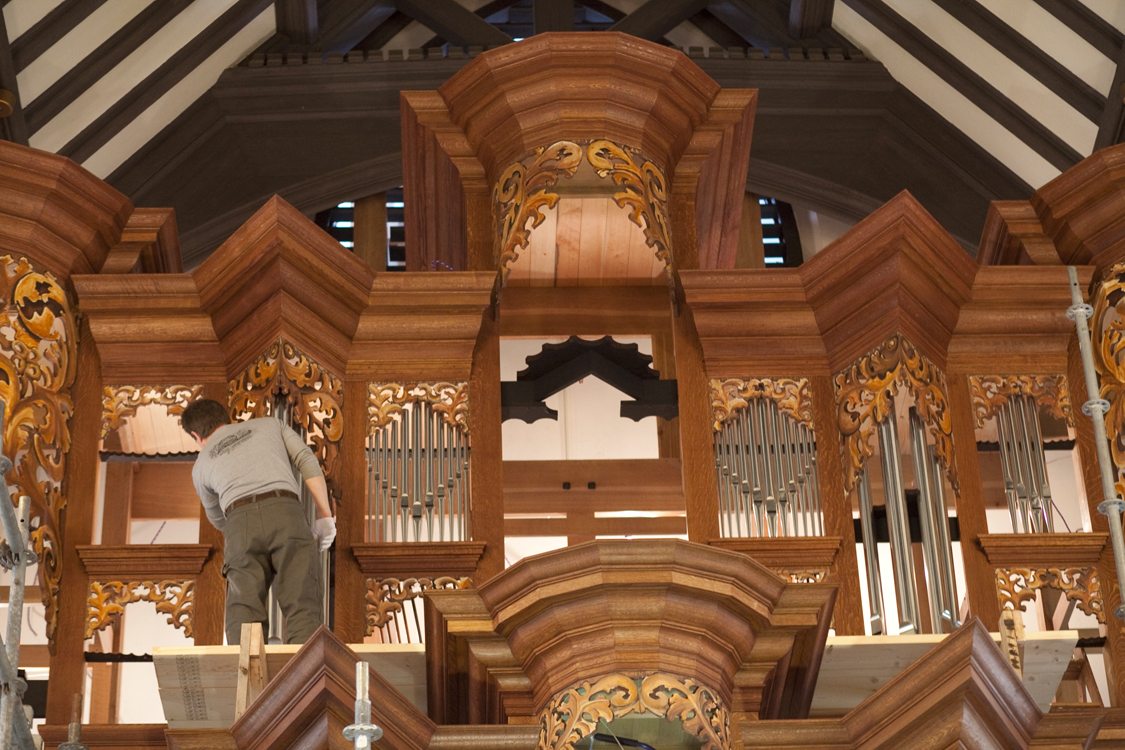
In “The world beyond your head… “, there is a great chapter about a small family-run business that is specialized in restoring and building from scratch old baroque organs.
A New Organ for Anabel Taylor Chapel
Like Peter Goossens, these organ builders don’t content themselves with restoring or building to spec. What they aim for is a dramatically superior musical experience by the musician who will play the organ.
Tradition is about building on the shoulders of giants, a bit of a simplistic statement. The author goes at length to “craft” deep into the meaning of tradition, to internalize tradition, and to pass it on in your work and onto next generations.
Tradition
is not seen as non-authentic,
but a source for energized work.
“Unlike a space shuttle, the pipe organ is a species that comes to us through cultural traditions, and serves aesthetic purposes that would be unintelligible without reference to those traditions.”
“the historical inheritance of a long tradition of organ making seems not to burden these craftspeople, but rather to energize their efforts in innovation.”
What is driving these people to strive for unconditional excellence? Wouldn’t it be easier to componentize and modularize the different elements of work and cast them in a repeatable process, so we can be more efficient and produce more at less cost? Yes, that would be possible, but I think some of us don’t get excited anymore by the efficiency game and we are aiming for a higher quality and awareness of quality of our work and the experience it delivers to our customers, or should I call them “guests”?
“There were also electronic organs available. But there’s a part of the population that will only take this.
“It’s a totally handcrafted, handmade object, and some people are willing to pay an enormous premium for it. They realize the performance musically is superior. And that’s the only justification.”
“We’re weird: we’re trying to make a living, for one thing, and make this whole thing practical, so we have to make the parts in good order and build to the contract price, which is an insane thing to do for what we’re producing, and we have to make something that’s going to perform technically or our customers are going to be coming back and getting on us. At the same time the ethos of the instrument has to be authentic—that’s why people are paying big money for us to do the work. So we’re jammed in the cracks, trying to make a realistic business out of this and at the same time be as authentic as we can. The thread of what we’re doing is totally authentic.”
The author leads us into two criteria that are essential for the Essence of Work:
Historical coherence: The work is enlivened by a sense of going further on a trajectory they have inherited.
Musicality: Timeless standards of engineering, specifically as they contribute to musicality.
So, we are getting into something called
“The timeless demands of musicality.”
Wow! This is getting pretty close to Christopher Alexander’s “Timeless way of building” and his passion for “pattern languages”, much more profound ways of communicating, integrating, and passing on of patterns of tradition and craftsmanship.
How would you define “musicality” in your work, even if your work has nothing to do with organs or music?
I would now like to mix-in two other criteria for our Essence of Work:
Constraints: Constraints have to do a lot with craftsmanship, tradition, and musicality.
Authentic observation: perceiving as a baby does, liberated from conventionality
Constraints. Good work is usually performed within the boundaries of timeless tradition and qualities. You have to respect the scheme, the pitch, tone, the rhythm and other musical traditions to create the right “musical experience”. Very well trained musicians, who have superior mastery of their instruments, and respect the tradition canvas of conventions, usually perform a good jazz jam.
The Essence of Work is about producing a good jazz jam. Grounded and building upon the conventions and traditions of the thousand of years before us.
The other “constraint” is the audience: the public, the commissioner, the customer, the guest. Where the context of the host and the guest meet, where host and guest get into a dance, not a fight. Host and guest: much better than the transactional supplier and buyer, or producer and consumer.
Architecture is not at all about letting your imagination go. You must confront your imagination again and again with the request and desire of your customer
Then there is “authentic observation”.
In my art classes last year, I learned to observe. To draw what I see and not to draw what I think. This has helped me a lot to get the basics more or less right: arms and legs in the right proportion vis-à-viz the body, that sort of basics. I only got a feel for the basics. Much more work to before i am getting any good at it, let’s not even think yet about mastery or even mystery. It’s still something very tactical, mechanical for me. So much more to learn.
This week-end the 2015-2016 art class started.
Picture of my art class – season 2015-2016
I will try painting this year. I never did painting, never worked with color. I am completely novice here, and open and receptive to anything that comes my way. No clue what will happen. No plan in mind.
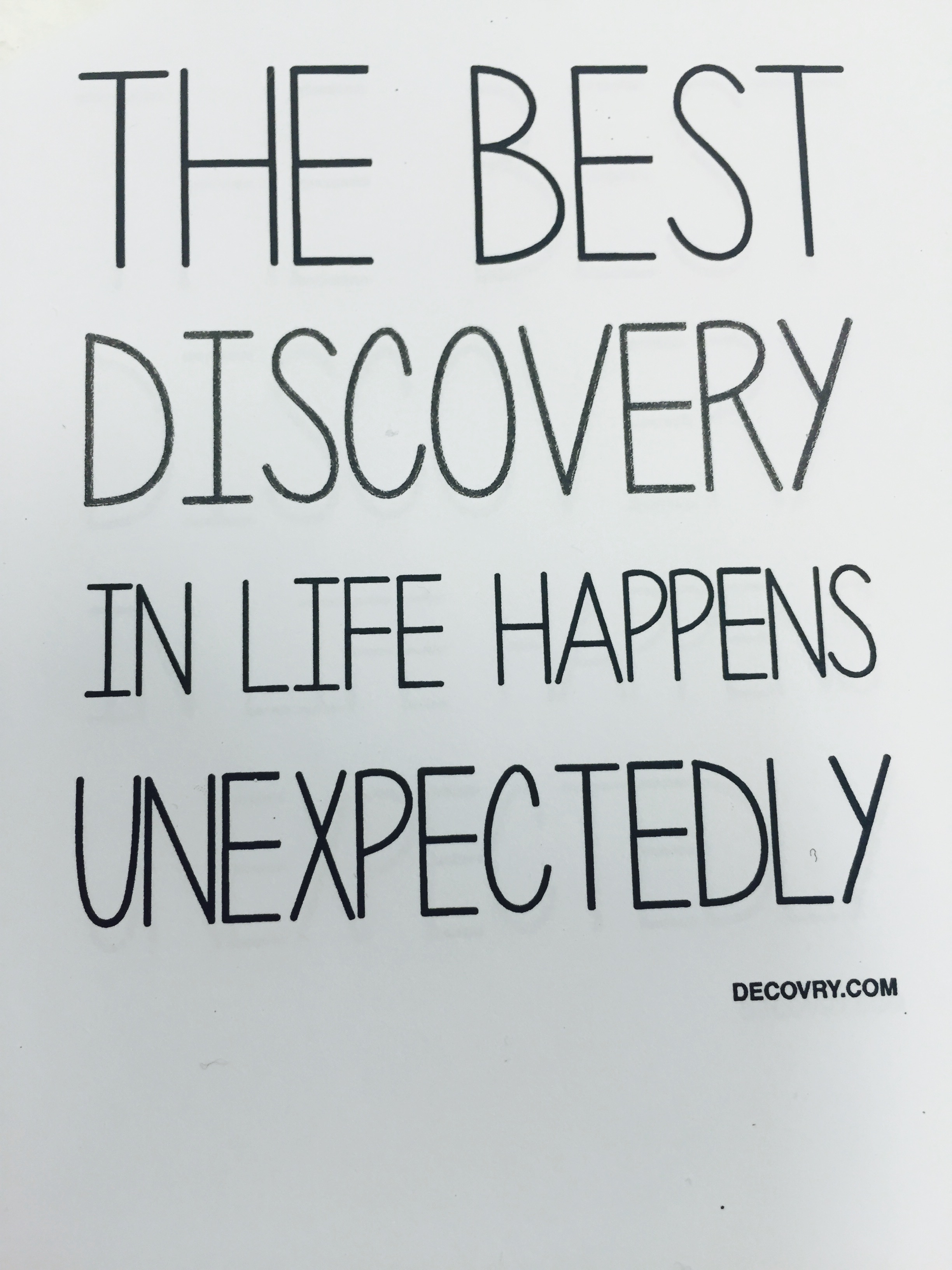
It was thus a happenstance when my art teacher showed this as the main guiding principle for this academy year:
We were asked to “observe”, to look through a frame and let ourselves surprise by the shapes in the frame. Just see. But it is more than non-judgmental observation. It’s more than the facts and the spec.
An historian looks at the world adopting an non-judgmental stance towards the facts.
A preservationist adopts a deferential stance towards the world
What we are talking about in the Essence of Work is the “Artist’s Way” of looking at the world.
“This is what an artist does. She must defamiliarize herself with her everyday perceptions, which depend on—are conditioned by—her past experiences, including the experience of inhabiting a world that is thoroughly conventional. She has to try to perceive as a baby does, or as the empiricist supposes we all do, but this is a subtle and extraordinary accomplishment. There is nothing infantile about good art, but it does show us the world as viewed by a consciousness that has, for a spell, liberated itself from conventionality” (from the World beyond your head…)
Craftsmanship, Historical Coherence, Musicality, Authentic Observation, and Creating The Dance between host and guest are critical components of the Essence of Work.





 Petervan Studios