
What is it that motivates people to come to work, be happy and do a great job ?
I am a bit bored these days with all sort of “manifestos” and all sorts of “Power of Now”, “Power of Push”, Power of Why”, “Power of…”
What about candies ?
If you company is looking into people and culture, here are 3 candies that could give you the answer to the question of motivation and happy people.
Candy #1

Start treating people like people
might be a good start
And find some good motivators. Here is a nice 10 min video scribe of Dan Pink’s presentation of his book “Drive” that is all about what REALLY motivates people ?
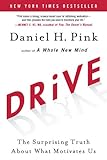
It’s really worth spending the 10 min video to understand why incentives that work in production environments don’t work in creative environments, and even have counterproductive effects.
It is the same as applying Lean efficiency programs that were designed for production environments, and applying them blindly to white collar creative and innovation environments. Nobody in his right mind would do this of course.
In essence motivators for creative workers are fundamentally different than classic bonus based motivators.
Candy #2
Create a culture of true personal leadership
My colleague Mela found the following interesting post on the Change This site.

I found this site last week, and if you follow my tweets @petervan you already knew about this site 😉

There is an interesting part about the difference between Systems Thinking, the linear engineering type of approach – where we treat people as individual components whose behaviors need to be analyzed and fixed – also called “Tamed Problems “, and “Wicked Problems”- where we have to look at the CONTEXT where the people live in.
Later, the author writes about “emergent properties” in nature, and then uses this as a metaphor for the emergent properties in the relationship leader – person being led.
- In dictatorships, the emergent property of people being led is fear and lack of freedom.
- When the individual is in the position to choose it’s leader, then the emergent property of people being led is freedom.
Many other things emerge when people can vote: innovation, wealth, power, competitive advantage, a free media, the attraction of talent and so on.
The important point here is that real freedom brings real success. Shared systems matter more than shared culture.
The most interesting part is in the section about emerging properties in the workplace and where he notes that in the dictatorship metaphor, the emergent property of the boss is power.
Dr. Harvey A. Hornstein, a retired professor at Columbia University and the author of the book “Brutal Bosses and their Prey”. Dr. Hornstein found that while bosses used power in expected ways like putting down threatening subordinates or making them scapegoats, their main reason for abusing power was far more monstrous. Managers abused their subordinates for the fun of it, for the sheer pleasure of exercising power
Wow ! Nobody would want to work for a boss like this. But many people don’t have the choice, especially in the current economic climate where a having a job is priority #1 for most people. Frequent readers of this post know that i claim you always have a choice, but maybe i am reasoning from a luxury position, and the folks getting fired as part of all sorts of efficiency programs think very differently. I see so many good people go, and not finding something decent on the marketplace. Some recruiters told me they have piles of high-potential CV’s on their desk, and they expect a massive exodus once the economy picks up again.
Dr. Hornstein’s “scapegoating” reminds me of my Leading by Bing training, where in the “Who am i in a group" section, we learned the hard way that also a group goes through maturation stages. One important stage is when a group gets into scapegoating. Every group does in its lifecycle. The maturation comes when somebody in the group stands up – takes his personal leadership – and says we had enough scapegoating.
So Candy #2 is really about creating a culture of true personal leadership, not the leadership of a boss commanding his staff, but the personal leadership as the personal courage and to stand up, stick out your neck, daring to say the things as they are, and not making the story “better” as it moves up the corporate hierarchy. In essence caused by the phenomenon of Groupthink.
Groupthink is a phenomenon in which a group of people — however smart — ends up making poor decisions by disregarding facts, just to maintain consensus
To prevent groupthink, James Surowiecki says in his book that the best way for a group to be smart is for each person to think and act independently.
Every company executive
and at least every level-1
should take
a deep leading by being training
to discover the best and the purpose in
themselves
and making their people and companies better
Talking about “better”, candy #3 is about “betterness” for the company as a whole
Candy #3
Create a culture of true corporate leadership
It all boils down to having companies that make our world better. Umair Hague did once again a fantastic post this week on why Betterness is good for you and your company.

He’s telling us to do betterness instead of business, pursue awesomeness instead of innovation — and maximize good, instead of quarterly profits.
The tectonic shift to social investing going mainstream is going to amplify the effects above as it gathers strength. It will ensure that every marginal bit of good creates even more shareholder value — and every marginal bit of bad destroys even more. It’s nothing less than the retuning of the global economic engine itself.
And he concludes:
Good, the evidence suggests, is the very opposite of Utopian idealism. The real utopia? That was the one economists, bankers, and titans of industry promised: in a world of perfect markets and infinite leverage, companies who blindly maximized profit would lead everyone, ineluctably, to unstoppable prosperity. It didn’t work out that way. Just ask Wall Street, Big Food, Big Media, Detroit, Greece, Spain, Dubai, or anyone from the American homeowner to the Chinese migrant worker. Today’s real idealism is this: pretending that business as usual is good enough for companies, countries, the world, or the future. It isn’t.
It’s time to get real: good is as sharp as a razor, as hard as a hammer blow. That’s what decades of research suggest. That’s why companies as different as Google, Wal-Mart, Pepsi, Lego, Starbucks, Nestle, Apple, Patagonia, Timberland, GE, Tata, are all, in their own ways, taking steps small and large towards it — and why customers, governments, and investors are joining hands with them on the way.
Welcome to 21st century business
It’s a movement to do meaningful stuff
Will be interesting to read Umair Hague’s upcoming book.
Maybe we should invite him to Sibos. The program has just been made available here. And our impressive Innotribe @ Sibos 2010 program can be found here.

As you will notice, the Innotribe sessions are coming from many sources of our company and industry. Indeed, since our first Innotribe @ Sibos in 2009 we have come a long way: from an event-in-the-event mainly driven by technology into something that is now fully part of the overall Sibos program and with contributions from many many different business and even social areas.
I have seen there is session on Doing good is good for Business, with following description:
Corporate Social Responsibility (CSR) is much more than just embracing the ‘green’ agenda. How can smart CSR strategies contribute directly or indirectly on how we manage our planet’s resources and – at the same time – have a direct and positive impact on your bottom-line? In this pragmatic session, with the help of a leading academic and representatives from financial institutions who have already benefitted from CSR, we’ll examine how ‘doing good’ is equally good for business.
All this is very relevant for Innovation. What motivates people to keep coming up with new ideas during their free time ?
It will be very interesting to see how unions will react when they discover there are other things in life than paid hours for people to feel motivated, engaged and innovative. I am preparing another post on the relation between innovation and unions. Stay tuned
 Petervan Studios
Some comments on Candy 2 (as the person who unearthed this particular post, I guess it is no wonder that I want to comment on it :-).
A very interesting point that the “Why your boss is programmed to be a dictator” implies, and which is something that I myself always wondered about, is why does it always seem that as soon as you become a boss you seem to fit this Dictatorship mold. Even people who to start with are democratic and liberal and open minded end up being dictators ( I must confess that my answer has always been that power somehow gets to their heads and makes them act like perfect bastards, but I always wondered would I have the moral stamina to be different… or would I also become a dictator like everyone else; I’ve been so much afraid to face the answer to this question, that I have very carefully and deliberately avoided being in situations where I would have any hierarchical power what-so-ever).
Now, what this particular post talks about is two fold:
1), a lot of our behavior is determined by the situation (the example used is the simulated prison studies, where students acted the part of prison guards or prisoners, and were found to behave perfectly within the stereotypical roles, despite their initial character and personal convictions); so bosses behave as bosses, because our systems (organizations) force them to
2), the second thing is something known is psychology as Fundamental Attribution Error – which is the other side of the coin that Dhruve does not talk about, but you will find plenty on in the SWITCH book of Dan and Chip Heath (also referenced by Peter in previous blogs). The fundamental attribution error is a bias that we all suffer from, which means that in any situation we are likely to attribute observed bad behavior as fundamental character flaw of the person, rather than attempt to check if the situation was not responsible; however when we ourselves exhibit the same behavior it is very clearly the fault of the situation (example – observing a driver passing a red light, causes us to usually call him names, while when we ourselves commit the same offense, it is… because we have a very good reason that excuses the behavior, of course).
Now what all that means to me, is that there is great hope for our bosses and organizations: all we have to do is change the situation and people will miraculously behave in a different way. Simple! 🙂
I know it sounds way too simplistic to be true, but I have been observing this change in people in my work, but never realized what caused it and how I could reproduce it predictably.
I have worked over the last few months with many colleagues with whom previously I had difficult relationships.
My current work usually involves situations when I offer to help them achieve a goal and facilitate collaborative meetings/ workshops for them. I have observed the most amazing changes happen to people in such workshops – they suddenly behave in very open, non-confrontational, collaborative, and creative ways. They get excited, they want to share, they value their colleagues and they appreciate their differences. And before I could have betted (if I was a betting person) that they could never ever behave like that, because they were not such type of people (attribution error again).
I’ve seen this magic happen over and over again in different situations with different people, and I could not explain it, so I just took it for granted. Until I came across the SWITCH book and the Fundamental Attribution Error. And then I realized that there was no magic.
People are people, they have good and bad sides, and they are mainly….well, human. All you’ve got to do is chose the situation… and defer judgement: Good situations bring out the best in people, bad situations…..
Fascinating video…now what are we going to do with this insight?
As Churchill said – first we shape our structures, and then our structures shape us. A major challenge for our collective future is to develop better organizational models.