
There was this week a really interesting article in Trends Magazine about “The Blue Economy”, about a guy called Gunter Pauli, and his ZERI foundation.

I started googling this stuff, and was amazed about what i found.
Apparently, Gunter Pauli is busy doing what he does for quite some time, as can be seen in the Fastcompany article dating back 1993 !
Surprise, surprise: Gunter is from Flanders, Belgium. He was co-founder of Ecover. In 1991, Pauli launched the concept of zero waste and zero emissions for industry through the clustering of activities at his detergent factory in Belgium.

Gunter Pauli is Member of the Club of Rome, a Fellow of the World Academy of Arts and Sciences, a Creative Fellow of the Club of Budapest and a long term advisor to the Japanese Government and the United Nations. He is professor at the Politecnico di Torino in charge of “systems design” at the Faculty of Architecture and the School of Design.
“The Blue Economy” is introduced as:
a new business model to inspire entrepreneurs to shape a new economy based on competitive innovations, creating JOBS and SOCIAL CAPITAL”
“The Blue Economy: Cultivating a New Business Model for a Time of Crisis” is based on the new book “The Blue Economy: 10 years, 100 Innovations. 100 Million Jobs”, published by Paradigm Publications (New Mexico, USA) with the support of UNEP and IUCN.
I could not yet find the book on Amazon, but the paper that was input to the Club of Rome can be downloaded here.
From the intro:
The form of capitalism that has dominated world societies is entirely disconnected from peoples’ real needs. Some two billion people struggle to get by on less than two dollars a day, lacking access to food, water, health, and energy, the most basic requirements for survival. Over 25% of the world’s youth are unemployed. Yet one billion of us are over nourished and swim in 400 million tons of electronic waste with higher metal concentrations than the ores extracted from the earth. Conservatively, the top 70% of the world’s wealth is concentrated in the top 10% of the population.
Fortunately, times are changing. This book is about that change. As the second decade of the 21st century sets the stage for a new economy, the core question we answer is, “What is the business
framework we really need?”
And the Zero Emissions Research & Initiatives (ZERI) is introduced as:
a global network of creative minds seeking solutions to world challenges. The common vision shared by the members of the ZERI family is to view waste as resource and seek solutions using nature’s design principles as inspiration.
I continued clicking through the different ZERI sites, and was thrilled by the ZERI Education Initiative:

The opening song is
“I want to live in a better world”
This is about an innovative learning project for children, developed by Gunter Pauli and a team from ZERI Network of scientists, scholars, pedagogues and artists.
It’s about learning children to ask the right questions.
It’s about teaching children
the 5 intelligences
- Academic Knowledge
- Emotional Intelligence
- Artistic Expression
- Eco-Literacy
- Capacity to implement change

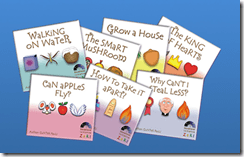
Apparently Pauli and friends published a whole series of books “Gunter’s Fables”. And yes, you can buy them at Amazon 😉
Also check-out this fantastic talk "How Can We Use Finite Resources To Propel Ourselves In The Future?" of TEDxTokyo 2009, held on May 22 at National Museum of Emerging Science and Innovation.
It all makes me think very much about the book “Cradle to Cradle” by William McDonough (Author), Michael Braungart (Author), a book that was a real eye-opener for me at the time, and a book that i already mentioned several times in this blog.

“Let the future emerge” is the tagline for this blog. And things seem to emerge with an astounding sense for synchronicity. Just last week, i discovered The Fifth Conference.

The Fifth Conference is a forum for vision. Part publisher and part conference, The Fifth Conference tackles the ‘big issues’, the factors that drive our future. Think ten, twenty, even fifty years ahead and try to imagine how we will live and work. What will this world look like? How will we have solved the economic, social and environmental challenges that we confront today? To answer those questions we talk to entrepreneurs, policy makers and experts. We analyse the facts, the forecasts and the arguments. And most importantly, we collect vision.
It is so close to my idea of the Think Tank for Long Term Future !
So, last week, i had a chat with Frank Boermeester, co-founder of The Fifth Conference.
Lots of synergies!
Frank invited me to draft an essay on Technology, with a focus on Technology Readiness in our region, for the next publication. Will certainly do so, and cross-post on this blog.
However, as we were chatting, we suddenly became aware of
the “understream”
that is driving all the changes and evolutions in Growth, Mobility, Green, Technology, Health.
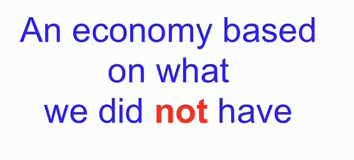
Its about the theme of Cradle-to-Cradle that “reducing waste” is not good enough anymore, we need to “add value”. Its about the notion that Google’s “Don’t do evil” is not good enough anymore, and we need to “Do Good”.
It’s about what keeps Gunter Pauli going, and what he refers to in his video as
“no more
collateral damage”
And not anymore
and yes, create a sustainable society.

See also some related blog posts on this site on:
![Reblog this post [with Zemanta]](https://i0.wp.com/img.zemanta.com/reblog_e.png)
 Petervan Studios
I cannot resist giving an example from my own experience, even though it’s a field very much removed from most topics on this blog, but is controversial (and everyone has a qualified or non qualified opinion on it)… farming.
Over the years we’ve gradually evolved our philosophy of farming as a “business” using the model of highly industrialized factories (with the basic principle of maximize profit and don’t think about tomorrow), which turned to be “Do-lots-of-unforeseen-harm approach”.
A side note – this does make me think that we have modeled lots of things over the factory – including our knowledge businesses – just see how we apply LEAN and other methods like this to a knowledge organization, with disastrous effects – and the same unforeseen harm is becoming obvious there too. I guess we as species suffer from a maximizing sickness – once we find something that works we apply it indiscriminately everywhere, no matter if it makes sense or not.
Now slowly we are moving towards “organic” and other “bio” approaches, but without changing much of the underlying factory style. So move towards Do-less-harm approach, or even Do-as-little-as-possible-harm approach. We establish acceptable norms of harm: less pesticides, less fertilizers, more engineered crops, or lots of both pesticides and fertilizers, but not based on synthetic products. And while this is great, it is restricting. Why don’t we ditch the whole “harm” concept and “do good” instead?
Guess what, in farming if you tell something like this most people will consider you completely crazy. It is as if you are proposing not only that perpetuum mobile is possible, but as if you are suggesting that you can make something out of nothing. To those people I can only say – did you ever try with your own two hands to make it work? Then how can you say it doesn’t!
So what would it mean to do good in this field: in means moving from a farm as factory and business approach to a farm as an ecosystem. The difference is not subtle – it is orthogonal; it means focusing first and foremost on building the capabilities of the eco-system and only then using a very small part of it to grow food. In practice it means that most of the surface, resources and time will be spent on sustaining a healthy ecosystem – building top soil, attracting and feeding wild life, and so on. And there are a number of experiments that have proven that this is possible on some scale – the Gaviotas community in Columbia, John Jeavon’s farms in the US.
The challenge is expanding this approach to much bigger scale. And looking at the 3 things that we need to attain sustainable society in Peter’s post above – the most difficult one in the case of farming is the last one – which roughly translates to “Get your hands dirty and get ready to shovel! Lots!”
Pingback: The Medici Effect « Petervan's Blog
Pingback: Get a Life and Get Alive « Petervan's Blog