Love and Hate Relationships


image

A good friend of mine commented on one of the blog post. It’s a comment that cuts deep. Knowing the person, i think it was quite a step to be this open on a public blog. So first of all, congrats for coming-out !

Here is the original comment:

I have spent some time reading through this and other blogs of yours. And they make me react strongly in a very controversial way: I love them and I hate them; I agree and fully reject their contents.
And, beyond the very valid and daring points you make, I’d like to reflect about the channel: speaking one’s true mind, yet doing so hiding behind a screen and sometimes even a fake name.
My fear is having my own children communicating with me via a blog.

You make me reflect, to the point of writing this reply. So I guess we should both be content as the blog has obviously achieved its goal…
But I dont know if I should be happy or sad about it. After all, I could have also called you!

With respect to the fake name, this was to protect. Not myself, but somebody else. I really would like to know on what content you agree or reject. Contact me.

In response to the strong point you make about the communication channel, I believe we have to let the future emerge (We don’t have a choice anyway ;-). We have to be in this world and evolve and adapt to survive. Or we can disconnect and go to a monastery, which is a valid choice of course.

My and your children consider e-mail as really very old-fashioned. And blogs are really for guys with grey hairs. So here we are. It’s 2010.

49 n02_21582623

Whether you like it or not, your and my children will communicate using Twitter, Facebook, Netlog, Foursquare etc or whatever will be applicable the next years. Like we used to send SMS’s, our kids will Tweet or whatever the channel will be.

special4

One thing is inevitable. The on-line communication channels move into real-time. Nova Spivack coined this “The Stream”. See my post on World Wide Web.

I have btw another blog post in preparation about about a very related subject: privacy.

We seem to have passed the tipping point where the default is NOT privacy, but Public. It will then be up to you to indicate what about yourself you want to keep private. I struggle with that too. It has a lot with digital identity. If you’re interested in digital identity, i can really recommend the blog of Kim Cameron: www.identityblog.com

I encourage anyone to get into discussion with me on the CONTENT of this blog. Via the comment link, via phone, mail, face-to-face.

When i started this blog, i had some blog-shyness. That over now. I feel more comfortable with this channel now.

Probably 10 years later than the early adopters, but who cares !

How real is your Innovation ?

I have been reading quite a lot on innovation lately. Books and blogs. But it looks to me that there is too much theory and too less practice.

I have read about many ideas to organize innovation, to do scouting, idea management, incubation, internal/external challenges, brand recognition programs. Grand theories about innovation in the core or beyond the core, or about innovation TO the core. About cultural change. About leadership and executive sponsorship.

All these are important components of a company wide Innovation Program, but all this ignores something very fundamental.

Does your company REALLY want to innovate ?

It’s more than wanting.

You must LOVE innovation


As mentioned elsewhere on my blog, i have something with “stage”. Well, maybe you do not know, but it just happens that Flanders is the host of the worldwide leader of stage-builders. The company is called STAGECO. They build the stages for U2, The Rolling Stones, Rock-Werchter, etc, etc. Oh boy, those guys are passionate about what they are doing ! So, i went to their site and look what i found:

image


The keyword is “loves”

Just this week, i stumbled upon this book from Jeanne Bliss.

I love you more than my dog

The book is a bit off-topic with respect to innovation “pur-sang”, but ask yourself the question:


“Do you love innovation

more than your dog ?”


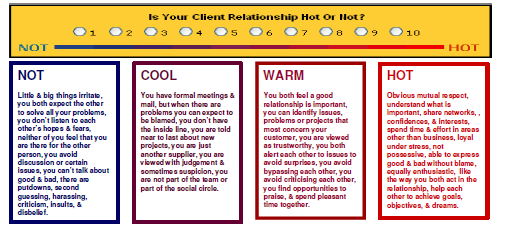
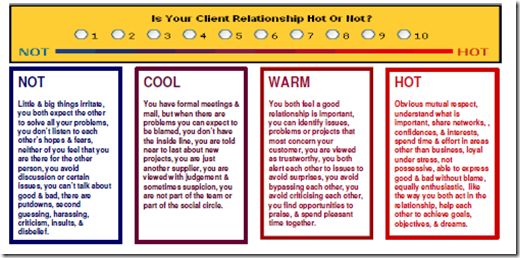
And love is about a relationship. In my previous life at Microsoft, we once had a consultant Max McKeowen. At that time we were discussing “Love/Hate Relationships” with customers. How did it come that people love Apple and hate Microsoft ? It ended up in a very interesting write-up and in the end a company wide program to create these Love-relationships with customers.

So, i went back to that write-up, and there was something about


 HOT or NOT
image

Imagine the same HOT or NOT questions about your Innovation.


Is your Innovation HOT ?


I also suggest that we all turn-on our bullshit-detector. To find out what Guy Kawasaki calls the “Bull Shiitake” of your Innovation Programs.

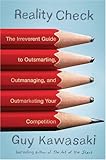
 

Guy Kawasaki


Such a detector comes really cheap. Every human with some basic intelligence has it just built-in. In essence, your need a reality check-out your love for innovation

So, ask yourself the question:

“Does my company LOVE innovation ?”


So, ask yourself:

“are we really shooting for the innovation that Guy Kawasaki had in mind at Sibos 2009 when he spoke about “Jumping the next curve” ?


So, ask yourself what you did with

“Don’t let the Bozo’s grind you down”


I am also a big believer of “Radical Innovation” as described in Rowan Gibson’s book “Innovation to the Core.

Radical Innovation is not the same as “Risky” Innovation. By Rowan’s definition, an idea is truly radical if it passes one or more of the following three tests:

  • Does it have the power to dramatically reset customer expectations and behaviors?
  • Does it have the power to change the basis for competitive advantage?
  • Does it have the power to change industry economics?

If an idea does not meet the test of being truly radical, it is not going to have very much impact on either the top line or the bottom line. It still may be something that is perfectly worthwhile to do, but it’s unlikely to make much of a difference to revenue growth.

For many executives, the word radical is too, well . . . radical. It makes them feel nervous and uncomfortable. Sometimes they feel more comfortable with “Impactful” rather than “Radical” Innovation.

This is very much related to the thinking of Mark Raison from Yellow Ideas. I already mentioned Mark in my previous blog on Google and Finance 2.0 when i wrote:

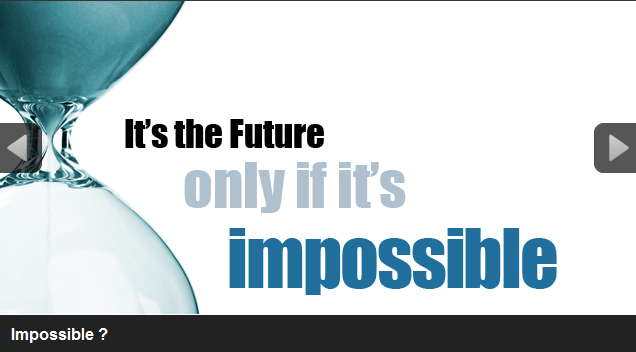
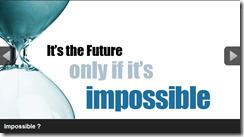
especially the implicit push for extreme – even “impossible” innovation. Last week, i was attending the 11th European Conference on Creativity and Innovation. One of the keynotes came from Mark Raison, titled “The Power of Impossible”

The Power Of Impossible By Mark Raison Yellow Ideas Eaci Ecci Creativity Congress 29 10 09

View more presentations from mark.raison.

One of his slides really summarizes this to it’s essence:
image 

So if you’re really serious about innovation, here is a checklist of do’s and don’ts (non exhaustive list 😉


Here are some good recipes for failure

– Don’t recognize your failures of the past

– Never invite your innovation guys to the company’s leadership off-sites

– Do invite external consultants who will say what you like and ideally repeat what you’ve been hearing about innovation the last 5 years. Everybody will feel proud on how much (old) innovation thinking is going on.

– Make sure that you always insert at least one of your most conservative guys from the past in any of your innovation strategy teams to ensure there are enough brakes on innovative thinking

– Focus your innovation on incremental changes

– Make sure that you “detach” your innovation resources to help supporting this year’s business priorities

– Ask your innovation resources to help selling.

And here are some suggestions for “real” success

– Keep yourself honest. Make sure you feel 100% ok when telling your innovation story to yourself. Try it: talk to yourself in the mirror. I hope you don’t fool yourself.

– If you are serious about innovation, be bloody serious about it: put at least the same budget and resources as for your Six Sigma, Quality, or other Efficiency programs.

– Make sure that your innovation efforts are exclusively and rigorously focused on radical innovation. All the rest is just window dressing and peace of mind and “peace of board”.

– Have a monthly 1/2 day quality time slot with your full Executive Team ànd your full Innovation Team to discuss and progress your Innovation program.

– Hire lots young people. Let them incubate and propose radical innovation. With some exceptions, innovation will NOT come from the 40+ years old.

– Build an Innovation-Force of young (< 35 years) high potentials (HIPO’s)

– Make sure that your HIPO Innovators have a seat on ALL your decision bodies and committees.

– Have an HR program that focuses on building the creative and innovative skills in your company. Consider setting-up an Innovation University together with other innovators from within or outside your industry.

– Have innovation exchange programs of your HIPOs with other companies.

– Protect innovators in your company. And be VERY vocal about this protection. And do something with the appraisal of those who have the courage to stick out their neck.

– Create the annual “stick-out-your-neck” Award. With a hefty monetary prize attached to it.

– Celebrate Innovation Achievements

– I already pointed at the key role of HR on this. See Emotional Zombies and HR and Innovation and Brand, Workforce and Innovation.

And last but not least, forbid any of the following 29 Idea Killers to be used to challenge any idea in your company:
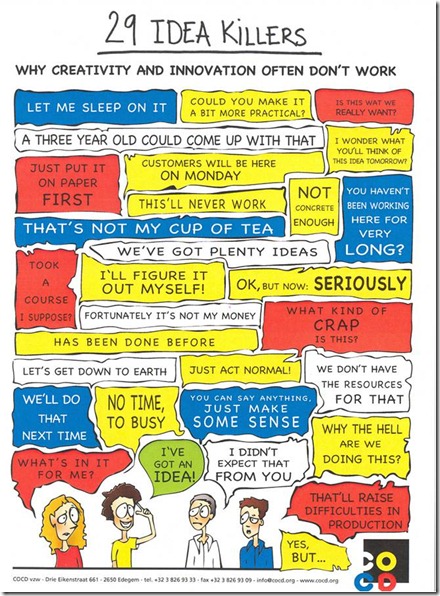
Innovation_killers

Keep yourself honest. Look in your mirror, and ask yourself “How real is our Innovation ?”

Cubicle 3B23: Let me entertain you


The idea for this blog post emerged when a colleague visited my cubicle.

I will from now on refer to my cubicle as “cubicle 3B23”. The idea developed to write regular post under the title “Cubicle 3B23”, reporting about the good, the bad and the ugly of corporate life. This is the first in a series. Maybe it’s the first and only one. But i thought the idea was “cute” to try it out, to see where it goes and to let the future emerge.

The initial idea was to do a one-off under a different title (go the the very end of the blog to find out), but a friend told me that “Let me entertain you” makes you want to read on. So here we go.

Sometimes people come to cubicle 3B23 for some good fun brainstorming: “Do you have 5 minutes, I want to pick your brain ?”. Others put their head into cubicle 3B23 and say something like “Oh, i see you’re busy, i will come back later”. The latter usually have something “sad” in their eyes.

These are the moments to connect. In both cases i know this connection will make somehow a difference.

The other day, Joe was the one with sad eyes.

He was doubting himself, and wondering whether he should do his own thing, or continue to shut-up and play the game of being mister nice-guy.

samrt-swine-flu-mask-4 

Joe was responsible for a program incentivizing staff to think out of the box. At TEDx Brussels, i heard a better expression for that: “burn the box”.


image

In the planning for the new year, he was asked to run the program again. But he felt it was just not right. He felt he would be cheating the people joining the program. He was doubting whether it really mattered. He felt that he would not be able to look those folks in the eyes at the end of the program as the expectations created were just over the top. It’s a bit like the subtle difference between lying and not fully telling the truth. Both don’t feel right, and appeal to your ethical compass.

He was tired. In search for his real purpose in life. Fed up with playing games.

We had a long chat. He kept on complaining about the artificial aspects in corporate life. Somewhere 1/2 way in our discussion, i asked Joe what really kept him going. What was giving him energy. In what circumstances he felt he could be his true self. Not the self that you construct/imagine to be in synch with the big bad world out there. No, the self that silently is waiting inside you to be discovered. To be stumbled upon is probably a better way to say this.

Joe gave it a long thought, and said: “when i can inspire other people, and make them happy”. (it was another answer, but then i would reveal too much about that person).

There was a short silence, and went to my PC, searched my music collection, started a song and said: “This is you, Joe !”

The song was right on. I could see the emotional impact on Joe. The song was “Let me entertain you” by Robbie Williams.

Robbie Williams' 'You Know Me' Music Video Debuted

I am an all-time fan of Robbie Williams. He is a great performer – once saw a concert of him in Wembley stadium – and you can love or hate him, but for me he is really authentic. Even if he puts on his rabbit/bunny head on. But i deviate. Although, this post is mainly about authenticity.

“Let me entertain you” is a high tempo energizing pop/rock song, but the real secret in Williams’ are often the lyrics.

Hell is gone and heaven’s here
There’s nothing left for you to fear
Shake your arse come over here
Now scream
I’m a burning effigy
Of everything I used to be
You’re my rock of empathy, my dear
So come on let me entertain you
Let me entertain you

I could see the sparkles in Joe’s eyes. “Yes, that’s what i want !” he said. “I want to entertain people ! Make them happy. Make them move/shake their arse.”

I have to say, me too.

But for me it translates into having this strange connection with “stage”

album_large_2215503

When i was young (…), i used to be a quite successful DJ. I organized rock concerts. I was on one of the first free-radio stations (end seventies). I even was singer :-/ in a rock-band.

I was always attracted by “stage”. The good buddies feeling with the roadies. The equipment being set-up. A great show. The after party.

Also today, when we do “events”, i love being close to the stage. I love to put together a program like Innotribe, and see how that resonates with the audience. Maybe we should do a TEDx @ Sibos 😉

I love to have and to apply authentically that soft “power” to move people emotionally. I even have that “stage” feeling when i try to do a good presentation in PowerPoint, Prezi, Adobe or whatever. Always in search for some good metaphors, good supporting images, have some “rhythm”, add some music to it.

But the last couple of weeks, it started smelling “like a trick”.

24_09092008ikugtf

It has become “too easy” to put a presentation together that is “different” than the average.

On my blog, i often experiment a very little with fonts, font colors and sizes, left/right indents etc. But it all starts smelling like a “trick”. Starts smelling like on auto-pilot. That’s why in this blog post no “tricks” with fonts. I don’t feel that way today.

I once was told that one recognizes the best the feelings of others when you recognize them with yourself. For ex if you easily spot arrogant people, that’s probably because you’re arrogant yourself. Projection that is called, i believe.

That’s why i feel a bit like Joe. I recognize the feeling. I can do more with my skills. I am in search for that something extra. Like Joe, I am not happy anymore with just well executing a job.

I want to make a difference. Not just a ripple but a wave.

My wife sometimes asks me: “Peter, why don’t you settle down ? Look at the others. They don’t worry that much.” But i can’t. And i doubt. Is this my true self ? Is this who i really am ? Or is this the image that i’d like people to have from me ?

By now you probably get a feel of the initial title of this blog post. It was “doubting my impact”. Doubting my impact when working for this or that particular company. For this or that particular audience. Not doubting my skills or my added value.

I know i have the holy fire and can ignite others.

But doubting my added value and whether at the end of the day it’s all worth it. Whether at the end of the day it all made a difference. Whether at the end of the day there is some new meat on the bone. Whether it really matters.

lov-story

This blog is often walking a thin balance between telling from the field, and packaging/romanticizing the story a bit that it just triggers the intelligent reader to do something with it but without going in “full contact”. The thin balance between private and public when you go public with a blog.

One of my bosses used to say “Management is a full contact sport”.

Ouch !

Do i want to be there ? Not in the way he meant it.

But yes, i want to go “full contact” in the connection. In keeping the doors of cubicle 3B23 open. To pick my brain or to share your pain.

Who feels the same ? Who wants to share his story ? Who wants to follow ?

Emotional Zombies

Great post on “Who needs employees anyway ?”. Discovered via Fred Zimny’s Blog.

This is based on a recent “Global Workforce Survey” conducted by Towers Perrin, an HR consultancy. In an attempt to measure the extent of employee engagement around the world, the company polled more than 90,000 workers in 18 countries. The survey covered many of the key factors that determine workplace engagement, including: the ability to participate in decision-making, the encouragement given for innovative thinking, the availability of skill-enhancing job assignments and the interest shown by senior executives in employee well-being.

Barely 21%

of employees are truly engaged in their work, in the sense that they would “go the extra mile” for their employer.


Nearly 38%

are mostly or entirely disengaged, while the rest are in the tepid middle.


Surprisingly, 86%

of the employees in the Towers Perrin study said they loved or liked their job.


So, next time you evaluate your yearly employee satisfaction survey, beware of the numbers saying that the majority of employees is happy. Even if you sense in every office, corridor and corner that is not true.


Anyway, why these rather shocking results ? The article suggests a number of reasons:


Ignorance

It may be that managers don’t actually realize that most of their employees are emotional zombies

Indifference

Another explanation: managers know that a lot of employees are flatlining at work, but maybe they simply don’t care

Impotence

It could be that managers do care, but can’t imagine how they could change things for the better. After all, a lot of jobs are just plain boring.

Reputation

The company’s reputation and its commitment to making a difference in the world—is this a company that deserves the best efforts of its people;

Leaders’ Trust

Are the behaviors and values of the organization’s leaders—are they people employees respect and want to follow?


Anybody who has ever read a Dilbert strip knows that cynicism and passivity are endemic in large organizations.


image


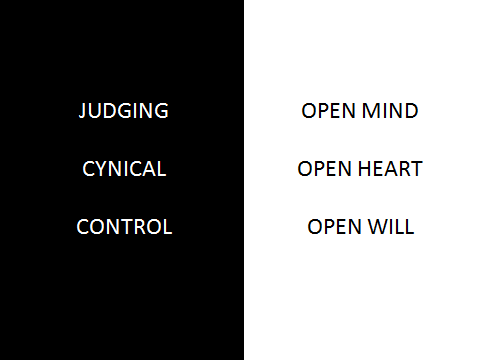
However – in my opinion – we too easily get away with joking about cynicism. In my opinion, it is the cancer of today’s organizations that seem great at the outside, but grim at the inside. They look like golden cages. They offer all the perks possible, but they ignore 3 basic attitudes for any human being to function well.

#1: To have an open mind. Companies/People who do not have an open mind tend to retract into highly judgmental.

#2: To have an open heart. The next level is that of the heart. People who do not have an open heart have developed cynicism as a defense. They have learned NOT to show their heart.

#3: To have an open will. Last but not least, when there is no room for open will, we become control freaks.

In today’s society, driven more and more by openness and transparency, these “tricks” of judging, being cynical and control don’t work anymore.

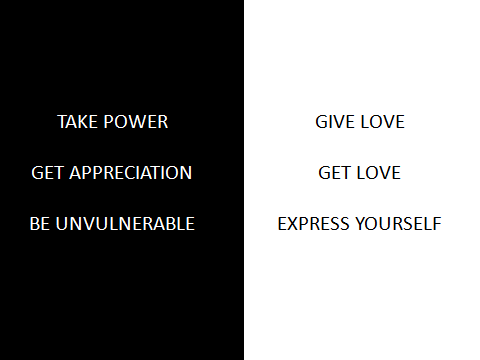
It all boils down to 3 fundamental needs for every human being:


image


People who are not able to express themselves (anymore), position themselves as “invulnerable”. In stead of being able to receive love, they compromise on getting appreciation. And in stead of giving love, the defense mechanism becomes one of taking power. As long as we have power games between the silos, the CEO can shout “change” and “innovation” as long as he wants, at the bottom of the pyramid nothing will change.

Surprisingly, the origins of these needs – and their fulfillment or not – is formed during the first 1-3 years of your life. In other words beyond the control of the organization you work for today.

But organizations should be conscious about these facts, and offer their employees probably the most interesting perk they can give: to follow a personal development program that lets the employee explore it’s true self.

  • Who am I ?
  • Who am I in a group ?
  • Who am I in the world ?
  • Finding your true passion.
  • Finding your true purpose in life.

And hopefully finding (or founding) a company that welcomes you respectfully as an employee, and gives you the chances to develop your true potential in line with your purpose.

It reminds me of Jim Collins and a 2003 blog post found back earlier today.

The start of the New Year is a perfect time to start a stop doing list and to make this the cornerstone of your New Year resolutions, be it for your company, your family or yourself. It also is a perfect time to clarify your three circles, mirroring at a personal level the three questions asked by Smith:

1) What are you deeply passionate about?
2) What are you are genetically encoded for — what activities do you feel just "made to do"?
3) What makes economic sense — what can you make a living at?

Those fortunate enough to find or create a practical intersection of the three circles have the basis for a great work life.

An to come back to the Global Workforce Survey:

  • In every industry, there are huge swathes of critical knowledge that have been commoditized—and what hasn’t yet been commoditized soon will be.
  • Given that, we have to wave goodbye to the “knowledge economy” and say hello to the “creative economy.”
  • What matters today is how fast a company can generate new insights and build new knowledge—of the sort that enhances customer value.
  • To escape the curse of commoditization, a company has to be a game-changer, and that requires employees who are proactive, inventive and zealous.
  • Problem is, you can’t command people to be enthusiastic, creative and passionate.
  • These critical ingredients for success in the creative economy are gifts that people will bring to work each day only if they’re truly engaged. (Eric Raymond made this point way back in 2001 when he argued that in the new economy, “enjoyment predicts productivity.”)

For passionate readers, i can recommend in this context Eric Raymond’s book The Cathedral and the Bazaar.

Or a bit an older – but still very relevant book – “The Cultural Creatives


Must be that I am some sort of +


positive guy when i turn a title like Emotional Zombies” into something positive like “The cultural creatives”

As Seth Godin was saying in his today’s blog:


One of the most common things I hear is, "I’d like to do something remarkable like that, but my xyz won’t let me." Where xyz = my boss, my publisher, my partner, my licensor, my franchisor, etc.

Well, you can fail by going along with that and not doing it, or you can do it, cause a ruckus and work things out later.

In my experience, once it’s clear you’re willing (not just willing, but itching, moving, and yes, implementing) without them, things start to happen. People are rarely willing to step up and stop you, and often just waiting to follow someone crazy enough to actually do something.

I’m going

Come along if you like


Reblog this post [with Zemanta]

Blogging Innovation’s Top Ten Innovation Articles of 2009

Hurray !

I am one of the 3 winners of Blogging Innovation’s contest to identify the Blogging Innovation’s Top Ten Innovation Articles of 2009.

Good start of the year: I will get a copy of Gary Hamel‘s latest book "The Future of Management" 😉


Thanks Guys !


The least i can do is share with you the results of the vote for the best articles, and once more recommend you to subscribe to this great innovation blog.

image

Here in no particular order are Blogging Innovation’s Top Ten Innovation Articles of 2009:

Happy reading and innovating in 2010 !

Reblog this post [with Zemanta]