
This trend is part of my five trends for human advancement. For an overview and background, check here:
As described in trend-2, patrimony is stored memory of the underlying structure of an organisation. Culture as recorded know-how. To advance humanistic organisations we need to advance this structure. Structure is more than organisational structure like hierarchies or non-hierarchies. The structure is about coherence between narrative, motives and governance (with thanks to Jean Russell @nurturegirl).
- Narrative: John Hagel has written a lot about the difference between stories and narratives. A story is well, a story: with a beginning, middle and an end, tied together by a plot. A narrative has a sense of purpose, has a call for action, and can rally humans to a new destination. I would argue that a good narrative moves an organisation beyond “building to spec”. I remember a narrative of a small family business that was specialised in building and restoring old baroque organs. Their humanistic ambition was not just to have developed mastery and craftsmanship in building organs to spec. No, their ambition was to create an instrument that would give the musician an extraordinary musical experience.

Baroque organ
- Motives: John Haidt has written a whole book about it (“The Happiness Hypothesis: Finding Modern Truth in Ancient Wisdom), describing the motivations of the rider and the elephant. The unconscious elephant is motivated by reciprocity, prestige, self-serving biases, power, hypocrisy, arrogance and entitlement. To be truly humanistic, we need to appreciate another level of motivation, the motivation of “we”. Here we are in the territory of motivations such as care, tradition, craftsmanship, beauty, proportion, sacredness, and infinite games.
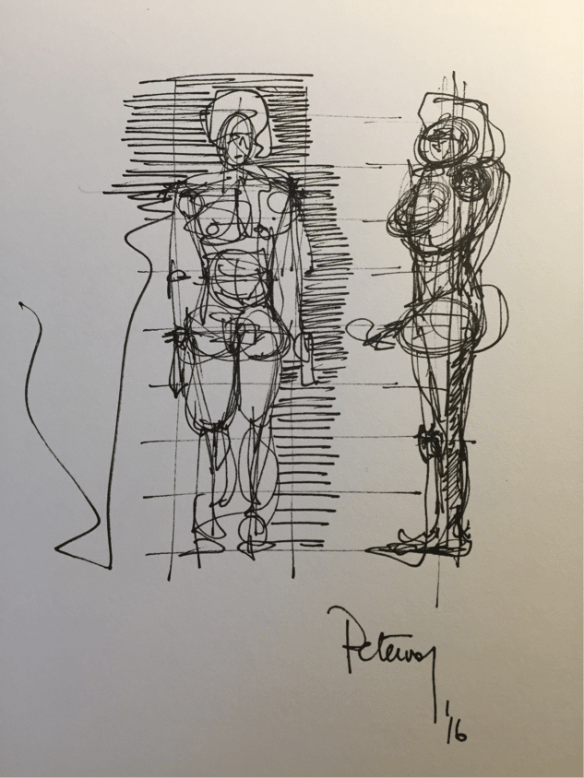
Human noise – Petervan Productions 2016
- Governance: we are slowly progressing on the spectrum from centralised to centralised to distributed governance. The traditional metaphor for change is the “Castle & Sandbox” metaphor of separating core and innovation activities of organisations. I have come to realise that we need another metaphor that is based on that of cities. As Geoffrey West pointed out in his research, Cities never die, even when more complexity is added. It would make more sense these days to think in terms of distributed, networked governance, organised like “Kasbahs”, a web of innovation and advancement initiatives, transparent to all, and governed by self organizing mobs. This is however not a call for the “gig-economy”, as many gigs are piece-mealed shit-jobs, driven by non-human algorithms, leading to a precariat experience of work.

Picture of a Khasba
To advance humanistic organisations we need to advance their coherence between narrative, motives and governance.
 Petervan Studios
Pingback: Five trends for human advancement | Petervan
Pingback: Five trends for human advancement | Petervan Productions
Pingback: Petervan Jan 2018 – Let’s do something interesting | Petervan
Pingback: Innovation Apes**t | Petervan's Blog