
We are all – or should be – familiar with Clayton Christensen’s work on The Innovator’s Dilemma, where he articulated the principles of disruptive innovation. It’s a great business book about innovation.

This is a book about “…how market-leading companies have missed game-changing transformations in industry after industry…not because of ‘bad’ management, but because they followed the dictates of ‘good’ management. They listened closely to their customers. They carefully studied market trends. They allocated capital to the innovations that promised the largest returns. And in the process, they missed disruptive innovations that opened up new customers and markets for lower-margin, blockbuster products.”
For innovation to happen in a company, the principles of Christensen’s books are definitely great advice. There are several other innovation business books that are recommended reading. Check out my GoodReads page.
But since a couple of months now, I believe there is something else we need to look into: something else that is the ticking heart of innovation, something about people, about humans, that makes the difference between thin and thick value creation.
I don’t believe anymore in big corporate change programs that are rolled-out top-down in a military drill. Whether those change programs are focused on efficiency (Lean, Six Sigma, …) or on creating new value (Innovation) does not matter for the argument here.
Real change happens from within the organization. Bottom-up. Virally.
What I want to talk about is the other innovator’s dilemma: the human dilemma, the Innovators Personal dilemma.
This personal dilemma post is about joy versus pain, passion versus suffocation, freedom versus slavery, excitement versus illusion. It is part of saying the unsaid. It is a cry for freedom, a cry for unleashing the energy of the hidden pearls in our organizations, a cry for supporting and encouraging those who really want to create positive viral change from within our organizations.
There is so much positive energy in our organizations that we could tap into, but that energy gets blocked by the corporate “machinery”, by best (or worst) practices, by power games, and in some cases by plain sick people or organizations.
With Corporate Rebels United, we gathered a really great cross-industry sample of innovators, instigators and protagonists that work in bigger and smaller organizations worldwide. We came across a number of real-life stories that give a glimpse of what sort of human dramas sometimes happen deep in the fabric of our corporate organizations, and that are a absolute barrier to innovation.
The great advantage of working as a group is that we now can see some patterns cross-industry. They are not specific to one or the other organization. They are universal. And I want to put them on the table. I want to create awareness.
But most of all, I want to create a soundboard so that we increase our sensitivity and awareness for the symptoms, so that we can prevent human dramas and turn the pain into something positive, an unstoppable wave of change that will transform our corporations from deep within.
Innovation only happens when somebody steps out of the blueprint
And that means taking a risk. That means going for your own beliefs, against the flow, against the current practices of “this is how we do business here”

Ghandi: “First they ignore you, then they ridicule you, then they fight you, then you win”
It takes guts to try to change the corporation. Many people try. They will laugh at you. Many get hurt as well. Sometimes minor scarves. Sometimes it results in deep wounds of self-esteem. I collected some stories to illustration the innovator’s dilemma.
There are some common themes in these stories:
– I want to jump, but I have a family to feed
– I am surrounded by sick people
– The employee as a resource
– The fear of being punished
– I want to innovate but my manager does not let me
– Leading by Being does not get recognized
– Not good for your career
I want to jump, but I have a family to feed
Some of the reactions to my “The Myth of Innovation Incentives” post made me more aware of the “luxury pedestal” I am preaching from. By being part of an innovation team, I get by definition much more freedom than those who are deep in the trenches. In my personal life, I have reached some level of personal wellbeing and stability. But many of my friends out there are at the beginning of their career.
Here is one reaction I received from Jonathan to our invite to join corporate rebels. Jonathan works in the pharma industry:
I have to say that my current employee is a really, really conservative corporation. Quite frankly speaking, we are in dire need of a lot of corporate rebels – but I strongly believe that joining your “club” would get me into serious trouble – if my boss or our corporate communications department ever found out (and they would never, never ever supply me with any resources in that matter). And since I´m going to be a father for the first time this year, trouble with my employer is something I´d rather avoid if possible.
The personal dilemma: “Stand up for who I am, or give in to the power of the corporation”
My answer is one of empathy. I have been there as well. And I regret not having spoken earlier in my life. I do cannot force a person to jump off the springboard. I can only give a gentle nudge. Encourage you despite everything to go for the unknown. Opting for uncertainty and doing something scary (or not) is a deep innovators dilemma. Because you know: if you are not scared of what you’re doing, it’s probably not innovative enough. It’s not disruptive enough. It’s a deep human dilemma, going back to daring to be great. Daring to live and act from your belly. Liberated from the chains of captivity. Leading by being from your true self.
My answer is also that making the jump does not always have to include dramatic live changing decisions. You can start small. And getting addicted by small doses of adrenaline when you stand for who you are. And then a bit more, and a bit more. Makes me think of “Love is the drug” from Roxy Music.

I am surrounded by sick people
I got the following message from Françoise, a 33 year energetic woman, working in an energy utility company:
In our company we have a culture of public humiliation. Mocking publicly about people’s achievements during town hall meetings, that sort of things. For a person who has worked his fingers to the bones, despite all odds, being humiliated publicly was devastating. The way things work in our team is “man eat man”. They put you in an arena, let you fight it out and silently watch. Whoever wins is right. Blame is the name of the game. Everyone dreads that. If you fail, you will be publicly mocked. Whiteboard and town halls are the new place for mocking failures. I remember such treatment in school. For heavens sake, we are adults. They took me off the project I loved. I was “promoted” to a new project. The new project was boring as hell. I could not motivate myself to do any of the work they assigned. Writing this mail is painful beyond my imagination. They were so manipulative beyond words. The crime they commit has no facts. The torture I have endured has no records.
It makes me think of a recent case in public service in Belgium. A woman working for the city hall in a small village was disturbing because she said the unsaid. She was “promoted” to a new function. Her new office was a dirty back room of a side building. She got a computer, but one without connection. She did not get a phone. She was not allowed to meet people. All this with the excuse that her new job required her to focus. She had the courage to go to court. She won.
The Personal Dilemma: coming up for your rights, or let your company by run by sick people
I have heard many stories like the above from many companies cross-industry. These stories illustrate plain criminal behavior by sick people. There are no excuses for this. That’s why companies have “persons of trust”. Let there be no mistake. Go and find your person of trust and open a case. Whenever you can, put on the table these sorts of practices, so they and the people responsible for them get eradicated from our organizations. To grow healthy plants, you must first sanitize and fertilize the land.
The employee as a resource
Doc Searls (@dsearls) describes the relationship between a vendor and a customer as a Client/Server one (at times trending to slavery) where the customer calf is drinking the cookie milk from the vendor cow.
What he describes in buyer/supplier relationships is equally applicable in employer/employee relationships. The proposed solutions for “getting the cattle human” is by proposing them tools to take control of their own abundant information.
Replace vendors by employers in the slide below:

Extract presentation Doc Searls at New Digital Economies 27 Mar 2012
Whether employees are seen as cattle or just resource also quickly becomes apparent in all sorts of employee surveys and result discussions involving “benchmarks”:
Here is Anthony from a Financial Institution, reporting on one of their latest employee surveys on corporate culture:
The results of the survey indicated that we were doing quite well compared to the rest of the industry. I could not match that outcome with the generalized quantified results that less than 40% of the employees felt engaged. What if “the industry in general” was crap and a standard for mediocrity? What if the expectations of the staff set the bar way higher than the benchmark? What if we benchmarked against the wrong standard? These old surveys do not take into account that the environment has fundamentally changed. Due to abundance of information, social media and P2P communication, the employees have a richer and more precise data set available. We laugh at those “official” benchmark cheering results
The fear for being punished
Something very similar pops up, when companies try to define KPI’s for innovation. Check out this great post from Drew Boyd (@drewboyd)
Measure innovation alternatives, not just the current program. When assessing the impact of an initiative, always ask, “Compared to what?” Don’t fall into the trap of measuring only what the company is doing today. Rather, measure it against the next best alternative. For example, if you are using a ideation methodology like S.I.T., be sure to measure the effectiveness of using S.I.T. versus another ideation method. Understand why you are using one method over another by forecasting results from the alternative. This re-frames the question from “does this method work?” to “does this method work better than this alternative?
and:
Measure novelty, not impact. Senior leaders want to know the “bottom line” impact of innovation. When they see ideation results, they respond with, “Yes, but how many of these actually made it into the marketplace, and what revenues were generated?” This is a trap because so much of the impact is dependent internal and external factors. Holding employees accountable for impact will cause them to avoid the truly novel and game-changing ideas. They fear being punished for pushing great ideas that fall outside their category. To manage this dilemma, managers need to think more in terms of finding the “innovation sweet spot,” that place somewhere between disruptive and incremental. The right balance between risk and reward is more likely to occur here.
I want to innovate but my manager does not let me
I silently helped without getting any credit. Then I saw your post about Corporate Rebels. I sat there and was thinking, here I am really doing a rebel activity and suffering and no one is paying attention. At that point everything started looking fake to me… Pain is deep and buried. It takes lot of time to vent it all out. My point is, don’t lose me. I am of lot of value to my company because I genuinely care about the company and its people. My friends do too. Some of us get fired for stepping out of the blueprint. Don’t let this happen again and again. Please use your power and contacts with powerful people to do something good and to fight against injustice.
Leading by Being does not get recognized
If Chris is rocking, it is because of the way I nudged him to do it. If Laura is jumping up and down with ideas, it is because she got inspired by what I was doing. I have inspired many souls at our company. Inspiration can only happen if someone is speaking from his or her soul. Inspiration is language of soul. I have earned respect from lot of people at in the company because of who I was. I have the attitude to make people take action. But I got fired. Because real change disturbs and challenges the status quo. My death was so silent. They did not even give me a chance to say good-bye. It is fishy and please don’t let this happen to anyone else.
Not good for your career
And also heard the following so many times: being innovative is hampering your career.
Kathleen just joined a telco company:
In our company we have a Young Grads Program. But when postulating for the innovations positions, we are kindly taken aside, and somebody whispers in my ear “being part of the innovation team is bad for your career as a manager”.
That’s a really bad story. It’s the story that lets you immediately recognize corporations where innovation is just window-dressing. Even the young people, full of healthy innovation energy don’t get a chance. What a disaster if you have joined such a company. Getting suffocated in your ambitions and drive from day one!
Any CEO with her innovation heart in the right place should mandate – yes mandate – that all newcomers and GEN-Y’s first get immersed in the innovation team. What people are allowed to do there is not the worst possible scenario; it is the best possible starting point for doing much-much more, to instigate real and viral and tidal change throughout the company.
Conclusion
All the above are REAL circumstances in REAL companies. Yes, innovation in these circumstances is hard. You have to go against the wind. And find the balance between a good/bad rebels. Sometimes you will be seen as subversive. And to be honest, some healthy dose of subversiveness is needed. Sometimes you need to act like McGyver. Sometimes you need to be Jack Bauer. One company told me they were acting like the “agency of subversions”
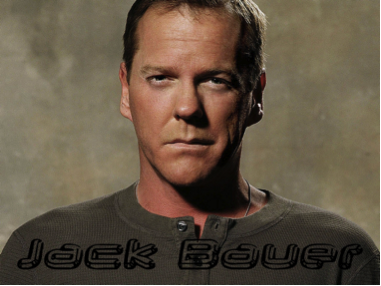
But I can’t expect everybody to be on that extreme end. I would already be so happy if with our Corporate Rebels United movement we can unleash the change-energy of every individual in our corporations.
That each of you have the courage to stand up, to come up for your ideas, to start small and make little changes, or to be very hungry and go for the big visible changes. One could refer to introvert and extrovert changes. Both are equally important to make true and viral change happen.
But we can’t have subversion or anarchy. This is not the way we as Corporate Rebels United want to go. We do not want to provoke for provocation sake. And we do not like to be like the Cacaphonists. Nor do we plan to start flash mob activities who share some ideas with Cacophony, as well as groups like Improv Everywhere and movements like Discordianism.
What we want is change
Viral change from within the fabric of our corporations
We want to change our corporations, not by complaining and blame-is-the-name-of-the-game, but by showing the right behavior, by encouraging each other, by uncovering the hidden pearls of our organizations. But for sure as well furiously fighting and making visible injustice, sick or plain criminal behavior.
We want to change, not by focusing on the things that make innovation hard and only looking for self-esteem, but by focusing both on our dreams and on other people in our lives.
We want to change by daring to be great.
In small and big things/actions.
It feels like somebody should start writing the first chapter of the human book for innovation. Maybe that somebody can use some testimonials of this post. Maybe Whitney Johnson (@johnsonwhitney) is the one? She is preparing a book titled “Dare, Dream, Do”. It’s planned to come out in May 2012. Maybe she addresses the human aspects that are not covered in business books.
Daring to dare is the personal dilemma of corporate innovators
If you feel inspired, join Corporate Rebels United, by leaving an “I join” comment on that or this blog post.
Let’s rock!
 Petervan Studios
Feeling like this is in part a look at myself and some of the many challenges that I have faced. Even having stepped out of the corporate side of things to where I am now with a perspective, initiative, and approach to faith and tech thats got me more times looking for financing than seeing the passions drive me forward, there is a lot of truth here. I am younger than many who startup like this in this genre, another barrier. And cultural contexts are also at play.
Could I have done this as a part of a culture in a corporation? Yes, but only if the questions, explorations, and approaches were allowed. There is fear in that. And the personal dilemma that comes from being an instigator to change is that you oftentimes just have to go without much folks wanting to go with you.
Pingback: rebels and kings, propaganda and language, magic and traffic signals ;) « power of language blog: partnering with reality by JR Fibonacci