
Not many people know this, but in the 70ies, 80ies, I was a quite successful DJ, and me and my friends toured under the brand “Celebration”. Life was – and still is – a big feast.
Embarrassed to say, but my first record bought was “Paranoid” from Black Sabbath. The paranoid thing probably haunted me for the rest of my life.
But I also have the original “God Save The Queen” by the Sex Pistols, on the EMI-label that rejected them before they became a huge hit, part of the disruptive album “Never Mind the Bollocks”


Watch the metaphor of the “flag”.
With “Celebration”, we did everything ourselves:
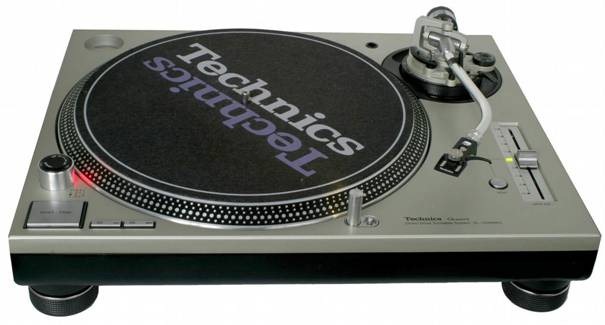
- We built ourselves the PA system, the lighting system, made our own jingles, we cut out our own slip-mats in cardboard (this was before the first fast-starting Technics turntables)
- printed our own posters to announce the show
- distributed at parties all sorts of gadgets to attract audience to our next gig. A famous example is a small plastic bag with 2 sugar cubes suggesting the energy that will be required at the next party.
- We begged for the small lorry from the grocery shop to be able to transport all that stuff and records from one place to another.
- A lot was manual. And heavy. Vinyl records are heavy. Especially if you have a couple of thousand and you live on a 5th floor apartment with no elevator, stairs only.
It was a network of friends. We went out on our scooters to paste the posters on the ad boards in the villages around, we borrowed each other’s records. It was the shareable economy avant-la-letter. We played for fun, later for a crate of beer, and much later for a couple of 100 Euro per night. That was for gigs for 3,000+ people. No prima-donna behavior like today’s top-DJ’s like Tiesto and others. Everything was new and innovative.
We wanted to shock
We felt like pirates
Later I joined a group of crazy enthusiasts who founded one of the first free and – at that time – pirate radio station FM-Bruxel. That was with guys like Gust Decoster, Luckas Vander Taelen, Dominique Deruddere, Ray Cokes and Marcel Vanthilt, most of them still playing a prominent role in the local media and film industry.
We really behaved like pirates. We also had our flag and our own logo. Can’t find it back: if somebody from the original gang still has a picture, please mail it to me. I will be grateful for eternity.
And years later, some of these guys found each other as founders and managers of one of the most famous nightclubs of Belgium “Le Beau Bruxel”. Our party animals were from art scene and musicians. I did that for 2 years. And I can tell you, I saw a lot of “characters”, learned a lot about human (non)-behavior. We closed the shop because nightlife became too dangerous in Brussels.
Fast forward many years to 2011: I am having a telephone conversation with a potential speaker for Innotribe at Sibos 2011 in Toronto. And I describe the Innotribe space we had in Amsterdam last year.
My speaker reacted: “wow, that sounds cool! The only things you guys are missing is a pirate flag!”

Indeed, with some – a lot actually – imagination, you could see our 600 m² Innotribe space at Sibos as a flagship, with the front part for the keynote presentations as the “prow” of our ship, the lab-space as the “galley”, the tower with the projector as our mast, and the projection screen as our sails.
Imagine a ship like this sailing in the middle of the exposition hall of Sibos, creating havoc – positive inspirational havoc – throughout the week. The only thing that was missing was the pirates flag on the top of our mast.

The pirate flag.
Two days later – completely by coincidence – I started reading “The Pirate’s Dilemma: How Youth Culture Is Reinventing Capitalism” (Amazon Affiliates Link) by Matt Mason, also author of “The Pirate’s Dilemma: How Hackers, Punk Capitalists, Graffiti Millionaires and Other Youth Movements are Remixing Our Culture and Changing Our World”

Fantastic read. Some parts you can skip if you – like me – have been inherently part of the punk and new-wave culture of that period. The names of bands generate a lot of nostalgia!
Some really cool quotes from this book:
changing the very fabric of our economic system, replacing outdated ideas with the twenty-first-century upgrades of Punk Capitalism
Disruptive new D.I.Y. technologies are causing unprecedented creative destruction
D.I.Y. encourages us to reject authority and hierarchy, advocating that we can and should produce as much as we consume
Youth cultures often embody some previously invisible, unacknowledged feeling in society and give it an identity
Building a community of pirate entrepreneurs
In Chapter 2, the author introduced the “Principality of Sealand”, a pirates home in the middle of the English Channel, in waters that are un-sovereign.


And have a good look at the intro about “Principality of Sealand” in Wikipedia:
Since 1967, the facility has been occupied by the former British Major Paddy Roy Bates; his associates and family claim that it is an independent sovereign state. External commentators generally classify Sealand as a micro-nation rather than an unrecognised state.[3] While it has been described as the world’s smallest nation,[4] Sealand is not currently officially recognised as a sovereign state by any sovereign state. Although Roy Bates claims it is de facto recognised by Germany as they have sent a diplomat to the micronation, and by the United Kingdom after an English court ruled it did not have jurisdiction over Sealand, neither action constitutes de jure recognition as far as the respective countries are concerned.
Maybe that is what innovation teams have to do: create their own sovereign state, micro-nation, governed by its own rules, taking unclaimed territory, and… act like pirates.
The pirates metaphor also came to mind when I saw last year Laura Merling from Alcatel-Lucent (@magicmerl on twitter and describing herself as “API Strategist, Marketing and Business Dev, Developer Community Geek”) gave a speech at Defrag 2010 in Boulder, CO.
Her talk was titled:
“On Being A Corporate Renegade”
Depending on what dictionary, a “renegade” is a deserter from one faith, cause, or allegiance to another or an individual who rejects lawful or conventional behavior. That’s what I would call a pirate.
You haven’t seen Laura. She is a bit skinny, long rave-black peaky hair, and some really cool belt. A bit like the one below, but much cooler. Since then I refer to her as the “belt-woman”.

Her talk went more or less like this:
When I got hired as manager of the API start-up within Alcatel Lucent, my CEO gave me 90 days to deliver V1 of the platform. 90 Days !
I did not have resources nor budget
I hired 6 mercenaries, good friends with specific proven strengths on marketing, coding, program management etc
We did it for fun and for the challenge
Next meeting with my CEO was on my role as change agent
He said: “Laura, you are successful when in 3 months time there are 70,000 people at my door complaining what this bloody women is doing in my company!”
That’s what I would call a CEO Innovation mind-set ! Maybe the Laura’s story is a bit romanticized, so what ? She gets the story across.
That’s why we invited Laura and her team when we were doing the Cloud Computing study tour earlier this year. This time we had her full team – 15 young and brilliant folks – who could interact with an executive audience that could compete big time with what you sometimes see from incumbents like IBM, Microsoft, Oracle, you name them. Very impressive. And what an energy from this start-up groovy team. So inspiring.
So when Laura was in Europe for business a couple of weeks ago, we asked her to come and meet our innovation team in La Hulpe. Inspired by the culture story, the idea emerged of teaming up together more regularly.
Quickly back to The Pirate’s Dilemma book:
What pirates do differently is create new spaces where different ideas and methods run the show
Pirate radio is an incubator where new music can mutate. Initially, the new strains of music it produces are seen as too risqué for the mainstream to touch, but once this music reaches a critical mass in popularity, anthems from the pirates start hitting the pop charts, pirate DJs become crossover celebrities, and the scenes created by these stations grow into cottage industries and worldwide exports
I started reflecting on this.
Why not create a community of pirates, of rebels with a cause, of innovators. By positioning our Innotribe space at Sibos as the Pirates’ Mother Ship, and like Matt Mason suggests:
“By giving a community
a new space
that was not previously available
to them,
you can empower them,
and they in turn
will propel your idea forward”
A group of people who are relentlessly challenging the status quo, breaking the rules, saying the unsaid, spreaders of the innovation virus and of tribal energy. No fear. Rebels with a cause. Leading by being our true selves.
And with the Innotribe Logo as our Pirate’s Flag and declare sovereignty.
 Petervan Studios
Pingback: A Good Renegade is a Bad Renegade | Maney|Digital
Pingback: Pirates, Rebels, Mercenaries and Innovators | Corporate Rebels United | Scoop.it